Cadence

Search documents
Cadence Advances SoC and Chiplet Design With Samsung Foundry
ZACKS· 2025-06-17 14:45
Core Insights - Cadence Design Systems, Inc. (CDNS) has expanded its partnership with Samsung Foundry through a new multi-year IP agreement aimed at enhancing its memory and interface IP solutions across Samsung's advanced process technologies [1][10] Group 1: Partnership and Collaboration - The collaboration combines Cadence's AI-driven design platforms with Samsung's fabrication technologies to deliver high-performance, low-power solutions for AI data centers, automotive applications like ADAS, and next-generation RF connectivity [2] - The renewed IP agreement reinforces Cadence's commitment to accelerating innovation, allowing mutual customers to develop next-generation products faster and more efficiently [3] Group 2: Advanced IP Offerings - Under the expanded IP agreement, Cadence will provide a robust suite of advanced IP targeting AI, HPC, and automotive markets, including memory and interface IP such as LPDDR6/5x-14.4G, GDDR7-36G, DDR5-9600, and PCIe 6.0/5.0/CXL 3.2 [4] - Tailored IP offerings include LPDDR5X-8533 PHY for automotive and a 32G PCIe 5.0 PHY for SF2P, further enhancing their joint IP portfolio [4] Group 3: Digital and Verification Solutions - Cadence's digital full flow has been certified for Samsung's SF2P node, developed through extensive design-technology co-optimization, including Hyper Cell methodology and Local Layout Effect support [5] - The Pegasus Verification System and broader physical verification flow have been certified for SF2P and other nodes, ensuring signoff-grade accuracy and scalability, thus reducing time-to-market [6] Group 4: RF and 3D-IC Innovations - Cadence and Samsung have demonstrated an advanced co-design flow for Front-End Module (FEM) and Antenna-in-Package (AiP) designs targeting mmWave applications, improving design data management and enabling quicker development cycles [7] - In the 3D-IC space, a comprehensive power integrity flow has been developed, resolving 80–90% of IR-drop issues with minimal performance impact, showcasing the effectiveness of Cadence's AI-driven analysis [8] Group 5: Market Performance - CDNS currently holds a Zacks Rank 3 (Hold), with shares increasing by 18.5% over the past three months, compared to the Zacks Computer-Software industry's growth of 21.3% [9]



Arteris Accelerates AI-Driven Silicon Innovation with Expanded Multi-Die Solution
GlobeNewswire News Room· 2025-06-17 13:00
Core Viewpoint - Arteris, Inc. is expanding its multi-die solution to meet the increasing computational demands of AI, transitioning from traditional monolithic die designs to chiplet-based architectures, which are essential for high-performance computing and automotive applications [2][8]. Industry Impact - The semiconductor industry is experiencing a shift towards multi-die systems as Moore's Law slows down, necessitating architectural innovation to enhance performance and efficiency, particularly for AI workloads [2][8]. - Arteris' technology reduces design time for chiplets and SoCs, optimizing power, performance, and area bottlenecks through key Network-on-Chip (NoC) IP technology [3][8]. Technological Capabilities - The expanded multi-die solution supports the Universal Chiplet Interconnect Express (UCIe) specification and various protocols, ensuring robust ecosystem compatibility [4][5]. - Key capabilities include non-coherent FlexNoC IP, cache-coherent Ncore NoC IP, and optimized automation for SoC assembly and integration, which collectively enhance the development process and reduce risks [6][7]. Strategic Collaborations - Arteris is collaborating with major players in the silicon value chain, including Arm, Cadence, Renesas, and Synopsys, to enable next-generation AI and automotive platforms [6][7]. - These partnerships aim to accelerate the journey to chiplet-based systems, optimize performance metrics, and ensure seamless interoperability across multi-die designs [7]. Market Relevance - The expanded multi-die solution is crucial for semiconductor firms to compress development cycles, scale modular architectures, and deliver differentiated AI performance, aligning with evolving industry demands [8].


Cadence Design Systems: Where Next-Gen Chips Begin Their Journey
Seeking Alpha· 2025-06-14 08:10
Core Insights - Regentis Group is a student-run equity research firm that emphasizes fresh perspectives to unlock insights in investment analysis [1] - The firm is founded and operated by high-performing university students passionate about finance, aiming to redefine the future of investment analysis [1] - Regentis specializes in fundamentals-driven equity research across various sectors, combining academic excellence with practical application [1] Unique Attributes - The firm distinguishes itself through its youthful edge, intellectual curiosity, and commitment to quality [1] - Analysts at Regentis are trained to think independently and challenge conventional narratives, delivering high-conviction ideas supported by rigorous models and data [1] - Regentis aims to build a new approach to equity research grounded in integrity, precision, and a long-term perspective [1] Target Audience - Regentis caters to both seasoned investors and learners, providing a bold and thoughtful voice in the investment community [1] - The firm positions itself as a movement of next-generation thinkers in the field of investment analysis [1]

Silvaco Group, Inc.(SVCO) - 2025 FY - Earnings Call Transcript
2025-06-11 21:00
Financial Data and Key Metrics Changes - The company reported a 10% increase in revenue and a 13% growth in bookings for 2024 [6][8] - The annual contract value (ACV) grew by 21% from Q1 2024 to Q1 2025, indicating strong underlying business growth [24][25] - Gross margins are forecasted to be in the range of 83% to 86%, with last year's margin at 86% [26] Business Line Data and Key Metrics Changes - The company operates three main product lines: TCAD, EDA, and silicon-based IP, with TCAD being the foundational business [5][6] - The introduction of FTCO has expanded the total addressable market (TAM) from $3.3 billion to $4.4 billion [20] - The company added nine new customers in AI photonics, contributing to 23% of bookings in Q1 [11] Market Data and Key Metrics Changes - The company is focusing on fast-growing markets, particularly power, photonics, and memory, with significant opportunities in automotive and IoT devices [13][14] - The photonics market is described as being larger than the semiconductor market, with the company positioned to provide solutions for digital twin simulations [40][41] - The company anticipates that 10% to 15% of its revenue will come from China, with potential to exceed this forecast [51] Company Strategy and Development Direction - The company aims to differentiate itself through strategic acquisitions, such as TechX and OPC, to enhance its product offerings and market reach [7][17] - The focus is on expanding in the foundry market and enhancing capabilities in photonics and advanced CMOS technology [32][34] - The company is leveraging AI to improve design processes and manufacturing efficiency, aiming for a future where chip design and manufacturing are integrated through digital twin models [79] Management's Comments on Operating Environment and Future Outlook - Management expressed confidence in the company's forecasts despite macroeconomic uncertainties [8][9] - The company has been proactive in managing risks associated with the China market, maintaining transparency with regulatory bodies [49][50] - The management highlighted the importance of adapting to market changes and learning from past experiences to mitigate risks [51][52] Other Important Information - The company has achieved ISO 9001 certification, enhancing its credibility in the market [6] - The FTCO product is a patented technology aimed at optimizing fab processes, which is expected to drive significant future revenue [54][61] Q&A Session Summary Question: What are the biggest opportunities in your total addressable market? - The company focuses on fast-growing markets, particularly power, photonics, and memory, with significant potential in the foundry business [30][31] Question: How is the company positioned in the TCAD market? - The company is the number two player in the TCAD market, with a strong focus on expanding its market share through strategic initiatives [36][37] Question: What is the outlook for the China market? - The company expects to derive 10% to 15% of its revenue from China, with plans to close delayed orders in the upcoming quarters [51][52] Question: Can you explain the FTCO product offering? - FTCO is a patented technology aimed at bridging the gap between design and fab processes, enhancing yield and efficiency in chip manufacturing [54][61] Question: How is AI impacting the company's operations? - The company is utilizing AI to enhance design processes and manufacturing efficiency, aiming for a future where all steps in chip manufacturing are integrated [79]
Cadence Design Systems: Strong Moat And Multiple Growth Drivers
Seeking Alpha· 2025-06-11 13:43
Group 1 - Cadence Design Systems (NASDAQ: CDNS) is rated as a buy due to multiple secular tailwinds and a strengthening competitive moat [1] - The company has demonstrated strong execution and consistent demand, indicating no signs of slowing [1] - The investment approach focuses on understanding core business economics, including competitive moat, unit economics, reinvestment runway, and management quality, which contribute to long-term free cash flow generation and shareholder value [1] Group 2 - The analyst emphasizes a fundamental, valuation-driven investment strategy, particularly in sectors with strong secular tailwinds [1] - The motivation for sharing insights is to help readers focus on factors that drive long-term equity value [1] - The analysis aims to be both analytical and accessible, providing value to readers seeking high-quality, long-term investment opportunities [1]

黄仁勋:计划在欧洲新建20家“人工智能工厂” 量子计算正迎来拐点
Hua Er Jie Jian Wen· 2025-06-11 11:06
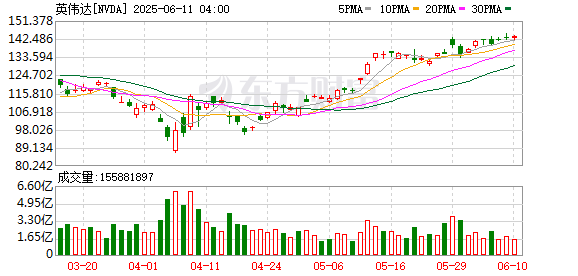
Group 1 - Nvidia plans to build the world's first industrial AI cloud platform to support the development of the manufacturing industry in Europe [2] - The company aims to establish 20 "AI factories" in Europe, with AI computing power expected to increase tenfold within two years [2] - Each planned data center will be equipped with 10,000 GPUs, including Nvidia DGX B200 systems and RTX PRO servers, to accelerate manufacturing applications across various stages [2][3] Group 2 - The AI factories will utilize Nvidia's CUDA-X libraries and accelerate workloads from leading software providers such as Siemens, ANSYS, and Cadence [3] - The investment is seen as a starting point for European manufacturers to accelerate AI development and adoption, leading to the era of AI gigafactories [3] - Major European manufacturers, including BMW, Maserati, Mercedes-Benz, and Schaeffler, are transitioning to AI-driven operations and logistics through Nvidia's accelerated applications [7] Group 3 - Nvidia's CEO highlighted that quantum computing is reaching a turning point, with plans to integrate the CUDA-Q software toolkit on the Grace Blackwell 200 chip [5] - The quantum algorithm stack can be accelerated on the Blackwell 200, indicating advancements in quantum computing capabilities [5]

NVIDIA Builds World's First Industrial AI Cloud to Advance European Manufacturing
Globenewswire· 2025-06-11 10:23
Core Insights - NVIDIA is establishing the world's first industrial AI cloud in Germany to support European manufacturers, featuring 10,000 GPUs to enhance manufacturing applications [1][3][15] - Major European manufacturers like BMW Group, Maserati, Mercedes-Benz, and Schaeffler are adopting NVIDIA's technologies to transform their product lifecycles through AI-driven operations [2][10][12] Group 1: Industrial AI Cloud Development - The AI factory will utilize NVIDIA DGX B200 systems and NVIDIA RTX PRO Servers, running NVIDIA CUDA-X libraries and Omniverse-accelerated workloads [3][4] - This initiative aims to accelerate AI development and adoption in anticipation of AI gigafactories across Europe [5] Group 2: Partnerships and Software Integration - Siemens and NVIDIA are expanding their partnership to enhance industrial AI and digitalization, optimizing performance and productivity for various sectors [7] - Ansys is integrating Omniverse into its simulation software to improve fluid simulations, achieving a 2.5x acceleration in performance for Volvo Cars [8][9] Group 3: Manufacturer Innovations - Schaeffler is leveraging AI factories and NVIDIA's technology for digital factory planning and automation across its manufacturing plants [10][11] - BMW Group is creating digital twins of its production facilities to optimize manufacturing processes and develop AI applications [12][13]

计算机行业周报20250603-20250606:Circle美股上市需求火爆!EDA国产替代加速-20250607
Shenwan Hongyuan Securities· 2025-06-07 13:32
Investment Rating - The report maintains a positive outlook on the EDA industry, highlighting the acceleration of domestic substitution due to increased export controls from the U.S. [4][5] Core Insights - The report emphasizes the booming demand for stablecoins, particularly following Circle's successful IPO, which raised $1.05 billion with a first-day closing price increase of 168% [4][6] - The U.S. Senate's recent approval of a stablecoin bill is expected to significantly boost the stablecoin market, with major players like Visa entering the ecosystem [7][6] - The report discusses the impact of new EDA export restrictions from the U.S. on Chinese firms, suggesting that this could open up opportunities for domestic EDA companies [4][20] Summary by Sections Stablecoin Market - Circle, the issuer of the second-largest stablecoin USDC, went public on June 5, 2025, with a final IPO price of $31 per share, significantly higher than initial expectations [6] - The stablecoin market is anticipated to grow rapidly due to legislative support and increased participation from major financial institutions [7] - Circle's revenue model relies heavily on interest from reserve assets, with projected revenues of $736 million, $1.431 billion, and $1.661 billion from 2022 to 2024 [12] EDA Industry - The U.S. Department of Commerce has imposed new export restrictions on EDA tools to China, which may accelerate the domestic substitution trend [20][21] - Demand for EDA tools is expected to shift as consumer-grade chip manufacturers may face challenges due to these restrictions, potentially increasing the market for domestic EDA products [23] - Domestic EDA companies are experiencing growth, with significant mergers and acquisitions occurring to enhance product offerings and market share [26] Investment Opportunities - The report identifies several key investment targets in the stablecoin and EDA sectors, including companies like ZHONGAN Online, LianLian Digital, and various Web3.0 service providers [20] - Specific companies highlighted for their potential in the AIGC and digital economy sectors include Kingsoft Office, Hikvision, and Huada Jiutian [39]


英特尔、OMDIA、中科院领衔,500+芯片企业齐聚苏州,提前锁定2025半导体风向标!
半导体行业观察· 2025-06-07 02:08
Core Viewpoint - The Chinese integrated circuit industry is undergoing a "dual-line war," facing challenges from both advanced process technology and the demand for AI computing power, necessitating a restructuring of chip architecture [1] Group 1: Event Overview - The Fifth China Integrated Circuit Design Innovation Conference and IC Application Ecosystem Exhibition (ICDIA 2025) will take place on July 11-12 at the Suzhou Jinji Lake International Conference Center, focusing on the future of the semiconductor industry [1] - The conference will gather over 500 chip design companies, 200 terminal application enterprises, 150 AI and system solution providers, and more than 3,000 professional attendees [2] Group 2: Key Discussions and Presentations - High-level forums will feature discussions on AI-driven heterogeneous integration and the semiconductor market forecast for 2025, with insights from industry leaders [4] - The conference will also present the "2025 China Integrated Circuit Talent Development Research Report," highlighting the anticipated talent gap in the semiconductor sector [5][6] Group 3: Industry Trends and Innovations - The slowdown of Moore's Law is pushing the computing industry towards a critical turning point, with new technologies like 3D packaging and Chiplet technology emerging as key solutions [7] - Future computing power evolution will rely on multi-dimensional innovations rather than single-dimensional technological advancements, presenting a historic opportunity for the Chinese chip industry [9] Group 4: Collaboration and Development - The integration of academia, industry, and research is crucial, with various institutions and companies collaborating to redefine the landscape of AI and automotive chips [10] - The current low domestic production rate of automotive chips (less than 15%) highlights the need for a cohesive industry chain from design to testing [10][12] Group 5: Exhibition Highlights - The ICDIA exhibition will showcase China's IC innovation achievements, AI frontier technologies, and local industry applications across four major exhibition areas [13][15]

手机芯片,大变局
半导体行业观察· 2025-06-07 02:08
Core Viewpoint - Leading smartphone manufacturers are facing challenges related to local generative AI, standard smartphone functionalities, and increasing data interactions between mobile devices and the cloud, which put pressure on computing and power consumption [1][3]. Group 1: Mobile SoC Design Challenges - High-end smartphones utilize heterogeneous architectures in their System on Chip (SoC) designs, where multiple modules perform different tasks collaboratively [3]. - The rapid evolution of AI networks and diverse AI model requirements complicate mobile SoC design, necessitating support for both large-scale cloud models and efficient local models [3][4]. - The integration of AI capabilities into chips is becoming less challenging due to advancements in tools and processes over the past five to ten years [6]. Group 2: AI Processing and Architecture - The design focus is shifting towards optimizing power consumption in parallel processing of graphics, general computing, and AI operations [5]. - AI accelerators in mobile SoCs may include GPUs, NPUs, or high-end ASICs, with NPU becoming central for low-power tasks [7][8]. - The rise of multimodal models and generative AI tools adds complexity to design, requiring flexible and efficient computing structures [10]. Group 3: Local vs. Cloud Processing - Local processing of AI applications, such as facial recognition and photo editing, is preferred to reduce latency and enhance data privacy [13]. - Despite the increase in local AI processing, some tasks still need to be executed in the cloud due to battery and power limitations [13]. - The balance between local and cloud processing will be an ongoing challenge as AI models become more efficient [13]. Group 4: Key Trends in Mobile SoC Design - Three key trends driving changes in mobile SoC design include rising analog demands, the proliferation of visual and AI applications, and the high-performance computing requirements of modern applications [15]. - Designers must consider both hardware and software perspectives to remain competitive, emphasizing the need for collaborative efforts across disciplines [15].