国信证券

Search documents
国信证券助力AI产业链核心龙头胜宏科技完成19亿元定增,以专业力量赋能高端智造全球布局
Zheng Quan Shi Bao Wang· 2025-09-30 08:27
Group 1 - The core viewpoint of the news is that Guosen Securities successfully assisted Shenghong Technology in completing a 1.9 billion yuan private placement, which will strengthen its global leadership in AI computing infrastructure [1][2] - Shenghong Technology is a key supplier of PCBs for artificial intelligence and high-performance computing, focusing on high-end HDI and multilayer PCBs, with applications in AI, new energy vehicles, and high-speed communication [1][2] - The funds raised will be used for projects in Vietnam and Thailand, aimed at enhancing Shenghong Technology's production capacity and capabilities to meet high-end requirements in AI servers and GPU chips [2] Group 2 - Guosen Securities has been a long-term partner of Shenghong Technology, having assisted in multiple rounds of financing since its IPO in 2015, raising over 5 billion yuan in total [2] - The recent issuance attracted significant market attention, with 270 investors participating and a subscription multiple of 3.01, indicating strong confidence in Shenghong Technology's AI business prospects [3] - The issuance price was set at 248.02 yuan per share, reflecting a premium over the average price, showcasing Guosen Securities' pricing and value extraction capabilities [3]

利率“贴地飞行”,券商融资融券业务如何走出“内卷”困局?
Zheng Quan Ri Bao Zhi Sheng· 2025-09-30 04:37
Core Viewpoint - The securities industry is experiencing a severe "price war" in the margin financing and securities lending business, with average financing rates plummeting from a historical high of 8.35% to a range of 5%-5.5%, and some brokers offering rates below 4%, which is approaching their comprehensive funding cost line. Despite this, the overall scale of margin financing is steadily increasing, highlighting a significant disconnect between volume growth and price reduction, representing a typical symptom of the industry's transformation pains [1][2]. Group 1: Current Challenges - The financing rates in the securities industry are on a downward trend, with rates expected to continue decreasing from 8.35% in 2015 to 5%-5.5% by 2024, and some firms offering rates below 4% to high-net-worth clients, intensifying competition [2][3]. - The price war is rooted in structural contradictions and homogeneous competition, with 150 securities firms in the market, leading to fierce resource competition and forcing firms to rely on price cuts to gain market share [3]. - The mismatch between the growth in margin financing balance, which reached 18,505 billion with a year-on-year increase of 24.95%, and the revenue from financing interest, which only grew by 10%, indicates the limitations of the price war [3]. Group 2: Negative Impacts - The price war is hindering industry innovation, as firms are focusing resources on traditional business lines rather than exploring new models, which limits their ability to meet the diverse needs of the real economy [4][5]. - The competitive environment has led to a degradation of service capabilities, with the value of professional services being underestimated and talent retention becoming increasingly difficult due to declining profit margins [6]. - The adverse effects of the price war may result in a misallocation of social economic resources, undermining the financial sector's ability to serve the real economy effectively [7]. Group 3: Systemic Risks - The low financing rate environment is likely to amplify market volatility, as high leverage can lead to forced liquidations during market downturns, negatively impacting liquidity [8]. - The interconnectedness of risks among financial institutions is heightened, as difficulties in short-term financing can lead to asset sell-offs by securities firms, triggering broader market declines [8]. Group 4: Policy and Structural Solutions - The central government has initiated a series of anti-involution policies to regulate market order, emphasizing the need for industry self-discipline and the prevention of "involutionary" competition [11][12]. - A shift in development philosophy is necessary, moving from a focus on scale to value creation, with a comprehensive evaluation system that prioritizes long-term indicators such as customer satisfaction and innovation investment [13]. - Establishing a multi-tiered competitive system based on professional capabilities is essential, allowing firms to transition from price competition to value creation [14]. Group 5: Technological and Regulatory Enhancements - Digital transformation is crucial for reconstructing the business value chain, with firms deploying AI systems and enhancing risk management through big data [15]. - Regulatory guidance and industry self-discipline must work in tandem to establish a healthy market ecosystem, including reasonable interest rate determination and the prohibition of malicious competition [16]. Conclusion - To overcome the challenges posed by the "involutionary" competition in the securities industry, a balance between market efficiency and industry order is required, alongside a strategic focus on long-term value creation [17].



欢创科技递表港交所 联席保荐人为中金公司、国信证券香港
Zheng Quan Shi Bao Wang· 2025-09-30 00:53
Core Viewpoint - HuanChuang Technology has submitted its application to the Hong Kong Stock Exchange, with CICC and Guosen Securities Hong Kong as joint sponsors [1] Group 1: Market Position - According to Zhaoshang Consulting, HuanChuang Technology is the leading player in the global space perception solutions for robotic vacuum cleaners, holding over 50% market share in the LiDAR product segment based on 2024 revenue projections [1] Group 2: Product Offerings - The company has a diversified product matrix that includes traditional triangulation LiDAR, dTOF LiDAR, 3D TOF LiDAR, and line laser sensors [1] - HuanChuang Technology possesses self-developed sub-millimeter AI spatial data processing chip design and core AI algorithm capabilities [1] Group 3: Technological Innovation - The company utilizes a unique consumer-grade CIS combined with self-developed ASIC chip technology, achieving cost-effectiveness, high positioning accuracy, and commercial scalability [1] - HuanChuang Technology's AI-enabled solutions can address environmental challenges such as lighting, materials, and textures, enabling sub-millimeter high-precision measurements and supporting wireless updates [1] Group 4: Client Relationships - The company has established long-term partnerships with major clients in the smart robotics sector, serving as a core supplier to four of the top five robotic vacuum cleaner companies [1]

募集资金约19亿元 占公司最新市值比例不到1% 胜宏科技“袖珍定增”引争议
Mei Ri Jing Ji Xin Wen· 2025-09-29 21:13
Group 1 - The core point of the article is the controversy surrounding Shenghong Technology's recent fundraising plan, which raised approximately 1.9 billion yuan, accounting for less than 1% of its latest market value, amidst a significant stock price increase of over 580% this year [2][3][8] - Market expert Xu Li raised concerns about the timing and scale of the fundraising, suggesting it may not be prudent given the company's high stock price [3][4] - Despite the controversy, some industry insiders argue that raising funds when a company's market value is high can be efficient and minimizes dilution for major shareholders [3] Group 2 - Other technology companies, including Cambrian-U, Chipone, Zhongke Feicai, and Lexin Technology, are also pursuing refinancing plans, with some already receiving approval from the regulatory authority [6] - The trend of multiple technology companies seeking refinancing simultaneously indicates a rapid development phase in the tech sector, with the potential to cool down high valuations in the secondary market [6] - Notable tech firms like Yushu Technology and Moore Threads are approaching significant milestones in their IPO processes, with Yushu currently in the counseling stage and Moore Threads having recently passed its IPO application [6][7] Group 3 - The overall IPO activity on the Sci-Tech Innovation Board has been low this year, with a significant decline in the total amount raised compared to previous years, indicating a gradual recovery process [8] - Major brokerage firms, such as CITIC Securities, are playing crucial roles in the financing processes of these technology companies, highlighting the importance of institutional support in capital market activities [8]

募集资金约19亿元 占公司最新市值比例不到1% 年内大涨超580% 胜宏科技“袖珍定增”引争议
Mei Ri Jing Ji Xin Wen· 2025-09-29 14:02
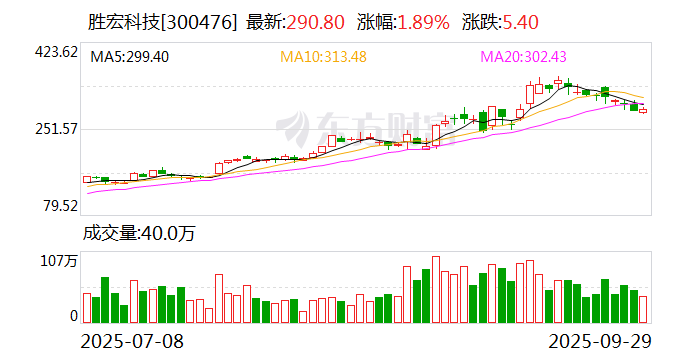
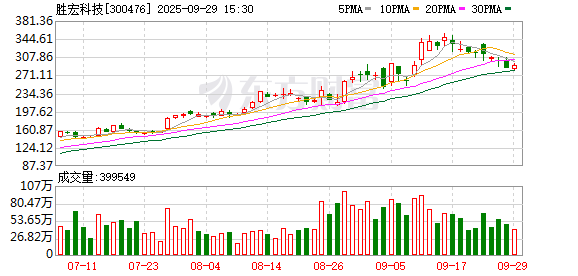
Core Viewpoint - The recent fundraising by Shenghong Technology has sparked controversy in the market due to its small scale relative to its high market valuation, raising questions about the timing and necessity of such a capital increase [2][3]. Group 1: Shenghong Technology's Fundraising - Shenghong Technology completed a private placement, raising approximately 1.9 billion yuan, which is less than 1% of its latest market capitalization of 250.9 billion yuan [2][3]. - The company has seen a significant stock price increase of over 580% year-to-date as of September 29, leading to debates about the appropriateness of this fundraising at such a high valuation [3]. - Market analyst Xu Li expressed concerns regarding the risks associated with this fundraising, although his views are considered to represent a minority opinion [3][4]. Group 2: Broader Market Context - Other technology companies, including Cambrian-U, Chipone, and Lexin Technology, are also pursuing refinancing plans, indicating a trend of capital raising within the tech sector [5]. - The concurrent timing of these fundraising efforts suggests that the technology sector is in a rapid growth phase, with companies seeking to capitalize on high market valuations [5]. - Notable tech firms like Yushu Technology and Moore Threads are also approaching significant milestones in their IPO processes, reflecting ongoing interest in tech investments [5][6]. Group 3: Regulatory and Market Trends - The China Securities Regulatory Commission (CSRC) has been actively promoting reforms to support innovation and facilitate capital raising for high-quality enterprises, aligning with national policy directions [6][7]. - Despite the push for IPOs, the overall number of IPOs on the Sci-Tech Innovation Board remains low, with a significant decline in fundraising compared to previous years [7]. - Major brokerage firms are playing crucial roles in the financing processes of these technology companies, indicating their importance in the current market landscape [7].
奇德新材回复审核问询函:剖析经营状况与募投项目情况
Xin Lang Cai Jing· 2025-09-29 13:38
Core Viewpoint - Guangdong Qide New Materials Co., Ltd. has provided a detailed response to the Shenzhen Stock Exchange regarding its application for a specific stock issuance, analyzing its operational performance, capacity utilization, and overseas business developments [1]. Group 1: Financial Performance - The company's revenue for 2022, 2023, and 2024 is projected to be 256.34 million, 283.25 million, and 346.14 million respectively, indicating a continuous growth trend [1]. - Net profit for the same years is expected to be 14.73 million, 8.03 million, and 8.69 million, with gross profit margins of 23.37%, 26.65%, and 22.80% respectively [1]. - For the first half of 2025, the company reported revenue of 178.58 million with a gross profit margin of 25.85% [1]. Group 2: Gross Margin Fluctuations - The gross margin has shown a trend of initial increase, followed by a decrease, and then a rise again, influenced by raw material prices and product structure [2]. - The increase in gross margin in 2023 was primarily due to the rise in the gross margin of modified nylon composite materials, attributed to lower unit costs of key raw materials like PA6 and PA66 [2]. - In 2024, the gross margin decreased due to rising material procurement costs and increased manufacturing expenses, while in the first half of 2025, it improved due to enhanced margins from other modified composite materials [2]. Group 3: Revenue and Net Profit Changes - Revenue growth is attributed to market expansion in the electric vehicle sector and the additional income from the Thai subsidiary [3]. - The net profit decreased in 2023 due to a significant rise in period expenses, remained stable in 2024, and increased in the first half of 2025 due to revenue and gross margin growth with minimal changes in period expenses [3]. - Compared to industry peers, the company's revenue trends align, but net profit trends differ in 2023 and the first half of 2025, influenced by revenue, gross margin, and period expenses [3]. Group 4: Capacity Utilization - The company's capacity utilization rate in 2024 was lower compared to industry peers, primarily due to a shift in business focus from baby products and sports equipment to the automotive sector, resulting in unmet order expectations [4]. - The company is also facing challenges related to production due to the need for capacity reserves and machine switching times [4]. - To improve capacity utilization, the company is enhancing core product competitiveness, expanding overseas markets, and optimizing capacity management [4]. Group 5: Overseas Business Development - In October 2023, the company established a wholly-owned subsidiary in Thailand, which is set to commence production in October 2024 [5]. - The overseas sales revenue has been increasing year by year, and the company has gained operational and management experience in international projects [5]. - The current investment projects include the construction of composite materials production lines in Thailand and the expansion of carbon fiber product production, deemed necessary based on market demand and industry trends [5].
募集资金约19亿元,占公司最新市值比例不到1% 年内大涨超580%,胜宏科技“袖珍定增”引争议
Mei Ri Jing Ji Xin Wen· 2025-09-29 13:10
Core Viewpoint - The recent fundraising by Shenghong Technology has sparked controversy in the market due to its small scale relative to its high market valuation, raising questions about the timing and necessity of such a capital increase [1][2]. Group 1: Shenghong Technology's Fundraising - Shenghong Technology completed a private placement, raising approximately 1.9 billion yuan, which is less than 1% of its latest market capitalization of 250.9 billion yuan [1][2]. - The company has seen a significant stock price increase of over 580% year-to-date as of September 29, leading to debates about the appropriateness of this fundraising strategy [2]. - Market analyst Xu Li expressed concerns regarding the risks associated with this fundraising, although his views are considered to represent a minority opinion [2][3]. Group 2: Broader Market Context - Other technology companies, including Cambrian-U, Chipone, and Lexin Technology, are also pursuing refinancing plans, indicating a trend of capital raising within the tech sector [4]. - The concurrent timing of these fundraising efforts suggests that the technology sector is in a rapid growth phase, with companies seeking to capitalize on high market valuations [4]. - Notable tech firms like Yushu Technology and Moore Threads are approaching significant milestones in their IPO processes, reflecting ongoing interest in tech equity financing [4][5]. Group 3: Regulatory Environment and Trends - The regulatory environment is evolving to support innovation, with recent reforms aimed at enhancing the capital market's ability to serve high-quality enterprises [5][6]. - Despite the push for more IPOs, the overall number of IPOs on the Sci-Tech Innovation Board remains low, with a significant decline in fundraising compared to previous years [6]. - Major brokerage firms are playing crucial roles in the financing processes of these technology companies, indicating a strong involvement of institutional players in the market [6].
上市券商2025年中报综述:创2016年以来最佳半年度经营业绩
Zhongyuan Securities· 2025-09-29 13:02
Investment Rating - The report maintains a "Market Perform" rating for the securities industry relative to the CSI 300 index [2] Core Insights - The securities industry achieved its best half-year operating performance since 2016 in the first half of 2025, with revenue increasing by 23.47% year-on-year and net profit rising by 40.37% [9][15] - The report highlights significant improvements across various business segments, particularly in proprietary trading and brokerage services, driven by a recovery in the equity market and increased market activity [9][21] Summary by Sections 1. Industry Performance - In the first half of 2025, the securities industry generated total revenue of CNY 2,510.36 billion, a year-on-year increase of 23.47%, and net profit of CNY 1,122.80 billion, up 40.37% [15][16] - The performance of listed securities firms showed notable improvement, with 42 firms reporting a combined revenue of CNY 2,518.66 billion, a 30.58% increase year-on-year, and a net profit of CNY 1,040.17 billion, up 65.08% [16][21] - The industry experienced a slight decline in leverage, with an average leverage ratio of 3.29 times, while the weighted average return on equity (ROE) increased to 3.53%, up 0.85 percentage points year-on-year [23][24] 2. Business Segment Analysis - Proprietary trading revenue reached a new high, accounting for 39.9% of total income, while brokerage revenue increased to 28.7% [32][33] - The brokerage business saw a significant year-on-year growth of 47.0%, while proprietary trading revenue grew by 21.3% [33][34] - Investment banking activities showed marginal improvement, with equity financing volumes rebounding significantly and debt financing continuing to expand [9][21] 3. Market Conditions and Future Outlook - The report indicates a favorable policy environment aimed at enhancing the attractiveness and inclusivity of the domestic capital market, which is expected to support continued growth in the securities industry [9][30] - The average price-to-book (P/B) ratio for the brokerage sector is projected to fluctuate between 1.40 and 1.60 in the fourth quarter of 2025, suggesting limited downside potential for the sector [9][30] - The report recommends focusing on leading firms with strong wealth management capabilities and deep engagement in equity investments, particularly those with valuations significantly below the sector average [9][30]



主力资金丨5股尾盘获主力资金大幅抢筹
Zheng Quan Shi Bao Wang· 2025-09-29 11:46
Group 1 - Non-bank financial and computer industries saw significant net inflows of main funds, amounting to 50.99 billion and 12.56 billion respectively [1] - The overall main funds in the Shanghai and Shenzhen markets experienced a net outflow of 33.85 billion [1] - Among the 20 industries with net outflows, the electronics industry led with a net outflow of 26.12 billion [1] Group 2 - Five stocks received net inflows exceeding 10 billion, with Lingyi Technology leading at 34.54 billion due to a recent joint venture in robotics [2] - Dongfang Caifu followed with a net inflow of 29.81 billion, attributed to the surge in brokerage stocks amid policy support and economic stabilization [2] - A total of 74 stocks had net inflows exceeding 2 billion [2] Group 3 - In the tail end of trading, main funds saw a net inflow of 2.37 billion, with sectors like computer, automotive, and electronics attracting over 1 billion each [5] - Individual stocks such as Sanhua Intelligent Control and Northern Huachuang had net inflows exceeding 1 billion during the tail end [6] - Notable net outflows in the tail end included stocks like Xian Dao Intelligent and CITIC Securities, with outflows exceeding 2 billion [9]



《财经》特别报道:券商出海新格局,从香港到全球
3 6 Ke· 2025-09-29 11:31
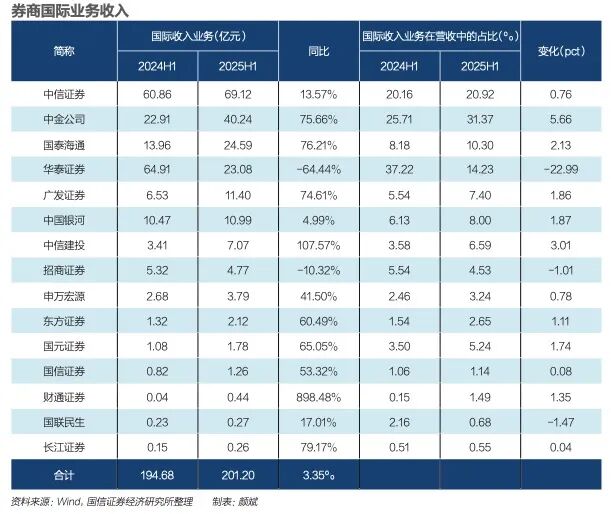
Core Viewpoint - The Hong Kong stock market is experiencing a strong recovery, driven by a surge in IPO activities and international investment interest, with significant contributions from Chinese securities firms [1][4][11]. Group 1: Market Performance - As of August 2025, the total financing amount for new stock issuances reached HKD 134.5 billion, a nearly sixfold increase compared to the same period in 2024, significantly outpacing global IPO financing growth [1]. - The average daily trading volume in the Hong Kong stock market reached HKD 240.2 billion in the first half of 2025, representing a year-on-year increase of 118% [4]. - The IPO fundraising amount in the first half of 2025 was HKD 109.4 billion, a staggering 716% increase year-on-year, making it the leading capital market globally [4]. Group 2: Performance of Chinese Securities Firms - The international business revenue of 15 A-share listed securities firms reached CNY 20.12 billion in the first half of 2025, a year-on-year increase of 3.35% [7]. - Among these firms, CITIC Securities led the industry with an international business revenue of CNY 6.91 billion, a growth of 13.57% year-on-year [7]. - CICC maintained its position as the top underwriter for Hong Kong IPOs, with a market share of 35% and an underwriting scale of USD 3.9 billion [4]. Group 3: Strategic Developments - Chinese securities firms are increasingly positioning Hong Kong as a strategic high ground for international business, with major firms like CICC and CITIC Securities actively hosting global investor conferences [3][11]. - The Hong Kong market is seen as a critical bridge for Chinese companies to access international capital, with a significant portion of IPOs being driven by domestic firms seeking to expand globally [2][12]. - The Hong Kong government is implementing policies to enhance the financial market environment, including simplifying the licensing process for foreign firms, which is expected to lower entry barriers for smaller securities firms [14]. Group 4: Future Outlook - The ongoing global economic integration and financial reforms in emerging markets are creating favorable conditions for the overseas expansion of Chinese securities firms [19]. - The demand for cross-border services is expected to grow as Chinese companies continue to seek international financing and as global investors look to allocate more capital to Chinese assets [19].