
复旦大学

Search documents
用大模型检测工业品异常,复旦腾讯优图新算法入选CVPR 2025
量子位· 2025-06-06 06:06
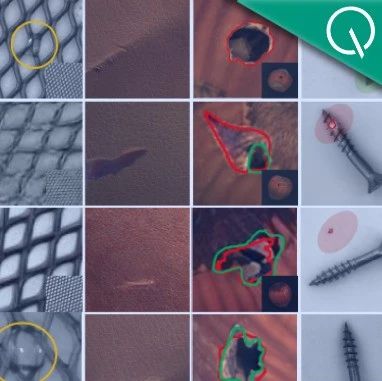
Core Viewpoint - The research introduces a new model called DualAnoDiff for generating anomalous images and masks, which utilizes a parallel dual-branch diffusion mechanism to ensure high alignment and realism of generated anomalous images [20][21][22]. Summary by Sections Industrial Anomaly Detection - The industrial sector often faces challenges in detecting product anomalies due to a lack of real defective product data for training detection models [2][7]. - Traditional methods involve generating realistic "defective images" and annotating the specific defects [2]. DualAnoDiff Model - Researchers from Fudan University and Tencent Youtu Lab have developed the DualAnoDiff model, which is based on diffusion models for few-shot anomaly image generation [3][4]. - The model has achieved state-of-the-art (SOTA) results compared to previous methods [4]. Generation Mechanism - DualAnoDiff employs a dual-branch parallel generation mechanism that synchronously generates anomalous images and their corresponding anomalous regions [10][12]. - The main branch focuses on generating complete images with anomalies, while the sub-branch emphasizes the authenticity of local anomalous areas [11][12]. Background Compensation Module - A Background Compensation Module (BCM) is introduced to enhance the model's ability to fit complex backgrounds by separating key and value features from normal images [14][21]. Experimental Results - The model has demonstrated superior performance in generating high-quality and diverse image data compared to existing anomaly generation methods [16][22]. - Quantitative metrics indicate that the generated data significantly improves downstream anomaly detection tasks [19][22]. Future Implications - The research is expected to advance the field of anomalous image generation, providing better tools for industrial anomaly detection [23].

预算1.10亿元!复旦大学近期大批仪器采购意向
仪器信息网· 2025-06-06 06:03
Core Viewpoint - Fudan University has announced procurement intentions for 24 items of laboratory equipment, with a total budget of 110 million yuan, scheduled for procurement between January and July 2025 [1][2]. Procurement Overview - The procurement includes high-resolution long-term fluorescence microscopes, ultra-high vacuum sample preparation systems, ultra-high vacuum low-temperature strong magnetic field scanning tunneling microscopes, and systems for the growth and preparation of two-dimensional materials in ultra-high vacuum [2][3]. - The total budget for the procurement is 110 million yuan, with specific items and their respective budgets detailed in the document [2][3]. Specific Equipment and Budget - High-resolution long-term fluorescence microscope: 202 million yuan, required for integrated imaging systems with advanced optical paths and environmental interference elimination [3]. - Gas phase liquid nitrogen tanks: 195 million yuan, for long-term preservation of biological samples at temperatures below -180°C [3]. - Ultra-high vacuum low-temperature strong magnetic field scanning tunneling microscope: 400 million yuan, for atomic-scale characterization of two-dimensional materials [3]. - Network analyzer: 840 million yuan, aimed at high-frequency and ultra-high-frequency testing for photonic and terahertz devices [5]. Additional Equipment - Multi-dimensional energy metabolism measuring instrument: 140 million yuan, designed for high precision and stability in measuring energy metabolism in various cell types [5]. - Dual-energy X-ray bone densitometer: 125 million yuan, for clinical screening and analysis of bone density and composition [5]. - ATE testing machine: 1000 million yuan, for advanced chip testing and verification [6]. Procurement Timeline - The expected procurement period is set for January to July 2025, with specific timelines for each item outlined in the procurement intentions [2][4].

能“看见”红外光的“超视觉”假体在实验室诞生
news flash· 2025-06-05 18:03
Core Viewpoint - A groundbreaking visual prosthetic has been developed that enables blind animals to regain visible light vision and even perceive infrared light, marking a significant advancement in optical technology [1] Group 1: Product Development - The visual prosthetic has a wide spectral coverage range from 470 to 1550 nm, extending from visible light into the near-infrared region [1] - The prosthetic operates without the need for any external devices and can be implanted through minimally invasive surgery [1] Group 2: Research Collaboration - The development involved collaboration between teams from Fudan University, including the Integrated Circuit and Micro-Nano Electronics Innovation Institute and the Brain Science Research Institute, along with the Shanghai Institute of Technical Physics of the Chinese Academy of Sciences [1] Group 3: Publication and Recognition - The research findings were published in the journal "Science" on June 6, 2025, under the title "Enhanced Visual Perception in Blindness Using Tellurium Nanowire Retinal Prosthetics" [1]
华人学者一天发表了9篇Nature论文
生物世界· 2025-06-05 08:29
Core Insights - The article highlights significant research advancements published in the journal Nature on June 4, 2025, with a notable contribution from Chinese scholars, indicating a growing influence in the global scientific community [2][3][6][8]. Group 1: Medical Innovations - A new thrombectomy technique called "Milli-spinner thrombectomy" was developed, demonstrating over twice the efficiency of existing methods in clearing blood clots, which could enhance treatment success rates for stroke, heart disease, and pulmonary embolism [2]. - Research identified CREM as a critical regulatory factor in NK cell function, suggesting its potential as a therapeutic target to enhance CAR-NK cell anti-tumor efficacy [3]. - A study revealed a novel mechanism of red blood cell hemolysis induced by ischemic endothelial necroptosis in COVID-19 patients, proposing a new therapeutic intervention to alleviate microvascular obstruction [7]. Group 2: Genetic and Archaeological Discoveries - The study utilizing ancient DNA confirmed the existence of a two-clanned matrilineal community in Neolithic China, providing insights into early human social structures [2]. - Research on human Pol III transcription initiation offered structural insights that could enhance understanding of non-coding RNA synthesis regulation [8]. - The discovery of the preference of the human chromatin remodeler SMARCAD1 for subnucleosomes highlights its role in maintaining pluripotency in mouse embryonic stem cells [8]. Group 3: Technological Developments - A new method using a non-natural micropeptide called "killswitch" was developed to probe condensate microenvironments, linking these environments to cellular functions [4]. - The introduction of a soft-clamped topological waveguide for phonons represents a significant advancement in the field of phononic devices [5].

复旦阿里强强联手,人工智能教育开启新篇章!
Sou Hu Cai Jing· 2025-06-04 12:18
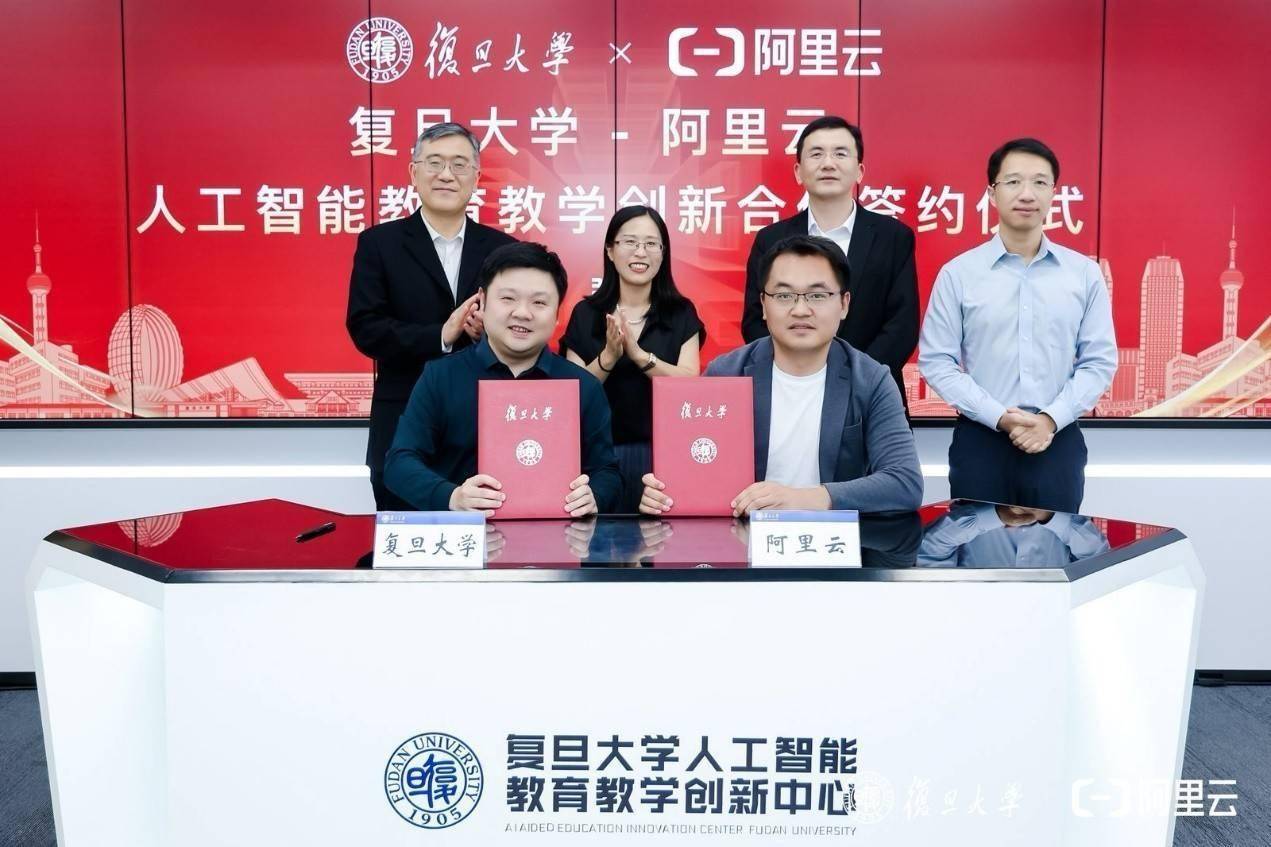
Core Insights - The collaboration between Alibaba Cloud and Fudan University marks a significant advancement in AI education innovation, coinciding with Fudan's 120th anniversary [1][3] - The partnership aims to enhance the "AI Big Class 2.0" project, providing comprehensive support in computing resources, experimental tools, and course content development [1][3] Group 1: Collaboration Details - Alibaba Cloud will support Fudan University's AI education initiatives, including the development of a new educational paradigm for AI learning [1][3] - The collaboration is an extension of previous efforts in the AI for Science domain, which has already benefited over 5,200 students and faculty, supporting more than 550 research projects [3][7] Group 2: Educational Initiatives - Fudan University has initiated a new round of educational reforms, launching the "AI Big Class" project with over 110 courses in the AI-BEST curriculum [3][10] - The "Cloud Engineering and Materialization" program provides substantial computing power for practical training, enhancing students' AI application skills [3][10] Group 3: Future Plans - In 2025, the partnership will introduce a large model certification program for students, with the first batch of certified students already emerging from various departments [7][10] - Alibaba Cloud will continue to provide resources and support for Fudan's AI curriculum, including course co-development, talent certification, and practical training activities [10]

Nature子刊:复旦大学倪挺团队开发预测评估人类细胞衰老的通用工具——hUSI
生物世界· 2025-06-03 03:54
Core Viewpoint - The article discusses the development of a human universal senescence index (hUSI) that accurately predicts cellular senescence across various conditions, addressing the challenges of identifying heterogeneous senescent cells [3][7][9]. Group 1: Background on Cellular Senescence - Cellular senescence (CS) is characterized by irreversible cell cycle arrest and is considered a key factor in age-related diseases [2]. - Senescent cells secrete pro-inflammatory proteins and other paracrine factors, which can stimulate immune responses and intercellular communication, leading to diverse effects in various tissues [2]. Group 2: Development of hUSI - The research team from Fudan University developed hUSI, a transcriptome-based index for assessing cellular senescence reliably across different cell types and conditions [3][7]. - The study compiled and standardized single-cell transcriptome sequencing data from 73 published studies, resulting in a comprehensive dataset of 770 senescent and non-senescent cell samples covering 34 cell types and 13 senescence types [3][9]. Group 3: Significance and Applications of hUSI - hUSI demonstrates a strong correlation with senescence phenotypes and shows robustness in predicting senescence states [9]. - The technology has identified potential senescence regulatory factors and mapped the accumulation of senescent cells in different cell types during COVID-19, as well as decoded the heterogeneous senescence states in melanoma tumors [9][10]. - The hUSI method has broad applications in aging research and clinical practice, with an open-source software package and user guide available for further use [10].

重磅︱国地中心即将发布7B龙跃大模型(MindLoongGPT),开启生成式机器人运动控制时代
机器人大讲堂· 2025-05-28 13:04
2025年5月29日,由国家地方共建人形机器人创新中心(以下简称"国地中心")和上海张江(集团)有限公 司共同主办的2025张江具身智能开发者大会暨张江人形机器人创新创业大赛将在上海浦东新区盛大举行。 本次活动将汇集200余家人形机器人、具身智能和产业链头部企业,吸引1000余位知名院士、专家、企业领 袖及开发者,共同探讨人形机器人产业的技术突破与商业落地路径。这是一场真正意义上的行业顶级盛会, 以"峰会+大赛+展览"三位一体的模式,全方位展示人形机器人技术与产业的最新进展。 在 本 次 大 会 上 , 国 地 中 心 将 联 合 复 旦 大 学 正 式 发 布 全 球 首 款 生 成 式 人 形 机 器 人 运 动 大 模 型 —— " 龙 跃"(MindLoongGPT) ,此举将标志着我国在智能体运动控制领域迈入全球领先行列。 ▍ "龙跃"MindLoongGPT:生成式机器人运动大模型的革命性突破 ■ 从实验室到产业应用,重新定义人机交互 人形机器人如何像人类一样自然运动?如何通过语言指令让机器人理解并执行复杂动作?这一直是行业亟待突 破的技术瓶颈。国地中心联合复旦大学未来信息创新学院研发的 龙跃Mi ...

学习进行时丨追寻真理 铸魂育人——习近平总书记对复旦大学寄予厚望
Xin Hua Wang· 2025-05-27 16:23
Core Points - Xi Jinping congratulated Fudan University on its 120th anniversary, emphasizing the importance of the institution in China's educational landscape [1][13] - Fudan University, founded in 1905, is recognized as the first higher education institution independently established by Chinese people [1][13] Group 1 - Xi Jinping has shown consistent concern for Fudan University throughout his political career [1][13] - The university's history includes significant contributions to Chinese Marxism, notably through the first Chinese translation of "The Communist Manifesto" by its first president, Chen Wangdao [4][6] - Xi Jinping has referenced Chen Wangdao's story multiple times, highlighting the importance of truth and dedication in the pursuit of knowledge [6][10] Group 2 - In 2018, Fudan University transformed Chen Wangdao's former residence into a "Communist Manifesto" exhibition hall, promoting volunteer activities among students and faculty [8] - A sculpture of Chen Wangdao was unveiled at the exhibition hall in June 2021, symbolizing the university's commitment to his legacy [10] - Xi Jinping encouraged young party members to study Marxist theory and contribute to national goals, reinforcing the university's role in shaping future leaders [10][13]

以人工智能引领科研范式变革(深入学习贯彻习近平新时代中国特色社会主义思想)
Ren Min Ri Bao· 2025-05-22 22:02
Group 1 - Artificial intelligence (AI) is recognized as a strategic technology leading a new round of technological revolution and industrial transformation, emphasizing its strong "leading goose" effect [1] - The development of AI is accelerating, driven by advancements in mobile internet, big data, supercomputing, and brain science, reshaping the fundamental logic and methodology of scientific research [1][2] - AI is transitioning from being an "auxiliary tool" to becoming a "research主体," forming a human-machine collaborative research model that enhances research efficiency [3][4] Group 2 - The historical evolution of research paradigms includes three major transformations: the empirical paradigm, the theoretical paradigm, and the computational paradigm, each emphasizing different methodologies [2] - The emergence of AI large models, such as ChatGPT and DeepSeek, marks a new phase in AI development, with "data-driven" and "computational power-driven" approaches becoming core features of the new research paradigm [3] - AI's ability to mine hidden patterns from vast datasets is revolutionizing scientific innovation, as exemplified by AlphaFold's prediction of nearly 200 million protein structures [3] Group 3 - AI is fostering a shift from "island innovation" to "distributed intelligent networks," transforming traditional research organizations into collaborative networks that enhance knowledge production [5] - The integration of AI with various disciplines is creating a cross-disciplinary innovation ecosystem, improving research efficiency and stimulating new discoveries [3][5] - The development of AI is also pushing for a more open and inclusive research paradigm, enhancing fairness in scientific research through open-source models and collaborative platforms [6][7] Group 4 - China is actively exploring pathways for AI-driven research paradigm transformation, focusing on modular research organization capabilities and dynamic team formations for urgent national strategic tasks [7] - The rich application scenarios in China are being leveraged to enhance AI data augmentation, improving innovation capabilities and model accuracy [7] - The integration of Chinese culture with AI modeling thinking is expanding research horizons and application boundaries, as seen in the digital construction of traditional medical theories [7] Group 5 - The rapid development of AI presents both opportunities and challenges, including data security, ethical considerations, and the need for new evaluation systems for AI-generated research outcomes [8] - Establishing a national research computing power network is essential for supporting AI development, ensuring high-level computing resources are available for research innovation [9][10] - Promoting international collaboration in research through open innovation ecosystems can enhance innovation capabilities and improve the global research environment [11]
134所院校有“世界一流学科”分布
Guang Zhou Ri Bao· 2025-05-21 19:23
5月22日,广州日报数字化研究院(GDI智库)发布"GDI大学一流学科排行榜(2025)",对全国534所 院校的92个学科(人文社会学科20个、自然科学学科34个、工程学科38个)进行科学评价、排行,范围 涵盖上述学科设有硕士点的全部院校(不含香港特别行政区、澳门特别行政区和台湾地区院校,未涉及 军事类院校)。 GDI大学一流学科排行榜(2025)构建"人才培养""科学研究""学科声誉""二次评估"四维评价体系,坚 持定量评价和定性评价相结合,对相关院校学科发展进行独立、科学评价。榜单坚持分类评价,对人文 社会学科、自然科学学科和工程学科采用不同评价标准,以求更好体现学科特色、反映学科内涵特征, 科学精准地对学科进行差异化评价。 一般认为,我国一所大学的某个学科排名进入全国排名前5,表明该大学这一学科的发展水平已跨入"世 界一流学科"行列或接近"世界一流学科"水平;进入全国排名前25表明已进入"国内一流学科"行列;进 入全国排名前50表明已进入"国内高水平学科"行列。 据此分析统计,"世界一流学科"分布在全国134所院校,其中103所为"双一流"建设高校。在拥有"世界 一流学科"数量上:北京大学有39个,排 ...