大智慧

Search documents
四连涨终结,炒股软件流量下降,两融新开账户数同步下滑
21世纪经济报道· 2025-11-19 15:05
Core Viewpoint - The active user count of securities apps has declined in October after four consecutive months of growth, influenced by high market volatility and changes in investor behavior [1][3]. User Activity Summary - In October 2025, the monthly active users of securities apps reached 169 million, marking an 8.40% year-on-year decline and a 3.38% month-on-month decrease, ending a four-month growth streak [2][5]. - The peak user activity was recorded in September 2025, with 175 million users, the highest monthly figure for the year [1][10]. - The decline in October is attributed to profit-taking pressures after the Shanghai Composite Index surpassed 4000 points and increased investor caution due to the National Day holiday [3][5]. Top Securities Apps Performance - Among third-party securities apps, Tonghuashun led with over 30 million active users, followed by Dongfang Caifu and Dazhihui, both exceeding 10 million [1][6]. - In the brokerage self-operated apps, Huatai's Zhangle Wealth app surpassed 10 million users, while Guotai Haitong's Junhong app fell below that threshold [1][6]. Market Dynamics - The top 50 securities apps all experienced a decline in active users in October, with the average decrease being 3.59% compared to September [10]. - Despite the overall decline, some smaller securities apps and specialized tools showed positive growth, indicating a divergence in user engagement across different platforms [11][12]. AI Integration in Securities Apps - The industry is witnessing a shift towards integrating AI technologies into securities apps, enhancing user experience and service offerings [14][15]. - Major firms like Huatai Securities and Guotai Haitong are launching independent AI applications to improve trading, analysis, and user engagement [14][15].







大智慧11月17日获融资买入4112.25万元,融资余额10.96亿元
Xin Lang Cai Jing· 2025-11-18 01:33
Group 1 - The core viewpoint of the news is that Dazhihui's stock performance and financial metrics indicate a mixed outlook, with a notable increase in shareholder accounts but a decline in per capita circulating shares [1][2]. Group 2 - On November 17, Dazhihui's stock rose by 3.62%, with a trading volume of 493 million yuan. The margin trading data shows a financing buy-in of 41.12 million yuan and a net financing outflow of -10.77 million yuan [1]. - As of November 17, the total margin trading balance for Dazhihui is 1.097 billion yuan, with the financing balance accounting for 4.19% of the circulating market value, indicating a high level compared to the past year [1]. - In terms of securities lending, on November 17, Dazhihui repaid 35,500 shares and sold 11,200 shares, with a selling amount of 147,400 yuan, while the securities lending balance is 1.4647 million yuan, which is below the 50th percentile of the past year [1]. Group 3 - As of September 30, Dazhihui had 166,000 shareholders, an increase of 24.23%, while the average circulating shares per person decreased by 19.50% [2]. - For the period from January to September 2025, Dazhihui reported revenue of 564 million yuan, a year-on-year increase of 8.78%, but a net profit attributable to shareholders of -29.56 million yuan, reflecting an 85.30% year-on-year increase in losses [2]. - Dazhihui has distributed a total of 174 million yuan in dividends since its A-share listing, with no dividends paid in the last three years [2]. - Among the top ten circulating shareholders as of September 30, 2025, Hong Kong Central Clearing Limited holds 20.93 million shares, a decrease of 6.52 million shares from the previous period, while Huabao Zhongzheng Financial Technology Theme ETF is a new entrant with 16.77 million shares [2].
大智慧被自然人告上法庭,事涉与湘财股份合并事项
Nan Fang Du Shi Bao· 2025-11-17 03:56
Core Viewpoint - Shanghai Dazhihui Co., Ltd. (601519.SH) is facing a lawsuit from individual Wang Gongwei, who accuses the company of failing to conduct proper audits or evaluations regarding the merger with Xiangcai Co., and not submitting the matter for shareholder approval, which is claimed to be a procedural violation [2][3]. Group 1: Legal Allegations - The plaintiff claims that the merger constitutes a significant related party transaction and that Dazhihui did not comply with the Shanghai Stock Exchange Listing Rules, which require disclosure of audited financial reports for the transaction [3][4]. - Wang Gongwei requests the court to annul the resolutions made during Dazhihui's second extraordinary general meeting of shareholders in 2025, arguing that the necessary procedures were not followed [3][4]. Group 2: Company Defense - Legal and financial advisors, including Beijing Guofeng Law Firm and Yuekai Securities, have provided opinions stating that the merger does not involve the purchase or sale of assets, thus not requiring compliance with the aforementioned listing rules [4][5]. - The advisors confirmed that Dazhihui held a valid extraordinary general meeting on October 13, 2025, where 16 resolutions, including the merger plan, were approved, and the procedures were deemed legal and effective [4][5]. Group 3: Merger Details - The merger process began in March 2025, with Xiangcai Co. planning to absorb Dazhihui through a share exchange, issuing A-shares to Dazhihui's shareholders [6]. - The exchange ratio is set at 1:1.27, meaning each share of Dazhihui can be exchanged for 1.27 shares of Xiangcai, resulting in Xiangcai issuing a total of 2.282 billion shares [6]. - Following the merger, Dazhihui will be delisted and its legal entity will be dissolved, with Xiangcai inheriting all assets, liabilities, and rights of Dazhihui [6].

国常会部署增强消费品供需适配性;华为将发布AI领域突破性技术|周末要闻速递
21世纪经济报道· 2025-11-16 12:59
Group 1 - The State Council's meeting emphasized enhancing the adaptability of supply and demand in consumer goods to unleash consumption potential and facilitate economic circulation [1] - The meeting highlighted the importance of leading industrial upgrades through consumption upgrades and better meeting diverse demands with high-quality supply [1] - The focus is on accelerating the application of new technologies and models, particularly in key industries, to develop new products and value-added services [1] Group 2 - The Ministry of Finance is committed to strengthening counter-cyclical and cross-cyclical adjustments, determining deficit rates and debt scales based on changing circumstances [2] - The China Securities Regulatory Commission aims to enhance market resilience and stability, making the system more inclusive and attractive while improving the quality of listed companies [3] - The People's Bank of China announced an 800 billion yuan reverse repurchase operation to maintain ample liquidity in the banking system [4] Group 3 - The State Administration for Market Regulation released a draft for public consultation on antitrust compliance guidelines for internet platforms, aiming to clarify compliance responsibilities and promote fair competition [5][6] - The Ministry of Commerce and other departments issued a notice to strengthen management of second-hand car exports, particularly controlling new cars exported under the guise of second-hand vehicles [7] - The Shanghai Stock Exchange is monitoring stocks with severe abnormal fluctuations, including specific companies facing delisting risks [8][9] Group 4 - Several smartphone manufacturers have paused procurement of storage chips due to soaring prices, with some companies reporting DRAM inventory levels below three weeks [11] - Industrial Fulian responded to rumors of order downgrades, stating that current project progress and delivery schedules are normal [12] - Huawei is set to release breakthrough AI technology aimed at improving the efficiency of computing resource utilization [13] Group 5 - Samsung Electronics has raised contract prices for certain memory chips by up to 60% due to a shortage driven by the global AI data center construction boom [14] - Multiple airlines have announced free ticket changes for flights to Japan amid safety concerns, urging Chinese citizens to avoid travel to Japan [15] - The U.S. government has adjusted the "reciprocal tariffs" list, removing certain agricultural products from additional tariffs [17]

国盛证券减持计划落地 券商板块进入股东退出密集窗口
Jing Ji Guan Cha Wang· 2025-11-16 09:13
Group 1: Shareholder Reduction Announcements - Guosheng Securities announced that major shareholders plan to reduce their holdings by up to 54.52 million shares, accounting for 2.82% of the total share capital [1] - Other securities firms, including Founder Securities and Huaxi Securities, have also disclosed shareholder reduction plans, indicating a trend of shareholder exits in the brokerage sector [2][3] Group 2: Characteristics of Shareholder Reductions - The reduction plans from Guosheng Securities' shareholders are notable for their structure and correlation, with each shareholder limiting their reduction to under 1% [3] - The shareholders involved have held their shares since a 2022 agreement and have completed a 36-month non-transfer commitment [3] Group 3: Industry Restructuring and Competition - The securities industry is experiencing a significant restructuring, with the top ten brokerages accounting for 70.13% of revenue and 65.72% of net profit, highlighting the pressure on smaller firms [4] - Mergers and acquisitions are accelerating, with several major consolidations completed or approved in 2025, indicating a trend towards increased industry concentration [4][5] Group 4: Challenges for Small Brokerages - Small brokerages face multiple pressures, including industry consolidation, shareholder reductions, and the need for technological transformation [6] - The demand for AI applications in the securities industry is increasing, necessitating investments in financial technology [7] Group 5: Performance and Market Trends - Despite improved performance, with Guosheng Securities reporting a 46.84% increase in revenue and a 191.21% increase in net profit for the first three quarters of 2025, the industry faces structural challenges [7][8] - The commission rate in the securities industry has declined to 0.0158%, continuing a downward trend, which poses additional challenges for profitability [8]

韩国政府宣布:中国排日本前面
21世纪经济报道· 2025-11-16 09:12
Group 1 - The South Korean government has unified the order of the Northeast Asian countries' names to "Korea-China-Japan" based on Korean language usage habits, which is more commonly adopted in Korean society [1] - During the previous administration of President Yoon Suk-yeol, the order was changed to "Korea-Japan-China" to emphasize Korea-Japan cooperation, indicating a shift in diplomatic focus [3] - The current administration's decision is seen as a corrective measure to restore diplomatic balance, as the previous government's approach was perceived to overly favor Japan [3]

剧情反转:大智慧市值蒸发20亿元后,自然人股东撤诉
2 1 Shi Ji Jing Ji Bao Dao· 2025-11-16 08:10
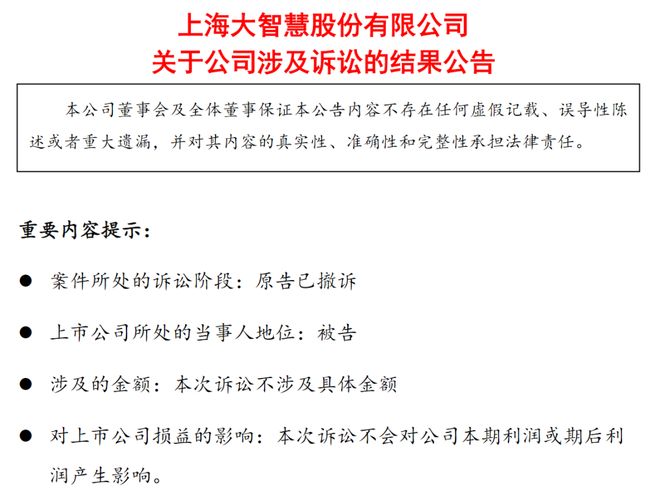
Core Viewpoint - The recent lawsuit against the stock trading software company Dazhihui (601519.SH) by individual Wang Gongwei has raised market concerns, but the lawsuit was withdrawn shortly after, alleviating investor fears regarding the merger with Xiangcai Shares (600095.SH) [1][4][11]. Group 1: Lawsuit Details - On November 11, Dazhihui announced that it was sued by Wang Gongwei, who sought to annul the resolutions passed at the second extraordinary general meeting of shareholders in 2025 regarding the merger with Xiangcai Shares [4][9]. - Wang Gongwei claimed that Dazhihui failed to conduct necessary audits or evaluations of the transaction, violating relevant regulations [9][10]. - Following the lawsuit announcement, Dazhihui's market value dropped by approximately 2 billion yuan, while Xiangcai Shares lost about 3.4 billion yuan in market capitalization [7]. Group 2: Withdrawal of Lawsuit - On November 14, Wang Gongwei submitted a request to withdraw the lawsuit, which was approved by the Shanghai Pudong New Area People's Court [1][11]. - The withdrawal of the lawsuit has relieved many investors, as it removes a significant obstacle to the merger process [4][11]. Group 3: Merger Progress - Dazhihui is currently advancing a major asset restructuring transaction where Xiangcai Shares will absorb Dazhihui through a share exchange [7][17]. - The share exchange prices are set at 7.51 yuan per share for Xiangcai Shares and 9.53 yuan per share for Dazhihui, with plans to raise up to 8 billion yuan in supporting financing [17]. - The restructuring has entered a critical review phase with the Shanghai Stock Exchange, following the acceptance of the application for asset acquisition and fundraising [17]. Group 4: Financial Performance - For the first three quarters of the year, Dazhihui reported revenue of 564 million yuan, an increase of 8.78% year-on-year, but still recorded a net loss of 30 million yuan [19]. - In contrast, Xiangcai Shares achieved revenue of 1.799 billion yuan, a year-on-year growth of 16.15%, with a net profit of 442 million yuan, reflecting a significant increase of 203.39% [19].
剧情反转:大智慧市值蒸发20亿元后,自然人股东撤诉
21世纪经济报道· 2025-11-16 07:58
Core Viewpoint - The recent lawsuit against Dazhihui (601519.SH) by individual Wang Gongwei has raised market concerns, but the case has been resolved with Wang withdrawing the lawsuit, alleviating investor fears regarding the merger with Xiangcai Shares (600095.SH) [1][4][11]. Group 1: Lawsuit Details - On November 11, Dazhihui announced that it was sued by Wang Gongwei, who sought to annul the resolutions passed at the second extraordinary general meeting of shareholders in 2025 regarding the merger with Xiangcai Shares [4][6]. - Wang claimed that Dazhihui failed to conduct necessary audits or evaluations of Xiangcai Shares, violating relevant regulations [9][10]. - Following the lawsuit announcement, Dazhihui's market value dropped by approximately 2 billion yuan, while Xiangcai Shares lost about 3.4 billion yuan in market capitalization [6]. Group 2: Legal Proceedings and Market Reaction - The lawsuit was perceived as a potential obstacle to the merger process, which has been ongoing for ten years and involves a fundraising target of 8 billion yuan [10][11]. - Wang's identity raised curiosity, with speculation that he might be a minority shareholder concerned about corporate governance [10][11]. - On November 14, just three days after the lawsuit was announced, Wang withdrew his complaint, leading to a positive market reaction [11][12]. Group 3: Merger Progress and Financials - Dazhihui is currently advancing a significant asset restructuring transaction, where Xiangcai Shares will absorb Dazhihui through a share exchange [6][15]. - The exchange ratio is set at 7.51 yuan per share for Xiangcai Shares and 9.53 yuan per share for Dazhihui, with the total share capital of Xiangcai Shares expected to increase to 5.141 billion shares post-merger [15]. - Dazhihui reported a revenue of 564 million yuan for the first three quarters of the year, marking an 8.78% year-on-year increase, but still recorded a net loss of 30 million yuan [19].

“湘财+大智慧”诉讼风波平息!自然人撤诉,曾要求撤销重组决议
2 1 Shi Ji Jing Ji Bao Dao· 2025-11-15 08:53
Core Viewpoint - The recent lawsuit against Dazhihui (601519.SH) by individual Wang Gongwei has raised market concerns, but the case has been resolved with Wang withdrawing the lawsuit, alleviating investor fears regarding the merger with Xiangcai Shares (600095.SH) [1][4][10]. Group 1: Lawsuit Details - On November 11, Dazhihui announced that it was sued by Wang Gongwei, who sought to annul the resolutions passed at the second extraordinary general meeting of shareholders in 2025 regarding the merger with Xiangcai Shares [4][5]. - Wang claimed that Dazhihui failed to conduct necessary audits or evaluations of Xiangcai Shares, violating relevant regulations [8][9]. - Following the lawsuit announcement, Dazhihui's market value dropped by approximately 2 billion yuan within three trading days [7]. Group 2: Legal Proceedings and Market Reaction - The lawsuit was perceived as a potential obstacle to the merger process, which has been ongoing for ten years and involves a fundraising target of 8 billion yuan [8][9]. - Wang's sudden legal action raised questions about his identity, with speculation that he might be a concerned minority shareholder focused on corporate governance [8][9]. - On November 14, just three days after the lawsuit was announced, Wang withdrew his complaint, and the court approved the withdrawal [10][11]. Group 3: Merger Progress and Financial Implications - Dazhihui is currently advancing a significant asset restructuring transaction through a share exchange with Xiangcai Shares, which was approved at the second extraordinary general meeting of shareholders on October 13, 2025 [5][14]. - The merger involves Xiangcai Shares issuing stock to Dazhihui's A-share shareholders, with a proposed exchange price of 9.53 yuan per share for Dazhihui [14]. - Following the merger, Xiangcai Shares will inherit all of Dazhihui's assets, liabilities, and business operations, with plans to raise up to 8 billion yuan for various financial projects [14][16]. Group 4: Financial Performance - For the first three quarters of the year, Dazhihui reported revenue of 564 million yuan, an increase of 8.78%, but still recorded a net loss of 30 million yuan [16]. - In contrast, Xiangcai Shares achieved revenue of 1.799 billion yuan, a year-on-year increase of 16.15%, with a net profit of 442 million yuan, reflecting a significant growth of 203.39% [16].
中国智能投顾产业:现状、问题与对策|财富与资管
清华金融评论· 2025-11-15 04:45
Core Viewpoint - The development of China's smart investment advisory industry is essential for better meeting residents' wealth management needs and facilitating long-term capital market investments, highlighting the necessity of addressing current obstacles to its growth [2][3]. Group 1: Necessity for Development - The application of AI large model technology in the financial services industry has accelerated, with smart investment advisory services becoming a key focus area [3]. - The demand for professional wealth management services among Chinese residents is rapidly increasing, with smart investment advisory serving as a crucial vehicle for this [5][6]. - China's economic context, including slowing growth, aging population, and urbanization challenges, is shifting wealth growth drivers from real estate to financial assets [6][7]. Group 2: Challenges and Obstacles - The current legal framework in China restricts full discretionary authority in investment advisory services, primarily to protect investors, which reflects concerns about the implementation of fiduciary duties [3][16]. - There is a lack of clarity regarding responsibility among key stakeholders in the smart investment advisory process, leading to potential gaps in investor protection [16][17]. - The confidentiality requirements and limitations in algorithm design pose significant challenges, as the subjective nature of algorithm optimization and lack of transparency can undermine investor trust [17]. Group 3: Market Growth and Trends - The global smart investment advisory market has seen rapid growth in assets under management (AUM), revenue, and client base, indicating a strong trend towards digital investment solutions [6]. - By 2024, the proportion of financial assets held by Chinese residents is projected to reach 47.6%, reflecting a growing inclination towards financial products [7]. - The diversification of financial products available to residents has increased, complicating the investment landscape and intensifying the demand for specialized wealth management services [8][10].