
火山引擎

Search documents
中科蓝讯:与火山引擎持续合作 落地AI耳机及玩具等端侧方案
Ju Chao Zi Xun· 2025-12-11 13:00
Core Viewpoint - The company is advancing its collaboration with Volcano Engine and Doubao large model through various chip platforms, enhancing AI applications in headphones and toys [1][4]. Group 1: Product Development and Launches - Starting from November 2024, the company's Xunlong third-generation chip BT895X platform will be integrated with the Volcano Ark MaaS platform, providing a comprehensive hardware and software solution for Doubao large model [1]. - The company has launched the AI ear-clip Bluetooth headset, OC3, equipped with the BT8951H chip, which supports AI intelligent Q&A features and enhances the AI experience on the device side [3]. - In June 2025, the company will showcase an AI toy solution based on the AB6003G Wi-Fi chip at the Volcano Engine FORCE conference, targeting IoT applications [3]. Group 2: Strategic Focus and Market Position - The company specializes in audio chips for Bluetooth headphones and speakers, focusing on wireless audio SoC and AIoT connectivity chips, covering various smart hardware categories [3]. - The company is increasing investments in high-performance, low-power audio platforms and edge AI applications, gradually forming a comprehensive product matrix [3]. - The company aims to continue expanding in the AI edge sector and collaborate with both domestic and international large model platforms to deliver superior user experience in AI products [4].


金融智能体元年真相 96%项目仍处探索期,谁在真正落地?
Jing Ji Guan Cha Wang· 2025-12-11 10:40
Core Insights - The report by iResearch indicates that 2025 will be a pivotal year for the development of financial intelligent agents, although the industry is still in its exploratory phase, with 96% of applications in proof of concept and pilot stages, and only 4% in agile practice [1][2] - The market for financial intelligent agent platforms and application solutions is projected to reach 950 million yuan in 2025, with an expected surge to 19.3 billion yuan by 2030, reflecting a compound annual growth rate of 82.6% from 2025 to 2030 [1][3] Market Distribution - The banking sector leads with 43% of project numbers, benefiting from diverse business scenarios and high-frequency interactions, while asset management institutions account for 27%, and the insurance industry represents 15% [2] - Internet finance companies and other institutions each hold 7% of the market share, with the former focusing on smart marketing and risk control, and the latter exploring niche applications in areas like financing leasing [2] Project Viability and Risks - Despite the increase in project numbers, there is a significant gap between pilot projects and effective implementation, with an estimated 20%-25% of projects likely to underperform or fail due to inadequate product capabilities, cost mismanagement, and environmental constraints [4] - The report identifies two project types: embedded intelligent agent functions (52.9%) and independent intelligent agent applications (47.1%), with successful vendors demonstrating a deep understanding of financial business logic and providing secure technology frameworks [7] Competitive Landscape - The market features a diverse competitive landscape with various types of vendors, including cloud providers and specialized technology firms, evaluated based on their competitive strength and market performance [4] - Leading firms such as Alibaba Cloud, Baidu Smart Cloud, and Tencent Cloud are positioned as comprehensive leaders, while others like iFlytek and Zhongguancun KJ focus on specific technical areas as core competitors [4][5] Future Outlook - The success of financial intelligent agents will depend on the ability to transition from being merely usable to becoming indispensable, requiring vendors to evolve from technology suppliers to business co-creation partners [8] - The next few years will witness a "survival of the fittest" scenario, where only those firms that truly understand finance and can consistently deliver value will remain in the market [8]
中关村科金总裁喻友平:企业智能体赋能新质生产力跃迁
Jin Rong Jie· 2025-12-11 02:11
Core Insights - The article discusses the launch of a comprehensive product matrix "3+2+2" by Zhongguancun KJ, which includes three core technology platforms, two general scenario platforms, and two industry-specific intelligent agent platforms, aimed at enhancing enterprise-level applications of AI [1][9][10] - Zhongguancun KJ emphasizes that intelligent agents are the new super connectors in the AI era, facilitating human-machine collaboration and breaking down knowledge barriers to create value [2][4][5] Group 1: Intelligent Agent Development - The essence of deploying intelligent agents lies in the iterative evolution of scenarios, data, and models, which requires high accuracy and adherence to rules in enterprise applications [5][6] - The enterprise-level intelligent agent roadmap includes a multi-layer architecture with a powerful model platform at its core, supported by AI capability and data platforms [6][13] Group 2: Product Matrix Overview - The "3+2+2" product matrix consists of the Dazhu Model Platform 5.0, which addresses challenges in scalable and economical AI innovation, reducing innovation costs by over 30% and improving development efficiency by more than 100% [10][11] - The AI capability platform provides high-precision traditional models and foundational AI capabilities, while the AI data platform focuses on knowledge insights and efficient operations [13] Group 3: Application Scenarios - The Dazhu Intelligent Customer Platform 5.0 enhances marketing and customer service through human-machine collaboration, significantly improving marketing efficiency and customer service bandwidth [16][18] - Specific applications include automated lead analysis, intelligent outbound calling, and customer service enhancements, achieving over 55% increase in lead generation and 40% improvement in conversion rates [18][19] Group 4: Industry-Specific Platforms - The Dazhu Financial Intelligent Agent Platform integrates capabilities across various financial services, helping institutions innovate products and services [29][31] - The Dazhu Industrial Intelligent Agent Platform focuses on optimizing processes in the industrial sector, achieving significant improvements in operational efficiency and energy management [33][34]

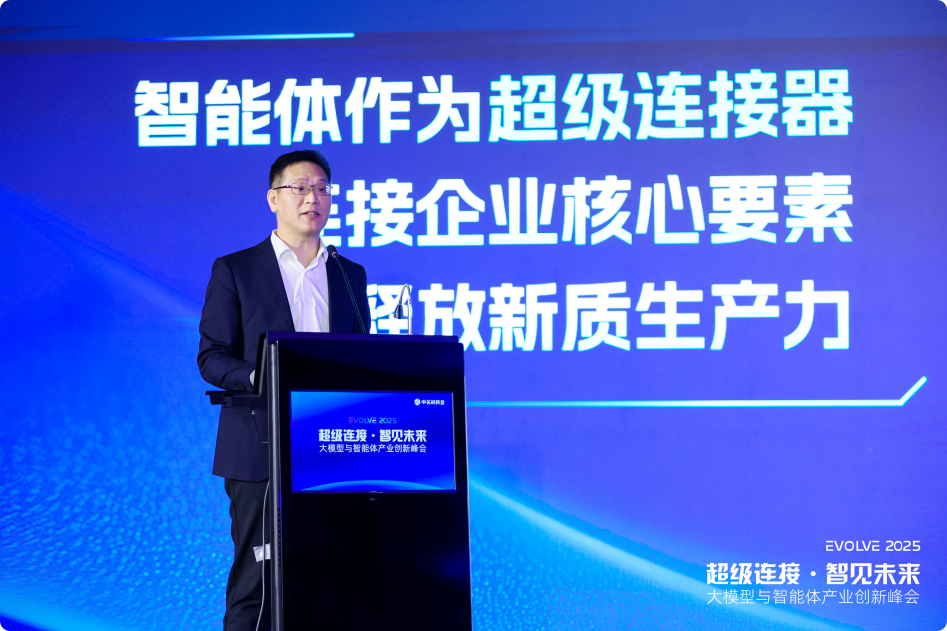
硅谷人工智能研究院院长皮埃罗·斯加鲁菲:2025年AI智能体将重塑数字劳动力
Jin Rong Jie· 2025-12-10 08:41
Core Insights - The "EVOLVE 2025" summit showcased the roadmap for enterprise-level AI agents and introduced a "3+2+2" product matrix to facilitate rapid development of AI agents for businesses [1] - The summit emphasized the collaboration among major cloud service providers to create a sustainable AI ecosystem through the "Super Connection" global partner program [1] Group 1: AI Development Trends - Piero Scaruffi highlighted a clear trend of technological integration in generative AI by 2025, with innovations like diffusion Transformers and multi-modal capabilities becoming standard [3] - The emergence of new technologies such as thinking chains and expert mixtures is reshaping the landscape of AI applications [3] Group 2: Evolution of AI Agents - The distinction between traditional AI products and advanced AI agents was made, with the latter being likened to autonomous driving, capable of executing complex workflows independently [4] - The operational mechanism of these AI agents is summarized as a cycle of perception, decision-making, action, and learning, allowing them to adapt to various environmental changes [4] Group 3: Multi-Agent Systems - The transition from applications to multi-agent systems introduces challenges in orchestration, necessitating a new technology stack that includes hardware, cloud services, and orchestration layers [5] - The concept of "context engineering" is emphasized, requiring AI agents to understand organizational structures and goals beyond executing single tasks [5] Group 4: Industry Applications - Various sectors are witnessing innovative applications of AI, particularly in customer support, where intelligent systems can understand context and emotions, enhancing user experience [6] - Companies like Johnson Controls have developed integrated AI systems that significantly improve efficiency in maintenance and troubleshooting [6] Group 5: Trust in AI - The "Waymo effect" illustrates the growing trust in AI as autonomous vehicles become more prevalent, laying a foundation for broader AI agent applications [7] - Scaruffi envisions a future where multiple AI agents collaborate dynamically, akin to human social interactions, to achieve common goals [7]
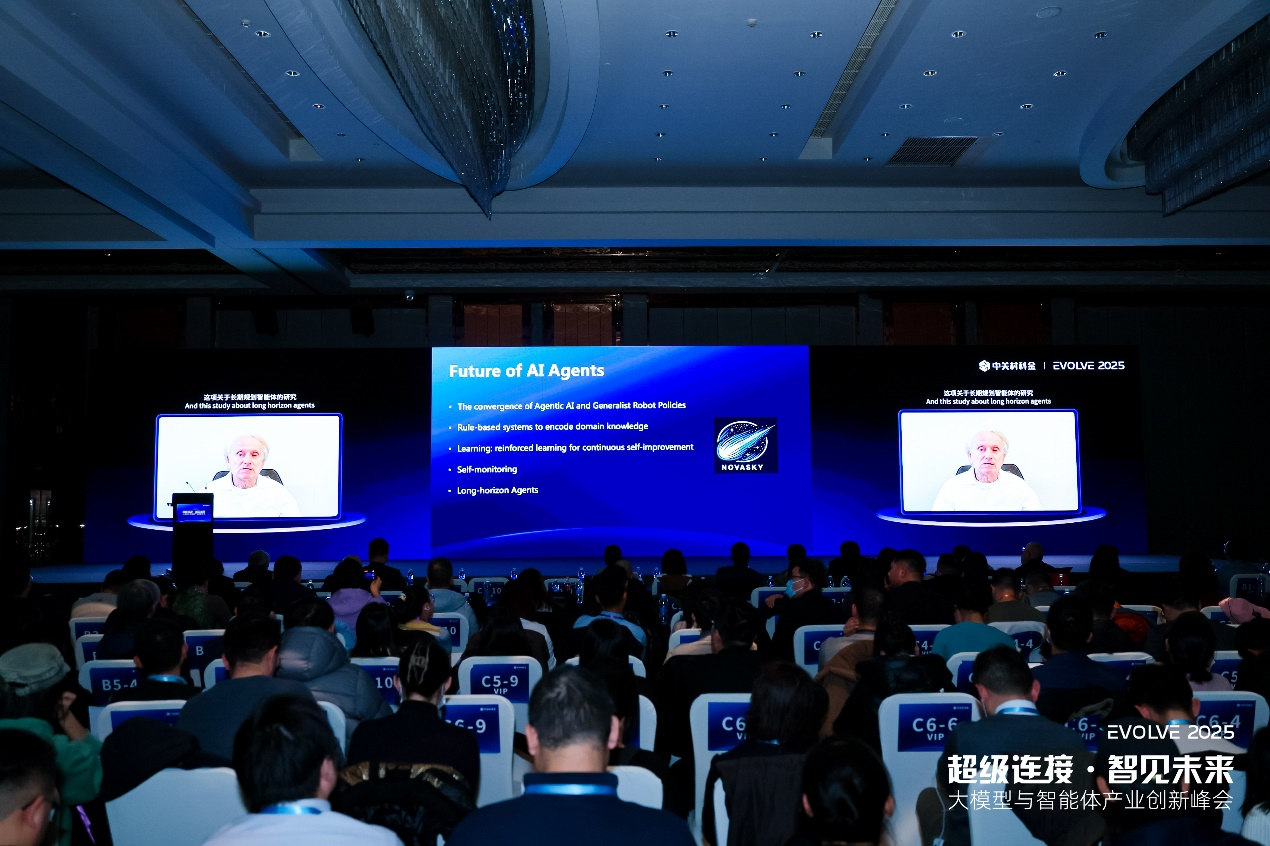
谭建荣院士:智能体是AI最终载体,知识工程乃落地核心路径
Jin Rong Jie· 2025-12-10 08:41
Core Insights - The rapid development of artificial intelligence technology is driving the integration of large models and intelligent agents, becoming a core driver of industrial innovation [1] - The "Super Link · Smart Future" EVOLVE 2025 summit highlighted the collaboration between leading companies in the industry, including Huawei Cloud, Alibaba Cloud, and Baidu Smart Cloud, to launch the "Super Connection" global ecosystem partnership plan [1] Group 1: Key Technologies and Trends - Intelligent agents serve as the carriers of artificial intelligence, which is fundamentally composed of data, algorithms, and computing power [3] - The emergence of generative AI, exemplified by OpenAI's ChatGPT and China's DeepSeek, marks a significant advancement in the field, with generative AI surpassing ordinary human writing capabilities [3] - The relationship between data and models is crucial, where data is seen as unintegrated "loose sand," and the extraction of relationships and patterns forms knowledge, while models represent quantitative knowledge [3] Group 2: Development Roadmap and Applications - The "3+2+2" intelligent agent product matrix was unveiled, which includes various platforms aimed at empowering enterprises to develop and utilize intelligent agents effectively [5] - The Dazhu Large Model Platform 5.0 integrates over 300 enterprise-level intelligent agents across six industries, achieving a 95% success rate in deployment [5] - The products have already served over 2,000 leading clients across more than 180 countries, significantly reducing innovation trial costs in finance by 60% and improving conversion rates in automotive marketing by 55% [5]

中关村科金发布企业级智能体全场景产品矩阵
Sou Hu Cai Jing· 2025-12-09 21:41
Core Insights - Zhongguancun KJ unveiled its enterprise-level intelligent agent roadmap at the 2025 Large Model and Intelligent Agent Industry Innovation Summit, introducing a "3+2+2" product matrix to facilitate rapid development and usage of intelligent agents [1][3] Group 1: Product Offerings - The "3+2+2" product matrix includes three foundational platforms: Large Model Platform, AI Capability Platform, and AI Data Platform, along with two general application platforms: Intelligent Customer Platform and Intelligent Work Application Platform, plus two industry-specific platforms for finance and industry [1][3] - The newly launched ZhiZhu Large Model Platform 5.0 serves as a comprehensive base for efficiently building enterprise-level intelligent agents, enabling faster and better AI innovation implementation [3] Group 2: Industry Applications - The upgraded intelligent agent marketplace integrates over 300 intelligent agents across six industries: finance, industry, automotive, retail, transportation, and government, allowing enterprises to quickly validate scenarios and focus on innovation rather than infrastructure [3] - The digital employee for clue analysis enhances enterprises' ability to gain insights into customer needs, achieving over a 55% increase in store visit leads in automotive client practices [3] - Intelligent writing capabilities can produce professional reports exceeding 100,000 words, leveraging internal knowledge and online information for precise sourcing and cross-validation [3] - Intelligent auditing serves as a tool for comprehensive compliance risk assessment in key scenarios, utilizing a combination of large and small models with rule engines for risk level evaluation and automated visual report generation [3] Group 3: Strategic Partnerships - Zhongguancun KJ, in collaboration with major cloud service providers including Huawei Cloud, Alibaba Cloud, Baidu Intelligent Cloud, Volcano Engine, Amazon Web Services, Super Fusion, and Softcom Power, launched the "Super Connection" global ecosystem partner program to create an open, connected, and sustainable "AI+" industry ecosystem [3]
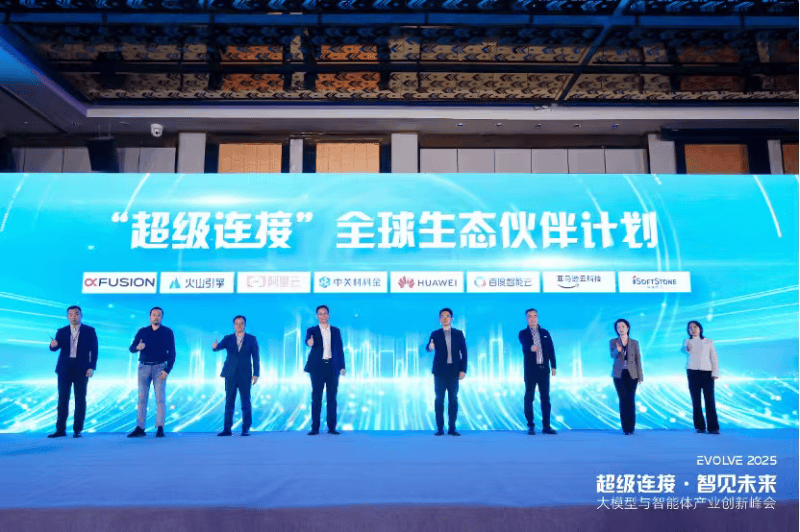
加速企业级智能体规模化落地 多家企业共建“超级连接”产业生态
Zheng Quan Shi Bao Wang· 2025-12-09 12:46
Core Insights - The "EVOLVE2025" summit highlighted the launch of a comprehensive enterprise-level intelligent agent roadmap by Zhongguancun KJ, featuring a "3+2+2" product matrix that includes three foundational platforms and two application platforms, aimed at accelerating the large-scale implementation of intelligent agents in various industries [1][2] Group 1: Intelligent Agent Development - The development of large models is rooted in the accumulation of smaller models and data modeling, emphasizing the need for data to be transformed into knowledge through the discovery of hidden patterns [1][2] - Intelligent agents integrate core capabilities such as perception, understanding, decision-making, and control, serving as key vehicles for technology implementation [1][2] - The evolution of intelligent agents is supported by foundational algorithms like deep learning and reinforcement learning, with a focus on enhancing efficiency through collaborative deployment across cloud, edge, and endpoint [1][2] Group 2: Industry Trends and Challenges - The need for precision and lightweight models in large model deployment is critical, with techniques like model distillation helping to reduce computational requirements [2] - There are technical risks such as "hallucinations" in natural language understanding, particularly in accurately grasping Chinese semantics, which remain a long-term challenge [2] - The future direction involves transitioning large models and intelligent agents from general-purpose to specialized applications tailored to specific industries and product scenarios [2] Group 3: AI Agent as a Central Hub - AI intelligent agents are seen as the central brain for enterprises, addressing issues like data silos and process fragmentation by connecting key elements such as people, resources, and systems [3] - Each connection made by intelligent agents generates new interaction data, which in turn iterates the model itself, leading to increased intelligence and value creation for enterprises [3] - The evolution from the internet to mobile internet and now to artificial intelligence represents an evolution of connectivity, with intelligent agents acting as super connectors within and outside organizations [2][3]
银行数字化抢蛋糕比赛,胜负已分?
Tai Mei Ti A P P· 2025-12-09 12:21
Core Insights - The digital transformation of China's banking industry is entering a "deep water zone" by 2025, characterized by market expansion, technological upgrades, and intensified competition [1] - The IT investment in the banking sector is projected to reach 169.315 billion yuan in 2024, with a growth rate of 3.6%, and is expected to exceed 266.2 billion yuan by 2028 [1] - The digital bidding landscape shows that successful digitalization in banking relies not only on investment scale but also on precise alignment with the bank's positioning and strategic partnerships [1] Investment Trends - In 2024, the six major state-owned commercial banks are expected to invest a total of 125.459 billion yuan in fintech, accounting for 52% of the total banking sector investment [2] - By 2025, the banking sector's fintech investment is anticipated to reach 333.85 billion yuan, representing a 38% increase from 2024 [2] Bank Types and Investment Focus - State-owned banks are leading in digital investment, with major banks like ICBC planning to invest 285.18 billion yuan in fintech in 2024, while smaller banks are focusing on localized services and specific pain points [3][5] - The investment focus for state-owned banks includes large model development, data platforms, and intelligent risk control systems [3] - Regional banks are prioritizing local economic services and optimizing processes for small and medium enterprises, with some banks investing over 6% of their revenue in technology [5] Digital Bidding Characteristics - The digital bidding projects are categorized into four main tracks: risk management, compliance control, data services, and technology platforms, each with varying technical requirements and budget allocations [7][8] - Risk management projects are rated the highest in complexity, requiring a deep understanding of financial logic and AI technology [7] - Compliance control projects are driven by regulatory requirements and have a high degree of standardization, making them easier to replicate [7] Competitive Landscape - A dual-competitive landscape is emerging between bank technology subsidiaries, which excel in understanding financial regulations, and internet technology companies, which leverage general technology capabilities [10][11] - The collaboration between bank technology subsidiaries and internet technology companies is becoming a mainstream approach, combining business understanding with technological innovation [17] Future Outlook - The investment landscape is expected to become more differentiated, with large banks focusing on systematic construction while smaller banks target essential local needs [18] - The emphasis will shift towards practical technologies that address compliance issues and enhance operational efficiency, with a growing trend of collaboration between different types of technology providers [18]



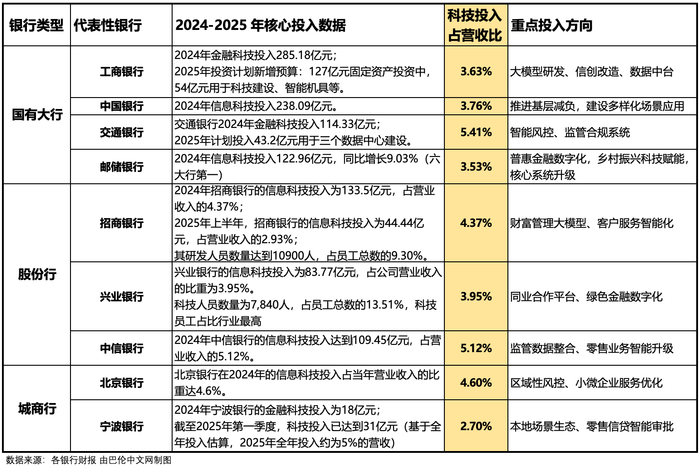
七巨头集结构建“超级连接”生态 企业级智能体落地再提速
Xin Jing Bao· 2025-12-09 09:57
Core Insights - The "EVOLVE 2025" summit was held in Beijing, focusing on creating an open, connected, and sustainable "AI+" industrial ecosystem through the "Super Connection" global partnership plan [1] - Zhongguancun Science and Technology Investment announced a roadmap for enterprise-level intelligent agents, introducing a "3+2+2" product matrix that includes various platforms aimed at core business scenarios [1] Group 1 - The summit featured collaboration among leading companies such as Huawei Cloud, Alibaba Cloud, Baidu Intelligent Cloud, and others to enhance the AI industry ecosystem [1] - The "3+2+2" product matrix includes the Dazhu model platform 5.0, Dazhu intelligent customer platform 5.0, Dazhu intelligent work application platform, Dazhu financial intelligent agent platform, and Dazhu industrial intelligent agent platform [1] - The products and solutions are designed to cover essential business scenarios including office work and research production [1]
人工智能算力基础设施赋能研究报告
中国信通院· 2025-12-09 08:01
Report Industry Investment Rating No relevant content provided. Core Views of the Report - The report focuses on the empowerment of intelligent computing centers, elaborating on the latest development trends around demand scenarios, key capabilities, and implementation ecosystems to further release the empowerment effect of intelligent computing centers and promote the deep integration of AI and the real economy [5]. - Facing the "14th Five-Year Plan", the artificial intelligence computing infrastructure has three important development trends: clear demand scenarios for optimal resource allocation, focused key capabilities for improved service levels, and aggregated implementation ecosystems for accelerated value release [24]. - In the future, the demand scenarios of artificial intelligence computing infrastructure will become more diverse and complex, key capabilities will be more intensive and soft, and the implementation ecosystem will be more aggregated and collaborative [75]. Summary by Directory 1. Evolution Trend of Artificial Intelligence Computing Infrastructure - **Technological Innovation: Upgrading of Tri - in - One Intelligent Computing Facilities**: China's artificial intelligence computing infrastructure is evolving towards large - scale clustering, green and low - carbon development, and high - speed interconnection. For example, Huawei's Ascend 384 super - node and ZTE's Nebula intelligent computing super - node achieve high - speed interconnection of computing cards; the liquid - cooling technology in the China Mobile data center reduces energy consumption [12][13][14]. - **Layout Optimization: Coordinated Development of National Intelligent Computing Facilities**: Policy guidance promotes the high - quality development of intelligent computing centers. The scale of intelligent computing centers continues to grow, and regional intelligent computing is deployed in a more coordinated and intensive manner. For instance, as of June 2025, the total rack scale of computing centers in use in China reaches 1.085 million standard racks, and the intelligent computing scale is 788 EFlops [16][17]. - **Industrial Upgrade: Collaborative Development of the Entire Intelligent Computing Industry Chain**: The intelligent computing industry is growing rapidly, with upstream hardware achieving domestic breakthroughs, mid - stream facilities being built on a large scale, and downstream applications accelerating penetration into various industries. Three major operators and AI giants are actively deploying intelligent computing [18][19][20]. 2. Important Trends in the Empowerment of Artificial Intelligence Computing Infrastructure - **Clearer Demand Scenarios for Optimal Allocation of Intelligent Computing Resources**: The positioning of demand scenarios is becoming clearer, promoting the precise empowerment of intelligent computing centers. The construction of artificial intelligence computing infrastructure is shifting from "building well" to "using well", and the rights and responsibilities of all parties are becoming more explicit [25]. - **Focused Key Capabilities for Improved Intelligent Computing Service Levels**: The supply of key capabilities is being strengthened. In terms of basic support, innovation services, and operation guarantee, the service capabilities of intelligent computing centers are continuously improving, promoting the value - closed - loop and long - term development of intelligent computing centers [26][27]. - **Aggregated Implementation Ecosystems for Accelerated Release of Intelligent Computing Value**: The ecological system is being integrated, and the collaborative mechanism is being improved. The construction of artificial intelligence computing infrastructure is evolving towards an integrated solution of "computing power + algorithm + data + scenario + service", and a sustainable and high - value partner network is being initially established [28]. 3. Demand Scenarios of Artificial Intelligence Computing Infrastructure - **Large - Model Pre - training Scenario**: Training large - scale pre - trained models (with over a thousand billion parameters) requires high - end ten - thousand - card cluster centers with E - level computing capabilities. Domestic operators and AI manufacturers are actively building such clusters [30][31][33]. - **Large - Model Fine - tuning Scenario**: Small - scale intelligent computing centers (with a computing capacity of 100 PFlops) can effectively support the fine - tuning of industry models. Most domestic intelligent computing centers are focusing on this scenario [34][36]. - **Large - Model Inference Scenario**: Cloud - side inference dominates the current inference demand scenarios. Different inference application scenarios have different requirements for inference models and intelligent computing centers, and specialized intelligent computing centers for inference are emerging [37][39][40]. 4. Key Capabilities of Artificial Intelligence Computing Infrastructure - **Basic Support Capabilities**: Training scenarios focus on cluster computing power effectiveness, stability, single - cluster computing power scale, and compatibility with mainstream computing frameworks. Inference scenarios focus on throughput, latency, and the heterogeneity of intelligent computing cards [44][45][46]. - **Innovative Service Capabilities**: Training scenarios emphasize high - efficiency cloud services, efficient model migration, and diverse data governance. Inference scenarios focus on the pooling and scheduling capabilities of intelligent computing resources and efficient model migration and deployment [50][51][52]. - **Operation Guarantee Capabilities**: Both training and inference scenarios focus on the flexibility of computing power scheduling, the cost - effectiveness of computing power leasing, and security and compliance. Training scenarios also pay attention to the richness of cooperative partners [55][56][57]. 5. Implementation Ecosystem of Artificial Intelligence Computing Infrastructure - **Collaboration between Intelligent Computing and Data Elements**: Collaborating closely with high - value data is the core for intelligent computing centers to improve basic support capabilities. For example, the Wenzhou Artificial Intelligence Computing Center and the Guian New Area are promoting the transformation of high - quality data resources into intelligent computing ecological capabilities [60][61]. - **Collaboration between Intelligent Computing and Algorithm Models**: Collaborating with high - level algorithm models is the key for intelligent computing centers to improve innovative service capabilities. For example, the Chongqing Artificial Intelligence Innovation Center and the Wuling Mountain (Lichuan) Artificial Intelligence Computing Center are promoting the development and application of industry - specific models [63][64][65]. - **Collaboration between Intelligent Computing and Cross - domain Intelligent Computing**: Promoting cross - domain intelligent computing interconnection and collaboration is an important exploration for the improvement of intelligent computing center operation capabilities. Operators' intelligent computing centers have achieved practical breakthroughs in long - distance interconnection [66][67]. - **Collaboration between Intelligent Computing and Industry Scenarios**: Collaborating closely with industry scenarios is the core driving force for the continuous evolution and upgrading of the intelligent computing center ecosystem. The Chang'an Automobile Intelligent Computing Center and the Yunnan Communications Investment Intelligent Computing Center are typical examples of in - depth collaboration [68][70]. - **Collaboration between Intelligent Computing and Regional Industries**: Collaborating with regional industries is an important guarantee for intelligent computing centers to achieve multi - dimensional and full - scenario empowerment. Intelligent computing centers in Ningbo, Wuhan, and Dalian are promoting regional industrial development [71][73]. 6. Development Outlook - **More Diverse and Complex Demand Scenarios**: The demand scenarios of artificial intelligence computing infrastructure will become more diverse, complex, and deeply integrated. There will be higher requirements for computing power, storage, industry integration, and cloud - edge - end collaboration. Different stakeholders should play different roles [76][77]. - **More Intensive and Soft Key Capabilities**: The artificial intelligence computing infrastructure is shifting from extensive hardware stacking to refined service improvement, including large - scale clustering, resource pooling, open - source development, and service - orientation. Industry organizations and operators should take corresponding measures [78][79][80]. - **More Aggregated and Collaborative Implementation Ecosystems**: The implementation of artificial intelligence computing infrastructure empowerment depends on a more aggregated and collaborative ecosystem, including multi - party participation, joint innovation, and industrial cultivation. Government departments and operators should play their roles [81][82][83].