
英伟达

Search documents
X @Cassandra Unchained
Cassandra Unchained· 2026-03-05 01:41
Kudos to $NVDA and CFO Colette Kress for changing company policy on the presentation of its earnings and earnings per share. Going forward NVDA will no longer exclude its Stock-Based Compensation GAAP expense from the adjusted earnings it presents to investors and Wall StreetThis will now make earnings look more like GAAP earnings. Not exactly, but much better.None of this changes the thesis I laid out in my Foundations article The Tragic Algebra of Stock-Based Compensation or subsequent Recurrence and Shor ...

Fifth Third Bancorp (FITB) Gets Target Boost from Morgan Stanley amid Banking Tailwinds
Insider Monkey· 2026-03-05 01:33
Core Insights - Generative AI is viewed as a transformative technology by Amazon's CEO Andy Jassy, indicating its potential to significantly enhance customer experiences across the company [1] - Elon Musk predicts that humanoid robots could create a market worth $250 trillion by 2040, representing a substantial shift in the global economy driven by AI innovations [2] - Major firms like PwC and McKinsey acknowledge that AI could unlock multi-trillion-dollar opportunities, reinforcing the optimistic outlook on AI's economic impact [3] Company and Industry Analysis - A breakthrough in AI technology is believed to be redefining work, learning, and creativity, leading to increased interest from hedge funds and top investors [4] - There is speculation about an under-owned company that may play a crucial role in the AI revolution, suggesting that its technology could pose a threat to competitors [4] - Prominent figures in technology and investment, including Bill Gates and Warren Buffett, recognize AI as a significant advancement with the potential for broad societal benefits [8] Market Dynamics - The potential market for AI and related technologies is vast, with predictions indicating that the ecosystem of AI innovators will reshape how businesses and consumers operate globally [2] - The enthusiasm surrounding AI is reflected in the investments and partnerships being formed by major companies, such as Oracle's collaboration with Nvidia to integrate generative AI into its offerings [8]





American Homes 4 Rent (AMH) Draws Cautious Analyst Views amid Softening Rental Trends
Insider Monkey· 2026-03-05 01:22
Core Insights - Generative AI is viewed as a transformative technology by Amazon's CEO Andy Jassy, indicating its potential to significantly enhance customer experiences across the company [1] - Elon Musk predicts that by 2040, humanoid robots could create a market worth $250 trillion, representing a major shift in the global economy driven by AI innovation [2][3] - Major firms like PwC and McKinsey acknowledge the potential of AI to unlock multi-trillion-dollar opportunities, reinforcing the optimistic outlook on AI's economic impact [3] Company and Industry Analysis - A breakthrough in AI technology is believed to be redefining work, learning, and creativity, leading to increased interest from hedge funds and top investors [4] - There is speculation about an under-owned company that may play a crucial role in the AI revolution, suggesting that it could be a significant investment opportunity [4][6] - Prominent figures in technology and investment, including Bill Gates and Warren Buffett, recognize AI as a major technological advancement with the potential for substantial social benefits [8]


英特尔晶圆厂,终于快挣钱了
半导体行业观察· 2026-03-05 01:13
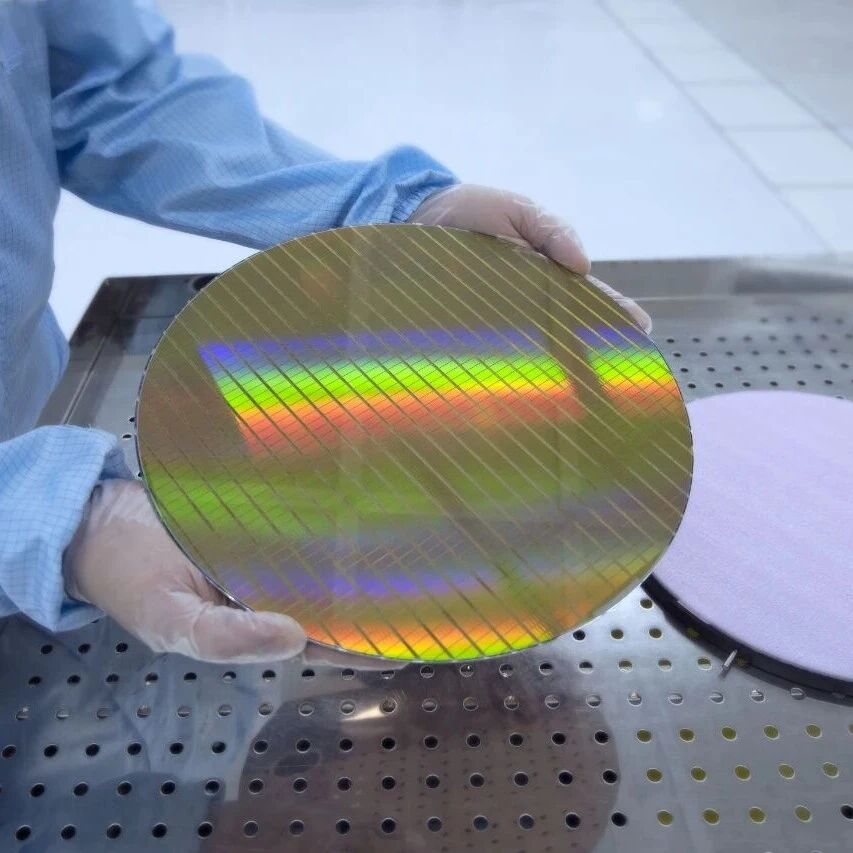
Core Viewpoint - Intel is gaining confidence in achieving breakeven for its foundry business, driven by strong customer demand amid the AI boom and successful production of the Panther Lake processor [2][5]. Group 1: Foundry Business Developments - Intel's CFO, David Zinsner, expressed optimism about the foundry business, indicating that the company is on track to achieve breakeven by 2027 if customer interest translates into actual orders [5]. - The 18A chip series, including derivatives like 18A-P, is expected to attract customer orders, with notable interest from Apple and Nvidia [2][3]. - Demand for Panther Lake chips currently exceeds supply, which is anticipated to enhance profit margins as production ramps up [2]. Group 2: 14A Chip Development - Despite initial skepticism regarding the 14A chip's adoption, Zinsner confirmed that production is still on schedule, with mass production expected by 2029 [3][4]. - The company remains cautious with capital expenditures for the 14A chip, balancing customer and internal market demands [3]. Group 3: Advanced Packaging Technology - Intel's advanced packaging technology is projected to generate "billions of dollars" in revenue, with potential customer adoption starting in the second half of this year [4]. - The EMIB and EMIB-T solutions are attracting interest from several fabless manufacturers, including discussions with Apple, Nvidia, and Qualcomm [4]. Group 4: Financial Outlook - Intel anticipates that improvements in yield and increased demand for mature process nodes will help the foundry business return to profitability soon [5].

三星DRAM再涨价100%
半导体行业观察· 2026-03-05 01:13
Core Viewpoint - Samsung Electronics has confirmed that DRAM prices will increase by over 100% in the first quarter, driven by surging demand for memory due to the proliferation of artificial intelligence (AI) [2][3] Group 1: Price Increases and Market Dynamics - The initial price increase for DRAM was negotiated in January at approximately 70%, but was later revised to over 100% due to rapid demand fluctuations [2] - The average quarterly price increase for general DRAM used in servers, PCs, and mobile devices is around 100% compared to Q4 of the previous year, with some clients experiencing even higher increases [2] - Major tech companies are proactively sourcing memory from Samsung and other manufacturers, indicating strong demand despite rising prices [2][3] Group 2: Supply and Demand Imbalance - The global expansion of AI infrastructure investment is causing a significant increase in demand for high-bandwidth memory (HBM), which is limiting the supply of DRAM for servers, PCs, and mobile devices [3][4] - Industry experts predict that the supply-demand imbalance will not improve until the second half of 2028, with ongoing price increases expected throughout this year [4][5] - The demand for DRAM in AI applications is rapidly growing, with projections indicating that its usage in AI servers will rise from 4% two years ago to potentially over 10% in the near future [4][5] Group 3: Future Market Outlook - Analysts expect that the shortage of memory chips will persist until 2028, with price momentum for DRAM and NAND chips strengthening [6][7] - Micron Technology is optimistic about its earnings prospects, with predictions of significant growth in earnings per share driven by AI demand [6][7] - Memory manufacturers are cautious about expanding production capacity due to concerns over future demand and operational challenges, which may further exacerbate supply constraints [8]

博通披露多颗重磅芯片:大厂自研持续
半导体行业观察· 2026-03-05 01:13
公众号记得加星标⭐️,第一时间看推送不会错过。 博通公司首席执行官陈福阳表示,公司预计其人工智能芯片销售额明年将突破1000亿美元,这将标志 着博通在英伟达主导的市场中取得重大进展。 他在与分析师的电话会议上表示:"我们有望在2027年实现这一里程碑。我们也已确保了实现这一目 标所需的供应链。" 博通公司公布的半导体解决方案营收为125.2亿美元,高于StreetAccount调查的分析师预期的122.5 亿美元。本季度,博通发布了新的Wi-Fi 8芯片。 博通公司表示,其基础设施软件业务的收入为 68 亿美元,低于 StreetAccount 此前预测的 70.2 亿 美元。 近几周来,投资者越来越担心生成式人工智能模型可能会对成熟的软件公司构成竞争威胁。iShares 扩展科技软件行业交易所交易基金今年迄今已下跌约 19%。 博通预计本季度人工智能芯片收入为107亿美元,因此,达到1000亿美元的年收入将是一次巨大的飞 跃。受陈福强讲话的影响,博通股价在尾盘交易中上涨约4%。 首席执行官一直试图将博通的命运与人工智能紧密联系起来。尽管英伟达仍然是加速器(用于训练和 运行人工智能模型的芯片)的最大制造商,但 ...

算力的新因果:AI Agent时代,被重估的CPU价值与新机遇
半导体行业观察· 2026-03-05 01:13
Core Insights - The article discusses a paradigm shift in artificial intelligence from large language models (LLMs) to autonomous agents (Agents), emphasizing the redefined role of CPUs as the backbone of data centers rather than GPUs [1] - This transition is driven by the evolving workload characteristics of AI, leading to a reevaluation of CPU's strategic value in the AI landscape [1] Group 1: Understanding CPU's Role - CPUs have always been crucial in traditional cloud computing and data center architectures, serving as the foundation for virtualization, container orchestration, and database operations [3] - The rise of LLMs led to a perception that GPUs were the primary drivers of AI success, sidelining CPUs to a supporting role focused on data preprocessing and task scheduling [3][4] - The misconception that "AI = large models = GPU" overlooks the necessity of CPUs for general intelligence, especially as AI moves towards executing complex tasks in open environments [4] Group 2: Expansion of CPU's Work Boundaries - The emergence of AI Agents has significantly broadened the operational scope of CPUs, making them critical for determining AI response speed and cost [6] - AI Agents utilize sandbox virtual machines for task execution, with CPUs managing all processes, leading to exponential growth in CPU core demand as millions of Agents operate concurrently [7] - The industry is adopting micro virtual machine technology to optimize resource usage, which places unprecedented demands on CPU scheduling capabilities and device access bandwidth [7] Group 3: Performance Bottlenecks - Research indicates that CPUs are becoming the new bottleneck for AI response times, with studies showing that CPU processing accounts for over 90% of total latency in certain Agent frameworks [10][12] - Under high-concurrency loads, CPU energy consumption has surged, with studies revealing that CPU energy usage can reach 44% in specific tasks, necessitating a reevaluation of power and cooling strategies in data centers [14][15] - The need for high-capacity memory for AI models has increased the pressure on CPU bandwidth, as inactive cache data is offloaded to CPU memory, creating new bottlenecks [15] Group 4: Future Trends and Opportunities - The demand for CPUs is expected to grow long-term due to the proliferation of cloud computing and the increasing need for CPU resources to support AI Agents [16] - Major semiconductor companies are recognizing this trend, with NVIDIA investing in cloud service providers to enhance CPU capabilities for AI workloads [16][17] - The evolving landscape presents opportunities for various CPU architectures, including x86, Arm, and RISC-V, each with distinct advantages and challenges in meeting the demands of AI Agents [17][23] Group 5: Architectural Insights - The x86 architecture remains dominant in enterprise markets due to its extensive software ecosystem and stability, particularly in sectors sensitive to system reliability [17] - Arm architecture is gaining traction for its energy efficiency and suitability for cloud-native applications, with significant adoption by leading cloud service providers [18][19] - RISC-V, while promising due to its open-source nature, faces challenges in achieving widespread adoption in enterprise-level server applications, requiring significant ecosystem development [23][24]
韩国芯片也离不开台积电
半导体行业观察· 2026-03-05 01:13
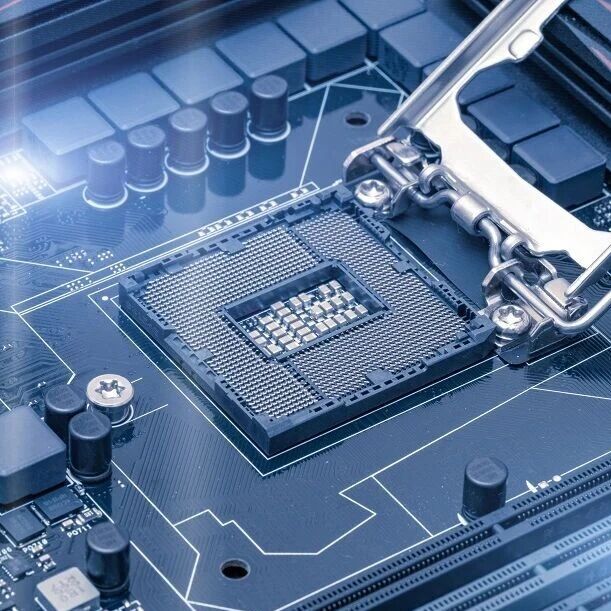
Core Insights - The AI boom has shifted South Korea's semiconductor export focus towards Taiwan, with Taiwan becoming the fastest-growing market for South Korean memory exports, nearly doubling its growth rate [2][3] - In 2022, South Korea's total global memory semiconductor exports reached $94.61 billion, with exports to mainland China dropping to $30.99 billion, accounting for only 32.7% of total exports, down from nearly 70% in previous years [2] - Exports to Taiwan surged to $27.08 billion, a remarkable increase of 87.2% from the previous year, raising Taiwan's share of South Korean memory exports from 6% in 2020 to 28.6% in 2022 [2] Market Dynamics - The core driver of this structural shift is the explosive demand for High Bandwidth Memory (HBM), particularly as SK Hynix increases its supply of HBM chips to NVIDIA, which boosts overall export growth [3] - The unique "Taiwan-Korea AI collaboration model" requires South Korean HBM chips to be sent to Taiwan for advanced packaging and processing by TSMC before reaching end customers, leading to a significant increase in exports to Taiwan from $3 billion in 2023 to $27 billion in 2022 [3] - The trend of shifting export focus from China to Taiwan, the United States, and Vietnam indicates a diversification of markets, which is expected to enhance the long-term resilience and stability of South Korea's semiconductor industry [3]

X @TechCrunch
TechCrunch· 2026-03-05 01:13
Jensen Huang says Nvidia is pulling back from OpenAI and Anthropic, but his explanation raises more questions than it answers https://t.co/Nt0dJnCM7p ...
Lattice Semiconductor (NasdaqGS:LSCC) 2026 Conference Transcript
2026-03-05 01:07
Summary of Lattice Semiconductor Conference Call Company Overview - **Company**: Lattice Semiconductor (NasdaqGS: LSCC) - **Date of Conference**: March 04, 2026 - **Key Speakers**: Ford Tamer, Lorenzo Flores Key Points Industry and Market Position - Lattice Semiconductor operates in the semiconductor industry, focusing on FPGA (Field-Programmable Gate Array) technology, particularly in data center AI and physical AI applications [4][5] - The company aims to be a "companionship" to major chips like GPUs and AI accelerators, emphasizing collaboration rather than competition [6][7] Financial Performance - Revenue decreased from $730 million to $500 million in 2024, but the company has since recovered, with a target of 25% growth in 2026 compared to 2025 [4][5] - Inventory levels were successfully reduced from 6 months to 3 months by mid-2025, indicating improved operational efficiency [5] - Current consensus estimates for 2026 growth exceed the initial 25% target, reflecting strong market demand [5] Product and Technology Development - Lattice has transitioned from selling FPGAs to providing comprehensive solutions, including security, power management, and post-quantum cryptography (PQC) [10][36] - The company has established partnerships with major players like NVIDIA and NXP to enhance its product offerings and market reach [11][12] - The attach rate of FPGAs per server is expected to exceed 3, with average selling prices (ASPs) above $4, driven by increased demand for AI applications [17] Future Growth Opportunities - The company anticipates significant growth in physical AI applications, with projections suggesting that humanoid robots could become a larger market than data centers [20][21] - Lattice expects new product revenue to reach mid-20% of total revenue, with a growth rate of 60% year-on-year for new products [54][55] Supply Chain and Pricing Strategy - Lead times for products are extending due to high demand, but the company is managing this by working closely with customers to align orders with actual demand [38][42] - Lattice maintains a long-term pricing strategy, avoiding short-term price increases to ensure stable gross margins [43][50] Competitive Landscape - The company believes its focus on low to mid-range FPGAs positions it well against competitors who have been acquired by larger compute companies [27][28] - Lattice's diverse applications across various sectors reduce the risk of being replaced by ASICs (Application-Specific Integrated Circuits) [79][80] M&A Strategy - Lattice has engaged in small tuck-in acquisitions primarily for IP and software tools but emphasizes strong organic growth as its primary strategy [89][92] - The company is open to M&A opportunities that align with its vision but maintains a disciplined approach [91] Segment Breakdown - The industrial segment accounted for approximately $195 million of the $523 million total revenue last year, with expectations for growth in this area moving forward [103][104] - The company aims to develop a balanced revenue model with strong legs in comms and compute, industrial, and potential future solutions [105] Additional Insights - The company is focused on enhancing productivity through investments in infrastructure and engineering capabilities, which have led to a reduction in operational costs [92][100] - Lattice is committed to addressing the evolving needs of the market, particularly in security and AI applications, which are driving demand for its products [36][66]
