联影医疗

Search documents
健信超导IPO:许建益一家三口控制六成表决权,妹夫赵吉明持股8.7%
Sou Hu Cai Jing· 2025-05-13 06:52
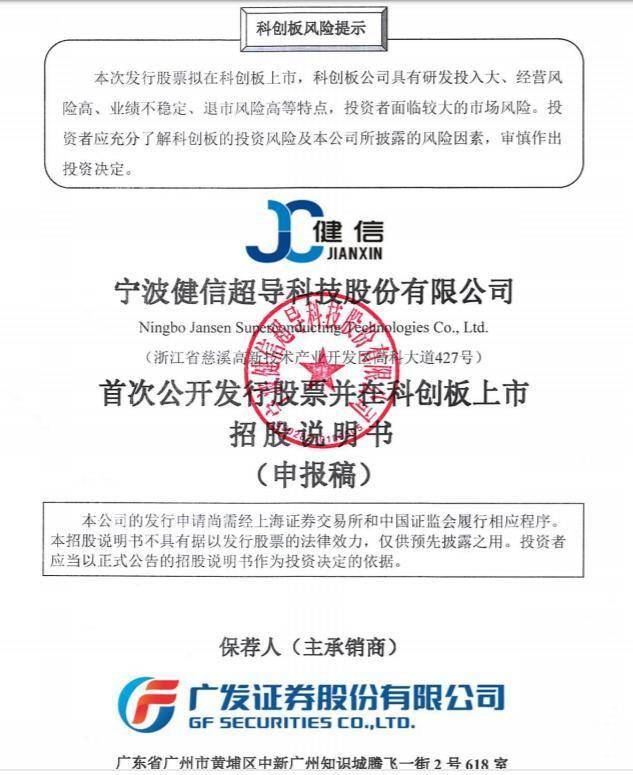
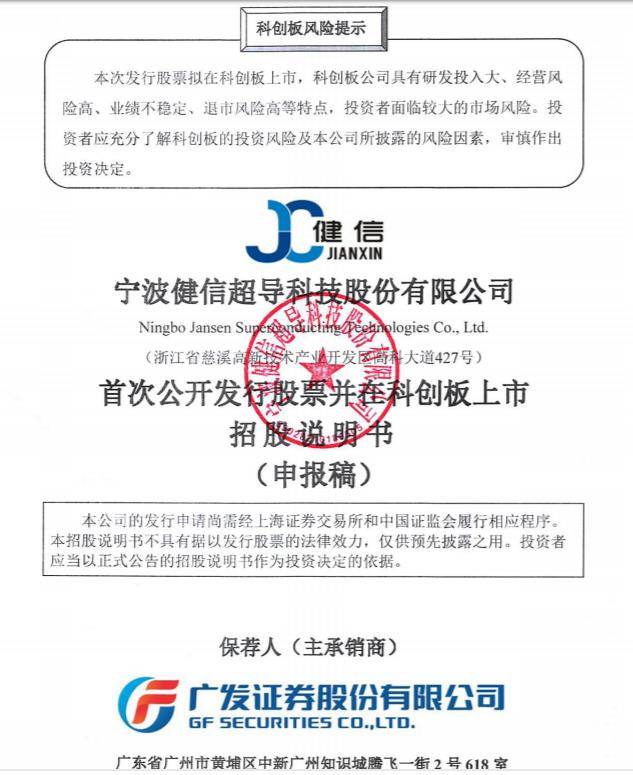
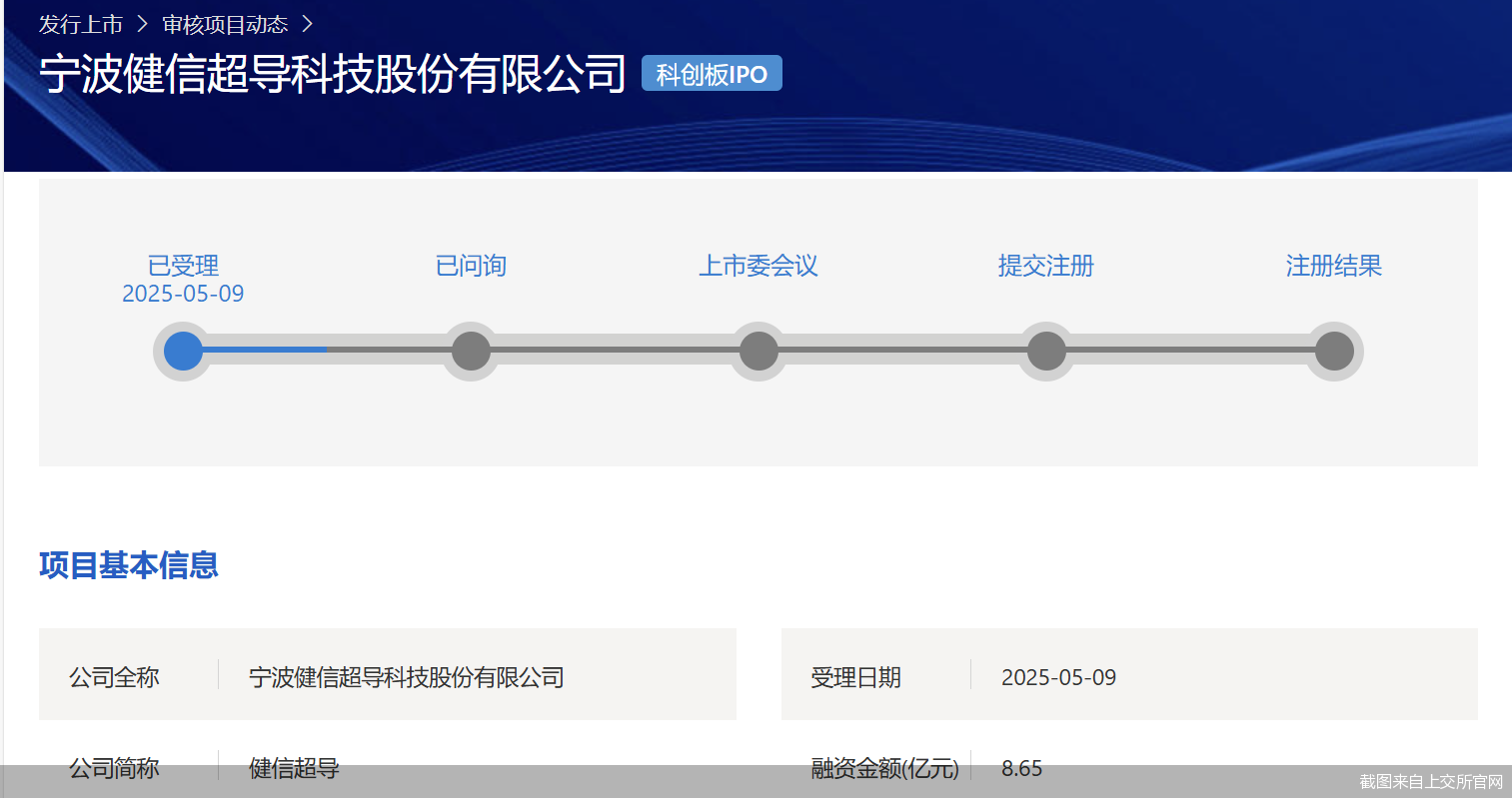
Core Viewpoint - Ningbo Jianxin Superconducting Technology Co., Ltd. has received acceptance for its IPO application on the Sci-Tech Innovation Board, with Guangfa Securities as the sponsor [3] Company Overview - Jianxin Superconducting primarily engages in the research, production, and sales of core components for medical magnetic resonance imaging (MRI) equipment, including superconducting magnets, permanent magnets, and gradient coils, which account for approximately 50% of the cost of MRI equipment [3] - The company ranks fifth globally and second among domestic companies in terms of market share for superconducting magnets used in MRI equipment, making it the largest independent supplier of superconducting magnets worldwide [3] Financial Performance - Total assets as of December 31, 2024, are projected to be 671.28 million yuan, an increase from 643.48 million yuan in 2023 and 527.12 million yuan in 2022 [4] - The company's net profit is expected to rise to 55.78 million yuan in 2024, up from 48.73 million yuan in 2023 and 34.63 million yuan in 2022, indicating profit growth without revenue increase in 2024 [4] - The operating income for the years 2022 to 2024 is reported as 359.3 million yuan, 450.64 million yuan, and 424.5 million yuan respectively [4] Shareholding Structure - Xu Jianyi holds 41.51% of the company's shares, making him the controlling shareholder, while his family members Xu Hui and Xu Dianbo hold 4.36% each, collectively controlling 59.92% of the voting rights [6][7] - The family members have signed a concerted action agreement, indicating a unified decision-making process among them [7] Leadership Background - Xu Jianyi, born in September 1953, has extensive experience in the magnetic resonance industry since the late 1980s and has held various leadership positions in related companies [8]

健信超导IPO:“左手分红、右手募资” 研发费用率仅个位数
Xin Lang Zheng Quan· 2025-05-13 06:00
Core Viewpoint - Ningbo Jianxin Superconductor Technology Co., Ltd. (referred to as "Jianxin Superconductor") faces multiple potential risks in its pursuit of an IPO on the Sci-Tech Innovation Board, raising concerns about its "hard technology" credibility and listing motivations [1] Group 1: Supply Chain and Customer Dependency - Jianxin Superconductor is in a weak position within the industry chain, with high customer and supplier concentration. The top five customers contributed nearly 80% of revenue, with the largest customer, Fujifilm Group, accounting for over 40% [1] - The company relies significantly on its top five raw material suppliers, which account for about 60% of purchases, leading to weak bargaining power and a gross margin of only 19.56%-24.94%, less than half the industry average of approximately 45% [1] Group 2: Lack of Technological Moat - The company has insufficient R&D investment, with R&D expense ratios of only 5.66%, 5.42%, and 6.50% from 2022 to 2024, which is less than one-third of comparable peers (14%-18%) [2] - Jianxin Superconductor holds only 42 invention patents, while competitors like United Imaging Healthcare have 3,475 patents, indicating a significant technological gap [2] - The core technology is protected by only 42 patents and confidentiality agreements, posing a risk of losing competitive advantage if key personnel are poached or if there is a leak [2] Group 3: Inventory Backlog and Liquidity Risk - The company's inventory surged from 182 million to 319 million yuan, accounting for over 30% of current assets, with inventory turnover days exceeding 200 [3] - The rapid iteration of superconducting magnet technology raises the risk of existing inventory becoming obsolete, yet the company has only recognized a write-down of 7.18 million yuan for inventory depreciation [3] - Accounts receivable have consistently exceeded 20% of revenue, which could exacerbate liquidity issues if downstream customers face financial difficulties [3] Group 4: Dividend Payouts and Fundraising Contradictions - Despite claiming a need to raise 90 million yuan for liquidity, the company distributed 59.99 million yuan in dividends over the past three years, with the chairman personally receiving 24.91 million yuan [4] - This "left hand dividend, right hand fundraising" approach raises questions about the rationality of its capital operation logic, especially given the average working capital ratio of 58.13% of revenue [4] Group 5: Policy Dependence and International Competitive Pressure - The company relies on a 15% income tax incentive for high-tech enterprises, with tax benefits accounting for 18% of total profits in 2024, making it vulnerable to policy changes [5] - With over 90% dependence on imported liquid helium, fluctuations in the international supply chain could disrupt production [5] - Although the company holds a 4.2% global market share, it faces significant pressure from international giants like Siemens and GE, which could squeeze its market position [5] Conclusion - The risk profile of Jianxin Superconductor's IPO journey includes both visible operational crises and hidden long-term concerns related to technological iteration and industry transformation [6]
大幅反弹!港股医药ETF(159718)高开高走涨超2%!医疗创新ETF(516820)小幅拉升
Xin Lang Cai Jing· 2025-05-13 01:56
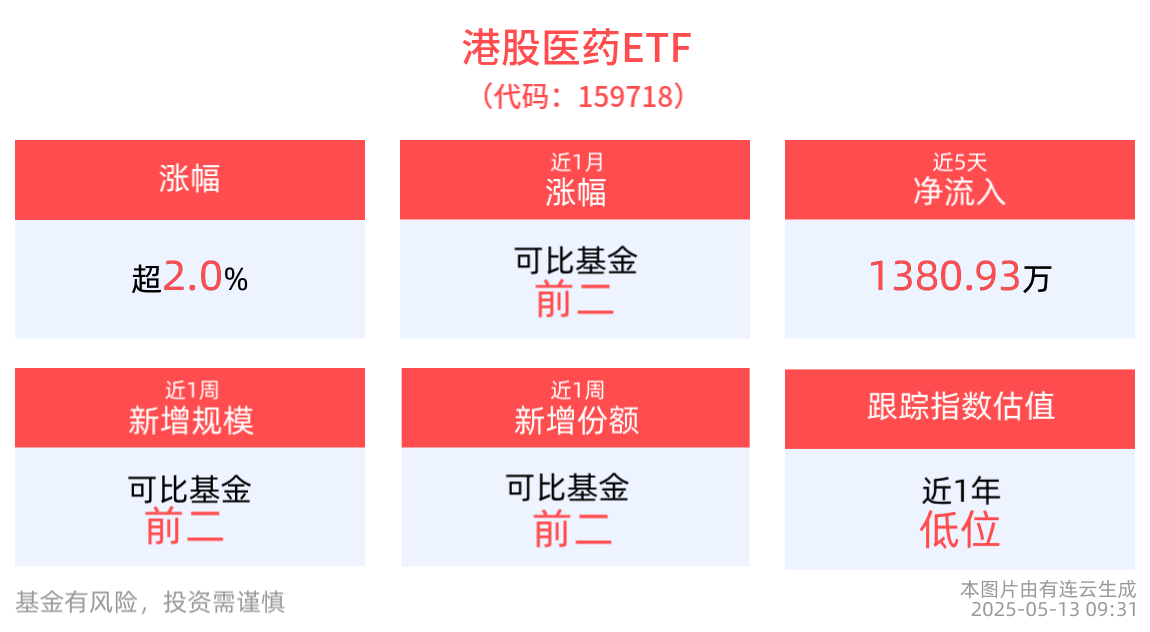
Core Viewpoint - The recent policy announced by Trump to align U.S. drug prices with the lowest global prices could lead to a significant decrease in prescription drug prices in the U.S., potentially by 30% to 80%, raising concerns among pharmaceutical companies, especially those exporting to the U.S. [1][2] Group 1: Market Performance - As of May 13, 2025, the CSI Hong Kong Stock Connect Pharmaceutical and Healthcare Composite Index (930965) rose by 2.42%, with notable increases in stocks such as BeiGene (06160) up 4.15% and Innovent Biologics (01801) up 3.14% [1] - The Hong Kong Pharmaceutical ETF (159718) opened high and increased by 2.04%, with a latest price of 0.70 yuan, and a one-month cumulative increase of 3.32% [1] - The CSI Pharmaceutical and Medical Device Innovation Index (931484) increased by 0.87%, with stocks like East China Pharmaceutical (000963) rising by 2.23% [4] Group 2: Trading Volume and Liquidity - The Hong Kong Pharmaceutical ETF had a turnover of 1.72% during the trading session, with a transaction volume of 4.0999 million yuan, and an average daily transaction volume of 95.7602 million yuan over the past month [1] - The latest scale of the Medical Innovation ETF (516820) reached 1.588 billion yuan [4] Group 3: Index Composition - The top ten weighted stocks in the CSI Hong Kong Stock Connect Pharmaceutical and Healthcare Composite Index accounted for 60.54% of the index, including BeiGene (06160) and WuXi Biologics (02269) [5] - The top ten weighted stocks in the CSI Pharmaceutical and Medical Device Innovation Index represented 66.51% of the index, featuring companies like Hengrui Medicine (600276) and WuXi AppTec (603259) [8]




首席之声:中美经贸会谈联合声明解读


2025-05-12 15:16
Summary of Key Points from the Conference Call Industry and Company Involvement - The conference call primarily discusses the impact of recent U.S.-China trade negotiations and tariff adjustments on various industries, particularly focusing on the Chinese economy and sectors such as home appliances, electronics, and renewable energy. Core Insights and Arguments - **Tariff Adjustments**: The U.S. has reduced tariffs on Chinese imports to an average of approximately 9.2%, significantly lower than the previous 145% rate, which is expected to positively impact the U.S.-China economic and trade chain [1][2] - **GDP Impact**: The fluctuation in China's GDP is projected to decrease from an estimated 1.7% under the previous tariff regime to around 0.7% with the new adjustments, indicating a more stable economic outlook [1][3] - **Export Share Decline**: The new tariffs may lead to a potential 34% decline in China's export share, but the overall impact is deemed manageable, allowing for market pricing adjustments [1][4] - **Sector-Specific Benefits**: Industries such as home appliances, optical electronics, consumer electronics, and clean energy are expected to see significant profit improvements due to tariff reductions, with potential for recovery in previously underperforming sectors [1][9] - **Long-Term Competitiveness**: Emerging sectors like automotive, shipbuilding, and semiconductors are highlighted as having medium to long-term competitive advantages, alongside traditional export sectors like textiles and light industrial products [1][10] Additional Important Insights - **Renewable Energy Sector**: The tariff adjustments are particularly beneficial for the renewable energy sector, with companies like CATL and Sungrow expected to recover quickly due to strong U.S. demand [1][11] - **Market Sentiment**: The overall market sentiment is optimistic, with expectations of improved pricing and recovery in stock performance for companies heavily impacted by previous tariffs, such as Haier and Ecovacs [1][15][16] - **Impact on Transportation and Logistics**: The reduction in tariffs is anticipated to boost shipping and logistics sectors, particularly for companies like COSCO and Orient Overseas, as export activities to the U.S. are expected to increase [1][25] - **Pharmaceutical Sector**: The pharmaceutical industry is expected to remain stable, with innovative drug companies like BeiGene and Hengrui benefiting from favorable market conditions despite previous tariff impacts [1][18][19] - **Cross-Border E-commerce**: Companies in the cross-border e-commerce space are adjusting to tariff changes, with some facing increased costs but also opportunities for profit margin recovery due to improved logistics and inventory management [1][22][23] - **Textile Industry Dynamics**: The textile sector is adapting to the new trade environment, with companies that have shifted production overseas likely to benefit from reduced tariff impacts [1][24] This summary encapsulates the key points discussed in the conference call, highlighting the implications of tariff changes on various sectors and the overall economic outlook for China amidst evolving U.S.-China trade relations.
医药生物行业跨市场周报:看好生命科学上游高端试剂国产替代-20250512
EBSCN· 2025-05-12 13:17
Investment Rating - The report maintains an "Accumulate" rating for the pharmaceutical and biotechnology sector [5]. Core Viewpoints - The report is optimistic about the domestic substitution of high-end reagents in the upstream life sciences sector, driven by factors such as product quality, emerging demands in oncology and CAR-T therapies, policy support, and the increasing emphasis on supply chain security amid rising global protectionism [2][24]. Summary by Sections Market Review - Over the past two weeks, the pharmaceutical and biotechnology index increased by 1.50%, underperforming the CSI 300 index by 0.06 percentage points and the ChiNext index by 2.80 percentage points, ranking 16th among 31 sub-industries [1][17]. - The Hong Kong Hang Seng Healthcare Index fell by 1.48%, lagging behind the Hang Seng China Enterprises Index by 4.31 percentage points [1][17]. Company Updates - Recent clinical application updates include new undertakings for injectable BG-C9074 by BeiGene and HDM2005 by Huadong Medicine, as well as IND applications for BGB-45035 tablets by BeiGene [27]. - Companies such as Enhua Pharmaceutical and Bide Pharmaceutical are currently in Phase III clinical trials for NH600001 and BL-M07D1, respectively [27]. Investment Recommendations - The report suggests focusing on companies like Titan Technology, Novozymes, Aladdin, Bide Pharmaceutical, Baipusais, and Yiqiao Shenzhou, which are well-positioned to benefit from the domestic substitution trend in high-end life science reagents [2][24]. Financial Forecasts and Valuations - Key company forecasts include: - Hengrui Medicine: EPS of 1.07 in 2025E with a PE of 48, rated as "Accumulate" [4]. - Mindray Medical: EPS of 10.62 in 2025E with a PE of 22, rated as "Buy" [4]. - United Imaging Healthcare: EPS of 2.39 in 2025E with a PE of 59, rated as "Buy" [4]. - Yuyue Medical: EPS of 2.32 in 2025E with a PE of 15, rated as "Buy" [4].

科创板年内第三家!健信超导IPO胜算几何
Bei Jing Shang Bao· 2025-05-12 11:48
Core Viewpoint - Ningbo Jianxin Superconducting Technology Co., Ltd. has recently received acceptance for its IPO application on the Sci-Tech Innovation Board, with significant revenue dependence on its largest customer, Fujifilm Group, which is expected to contribute over 40% of the company's revenue in 2024 [1][3]. Revenue Dependence - The company relies heavily on its top five customers, with sales to these clients accounting for approximately 73.75%, 76.68%, and 79.62% of total revenue from 2022 to 2024 [3]. - Sales to Fujifilm Group specifically are projected to represent 34.2%, 44.2%, and 42.71% of total revenue for the years 2022, 2023, and 2024, respectively [3][4]. Financial Performance - Jianxin Superconducting's revenue for 2022, 2023, and 2024 is approximately CNY 359 million, CNY 451 million, and CNY 425 million, respectively, with net profits of CNY 34.63 million, CNY 48.73 million, and CNY 55.78 million [3]. - The company's gross profit margins are significantly lower than industry peers, with margins of 19.56%, 22.84%, and 24.94% compared to industry averages of 46.27%, 45.59%, and 45.17% for the same periods [4]. Inventory and Cash Dividends - The company has experienced a substantial increase in inventory, with values of approximately CNY 182 million, CNY 236 million, and CNY 319 million at the end of each reporting period [4]. - Jianxin Superconducting has distributed significant cash dividends prior to the IPO, with amounts of CNY 19.99 million each year from 2022 to 2024, representing 57.74%, 41.04%, and 35.85% of net profits, respectively [5]. R&D Investment - The company's R&D expense ratio is notably lower than that of comparable companies, with rates of 5.66%, 5.42%, and 6.5% against industry averages of 14.44%, 14.41%, and 18.36% [7]. - Jianxin Superconducting plans to increase R&D investment, with part of the IPO proceeds allocated for this purpose to support new product and technology development [7]. Ownership Structure - As of the signing of the prospectus, the controlling shareholder, Xu Jianyi, holds 41.51% of the company, with the actual controllers collectively holding 59.92% of the voting rights [6].
科创板年报观察:超八成公司核心产品瞄准进口替代及自主可控
Zheng Quan Shi Bao Wang· 2025-05-12 11:13
Core Insights - In 2024, companies on the Sci-Tech Innovation Board are accelerating the gathering of innovative elements, enhancing innovation momentum, and helping China gain a competitive edge in global technology [1] - Over 80% of Sci-Tech Innovation Board companies focus on import substitution and self-control, with more than 380 companies achieving international advanced levels in over 850 products or technologies [1] Group 1: Innovation and R&D - Since its establishment, the Sci-Tech Innovation Board has maintained a "hard technology" positioning, with high R&D investment and output being a notable characteristic [2] - In the previous year, total R&D investment reached 168.08 billion yuan, exceeding 2.5 times the net profit, with a year-on-year growth of 6.4% and a compound annual growth rate of 10.7% over the last three years [2] - The median R&D investment as a percentage of operating income is 12.6%, leading all A-share sectors, with 107 companies maintaining an R&D intensity exceeding 20% for three consecutive years [2] Group 2: Technology Transfer and Market Impact - Sci-Tech Innovation Board biopharmaceutical companies have pushed 27 domestically developed innovative Class I drugs to market, filling domestic treatment gaps in key areas such as oncology and rare diseases [3] - Medical device companies have achieved over 1,000 Class III medical device product registrations, while semiconductor equipment companies have shipped over 16,000 units in 2024, driving a 39% year-on-year revenue growth [3] Group 3: Domestic Innovation and Global Reach - Companies on the Sci-Tech Innovation Board are accelerating the resolution of technical challenges through independent R&D and industrial mergers, aiming for self-control [4] - For instance, Huahai Qingke has successfully filled domestic gaps in chemical mechanical polishing equipment and has made significant progress in commercializing low-energy high-current ion implantation equipment [4] - Over 60 companies have launched globally innovative products, leading to breakthroughs in fields such as medical equipment and third-generation semiconductors [4] Group 4: Smart and High-End Manufacturing - Companies are deeply involved in artificial intelligence and smart manufacturing, playing a crucial role in upgrading traditional industries [6] - For example, Kede CNC's high-end CNC machine tools have been applied in over 1,300 units in aerospace and aviation sectors, while Iron Construction Heavy Industry has developed over 100 major equipment pieces for significant domestic and international projects [6] - Companies like Hongsoft Technology and Kingsoft Office are embedding AI technology into various sectors, enhancing operational efficiency and driving digital transformation [7]
医药行业周报:关注血透、药房等细分领域投资机遇
Minsheng Securities· 2025-05-12 10:23
Investment Rating - The report maintains a positive investment rating for the healthcare sector, particularly focusing on specific companies and segments within the industry [3]. Core Insights - The report emphasizes the recovery of medical device tenders and highlights investment opportunities in segments such as blood dialysis and ultrasound, with a focus on domestic replacements [1][2]. - It suggests that leading companies in the chain pharmacy sector are likely to increase market share due to the exit of smaller players [1]. - The report identifies several key areas for investment, including innovative drugs, CXO services, traditional Chinese medicine, vaccines, and medical devices, among others [1]. Summary by Sections 1. CXO Sector - The CXO sector is expected to see valuation recovery due to supportive innovation policies and a reduction in geopolitical risks [7]. 2. Innovative Drugs - The report notes a slight increase in the A-share chemical preparation sector and highlights recent approvals for innovative drugs, suggesting a focus on ongoing R&D progress [12][67]. 3. Traditional Chinese Medicine - The performance of the traditional Chinese medicine sector has lagged behind broader market indices, indicating potential for future growth [20]. 4. Blood Products - The report highlights the strong pricing power of manufacturers in the blood products sector, driven by increased demand for immunoglobulin products [22]. 5. Vaccine Sector - The vaccine sector is facing challenges due to low birth rates, but there are opportunities in specific areas such as HPV vaccines [26]. 6. Upstream Pharmaceutical Supply Chain - The report suggests focusing on companies with strong brand recognition and overseas growth potential in the chemical and biological reagent sectors [28]. 7. IVD Sector - The IVD sector is expected to benefit from the implementation of centralized procurement policies, which may accelerate domestic replacements [31]. 8. Medical Devices - The report recommends attention to the domestic continuous glucose monitoring (CGM) market, particularly in relation to GLP-1 drugs [37]. 9. Medical Services - The report suggests focusing on eye and dental medical service companies, anticipating a boost from consumer stimulus policies [42]. 10. Offline Pharmacies - The report indicates that leading pharmacy chains are stabilizing, with a recommendation to focus on companies with strong supply chain capabilities [45]. 11. Raw Materials - The report emphasizes the importance of quality and cost management in the raw materials sector, suggesting a focus on companies with strong product capabilities [48]. 12. Innovative Instruments - The report highlights the potential for AI applications in the medical device sector, particularly in surgical navigation and pathology screening [51]. 13. Instrument Equipment - The report notes that the scientific instrument sector is expected to recover as demand improves and more domestic support policies are introduced [56]. 14. Low-value Consumables - The report suggests that the low-value consumables sector may see investment opportunities as the industry cycle improves [59].



医药行业周报:关注血透、药房等细分领域投资机遇-20250512
Minsheng Securities· 2025-05-12 09:51
Investment Rating - The report maintains a positive investment rating for the healthcare sector, particularly focusing on specific companies and segments within the industry [3]. Core Insights - The report emphasizes the recovery of medical device tenders and highlights investment opportunities in segments such as blood dialysis and ultrasound, with a focus on domestic replacements [1][2]. - It suggests that leading companies in the chain pharmacy sector are likely to increase market share due to the exit of smaller players [1]. - The report identifies several key areas for investment, including innovative drugs, CXO services, traditional Chinese medicine, vaccines, and medical devices, among others [1]. Summary by Sections 1. CXO Sector - The CXO sector is expected to see valuation recovery due to supportive innovation policies and a reduction in geopolitical risks [7]. 2. Innovative Drugs - The report notes a slight increase in the A-share chemical preparation sector and highlights recent approvals for innovative drugs, suggesting a focus on ongoing R&D progress [12][67]. 3. Traditional Chinese Medicine - The performance of the traditional Chinese medicine sector has lagged behind broader market indices, indicating potential investment opportunities as the sector stabilizes [20]. 4. Blood Products - The report highlights the demand for immunoglobulin products and the potential for price increases due to supply shortages, recommending companies with strong product lines in this area [22]. 5. Vaccine Sector - The vaccine sector is currently under pressure, but there are opportunities in specific products that may gain market share, particularly in HPV vaccines [26]. 6. Upstream Pharmaceutical Supply Chain - The report suggests focusing on companies with strong brand recognition and operational capabilities in the chemical and biological reagent sectors [28]. 7. IVD Sector - The IVD industry is expected to benefit from the implementation of centralized procurement policies, which may accelerate domestic replacements [31]. 8. Medical Devices - The report recommends attention to the domestic continuous glucose monitoring (CGM) market, particularly in relation to GLP-1 drug growth [37]. 9. Medical Services - Investment opportunities are identified in ophthalmology and dental services, with a focus on companies that can leverage consumer healthcare trends [42]. 10. Pharmacy Sector - The report indicates that leading pharmacy chains are stabilizing, and suggests focusing on companies with strong supply chain capabilities [45]. 11. Raw Materials - The raw materials sector is undergoing significant changes due to procurement policies, with recommendations for companies that can adapt to these shifts [48]. 12. Innovative Instruments - The report highlights the potential for AI applications in medical devices and the ongoing trend of domestic replacements in various medical fields [51]. 13. Instrument Equipment - The scientific instrument sector is expected to recover as demand increases, with a focus on companies that are expanding their product offerings [56]. 14. Low-value Consumables - The report notes a potential recovery in the low-value consumables sector, particularly for companies that can capitalize on emerging market trends [59].
健信超导科创板IPO获受理:年入4亿元,全球最大超导磁体独立供应商
Sou Hu Cai Jing· 2025-05-12 09:19
| 序号 | 项目名称 | 预计投资金额 | 拟投入募集资金金额 | | --- | --- | --- | --- | | 1 | 年产 600 套无液氦超导磁体项目 | 27,601.34 | 27,500.00 | | 2 | 年产 600 套高场强医用超导磁体技改项目 | 26,293.27 | 26,000.00 | | 3 | 新型超导磁体研发项目 | 24,102.88 | 24,000.00 | | 4 | 补充流动资金 | 9,000.00 | 9,000.00 | | | 合计 | 86.997.49 | 86,500.00 | 本次IPO,健信超导拟投入募集资金金额为8.65亿元,用于年产600套无液氦超导磁体项目、年产600套高场强医用超导磁体技 改项目、新型超导磁体研发项目及补充流动资金。 招股书显示,健信超导主要从事医用磁共振成像(MRI)设备核心部件的研发、生产和销售,主要产品包括超导磁体、永磁 体和梯度线圈,占MRI设备核心部件成本的比例在50%左右。 根据灼识咨询数据,以装机量口径统计,2024年公司MRI设备超导磁体全球市占率位列第五、国内企业第二,是全球最大的 超导磁体独 ...