招商银行

Search documents
银行业周度跟踪2025年第52周:数字人民币正式启动生息-20260105
Changjiang Securities· 2026-01-05 12:14
Investment Rating - The report indicates a positive outlook for the banking sector, recommending long-term investments in leading city commercial banks with clear ROE advantages and large banks with low valuations and high dividend yields [2][10]. Core Insights - The banking sector experienced a slight increase at the end of the year, outperforming the CSI 300 and ChiNext indices, driven by risk appetite and institutional allocation behavior [2][10]. - The introduction of interest-bearing digital RMB is expected to enhance the promotional drive for commercial banks and attract more users [8][42]. - The banking sector is undergoing a rebalancing of its operational cycle and investment value, with a focus on establishing a risk bottom line as a foundation for valuation recovery [6][42]. Summary by Sections Banking Sector Performance - The banking index rose by 1.0% this week, outperforming the CSI 300 and ChiNext indices by 1.6% and 2.2% respectively [10]. - Major banks' H-shares generally increased, with Shanghai Pudong Development Bank leading the gains, while Xiamen Bank saw a pullback [10]. Digital RMB - Digital RMB wallets that have undergone real-name authentication will now earn interest at a rate of 0.05%, transitioning from being treated as cash to being managed like demand deposits [8][42]. - The digital RMB's interest-bearing feature is expected to boost commercial banks' promotional efforts and user attraction [42]. Credit Growth - As of the end of November 2025, credit growth rates varied across regions, with Jiangsu, Zhejiang, Sichuan, and Anhui maintaining growth rates above 8%, and Sichuan leading at 10.4% [37]. - Corporate loans remain the primary growth driver, with Jiangsu and Sichuan showing growth rates of 13.6% and 13.0% respectively [37]. Valuation and Investment Strategy - The report highlights that banking stocks are significantly undervalued from a PB-ROE perspective, particularly quality city commercial banks with leading ROE [7]. - The report recommends focusing on quality city commercial banks such as Hangzhou Bank, Nanjing Bank, and Jiangsu Bank, as well as dividend-focused assets like Bank of Communications and China Merchants Bank [7][10].





银行今十条:个人信用修复变中介营销噱头;一个月内6家银行敲定首席合规官;周锋获批担任中原银行行长...
Jin Rong Jie· 2026-01-05 11:49
Group 1 - The China Interbank Market Dealers Association is increasing penalties for violations related to bond transaction record-keeping, as many institutions have failed to comply with regulations, hindering effective supervision and enforcement [1] - The Ministry of Commerce and nine other departments are encouraging financial institutions to increase support for green consumption loans, promoting collaboration between financial institutions and trade enterprises to expand the application scenarios for these loans [2] - Several small and medium-sized banks have suspended overseas debit card transactions due to rampant overseas card fraud, indicating a consensus in the industry to enhance risk control measures [3] Group 2 - The newly established financial asset investment companies, such as Xingyin Investment and Zhaoyin Investment, have quickly secured projects, with Xingyin Investment reporting over 6 billion yuan in investments within 45 days of operation, showcasing a divergence in project focus compared to state-owned banks [4] - The implementation of personal credit repair policies starting January 1, 2026, has led to the emergence of illegal intermediaries offering services to "clean" large overdue debts, charging fees ranging from 3,000 to 10,000 yuan [5] - A significant number of banks have appointed chief compliance officers in response to regulatory requirements, with multiple banks announcing such appointments within a month [6] Group 3 - Zhou Feng has been approved to serve as the president of Zhongyuan Bank, with his term starting from December 31, 2025, until the next board election [7] - The banking wealth management sector is expected to shift focus from scale expansion to stability in returns, with a projected 10% growth in market size for 2026, emphasizing a return to genuine stability [8] - The payment industry is undergoing a significant cleanup, with the recent cancellation of the payment license for Zhonggang Yintong, marking the 108th license to be revoked [9] - Wang Feng, the chairman of Bozhou Yaodu Rural Commercial Bank, is under investigation for serious violations of discipline and law, marking a notable case in the banking sector [10]



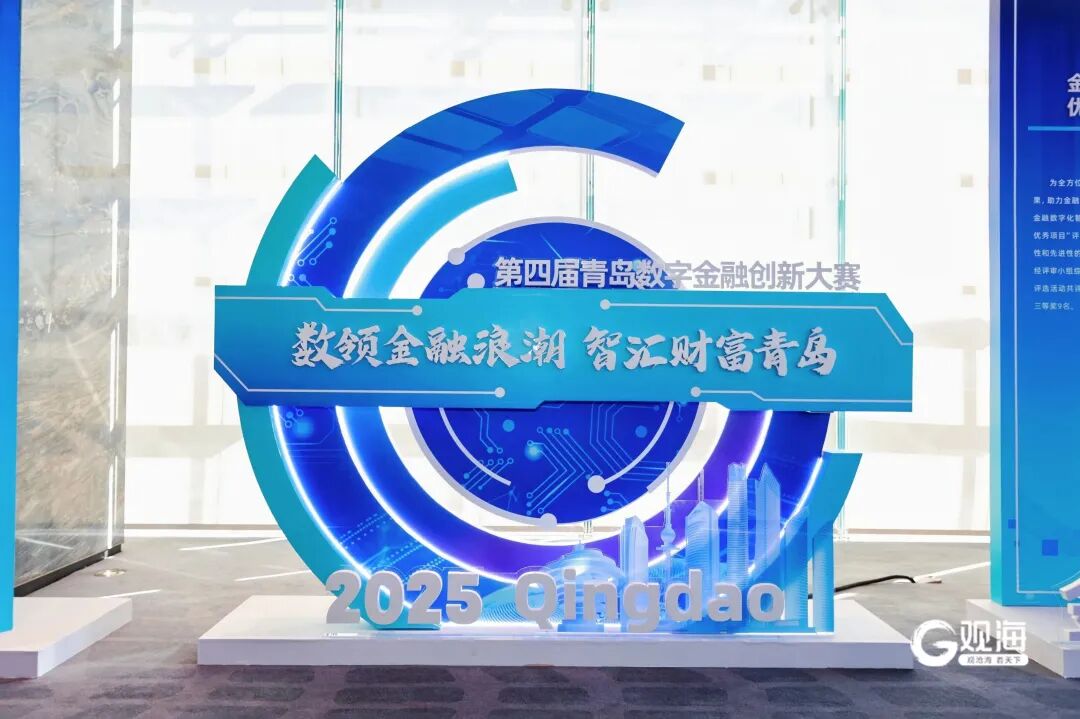
【微聚焦】服务补链强链重点项目30余个!“青链通”荣获“金融科技优秀项目”一等奖
Xin Lang Cai Jing· 2026-01-05 11:45
Core Insights - The "Qinglian Tong" project, developed by the Qingdao Municipal Transportation Bureau and China Merchants Bank Qingdao Branch, won the first prize for "Outstanding Financial Technology Project" at the Fourth Qingdao Digital Financial Innovation Competition [1][6] Group 1: Project Overview - In 2024, Qingdao was selected as a "National Comprehensive Freight Hub Support City," enhancing its hub capabilities [3][8] - The "Qinglian Tong" system aims to create a modernized regulatory framework for subsidy funds, focusing on traceability, risk prevention, and accountability [3][8] - The system has served over 30 key projects and assisted more than 200 enterprises since its launch [3][8] Group 2: System Features - The system integrates the entire business process from project entry to performance feedback, allowing real-time project scheduling and fund management [4][9] - It transforms the process from "enterprises running" to "data running," significantly reducing approval times from 5-7 working days to immediate processing [4][9] - The system employs intelligent risk control models to monitor fund flow and identify potential risks, enhancing regulatory oversight [4][9] Group 3: Collaborative Governance - The system promotes inter-departmental collaboration by breaking down data silos among transportation, finance, and auditing departments [4][9] - It establishes a unified regulatory framework where accountability is clearly defined, fostering a cooperative governance model [4][9] Group 4: Future Directions - The Qingdao Municipal Transportation Bureau plans to continuously optimize the system and expand its application scenarios to support the city's development as an international comprehensive transportation hub [6][11] - The initiative aims to provide replicable and scalable solutions for similar cities across the country [6][11]

Ping An Asset Management Co., Ltd.增持招商银行(03968)1056.5万股 每股作价约52.71港元
Zhi Tong Cai Jing· 2026-01-05 11:36
Group 1 - Ping An Asset Management Co., Ltd. increased its stake in China Merchants Bank (03968) by 10.565 million shares at a price of HKD 52.7146 per share, totaling approximately HKD 557 million [1] - After the increase, Ping An's total shareholding in China Merchants Bank reached approximately 1.111 billion shares, representing a holding percentage of 24.18% [1]
Ping An Asset Management Co., Ltd.增持招商银行1056.5万股 每股作价约52.71港元
Zhi Tong Cai Jing· 2026-01-05 11:27
Group 1 - Ping An Asset Management Co., Ltd. increased its stake in China Merchants Bank (600036) by 10.565 million shares at a price of HKD 52.7146 per share, totaling approximately HKD 557 million [1] - After the increase, Ping An's total shareholding in China Merchants Bank reached approximately 1.111 billion shares, representing a holding percentage of 24.18% [1]
市值又涨2万亿之后,银行股还有牛市行情吗?
Di Yi Cai Jing· 2026-01-05 11:27
Core Viewpoint - The banking sector is experiencing a structural "mini bull market" in 2025, with the China Securities Banking Index reaching a new high of 8570.16 points and the total market capitalization approaching 15 trillion yuan, indicating a positive shift in market sentiment and potential for value reassessment in 2026 [1][4]. Group 1: Market Performance - In 2025, the banking sector's total market capitalization increased by approximately 2.3 trillion yuan, reaching 14.66 trillion yuan by December 31, 2025, with A-share market capitalization surpassing 10 trillion yuan [4][5]. - The China Securities Banking Index recorded a 6.79% increase for the year, despite a notable decline in the second half [2]. - Among 42 A-share listed banks, 33 experienced price increases, with notable performers including Agricultural Bank of China (51.8% increase) and Industrial and Commercial Bank of China (21.02% increase) [2][3]. Group 2: Individual Bank Performance - Agricultural Bank of China led the market with a total market capitalization increase of 781.4 billion yuan and an A-share market capitalization increase of 747 billion yuan in 2025 [5][6]. - In the H-share market, Agricultural Bank of China also performed well, with a 41.15% increase, while other major banks like Industrial and Commercial Bank of China and China Construction Bank saw increases exceeding 30% [3]. - The top three banks in terms of annual growth were Xiamen Bank (32.49%), Shanghai Pudong Development Bank (22.42%), and Industrial and Commercial Bank of China (19.96%) [2]. Group 3: Future Outlook - For 2026, the banking sector is expected to continue attracting allocation-type funds, with a potential valuation recovery to around 1 times price-to-book (PB) ratio [7][8]. - Analysts predict that the banking operating environment will remain stable, with profit recovery driven by a bottoming out of interest margins and easing asset risks in sectors like local government financing and real estate [7][8]. - However, there are concerns about internal performance divergence within the banking sector, particularly affecting smaller banks, which may face increased revenue pressures and asset quality challenges [8].


招商银行(600036):业绩寻底,红利与价值属性兼备
Donghai Securities· 2026-01-05 11:06
Investment Rating - The report gives an "Accumulate" rating for the company, marking its first coverage [1]. Core Views - The company is navigating through a bottoming phase in performance, showcasing both dividend and value attributes [3]. - The bank's operating metrics remain significantly ahead of industry peers despite the ongoing industry downturn, with expectations for easing operational pressures as net interest margin (NIM) pressure subsides and non-interest income stabilizes [3]. Summary by Sections Scale - The growth momentum is shifting towards new areas as the banking sector transitions to a phase of high-quality development, with a fundamental change in the drivers of scale expansion [9]. - The bank's loan growth is slightly lower than asset growth, with a focus on optimizing retail and corporate loan ratios to balance growth and risk [10]. Net Interest Margin - The bank maintains a solid absolute advantage in net interest margin, with downward pressure easing [17]. - Despite facing challenges from asymmetric interest rate cuts, the bank's NIM remains significantly higher than the industry average due to its strong low-cost funding capabilities [19]. Asset Quality - The bank's asset quality management is prudent, providing a relative advantage in the current credit cycle [25]. - The bank has effectively managed its exposure to real estate risks and is expected to see a slowdown in retail risk increases following strategic adjustments [28]. Non-Interest Income - The darkest period for non-interest income has passed, with wealth management showing leading recovery potential [39]. - As macroeconomic expectations stabilize, the bank's wealth management business is anticipated to regain its role as a core driver of profitability [41]. Shareholder Returns - The bank's dividend payout ratio is among the highest in the industry, reflecting its strong capital management and ability to balance risk and shareholder returns [44]. - The bank's robust provisioning allows it to maintain high dividends without compromising on risk management [46]. Investment Recommendations - Projected revenues for 2025-2027 are estimated at 338 billion, 350 billion, and 371 billion yuan, with corresponding growth rates of 0.15%, 3.52%, and 5.95% [53]. - The bank's current valuation is at a historical low, with strong dividend yield and ROE, indicating a dual attribute of dividend and value, making it an attractive investment opportunity during this performance bottoming phase [53].
2025年主动权益产品排名出炉,广发基金6只产品年度跌幅超过10%
Xin Lang Cai Jing· 2026-01-05 10:38
Core Insights - In 2025, approximately 75 actively managed equity funds achieved a net value increase of over 100%, but there was significant disparity, with several funds reporting negative returns exceeding 10% [2][8] - Among the underperformers, six funds from GF Fund were highlighted, all managed by Wang Mingxu, indicating a potential issue with his management strategy [2][8] Fund Performance Analysis - Wang Mingxu managed a total of eight funds, with six showing negative annual returns, including the flagship fund, GF Domestic Demand Growth, which reported a -16.31% return for the year [10] - The fund underwent a significant style shift in its holdings throughout 2025, moving from a focus on real estate, liquor, and banking stocks in Q1 to a more diversified approach in Q2, yet the results remained unsatisfactory [3][11] Managerial Challenges - Wang Mingxu's management faced criticism as his long-held fund, GF Domestic Demand Growth, became a significant underperformer despite his overall fund management experience and a reported best-term return of 115.25% [10] - The fund's quarterly reports indicated attempts to adjust the portfolio by selling overvalued stocks and increasing positions in high-end liquor and IT services, but these adjustments did not yield the desired improvement in performance [4][11] Performance of Other Managers - Zheng Chengran, another manager at GF Fund, also faced challenges, with his funds showing a wide performance range; one fund achieved over 70% returns while five others fell below 20% [5][12] - His investment strategy included a mix of sectors that did not align with his expertise, leading to underwhelming results, particularly in the healthcare and steel sectors [12]
2026人身险经营8大推演:渠道+产品+投资……怎么变?
Xin Lang Cai Jing· 2026-01-05 10:10
Core Insights - The year 2025 marks a significant transformation in the life insurance industry, influenced by external macroeconomic pressures, declining interest rates, and the acceleration of digitalization and AI technologies. The competitive landscape is increasingly polarized, with leading companies expanding their advantages while smaller firms face multiple challenges [1][41]. Group 1: Regulatory Changes and Cost Management - The "reporting and operation integration" policy will be further refined in 2026, requiring life insurance companies to align reported costs with actual expenses, promoting fair competition and healthy development [2][44]. - The insurance industry is expected to reduce costs by over 300 billion yuan in 2024, primarily within the life insurance sector, as a result of regulatory pressures [2][3]. - The introduction of new regulations will lead to more detailed cost management and a shift towards rational product design, focusing on customer value and sustainable profitability [4][45]. Group 2: Channel Dynamics - The bancassurance channel has become a key growth driver for the industry, with its share of new business premiums rising to approximately 65% by 2025, driven by banks' increasing focus on wealth management [5][10][52]. - Despite the growth, the bancassurance model still faces challenges in professionalization, particularly in addressing deeper customer needs such as family protection and retirement planning [11][53]. - The individual insurance sector is experiencing significant difficulties, with a projected decline in new business premiums of around 5% in 2025, necessitating a focus on professionalization to retain agents and improve average premiums [12][56]. Group 3: Product Trends - The long-term decline in interest rates and the recovery of the capital market are expected to drive the growth of participating insurance products, as traditional high-guarantee products lose appeal [17][18]. - The implementation of DRG/DIP reforms is anticipated to enhance the mid-tier medical insurance market, with a focus on innovative products that cater to unmet healthcare needs [20][22]. - The aging population is creating new growth opportunities in pension insurance, with a significant increase in the elderly demographic expected to drive demand for retirement products [23][26]. Group 4: Investment and Asset Management - The insurance sector has seen a recovery in investment returns, with a notable increase in equity holdings, although market volatility poses challenges for stable operations [33][34]. - New asset-liability management regulations are set to be implemented, emphasizing the need for a robust governance structure and regular reporting to address the pressures on solvency [36][38]. - The industry is increasingly relying on perpetual bonds and capital-raising measures to alleviate solvency pressures, with a focus on maintaining a stable yield curve [37][38]. Group 5: Technological Integration - The integration of AI and advanced technologies is expected to reshape the insurance value chain, enhancing customer insights and enabling personalized product recommendations [39][40]. - The shift towards a customer-centric approach in sales and marketing is being reinforced by regulatory encouragement for professional sales practices [30][32]. - The industry is moving towards a model of precise and consultative marketing, which is anticipated to improve overall efficiency and customer satisfaction [29][30].
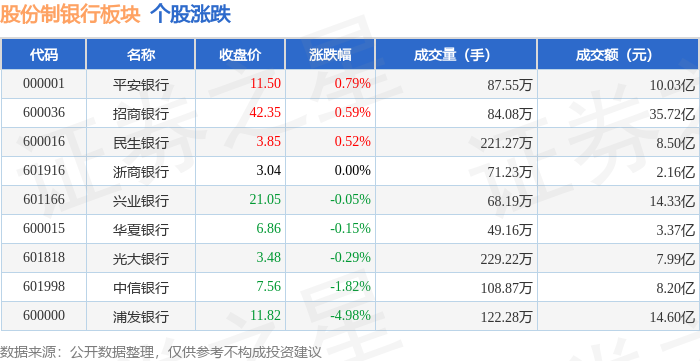
股份制银行板块1月5日跌0.72%,浦发银行领跌,主力资金净流入3.26亿元
Zheng Xing Xing Ye Ri Bao· 2026-01-05 09:09
Group 1 - The banking sector saw a decline of 0.72% on January 5, with Pudong Development Bank leading the drop [1] - The Shanghai Composite Index closed at 4023.42, up 1.38%, while the Shenzhen Component Index closed at 13828.63, up 2.24% [1] - Key stocks in the banking sector showed mixed performance, with Ping An Bank increasing by 0.79% and Pudong Development Bank decreasing by 4.98% [1] Group 2 - The banking sector experienced a net inflow of 326 million yuan from main funds, while retail and speculative funds saw outflows of 134 million yuan and 192 million yuan, respectively [1] - Among individual banks, Industrial Bank had a net inflow of 251 million yuan from main funds, while Ping An Bank and Pudong Development Bank had net outflows from retail investors [2] - The data indicates a significant outflow from Minsheng Bank and China Merchants Bank, with retail investors withdrawing 67.42 million yuan and 1.45 billion yuan, respectively [2]