
中国人民银行

Search documents
央行"8·11汇改"十年:人民币汇率双向波动,市场化程度显著提升
Sou Hu Cai Jing· 2025-08-11 02:06
Core Viewpoint - The "8.11 Exchange Rate Reform" has become a significant milestone in China's financial reform history, marking a key point in the market-oriented process of the RMB exchange rate formation mechanism [1] Group 1: Economic Environment Before Reform - The international economic and financial environment was complex, with a clear recovery in the US economy and expectations of interest rate hikes by the Federal Reserve, leading to a strong dollar [3] - Emerging market currencies faced depreciation pressures, while the RMB's nominal effective exchange rate appreciated by 11.6% and the real effective exchange rate by 11.3% from July 2014 to July 2015 [3] Group 2: Restructuring of the Central Parity Rate - The central parity rate of the RMB had lost its authoritative status due to increasing deviations from market rates, necessitating a reform to enhance its market-based nature [4] - Starting from August 11, 2015, market makers were required to reference the previous day's closing rate and consider supply-demand conditions and international currency fluctuations, making the central parity rate more aligned with market realities [4] - The reform aimed to strengthen the decisive role of market supply and demand in exchange rate formation and to correct deviations between the central parity and market rates [4] Group 3: Continuous Improvement of Marketization - Since the implementation of the "8.11 Exchange Rate Reform," the central bank has continuously improved the managed floating exchange rate system based on market supply and demand [5] - The RMB exchange rate has shown a dual fluctuation pattern, with significant increases in exchange rate elasticity and better functioning of macroeconomic stabilizers [5] - In the first quarter of the year, the RMB against the USD fluctuated between 7.1688 and 7.1891, with 28 days of appreciation and 29 days of depreciation, indicating a clear dual fluctuation characteristic [5] Group 4: Resilience of the RMB - In the context of dramatic changes in the external environment and global currency market volatility, the resilience of the RMB has exceeded market expectations [6] - The RMB appreciated slightly against the USD while maintaining stability in the CFETS basket of RMB exchange rate indices, supported by strong domestic macroeconomic policies [6]


一周流动性观察 | 资金价格基本横盘震荡 周五税期资金面或面临轻微扰动
Xin Hua Cai Jing· 2025-08-11 02:06
Group 1 - The People's Bank of China (PBOC) conducted a 1120 billion yuan reverse repurchase operation with a rate of 1.40%, maintaining the previous level, while a total of 5448 billion yuan in reverse repos matured on the same day, resulting in a net withdrawal of 4328 billion yuan from the open market [1] - Last week, the central bank's reverse repos resulted in a net withdrawal of 5365 billion yuan, and a 7000 billion yuan buyout reverse repo operation was conducted on Friday with a three-month term [1] - The overnight interest rates remained low, with R001 and DR001 hovering around 1.35% and 1.31%, respectively, while the seven-day rates R007 and DR007 oscillated around 1.47% and 1.45% [1] Group 2 - This week, the scale of reverse repos maturing will decrease to 11267 billion yuan, primarily due to a large amount maturing on Monday, with subsequent days around 1500 billion yuan [2] - The net government bond payment scale will rise to 4101 billion yuan, mainly concentrated on Monday and Friday, with August 15 being the tax deadline and mid-month reserve payment date [2] - Despite the large amount of reverse repos maturing and increased government bond payments, the liquidity in the market is expected to remain loose due to the central bank's stabilizing stance [2][3] Group 3 - The government bond payment pressure is concentrated on Monday (2344 billion yuan) and Friday (1847 billion yuan), marking a high point for the month [3] - The total reverse repos maturing this week is 11267 billion yuan, significantly lower than the previous week's 16632 billion yuan, but still above one trillion yuan [3] - The PBOC's recent 7000 billion yuan three-month buyout reverse repo operation has raised market attention regarding future liquidity management, with expectations for a second buyout operation in August [3]
中国人民银行和中国证监会近日出台政策 完善金融基础设施监督管理
Jing Ji Ri Bao· 2025-08-11 00:51
Core Viewpoint - The People's Bank of China and the China Securities Regulatory Commission have issued the "Financial Infrastructure Supervision and Management Measures," effective from October 1, 2023, to enhance the regulatory framework for financial infrastructure and mitigate systemic risks [1][2]. Summary by Relevant Sections Regulatory Framework - The new measures unify the regulation of six types of financial infrastructure, clarifying regulatory responsibilities and enhancing oversight in risk management, corporate governance, and operational requirements [2][3]. - The introduction of "systemically important financial infrastructure" and its recognition standards marks a significant step in establishing a centralized regulatory approach, with the People's Bank of China responsible for macro-prudential management [2]. Impact on Financial Market - Short-term effects include the standardization and upgrade of core processes such as clearing, settlement, and registration, which will enhance market transparency and efficiency [2]. - Long-term implications involve providing technical support for cross-border financial cooperation and the internationalization of the Renminbi, thereby increasing China's influence in global financial rule-making [2]. Compliance and Operational Standards - Financial infrastructure operators are required to operate with licenses, and illegal establishment or provision of financial infrastructure services is prohibited [3]. - The measures outline comprehensive regulations from institutional entry to daily operations and supervision, ensuring compliance and stability in financial infrastructure operations [3]. Future Directions - The People's Bank of China plans to continue strengthening the construction and coordinated regulation of financial infrastructure, aiming to create a rationally structured, effectively governed, and resilient financial infrastructure system to support the development of a strong financial nation [3].
驻村金融官为乡村振兴按下“快进键”
Yang Shi Wang· 2025-08-11 00:12
Core Viewpoint - The latest data indicates a continuous growth in agricultural loans in China this year, driven by new measures to address financing challenges in rural areas [1] Group 1: Agricultural Loans - Agricultural loans in China have been on the rise, reflecting a positive trend in rural financing [1] - The People's Bank of China and the Ministry of Agriculture and Rural Affairs have jointly introduced 19 measures aimed at alleviating issues related to rural financial access, including difficulties in obtaining loans and high costs [1] Group 2: Financial Inclusion - In Ningxia, inclusive finance initiatives are rapidly penetrating rural areas, tackling the challenges of complex procedures, high thresholds, and limited coverage in rural financing [1] - A new path for serving the agricultural sector is being explored, focusing on improving financial services for farmers and rural enterprises [1]
中国人民银行和中国证监会近日出台政策——完善金融基础设施监督管理
Sou Hu Cai Jing· 2025-08-10 23:28
Core Viewpoint - The introduction of the "Financial Infrastructure Supervision and Management Measures" by the People's Bank of China and the China Securities Regulatory Commission aims to establish a unified and efficient regulatory framework for financial infrastructure, effective from October 1, 2023 [1][2]. Group 1: Regulatory Framework - The new measures consolidate the regulation of six types of financial infrastructure into a unified framework, addressing previous fragmented oversight and enhancing regulatory clarity [2][3]. - The measures define the responsibilities of regulatory bodies and emphasize risk management, corporate governance, and operational requirements [2][3]. Group 2: Systemic Importance - The concept of "systemically important financial infrastructure" is introduced, with clear criteria for its identification, enhancing centralized oversight by the People's Bank of China [2][3]. - This approach aims to maintain the stability of the financial system while ensuring effective management of significant financial infrastructure [2]. Group 3: Operational Compliance - Financial infrastructure operators are required to operate under licenses, preventing illegal establishment and operation of financial infrastructure services [3]. - The measures outline comprehensive regulations from institutional entry to daily operations and supervision, ensuring compliance and stability in financial infrastructure operations [3]. Group 4: Impact on Financial Markets - The implementation of these measures is expected to positively influence financial markets by upgrading core processes such as clearing, settlement, and registration, thereby enhancing market transparency and efficiency [2]. - In the long term, a well-structured and effectively governed financial infrastructure will support cross-border financial cooperation and the internationalization of the Renminbi, increasing China's influence in global financial rule-making [2].
中国人民银行和中国证监会近日出台政策—— 完善金融基础设施监督管理
Jing Ji Ri Bao· 2025-08-10 21:59
Core Viewpoint - The introduction of the "Financial Infrastructure Supervision and Management Measures" by the People's Bank of China and the China Securities Regulatory Commission aims to establish a unified and efficient regulatory framework for financial infrastructure, effective from October 1, 2023 [1][2]. Group 1: Regulatory Framework - The new measures consolidate the regulation of six types of financial infrastructure into a unified framework, addressing previous fragmented oversight and enhancing regulatory clarity [2][3]. - The measures define the responsibilities of regulatory bodies and emphasize risk management, corporate governance, and operational requirements [2][3]. Group 2: Systemic Importance - The measures introduce the concept of "systemically important financial infrastructure" and establish criteria for its identification, enhancing centralized oversight by the People's Bank of China [2][3]. - This approach aims to maintain the stability of the financial system while ensuring effective management of significant financial infrastructure [2]. Group 3: Operational Compliance - Financial infrastructure operators are required to operate under licenses, with strict prohibitions against illegal establishment and operation of financial infrastructure services [3]. - The measures outline comprehensive regulations from institutional entry to daily operations and supervision, ensuring compliance and stability in financial infrastructure operations [3]. Group 4: Long-term Impact - In the short term, the measures are expected to enhance the standardization of core processes such as clearing and settlement, improving market transparency and efficiency [2]. - In the long term, a well-structured and effective financial infrastructure system will support cross-border financial cooperation and the internationalization of the Renminbi, increasing China's influence in global financial rule-making [2].
5万以上现金存取不再问来源或用途?反洗钱新规征求意见
Nan Fang Du Shi Bao· 2025-08-08 12:25
Core Viewpoint - The People's Bank of China, along with financial regulatory authorities, has released a draft for public consultation regarding the management of customer due diligence and identity verification for financial institutions, simplifying previous cash withdrawal requirements [2][3]. Group 1: Regulatory Changes - The new draft eliminates the requirement for financial institutions to understand and record the source and purpose of cash withdrawals exceeding 50,000 RMB or equivalent in foreign currency, which was a point of contention in the previous regulations [4][5]. - The draft specifies that for transactions involving cash remittances, cash exchanges, and other financial services exceeding 50,000 RMB or equivalent in foreign currency, institutions only need to conduct customer due diligence and retain basic identity information [5][6]. Group 2: Background and Context - The previous regulation, which mandated identification and verification for cash transactions above 50,000 RMB, sparked significant public debate and concern regarding privacy and the handling of personal funds [5][6]. - The initial implementation of the previous management measures was postponed due to technical reasons, indicating a responsive regulatory environment [5][6]. - The new draft reflects ongoing adjustments by regulatory bodies in response to market feedback and aims to balance anti-money laundering efforts with customer convenience [6].

世界黄金协会:6月全球官方黄金储备净增22吨 连续第三个月环比小幅上升
智通财经网· 2025-08-08 10:31
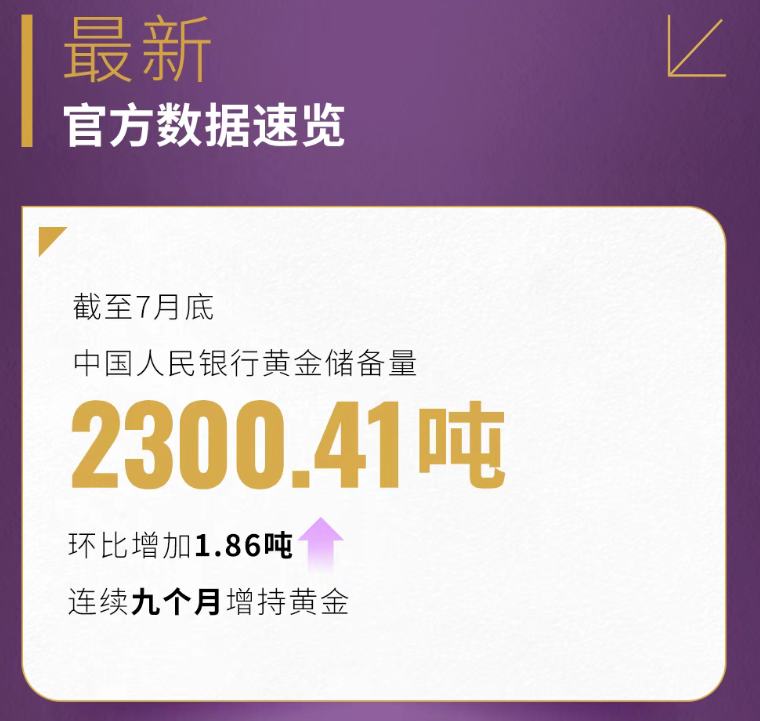
智通财经APP获悉,世界黄金协会发布的数据显示,截至7月底,中国人民银行黄金储备量2300.41吨,环比 增加1.86吨;连续九个月增持黄金。2025年6月,全球官方黄金储备净增22吨,已连续第三个月环比小幅上 升。2025年上半年全球央行净购金量达123吨,较2024年同期小幅下降。 2025年6月 全球官方黄金储备净增 已连续第三个月环比小幅上升 2025年上半年 全球央行净购金量达 较2024年同期小幅下降 150 100 50 fine 0 -50 -100 -150 购金总量 售金总量 净值 6月,乌兹别克斯坦央行是 本月最大的净买家* 吉尔吉斯斯坦 乌兹别克斯坦 哈萨克斯坦 + Q Inn +7 Int 捷克 +7.00 士直其 加纳 菲律宾 -7 III 新加坡 - I URLD 放眼全球 本月最大的净买家为乌兹别克斯坦央行 哈萨克斯坦国家银行购金规模同样显著 新加坡金融管理局(MAS)是唯一的净卖家 本月净售黄金6吨 全球央行购金总量略低于2024年的同期水平 波兰国家银行是 2025年迄今为止最大的净买家 净购金67吨 其次是阿塞拜疆国家石油基金和 哈萨克斯坦国家银行 0 20 80 -20 ...
科技型中小企业贷款余额同比增长24%
Jin Rong Shi Bao· 2025-08-08 07:59
本报讯 记者马玲报道 5月30日,中国人民银行发布了2025年一季度金融机构贷款投向统计报告。数 据显示,一季度末,金融机构人民币各项贷款余额265.41万亿元,同比增长7.4%,一季度人民币贷款增 加9.78万亿元。 企事业单位贷款增长平稳。一季度末,本外币企事业单位贷款余额179.53万亿元,同比增长8.8%, 一季度增加8.56万亿元。分期限看,短期贷款及票据融资余额60.69万亿元,同比增长9.3%,一季度增 加2.9万亿元。中长期贷款余额115.24万亿元,同比增长8.7%,一季度增加5.53万亿元。分用途看,固定 资产贷款余额75.94万亿元,同比增长8.5%,一季度增加3.44万亿元。经营性贷款余额73.94万亿元,同 比增长7.3%,一季度增加4.66万亿元。 工业和基础设施相关行业中长期贷款保持较快增长。一季度末,本外币工业中长期贷款余额26.04 万亿元,同比增长11.2%,增速比各项贷款高4.3个百分点,一季度增加1.52万亿元。其中,重工业中长 期贷款余额22.19万亿元,同比增长11.1%;轻工业中长期贷款余额3.86万亿元,同比增长11.8%。 一季度末,本外币服务业中长期贷款余额 ...
6月LPR维持不变,如何理解?
Jin Rong Shi Bao· 2025-08-08 07:59
Core Viewpoint - The LPR (Loan Prime Rate) remained unchanged in June, with the 1-year rate at 3.0% and the 5-year rate at 3.5%, aligning with market expectations following a previous reduction in May [1][2]. Group 1: LPR Stability - The unchanged LPR is attributed to the stability of the 7-day reverse repurchase rate at 1.40%, which serves as a basis for LPR pricing [1]. - Analysts believe that the current economic conditions, including improved domestic demand and stable production, support the decision to maintain the LPR [2]. Group 2: Financing Costs - The average interest rates for new corporate loans and personal housing loans are approximately 3.2% and 3.1%, respectively, both showing a decrease of about 50 basis points and 55 basis points compared to the previous year [3]. - The current interest rate levels are historically low, suggesting that a further reduction in LPR is not urgent [3]. Group 3: Future Considerations - Experts emphasize the need to monitor various factors influencing future interest rate trends, including global monetary policy shifts and domestic economic momentum [4]. - There is a call for a comprehensive approach to reduce non-interest costs, such as collateral and intermediary service fees, to further lower overall financing costs for businesses [4].