
山姆会员店

Search documents
头部零售企业竞相重仓武汉
Chang Jiang Ri Bao· 2025-06-16 00:25
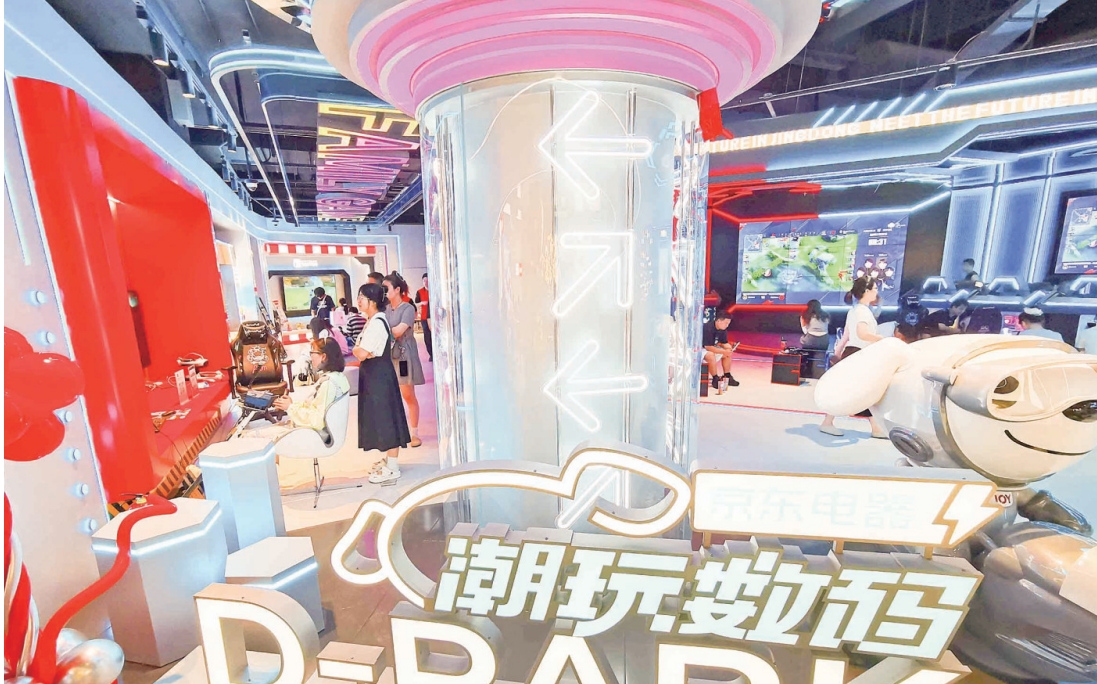
Group 1 - Wuhan has been awarded the title of "Model City for Good Consumption" by the Central Radio and Television Station [1] - JD MALL has opened a new store in Wuhan, making it the city with the most JD MALL locations, with plans for another store in Hanyang by the end of the year [1] - Wuhan has been selected as one of the first batch of national retail innovation pilot cities, highlighting its potential for retail development [2][3] Group 2 - The city's strong commercial foundation and rising consumer spending are key factors for its selection as a pilot city [4] - Wuhan's retail sales are projected to grow by 5.3% in 2024, leading among sub-provincial cities, with a 7.3% increase in the first quarter of this year [5] - The city is actively exploring innovative retail models, aiming to create a diverse and trendy shopping experience [5] Group 3 - Recent events like the "HOCH Hamburger Festival" generated over 17.4 million yuan in revenue, showcasing the vibrant consumer experience in Wuhan [6] - The Hong Kong Disneyland 20th Anniversary exhibition has attracted visitors of all ages to Wuhan, indicating a growing interest in cultural and entertainment events [7] - Areas like Tianhua Lin are becoming popular among young people for experiencing traditional culture and purchasing unique creative products [8] Group 4 - The demand for high-quality and cost-effective consumption is rapidly increasing, as evidenced by the opening of new Sam's Club locations in Wuhan [11] - Major retail players are focusing on enhancing product and service quality, aligning with the goals of the retail innovation initiative [11] - The "Retail Innovation and Improvement Project Implementation Plan" emphasizes optimizing quality supply and prioritizing consumer-centric approaches [11]


零售商超行业SAAS及数字化前景展望
2025-06-12 15:07
Summary of Retail Industry and SaaS Developments Industry Overview - The retail SaaS service providers initially charged based on software licenses and POS terminal counts, with large enterprises preferring standard software packages like SAP and Yonyou, priced by modules and user licenses [1] - Post-pandemic, internet companies shifted towards comprehensive solutions, with future rates influenced by technological advancements and competition [1] - Internet firms are reshaping the SaaS model through low-code platforms and cloud services, leading to a 50%-70% reduction in front-end costs, although back-end costs have increased due to the need for cloud infrastructure [1][5] Key Players and Competitive Landscape - Major players in the supermarket system supplier market include Shiji Information, SAP, Oracle, and Yonyou, with Shiji holding the largest market share [3] - Traditional supermarkets like Yonghui and Wumart are adapting to the online-offline integration model, with Yonghui collaborating with JD.com to enhance its business model [2] - Regional retailers like Pang Donglai have strong influence in their areas, showcasing the competitive dynamics within the retail sector [2] Challenges and Innovations in New Retail - New retail faces challenges such as online traffic stagnation and competition from platforms like Douyin, necessitating innovative promotional strategies and customer journey designs [1][8] - Retailers are leveraging big data and automation to enhance customer experience, with AI technology being widely applied for personalized marketing and customer profiling [2][12] SaaS Pricing Models and Trends - The pricing model for retail SaaS providers is closely linked to their growth stages, with early models based on software licenses transitioning to subscription-based pricing to meet new retail demands [4] - Future pricing trends will be influenced by technological advancements and competitive dynamics among various suppliers [4] Self-developed vs. Third-party Software - Self-developed systems, like those used by Walmart, allow for management iteration and value addition, avoiding customization cost increases [6] - Third-party software, such as Demo SaaS, aims to leverage supply chain advantages for online-to-offline (O2O) expansion [6] Retail Growth Bottlenecks - Yonghui Supermarket is experiencing growth bottlenecks post-pandemic, with no significant improvement in single-store gross margins [9] - To address these challenges, Yonghui is learning from the efficient management practices of regional leaders like Pang Donglai [9] AI Technology Applications - AI technology is being utilized in various retail scenarios, including personalized recommendations and automated service enhancements [14][15] - The integration of AI allows for real-time adjustments in product placement and promotional strategies, improving customer engagement and satisfaction [17][19] Global Market Challenges for Chinese Retailers - Chinese retailers face challenges in overseas markets, including consumer habit differences, high labor costs, and cognitive gaps regarding local business models [20] - To enhance competitiveness, Chinese retailers must optimize supply chain management and redesign customer journeys based on local consumer habits [21][22] Conclusion - The retail industry is undergoing significant transformation driven by technological advancements and changing consumer behaviors, with both traditional and internet-based retailers adapting to new market realities. The integration of AI and SaaS solutions is crucial for enhancing operational efficiency and customer experience in this evolving landscape.
坚果有虫,山姆又出事
盐财经· 2025-06-11 09:20
Core Viewpoint - Sam's Club has faced multiple food safety incidents, raising concerns about product quality and consumer trust, despite its strong revenue growth in China [2][18]. Group 1: Food Safety Incidents - A consumer reported finding a live worm in a nut product purchased from Sam's Club, which led to significant media attention and public outrage, with over 20 million views on social media [3][4]. - The customer, who spent 680 yuan on a membership, expressed dissatisfaction with the company's handling of the situation, stating that she would cancel her membership due to the lack of food safety assurance [10]. - Sam's Club acknowledged previous similar issues with the nut product and indicated that they would investigate the source of the problem [15]. Group 2: Financial Performance - Walmart reported strong financial results for Q1, with net sales in China reaching 6.7 billion USD, a 22.5% year-over-year increase, driven by Sam's Club and e-commerce growth [18]. - Membership revenue for Sam's Club in China grew over 40%, with membership numbers continuing to rise, indicating a robust business model despite the recent controversies [18]. - Sam's Club's revenue in China is projected to exceed 100 billion yuan in 2024, highlighting its significant market presence [18]. Group 3: Market Dynamics - The membership-based supermarket sector is becoming increasingly competitive, with Sam's Club operating 55 stores in China since its first opening in 1996 [18]. - Reports indicate the presence of scalpers outside Sam's Club locations, offering services to non-members, which reflects the high demand and exclusivity of membership shopping [25][28].

618竞争转向即时零售 顺丰同城化解履约高峰
Bei Jing Shang Bao· 2025-06-11 05:06
Group 1 - The competitive logic of the 618 shopping festival is undergoing a structural transformation, with traditional e-commerce facing challenges from "lowest prices" and "billion subsidies," leading to a rational return of consumers and a trend towards fragmented traffic [1] - The shift towards instant retail not only shortens order cycles and reduces return rates but also points to a growing market in instant consumption scenarios, extending from dining to supermarkets, electronics, and beauty products, with a projected market size exceeding 2 trillion yuan by 2025, where non-food categories will account for over 60% [1] - The emergence of a new competitive dimension in retail ecology emphasizes the advantages of third-party delivery services that can deeply integrate with brands and platforms, as exemplified by SF Express's collaboration with over 7,500 new KA stores in 2024, providing one-stop delivery solutions [1] Group 2 - SF Express serves as a flexible delivery partner for platforms like Douyin and WeChat, while also supplementing capacity for major platforms like Meituan and Ele.me during peak periods, supporting diverse scenarios such as live streaming and private domain e-commerce [2] - During the 618 shopping festival, SF Express not only provides instant delivery services but also integrates into various logistics stages, addressing the mismatch between traditional logistics capacity and order growth during peak times, achieving faster delivery through methods like "warehouse-to-delivery" [2] - The company utilizes big data forecasting and AI scheduling technology to create differentiated and refined capacity plans across the country, ensuring dynamic adjustments in high-demand areas such as core business districts and large communities [2]
突发,山姆又出事!
21世纪经济报道· 2025-06-11 00:13
Core Viewpoint - Sam's Club has faced significant backlash due to food safety issues, particularly involving the discovery of worms in nut products, which has led to widespread consumer concern and negative publicity [2][3][16]. Group 1: Incident Overview - A consumer reported finding a worm in a nut product purchased from Sam's Club, which has been confirmed by the company's customer service as not an isolated incident [4][16]. - The consumer expressed disgust and stated that she would no longer purchase any food items from Sam's Club after this experience [6][9]. - Sam's Club's response to the incident involved multiple compensation offers, including refunds and additional compensation, but the consumer was dissatisfied with the resolution [8][9]. Group 2: Company Performance and Growth - Walmart reported strong growth in its first quarter, with net sales in China reaching $6.7 billion, a 22.5% year-over-year increase, driven by Sam's Club and e-commerce [17]. - Membership revenue for Sam's Club in China grew over 40%, with membership numbers continuing to rise [17]. - Sam's Club's revenue in China is projected to exceed 100 billion RMB in 2024, indicating robust business performance despite recent controversies [17]. Group 3: Quality Control Issues - There have been multiple reports of quality issues at Sam's Club, including a case where a consumer found a glass-like object in a meat product [22]. - The company has been criticized for its inability to ensure food safety, which has led to a decline in consumer trust [9][21]. - The emergence of "scalpers" offering services to bypass membership requirements at Sam's Club highlights potential operational challenges and consumer dissatisfaction [25][26].
永辉大动作,前山姆高管接手了
36氪· 2025-06-10 13:34
Core Viewpoint - Yonghui Supermarket is undergoing significant organizational changes, including the appointment of a new Chief Procurement Officer, She Xianping, to enhance its supply chain management and adapt to the competitive retail landscape in 2025 [4][5][6]. Group 1: Leadership Changes - Yonghui appointed She Xianping, who has extensive experience in major retail chains like Sam's Club, Hema, and RT-Mart, as its first Chief Procurement Officer [5][6][8]. - She Xianping's background includes over a decade at Sam's Club, where he served as the National Fresh Procurement Director, and he has also contributed to building supply chain systems at Hema and RT-Mart [12][13][14]. Group 2: Organizational Restructuring - The establishment of the Chief Procurement Officer role signifies a shift from the previous decentralized procurement model to a centralized management approach, aiming to unify supply chain resources and standards [14][18][19]. - The restructuring involves relocating the standard product procurement headquarters and reducing redundant regional procurement departments to streamline operations [18][19]. Group 3: Supply Chain Strategy - Yonghui plans to implement a "naked price strategy + direct procurement model," eliminating middlemen to reduce costs and improve product quality [24][25]. - The company aims to increase its private label product share to 40% over the next 3-5 years, emulating the successful model of Sam's Club [26][29]. - Yonghui is also focusing on building long-term cooperative relationships with 200 core suppliers to enhance product competitiveness and align with national policies [31][42]. Group 4: Market Performance and Challenges - Financial data indicates a significant decline in revenue and net profit for Q1 2025, with revenue down 19.32% and net profit down 79.96%, highlighting the costs associated with the ongoing reforms [47][48]. - The company is attempting to balance supply chain efficiency with localized operations, drawing from the strengths of both Sam's Club and local competitors [48][49]. Group 5: Industry Trends - Yonghui's reforms align with broader retail trends, emphasizing the need for supply chains to generate profit and foster long-term supplier relationships [40][41][42]. - The company is shifting its focus from merely selling products to providing lifestyle services, adapting to changing consumer expectations for a more integrated shopping experience [44][45].

即时零售重塑消费场景研究报告
笙策零售· 2025-06-10 03:35
Investment Rating - The report does not explicitly state an investment rating for the instant retail industry Core Insights - Instant retail is defined as a consumption model based on an instant delivery system, emphasizing "online ordering, delivery within 30 minutes," allowing consumers to quickly obtain needed products [7][8] - The market size of China's instant retail reached 650 billion yuan in 2023, with a year-on-year growth of 28.89%, outpacing the growth of online retail by 17.89 percentage points [17][19] - By 2030, the instant retail market in China is expected to exceed 2 trillion yuan [19] Summary by Sections 1. Instant Retail Overview - Instant retail activates "scene consumption," meeting immediate needs, contrasting with traditional retail's reliance on "demand forecasting" [7][8] - The development of instant retail can be traced back to the emergence of food delivery platforms a decade ago, evolving into a high-speed growth phase post-2015 with platforms like Meituan and JD Daojia [11][13] 2. Background of Instant Retail's Rise - Consumer demand has shifted towards faster delivery, with over 50% of post-95 consumers wanting same-day or even within-hours delivery [24][27] - The Z generation's market share surged from 30% in 2020 to 59%, driving a shift towards "emotional value consumption" [30] - Technological advancements, including the integration of the internet and big data, support the growth of instant retail [32] 3. Reshaping of Consumption Scenarios - Instant retail has expanded from food delivery to encompass a wide range of products, including fresh produce, pharmaceuticals, and electronics [43][44] - New consumption scenarios have emerged, such as "hot pot delivery" and "instant meal kits," significantly reducing food waste [45] - Instant retail platforms have partnered with pharmacies to provide 24-hour medicine delivery services across over 300 cities [47] 4. Business Models of Instant Retail - Platform-based instant retail companies leverage various methods to acquire traffic, such as Meituan's integration with its food delivery service [60] - The front warehouse model is employed to ensure rapid response to consumer orders, particularly in densely populated areas [63] - The warehouse-store integration model enhances quality consumption by combining online and offline sales [71] 5. Competitive Landscape of Instant Retail - The market is characterized by a "one strong, many strong" structure, with Meituan leading with a 35% market share and over 10 million daily orders [79] - Major platforms have built strong supply chain systems and efficient delivery networks, enhancing their competitive edge [81][82] 6. Challenges Facing Instant Retail - Cost control is a significant challenge, with high warehousing and delivery costs impacting profitability [95] - Supply chain stability is crucial, as demand fluctuations can lead to supply interruptions [97] 7. Future Trends in Instant Retail - Instant retail platforms are expected to deepen service scenarios, such as offering laundry pickup and delivery services [109] - The integration of AI and IoT technologies will enhance operational efficiency and product quality assurance [118][119] 8. Development Recommendations - Companies should invest in AI and IoT technologies to optimize delivery routes and ensure product quality [131][132] - Strengthening partnerships with local producers and wholesalers can create a more agile supply chain [133]
“民营超市第一股”人人乐退市:传统商超大败退时代的缩影
Xin Lang Zheng Quan· 2025-06-10 02:12
Core Viewpoint - The article discusses the decline and impending delisting of *ST Renle (人人乐), once known as the "first private supermarket stock" in China, highlighting its financial struggles and the broader challenges facing the retail industry in China [1][2][7]. Company Overview - *ST Renle was founded in 1996 and initially thrived, achieving peak sales of 12.913 billion yuan in 2012 and operating nearly 150 stores [2]. - The company went public in 2010, marking its status as a significant player in the retail sector [2]. - However, it faced a turning point in 2012 when it reported its first loss post-IPO, leading to a prolonged period of financial difficulties [2][3]. Financial Performance - By 2024, *ST Renle's net assets had deteriorated to -4.04 billion yuan, triggering delisting warnings [1][3]. - The company's revenue plummeted by 49.86% year-on-year to 1.43 billion yuan in 2024, with a further decline of 77.81% to 129.4 million yuan in Q1 2025 [1][3]. - Despite attempts to sell assets and restructure, the company reported a loss exceeding 17 million yuan for the year [4]. Strategic Missteps - The company attempted various business models, including premium supermarkets and community fresh food stores, but was criticized for lacking a coherent strategy [4]. - Management instability, with three changes in leadership within six years, contributed to inconsistent strategic direction [5]. Industry Context - The retail sector in China is experiencing a significant downturn, with at least 782 supermarket closures in 2024, including major players like Yonghui Supermarket [7]. - In contrast, new retail formats such as Sam's Club and the phenomenon of Pang Donglai are thriving, indicating a shift in consumer preferences and market dynamics [7][8]. - The article emphasizes that the essence of retail lies in trust and value rather than mere scale and capital [8].

代购实体店:“县城分姆”拿捏了谁?
3 6 Ke· 2025-06-06 04:24
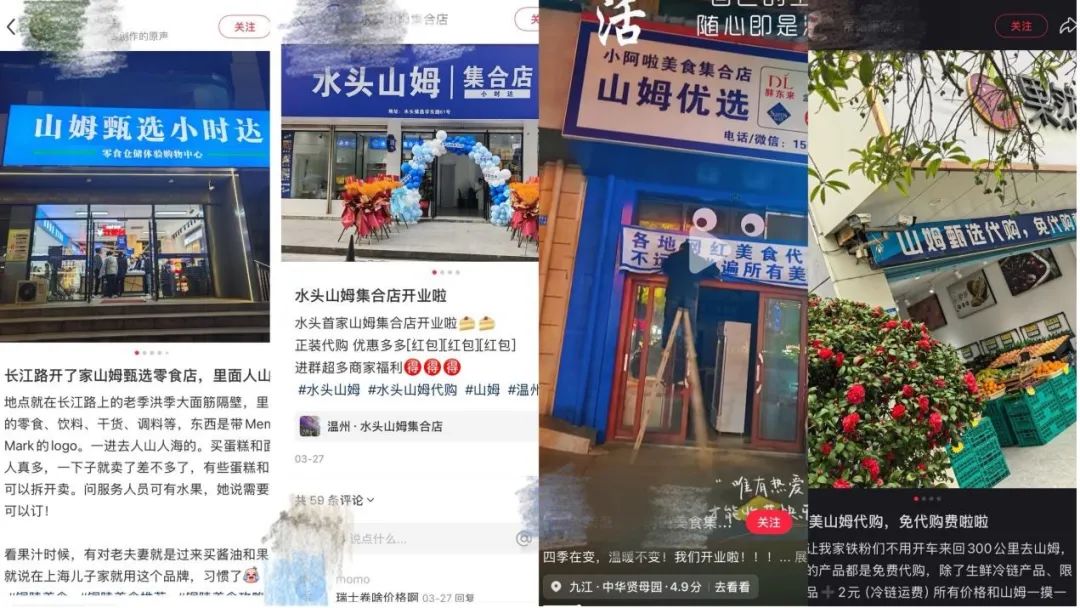
Core Insights - The rise of "county-level Sam's Club" stores in China reflects a significant shift in consumer behavior, with a growing demand for quality products in lower-tier cities [1][3][13] - The current market for purchasing Sam's Club products through agents has evolved, with physical stores emerging as a new business model to meet local consumer needs [1][5][12] Group 1: Market Dynamics - The emergence of agent-operated physical stores is driven by the increasing purchasing power in county-level markets, with retail sales in these areas rising from 36.8% to 38.8% from 2019 to 2024 [3][4] - Consumers in lower-tier cities are increasingly interested in premium products previously exclusive to first-tier cities, such as lululemon and Xiaomi SU7 [3][4] Group 2: Business Model and Profitability - Agent-operated stores offer advantages such as eliminating membership fees, providing a wider selection of products, and offering personalized services like repackaging [5][11] - Profitability for these stores relies on multiple revenue streams, including markup on products, rebates from Sam's Club, and membership fees [6][11] Group 3: Challenges and Risks - Despite the perceived success of agent-operated stores, many face challenges such as high competition from online platforms and the need to cover fixed costs like rent and utilities [9][11] - Legal risks are present, as operating under the Sam's Club name may lead to trademark infringement and regulatory compliance issues [12][15] Group 4: Strategic Considerations - The existence of agent-operated stores raises questions about why Sam's Club has not directly entered the county-level market, suggesting a strategic decision to allow agents to fill the gap [15][17] - The current trend indicates a shift from large warehouse retail models to more curated shopping experiences, which may not align with the operational costs of traditional membership stores in lower-density areas [17][18]
会员店供应链专家交流——零食、乳制品、保健品等分享
2025-06-04 15:25
Summary of Conference Call Records Industry Overview - The conference call discusses the performance of various food and beverage brands within the membership store channel, particularly focusing on snacks, dairy products, and health supplements [1][2][3]. Key Points and Arguments Sales Performance - **Youyou Duck Feet**: Sales increased from 27 million yuan in March to 28 million yuan in May, indicating strong market demand and growth potential [1][4]. - **Qing Tian Shi**: Initial sales of 2.2 million yuan in April rose to 6.95 million yuan in May due to improved raw material supply, highlighting market potential but also emphasizing supply chain stability as a risk factor [1][2][4]. - **Egg Yolk Quail Eggs**: Sales dropped to 15 million yuan in May from 17 million yuan in March and April, affected by seasonal fluctuations and negative news, indicating market volatility risks [1][4]. - **Zhou Hei Ya Classic Dipping Sauce**: Sales grew from 1.85 million yuan in April to over 3.4 million yuan in May, suggesting high acceptance of new products but potential cannibalization of existing products [1][6]. - **Tiramisu**: Sales remained stable between 9.5 million to 10 million yuan, but short shelf life and complex supply chain management pose risks [1][7]. Market Trends - The health supplement sector is experiencing a slowdown, with expected growth rates of 5%-8% for 2024-2025, lower than other categories like beverages and electronics, necessitating a reassessment of market strategies [3][9]. - The overall food category in membership stores includes approximately 1,200 SKUs, with a significant focus on rice, oil, nuts, and frozen foods [3][10]. Product Innovation and Development - Many small food and dairy companies are leveraging brand and product innovation to drive performance, as seen with Youyou Duck Feet and Qing Tian Shi [2]. - New product launches, such as the Frankie TT Cotto beef jerky and probiotics electrolyte powder, are currently in single-channel sales stages, with data expected by the end of July [5]. SKU Management and Consumer Feedback - The membership store collects around 20,000 member feedback entries daily to inform new product development and SKU optimization, ensuring alignment with market demand [3][14][15]. - New products undergo a protection period of three to six months, during which performance is evaluated before broader distribution [16]. Localization Strategy - The membership store has successfully implemented a localization strategy, enhancing its ability to discover and cater to local tastes, which has led to significant revenue growth [21][22]. Additional Important Insights - The sales data for various products indicate a trend of fluctuating performance, emphasizing the need for effective crisis management and quality control [1][4]. - The competitive landscape shows that the membership store's localized approach has outperformed competitors like Costco, which lacks a similar strategy [21][22].