幻方量化

Search documents
幻方量化员工被抓,腐败大案曝光,6年套取上亿
2 1 Shi Ji Jing Ji Bao Dao· 2025-08-10 12:41
Core Viewpoint - A significant commission rebate scandal involving the domestic quantitative private equity firm, Huansheng Quantitative, has emerged, with the case amounting to 118 million yuan over six years, drawing considerable market attention due to its connection with the DeepSeek AI model [1][3]. Group 1: Case Details - The scandal involves Huansheng Quantitative's marketing director, Li Cheng, who allegedly colluded with a brokerage manager from 2018 to 2023 to fabricate broker identities, directing trades to a designated brokerage to siphon off 40% of the commission as performance bonuses, totaling 118 million yuan, with over 20 million yuan directly benefiting Li Cheng [3]. - Several individuals involved in the case have been handed over to judicial authorities for further investigation [3]. Group 2: Company Response - Huansheng Quantitative has stated that Li Cheng's actions were personal and not representative of the company's practices, asserting that the company was unaware of any rebate activities and has not been contacted by regulatory bodies [5]. - The company emphasized that all its cooperation channels operate under the same fee structure, which is considered to be at a relatively low level within the industry [5]. Group 3: Industry Context - The practice of "brokerage rebates" typically involves brokers returning a portion of commissions to investors based on trading volume, which can lead to conflicts of interest and corruption issues [8]. - In the quantitative private equity sector, high-frequency trading can result in substantial commission rebates, with some brokers offering rebates ranging from 0.01% to 0.03% of trading volume, which can accumulate to significant amounts depending on the trading volume [8]. Group 4: Company Background - Huansheng Quantitative, founded by Liang Wenfeng, is a leading player in China's quantitative investment space, managing two billion-level private equity platforms and reaching a scale of 100 billion yuan in 2021 [10]. - The firm has recently ventured into the general artificial intelligence sector with the establishment of DeepSeek in April 2023, planning to launch its AI model by January 2025 [10].

幻方量化员工被抓,腐败大案曝光,6年套取上亿
21世纪经济报道· 2025-08-10 12:29
Core Viewpoint - The article discusses a significant rebate scandal involving Huansheng Quantitative, a leading quantitative private equity firm in China, where a total of 118 million yuan was allegedly misappropriated over six years by the marketing director, Li Cheng [1][3]. Group 1: Scandal Details - Li Cheng is accused of colluding with a brokerage manager to fabricate broker identities, directing trades to a specific brokerage to claim 40% of the commission as performance bonuses, totaling 118 million yuan from 2018 to 2023 [3]. - Over 20 million yuan of the misappropriated funds were traced to Li Cheng, and several individuals involved have been handed over to judicial authorities [3]. Group 2: Company Response - Huansheng Quantitative stated that Li Cheng's actions were personal and not representative of the company's practices, asserting that the company was unaware of any rebate activities [5]. - The company emphasized that all cooperation channels had uniform fee rates and that Li Cheng was not a senior executive but a regular marketing staff member [5]. Group 3: Industry Context - The article explains that "brokerage rebates" typically involve brokers returning a portion of commissions to investors based on trading volume, which can lead to conflicts of interest and corruption [6]. - In the quantitative private equity sector, high-frequency trading can result in substantial commissions, with rebates potentially reaching significant amounts depending on trading volumes [7]. - The article highlights that the minimum commission for brokers can be as low as 0.0085% to 0.01%, with rebates negotiated typically between 0.01% to 0.03% [7]. Group 4: Company Background - Huansheng Quantitative, founded by Liang Wenfeng, is recognized as a top player in China's quantitative investment field, managing two billion-yuan private equity platforms [9]. - The firm reached a scale of 100 billion yuan in 2021 and has recently ventured into the general artificial intelligence sector with the establishment of DeepSeek [9]. - As of June 30, 2023, the average return for 50 billion-yuan private equity firms was 10.93%, with a high percentage achieving positive returns, indicating a favorable market outlook for private equity firms [9].

8月私募“雷”盘点:私募大佬们不盯K线改盯片场?靖奇投资“内斗”升级!幻方量化“返佣门”持续发酵,均成资产违规承诺保本| 私募透视镜
Sou Hu Cai Jing· 2025-08-10 07:27
Group 1: Internal Conflicts at Jingqi Investment - Jingqi Investment's fund manager Fan Siqi announced his resignation and fund liquidation, revealing internal conflicts within the company [1] - Fan accused the company of an unceremonious dismissal and claimed that shareholder actions were not compliant [1] - Jingqi Investment countered by stating that the dismissal was compliant and accused Fan of unauthorized actions, including data deletion [1] Group 2: Financial Irregularities - Fan Siqi released a statement denying rumors of "data deletion and running away," and disclosed financial irregularities, alleging that shareholder Tang's commission income was not recorded and used for personal expenses [1] Group 3: DeepSeek and Huansheng Quantitative's Rebate Scandal - The "rebate scandal" involving Huansheng Quantitative continues to unfold, with connections to serious violations by key personnel [4] - Investigations revealed that from 2018 to 2023, key individuals fabricated broker identities to siphon off 118 million yuan in performance bonuses [4] - The scandal has led to legal actions against involved parties, including the market director of Huansheng Quantitative [4] Group 4: Industry Trends and Notable Movements - The private equity sector is witnessing a trend of firms diversifying into entertainment, with three private equity firms collaborating on a drama series [6][7] - The drama, set against the backdrop of the futures market, reflects the evolving interests of private equity firms beyond traditional finance [6] Group 5: Market Insights from Notable Investors - Investor Duan Yongping has increased his stake in Berkshire Hathaway, anticipating a price rebound after a significant drop following CEO Warren Buffett's retirement announcement [8] - Legendary investor Jim Rogers has divested from most U.S. stocks, focusing on Chinese equities and precious metals, citing concerns over the U.S. economy [9] - Gao Yi Asset's Feng Liu has reduced holdings in Hikvision while increasing stakes in Taiji Group, indicating a strategic shift amid market fluctuations [10] Group 6: Regulatory Developments - Six new securities private equity firms have been registered with the Asset Management Association of China, indicating growth in the sector [11] - Changes in leadership at financial institutions, such as the appointment of a new general manager at Caitong Securities, reflect ongoing shifts within the industry [14] Group 7: Compliance Issues - The Guangdong Securities Regulatory Bureau issued a warning to Hengqin Junchen Asset Management for failing to prevent employees from promising capital protection to investors [16][17] - The firm, which manages over 3 billion yuan, faced scrutiny for inadequate internal controls and compliance failures [17]
幻方量化员工“亿元返佣”背后:券商与量化私募的隐秘关联被揭开一角
Xin Lang Cai Jing· 2025-08-08 12:00
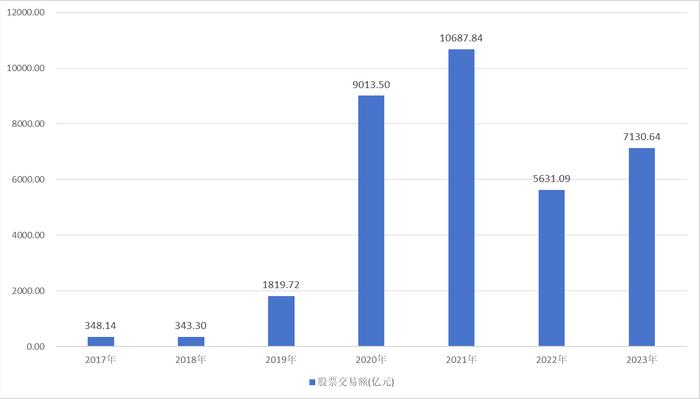
Core Viewpoint - The article reveals details about the "rebate incident" involving Li Cheng, the market director of Huanfang Quantitative, and the brokerage firm China Merchants Securities, highlighting the intricate relationships and interests between quantitative private equity firms and their cooperating brokerages [1][2]. Group 1: Incident Details - The key figure in the rebate incident is Meng Pengfei, who served as the general manager of the Shenzhen Nand East Road branch of China Merchants Securities from June 2018 to February 2023 [1]. - During his tenure, Meng arranged for his relatives to act as exclusive brokers for Huanfang Quantitative, receiving a total of 1.18 billion yuan in performance bonuses, with over 200 million yuan going to Li Cheng and 100 million yuan to Liu Huan [1]. - Meng attempted to secure his position by offering 3 million yuan in gold to his superior, Gao Xiang, who later returned the gold and was investigated in March of this year [1]. Group 2: Huanfang Quantitative's Growth - Huanfang Quantitative's management scale grew significantly, reaching approximately 30 billion yuan by the end of 2017, doubling in 2018, and surpassing 100 billion yuan in 2019, eventually becoming the first quantitative private equity firm in China to exceed 1 trillion yuan in 2021 [2]. - The timing of Huanfang Quantitative's trading activities at China Merchants Securities coincided with its rising industry profile and impending growth [2]. Group 3: Trading Volume and Rankings - From 2017 to 2023, the trading volume at the Shenzhen Nand East Road branch of China Merchants Securities increased dramatically, with trading volumes of 1,819.72 billion yuan in 2019, 9,013.5 billion yuan in 2020, and 10,687.84 billion yuan in 2021, leading to significant improvements in its ranking among all brokerage branches [2]. - Despite a decline in trading volume in 2022 and 2023, the branch maintained high trading volumes of 5,631.09 billion yuan and 7,130.64 billion yuan, ranking 18th and 8th respectively [3]. Group 4: Industry Trends and Competition - The quantitative private equity industry in China has rapidly developed, with an estimated total scale of approximately 837 billion yuan by the end of 2024, including around 768 billion yuan in stock holdings [5]. - As of July 25 this year, there are 44 quantitative private equity firms in China with assets exceeding 10 billion yuan, indicating a competitive landscape among brokerages to attract these influential firms [6]. Group 5: Broker-Private Equity Relationships - The collaboration between private equity firms and brokerages typically involves brokerage services, distribution, custody services, and other financial services, with brokerages earning commissions from these activities [7]. - The choice of brokerage by leading quantitative private equity firms often depends on the performance of trading systems and fee structures, with a typical trading fee around 0.12% [7]. - Relationships and personal connections play a significant role in these collaborations, which can lead to potential issues when large financial interests are involved [7]. Group 6: Custody and Regulatory Aspects - Huanfang Quantitative has a high percentage of its products (58.06%) under the custody of China Merchants Securities, indicating a deep partnership [8][9]. - Legal experts highlight that while private equity firms may negotiate commissions with brokerages, any undisclosed or improper financial arrangements could lead to regulatory scrutiny and penalties [11][13].

量化私募靖奇投资两大创始人内斗 牵出招商证券被投诉举报
Jing Ji Guan Cha Wang· 2025-08-08 11:56
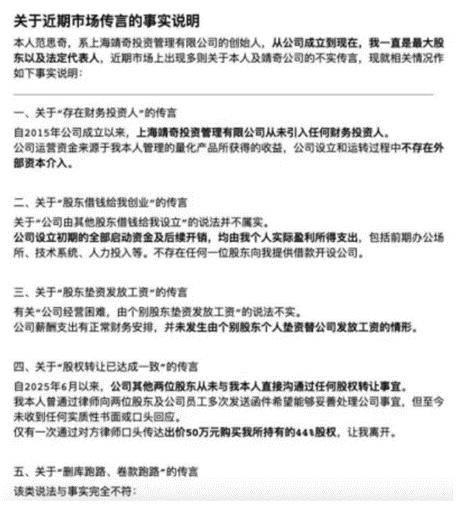
Core Viewpoint - A governance crisis within the quantitative private equity firm Shanghai Jingqi Investment Management Co., Ltd. has exposed underlying issues in the industry, leading to internal conflicts and regulatory complaints against its custodian, China Merchants Securities [2][4]. Group 1: Company Background - Jingqi Investment was established in 2015, managing assets between 1 billion and 2 billion yuan. The major shareholders include Fan Siqi (36.36%), Tang Jingren, and Mao Noping (27.27% each) [3]. - Fan Siqi serves multiple roles including legal representative, chairman, general manager, and fund manager, while Tang Jingren is the risk control officer [3]. Group 2: Recent Developments - On June 10, 2025, Fan Siqi announced his resignation as fund manager, citing significant stress and loss of passion due to management responsibilities [4]. - Following his resignation, a shareholder meeting led to his abrupt removal from all positions, which he described as a betrayal [4][6]. - On August 7, 2025, Jingqi Investment issued a risk warning, highlighting unauthorized actions by personnel and alleging that China Merchants Securities failed to fulfill its basic verification obligations [2][5]. Group 3: Financial Irregularities - Fan Siqi accused Tang Jingren of mismanaging company funds, including receiving commission income through a company owned by Tang, which was not properly accounted for [8]. - Allegations include using company funds for personal expenses and failing to report certain income, raising concerns about financial governance [8][9]. Group 4: Regulatory Context - The issue of commission rebates has been a longstanding concern in the industry, with regulations prohibiting such practices to maintain fair competition [11]. - Recent investigations into other firms, including allegations against senior personnel at China Merchants Securities, highlight ongoing scrutiny in the sector [10][12].

招商证券深陷DeepSeek母公司利益输送漩涡
阿尔法工场研究院· 2025-08-08 00:07
Core Viewpoint - The investigation involving a prominent quantitative institution and a leading brokerage firm highlights significant issues related to illegal commission practices in the financial industry, exposing a gray area of interests between quantitative private equity and brokerage firms [2][3][4] Group 1: Incident Overview - A recent investigation has emerged regarding the involvement of a quantitative private equity firm, Huanfang Quantitative, and China Merchants Securities in a commission-related scandal, leading to the transfer of implicated personnel to judicial authorities [2] - The market director of Huanfang Quantitative, Li Cheng, holds considerable influence within the company, particularly in selecting brokerage firms for trading, which may have contributed to the unfolding events [2] - Multiple personnel from China Merchants Securities are implicated, including Gao Xiang, the general manager of the institutional business department, who is under investigation for serious violations of discipline and law [2] Group 2: Details of Violations - Meng Pengfei, the former general manager of the Shenzhen Nanshan East Road branch of China Merchants Securities, engaged in a series of violations from 2018 to 2023, including arranging for relatives to serve as exclusive brokers for Huanfang Quantitative and facilitating the transfer of benefits to Li Cheng [3] - The total amount involved in these violations exceeds one hundred million yuan, indicating the scale of the misconduct [3] - Regulatory frameworks established in 2002 and 2012 explicitly prohibit improper commission practices, yet the actual implementation has seen increasingly covert methods, complicating regulatory oversight [3][4] Group 3: Industry Implications - The case serves as a wake-up call for the financial industry, revealing the long-standing gray interest chains between quantitative private equity firms and brokerage houses [4] - The incident raises concerns about the need for enhanced regulatory measures to ensure market order and prevent similar occurrences in the future, drawing attention from various market participants [4]

招商证券部门总被曝与幻方总监存返佣腐败 两方均沉默
Zhong Guo Jing Ji Wang· 2025-08-07 23:11
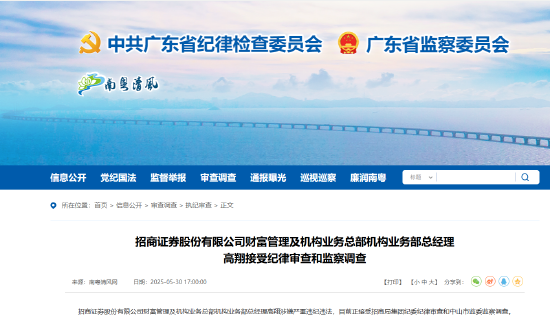
中国经济网北京8月8日讯(记者 徐自立) 财新网6日报道《幻方量化市场总监涉案原委 牵扯老东家多 人被查》指出,招商证券(600999)股份有限公司财富管理及机构业务总部机构业务部总经理高翔涉嫌 严重违纪违法接受调查一案,与去年幻方量化市场总监李橙案有直接关联。 南粤清风网此前于5月30日发布消息,招商证券股份有限公司财富管理及机构业务总部机构业务部总经 理高翔涉嫌严重违纪违法,目前正接受招商局集团纪委纪律审查和中山市监委监察调查。 新浪证券也于6日发布报道《招商证券机构业务部总经理高翔被查 或牵出幻方量化亿元返佣腐败链》, 据各方报道,其涉案线索或直指此前量化巨头幻方量化市场总监李橙的亿元返佣案。调查显示,高翔案 与2024年11月幻方量化市场总监李橙被查存在直接关联:李橙在2018-2023年间,伙同招商证券深南东 路营业部原总经理孟鹏飞,通过虚构经纪人身份,将幻方量化交易导入指定营业部,套取券商"交易佣 金40%提成" 制度下的绩效奖金,6年累计1.18亿元。孟鹏飞案发后曾向时任深圳分公司负责人高翔行贿 300万元黄金以求脱罪,高翔虽退还财物,仍因涉嫌渎职被查。目前相关几名涉案人员已移交司法。 中国经济 ...
招商证券机构业务部总经理高翔被查 或牵出幻方量化亿元返佣腐败链
Xin Lang Zheng Quan· 2025-08-06 03:56
Core Viewpoint - The investigation into Gao Xiang, the general manager of the institutional business department at China Merchants Securities, highlights serious disciplinary violations linked to a commission rebate scheme involving quantitative trading firms, particularly related to the case of Li Cheng, the market director of Huanfang Quantitative [1][3][4]. Group 1: Investigation and Management Changes - Gao Xiang is under investigation for serious violations and is being scrutinized by the disciplinary committees of China Merchants Group and Zhongshan City [3]. - The institutional business department, where Gao worked, generated 10.233 billion yuan in revenue in 2024, accounting for 48.98% of the company's total revenue [3]. - Gao's appointment was short-lived, as he took office less than a month before being investigated, following a recent leadership change at the Shenzhen branch [3]. Group 2: Commission Rebate Scheme - The internal commission rebate system at China Merchants Securities allows brokers to receive 40% of the net trading commissions as performance bonuses [4]. - Gao's case is directly linked to the investigation of Li Cheng, who, along with a former manager, allegedly misused the commission rebate system to siphon off 118 million yuan over six years [4]. - The investigation reveals a potential hidden mechanism of commission rebates between brokers and quantitative private equity firms, violating regulatory guidelines [4]. Group 3: Systemic Risks and Regulatory Response - The Gao Xiang case serves as a warning for internal governance at China Merchants Securities and exposes systemic risks in commission sharing during the rapid growth of quantitative trading [5]. - The new leadership, including Zhu Jiangtao, is expected to focus on balancing performance and compliance, which will be crucial for the industry's transformation [5]. - Regulatory measures are being strengthened, as indicated by the proposed revisions to the Securities Industry Professional Reputation Information Management Measures, which will include any commercial bribery in the record of unlawful conduct [4].
量化私募卖得最好,量化产品因何开启财富密码?
Feng Huang Wang· 2025-08-03 22:21
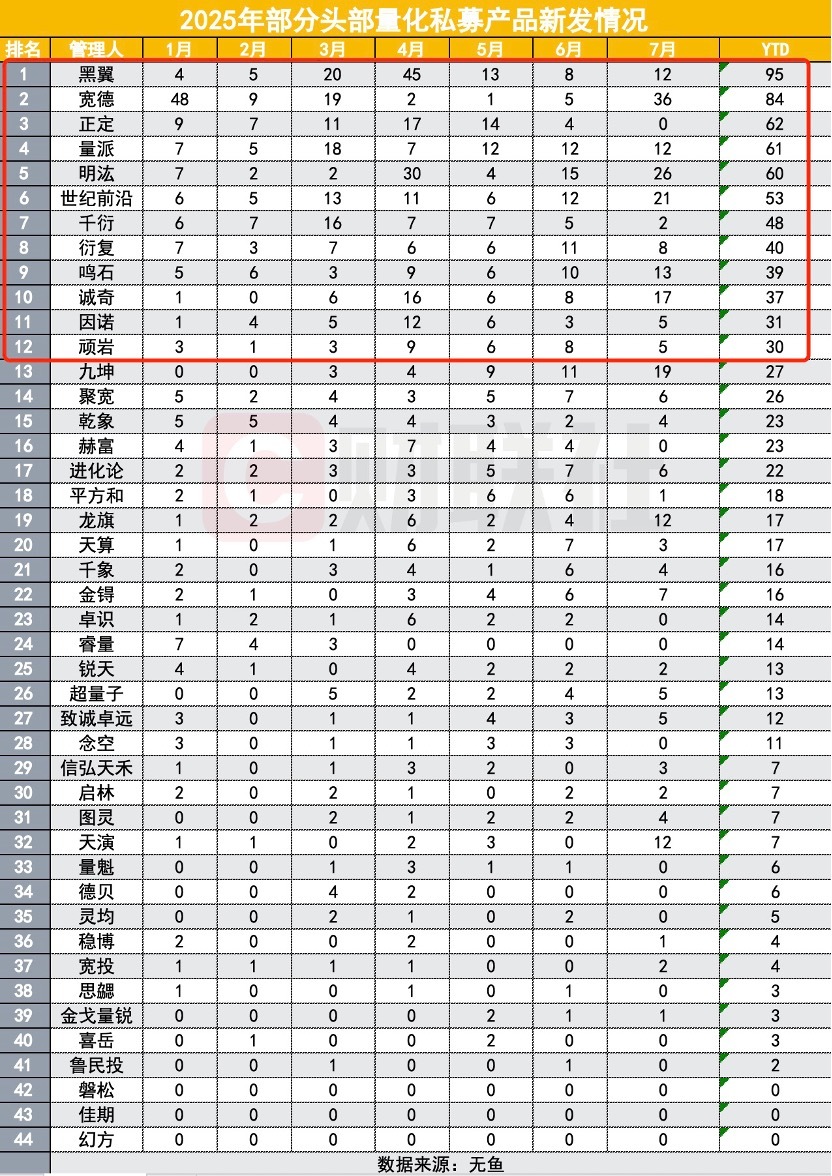
Core Insights - The A-share market experienced significant gains in July, leading to increased issuance of private equity funds, particularly in the quantitative sector, which has shown strong performance this year [1][3][10] Group 1: Quantitative Private Equity Growth - As of July 30, 2023, a total of 3,059 quantitative private equity products have been registered this year, accounting for 45.7% of all registered products [1][4] - The number of newly issued quantitative private equity products increased by 1,129 in just two months, reflecting a substantial rise in both product quantity and market share [1][4] - The number of billion-level quantitative private equity firms reached 41 in July, surpassing subjective private equity firms for the first time [4][10] Group 2: Sales and Marketing Strategies - Companies are adopting innovative sales strategies, including increased roadshow frequency and rapid response times, to enhance sales capabilities [2][8] - The use of AI tools is being integrated into sales processes to improve efficiency and professionalism [2][8] - Effective communication with clients about the nature of quantitative strategies and their inherent risks is emphasized to build trust and understanding [8][9] Group 3: Performance Metrics - The average return for 33 billion-level quantitative private equity firms in the first half of the year was 13.54%, with all firms achieving positive returns [10][11] - In a volatile market, quantitative stock selection strategies have shown significant advantages, with top strategies yielding over 36% returns year-to-date [11][12]
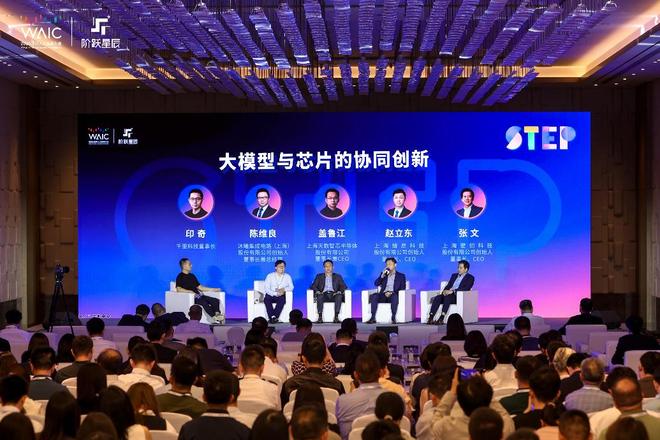
国产AI算力的“阶跃”时刻
Guan Cha Zhe Wang· 2025-07-30 09:26
Core Insights - The event highlighted the collaboration among leading domestic computing chip companies and the launch of the new multi-modal reasoning model Step 3 by Jumpshare Star, showcasing the strong adaptability of domestic chips [3][5][12] - The establishment of the "Model-Chip Ecological Innovation Alliance" aims to synchronize product development among hardware manufacturers and enhance strategic cooperation [12][19] - Jumpshare Star's revenue guidance for the year is projected to reach 1 billion yuan, indicating a strong market position compared to competitors [13][14] Group 1: Model and Chip Integration - The Step 3 model demonstrates a 300% inference efficiency improvement on domestic chips compared to DeepSeek-R1, and over 70% improvement in distributed inference on NVIDIA Hopper architecture [6][8] - Jumpshare Star's approach integrates model development with hardware characteristics from the outset, addressing the inefficiencies of traditional development cycles [8][9] - The new multi-matrix factorization attention (MFA) architecture significantly reduces key-value cache usage by 93.7%, making it more compatible with domestic chips [11] Group 2: Market Position and Strategy - Jumpshare Star has released over ten multi-modal models in the past year, positioning itself favorably in a market where multi-modal applications are increasingly sought after [15][16] - The company has established significant partnerships with leading domestic smartphone manufacturers and automotive companies, enhancing its market reach [16] - The rapid application of multi-modal models is expected to create a feedback loop that drives further model improvements [16] Group 3: Shanghai's Role in AI Development - Shanghai hosts a significant number of AI companies, with 24,733 registered AI enterprises in 2024, reflecting a 5.1% growth from the previous year [18] - The city benefits from a robust industrial ecosystem, including major wafer fabs and advanced packaging capabilities, which support GPU companies [18][19] - Shanghai's state-owned capital is actively investing in AI startups, indicating strong governmental support for the industry [18]