苏州银行

Search documents
苏州银行(002966) - 关于公司章程修改获监管机构核准及不再设立监事会的公告
2025-12-25 11:01
苏州银行股份有限公司(以下简称"本行")于 2025 年 11 月 17 日召开的 2025 年第二次临时股东会审议通过了《关于修订<苏州银行股份有限公司章程> 的议案》《关于不再设立监事会的议案》。 近日,本行收到《江苏金融监管局关于苏州银行股份有限公司修改公司章 程的批复》(苏金复﹝2025﹞479 号),核准本行修改后的章程。修改后的《苏州 银行股份有限公司章程》在巨潮资讯网(http://www.cninfo.com.cn)披露,供投 资者查阅。 自本行章程修改获监管机构核准之日起,本行不再设立监事会,监事会、 监事会专门委员会、监事等有关公司治理制度同步废止;本行各项规章制度中涉 及监事会、监事的规定不再适用;董事会审计委员会行使《公司法》和监管制度 规定的监事会职权;现任监事会成员不再担任监事及监事会相关职务,并确认与 本行无不同意见,亦无任何其他事项需通知本行股东及债权人。本行对各位监事 任职期间做出的贡献表示衷心感谢。 特此公告。 证券代码:002966 证券简称:苏州银行 公告编号:2025-097 苏州银行股份有限公司 关于公司章程修改获监管机构核准 及不再设立监事会的公告 本行及董事会全 ...
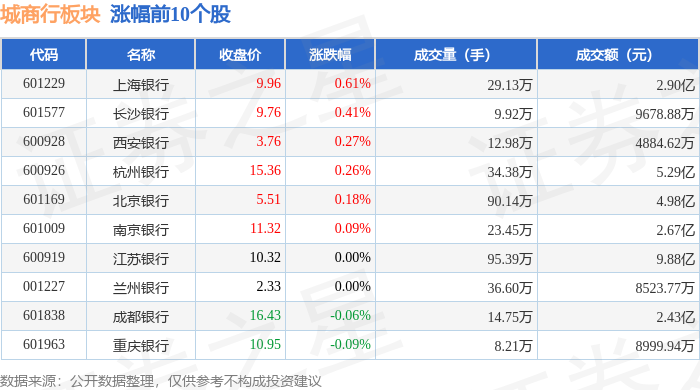
城商行板块12月25日涨0.07%,上海银行领涨,主力资金净流出1.11亿元
Zheng Xing Xing Ye Ri Bao· 2025-12-25 09:14
Market Performance - The city commercial bank sector increased by 0.07% compared to the previous trading day, with Shanghai Bank leading the gains [1] - The Shanghai Composite Index closed at 3959.62, up 0.47%, while the Shenzhen Component Index closed at 13531.41, up 0.33% [1] Individual Stock Performance - Shanghai Bank (601229) closed at 9.96, up 0.61% with a trading volume of 291,300 shares and a transaction value of 290 million [1] - Other notable performers include: - Changsha Bank (601577) at 9.76, up 0.41% [1] - Xi'an Bank (600928) at 3.76, up 0.27% [1] - Hangzhou Bank (600926) at 15.36, up 0.26% [1] - Beijing Bank (601169) at 5.51, up 0.18% [1] Capital Flow Analysis - The city commercial bank sector experienced a net outflow of 111 million from institutional investors, while retail investors saw a net inflow of 121 million [2] - The overall capital flow indicates a mixed sentiment, with institutional investors withdrawing funds while retail investors are increasing their positions [2] Detailed Capital Flow by Bank - Hangzhou Bank (600926) had a net inflow of 38.46 million from institutional investors, but a net outflow of 43.46 million from speculative funds [3] - Beijing Bank (601169) saw a net inflow of 23.41 million from institutional investors, with a net outflow of 18.77 million from speculative funds [3] - Guizhou Bank (601997) had a significant net inflow of 22.19 million from institutional investors, but a net outflow of 36.07 million from retail investors [3]


智能体如何重塑金融业?这场会议给出答案
Guo Ji Jin Rong Bao· 2025-12-25 02:34
Group 1 - The core theme of the event is the transformation of the banking industry through AI technology, emphasizing that the application of intelligent agents has shifted from optional to essential for banks [2][4] - The "14th Five-Year Plan" highlights the importance of AI in driving the digital transformation of the financial sector, positioning it as a key practice for enhancing financial services and promoting high-quality development [2][3] - Experts suggest that the focus of digital finance should shift from the "household sector" to the "enterprise sector," as the latter has a lower level of digitalization, which can enhance the efficiency of financial institutions [2][3] Group 2 - The development of digital finance is seen as a means to support supply-side structural reforms, requiring banks to apply digital capabilities across various management and operational levels [3] - The successful implementation of intelligent agents in finance relies on three factors: technological breakthroughs, iterative business scenarios, and supportive policies [4][5] - Financial institutions are encouraged to enhance their technological maturity and adapt to new business scenarios while building a collaborative ecosystem for the deployment of intelligent agents [5][9] Group 3 - The event highlighted the challenges faced by banks in AI application, including the need for high-quality knowledge bases and the integration of business and technology [6][7] - There are significant challenges in software testing for AI applications, including the need for comprehensive testing across various dimensions and ensuring fairness and safety in AI applications [8][9] - The future of intelligent agents in banking is expected to focus on creating operational loops that assess both business outcomes and model parameters for continuous improvement [9][10]
从工具升级到生态重塑:智能体开启银行业“人机共生”新图景
Zheng Quan Shi Bao Wang· 2025-12-24 12:18
Group 1 - The banking industry is undergoing a significant transformation driven by artificial intelligence, particularly through the integration of AI agents, which are reshaping the development landscape of the sector [1][2] - The Chinese banking sector is currently at the L3 level of AI integration, focusing on human-machine collaboration, with expectations for AI to evolve from being a mere assistant to having comprehensive decision-making capabilities by 2025 [2][8] - AI agents are expected to unlock new revenue streams by enabling banks to better identify risks and expand their service ecosystems, particularly in high-value scenarios that involve complex processes and large data analysis [3][8] Group 2 - Despite the promising outlook, the deployment of AI agents in the financial sector faces challenges such as uncertainty in AI outputs, which are probabilistic rather than deterministic, raising concerns about reliability [4][5] - Issues related to organizational responsibility and ethical considerations are emerging, including the need for clear delineation of responsibilities between business and technical teams, as well as the challenges in training personnel who understand both domains [5][6] - The industry is actively exploring solutions to these challenges by developing a "trustworthy" AI framework that emphasizes reliable domain knowledge, transparent decision-making processes, and continuous operational capabilities [6][7] Group 3 - The future of banking services is anticipated to shift towards a more seamless and ecological model, with profitability moving from interest margins to data-driven and open ecosystem competition [8][9] - The role of human employees in the banking sector is expected to evolve, with a focus on supervisory and strategic functions rather than routine tasks, leading to the creation of new job roles related to AI assessment and knowledge management [8][9] - The development of AI agents is seen as a catalyst for a deeper transformation in the banking industry, impacting productivity, relationships, and the essence of finance itself [9]
从“看资产”到“评创新”:一家银行这样破解科创企业融资密码
Sou Hu Cai Jing· 2025-12-24 01:37
Core Insights - The article emphasizes the critical role of finance in empowering the real economy, particularly through the innovative financial services provided by Suzhou Bank to support technology-driven enterprises [1][6]. Group 1: Financial Services for Innovation - Suzhou Bank has established a comprehensive financial service system that covers the entire lifecycle of technology enterprises, having served over 13,500 such companies with a total credit amount exceeding 130 billion yuan by the end of September 2025 [1][6]. - The bank has developed a "2+4+N" financial system specifically for technology enterprises, which includes a central committee and specialized departments to ensure efficient service delivery [2][3]. Group 2: Addressing Financing Challenges - Traditional financial services often rely on asset-based evaluations, which can hinder technology enterprises lacking fixed assets. Suzhou Bank has created the "Suxin Innovation Power" evaluation model to assess the intrinsic value of these companies based on innovation metrics [2][3]. - The bank has launched six "Accompanying Series" products that cater to the financial needs of enterprises at various stages, from seed to maturity, addressing challenges in funding for research and development, capacity expansion, and cross-border growth [3][6]. Group 3: Knowledge Property Financing - Suzhou Bank has focused on knowledge property financing, completing over 780 registrations with a total amount exceeding 10 billion yuan, positioning itself as a leader in this emerging field [5]. - The bank has been involved in pioneering initiatives, such as the first data intellectual property registration certificate in the banking industry, and has successfully facilitated financing solutions for local enterprises [5]. Group 4: Multi-Dimensional Support - The bank extends its services beyond technology finance to include green development, cross-border trade, and supply chain collaboration, thereby enhancing its support for the broader real economy [6]. - By integrating various resources, including government support and venture capital, Suzhou Bank has created a comprehensive support system for technology enterprises, facilitating their growth and innovation [3][6]. Group 5: Future Outlook - As the transformation of the real economy progresses, Suzhou Bank aims to strengthen its financial capabilities to support more technology enterprises, contributing to sustainable and high-quality regional economic development [7].
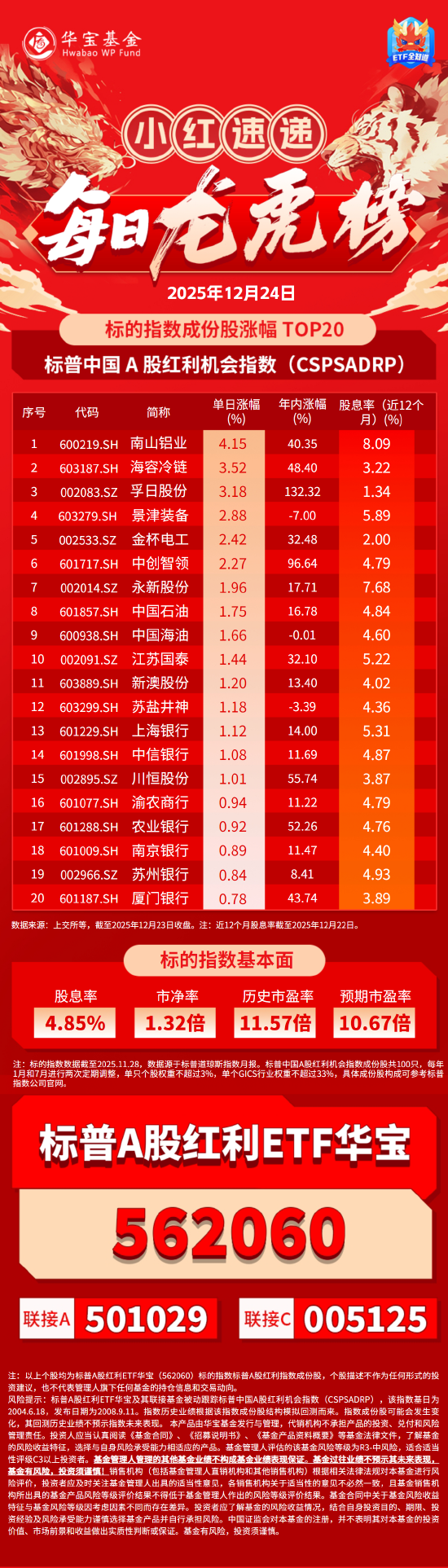
小红日报 | 南山铝业、海容冷链领涨!标普A股红利ETF华宝(562060)标的指数小幅飘红
Xin Lang Cai Jing· 2025-12-24 01:21
Group 1 - The article discusses the performance of the CSPSADRP index, highlighting the top 20 stocks based on their annual growth and dividend yield [6][7] - Nanshan Aluminum (600219.SH) leads with a daily increase of 4.15% and an annual growth of 40.35%, along with a dividend yield of 8.09% [6] - Other notable performers include Hailong Cold Chain (603187.SH) with a 3.52% daily increase and 48.40% annual growth, and Luri Co. (002083.SZ) with a remarkable 132.32% annual growth despite a lower dividend yield of 1.34% [6] Group 2 - The overall dividend yield for the index is reported at 4.85%, with a price-to-book ratio of 1.32 times [7] - Historical price-to-earnings ratio stands at 11.57 times, while the expected price-to-earnings ratio is 10.67 times, indicating potential valuation insights for investors [7]




银行AH优选ETF(517900)午后涨1.2%,机构:银行PB与ROE不匹配
Jin Rong Jie· 2025-12-23 21:04
Group 1 - The core viewpoint of the news is that bank stocks are experiencing a rebound, with several banks showing significant gains as mid-term dividend announcements peak, indicating a positive sentiment in the banking sector [1] - As of December 17, 2025, 26 A-share listed banks have disclosed mid-term or quarterly dividend plans, with a total proposed payout exceeding 264.6 billion yuan [1] - The price-to-book (PB) ratio of the banking sector has increased from 0.56 at the beginning of the year to 0.68 by December 17, 2025, reflecting a revaluation driven by dividend themes [1] Group 2 - Insurance funds have significantly increased their investments in bank stocks during the third quarter, indicating a sustained preference for bank equities among institutional investors [2] - The bank AH index has outperformed the A-share bank index, with a cumulative increase of 96.08% since early 2019 compared to 87.79% for the China Securities Bank index [2] - The current valuation and dividend yield of bank stocks are attractive for long-term investors, suggesting a favorable cost-benefit ratio for investing in this sector [2]
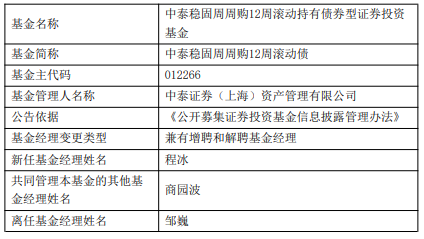
中泰稳固周周购12周滚动债增聘程冰 邹巍离任
Zhong Guo Jing Ji Wang· 2025-12-23 07:53
Group 1 - The core point of the news is the announcement by Zhongtai Securities (600918) regarding the appointment of Cheng Bing as the new fund manager for Zhongtai Stable Weekly Purchase 12-Week Rolling Bond, while Zou Wei has resigned from the position [1][2] - Cheng Bing has extensive experience in the financial sector, having held various positions in companies such as Dongwu Securities, Shanghai Bank, and Industrial Securities, and has been with Zhongtai Securities since June 2023 [1] - The Zhongtai Stable Weekly Purchase 12-Week Rolling Bond A/C was established on July 21, 2021, and as of December 22, 2025, it has reported a year-to-date return of 1.82% and 1.53%, with cumulative returns since inception of 13.88% and 12.38% [1] Group 2 - The fund is managed by Zhongtai Securities (Shanghai) Asset Management Co., Ltd., and the announcement is in accordance with the "Measures for the Disclosure of Information on Publicly Raised Securities Investment Funds" [2] - The fund manager change includes both the appointment of Cheng Bing and the resignation of Zou Wan [2] - The fund's main code is 012266, and it is categorized as a bond-type securities investment fund [2]

青岛汇金通电力设备股份有限公司 关于为下属控股子公司申请银行综合授信提供担保的进展公告
Zhong Guo Zheng Quan Bao - Zhong Zheng Wang· 2025-12-23 06:45
重要内容提示: ● 担保对象及基本情况 ■ 本公司董事会及全体董事保证本公告内容不存在任何虚假记载、误导性陈述或者重大遗漏,并对其内容 的真实性、准确性和完整性承担法律责任。 ● 累计担保情况 ■ 青岛汇金通电力设备股份有限公司(以下简称"公司")于2025年12月22日与苏州银行股份有限公司兴化 支行(以下简称"苏州银行")签订《最高额保证合同》,为下属控股子公司江苏江电电力设备有限公司 (以下简称"江苏江电")申请银行综合授信提供人民币8000万元担保,担保方式为连带责任保证。截至 本公告披露日,公司年度预计担保额度使用情况如下: 单位:万元 ■ (二)内部决策程序 公司于2025年3月24日召开第五届董事会第二次会议、2025年4月14日召开2024年年度股东大会分别审议 通过了《关于2025年公司及子公司间担保额度预计的议案》,同意2025年度公司为合并报表范围内下属 子公司提供担保、子公司间互相担保额度总计不超过人民币11亿元(包括原有担保展期或续保),担保 方式包括保证、抵押、质押等。具体内容详见公司于2025年3月25日在上海证券交易所 (www.sse.com.cn)披露的《公司关于2025年 ...

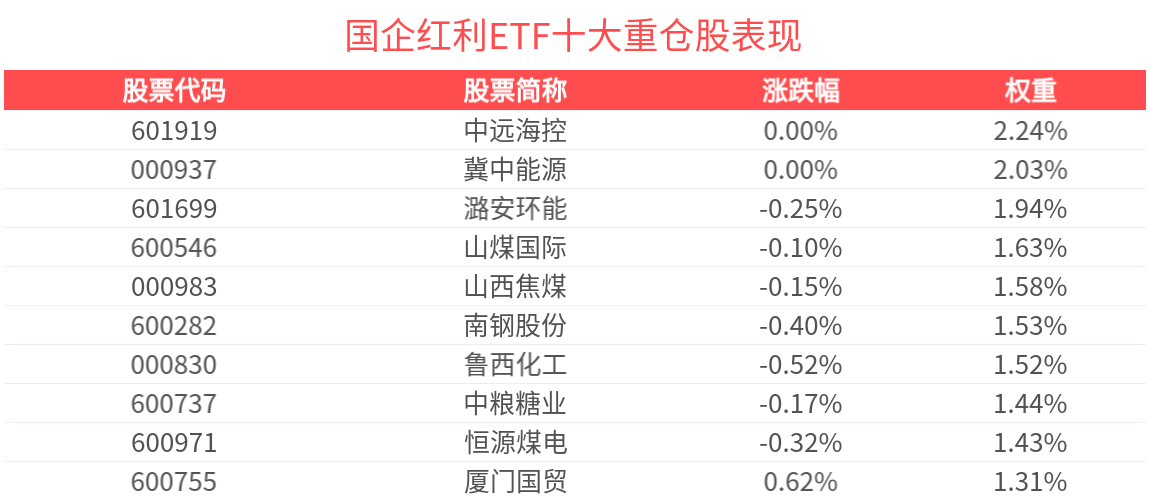
政策支持“AI+”为央企转型赋能,国企红利ETF(159515)盘中蓄势
Sou Hu Cai Jing· 2025-12-23 02:25
Group 1 - The core viewpoint of the articles indicates that traditional state-owned enterprises (SOEs) are expected to receive clear guidance for transformation and growth in emerging businesses, driven by policy support and capital investment, which may enhance their profitability and long-term investment value [1][2] - The National State-owned Assets Supervision and Administration Commission (SASAC) has announced that during the "14th Five-Year Plan" period, state-owned enterprises will actively undertake major national technological tasks and promote the "AI+" initiative, focusing on high value-added and high-tech industries [1][2] - The China Securities State-Owned Enterprises Dividend Index, which tracks high dividend yield securities from SOEs, reflects the overall performance of these high dividend yield stocks, with the top ten weighted stocks accounting for 16.99% of the index [2][4] Group 2 - The National State-Owned Enterprises Dividend ETF (159515) has shown a trading volume of 450.44 million yuan with a turnover rate of 9.47%, indicating a stable interest in dividend-paying assets in the current low-interest-rate environment [1][2] - The ETF has seen a growth of 298.21 million yuan in size and an increase of 360.00 million shares since the beginning of the month, highlighting the attractiveness of dividend assets in the current market [1][2] - The top ten weighted stocks in the China Securities State-Owned Enterprises Dividend Index include COSCO Shipping Holdings, Jizhong Energy, and Lu'an Environmental Energy, among others, with varying performance in terms of price changes [2][4]