吉利汽车

Search documents
花旗:内地以旧换新补贴新政或令入门级车型市场加快整合 比亚迪股份(01211)等更具规模优势
智通财经网· 2026-01-02 08:19
Group 1 - Citigroup reports that China's new vehicle replacement subsidy policy for 2023 maintains the subsidy cap from last year but changes the calculation method to a percentage of vehicle price instead of a fixed amount [1] - Only new energy vehicles priced above 166,700 RMB and fuel vehicles above 150,000 RMB qualify for the maximum subsidy under the scrappage policy; under the replacement policy, new energy vehicles priced above 187,500 RMB and fuel vehicles above 216,700 RMB qualify [1] - The new subsidy policy may accelerate market consolidation for entry-level models (average price below 160,000 RMB), benefiting companies like BYD, Geely, and Great Wall Motors due to their cost control and export profit leverage [1] Group 2 - Citigroup predicts that China's passenger car retail sales in Q4 last year may deviate from normal seasonal fluctuations by approximately 700,000 to 800,000 units; even if this sales volume is fully added back in Q1 this year, wholesale sales are expected to decline by 33% quarter-on-quarter (8% year-on-year) [2] - Citigroup also anticipates that Pony.ai-W's H-shares will enter the Hong Kong Stock Connect around mid-2026 [2]



花旗:内地以旧换新补贴新政或令入门级车型市场加快整合 比亚迪股份等更具规模优势
智通财经网· 2026-01-02 08:19
Group 1 - Citigroup reports that China's new vehicle replacement subsidy policy for 2023 maintains the subsidy cap from last year but changes the calculation method to a percentage of vehicle price instead of a fixed amount [1] - Under the scrappage policy, only new energy vehicles priced above 166,700 RMB and fuel vehicles above 150,000 RMB qualify for the maximum subsidy; under the replacement policy, new energy vehicles priced above 187,500 RMB and fuel vehicles above 216,700 RMB qualify for the maximum subsidy [1] - The new subsidy policy may accelerate market consolidation for entry-level models (average price below 160,000 RMB), benefiting companies like BYD, Geely, and Great Wall Motors due to their cost control and export profit leverage [1] Group 2 - Citigroup predicts that China's passenger car retail sales in Q4 last year may deviate from normal seasonal fluctuations by approximately 700,000 to 800,000 units; even if this sales volume is fully added back in Q1 this year, wholesale sales are expected to decline by 33% quarter-on-quarter (8% year-on-year) [2] - The company anticipates that Pony.ai's H-shares will enter the Hong Kong Stock Connect around mid-2026 [2]
2025车圈争锋落幕,传统车企转型驶向新纪元
Di Yi Cai Jing· 2026-01-02 06:57
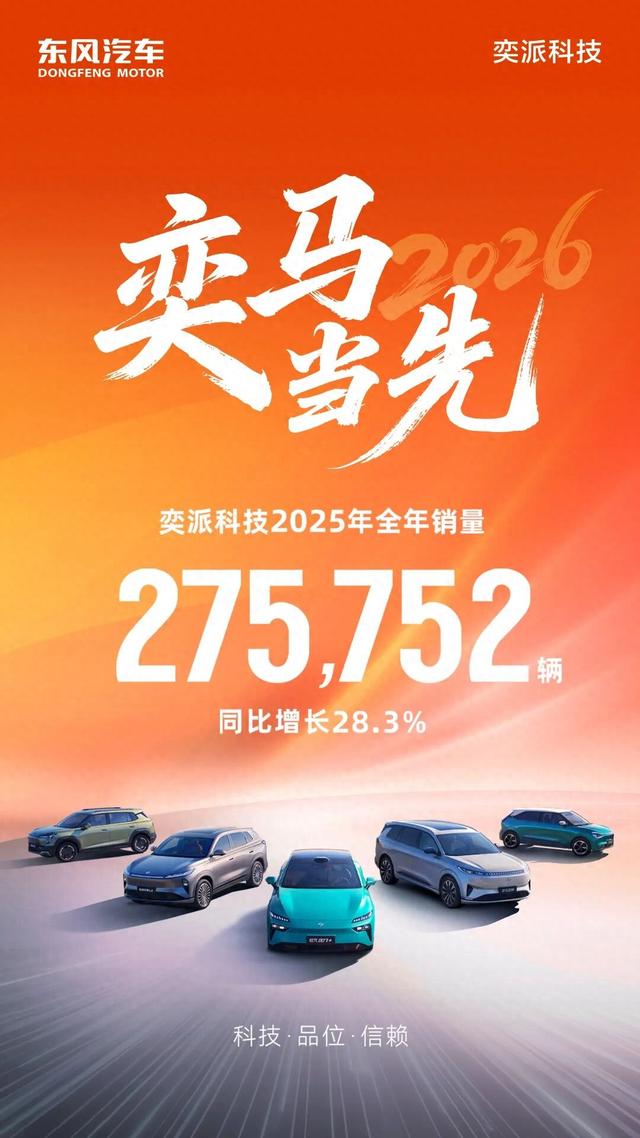
Core Insights - The automotive market is transitioning into a summary period after 2025, with traditional automakers and joint ventures revitalizing their strategies to embrace the new energy era, achieving significant transformation results [1] - By November 2025, the penetration rate of new energy passenger vehicles in China approached 60%, indicating a major shift in consumer preferences towards electric vehicles [1] - Despite the overall growth in new energy vehicle sales, there are few blockbuster models with monthly sales exceeding 10,000 units, highlighting the challenges traditional automakers face in changing consumer perceptions [1] Group 1: Market Trends - In the mainstream price segment of 100,000 to 200,000 yuan, new car sales reached 9.3957 million units in the first 11 months of 2025, with a year-on-year growth of 5.8%, accounting for over 40% of the total new car sales market [4] - The competitive landscape in this price range is intense, with up to 10 new models entering the market each month, making it difficult for any single model to secure a leading position [4] Group 2: Company Performance - Dongfeng Yipai has emerged as a strong competitor, with a nearly 30% increase in sales in 2025, showcasing the effectiveness of its strategic adjustments [6] - The Yipai brand has successfully launched multiple models, such as the 2026 Yipai eπ008, which quickly became one of the top three sellers in the 150,000 to 200,000 yuan new energy SUV segment [7] - The Yipai brand's sales strategy focuses on integrating advanced technology and appealing design to meet diverse consumer demands, resulting in rapid sales growth [6][7] Group 3: Product Development - In 2025, Yipai Technology launched seven new models, maintaining a product release pace comparable to new energy startups, with plans to introduce six new models in 2026 [12] - The company aims to build a comprehensive product matrix with at least 20 models by 2028, ensuring full coverage of mainstream market segments [12] Group 4: Strategic Partnerships - Yipai Technology emphasizes collaboration with ICT companies to enhance its electric and intelligent technology advantages, which is crucial for its transformation [1][22] - The company has established a rapid response mechanism for customer complaints, ensuring timely solutions to enhance user satisfaction and brand loyalty [14] Group 5: Brand Positioning - The Yipai brand targets younger consumers with a focus on technology and aesthetics, while the Dongfeng Fengshen brand emphasizes comfort and value for family users [10][8] - Yipai has engaged in various cultural and sports events, such as esports and marathons, to connect with younger audiences and promote a sustainable development ethos [19][21] Group 6: Industry Outlook - The automotive industry is expected to continue facing intense competition, with predictions that only 5 to 6 automakers may survive in the long term [24] - As the market evolves, the focus will shift back to core competencies such as safety and technology, which are critical to consumer trust and brand loyalty [24]


大行评级|花旗:以旧换新补贴新政或令入门级车型市场加快整合 比亚迪、吉利等更具规模优势
Ge Long Hui· 2026-01-02 04:55
Core Viewpoint - Citigroup's report indicates that the mainland has updated its vehicle trade-in subsidy policy for 2023, shifting from fixed amounts to percentage-based calculations based on vehicle prices [1] Summary by Category Subsidy Policy Changes - The subsidy cap remains unchanged from last year, but eligibility is now based on vehicle price percentages rather than fixed amounts [1] - For scrapping and updating policies, only new energy vehicles priced above 166,700 yuan and fuel vehicles above 150,000 yuan qualify for the maximum subsidy [1] - Under the trade-in policy, only new energy vehicles priced above 187,500 yuan and fuel vehicles above 216,700 yuan are eligible for the maximum subsidy [1] Market Implications - The new subsidy structure may accelerate market consolidation for entry-level models (average price below 160,000 yuan) [1] - Companies like BYD, Geely, and Changan, which have advantages in cost control and higher profit margins from export businesses, may gain a competitive edge in the domestic market compared to smaller, loss-making car manufacturers [1] Commercial Vehicle Subsidies - The subsidies for commercial trucks and urban buses will remain unchanged from last year, which is expected to benefit companies like Yutong Bus and China National Heavy Duty Truck Group [1]

2025 全年汽车销量 / 交付榜出炉:比亚迪 460 万辆蝉联第一,零跑夺新势力销冠
Xin Lang Cai Jing· 2026-01-02 04:26
Group 1 - In 2025, the domestic automotive market is highly competitive, with BYD leading in sales at 4,602,436 units, marking a year-on-year increase of 7.73% [1][2] - BYD's overseas sales surpassed 1 million units for the first time, showing a significant growth of 145% [2] - China FAW achieved sales of 3,301,963 units, a 3.2% increase, with notable growth in its Hongqi brand, which sold over 460,000 units, up 11.7% [2] Group 2 - Geely Auto reported sales of 3,024,567 units, a 39% increase, exceeding its annual target of 3 million units [2] - Chery Group's sales reached 2,631,381 units, an 8% increase, with its Jetour brand growing by 10% [2] - Great Wall Motors sold 1,323,672 units, with its WEY brand experiencing a remarkable growth of 86.29% [3] Group 3 - Li Auto's sales were 406,343 units, reflecting a decline of 18.8%, while NIO reported 326,028 units, a growth of 46.9% [3] - Xpeng Motors achieved sales of 429,445 units, a significant increase of 126%, with overseas deliveries reaching 45,008 units, up 96% [3] - The overall performance of new energy vehicles is strong, with several brands, including SAIC-GM Wuling, surpassing 1 million units in annual sales [2][3]
电动汽车销量,比亚迪有望超越特斯拉,成全球第一
Guan Cha Zhe Wang· 2026-01-02 03:54
Core Viewpoint - BYD is poised to surpass Tesla in global electric vehicle sales for the first time in 2025, achieving significant growth while Tesla faces a decline in sales [1][3]. Group 1: Sales Performance - In 2025, BYD delivered 4.6 million vehicles, a 7.7% increase from 2024, with electric vehicle sales rising by 28% to 2.25 million units [1][3]. - Tesla's estimated electric vehicle sales for 2025 are projected to decline by 8% to 1.64 million units, allowing BYD to potentially become the largest electric vehicle manufacturer globally [1][3]. - BYD's cumulative sales in 2024 surpassed Japanese automakers Honda and Nissan, and the company has achieved growth for five consecutive years [3]. Group 2: Market Expansion - BYD is leveraging its large domestic market while actively expanding its overseas sales, particularly in Europe, Latin America, and Southeast Asia [3][5]. - The company has seen significant growth in overseas sales, with a notable performance in European markets, where it registered 7,231 pure electric vehicles in April 2025, a 169% year-on-year increase [7]. - In the UK, Chinese automakers, including BYD, accounted for 13% of new car registrations in November, doubling their market share from the previous year [8]. Group 3: Competitive Landscape - Despite ongoing sales growth, BYD faces challenges, including a 18% year-on-year decline in December sales, marking the fourth consecutive month of declining deliveries [3]. - Analysts believe BYD is better positioned to handle competitive challenges compared to other automotive brands, with expectations for total sales to reach 5.3 million units in 2026 [5]. - The introduction of new products and technology platforms is anticipated to enhance BYD's competitive edge over Tesla [5].

港股新能源汽车股集体上涨,理想汽车涨超6%领涨
Xin Lang Cai Jing· 2026-01-02 03:04
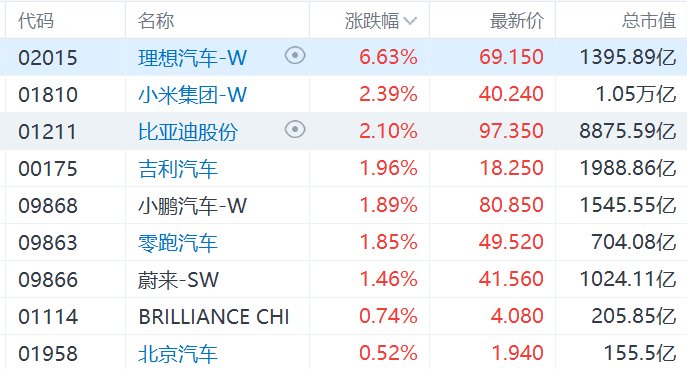
格隆汇1月2日|港股市场新能源汽车股集体上涨,其中,理想汽车涨超6%领涨板块,小米、比亚迪股 份涨超2%,吉利汽车、小鹏汽车、零跑汽车涨近2%。 | 代码 | 名称 | | 涨跌幅 √ | 最新价 | 总市值 | | --- | --- | --- | --- | --- | --- | | 02015 | 理想汽车-W | (0) | 6.63% | 69.150 | 1395.89 Z | | 01810 | 小米集团-W | | 2.39% | 40.240 | 1.05万亿 | | 01211 | 比亚迪股份 | 0 | 2.10% | 97.350 | 8875.59亿 | | 00175 | 吉利汽车 | | 1.96% | 18.250 | 1988.86亿 | | 09868 | 小鹏汽车-W | | 1.89% | 80.850 | 1545.55亿 | | 09863 | 零跑汽车 | | 1.85% | 49.520 | 704.08亿 | | 09866 | 蔚来-SW | | 1.46% | 41.560 | 1024.11亿 | | 01114 | BRILLIANCE CHI | ...


新势力车企2025销量公布:零跑夺得销冠,小米、小鹏也超目标
新华网财经· 2026-01-02 02:55
| 车企 | 2025年全年(辆) | 同比 | 2024年全年(辆) | | --- | --- | --- | --- | | 比亚迪 | 460. 24万 | 7.73% | 427.21万 | | 吉利汽车 | 302. 46万 | 38. 96% | 217.66万 | | 奇瑞集团 | 280.64万 | 7.80% | 260. 39万 | | 长城汽车 | 132.37万 | 7. 33% | 123.33万 | | 零胞 | 59.66万 | 103. 13% | 29.37万 | | 鸿蒙智行 | 58.91万 | 32. 38% | 44.50万 | | 小鵬 | 42.94万 | 126. 02% | 19万 | | 小米 | 预计超41万 | 预计超203% | 超13.5万 | | 理想 | 40.63万 | -18.82% | 50.05万 | | 长安启源 | 超40万 | 超173% | 14.63万 | | 劇来 | 32.60万 | 46. 90% | 22.2万 | | 奕派科技 | 27.58万 | 28. 30% | 约21.30万 | | 岚图 | 15.02万 ...
港股开盘 | 2026年首个交易日恒指高开0.34% 壁仞科技(06082)涨82%
智通财经网· 2026-01-02 01:37
Group 1: Market Overview - The Hong Kong stock market opened positively on the first trading day of 2026, with the Hang Seng Index rising by 0.34% and the Hang Seng Tech Index increasing by 0.58% [1] - Wall Street analysts suggest that the Federal Reserve's expected interest rate cuts and potential expansion of its balance sheet may reduce policy uncertainty and market volatility, presenting opportunities in global equities and commodities [1] - Despite the current low trading volume and market differentiation in Hong Kong, there are opportunities for gradual accumulation of undervalued assets with resilient fundamentals [1] Group 2: Company News - Meitu Inc. has completed all conditions for a $250 million convertible bond agreement with Alibaba, expected to close by December 31, 2025, with proceeds intended for general business purposes [2] - CITIC Resources anticipates a significant decline in its unaudited consolidated net profit for the year ending December 31, 2025, estimated between HKD 170 million to 230 million, representing a year-on-year decrease of approximately 60% to 70% [2] - XPeng Motors delivered 37,500 smart electric vehicles in December 2025, marking a 2% year-on-year increase, with total deliveries for the year reaching 429,400 units, a 126% growth compared to the previous year [2] - Geely Automobile reported total vehicle sales of 236,817 units in December 2025, a year-on-year increase of approximately 13%, with total annual sales reaching 3,024,567 units, up 39% from the previous year [2] - NIO delivered 48,100 vehicles in December 2025, achieving a monthly record with a year-on-year growth of 54.6%, bringing the cumulative delivery total to 997,600 units by December 31, 2025 [2]

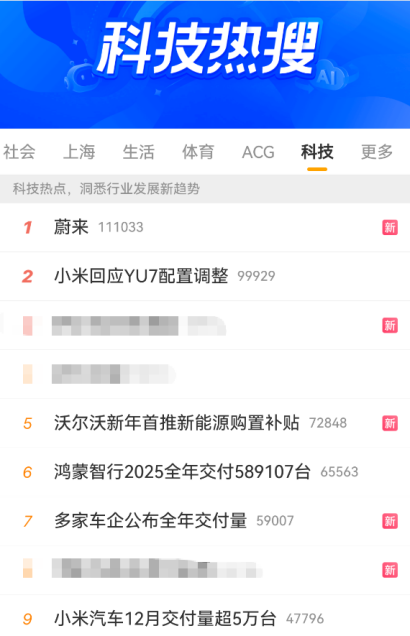
多家车企冲上微博科技热搜,蔚来、小米等销量均创新高
Zhong Guo Ji Jin Bao· 2026-01-02 01:37
2026年1月1日,微博科技热搜一度被车企霸榜,主要与车企交付量(销量)有关。 车企月度竞争仍是"你追我赶"的态势。2025年12月,蔚来、小米等车企的交付量(销量)均创新高,而 在此前多个月份是零跑等车企遥遥领先。 多家车企人士向记者表示,基于年底车企冲刺销量的需求,以及2026年新能源汽车购置税减半等政策变 化,大部分车企在2025年12月的销量会比较高。 对比全年交付量(销量),更能凸显汽车市场竞争的激烈。比亚迪、理想作为2024年的"大赢家",2025 年的增长势头落后于吉利汽车、零跑、小米等车企。 多家车企掌门人在受访时表示,汽车行业就像是一场没有尽头的马拉松,一时的领先很正常,困难的是 持续能赢,或者退一步后要一直能在"牌桌"上。 | 车企 | 2025年全年(辆) | 同比 | 2024年全年(辆) | | --- | --- | --- | --- | | 比亚迪 | 460. 24万 | 7.73% | 427.21万 | | 吉利汽车 | 302. 46万 | 38. 96% | 217.66万 | | 奇瑞集团 | 280.64万 | 7.80% | 260. 39万 | | 长城汽车 ...