富士

Search documents
富士X-Pro4或10月发布 将搭载4000万像素传感器
Xin Lang Cai Jing· 2026-02-16 02:30
7-8档的防抖系统 近期,关于富士新品的爆料猜测,富士X-Pro系列最新的X-Pro4或将于今年10月正式发布。根据 Fujirumors的爆料,富士X-Pro4相机将于富士X-T6之后推出,目前猜测的时间是10月到12月之间。另 外,有消息称富士会跳过X-Pro4的名称,而改用X-Pro5或者X-Pro6。 目前曝光的富士X-Pro4的大概规格如下: 与X-H2同款的4020万像素APS-C画幅传感器 X-Processor 5影像处理器 改进的混合OVF/EVF取景器 约425点智能对焦系统 视频支持4K 60P 4:2:2 10bit规格视频,可能具备6k或8K规格视频 机身采用复古旁轴设计 (11355668) ...


AI热潮带飞马桶厂?不起眼的日企,控制了芯片命脉
创业邦· 2026-02-06 00:08
Core Viewpoint - The article discusses how traditional companies, such as TOTO, have successfully transitioned into the semiconductor industry by leveraging their existing technologies and expertise, particularly in ceramics, to meet the growing demands of the AI and semiconductor markets [6][19]. Group 1: TOTO's Transformation - TOTO, a Japanese bathroom products company, saw its stock price surge by 11% due to its involvement in the semiconductor industry, despite its primary business being unrelated to AI [8]. - The company's success is attributed to its expertise in producing high-density, low-porosity ceramics, which are essential for semiconductor manufacturing processes [11][12]. - TOTO's pivot to semiconductor precision ceramics has become a significant growth engine, contributing 42% of its revenue with a profit margin of 40%, far exceeding the average of 7% across all departments [19]. Group 2: Broader Industry Trends - The semiconductor industry is increasingly adopting electrostatic chucks, which TOTO has developed, due to their ability to provide uniform force and reduce contamination risks during wafer processing [12][17]. - Other traditional Japanese companies, such as Ajinomoto and Kao, have also successfully transitioned into the semiconductor sector by utilizing their existing technologies to create essential materials for chip manufacturing [22][30]. - The article highlights that Japan's historical industrial strength and technological reserves have allowed these companies to adapt and thrive in the semiconductor market, even as their traditional businesses face challenges [34][37]. Group 3: China's Potential - The article suggests that China's industrial sectors are beginning to mature, with companies like Xingfa Group and Huitian New Materials emerging as players in the semiconductor supply chain by developing high-purity materials and specialized adhesives [39][43]. - The narrative emphasizes that China's industrial development, although historically delayed, is now gaining momentum, and the accumulated technological expertise will eventually lead to significant advancements in the semiconductor industry [49].


上海芯导电子科技股份有限公司2025年年度报告摘要
Shang Hai Zheng Quan Bao· 2026-02-02 19:16
Core Viewpoint - The company, Xindao Technology, focuses on the research and sales of power semiconductors, with a significant emphasis on product innovation and market expansion in various sectors, including consumer electronics, automotive, and renewable energy [7][14][15]. Company Overview - Xindao Technology operates under a Fabless model, concentrating on the design of power semiconductor products while outsourcing manufacturing and testing processes [8][10]. - The company's main products include power devices such as TVS, MOSFETs, and IGBTs, as well as power ICs for power management applications [14][15]. Industry Situation - The global semiconductor market is projected to grow significantly, with a forecasted revenue of $753 billion in November 2025, reflecting a year-on-year increase of 29.8% [13]. - China's semiconductor sales are expected to exceed $180 billion in 2025, capturing approximately 27.8% of the global market share [13]. - The industry is experiencing a shift towards domestic production due to geopolitical tensions, creating substantial opportunities for local manufacturers [17]. Financial Performance - In the reporting period, the company achieved a revenue of 393.61 million yuan, an increase of 11.52% year-on-year, while net profit attributable to shareholders decreased by 4.91% to 106.15 million yuan [21]. - The company plans to distribute a cash dividend of 4.30 yuan per 10 shares, amounting to a total of 50.57 million yuan, which represents 47.64% of the net profit for the year [5]. Future Development Trends - The semiconductor market is expected to rebound sharply in 2024, driven by emerging applications such as AI, electric vehicles, and data centers, with a compound annual growth rate of 6.8% projected until 2030 [16]. - The demand for power devices is anticipated to grow due to the dual carbon goals, with a focus on high-voltage and low-power applications in sectors like electric vehicles and renewable energy [20].

拼多多把过年干沉默了
半佛仙人· 2026-01-11 13:50
Core Viewpoint - The article discusses the changing nature of the Chinese New Year celebrations, highlighting the financial pressures on individuals and the commercialization of the holiday, while promoting Pinduoduo's subsidies and discounts for purchasing New Year goods [2][21]. Group 1: New Year Spending Trends - The article notes that the New Year has transformed from a joyful celebration into a financial burden for many, with individuals feeling pressured to spend excessively on gifts and goods to maintain social status [2][4]. - It emphasizes the concept of "keeping up appearances" during the New Year, where individuals buy expensive gifts despite financial constraints, leading to feelings of regret [4][18]. Group 2: Pinduoduo's Offerings - Pinduoduo launches a "100 Billion Subsidy New Year Goods Festival" starting January 8, offering significant discounts on a wide range of products, including food, beverages, and gifts [2][21]. - The article highlights specific products available at discounted prices, such as 4 barrels of Lu Hua peanut oil for 52 yuan, which is over 100 yuan cheaper than supermarkets [8]. - It mentions the availability of popular snacks and beverages, like Xu Fu Ji chocolates and Coca-Cola, at competitive prices, reinforcing the value proposition of Pinduoduo [8][9]. Group 3: Personal Rewards and Gifting - The article suggests that the New Year is also a time for self-reward, with mentions of high-end products like the iPhone 17 being offered at discounted prices, such as 5,099 yuan for the base model [11]. - It discusses the importance of thoughtful gifting, recommending items like the "Xiao Xian Dun" bird's nest gift box and "Sea Blue Mystery" skincare set as ways to convey care and social status without overspending [18][19]. - The article also highlights the appeal of toys like LEGO for children, which serve as both entertainment and educational tools, making them suitable gifts for the New Year [19][20]. Group 4: Consumer Empowerment - The article emphasizes that consumers can choose between high-end and budget-friendly options on Pinduoduo, allowing them to make informed decisions without succumbing to social pressures [22]. - It concludes by stating that the New Year should not be a financial burden but rather a time for relaxation and enjoyment, with Pinduoduo's subsidies making it easier to celebrate without overspending [21][22].



吹最大的牛,挨最毒的打:2025 年科技失望榜出炉,这些产品为何“高开低走”?
3 6 Ke· 2026-01-05 09:17
Core Insights - The article presents a "Disappointment List" of products that failed to meet expectations despite initial hype, emphasizing the importance of learning from failures to improve future products [1] Group 1: Sora 2 - Sora 2, an AI video model from OpenAI, faced significant user dissatisfaction due to limited daily generation quotas and inconsistent video quality, leading to a user retention rate of less than 1% over 30 days [4][5] - OpenAI's initial oversight of user demand and subsequent adjustments to its service model resulted in a loss of reputation, highlighting the need for careful consideration of user needs and compliance before launching AI models [5] Group 2: Humane AI Pin - The Humane AI Pin was initially touted as a revolutionary product but turned out to be a basic device with significant usability issues, including slow response times and a problematic operating system [8][9] - Despite high expectations, the product's performance and functionality fell short, leading to its eventual shutdown and bankruptcy, serving as a cautionary tale for the AI hardware market [9] Group 3: Microsoft Recall - Microsoft's Recall feature aimed to enhance user experience by allowing users to revisit past activities but raised privacy concerns due to the extensive data it collects [12][13] - The feature's perceived lack of utility compared to existing solutions and potential privacy risks led to user backlash, indicating a misalignment between developer intentions and user needs [13] Group 4: Galaxy XR - Samsung's Galaxy XR, positioned as a competitor to Apple's Vision Pro, received negative feedback regarding its weight, comfort, and lack of compelling software applications, which hindered its market acceptance [16][17] - The product's failure to deliver a robust XR ecosystem reflects the ongoing challenges in the XR market, suggesting that the technology is not yet mature enough for widespread adoption [17] Group 5: Fujifilm X Half - Fujifilm's X Half camera was criticized for its high price relative to its performance, failing to meet user expectations for a retro digital camera [20][21] - The product's inability to align with user demands and its outdated features led to a rapid decline in its second-hand market value, indicating a disconnect between the company's vision and consumer preferences [21] Group 6: AI Learning Machines - AI learning machines, marketed as affordable alternatives to human tutors, often failed to deliver accurate educational content, leading to parental dissatisfaction and a return to traditional tutoring methods [24][25] - The prevalence of "AI hallucinations" in these products underscores the challenges in ensuring reliable AI performance in educational contexts [25] Group 7: Redmi Book 14 - The Redmi Book 14 2025 model disappointed users with downgraded specifications compared to its predecessor, raising concerns about product positioning and planning within the brand [28][29] - The confusion surrounding multiple versions of the product highlights the need for clearer product differentiation and strategic planning in the entry-level laptop market [29] Conclusion - The article emphasizes that many of the highlighted products, despite initial promise, failed due to a lack of understanding of user needs and market dynamics, serving as a reminder for companies to prioritize user experience over mere technical specifications [30]



喜茶掉队、DeepSeek被它打败,2025年好品牌之争谁赢了
3 6 Ke· 2026-01-04 02:24
Group 1 - The brand index is used as a measurement standard for the public, calculated based on reader votes, with the highest voted brand in each category set to 100 for index processing [2] - The top five brands in various categories have been identified, with changes in rankings noted, including new entries and shifts in positions compared to the previous year [4][9] - The overall consumer sentiment indicates a cautious approach to spending, with a significant portion of respondents prioritizing product quality and reliability over brand loyalty [123][124] Group 2 - Heytea has fallen behind, with Guming Tea replacing it in the top five, and Guming Tea's store count reaching 11,179 with a net profit of 1.625 billion yuan, surpassing its total profit from the previous year [9] - Haidilao remains the top brand in the hot pot category, while KFC and McDonald's have swapped positions, with KFC slightly ahead [12] - The beverage market sees a return of Nongfu Spring to the top ranks, while Wahaha faces management turmoil, impacting its brand perception [15][17] Group 3 - In the beauty and personal care sector, Estee Lauder and L'Oreal dominate, with significant changes in rankings and the absence of local brands in the top positions [41] - Anta and Li Ning lead the sportswear category, with Li Ning rising to first place from fourth last year, while Adidas has returned to the rankings [45] - Douyin has surpassed Bilibili in the short video sector, with Douyin's daily active users reaching 600 million, while Bilibili has improved its profitability [55] Group 4 - The e-commerce landscape is evolving, with traditional platforms like JD, Meituan, and Taobao entering the instant retail competition, leading to significant financial investments in subsidies [73] - The AI app market is witnessing explosive growth, with ByteDance's products leading in active user numbers, indicating a shift towards AI-driven applications [80] - The adult product market is quietly rising, with brands like Durex and Okamoto leading the category [82] Group 5 - The home appliance market is characterized by intense competition, with Midea focusing on diversified business strategies, while Haier emphasizes high-end and localized operations [92] - Huawei continues to focus on the high-end market, with significant developments in its HarmonyOS ecosystem, while Apple faces challenges with its latest iPhone series [94][95] - The hotel industry is shifting towards new chain hotels, with traditional five-star hotels losing appeal as consumers seek more modern accommodations [116]

被手机影像干趴,佳能要放弃自产低端相机,Vlog相机成最后避风港?
3 6 Ke· 2025-12-25 02:57
Group 1 - Canon is considering outsourcing the production of some low-end products, particularly cameras and printers, due to increasing pressure on profit margins in the entry-level camera market [1][3] - The company had previously shut down its camera factory in Zhuhai, Guangdong, which primarily produced compact and entry-level cameras, indicating a shift in focus away from the low-end camera market [1][3] - The decline in entry-level cameras is attributed to the significant advancements in smartphone imaging technology, which has increasingly encroached on the market share of compact cameras [3][4] Group 2 - The entry-level camera segment has been in a long-term decline, with global digital camera shipments dropping from nearly 100 million units in 2010 to around 7-8 million units annually since 2020, representing a reduction to about one-tenth of its peak [11] - The traditional compact camera market has seen shipments fall from tens of millions to less than 2 million units, while low-end interchangeable lens cameras are also experiencing a contraction [11] - In contrast, flagship imaging smartphones are gaining popularity, with brands like Xiaomi seeing significant market share growth in Japan, particularly with high-end models like the Xiaomi 14 Ultra [13][15] Group 3 - Despite the overall decline in entry-level cameras, some manufacturers are still releasing new products, focusing on Vlog video capabilities to avoid direct competition with smartphones [16][18] - Canon and other brands are shifting their target audience for entry-level cameras from casual users to content creators, aligning with current market trends and consumer demands [18] - The potential outsourcing of entry-level camera production by Canon may indicate that this segment will not be entirely abandoned, but rather repositioned within the market [18]


富士免费开放LUT方案,“富士味”烂大街后,手机影像何去何从?
3 6 Ke· 2025-12-04 10:26
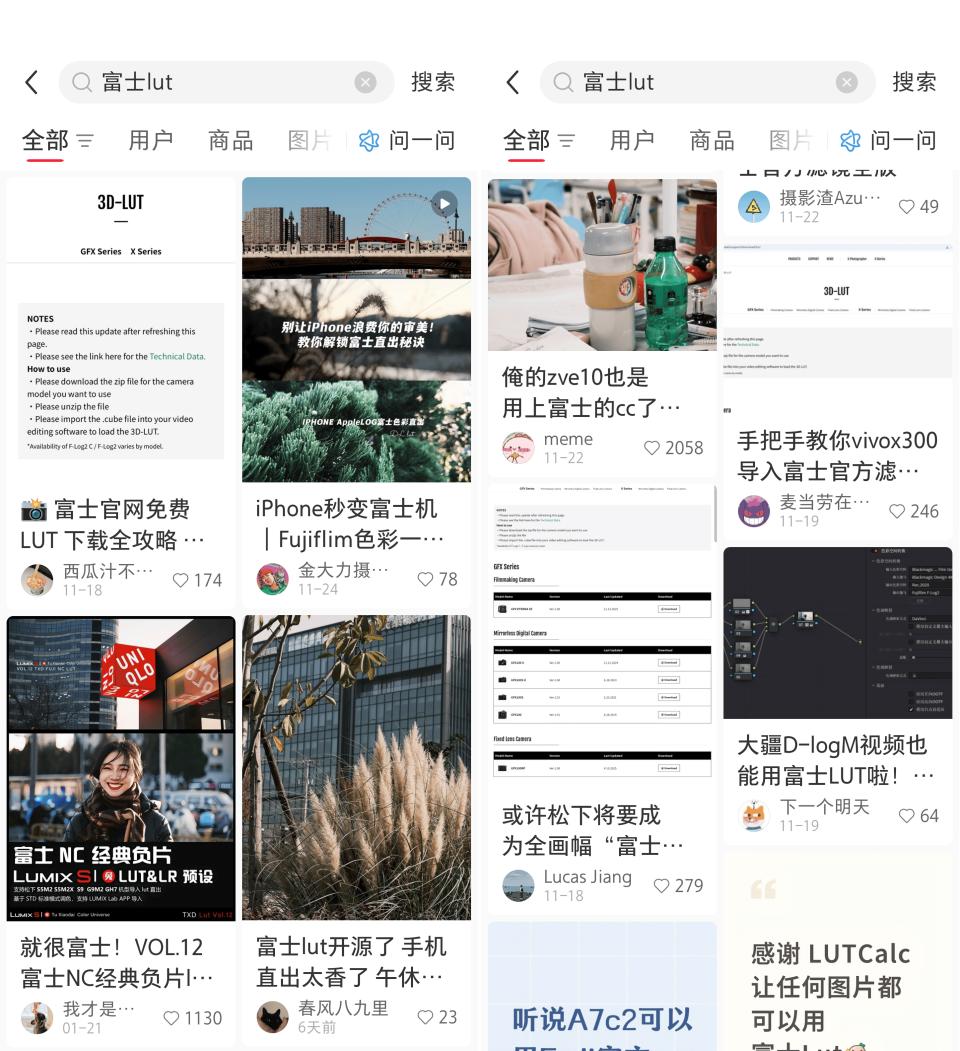
Core Insights - Fujifilm has decided to release its classic film simulation LUTs for free, allowing users to apply these color profiles to various cameras and editing software, thus expanding its influence beyond just hardware [1][3] - This move challenges smartphone manufacturers who have previously relied on "film modes" and similar marketing tactics, as Fujifilm's authentic LUTs provide a direct comparison to smartphone filters [3][4] Group 1: Impact on Smartphone Industry - The release of Fujifilm's LUTs may diminish the relevance of smartphone filters that mimic Fujifilm's style, pushing smartphone manufacturers to focus on improving their fundamental imaging capabilities [4][20] - Current flagship smartphones already possess advanced imaging features, such as 10-bit Log video recording and LUT import capabilities, which can produce results closer to Fujifilm's original output [4][11] - The marketing success of smartphone filters has been based on user perception rather than technical accuracy, leading to a noticeable gap when compared to professional LUTs [7][12] Group 2: Evolution of User Expectations - Users are now more aware of the differences between smartphone filters and professional LUTs, leading to higher expectations for smartphone imaging quality [12][20] - The smartphone industry must shift its focus from superficial marketing to enhancing user experience through improved color accuracy, dynamic range, and detail retention [12][19] - As smartphone manufacturers adapt to these changes, they can redefine their roles in the imaging ecosystem, focusing on ease of use and integration with social media [14][19] Group 3: Future Directions - The future of imaging may involve a collaborative ecosystem where cameras focus on high-quality output while smartphones cater to quick and convenient sharing [19][20] - Smartphone manufacturers are encouraged to develop more professional features, such as reliable LOG previews and advanced editing tools, to meet the needs of both casual users and aspiring creators [19][22] - Ultimately, the goal for smartphones should be to establish their unique identity in the imaging space, moving away from imitation towards defining their own visual style [22][23]
大疆步步紧逼,影石决定“改行”
3 6 Ke· 2025-11-18 09:08
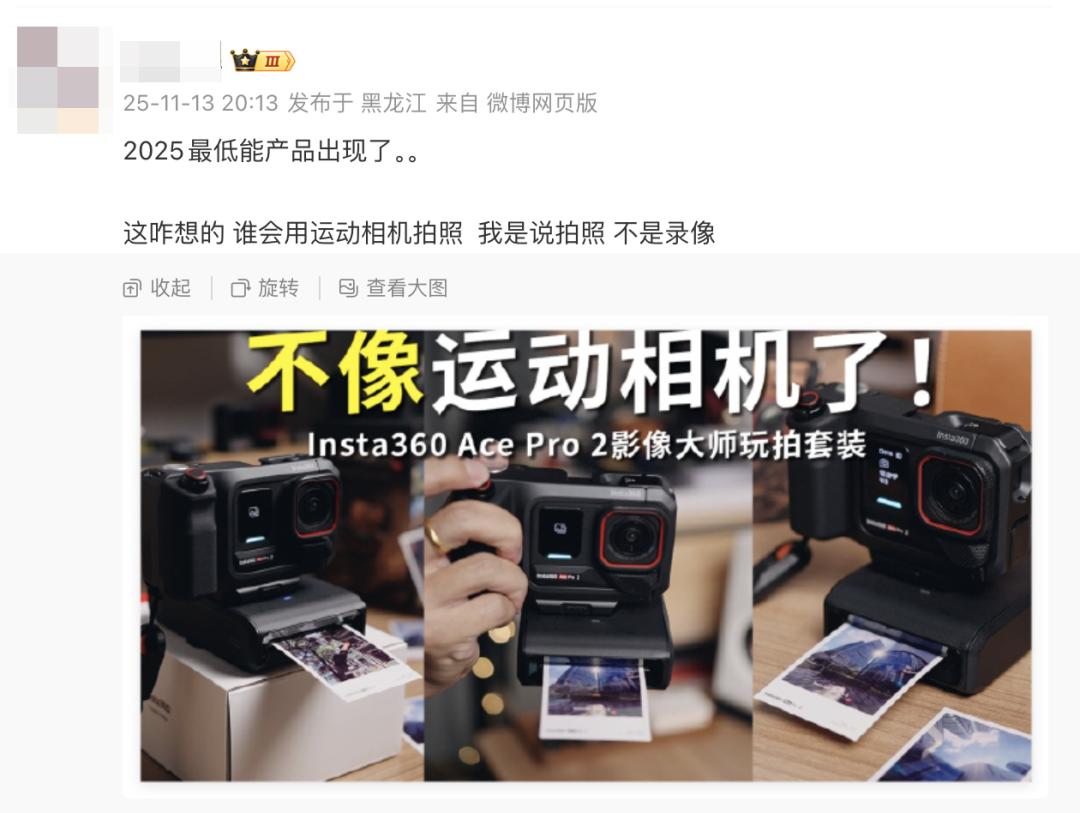
Core Insights - The article discusses the recent launch of the Ace Pro 2 sports camera by Ying Shi Technology, which includes a "Play and Shoot Package" that transforms the camera into a Polaroid-like device with instant printing capabilities [1][4][9] - The product aims to target the growing market of young female consumers who are increasingly interested in instant photography, as evidenced by the booming sales of Fujifilm's Instax series [9][12] - The competitive landscape has shifted with DJI entering the panoramic camera market, leading to a significant decline in Ying Shi's market share, prompting the company to pivot its strategy [12][16] Product Features - The Ace Pro 2's "Play and Shoot Package" includes a mini portable printer, enhancing the camera's appeal by allowing users to print photos instantly, thus adding emotional value [4][6] - The camera also incorporates Leica's color and style, aiming to provide a unique aesthetic that resonates with consumers seeking a vintage feel [7][9] - The product's design reflects a shift from a traditional sports camera to an "emotional camera," targeting the preferences of young women [9][11] Market Dynamics - The instant printing market has seen explosive growth, with Fujifilm's Instax series achieving sales of 150 billion yen (approximately 7 billion RMB) in the 2023-2024 fiscal year, marking a threefold increase year-on-year [9][12] - The popularity of instant photography among young women has created a billion-dollar market, indicating a strong consumer trend that Ying Shi aims to capitalize on [9][12] - The competitive pressure from DJI, which has rapidly gained market share with its Osmo 360 camera, has forced Ying Shi to adapt its product offerings [12][16] Challenges and Criticism - Despite the innovative features, the Ace Pro 2 has faced criticism for its suitability as a static photography device, with concerns about image quality and user experience [17][19] - The high price point of the Ace Pro 2, which can exceed 4,099 RMB with additional accessories, raises questions about its market viability, especially compared to more affordable alternatives [19][20] - Previous failures of similar products in the market highlight the risks associated with launching emotionally-driven products that lack practical value [20][21]
从理光到大疆,年轻人在追逐什么样的新相机
3 6 Ke· 2025-11-09 05:55
Core Insights - The camera market is experiencing a resurgence, with a 1350% increase in film photography searches on Xiaohongshu in the first nine months of the year and a 24.1% overall growth in camera shipments in China during Q1, which is double the global growth rate [1][2] - Young consumers are increasingly seeking cameras for their aesthetic quality, as they feel that even the best smartphone cameras fall short in comparison [1][2] - The trend of outdoor activities among young people has expanded the demand for cameras, with action and panoramic cameras becoming popular choices alongside traditional brands like Canon and Fujifilm [2][3] Market Dynamics - Classic camera models maintain their value in the second-hand market, with models like the Canon A620 seeing prices rise from an original price of approximately 2600 yuan to over 1500 yuan [2] - The rise of social media has created a strong desire among consumers for high-quality images, leading to a shift in the types of cameras being sought, from DSLRs to compact and action cameras [5][9] - Rental services for cameras are becoming increasingly popular, allowing consumers to try before they buy, which lowers the barrier to entry for new users [8][9] Consumer Behavior - Young consumers are motivated by trends and the desire to capture aesthetically pleasing moments, leading to a continuous demand for new camera models [10][12] - The integration of AI technology in cameras is enhancing user experience by simplifying the shooting process and improving image quality, further driving interest in new camera purchases [15][16] - The emergence of new brands and models, such as the DJI Pocket 3, reflects the evolving preferences of consumers who prioritize portability and ease of use [12][13] Future Trends - The camera industry is likely to see continued growth as younger generations seek innovative and user-friendly devices that cater to their social media needs [16][17] - Companies are focusing on developing AI-driven imaging solutions that simplify the photography process, making it accessible to a broader audience [16][17] - The ongoing evolution of consumer preferences indicates that the demand for cameras will remain strong, with a focus on lightweight, intelligent, and high-quality output devices [16][17]