舍弗勒集团

Search documents
德国汽车业遇“暴风雨”!数万岗位削减,供应商裁员幅度远超整车制造商
Di Yi Cai Jing· 2025-11-20 11:22
德国汽车行业就业人数已降至十多年来的最低水平。 德国举步维艰的汽车行业再迎风雨。 20日,德国联邦统计局发布最新数据显示,德国工业近期遭遇了显著的就业岗位流失,其中汽车行业受 冲击尤为严重。由于数万个工作岗位被裁撤,德国汽车行业就业人数已降至十多年来的最低水平。 具体而言,截至2025年第三季度末,骑车业就业人数较上年同期减少逾48700人,降幅达6.3%,在员工 规模超过20万人的主要工业部门中居首位。 值得注意的是, 在汽车产业内部,供应商受裁员冲击远大于整车制造商。 柏林自由大学现代中国学院客座研究员、中国欧洲学会经济研究分会理事史世伟教授长期在欧洲追踪德 国工业发展和政策。他对第一财经记者表示,德国汽车业在全球各地发展不同,在美国市场面临关税和 销售下降,在中国市场面临电动车的强力竞争,目前也在"卷价格"和试图在生产上流程创新,不过在欧 洲市场上德国汽车在关税等因素的影响下,仍有相对优势。 供应商裁员幅度远超整车制造商 德国联邦统计局数据显示,德国汽车业从业人数降至72.14万人,创历史新低。此前的低点为2011年第 二季度末(71.8万人)。尽管如此,汽车工业仍是机械工程之后的德国第二大就业部门。 ...

“去内燃机化”,舍弗勒抛售涡轮增压器业务
Zhong Guo Qi Che Bao Wang· 2025-11-10 01:33
Core Viewpoint - Schaeffler Group is advancing its "decarbonization" strategy by selling its internal combustion engine-related business in China, specifically the turbocharger operations of Weichai Technology, to Chengdu Xiling Power Technology Co., Ltd. This move is part of Schaeffler's ongoing efforts to divest non-core internal combustion engine operations and is a significant step in the integration process following its acquisition of Weichai Technology [2][8][10]. Summary by Sections Transaction Details - Schaeffler has signed an agreement to sell 100% of Weichai Automotive Electronics (Shanghai) Co., Ltd., which operates the turbocharger business in China. The expected revenue for 2024 is approximately €100 million, but the company is facing significant losses, with a net loss of ¥22.58 million in 2024 and a further increase to ¥46.06 million in the first three quarters of the year [3][5]. - The transaction will be completed through a cash payment, with a nominal base payment of ¥1, and the final price will be adjusted based on various financial metrics at the time of closing [5]. Strategic Implications - Chengdu Xiling Power views the turbocharger as a critical component in the mid-term power system, especially in the context of the automotive industry's shift towards hybrid and upgraded fuel vehicles. The company believes there is still substantial market potential for turbochargers [6]. - The acquisition is seen as an opportunity for Xiling Power to leverage Weichai's technological advantages in automated digital production lines and precision manufacturing processes, as well as its established relationships with major clients like Volkswagen [6]. Schaeffler's Business Restructuring - Schaeffler's divestment of the turbocharger business is part of a broader restructuring strategy following its acquisition of Weichai Technology, which is aimed at focusing on four core business divisions: electric drive, powertrain and chassis, vehicle lifecycle solutions, and bearings and industrial solutions. The electric drive division is identified as a strategic priority [8][10]. - The company has explicitly categorized the internal combustion engine turbocharger business as non-core and has initiated its sale to optimize resource allocation and free up capital for its core electric drive operations [10]. - Despite the divestment, Schaeffler acknowledges that internal combustion engine optimization and hybrid-related products will continue to be important for profit and cash flow in the foreseeable future [10].


【快讯】每日快讯(2025年11月6日)
乘联分会· 2025-11-06 08:38
Domestic News - Shanghai leads the world in the promotion of new energy vehicles, with over 220,000 units promoted from January to September 2025, a year-on-year increase of 25.4%. The cumulative promotion volume has reached 1.87 million units, ranking first among global cities [5] - Xiaopeng Motors unveiled its second-generation VLA large model, featuring 72 billion parameters and a cloud computing power cluster of 30,000 cards. The model will support "no navigation automatic driving" and is set to launch in December 2025 [6] - Volkswagen China announced plans to develop its own system-on-chip (SoC) for advanced driving assistance systems (ADAS) and future autonomous driving (AD) capabilities, enhancing local R&D capabilities [7] - Porsche has officially opened its R&D center in China, which will significantly shorten development cycles and enhance responsiveness, with a core team of over 300 engineers [8] - BYD will produce its best-selling plug-in hybrid vehicle, Seal U, in Turkey, marking a significant expansion in its European operations [9] - Pony.ai launched its seventh-generation Robotaxi, designed for a lifespan of 600,000 kilometers, showcasing its commitment to scaling up autonomous taxi operations [10] - Nissan established a joint venture for import and export in China, marking a new phase in its local development strategy [11] - Schaeffler has sold its turbocharger business in China to optimize its business structure, focusing on core competencies [12] International News - In Canada, new car sales in October 2025 decreased by 1.8% year-on-year, totaling 159,000 units [13] - The UK saw a slight increase in new car registrations in October 2025, up 0.5% year-on-year, with electric vehicles accounting for 25.4% of the market [14] - France's new passenger car registrations grew by 2.94% year-on-year in October 2025, reaching 139,513 units, although the cumulative registrations for the first ten months fell by 5.36% [15] - The EU plans to announce new regulations in December 2025 to promote affordable small electric vehicles, aiming to enhance competitiveness against Chinese manufacturers [16] Commercial Vehicles - BYD's T4 electric truck is set to be officially launched at the Wuhan Commercial Vehicle Exhibition on November 13, 2025 [19] - A new ultra-fast charging network for electric logistics has been launched in Linyi, China, marking a significant milestone in low-carbon logistics [20] - Jinbei (Shenyang) Automobile Co., Ltd. has entered a strategic cooperation with Toyota Tsusho, focusing on market channel collaboration and targeting the Saudi market [21] - Great Wall's Haval Shanhai Cannon Hi4-T has officially launched in Chile, marking a significant step in its global strategy [22]

太仓高新区智能产线扬帆“出海”
Xin Hua Ri Bao· 2025-10-10 21:34
Core Insights - The successful completion of the pre-commissioning of the three-in-one electric drive assembly line by Schaeffler's intelligent equipment team in China marks a significant collaboration in automated manufacturing with European partners [1] - This assembly line adheres to European technical standards and top automotive industry specifications, showcasing China's global delivery capabilities in the intelligent equipment sector [1] Company Overview - Schaeffler Group has been involved in equipment manufacturing in China since 2006, establishing a special equipment department in Taicang [1] - The establishment of Schaeffler Intelligent Equipment (Taicang) Co., Ltd. focuses on the research and manufacturing of intelligent assembly and testing equipment, along with digital software solutions for global clients in automotive, industrial, and medical sectors [1] Industry Development - Taicang High-tech Zone has concentrated on high-end equipment industries, making strides in areas such as CNC machine tools, precision tools, and industrial software [1] - The region has attracted top global machine tool companies like Trumpf and Juaristi, as well as precision equipment manufacturers such as Tox and Krones, fostering a cluster of specialized enterprises [1]
特朗普关税下,大众、博世、奥迪、保时捷等德国汽车大厂深陷裁员潮
Di Yi Cai Jing Zi Xun· 2025-09-29 11:23
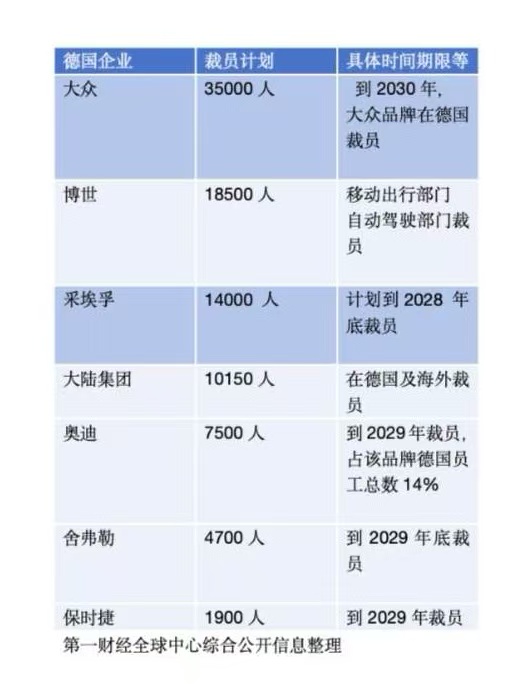
Core Viewpoint - The recent announcement by the Trump administration to impose a 25% tariff on imported heavy trucks has negatively impacted the already fragile state of the German automotive industry, leading to significant job cuts and restructuring efforts among major manufacturers [2][4]. Group 1: Impact of Tariffs and Economic Conditions - The German automotive sector is struggling with weakened demand, high labor and energy costs, and increased competition from rapidly developing manufacturers, exacerbated by the U.S. tariff policies [4][5]. - Bosch, Germany's largest automotive parts supplier, announced plans to cut 13,000 jobs over the next five years, signaling a critical warning for the German industrial sector [2][9]. - The DAX index's structure is expected to undergo a fundamental shift by 2025, with the automotive and parts industry’s weight dropping from approximately 21% in 2015 to less than 10% [4]. Group 2: Job Cuts and Corporate Restructuring - Major German automotive companies, including Bosch, Continental, Schaeffler, and ZF, are implementing significant layoffs and cost-cutting measures due to ongoing pressures [5][8]. - Volkswagen plans to cut 35,000 jobs in Germany by 2030, while Bosch is set to reduce 18,500 positions, primarily in its mobility and autonomous driving divisions [8]. - The overall German automotive industry has eliminated about 55,000 jobs in the past two years, with projections indicating further job losses in the coming years [7][8]. Group 3: Economic Forecast and Recovery - A joint economic forecast from five major German economic research institutions predicts that Germany's economy will grow by only 0.2% in 2025, hindered by U.S. tariff policies and structural issues [10][11]. - The report highlights that the manufacturing sector's recovery is sluggish, with high energy and labor costs, a shortage of skilled workers, and declining competitiveness limiting growth prospects [11]. - The German government has attempted to boost confidence through increased military spending and a €100 billion "Made in Germany" investment plan, but tangible results have yet to materialize [11][12].

德国工业心脏之痛:特朗普关税下 汽车大厂深陷裁员潮
Di Yi Cai Jing· 2025-09-29 10:48
Core Insights - The recent announcement by the Trump administration to impose a 25% tariff on imported heavy trucks has negatively impacted the already fragile state of the German automotive industry [1][2] - Bosch, Germany's largest automotive parts supplier, plans to cut 13,000 jobs over the next five years, signaling a critical warning for the industrial sector [1][6] - German Chancellor Merz is set to host an automotive summit on October 9, with various stakeholders expected to attend, amid ongoing challenges in the automotive sector [1] Industry Overview - The automotive and parts sector's weight in the DAX index has significantly decreased from approximately 21% in 2015 to below 10% by 2025, indicating a fundamental shift in the industry structure [2] - German automotive manufacturers are struggling with weakened demand, high labor and energy costs, and increasing competition from rapidly developing manufacturers [2][3] - Major companies like Daimler Trucks and Volkswagen's Traton saw their stock prices drop following the tariff announcement [2] Employment Impact - Bosch's job cuts are part of a broader trend, with other companies like Continental, Schaeffler, and ZF also reducing positions and expenses due to economic pressures [3][5] - Volkswagen is limiting production and temporarily closing two electric vehicle factories in Germany, with plans to cut 35,000 jobs by 2030 [3][5] - The German automotive industry has already eliminated approximately 55,000 jobs over the past two years, with expectations of further job losses in the coming years [5] Economic Forecast - A joint economic forecast from five major German economic research institutions predicts only a 0.2% growth for the German economy in 2025, largely due to the impact of U.S. tariff policies [7][8] - The report highlights that while the service sector is growing, the manufacturing sector's recovery remains weak due to high costs and a lack of structural reforms [8] - Germany's reliance on exports, which has historically been around 70%, makes it particularly vulnerable to external shocks like tariffs [8] Government Response - The Merz government has attempted to boost confidence through increased military spending and a €100 billion "Made in Germany" investment plan, but these efforts have yet to yield significant results [8][9] - There are indications that some German automakers are shifting their business models to take on defense contracts, which could provide some economic relief [9]
特朗普关税下,大众、博世、奥迪、保时捷等德国汽车大厂深陷裁员潮
第一财经· 2025-09-29 10:23
Core Viewpoint - The recent announcement by the Trump administration to impose a 25% tariff on imported heavy trucks has further exacerbated the already fragile state of the German automotive industry, leading to significant job cuts and restructuring efforts among major manufacturers and suppliers [2][5]. Group 1: Impact of Tariffs and Economic Conditions - The German automotive sector is struggling with declining sales, profit warnings, and the impact of U.S. tariffs, prompting a summit hosted by Chancellor Merz to address these challenges [2][5]. - Economic experts indicate that Germany has not yet emerged from its economic crisis, with a full recovery potentially not occurring until after 2026 due to tariff impacts and necessary structural adjustments [2][5][14]. Group 2: Job Cuts and Corporate Restructuring - Bosch announced plans to cut 13,000 jobs over the next five years, signaling a broader trend of layoffs across the German automotive industry, including major players like Daimler, Volkswagen, and Ford [2][10]. - The automotive industry has already seen approximately 55,000 jobs eliminated over the past two years, with projections indicating that tens of thousands more jobs could be lost by 2030 [9][10]. Group 3: Shift in Industry Structure - A report from Goldman Sachs highlights a fundamental shift in the DAX index's industry structure, with the automotive and parts sector's weight dropping from about 21% in 2015 to less than 10% [5]. - The transition to electric vehicles is slower than anticipated, leading to increased pressure on German manufacturers to downsize and restructure [7][12]. Group 4: Future Economic Outlook - A joint economic forecast from five major German economic research institutions predicts only a 0.2% growth for Germany in 2025, with manufacturing recovery remaining weak due to high energy and labor costs [14][15]. - The reliance on exports, which has historically been around 70% for Germany, makes the economy particularly vulnerable to external shocks like U.S. tariffs [16].

江苏外资外贸新动能
21世纪经济报道· 2025-09-27 15:50
Core Viewpoint - Jiangsu is actively responding to the dual challenges of global supply chain restructuring and domestic industrial transformation by enhancing foreign investment and focusing on key industries [3][4]. Group 1: Foreign Investment Strategy - Jiangsu has established multiple high-level international cooperation industrial parks and bases, such as the Sino-German Enterprise Cooperation Base in Taicang and the Sino-Korean Industrial Park in Yancheng, to attract foreign investment [8][9]. - In 2024, Jiangsu's actual foreign investment reached $19.05 billion, maintaining the highest level in the country for seven consecutive years, with a cumulative total of $103.74 billion [8]. - The investment from countries like Germany, Japan, and Switzerland has seen an increase of over 90% since 2025, highlighting the effectiveness of Jiangsu's targeted foreign investment strategy [8]. Group 2: Industrial Development and Ecosystem - Taicang has become a hub for over 560 German enterprises, contributing significantly to the local economy, with German companies accounting for 8% of Taicang's GDP and 20% of its public fiscal revenue [9][10]. - The focus on key industries, such as the automotive parts supply chain, has led to the establishment of over 700 companies in Taicang's new energy vehicle sector, with a market share exceeding 30% for several core components [10][11]. - Jiangsu is guiding foreign investment towards advanced manufacturing, modern services, and high-tech industries, with manufacturing foreign investment accounting for 36.2% of total foreign investment from 2021 to 2024 [19]. Group 3: New Investment Models - The SK battery project in Yancheng represents a new investment model where raw materials are imported from Korea, and the finished products are exported to the U.S., demonstrating a unique production and supply chain strategy [20]. - The collaboration between Jiangsu's Jiaao New Energy and BP Global aims to leverage BP's global sales network to expand into overseas markets, showcasing a strategic partnership for sustainable aviation fuel production [21]. - The introduction of innovative projects, such as the "Lighthouse Factory" by Faurecia in Yancheng, emphasizes the focus on technology and efficiency improvements to enhance market competitiveness [16][17].
舍弗勒:构建中国特色的ESG管理体系| 2025华夏ESG实践十佳案例
Hua Xia Shi Bao· 2025-09-23 09:44
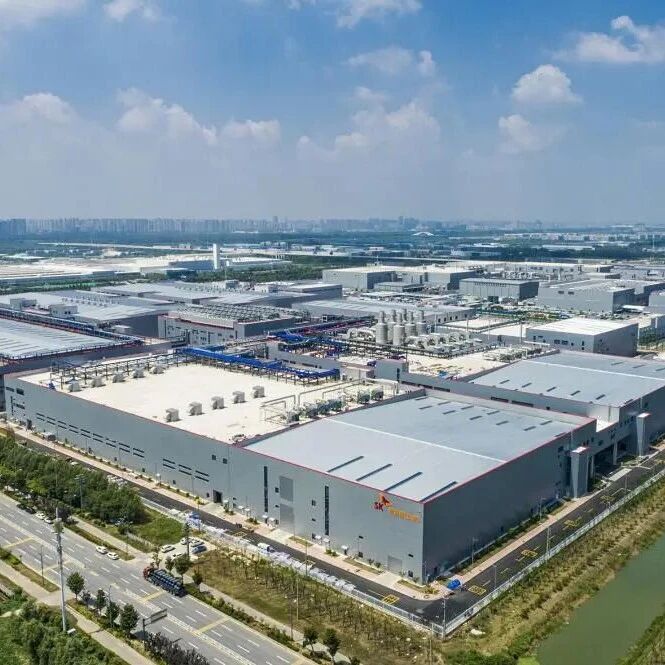
文/华夏ESG观察联盟 企业介绍 舍弗勒集团成立于1946年,总部位于德国,是一家专注驱动技术的科技公司,旗下拥有三大产品品牌: INA、LuK和FAG。舍弗勒提供汽车驱动系统及底盘应用的高精密部件与系统,以及广泛应用于工业领 域的滚动轴承和滑动轴承解决方案。舍弗勒集团是一家由家族控股的上市公司,目前拥有约120,000名 员工,在全球55个国家和地区设有250多个分支机构。 舍弗勒于1995年开始在中国投资生产,深耕中国30年,秉承"本土资源服务本土市场"理念,致力于本土 生产和本土研发。目前,舍弗勒在中国拥有员工约19,000人,在全国各地设有6大研发中心、17座工 厂,以及遍布全国的销售网络。 实践案例 一、ESG治理架构 ·舍弗勒集团建立了以董事会为核心的ESG治理结构,以及可持续发展委员会(SustAInability Committee)、治理、风险与合规委员 会(GRCC)及风险子委员会三级管理体系。 ·ESG目标已被纳入集团"Roadmap 2030"战略,并细化为"气候行动迈向净零、循环经济绿色转型、保障 人权护佑安康、赋能员工共筑未来、正直诚信决策透明"五大行动领域。 ·中国区管委会下设可 ...

(活力中国调研行)逾560家德企聚太仓 水乡化身“德企之乡”
Zhong Guo Xin Wen Wang· 2025-09-17 05:15
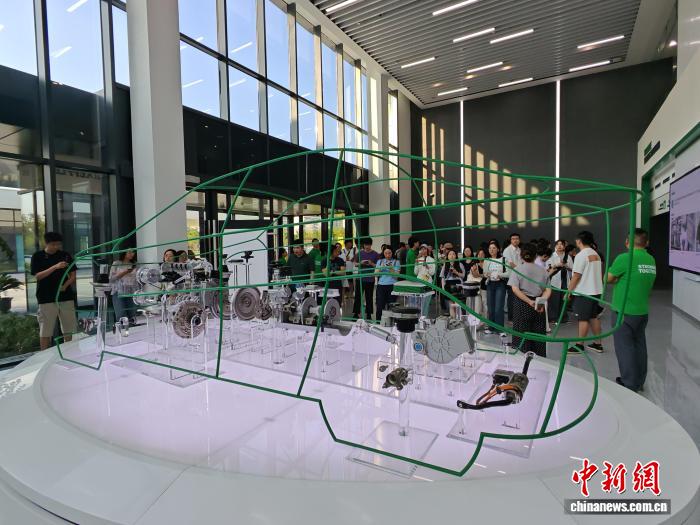
中新社江苏苏州9月17日电 (记者 邓敏 谷华)"今年是舍弗勒(中国)有限公司进入中国30周年,我们收到 太仓供电局提供的一份热力图谱,显示舍弗勒从1995年到现在供电量增加60倍,让我们非常感动。"该 公司企业传播与市场部总监李佑美近日受访时说。 (活力中国调研行)逾560家德企聚太仓 水乡化身"德企之乡" 9月16日,舍弗勒(中国)有限公司工作人员向"活力中国"媒体采访团介绍企业生产的汽车零部件。中新 社记者 谷华 摄 李佑美所说的江苏太仓,不仅是中国的重要港口和商埠,在德国亦有相当知名度。在过去的32年里,太 仓吸引了560余家德国企业入驻,总投资超60亿美元。德国十大机床企业中有6家、20强家族企业中有8 家都落户太仓。 舍弗勒集团就是德国十大家族企业之一,也是全球第二大滚动轴承制造商和全球知名汽车零部件供应 商。自1995年在太仓落户以来,舍弗勒已在中国设立6大研发中心、17座工厂,拥有员工近2万名,2024 年中国区营收约34.9亿欧元。 为什么这么多德企会选择太仓?沿江临沪、通江达海是太仓的区位优势,从这里乘坐高铁到上海仅20多 分钟,太仓港集装箱吞吐量2024年超800万标箱,连续16年居长江 ...