Lynas Rare Earths

Search documents
Weekly Wrap: Winning Streak Persists as Tech, Banks Drive Aussie Shares
Small Caps· 2026-01-16 08:52
Market Overview - The Australian share market finished up on Friday, with the ASX 200 increasing by 0.5%, or 42.90 points, to 8903.90, marking a weekly gain of 1.6% after five consecutive days of increases, the longest winning streak since May 2025 [1] Technology Sector - Technology stocks performed strongly, driven by Taiwan Semiconductor Manufacturing's forecast of nearly 30% revenue growth in 2026, which exceeded analyst expectations and alleviated concerns regarding AI-related demand. Local tech stocks such as NextDC rose by 3.5% to $13 and Life360 by 1.7% to $29.23 [2] Banking Sector - Major banks contributed to the market rally, with Commonwealth Bank shares rising 0.5% to $154.30 and ANZ shares also up 0.5% to $37.52. National Australia Bank shares increased by 0.7% to $42.67, Westpac shares rose 1.8% to $39.19, and Macquarie shares were up 2.6% to $211.86 [3][2] Mining Sector - Shares in major miners experienced profit-taking after strong gains, with BHP shares falling 0.8% to $48.99 after a weekly rise of over 6%. This decline was influenced by a drop in oil prices following comments from US President Donald Trump regarding Iran [4] Energy Sector - Energy stocks also saw declines, with Woodside shares down 1.4% to $23.68 and Santos shares falling 1.6% to $6.23, reflecting the broader market reaction to falling oil prices [5] Company-Specific News - Capstone Copper shares surged 7.1% to $15.63 after meeting its annual copper guidance of 224,764 tonnes, a company record. Catalyst Metals shares climbed 14.7% to $9 following record quarterly production at Plutonic and positive broker reviews [6] - Conversely, Novonix shares dropped 15.8% to 42.5¢ after delaying the start of mass production of anode material for Panasonic Energy to the second half of 2027 [7] Upcoming Economic Data - The December labour force survey is expected to show an increase of about 35,000 jobs, maintaining the unemployment rate at 4.3% despite a projected rise in the participation rate [8] - In the US, the core personal consumption expenditures (PCE) price index is anticipated to rise by 2.8% year-over-year [9] - China is set to release various economic indicators, with the fourth-quarter GDP growth expected to be around 4.9%, aligning with the government's target of approximately 5% growth [10] - Australia will also see quarterly updates from several mining and energy companies, including BHP and Santos, while Wall Street will report fourth-quarter earnings from major firms like Netflix and Johnson & Johnson [11]


Will the US’ onshoring strategy remove China’s chokehold on REEs?
Yahoo Finance· 2026-01-13 13:02
Core Insights - The US is focusing on MP Materials' Mountain Pass mine, the largest REE mine in the US, which has started producing various rare earth elements (REEs) since late 2023, selling exclusively to customers outside of China due to tariffs [1][3] - A multi-billion-dollar pipeline of rare earth projects is expected to reduce US dependence on Chinese REEs, with projections indicating that by 2030, the US could meet about 95% of its own demand domestically, although China will still supply around 60% of the world's key magnet-making REEs [3][5] - The Trump administration has become the largest shareholder of MP Materials, investing $134 million in domestic projects and enhancing supply chains through partnerships in Australia, Japan, Malaysia, and Thailand [4] Industry Developments - The US government is increasingly motivated to reduce reliance on Chinese REEs, spurred by trade tensions and the need for critical minerals for the economy and defense [5][6] - New projects in the US include significant finds such as American Rare Earths' Halleck Creek in Wyoming and US Critical Materials' Sheep Creek in Montana, which have confirmed high-grade REE deposits [9] - Permitting reforms are seen as crucial for the development of new mines in the US, with industry leaders expressing optimism about recent improvements in the permitting process [11][12] Challenges and Concerns - Experts express skepticism about the timely realization of the current pipeline of projects, indicating that many may not meet the necessary standards or timelines [2][15] - The processing and refining of REEs present significant challenges, as the US lacks the advanced chemical engineering capabilities that China has developed, leading to a cost disadvantage [20][21] - There are concerns that many proposed projects may not yield high-grade REEs, with some deposits being low-grade or containing less desirable types of rare earths [15][18] Government Support and Investments - The Trump administration has provided substantial financial support for expanding processing facilities, including a $150 million loan to MP Materials and a $620 million loan to VulcanElements for a magnet facility in North Carolina [24][25] - The US government is also considering measures to encourage local consumption of REEs, potentially using tariffs once domestic capacity is established [26][27]
Lynas Rare Earths CEO Amanda Lacaze to Depart
WSJ· 2026-01-12 23:04
Group 1 - The Australian rare-earths producer is set to consider both internal and external candidates for the position succeeding Lacaze [1] - Lacaze will remain with the company until the end of June [1]

China-Japan rare earth spat curbs exports
MINING.COM· 2026-01-08 17:37
Core Viewpoint - China's potential restrictions on rare earth exports to Japan could significantly impact the Japanese economy and its manufacturers, who rely heavily on these critical minerals for production [1][3]. Economic Impact - Analysts predict severe economic fallout for Japan if rare earth exports are restricted, particularly affecting the automotive industry, which utilizes rare earths for various components [3]. - If restrictions last for three months, Japan could face losses of approximately 660 billion yen ($4.2 billion), leading to a decline in nominal and real GDP by an annualized 0.11%. Over a year, losses could escalate to 2.6 trillion yen, reducing GDP by 0.43% [4]. Stock Market Reaction - Following the news of potential export restrictions, Japan's Nikkei stock index experienced a decline of more than 1% over three consecutive days [5]. Trade Dependency - In 2024, Japan's imports from China included 7.7 trillion yen in electrical machinery and telecommunications equipment, 2.4 trillion yen in personal computers and peripherals, 400 billion yen in precision optical instruments, and 200 billion yen in rare earths, totaling about 10.7 trillion yen, which represents around 42% of Japan's total imports from China that year [6]. Historical Context - China's current export restrictions are reminiscent of a similar action in 2010, when it reduced rare earth shipments to Japan following a territorial dispute, which highlighted Japan's reliance on China for these minerals [7][8]. Supply Chain Developments - The 2010 restrictions prompted Japan to seek alternative suppliers, leading to a significant reduction in reliance on Chinese rare earths from 90% in 2010 to 60-70% today, aided by deals such as the $250 million agreement with Australia's Lynas Rare Earths [9][10]. US Initiatives - Japan's efforts to enhance supply chain resilience predate similar initiatives in the United States, which have included agreements with domestic producers like MP Materials for rare earth supplies [11][12].


有色:能源金属行业周报:短期锂价或偏强震荡,看好价格重估背景下的关键金属全面行情-20260104
HUAXI Securities· 2026-01-04 13:19
Investment Rating - Industry rating: Recommended [3] Core Views - The report anticipates a strong fluctuation in lithium prices in the short term, supported by a backdrop of price reassessment across key metals [1] - The Indonesian government plans to reduce nickel and coal production in 2026, which, combined with Vale's suspension of nickel mining, is expected to tighten supply and support nickel prices [1] - The cobalt market is expected to remain structurally tight, with prices likely to rise further due to ongoing supply constraints [2][5] - The antimony market is showing signs of recovery in exports, which may lead to domestic prices converging with higher international prices [6][18] - The lithium market is experiencing a continuous destocking trend, with prices expected to remain strong due to stable demand from the electric vehicle and energy storage sectors [8][19] - The rare earth market is tightening due to new export restrictions from Vietnam, which may further support prices [20] - The tin market faces uncertainties in supply due to ongoing issues in the Democratic Republic of Congo and Indonesia's export controls [21] Summary by Sections Nickel and Cobalt Industry Update - Indonesia's government plans to cut nickel production by approximately 34% in 2026, reducing the target to 250 million tons from 379 million tons in 2025 [1] - Vale's Indonesian operations have halted nickel mining, contributing to supply tightness [1] - The cobalt market is expected to face structural supply constraints, with prices projected to rise due to a decrease in available export quotas from the Democratic Republic of Congo [2][5] Antimony Industry Update - Domestic antimony prices are expected to rise as supply remains tight, particularly with winter mining activities slowing down [6][18] - The Chinese government has implemented export controls that may further tighten supply and support higher domestic prices [6][18] Lithium Industry Update - The average price of battery-grade lithium carbonate has increased to 118,600 CNY/ton, reflecting a 16.76% rise [8] - Continuous destocking in the lithium market is expected to support prices, with demand from the electric vehicle sector remaining robust [8][19] Rare Earth Industry Update - New export restrictions from Vietnam are expected to tighten global rare earth supply, supporting prices [20] - China continues to dominate the rare earth supply chain, with significant production capacity compared to other countries [20] Tin Industry Update - The tin market is facing uncertainties due to supply issues in the Democratic Republic of Congo and Indonesia's export controls [21] - Recent increases in tin imports from Myanmar may help alleviate some supply concerns, but overall uncertainty remains [21]





有色能源金属行业周报:短期锂价或维持震荡,战略金属价值重估背景下看好锑钴钨锡等金属-20251214
HUAXI Securities· 2025-12-14 05:36
Investment Rating - The industry rating is "Recommended" [3] Core Views - Short-term lithium prices are expected to remain volatile, with a positive outlook on antimony, cobalt, tungsten, and tin due to a reassessment of strategic metal values [1][2][7] - Supply concerns in the nickel market are supported by the lack of new approvals from Indonesia's RKAB, which may lead to price stabilization [1][28] - The cobalt market is expected to see continued price increases due to structural supply tightness, with Congo's export regulations impacting availability [2][5][16] - Antimony prices are anticipated to converge towards higher overseas prices due to export controls and tight domestic supply [6][17] - The lithium market is experiencing a strong demand backdrop, with expectations of continued inventory depletion supporting prices [7][17] - The rare earth market is tightening due to Vietnam's export ban, which is expected to support prices [9][18] - Tin prices are supported by ongoing supply concerns from overseas sources, particularly from Myanmar and Congo [11][20] - Tungsten prices are expected to remain supported due to supply constraints and regulatory controls [12][21] - The uranium market is facing supply tightness, which is likely to support prices amid geopolitical uncertainties [14][22] Summary by Sections Nickel and Cobalt Industry Update - Nickel prices are under pressure due to stable demand but cautious purchasing from smelters, with LME nickel closing at $14,420 per ton, down 2.04% [1][28] - Cobalt prices are expected to rise further, with Congo's export regulations causing supply constraints [2][5][16] Antimony Industry Update - Domestic antimony prices are lower compared to international prices, but supply tightness is expected to support future price increases [6][17] Lithium Industry Update - Lithium carbonate prices have increased, with a strong demand outlook from the electric vehicle sector [7][17] Rare Earth Industry Update - Vietnam's recent export ban on rare earths is expected to tighten global supply and support prices [9][18] Tin Industry Update - Tin prices are supported by supply concerns from Myanmar and Congo, with LME tin prices rising to $41,905 per ton [11][20] Tungsten Industry Update - Tungsten prices are expected to remain high due to supply constraints and regulatory measures [12][21] Uranium Industry Update - The uranium market is facing supply tightness, with prices supported by geopolitical factors and production delays [14][22]


全球可持续发展:从稀土到磁体-关键使命-Global Sustainability_ Rare earths to magnet_ mission critical_
2025-12-08 00:41
Summary of Key Points from the Conference Call on Rare Earths and Magnets Industry Overview - The report focuses on the rare earths (RE) to permanent magnet production value chain, highlighting the critical role of rare earths in various sectors, including energy transition, defense, and consumer electronics [1][2][3] Core Insights and Arguments - **Geopolitical Dependency**: China dominates the rare earths supply chain, controlling over 60% of global mine supply and approximately 90% of refining capacity. This dependency poses risks for other countries, especially in light of recent geopolitical tensions [3][16][17] - **Need for Investment**: Significant government support and investment are necessary to establish a functioning magnet production supply chain outside of China. Current efforts, such as the U.S. Department of War's deals with companies like MP Materials, are steps in the right direction, but more incentives are needed [4][18] - **Challenges in Scaling Production**: The multi-step processing from RE ore extraction to magnet production is complex and requires specialized skills and equipment, which are currently heavily reliant on Chinese sources. This presents a significant barrier to scaling production in the West [5][31] - **Market Dynamics**: The demand for rare earths is driven by their essential role in high-tech applications, including electric vehicles (EVs), wind energy, and defense technologies. The market is expected to grow, but supply chain vulnerabilities remain a concern [2][16][23] Important but Overlooked Content - **Historical Context**: The U.S. once had a robust magnet production capability, which diminished in the late 20th century due to various factors, including regulatory and economic challenges. This historical context underscores the current dependency on Chinese production [15] - **Environmental and Technical Challenges**: The extraction and processing of rare earths often involve environmentally challenging and technically demanding processes, which can complicate efforts to establish new production facilities outside of China [31][75] - **Emerging Alternatives**: There is a growing interest in developing alternative materials to rare earths for magnet production, driven by supply chain pressures and geopolitical tensions. However, rare earth-based magnets are still considered more efficient for many applications [22][23] Company Exposure - Companies with significant exposure to the rare earths to magnet value chain include Lynas, Iluka, and Solvay. These companies are expected to benefit from increased government support, particularly in the U.S. [6][38] Risks and Catalysts - **Risks**: Key risks include insufficient government support, dependency on Chinese pricing, and cautious investor sentiment due to price fluctuations and previous industry failures [22] - **Catalysts**: Strategic long-term thinking, robust policy support, and development of skilled labor are essential for building a more secure rare earths supply chain outside of China [22][23] Conclusion - The rare earths and magnets industry is at a critical juncture, with significant geopolitical implications and a pressing need for investment and innovation to reduce dependency on China. The path forward will require coordinated efforts from governments, industry players, and investors to establish a more resilient supply chain [4][18][19]
Heavy Rare Earth Global Crisis Spotlights Norra Kärr in Sweden
Globenewswire· 2025-12-01 07:30
Core Insights - The urgency for Europe to secure a stable supply of heavy rare earth elements, particularly Dysprosium and Terbium, has been emphasized due to geopolitical tensions and supply chain vulnerabilities [2][3][16] Company Updates - Leading Edge Materials Corp. is progressing on the Norra Kärr Heavy Rare Earth Elements Project through its subsidiary Greenna Mineral AB, which is recognized as one of Europe's richest deposits for heavy rare earth elements [1][6] - The company has submitted supplementary information for a mining lease application, with a decision expected soon [9] - A pre-feasibility study is ongoing, focusing on mineral processing and the production of higher-grade concentrates [11][12] Industry Context - The European Rare Earths Competency Network (ERECON) highlighted the need for new sources of heavy rare earths outside of China, identifying Norra Kärr as a key project for securing supply [4] - The project is estimated to produce 248 tonnes of Dysprosium and 36 tonnes of Terbium oxides annually over an initial 26-year mine life, covering only 30% of the defined resource [7] - Competitors like Lynas and MP Materials are significant players in the rare earths market, with Lynas recently expanding its heavy rare earths separation facility [8] Strategic Importance - Norra Kärr's strategic importance has been reinforced by the Swedish Geological Survey, which designated it as a National Interest site due to its significance for Sweden and the EU [5][6] - The CEO of Leading Edge Materials emphasized that the production of Norra Kärr is essential for Europe to achieve independence in the heavy rare earth supply chain [18]

Heavy Rare Earth Global Crisis Spotlights Norra Kärr in Sweden
Globenewswire· 2025-12-01 07:30
Core Insights - The Norra Kärr Heavy Rare Earth Elements Project is crucial for addressing Europe's supply chain vulnerabilities in heavy rare earth elements, particularly Dysprosium and Terbium [2][3][4] Company Updates - Leading Edge Materials Corp. is advancing the Norra Kärr project through its subsidiary Greenna Mineral AB, with a focus on securing a mining lease and enhancing stakeholder engagement [1][9][13] - The company has submitted supplementary information for a 25-year mining lease application, which is currently under review by the Mining Inspectorate [9] Project Details - Norra Kärr is projected to produce 248 tonnes of Dysprosium and 36 tonnes of Terbium oxides annually over an initial 26-year mine life, covering only 30% of the defined resource [7] - The Swedish Geological Survey has recognized Norra Kärr as one of Europe's richest deposits for heavy rare earth elements, emphasizing its strategic importance for the EU's supply [6][5] Industry Context - The article highlights a critical shortage of heavy rare earth elements in Europe, exacerbated by geopolitical tensions and supply chain dependencies on China [2][16] - The urgency for developing new sources of heavy rare earths outside of China has been emphasized since 2014, with Norra Kärr identified as a key project for securing European supply [4] Competitive Landscape - Lynas Rare Earths and MP Materials are significant players in the rare earths market outside of China, with Lynas recently announcing plans for an expanded separation facility in Malaysia [8] - The U.S. government has invested heavily in MP Materials, indicating strong governmental support for critical mineral strategies [8] Sustainability Initiatives - Greenna Mineral is committed to sustainability, achieving a 65% reduction in the operational footprint of Norra Kärr by eliminating chemical processing, which minimizes environmental impact [14]

Power cuts hit Lynas; Canaccord flags fiscal-2026 earnings risk
MINING.COM· 2025-11-26 00:06
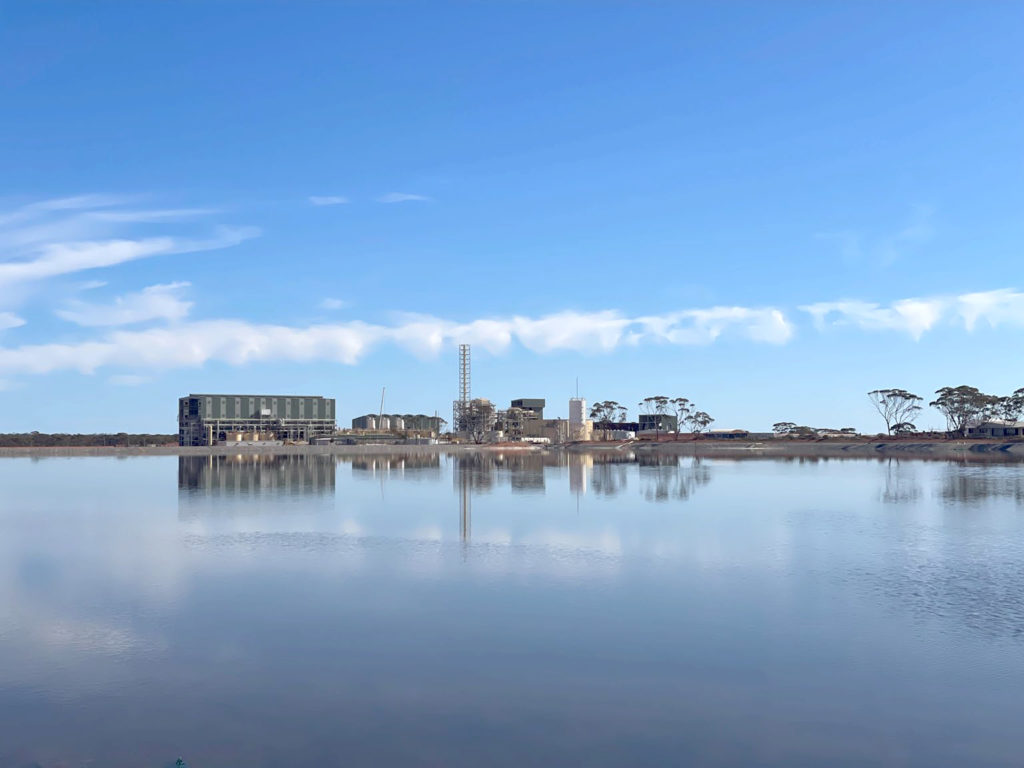
Core Viewpoint - Lynas Rare Earths is facing production shortfalls at its Kalgoorlie cracking-and-leaching plant due to repeated grid interruptions, which will impact its finished product output from the Malaysian refinery [1][2]. Production Impact - The company estimates a shortfall equivalent to one month's production this quarter, exacerbated by scheduled maintenance at its Malaysian kilns [2]. - Canaccord Genuity has revised its December-quarter neodymium-praseodymium (NdPr) output forecast to approximately 1,800 tonnes, projecting a 20% revenue drop to about A$220 million ($142 million) and a 35% decline in quarterly EBITDA to around A$77 million [3]. Market Reaction - Lynas shares in Sydney experienced a nearly 30% decline from late October to November 6, before slightly recovering to a closing price of A$15.02, with a market capitalization of A$15.1 billion ($9.7 billion) [4]. Operational Challenges - The Kalgoorlie facility operates under an interruptible supply scheme, leading to reliability issues and intensified shortages in November [5]. - The company is exploring short-term off-grid options while collaborating with the Western Australian government and Western Power, expecting to recover lost production within the financial year ending June 30 [5]. Long-term Considerations - Disruptions at the Kalgoorlie plant could have lasting effects, as it is Australia's first downstream rare earths processing plant with a capacity of about 9,000 tonnes per year of NdPr finished product [6]. - The Malaysian facility, the world's largest single separation facility, targets a capacity of approximately 12,000 tonnes per year of NdPr separation as part of its growth plan [6]. Inventory Management - Despite the disruptions, Lynas asserts it will still produce sufficient finished product to meet key customer needs this quarter, with inventories potentially mitigating immediate sales impacts [7].