
WeWork

Search documents
软银投资(上)孙正义的“金蛋”大赚
日经中文网· 2026-01-06 02:50
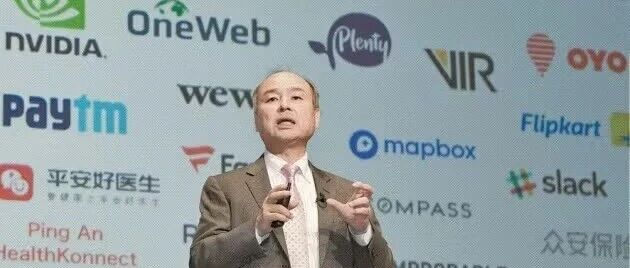
Core Viewpoint - SoftBank Group's Vision Fund has shown strong performance, with total investments reaching $163.2 billion (approximately 25.3 trillion yen) and pre-tax investment returns of about 3.7 trillion yen as of September 30 [2][6]. Group 1: Fund Performance - The Vision Fund's investment returns have rebounded to nearly 3 trillion yen in the July-September quarter, marking a recovery after years of challenges, including the bankruptcy of WeWork [3][4]. - The first Vision Fund has generated a profit of $32.8 billion despite significant losses from WeWork, while the second fund, which started investing in 2019, has faced difficulties with a current loss of $9.1 billion on investments totaling $73.7 billion [7][8]. Group 2: Key Investments - Coupang, a South Korean e-commerce giant, has been the most profitable investment for SoftBank, with a return of 5.7 times the initial investment, reaching a value of $15.6 billion [6][7]. - DoorDash, a U.S. food delivery platform, generated $7.2 billion in profit, with an investment return of 11.7 times, and all shares have been sold [7]. - The second fund's most profitable investments include Beike, Symbotic, and Swiggy, with returns of $1.1 billion, $800 million, and $300 million respectively [7]. Group 3: Future Outlook - The second fund's underperformance is attributed to high entry prices for unlisted stocks, but upcoming IPOs, including Chime and Klarna, are expected to improve performance [8]. - SoftBank's CFO expressed confidence in future IPOs and the potential for recovery in the second fund's performance [8]. - The company plans to invest an additional $22.5 billion in OpenAI, bringing the total investment to $34.7 billion, aligning with the "ALL IN AI" strategy [12].

速递|软银300亿美元鲸吞DigitalBridge,孙正义的AI数据中心“重资产”下注
Z Potentials· 2025-12-30 03:09
Core Viewpoint - SoftBank Group has agreed to acquire DigitalBridge Group Inc. for approximately $3 billion in cash, marking a strategic move to invest in digital infrastructure driven by the AI boom [1][4]. Group 1: Acquisition Details - The acquisition will be at a price of $16 per share, representing a 65% premium over DigitalBridge's closing price on December 4, the last trading day before the acquisition news [1]. - The total valuation of the acquisition, including debt, is approximately $4 billion [1]. - The deal is expected to close in the second half of 2026, pending regulatory approval [4]. Group 2: Market Context - There has been a surge in demand for digital infrastructure, particularly data centers, driven by the AI boom, leading to several multi-billion dollar transactions in the sector [2]. - Notable transactions include BlackRock's acquisition of Aligned Data Centers for $40 billion and Oracle's commitment to provide OpenAI with approximately 4.5 gigawatts of computing power, valued at up to $300 billion [2]. Group 3: DigitalBridge Overview - DigitalBridge is one of the largest investment firms focused on digital infrastructure, managing approximately $108 billion in assets as of the end of September [3]. - The company's stock rose by 9.7% to $15.27 shortly after the acquisition announcement, still below the acquisition price [3]. Group 4: Strategic Implications for SoftBank - This acquisition allows SoftBank to connect with more investors interested in the data center industry, enhancing its portfolio in digital infrastructure [4]. - SoftBank has previously engaged in significant transactions in asset management, including the acquisition of Fortress Investment Group for over $3 billion in 2017 [6]. - The company is also involved in a $500 billion "Stargate" project to build data centers in the U.S., although progress has been slower than planned due to various challenges [6]. Group 5: Financial Maneuvering - SoftBank's recent investment activities indicate a need for capital reallocation, with the founder expressing regret over selling $5.8 billion worth of Nvidia shares to fund other AI-related expenditures [7].

Why DigitalBridge Group Stock Rocked the Market Today
The Motley Fool· 2025-12-30 00:36
Group 1 - Digital Bridge Group's share price surged nearly 10% following news of a buyout by SoftBank Group, indicating strong market interest [1][2] - The acquisition deal has an enterprise value of approximately $4 billion, with SoftBank agreeing to pay $16 per share in cash for DigitalBridge [2][6] - DigitalBridge operates in the digital infrastructure sector, which is experiencing high demand due to the needs of artificial intelligence, making it a strategic investment opportunity [4][5] Group 2 - SoftBank's CEO Masayoshi Son emphasized that the acquisition aims to strengthen the foundation for next-generation AI data centers and advance their vision of becoming a leading Artificial Super Intelligence platform provider [5] - DigitalBridge's current market cap is $2.5 billion, with its stock closing at $15.26, below the acquisition price, reflecting some skepticism among investors regarding the deal's completion [6][8] - The deal is considered smaller in scale compared to SoftBank's previous investments, such as WeWork, and is viewed positively due to DigitalBridge's reliable profitability and strong market position [7][8]

孙正义可以忘掉马云了吧
3 6 Ke· 2025-12-11 10:38
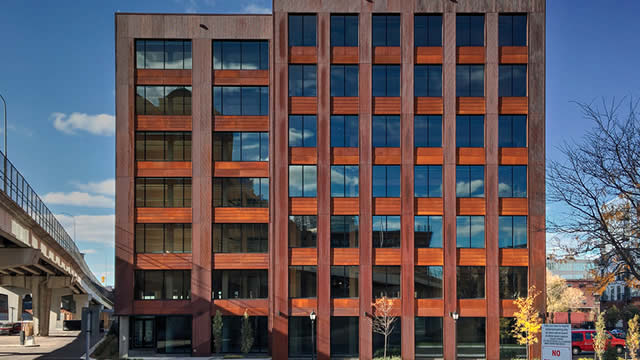
Core Insights - Masayoshi Son has been searching for the next Jack Ma, having made significant profits from his investment in Alibaba, which peaked at a valuation that yielded him over $100 billion [2] - After a series of unsuccessful investments post-Alibaba, including WeWork, Son has shifted his focus to artificial intelligence, particularly OpenAI, in hopes of replicating his past successes [3][4] - SoftBank's financial performance has been volatile, with a reported net profit of approximately $18.8 billion for the first half of 2025, but concerns arose over the sustainability of these profits due to reliance on unrealized gains [5][8] Investment Strategy - The Vision Fund, initiated by SoftBank, aims to invest heavily in transformative technologies, with a notable investment of $77 billion in Uber and $11 billion in WeWork, although the latter resulted in significant losses [2][3] - Son's strategy involves high-risk, high-reward investments, as evidenced by his commitment to OpenAI, which includes a $40 billion initial investment and a subsequent $22.5 billion commitment [4][11] - The AI sector is projected to generate substantial economic returns, with Son estimating that AI could contribute around 10% to global GDP, justifying his aggressive investment approach [12] Market Reactions - Following the announcement of SoftBank's financial results, the company's stock experienced a sharp decline, losing nearly $100 billion in market value within weeks, raising concerns about the sustainability of its financial strategies [7][8] - Analysts have expressed skepticism regarding SoftBank's financial health, citing a potential $54.5 billion gap between promised investments and actual available funds, indicating a risk of overcommitment [9] - The competitive landscape in AI has intensified, particularly with Google's launch of its Gemini 3 model, leading to doubts about OpenAI's ability to maintain its market leadership [19][20] Future Outlook - OpenAI is reportedly preparing for an IPO by 2026, with a potential valuation of $1 trillion, which could provide significant returns for SoftBank if successful [4] - Son's investment strategy reflects a shift towards a more diversified approach, aiming to mitigate risks by engaging in various segments of the AI ecosystem, including partnerships and acquisitions [24][25] - The ongoing volatility in the AI market and the need for substantial capital investment highlight the challenges and opportunities that lie ahead for SoftBank and its ambitious plans in the technology sector [25][26]



哭着卖……
Xin Lang Cai Jing· 2025-12-04 03:14
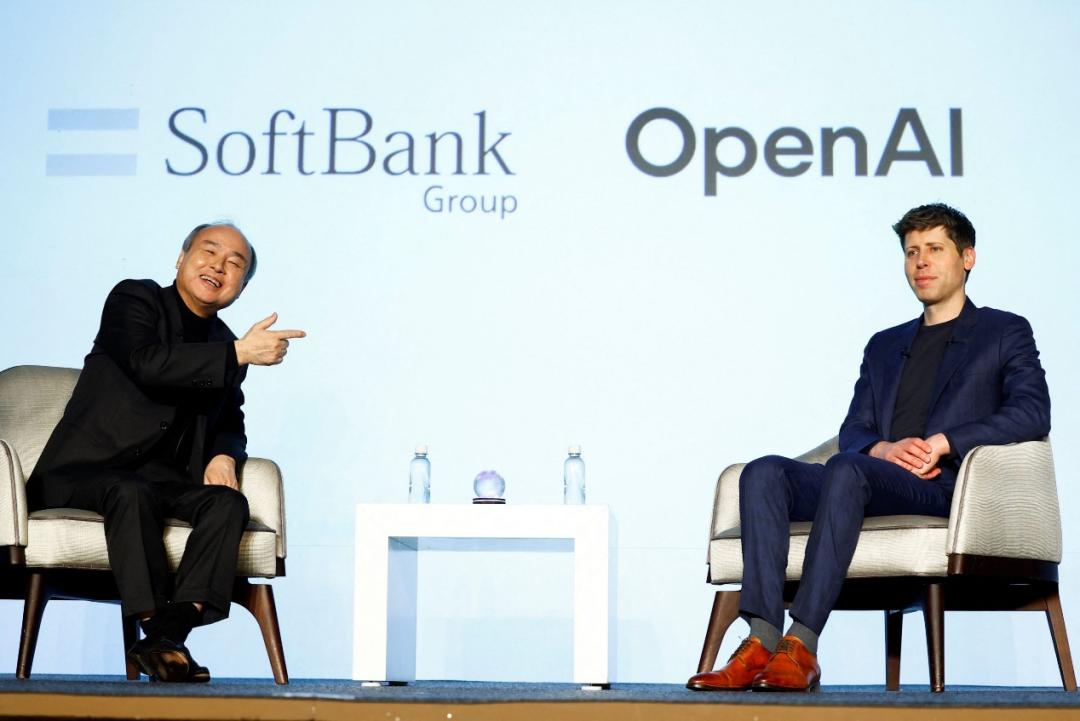
Group 1 - SoftBank founder Masayoshi Son significantly sold off his Nvidia shares in November, stating he needed funds for investments in OpenAI and other projects, expressing regret over the sale [2][8] - Son believes that if artificial intelligence can create 10% of global GDP in the long term, the investment of trillions of dollars would be justified, countering the argument of an AI bubble [2] - Son's investment history includes notable successes such as a $105 million investment in Yahoo during the internet boom, yielding approximately 100 times return, and a $20 million investment in Alibaba, which peaked at over 3000 times return [4] Group 2 - Son's investment strategy involves making large bets on future technologies, often investing heavily in startups within promising sectors, akin to an "All IN" thematic index approach [5] - A significant drawback of this investment style is a lack of deep understanding of individual companies, which can lead to cash flow issues, as seen when SoftBank reduced its Nvidia holdings after other investments incurred losses [6] - Despite selling Nvidia shares, the investment was still highly profitable, yielding around $5.1 billion, but holding onto the shares could have made Son one of the world's richest individuals again [7]

软银将带领印度创业者组团赴硅谷考察AI技术
Xin Lang Ke Ji· 2025-11-26 08:32
Group 1 - SoftBank Group plans to lead a group of Indian startup founders to Silicon Valley next month to explore artificial intelligence technology, aiming to inject more AI elements into its investment portfolio [1] - Sumer Juneja, head of investments for SoftBank Vision Fund in Europe, the Middle East, Africa, and India, stated that the company is assisting its portfolio companies in adopting AI technology and has arranged for founders to engage with top companies in the field [1] - SoftBank intends to arrange for up to 20 Indian startup founders to participate in the trip, with investments in companies such as Oyo, Ola, and Swiggy [1] Group 2 - SoftBank has been active in the venture capital space but paused investments due to investor disappointment with loss-making startups, resuming investments in the second quarter of this year [1] - The company currently has over $40 billion in cash and is preparing for the IPO of chip design company Arm to raise additional funds [1] - Juneja emphasized the importance of having a top-tier technology team and being in an industry that can leverage AI to enhance business model efficiency when considering new investments [1] Group 3 - The rise of ChatGPT has led investors to accelerate support for AI companies, with Juneja warning that many industries, including SaaS, could see a significant number of companies become redundant if they fail to quickly utilize AI technology [1] - The biggest challenge today is how to fully leverage AI technology [1] - SoftBank has invested over $140 billion in startups since the establishment of the Vision Fund in 2017, supporting the development of new technologies like AI [2]

孙正义重夺日本首富后清仓英伟达,释放了AI泡沫破裂信号?
创业邦· 2025-11-16 10:53
Core Viewpoint - The article discusses Masayoshi Son's strategic decision to liquidate SoftBank's entire stake in NVIDIA, raising approximately $5.8 billion, and the implications of this move on the AI investment landscape, particularly regarding OpenAI [5][10][12]. Group 1: NVIDIA Investment - SoftBank's liquidation of NVIDIA shares resulted in a significant drop in NVIDIA's market value, losing $100 billion overnight [5]. - Son's previous experience with NVIDIA, including a complete exit in 2019, serves as a cautionary tale about missed opportunities in tech investments [10]. - The decision to sell NVIDIA shares is seen as a shift in focus towards OpenAI, which Son believes is undervalued compared to its potential [11][12]. Group 2: OpenAI Focus - SoftBank plans to invest over $30 billion in OpenAI, necessitating the liquidation of existing assets to fund this commitment [13]. - Son's investment strategy emphasizes high-stakes bets on leading companies rather than diversified portfolios, which has led to both successes and failures in the past [7][11]. - OpenAI is currently viewed as being in its early stages, with expectations of significant future growth, but also faces challenges such as high operational costs and potential market corrections [12][18]. Group 3: Market Dynamics and Risks - The article highlights concerns about a potential AI bubble, with significant investments flowing into companies like OpenAI, raising questions about sustainability [15][18]. - There are indications that the market may be underestimating the risks associated with over-commitment to AI investments, as evidenced by SoftBank's financial maneuvers [16][20]. - The reliance on circular financing among tech giants, where funds are recycled between companies, raises concerns about the underlying economic viability of these investments [19][20]. Group 4: Future Outlook - The article suggests that while OpenAI may succeed in going public, it faces substantial challenges related to resource availability, particularly in power supply for data centers [20]. - Historical patterns indicate that technological bubbles can burst without undermining the overall progress of the technology sector, as seen in past tech revolutions [22].

5 high-profile CEOs who were famously ousted from their companies
Yahoo Finance· 2025-11-15 16:33
Core Insights - The modern business landscape in America is crowded with both public and private companies, creating an environment susceptible to fraud and misconduct, often leading to the ousting of CEOs when issues arise [1][2]. Group 1: High-Profile CEO Dismissals - High-profile CEOs have faced dismissal for various reasons, including corporate fraud, financial misconduct, and poor performance [2]. - Notable cases include Carlos Ghosn, who resigned from Renault-Nissan-Mitsubishi Alliance in 2018 due to ethical misconduct, including underreporting compensation [4][5]. - Elizabeth Holmes resigned as CEO of Theranos in 2018 after being indicted for defrauding investors and patients regarding the company's blood testing capabilities [9][10]. - Adam Neumann stepped down as CEO of WeWork in 2019 amid concerns over the company's financial viability and corporate governance issues, receiving $1.7 billion as part of his exit [14]. - Travis Kalanick resigned as Uber's CEO in 2017 following allegations of a toxic work culture and sexual harassment [17]. - Dennis Muilenburg resigned as Boeing's CEO in 2019 after two fatal crashes involving the 737 MAX raised serious safety concerns [21]. Group 2: Other Notable CEO Exits - Sam Bankman-Fried, former CEO of FTX, stepped down in November 2022 amid bankruptcy proceedings and allegations of misusing customer funds [22]. - John Stumpf, former CEO of Wells Fargo, resigned in October 2016 after the bank admitted to improper sales practices, forfeiting $41 million in stock awards [23]. - Bernard Ebbers, former CEO of WorldCom, was forced to resign in 2002 due to accounting fraud allegations, leading to the company's bankruptcy [24].


孙正义撤了,上次这么干,抱着黄仁勋痛哭
创业家· 2025-11-14 10:20
Group 1 - The article highlights Masayoshi Son's extreme investment style, emphasizing his recent decision to sell all of SoftBank's $5.8 billion Nvidia shares to invest in AI, including a planned $30 billion investment in OpenAI and participation in a $1 trillion AI manufacturing center project in Arizona [3][18]. - SoftBank sold all 32.1 million shares of Nvidia at an exit price of approximately $181.58 per share, which is only 14% lower than Nvidia's historical peak of $212.19 [3][18]. - This marks SoftBank's second complete exit from Nvidia, with the first exit in 2019 resulting in significant losses, as the shares sold then are now worth over $150 billion [3][19]. Group 2 - Son's career has been characterized by extreme bets, from losing $70 billion during the dot-com bubble to the legendary investment in Alibaba, which turned $20 million into $150 billion by 2020 [9][10]. - The article discusses the painful lessons from the WeWork investment, where Son ignored internal opposition and set a valuation of $47 billion, leading to a loss of $11.5 billion in equity and an additional $2.2 billion in debt [14][15][16]. - The recent Nvidia exit raises questions about whether Son sees risks that others do not, reflecting the uncertainty that investors currently face [19].

创投观察:左手买,右手卖! 孙正义葫芦里卖的什么药?
Zheng Quan Shi Bao Wang· 2025-11-12 11:35
Core Insights - Son Masayoshi, founder of SoftBank, has sold all his shares in Nvidia for $5.8 billion and invested $22.5 billion in OpenAI, indicating a strategic shift in his investment focus from hardware to software and AI models [1][2] - This move reflects a broader strategy to reposition within the AI value chain, suggesting that SoftBank is not bearish on AI but is instead aiming to take a more prominent role in the AI ecosystem [1][2] - SoftBank's recent financial performance shows that its investment in OpenAI has contributed over 50% of its investment returns, significantly boosting its net profit by 190% in the second quarter [2] Investment Strategy - Son's investment philosophy emphasizes high-risk, high-reward strategies, focusing on disruptive technologies rather than diversifying risk [2][3] - The decision to invest in OpenAI is seen as a bet on the future of AI, contrasting with Nvidia, which represents the current state of AI technology [2] - The ongoing investments in companies like Ampere Computing and participation in AI manufacturing initiatives illustrate a comprehensive strategy to dominate the AI ecosystem [2] Market Perception - There is skepticism in the market regarding Son's extreme foresight, questioning whether he anticipates a peak in AI hardware growth or a shift in value towards AI models [3] - The outcome of this bold investment strategy could either lead to significant success or repeat past mistakes, highlighting the high stakes involved in his approach [3]