三六零

Search documents
曾被吐槽“鸡肋”的AI智能锁,快被年轻人玩坏了
创业邦· 2026-01-12 10:19
Core Viewpoint - The smart lock industry has evolved significantly over the past decade, transitioning from basic electronic locks to advanced AI-driven solutions that enhance security and convenience, with a projected market growth from $2.77 billion in 2024 to $8.1 billion by 2030 [5][7]. Market Overview - The smart lock market in China is experiencing rapid growth, with a penetration rate exceeding 40% in first-tier cities by 2025 [5]. - The global smart door lock market is expected to reach $27.7 billion in 2024 and grow to $81 billion by 2030, indicating a robust demand for smart locking solutions [7]. Industry Dynamics - Major tech companies like Xiaomi, Huawei, and Haier are heavily investing in the smart lock sector, leading to intense competition and a "red ocean" market environment [7][12]. - The number of smart lock brands in China surged from 600 in 2015 to over 3,500 by mid-2018, highlighting the industry's explosive growth [19]. Technological Advancements - The evolution of smart locks has been driven by advancements in AI, biometrics, and IoT technologies, transforming locks from passive security devices to proactive smart solutions [21]. - New features such as 3D facial recognition and palm vein identification are becoming standard in high-end models, addressing previous limitations of fingerprint recognition [34][38]. Consumer Experience - The shift from basic functionality to enhanced user experience is evident, with smart locks now integrating with home automation systems to create a seamless living environment [26][32]. - Companies are focusing on user-friendly features, such as visitor interaction capabilities and automated home settings upon unlocking [30][32]. Challenges and Concerns - Despite advancements, the reliability of smart locks remains a concern, with reports of malfunction leading to security breaches and user dissatisfaction [40][42]. - Data privacy issues are also critical, as many smart locks collect sensitive user information, raising concerns about potential data breaches if not properly secured [44]. Conclusion - The smart lock industry is at a pivotal point, where the focus is not only on technological innovation but also on ensuring security and user trust. The ultimate goal is to provide a reliable solution that allows users to feel safe and secure in their homes [46].





杀疯了!两大顶流赛道引爆全市场
Ge Long Hui· 2026-01-12 09:27
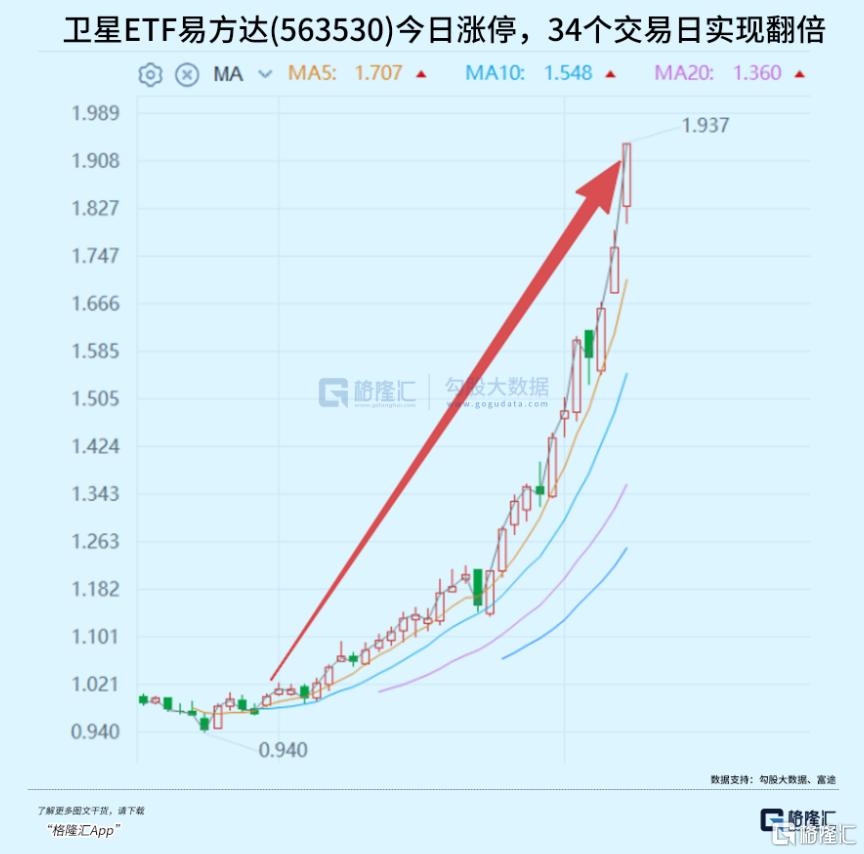
Core Insights - The article highlights the explosive growth of the satellite and AI application sectors, marking the beginning of a strong market trend in 2026, with A-shares achieving a 17-day consecutive rise and nearing 4200 points [1][24]. Group 1: Satellite Industry Developments - China has submitted a record application to the International Telecommunication Union (ITU) for approximately 203,000 satellites, covering 14 constellations, aiming to secure essential resources for satellite internet development over the next decade [6][26]. - The U.S. Federal Communications Commission (FCC) has approved SpaceX's deployment of an additional 7,500 second-generation Starlink satellites, indicating a competitive race for scarce space resources [7][8]. - The satellite industry is experiencing a significant increase in investment, with a notable rise in institutional fund inflows exceeding 150% in key sectors such as satellite manufacturing and rocket support [16][17]. Group 2: AI Application Advancements - The AI sector is witnessing a shift from "Chat" to "Agent" models, with major tech companies accelerating their entry into AI healthcare and other applications [11][12]. - The cost of AI services has decreased by over 90% in the past 18 months, making complex AI applications economically viable for large-scale commercialization [25][28]. - Significant investments are being made in AI, with SoftBank investing $41 billion in OpenAI and ByteDance partnering with NVIDIA for a $14 billion chip collaboration [20][22]. Group 3: Market Trends and Investment Opportunities - The satellite ETF E Fund (563530) has seen a net inflow of 860 million yuan, reflecting strong investor interest in the satellite industry, which is expected to benefit from a long-term growth cycle [18][20]. - The software ETF E Fund (562930) has increased by 213% in size compared to the previous year, indicating a robust interest in AI application companies [20][22]. - The convergence of satellite technology and AI applications is anticipated to create substantial commercial value, with both sectors poised for significant growth in 2026 [30][31].
智谱AI概念上涨9.00%,13股主力资金净流入超亿元
Zheng Quan Shi Bao Wang· 2026-01-12 09:24
Group 1 - The Zhipu AI concept index rose by 9.00%, ranking fourth among concept sectors, with 66 stocks increasing in value [1] - Notable stocks within the Zhipu AI sector include BlueFocus, Daily Interaction, and Hand Information, which reached a 20% limit up, while other stocks like People's Daily and Guomai Culture also hit the limit up [1] - The top gainers in the sector were Hand Information, which saw a net inflow of 8.28 billion yuan, followed by 360 and Daily Interaction with net inflows of 7.12 billion yuan and 3.68 billion yuan respectively [2][3] Group 2 - The Zhipu AI sector experienced a net capital inflow of 46.25 billion yuan today, with 51 stocks receiving net inflows, and 13 stocks exceeding 1 billion yuan in net inflow [2] - The leading stocks by net inflow ratio included Visual China, People's Daily, and Guomai Culture, with net inflow ratios of 48.00%, 41.37%, and 19.00% respectively [3] - The stock with the highest turnover rate was Hand Information at 27.66%, followed by Daily Interaction at 30.75% [3][4]



ChatGPT概念涨7.96%,主力资金净流入这些股
Zheng Quan Shi Bao Wang· 2026-01-12 09:23
Group 1 - The ChatGPT concept stock increased by 7.96%, ranking 8th among concept sectors, with 135 stocks rising, including notable gainers like Fushi Holdings and Tuorisi, which hit the 20% limit up [1] - The top gainers in the ChatGPT sector included Dingjie Zhizhi, Xinzhiyuan Software, and Hongbo Medicine, with increases of 16.78%, 15.09%, and 14.69% respectively [1] - The sector saw a net inflow of 10.553 billion yuan, with 91 stocks receiving net inflows, and 30 stocks exceeding 100 million yuan in net inflow, led by Sichuan Changhong with 1.139 billion yuan [2][3] Group 2 - The top stocks by net inflow ratio included Liou Co., Tongda Hai, and Sichuan Changhong, with net inflow ratios of 65.15%, 35.85%, and 28.48% respectively [3] - The ChatGPT concept stocks with significant trading volumes included Sichuan Changhong, Tuorisi, and Keda Xunfei, with trading volumes of 1.138 billion yuan, 781.24 million yuan, and 760.76 million yuan respectively [3][4] - Other notable stocks in the ChatGPT sector included Youyou Network and Zhongwen Online, which also experienced significant price increases of 10.03% and 20.00% respectively [4][5]


157.74亿元主力资金今日抢筹计算机板块
Zheng Quan Shi Bao Wang· 2026-01-12 09:23
Market Overview - The Shanghai Composite Index rose by 1.09% on January 12, with 28 out of the 31 sectors experiencing gains, led by the Media and Computer sectors, which increased by 7.80% and 7.26% respectively [1] - The sectors that saw declines included Oil & Petrochemicals, Coal, and Real Estate, with decreases of 1.00%, 0.47%, and 0.29% respectively [1] Capital Flow Analysis - The net outflow of capital from the two markets was 27.468 billion yuan, with 11 sectors experiencing net inflows [1] - The Computer sector had the highest net inflow of capital, amounting to 15.774 billion yuan, while the Media sector followed with a net inflow of 5.391 billion yuan [1] Computer Sector Performance - The Computer sector saw a significant increase of 7.26%, with 321 out of 336 stocks in the sector rising, including 31 stocks hitting the daily limit [2] - The top stocks in terms of net capital inflow included Yanshan Technology with 1.485 billion yuan, China Great Wall with 978 million yuan, and Hand Information with 828 million yuan [2] Capital Inflow and Outflow Rankings - The top stocks by capital inflow in the Computer sector included: - Yanshan Technology: +10.05%, turnover rate 16.63%, capital flow 1.484 billion yuan - China Great Wall: +9.99%, turnover rate 3.88%, capital flow 978 million yuan - Hand Information: +20.01%, turnover rate 27.66%, capital flow 828 million yuan [2] - The top stocks by capital outflow included: - Huasheng Tiancai: -4.10%, turnover rate 34.38%, capital flow -1.186 billion yuan - Dawi Technology: -6.50%, turnover rate 35.33%, capital flow -442 million yuan - Aerospace Information: -6.22%, turnover rate 10.60%, capital flow -204 million yuan [4]


2026十大AI技术趋势报告
Sou Hu Cai Jing· 2026-01-12 08:10
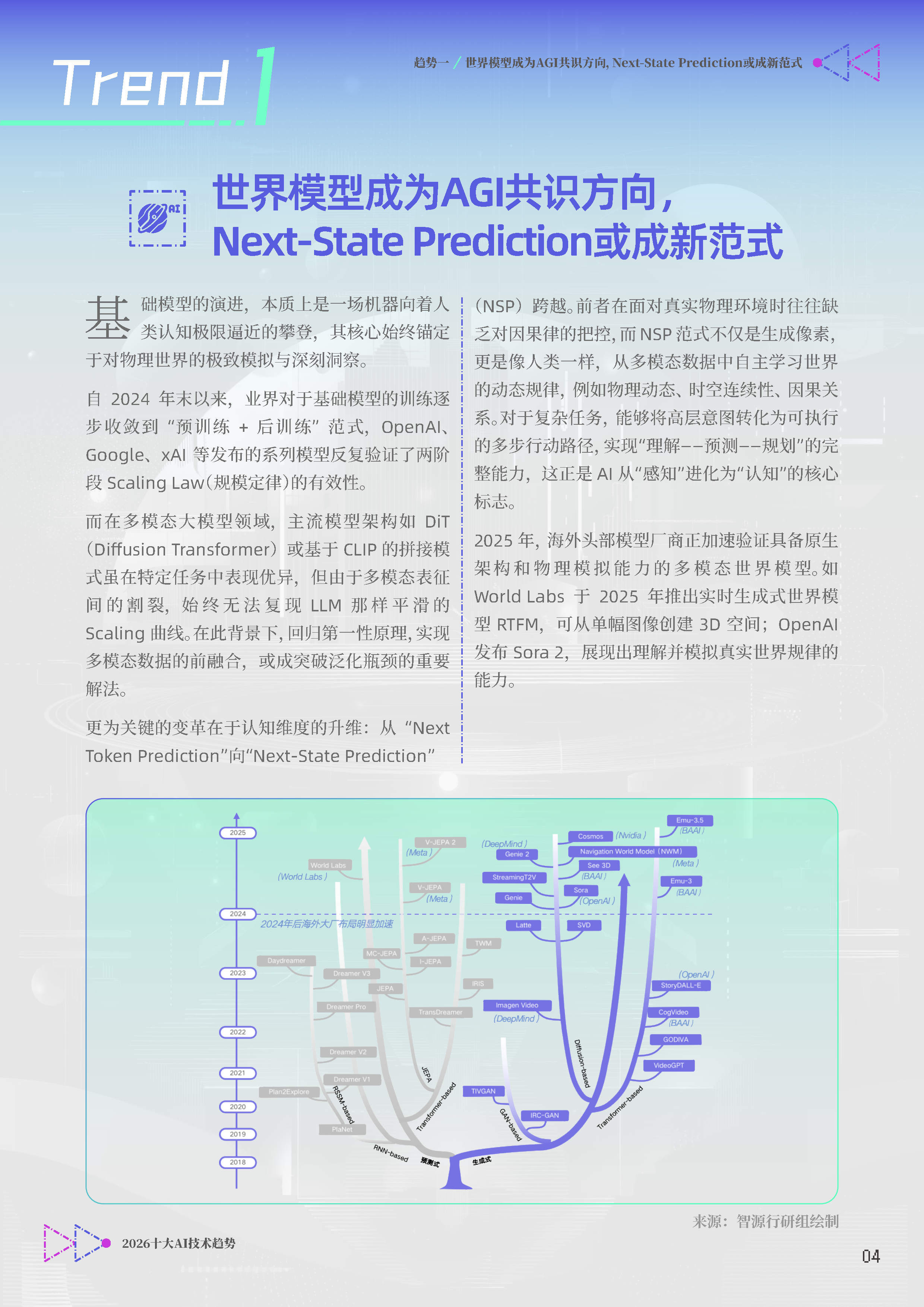
Core Insights - The article discusses the evolution of artificial intelligence (AI) from a rapid initial phase to a more mature stage characterized by cognitive enhancement, collaborative clusters, and deep industry integration, outlining ten core trends that shape the new blueprint of the intelligent era [1]. Group 1: AI Model Evolution - The evolution of foundational models is described as machines approaching human cognitive limits, with the "pre-training + post-training" paradigm validated by the industry since late 2024 [1]. - Breakthroughs in the multimodal field hinge on the transition from "Next Token Prediction" to "Next-State Prediction (NSP)," enabling AI to learn physical dynamics, temporal continuity, and causal relationships like humans [1]. Group 2: Industry Trends and Developments - By 2025, the industry is expected to enter a "clearing" phase, with over 230 embodied intelligence companies in China, including more than 100 humanoid robot firms, facing significant technical challenges and funding requirements [2]. - The commercial focus has shifted from laboratory validation to mass production, with humanoid robot sales surpassing 10,000 units and large-scale orders becoming common [2]. Group 3: Multi-Agent Systems (MAS) - AI applications are evolving from single-agent systems (SAS) to multi-agent systems (MAS), with SAS applications currently accounting for 63% in areas like customer service and code generation [3]. - A report indicates that 57% of organizations have deployed agents to handle multi-stage workflows, with this figure projected to rise to 81% by 2026 [3]. Group 4: Communication Protocols and AI for Science - The core breakthrough in MAS is the unification of communication protocols, with MCP and A2A protocols being integrated into the Linux Foundation, supporting complex applications [4]. - AI for Science (AI4S) has evolved from a supportive tool to an AI Scientist capable of executing a complete research workflow, marking a significant shift in scientific research methodologies [4]. Group 5: Global Competition and Infrastructure - The international competition is intensifying, with the U.S. launching the "Genesis Project" in November 2025 to accelerate the large-scale implementation of AI4S [5]. - China exhibits strengths in application but lacks in foundational infrastructure such as computing power, data, and models, with the national data center holding 4.6PB of data as of 2025 [5]. Group 6: Consumer AI and Vertical Markets - Consumer AI competition is focusing on "Super Apps," which integrate various functionalities into a single platform, with apps like ChatGPT and Gemini achieving over 100 million daily active users [5]. - Vertical markets show significant potential, with multimodal models demonstrating high value despite low usage frequency, as seen in the success of health management apps like Ant Financial's Aifeng [6]. Group 7: Challenges and Future Outlook - Many ToB AI applications remain in the proof of concept (PoC) stage, with 95% of GenAI pilot projects failing to produce measurable impacts due to data quality and integration challenges [6]. - The second half of 2026 is anticipated to be a critical period for the MVP rollout of ToB applications, with a clear implementation path for data governance and API connections [7]. Group 8: Synthetic Data and Cost Reduction - Synthetic data is emerging as a crucial resource for the AI 2.0 era, addressing the shortage of real data, with companies like NVIDIA optimizing 3D detection using synthetic datasets [8]. - The cost of inference has significantly decreased, with the cost per million tokens dropping from $20 to $0.07 between November 2022 and October 2024, reflecting a 280-fold reduction in 18 months [8].
未来生存法则:VibeCoding能力,你准备好迎接2026了吗?
Sou Hu Cai Jing· 2026-01-12 07:41
Core Concept - The article discusses the rapid evolution of programming through AI tools, particularly the concept of "VibeCoding," which allows non-technical individuals to create applications by simply describing their needs to AI [1]. Group 1: AI Programming Tools - Major tech companies like Google and Microsoft have integrated AI programming tools throughout the development process, with reports indicating that 80% of coding tasks at Microsoft are now handled by CopilotX [3]. - AI's efficiency in coding has been highlighted, with a GitHub report stating that using AI can increase coding efficiency by 3.7 times [3]. Group 2: Accessibility for Non-Technical Users - Individuals without a technical background can create functional applications in an average of just 7 days using AI tools [5]. - Examples of successful non-technical users include a sales professional who generated a SaaS tool interface through AI and a self-media tool creator who earns a stable income by validating AI-generated models through A/B testing [7][11]. Group 3: Changing Skill Requirements - The focus has shifted from traditional coding skills to the ability to articulate business logic clearly, likening this to a commander giving orders to soldiers [7]. - The article emphasizes that the most valuable skill in the next decade will be the ability to solve problems using AI [7]. Group 4: Overcoming Psychological Barriers - A survey indicated that 80% of people are hesitant to learn programming due to intimidation by coding symbols, a phenomenon known as "impostor syndrome" [9]. - The article encourages individuals to embrace AI as a coding assistant rather than fearing obsolescence, suggesting that clear communication of ideas is crucial for success [13].
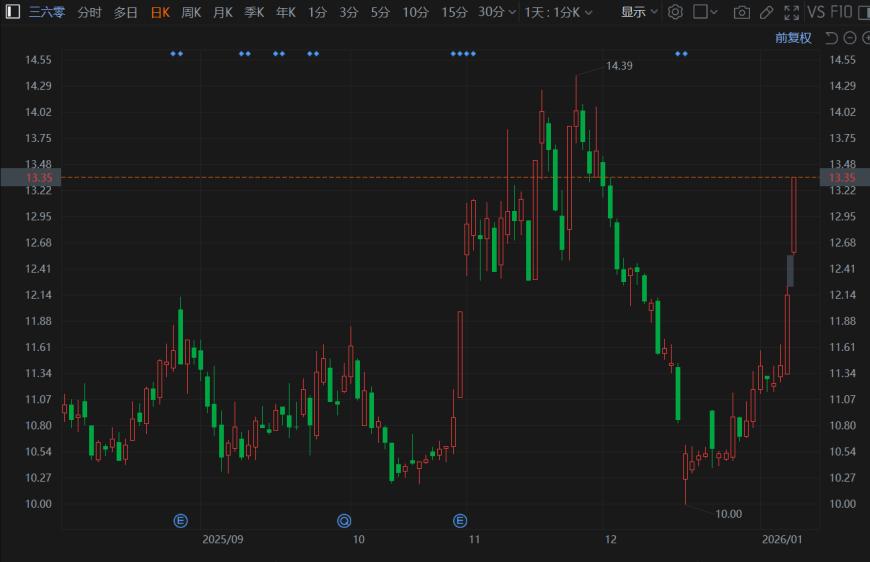
AI应用题材全线爆发,三六零强势封涨停,创近一个半月新高
Ge Long Hui· 2026-01-12 07:12
Core Viewpoint - The AI application sector has experienced a significant surge, with companies like 360 (601360.SH) hitting a new high and strong market performance driven by recent developments in the AI industry [1] Group 1: Company Performance - 360 (601360.SH) has seen a strong performance, closing at 13.15 yuan, marking a new high in one and a half months, with a total market capitalization of 934.44 billion yuan [1] Group 2: Industry Developments - Recent AI industry dynamics include overseas financing rounds for xAI and Anthropic, as well as the introduction of domestic policies promoting "AI + manufacturing" [1] - The stock market has reacted positively to the listings of large model companies like Zhiyu and MiniMax in Hong Kong, which have seen significant price increases [1] - The upcoming launch of DeepSeek-V4 is anticipated to trigger a new wave of enthusiasm in AI applications [1]
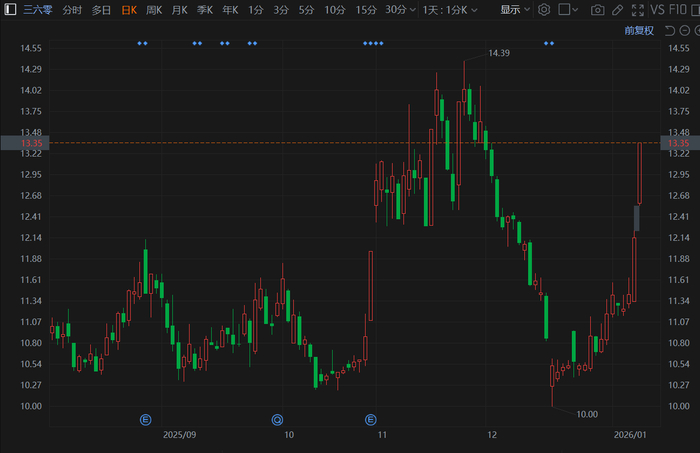
A股异动丨AI应用题材全线爆发,三六零强势封涨停,创近一个半月新高
Ge Long Hui A P P· 2026-01-12 07:05
Core Viewpoint - The AI application sector is experiencing a significant surge, with companies like 360 (601360.SH) seeing strong stock performance and reaching a new high of 13.15 yuan, resulting in a total market value of 934.44 billion yuan [1] Group 1: Market Dynamics - Recent developments in the AI industry include financing rounds for overseas companies like xAI and Anthropic, and the introduction of domestic policies promoting "AI + manufacturing" [1] - The stock prices of Hong Kong-listed large model companies, such as Zhipu and MiniMax, have surged following their listings, indicating a growing interest in AI applications [1] - The upcoming launch of DeepSeek-V4 is expected to trigger a new wave of enthusiasm for AI applications [1] Group 2: Company Developments - 360 has been selected as one of the first pilot application units for the intelligent agent interconnection protocol, alongside 27 other entities including Huawei, Tsinghua University, and China Telecom [1] - The market anticipates that the development of "professional intelligent agents" is essential for empowering vertical industries [1] - 360's founder and chairman, Zhou Hongyi, predicts that the market space opened by professional intelligent agents could reach ten times the size of the traditional software market [1] Group 3: Strategic Initiatives - 360 has established an "All in Agent" core strategy, which includes the release of the world's first L4-level multi-agent swarm, showcasing its ability to handle complex tasks collaboratively [1] - The company has also launched the "360 Enterprise-level Intelligent Agent Construction and Operation Platform," aimed at addressing the challenges faced by government and enterprise users in their intelligent transformation [1]
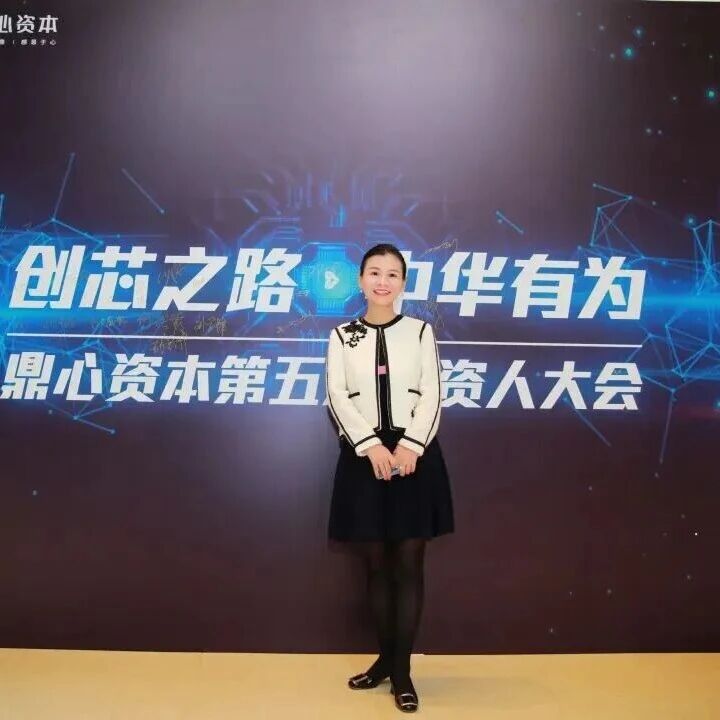
从顶级机构到创业舵手:鼎心资本胡慧的硬科技与医疗健康投资远征
投中网· 2026-01-12 07:05
Core Insights - The article highlights the career evolution of Hu Hui, a prominent figure in China's venture capital industry, illustrating the shift from model innovation to hard-core innovation in technology investment [4][7]. Group 1: Career Evolution - Hu Hui transitioned from a top investment institution to entrepreneurship, founding Dingxin Capital during the "mass entrepreneurship and innovation" wave in 2014, seizing the opportunity presented by the privatization of Chinese concept stocks [10][11]. - After establishing a foothold, she shifted Dingxin Capital's focus from late-stage opportunity investments to early-stage systematic investments in 2016, emphasizing the need for a specialized team with deep industry backgrounds [13][14]. - By 2019, Hu Hui further refined the investment strategy to concentrate on hard-core technology and healthcare sectors, achieving significant recognition and awards in the venture capital field [17][19]. Group 2: Investment Philosophy - Hu Hui's investment philosophy is encapsulated in the balance between "daring to believe" and "cautiously verifying," focusing on identifying genuine pain points and assessing the timing of technological breakthroughs [19][23]. - The investment style of Dingxin Capital is characterized by long-term value creation, demonstrated through strategic decisions made during challenging times, such as investing in a light chip project post-COVID-19 [21][22]. Group 3: Key Characteristics of Investors - Hu Hui identifies three essential traits for successful investors: strong curiosity and learning ability, tolerance for uncertainty, and a long-term value perspective [23]. - She emphasizes the importance of patience and continuous skill enhancement, particularly in the context of the evolving landscape of hard technology and healthcare investments [26][29]. Group 4: Industry Trends - The article notes that the healthcare sector has entered an "innovation 2.0" phase, requiring original solutions rather than incremental improvements, while semiconductor investments face increasing differentiation challenges due to AI and domestic substitution demands [24]. Group 5: Conclusion - Hu Hui's journey reflects the importance of adapting to changing times and the need for a deep understanding of industry dynamics, positioning her as a role model for future investors and entrepreneurs [29][30].