恒生电子

Search documents
金翼基金万成水: 锚定“颠覆性创新” 做中国资本出海“导航员”
Zhong Guo Zheng Quan Bao· 2025-12-28 21:27
Core Insights - The article highlights the journey of Wan Chengshui, a seasoned investment professional with over 20 years of experience in domestic and international securities markets, emphasizing the evolution of China's asset management industry from "bringing in" to "going out" [1][2][4] Group 1: Career Development - Wan Chengshui transitioned from being a teacher to a financial expert, starting his career in Shenzhen and gaining insights into the financial technology sector through roles in companies like Jinzheng Co. and Hengsheng Electronics [2] - His experience in both domestic and international financial markets has shaped his team's global perspective since their inception [2][4] - In 2010, he co-founded a company focusing on Hong Kong stock investments, later expanding to U.S. tech stocks, establishing a unique positioning as a global tech stock investment expert for ultra-high-net-worth individuals in China [2][3] Group 2: Company Growth and Strategy - The establishment of Jin Yi Private Fund Management in 2021 was a response to client demand for RMB funds investing in U.S. tech stocks, with the company managing nearly 2 billion RMB in assets [3] - The company has developed a robust investment methodology centered on disruptive innovation, focusing on long-term holdings and a concentrated portfolio strategy [5][6] - Jin Yi Fund has achieved significant performance, with its flagship fund outperforming major indices like the Dow Jones and S&P 500 over the past decade [2][3] Group 3: Investment Philosophy - The investment philosophy is built on four pillars: first principles, disruptive innovation theory, comparative advantage theory, and a strategy of relatively concentrated long-term holdings [5][6] - The team emphasizes the importance of understanding the essence of businesses and investing in companies with strong competitive advantages and clear growth trends [5][6] - The approach includes a focus on a limited number of stocks to enhance investment efficiency, with a preference for companies at the forefront of disruptive innovation [6] Group 4: Future Outlook - The company aims to evolve its research and investment framework, moving from a focus on foresight and steadfast holding to incorporating macroeconomic research and risk management tools [8] - The future investment landscape is expected to be heavily influenced by artificial intelligence, with opportunities across various sectors such as storage, chips, and intelligent robotics [8] - The company positions itself as a trusted partner for China's ultra-high-net-worth individuals, focusing on global tech growth stocks [8]
锚定“颠覆性创新” 做中国资本出海“导航员”
Zhong Guo Zheng Quan Bao· 2025-12-28 21:08
Core Insights - The article highlights the career journey of Wan Chengshui, a seasoned investment manager with over 20 years of experience in domestic and international securities markets, reflecting the evolution of China's asset management industry from "bringing in" to "going out" [1][4] - The company, Jin Yi Fund, has established a unique investment methodology centered on "disruptive innovation" and a disciplined approach to relatively concentrated and long-term holdings [1][5] Company Development - Jin Yi Fund was founded in 2014, focusing initially on the Hong Kong stock market and later expanding to the U.S. tech sector, aiming to serve ultra-high-net-worth individuals in China [2][3] - As of now, Jin Yi Fund manages nearly 2 billion RMB in domestic fund products and has a total asset management scale between 5 billion to 10 billion RMB [3] Investment Philosophy - The investment methodology is based on four pillars: first principles, disruptive innovation theory, comparative advantage theory, and a strategy of relatively concentrated long-term holdings [5][6] - The company emphasizes that investing in stocks equates to investing in businesses, with a focus on companies at the forefront of disruptive innovation and possessing significant competitive advantages [6] Future Outlook - The company plans to evolve its research and investment system from version 1.0 to 2.0, incorporating macroeconomic research and risk management tools like options and futures [7] - The anticipated investment theme for 2026 revolves around artificial intelligence (AI), which is expected to drive market trends in both Chinese and U.S. stock markets [7]
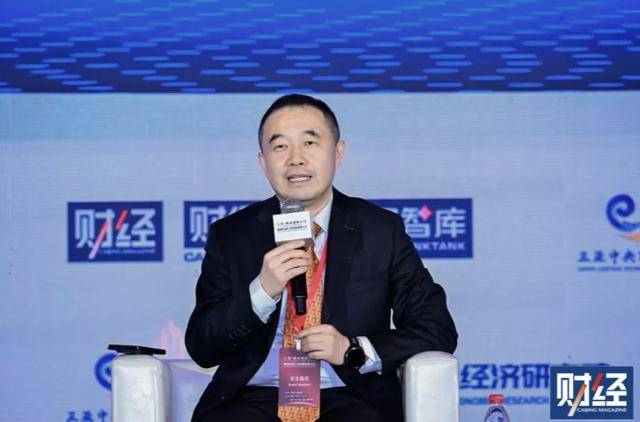
恒生电子执行总裁官晓岚:金融科技与AI将成为海南财富管理转型升级的核心驱动力
Sou Hu Cai Jing· 2025-12-28 16:20
Core Insights - The Sanya International Forum and the Fifth Sanya Wealth Management Conference highlighted the theme of "Future Positioning of Hainan Free Trade Port and New Opportunities in Sanya" [1] - Financial technology and artificial intelligence are identified as core drivers for the transformation and upgrading of the wealth management industry post-Hainan's customs closure [3] Financial Technology and AI Applications - Financial institutions are expected to gather in Hainan, leading to demands for innovation in financial markets and infrastructure [3] - AI can significantly enhance investment research efficiency, reducing report writing discrepancies from over 25% to around 15% [8] - AI systems can generate personalized asset allocation suggestions based on client profiles, covering various financial products [10] - AI plays a crucial role in risk management and intelligent customer service, enhancing operational efficiency [10] Future Outlook for Sanya - Sanya is projected to become a hub for the globalization of the Renminbi, financial technology applications, and financial data services [3][13] - The wealth management sector is shifting from yield-driven to risk-driven models, increasing the demand for financial technology and data services [6] Infrastructure and Market Development - The influx of investors will lead to the establishment of new financial institutions and innovative market infrastructure [5] - The development of trading systems, including potential 24/5 trading models, is being explored to enhance transaction efficiency [5] Data Utilization and AI Integration - Data is becoming increasingly vital in Sanya, with a focus on providing global data related to the Renminbi [11] - The introduction of AI-friendly databases aims to facilitate easier access to relevant data for wealth management institutions [11] - AI's capabilities are being integrated into customer service processes, enhancing client interactions and satisfaction [10][13]


嘉实基金邝霞:财富管理需以“账户思维”为核心进行多元资产配置,海南封关提供重要机遇
Sou Hu Cai Jing· 2025-12-28 15:24
由三亚市人民政府主办,《财经》杂志、财经网、《财经智库》、三亚中央商务区管理局、三亚经济研 究院承办的"三亚·财经国际论坛暨第五届三亚财富管理大会"12月27日在海南三亚举行,主题为"海南自 贸港未来定位及三亚新机遇"。 12月27日,嘉实财富副总经理邝霞在大会上表示,财富管理的出发点是客户需求,同时应立足于"账户 思维"为客户进行多元化和全球化的资产配置。海南封关带来的跨境资管试点等政策红利,为财富机构 汇聚专业力量服务客户需求提供了重要机遇。 邝霞指出,嘉实财富从客户需求出发设立财富管理目标,并通过具有保障、生息、增值功能的产品来构 建客户账户,在持续陪伴中确保客户账户目标实现。 在资产配置层面,她谈到,全球增长放缓的背景下需通过多元资产组合提供收益并穿越周期。具体而 言,债券是账户压舱石,在降息背景下具备配置价值;股票是账户的增长引擎,科创硬科技是重要成长 力量;黄金等商品则能对冲宏观不确定性风险。她强调,核心不是单类产品,而是基于账户做好规划, 以多元资产组合拥抱变化。 针对海南封关的意义,她认为这为全球资产配置提供了便捷通道。她指出,跨境资产管理试点及境内外 资金双向流动便利化是关键,且"双15%" ...

业界热议高水平开放下的财富管理新生态
Zheng Quan Ri Bao· 2025-12-28 14:30
Group 1: Wealth Management Industry Trends - The wealth management industry is transitioning from a focus on single product sales to diversified, solution-oriented services, emphasizing the need for a variety of investment tools tailored to individual life cycles and wealth planning [1][3] - The industry is shifting from a product-centric approach to a client-centric model, highlighting the importance of understanding customer needs and providing diversified global asset allocation [1][3][4] Group 2: Opportunities from Hainan Free Trade Port - The official launch of the Hainan Free Trade Port is expected to create a convenient channel for global asset allocation, with policies facilitating cross-border asset management and the dual 15% tax policy providing tangible benefits [2][3] - Hainan's unique environment and service industry foundation are anticipated to attract a significant number of retirees, leading to emerging demands in retirement finance and wealth planning, thus presenting new growth opportunities for the wealth management sector [3][4] - The policies in Hainan are seen as advantageous for family trusts, enhancing their security, flexibility, and internationalization, which can support the establishment of robust asset isolation and inheritance structures [4] Group 3: Role of Technology in Wealth Management - Financial technology and artificial intelligence are identified as core drivers for the transformation and upgrading of the wealth management industry following the Hainan Free Trade Port's operations, necessitating innovative financial market and infrastructure development [4]
恒生电子执行总裁官晓岚:海南封关为金融科技与财富管理带来重要机遇
Zheng Quan Shi Bao Wang· 2025-12-27 13:29
Group 1 - The core viewpoint is that Hainan's customs closure presents significant opportunities for financial technology and wealth management [1] - The company plans to provide financial technology services that include asset management, wealth management, trading systems, and risk control to meet the needs of financial institutions settling in Hainan [1] - The rapid implementation of artificial intelligence in the financial sector is highlighted, particularly in areas such as investment research support, intelligent advisory, risk identification, and customer service [1] Group 2 - The use of AI is noted to significantly enhance information processing efficiency and the reliability of decision-making [1] - Data is emphasized as a key factor in the development of AI within the financial industry [1]
恒生电子官晓岚:财富管理的核心是将居民资金投向创新企业
Xin Lang Cai Jing· 2025-12-27 09:07
Group 1 - The Sanya Financial International Forum and the 5th Sanya Wealth Management Conference will be held on December 27 in Sanya, Hainan, with the presence of the Executive President of Hengsheng Electronics, Guan Xiaolan [1][3] - Guan Xiaolan indicated that after the closure of the Hainan Free Trade Port, a significant influx of investors is expected, leading to a follow-up from financial institutions, which may drive the development of the entire financial market and infrastructure [3][5] - The company aims to provide services to financial institutions, investors, and regulators, emphasizing the importance of financial technology services as financial institutions establish their presence [5] Group 2 - Guan Xiaolan views wealth management as a broad concept, focusing on channeling residents' funds into innovative enterprises, and aims to facilitate this pathway through financial services [5] - Hengsheng Electronics plans to offer asset management, wealth management services, as well as trading, exchanges, and risk management services [5]
下周剑指4000点?央行印发《人民币跨境支付系统业务规则》
Sou Hu Cai Jing· 2025-12-26 17:36
Core Insights - The People's Bank of China released a draft for the revised rules of the Cross-Border Interbank Payment System (CIPS), indicating significant changes in financial infrastructure and catalyzing the financial market [1] - The CIPS system is crucial for the internationalization of the Renminbi, connecting 174 direct participants and 1,509 indirect participants across 120 countries and regions by May 2025 [1] - The new rules enhance the flexibility of the CIPS system, allowing for additional business activities approved by the People's Bank of China, which opens up opportunities for future innovations [1] Policy Benefits - The CIPS system serves as a "highway" for Renminbi internationalization, facilitating nearly 35,000 cross-border Renminbi transactions daily [1] - Recent policy measures from the State Council, including 77 pilot measures related to financial technology and cross-border payments, are being promoted to other free trade zones and nationwide [2] - The launch of the Cross-Border Payment Link in Hong Kong allows real-time cross-border remittances, enhancing convenience for residents [2] Market Reactions - The financial software sector has reacted positively, with significant stock price increases for companies like Zhinancun and Dazhihui following the announcement [4] - Analysts are optimistic about the financial IT sector, noting that the new rules will facilitate the continuous expansion of CIPS, benefiting IT service providers [4] - Digital Renminbi applications are expanding, with innovative uses in offshore trade scenarios already being implemented [4] Investment Logic - There is a strong demand for a rebound in the financial technology sector, which has lagged behind other sectors since 2025 [5] - The balance between traditional financial stocks and technology innovation stocks is expected to converge, with opportunities arising from financial reforms [5] - The focus on intelligent risk control is becoming paramount in digital finance, with institutions encouraged to build advanced risk management platforms [5] Ecological Transformation - The upgrade of the cross-border payment system is expected to drive upgrades across the entire industry chain, from hardware to software and operational services [7] - Financial institutions are actively participating in the national "data factor" initiative, which aims to enhance the application of financial data through shared technologies [7] - There is a growing competition for digital finance talent, with institutions encouraged to recruit professionals with digital backgrounds [7] Opportunities and Challenges - Financial institutions must balance innovation with risk control, as highlighted in the new guidelines for artificial intelligence applications [8] - The complexity of managing external cooperation risks in the digital finance ecosystem is increasing, necessitating robust risk assessment frameworks [8] - Rapid technological advancements require financial institutions to continuously adapt and innovate, focusing on distributed and microservice architectures [8] Market Outlook - The CIPS system upgrade is expected to inject new momentum into the financial technology sector, with cross-border payments and digital Renminbi likely to remain active areas [10] - The market is trending towards balance, with undervalued financial stocks and growth-oriented technology stocks expected to rotate positively [10] - The financial technology sector is entering a promising era, with companies demonstrating technological strength and innovation likely to stand out [10]
全球资管深研系列(四):全球智能投顾全景图
Guoxin Securities· 2025-12-25 15:25
Core Insights - The rise of robo-advisors is driven by the integration of financial technology and traditional wealth management, offering low costs, high accessibility, and convenience. Post-global financial crisis, stricter regulations and technological advancements have facilitated the emergence of non-bank fintech companies, with robo-advisors serving as a cost-effective alternative to human advisors. They utilize algorithms to automatically construct investment portfolios, significantly reducing advisory fees and breaking geographical barriers, allowing investors to access professional services anytime and anywhere. Robo-advisors particularly attract low-income groups and younger users by minimizing trading costs through passive investment strategies, enhancing capital market participation for long-term goals like retirement and emergency savings. The evolution of robo-advisors has progressed through four stages: early online questionnaires and static advice, full automation and passive management, establishment of hybrid models, and AI-driven hyper-personalization and intelligent agents [2][9][10]. - The global robo-advisory market is experiencing rapid expansion, with the U.S. maintaining a dominant position while emerging markets like China show significant potential for growth. The market size is projected to increase from $7.7 billion in 2023 to approximately $116.4 billion by 2033, with the U.S. accounting for 81% of global assets under management (AUM). The competitive landscape in the U.S. has formed a "three giants and many strong" scenario, with Vanguard, Schwab, and Fidelity as the major players, while independent unicorns like Betterment and Wealthfront continue to thrive. In Europe, the market share remains relatively small, with key players categorized into pan-European super platforms, market consolidators, and regional champions. China's robo-advisory market is expected to exceed $2 billion by 2028 and $4 billion by 2030, contributing to the development of passive investment strategies and long-term capital market participation [2][15][21][25][30]. - The business model of robo-advisors is evolving towards platformization and ecosystem integration, with revenue models shifting from single asset management fees to layered charging and technology empowerment. Robo-advisors have expanded from B2C to B2B and ecosystem models, exemplified by Ant Wealth's scenario collaboration for traffic conversion. Revenue diversification includes pure digital models relying on AUM management fees, tiered subscription models offering premium services, B2B tool empowerment models generating profits through technology output, and ecosystem platform models depending on product distribution commissions. This evolution highlights the industry's transition from scale expansion to value extraction [2][35][39]. - The core competitive advantages of leading robo-advisors include comprehensive strength, digital experience, and user-friendliness for beginners. Platforms with strong comprehensive capabilities often excel in long-term performance and service quality, while the best digital planning platforms possess robust personal asset aggregation tools that create automated financial management loops. User-friendly platforms may excel in brand trust or community ecosystem development. In the competitive landscape, Betterment and Wealthfront not only survive but thrive, embodying the pure fintech spirit by creating value through technological innovation and exceptional user experience [2][39][50]. - The development trend of robo-advisors is characterized by a philosophical debate between "active" and "passive" investment strategies. Analyzing the portfolio data of various robo-advisors reveals a shift in the industry towards this philosophical contention, categorized into MPT believers (Vanguard & Betterment), potential active managers (SoFi & Axos), and tech-driven alpha harvesters (Wealthfront) [2][11]. - Looking ahead, the industry is poised for significant restructuring and a new journey. By 2025, the robo-advisory sector will have transitioned from rapid growth to a phase of integration and iteration. Three major trends are expected to continue: industry consolidation, a shift from scale to sustainable profitability, and AI reshaping robo-advisory services. The complete withdrawal of bank-affiliated robo-advisors reflects ongoing industry consolidation, as the mismatch between customer acquisition costs and lifetime value necessitates substantial new scale to cover technology and compliance costs. Independent platforms are now focusing on sustainable profitability rather than blind scale expansion, as exemplified by Robinhood's acquisition of AI financial planning company Pluto and the launch of its own robo-advisory service, which aims to provide genuinely personalized financial consulting through large language models [2][15][30].

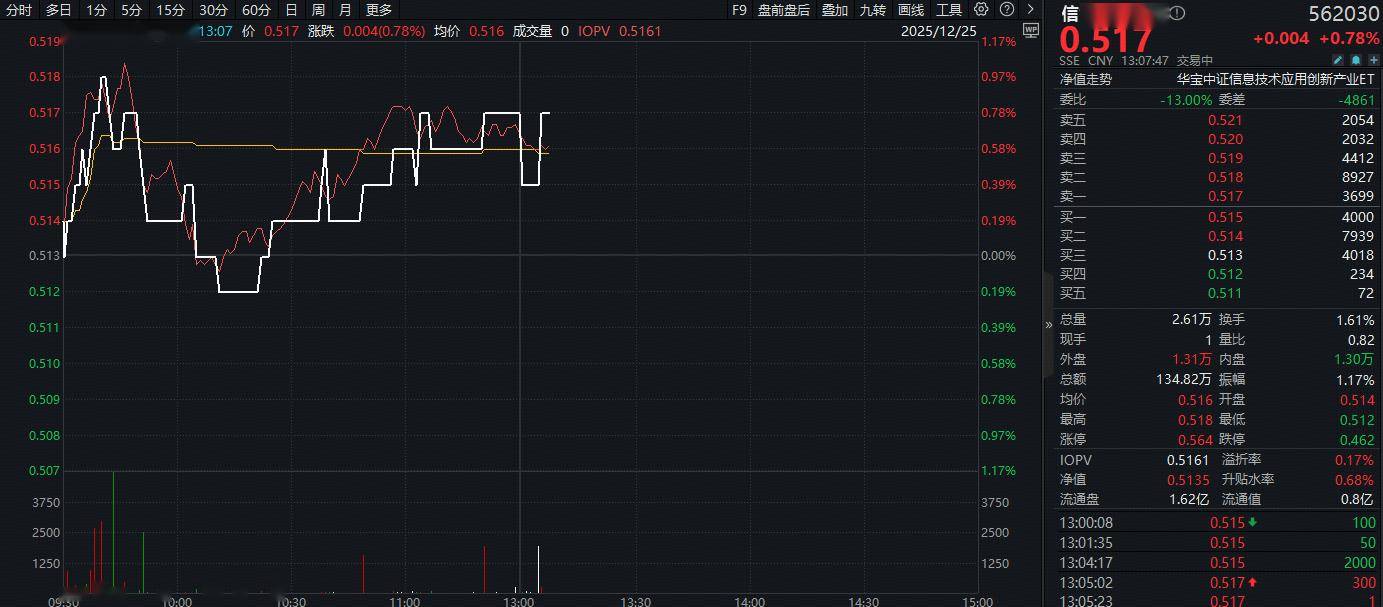
ETF盘中资讯|快手攻击事件催化,网络安全板块活跃!信创ETF基金(562030)逆市涨近1%,盘中收复20日线、年线
Sou Hu Cai Jing· 2025-12-25 05:42
Core Viewpoint - The news highlights the active performance of the Xinchuang ETF fund (562030) in the information technology self-controllable sector, with a price increase of nearly 1% at one point and currently up by 0.78%, recovering key moving averages and showing potential for further gains [1][3]. Group 1: Market Performance - The Xinchuang ETF fund has seen significant activity, with key stocks such as Chengdu Huami leading with a rise of 10.48%, followed by Nandian Information at 5.10%, and others like Yaxin Security and Xin'an Century increasing by over 2% [3]. - The fund's underlying index includes core segments of the Xinchuang industry chain, covering hardware, software, application software, information security, and external devices, indicating high growth and elasticity characteristics [6]. Group 2: Policy and Industry Outlook - Eight departments have issued a document to support the construction of the Western Land-Sea New Corridor, promoting cross-border payment opportunities, with predictions of rapid growth in global retail cross-border payment scale by 2032 [4]. - Analysts from CITIC Securities and Guotai Junan Securities suggest that the Xinchuang industry is poised for unexpected growth due to favorable policies and the urgent need for self-controllable technology, with hardware and software localization rates currently low [4][7]. - The Xinchuang sector is characterized by recovery in market conditions, improved product performance, and leadership in domestic computing power, with significant orders expected to accelerate in the next two years due to supportive policies [4][7]. Group 3: Investment Strategies - Investment opportunities in the Xinchuang sector can be categorized into three main lines: core participants in the Huawei supply chain, leading companies in the Xinchuang ecosystem, and urgent demand in specific fields such as domestic computing power and industrial software [4][7]. - The current geopolitical climate and the trend towards de-globalization emphasize the necessity for self-controllable technology, which is expected to receive strong support from the government and accelerate industry development [6][7].