阿迪达斯

Search documents
巴菲特投的日本财团,收购英国运动品牌Gola
Xin Lang Cai Jing· 2026-01-07 13:00
在全球复古运动鞋热度持续攀升的背景下,受巴菲特投资的日本综合商社丸红株式会社,收购了英国经 典运动服饰品牌Gola。 20世纪90年代,随着耐克、阿迪达斯等品牌的崛起,Gola的发展陷入困境。即便在英伦摇滚全盛时期, 绿洲乐队的加拉格尔兄弟曾脚踩该品牌经典款哈里尔运动鞋出镜,也未能扭转其颓势。 丸红此番收购,意在复制阿迪达斯的成功路径——阿迪达斯正是凭借复古运动鞋的强劲市场需求,于去 年10月上调了盈利预期。日本亚瑟士(Asics)品牌的复古跑鞋系列同样人气暴涨。英国公司注册处的 公开文件显示,雅各布森集团持有登禄普、龙狮戴尔等六个品牌的所有权或经营权,2024年其销售额同 比大增38%,达到3630万英镑,增长动力主要来自Gola品牌在欧美市场的亮眼表现;税前利润更是实现 超五倍增长,达到390万英镑,而在此之前,该公司已连续十年亏损。 雅各布森集团曾于去年9月表示,预计2025年营收将实现40%的增长。 丸红此次收购,恰逢该公司社长本间正行的战略转型推进期。本间正行于今年4月上任后,正推动丸红 从大宗商品贸易业务,向聚焦特定区域市场销售的实体业务转型。 巴菲特旗下的伯克希尔哈撒韦,一直对日本综合商社青睐有 ...


华利集团:公司为阿迪达斯在越南、印尼和中国均开设了专属工厂
Zheng Quan Ri Bao Wang· 2026-01-07 11:11
证券日报网讯 1月7日,华利集团(300979)在互动平台回答投资者提问时表示,公司为阿迪达斯在越 南、印尼和中国均开设了专属工厂,正式订单与预告订单差异不大,这几个工厂的出货情况基本按规划 在进行,没有出现大的异常。 ...
抢占新高地:预见TikTok德国市场的未来生态与公会机遇
Sou Hu Cai Jing· 2026-01-07 07:45
Core Insights - TikTok's German market is experiencing significant growth with 21.8 million active users and an average monthly usage time of 34 hours, positioning it as a key player in the global short video landscape [1] - The market is evolving from content entertainment to a diversified ecosystem that includes content, e-commerce, and services, with MCNs (Multi-Channel Networks) poised to seize unprecedented opportunities [1] Market Ecosystem: Diverse Growth Driven by High-Value Users - TikTok's competitive edge in Germany stems from the deep integration of high-value users and refined operations, with over 60% of users aged 18-34 and significant growth among users aged 35 and above [3] - Major cities like Berlin and Munich are becoming traffic hubs, and the average revenue per user (ARPU) is €8, indicating strong willingness to pay [3] - Local content, including topics like German football and environmental issues, accounts for over 55% of traffic, while niche content is also gaining traction [3] E-commerce Growth as a Key Increment - Germany is a leading market for TikTok Shop in Europe, with monthly GMV ranging from $6 million to $25 million, and significant growth during peak shopping seasons [4] - The alignment of content and user interest with a focus on quality has led to high sales in categories like smart home devices and eco-friendly products, with average order values exceeding €45 [4] Compliance as a Fundamental Requirement - Compliance is essential for entering the German market, with strict GDPR regulations requiring user data to be stored within the EU and potential fines for violations reaching €20 million or 4% of annual revenue [5] - Tax compliance is also critical, with a VAT rate of 19% and penalties for late filings, necessitating automated tax systems for MCNs [5] - Content must avoid sensitive topics and adhere to local standards, impacting conversion rates and brand trust [5] Opportunities for MCNs: Triple Benefits - TikTok's German market offers MCNs policy, traffic, and commercialization benefits, including a 3-6 month traffic support period for new MCNs and increased exposure for new streamers [7] - The "one store sells five countries" policy allows MCNs in Germany to reach other EU markets, enhancing scalability [7] Flow of Traffic and Monetization Potential - The competitive environment is currently favorable, with fewer than 10 active MCNs in Germany, and users spending over 75 minutes daily on the platform [8] - Live streaming during peak hours can significantly enhance conversion rates, with potential earnings from gifts and brand collaborations being substantial [8] Technological Empowerment for Smaller MCNs - The adoption of hybrid models combining human and AI streamers can reduce costs significantly, while innovative content generation methods can enhance efficiency [9] - New revenue streams are emerging from knowledge-based services, such as language teaching and carbon neutrality courses [9] Future Outlook: Focus on Precision and Global Integration - The future of TikTok's German market is expected to evolve towards verticalization, technological advancement, and integration, focusing on sectors like renewable energy and precision manufacturing [11] - The integration of local brands with TikTok's content strengths will create a closed-loop ecosystem that enhances user engagement and brand trust [11] - Cross-regional synergies will facilitate collaborative growth across EU markets [11] Conclusion - TikTok's German market is at a pivotal moment, driven by high-value users, policy advantages, and e-commerce growth, presenting vast opportunities for MCNs [12] - Success will depend on compliance, localized content, and leveraging technology to establish a strong foothold in this emerging European market [12]
韩国版lululemon被收购,瑜伽服创业风口已过
3 6 Ke· 2026-01-07 01:59
Core Insights - The entrepreneurial stories of brands resembling lululemon in different markets are diminishing, as evidenced by the acquisition of the Korean yoga apparel brand andar by Bain Capital, with an estimated valuation of around 2 billion RMB [1][5] - Similar to the case of MAIA ACTIVE, which was acquired by Anta Group, the trend indicates a closing window for new entrants in the yoga apparel market [1][12] Group 1: Market Dynamics - andar, founded in 2015, has surpassed MAIA ACTIVE in scale, with its parent company Eco Marketing reporting Q3 revenue of 117.8 billion KRW and operating profit of 15.5 billion KRW, marking a historical quarterly high [5][7] - The brand has successfully positioned itself with lower prices and designs tailored for Asian women, capitalizing on the growing fitness culture in Korea [7][9] - The entry of lululemon into the Korean market in 2024 has created a competitive landscape, as andar had already established its presence during the previous decade [7][9] Group 2: Challenges Faced by Brands - Both andar and MAIA ACTIVE face challenges despite their unique positioning, as they are caught in a competitive environment with high-end brands like lululemon and low-end "white label" yoga apparel [9][12] - MAIA ACTIVE's mid-range positioning has led to difficulties in scaling, as reliance on e-commerce has proven insufficient, necessitating the opening of physical stores, which brings additional costs and challenges [9][12] - The overall trend indicates that many emerging yoga apparel brands are struggling, with some like Outdoor Voices undergoing significant restructuring and others like Particle Fever facing sales pressures [12][14] Group 3: Industry Trends - The yoga apparel market is witnessing a head-to-head competition among international brands, with major players like Nike and Adidas expanding their yoga product lines [14][16] - The saturation of the yoga apparel market is prompting brands to explore new opportunities in outdoor and other athletic segments, as seen with brands like Outopia and JSC [17][19] - The narrative of "downstream" and "alternative" brands continues, but the premium brand value remains largely with international players, indicating a shift in the entrepreneurial landscape for domestic brands [19]


This Turnaround Stock Has One of the ‘Best Brands’ in the World. Buy Its Shares in 2026.
Yahoo Finance· 2026-01-06 18:33
Core Viewpoint - Under Armour (UAA) is experiencing a potential turnaround as recent positive analyst calls and a rebound in stock price suggest a shift in market sentiment despite previous struggles [1][4][13]. Company Overview - Founded in 1996, Under Armour has evolved into a global sportswear brand with a market capitalization of $2.26 billion, offering a wide range of products from apparel to footwear and accessories [2][6]. Financial Performance - Under Armour's Q2 results showed a revenue decline of 5% year-over-year (YOY) to $1.3 billion, with North America down 8% to $792 million, while international revenue grew 2% to $551 million [9][10]. - The gross margin fell by 250 basis points to 47.3%, influenced by supply-chain costs, but adjusted operating income reached $53 million, and adjusted EPS of $0.04 exceeded Wall Street forecasts [10][11]. Analyst Insights - Analyst Jay Sole from UBS believes that Under Armour's brand is undervalued compared to peers, with a projected 25% five-year EPS compound annual growth rate (CAGR) and a price target of $8, indicating a 47% upside potential [3][13][14]. - The consensus rating for UAA stock is "Hold," with an average price target of $5.61, suggesting a modest upside, while the highest target price of $9 indicates a potential rally of up to 65% [15]. Future Outlook - For fiscal 2026, revenue is expected to decline by 4% to 5%, with a projected adjusted EPS of $0.03 to $0.05, before a significant rebound to $0.20 in fiscal 2027 [12]. - Analysts anticipate that renewed product innovation and strong brand awareness will drive revenue growth towards $5.6 billion by 2030 [14].
欧洲股市再创新高 诺和诺德带动医疗保健股上涨
Xin Lang Cai Jing· 2026-01-06 17:22
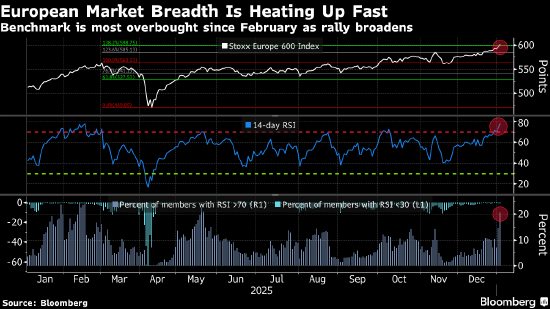
Group 1 - European stock markets rose, driven by Danish pharmaceutical company Novo Nordisk, boosting the healthcare sector [1][4] - The Stoxx Europe 600 index closed up 0.6%, reaching a new all-time high [1][4] - Novo Nordisk's stock increased by 5% due to optimistic market expectations for its new oral version of a weight-loss injection drug launched in the U.S. this week [1][4] - Novo Nordisk's stock has risen 12% this year, recovering from a 48% decline in 2025 [1][4] Group 2 - Mining stocks also rose as copper prices continued their strong upward trend [1][4] - Bank and financial services stocks lagged behind in performance [1][4] Group 3 - InPost SA, a Polish parcel locker operator, saw its stock surge by 28% after receiving an acquisition proposal from an unnamed company [1][4] - Adidas's stock fell by 3.6% after Bank of America downgraded its rating on the company [1][4] Group 4 - Investors flocked to defense and mining stocks following U.S. attacks on Venezuela, pushing European major indices to surpass the 600-point mark for the first time [3][6] - Broader economic optimism and rising technology stocks supported this rally [3][6]
Will China's Structural Challenges Slow NIKE's Global Comeback?
ZACKS· 2026-01-06 16:51
Core Insights - NIKE, Inc.'s Greater China market has historically been a key driver of global growth, benefiting from a growing middle class, increased sports participation, and strong brand loyalty [1] Market Challenges - Recent years have seen complexities in the Greater China market due to macroeconomic headwinds, weak consumer spending, and increased competition from local brands like Anta and Li-Ning, leading to significant sales declines [2][3] - In Q2 fiscal 2026, revenues in Greater China fell 17% year over year to $1.42 billion, with NIKE Direct down 18%, Digital revenues down 36%, and wholesale revenues down 15% [3][9] Strategic Initiatives - NIKE is implementing "Win Now" actions in major cities, focusing on product innovation storytelling, disciplined assortment curation, and improved in-store presentation [3][4] - The company is evolving its approach to better align with China's retail landscape and digital-first marketplace, which will take time to fully implement [4] Competitive Landscape - Key competitors in China include adidas and lululemon, both of which are actively expanding their market presence and adapting strategies to local consumer preferences [5][6][7] - adidas is focusing on locally relevant product lines and diversifying its supply chain, while lululemon has seen a 47% revenue increase in Mainland China in constant currency [6][7] Financial Performance and Estimates - NIKE shares have declined 15.6% over the past six months, compared to the industry's decline of 13.8% [8] - The Zacks Consensus Estimate for NIKE's fiscal 2026 earnings indicates a year-over-year decline of 27.8%, with a projected growth of 55.7% for fiscal 2027 [11] - NIKE currently trades at a forward price-to-earnings ratio of 30.91X, higher than the industry average of 27.65X [10]


利空突袭!刚刚,直线大跳水!
券商中国· 2026-01-06 10:42
Core Viewpoint - The global sports apparel industry is experiencing a slowdown in growth after a period of rapid expansion, impacting major brands like Adidas and Nike, leading to significant stock price declines following negative ratings from Bank of America [1][5][8]. Group 1: Adidas Stock Performance - Adidas stock fell over 7% after Bank of America downgraded its rating from "Buy" to "Underperform" and reduced the target price from €213 to €160 per share [5]. - Following the release of its Q3 2025 earnings report, Adidas shares dropped more than 10%, marking the largest single-day decline since July 2025 [5]. - The company's Q3 2025 revenue reached €6.63 billion, a record for a single quarter, but fell short of market expectations of €6.71 billion [5][6]. Group 2: Market Conditions and Consumer Behavior - The sports apparel industry is facing challenges due to cautious consumer spending, macroeconomic uncertainties, and a shift in consumer preferences towards specific brands and casual wear [8]. - Nike reported a 32% year-over-year decline in net profit for Q2 FY2026, with net sales only increasing by 1% [8]. - A McKinsey report predicts a 6% slowdown in the growth of the sports apparel industry from 2024 to 2029 [9]. Group 3: Regional Performance - In North America, Adidas experienced a 5% year-over-year revenue decline when adjusted for currency effects, with only a 1% increase in revenue on a currency-neutral basis [6]. - The largest revenue contribution for Adidas in the first three quarters of 2025 came from Europe, totaling €63.11 billion, followed by the U.S. at €38.21 billion [6].

商场一层,被运动风攻占
虎嗅APP· 2026-01-06 09:13
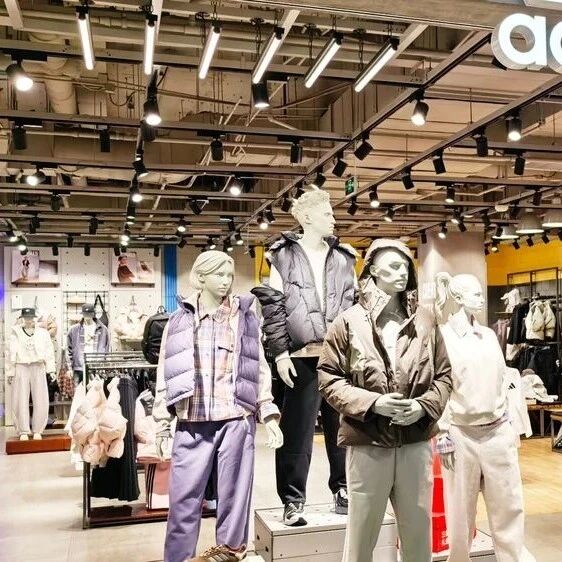
Core Viewpoint - A significant shift in retail branding is occurring, with sportswear brands increasingly occupying prime locations in shopping malls, replacing fast fashion brands that once dominated the space [4][11][12]. Group 1: Brand Transition in Malls - The rise of the "athleisure" trend has led to a transformation in shopping centers, where sports brands like Nike, Adidas, and emerging brands such as Lululemon are now prevalent in prime retail spaces [4][8]. - Traditional fast fashion brands, which once held significant market power, are now facing challenges due to declining sales and consumer preferences shifting towards quality and comfort [11][12]. - Shopping mall operators have noted a decline in the sales per square meter for fast fashion brands, while sports brands have shown steady growth, prompting a reallocation of retail space towards sports and outdoor brands [13][14]. Group 2: Consumer Behavior Changes - Consumers are increasingly prioritizing comfort and quality over fast fashion trends, leading to a demand for sportswear that integrates into daily life rather than being limited to athletic activities [5][9]. - The growing health consciousness and the normalization of fitness culture have made sportswear a lifestyle choice, influencing purchasing decisions across demographics [9][17]. - The shift from fast fashion to sportswear reflects a broader societal change, where consumers are more focused on health and quality of life rather than just fashion trends [18][19]. Group 3: Market Dynamics and Future Trends - The market for outdoor and sports brands is expected to continue growing, with projections indicating significant retail revenue increases for brands like Descente and KAILAS [16]. - The integration of technology in sportswear, such as breathable fabrics and smart wearables, is enhancing product appeal and driving innovation in the sector [14][16]. - The ongoing evolution in consumer preferences suggests that the retail landscape will continue to adapt, with brands needing to balance functionality and style to remain competitive [19].
QuestMobile 2025年营销热点事件盘点:“情绪”成为核心生产力,IP营销频出爆点,AI营销革命大幕拉开……
QuestMobile· 2026-01-06 02:05
Core Insights - The article emphasizes the significant changes expected in the AI industry by 2026, driven by increased capital investment, systematic competition among models, and intensified competition in foundational applications [3] Group 1: Marketing Trends in 2025 - 2025 is projected to be a "harvest year" for marketing, with "emotion" becoming a core productivity driver influencing various industries and products [4] - The marketing landscape will see three major peaks: popular IP marketing from New Year's to Spring Festival, new product marketing from Labor Day to 618, and diverse marketing from Mid-Autumn Festival and National Day to Double 11 [4] - Emotional marketing will enhance brand connections by deeply exploring consumer emotional tags, leading to innovative collaborations like "Luckin Coffee X Line Dog" and "Morning Glory Stationery X 'Wang Wang Mountain Little Monster'" [4] Group 2: Industry Opportunities - Traditional industries such as food services and apparel will benefit from emotional marketing, with their respective co-branding marketing shares at 18.5% and 12.1% in 2025 [5] - AI marketing will gain momentum as AI technology matures, supported by government policies like the AI labeling system, making it a "new prominent field" [5] - Virtual idols will dominate content interaction, while intelligent marketing will evolve from single-point to cross-platform strategies, enhancing user engagement [5] Group 3: Brand Marketing Strategies - Brands will focus on diverse marketing strategies in 2025, balancing traditional methods with deeper AI marketing applications [9] - Key marketing nodes will include new product launches and public sentiment management, with content platforms playing a crucial role in brand communication [12][14] - Brands will increasingly align marketing efforts with holiday events, using emotional and AI marketing to convey brand values [19] Group 4: Co-branding and Emotional Marketing - Co-branding will thrive under the consumer logic of "buying for emotions," with brands leveraging deep understanding of consumer psychology and social emotions [24][26] - Brands will focus on aligning IP cultural cores with their value genes, creating fresh experiences that resonate with both IP and brand characteristics [28] - The overlap between mainstream IP users and core brand users will be emphasized to strengthen emotional connections [30] Group 5: AI Marketing Evolution - AI marketing will become a central topic in 2025, driving continuous optimization of marketing models [39] - The rise of AI virtual digital humans will shift from traditional models to AI-native entities, expanding their application across industries [43] - User operations will transition from segmented approaches to generative user management, enhancing marketing content across various scenarios [45] Group 6: Channel Marketing Dynamics - Online channels will see steady growth in traffic, with brands concentrating marketing resources on these channels [58] - Hard advertising will focus on e-commerce and live-streaming channels to shorten conversion paths [60] - The beauty industry will expand its offline channels, shifting marketing highlights from "flagship stores" to diverse concepts like "experience labs" [66]