Arm

Search documents
市场消息:Arm(ARM.O)表示其数据中心客户数量自2021年以来已增加了14倍,达到70,000家。
news flash· 2025-07-09 10:03
市场消息:Arm(ARM.O)表示其数据中心客户数量自2021年以来已增加了14倍,达到70,000家。 ...
7月9日电,Arm表示其数据中心客户数量自2021年以来已增加了14倍,达到70,000家。
news flash· 2025-07-09 10:02
智通财经7月9日电,Arm表示其数据中心客户数量自2021年以来已增加了14倍,达到70,000家。 ...
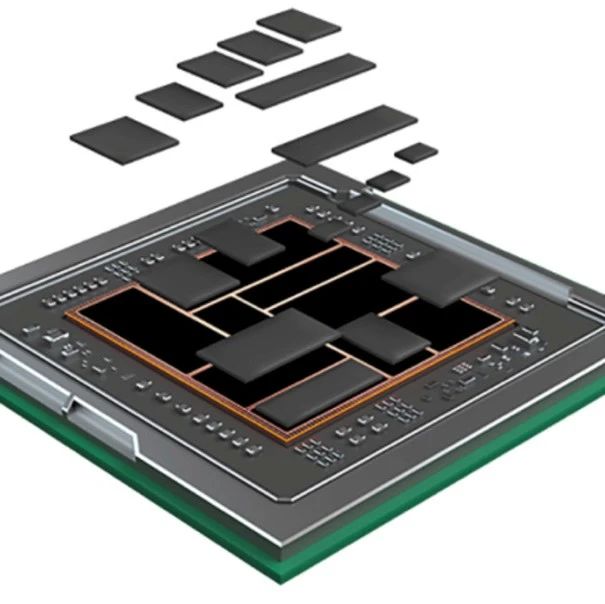
手机芯片:从SoC到Multi Die
半导体行业观察· 2025-07-09 01:26
Core Viewpoint - Advanced packaging is becoming a key differentiator in the high-end mobile market, offering higher performance, greater flexibility, and faster time-to-market compared to System on Chip (SoC) solutions [2][5]. Group 1: Market Trends - Advanced packaging technologies, such as multi-chip components, are essential for AI inference and adapting to rapid changes in AI models and communication standards [2][5]. - The high-end mobile market is increasingly adopting multi-chip assembly, moving beyond single-chip SoC solutions due to the need for enhanced performance and flexibility [5][8]. - The transition from single-chip SoCs to 2.5D systems is driven by the demand for higher computational capabilities and the limitations of traditional scaling methods [5][6]. Group 2: Technical Insights - Single-chip SoCs are efficient and cost-effective for low-end devices, integrating all necessary components on a single silicon die [3][10]. - Multi-chip components allow for greater diversity in processing units, including combinations of CPUs, GPUs, and specialized accelerators, enhancing performance for high-end applications [5][6]. - The use of advanced 3D and 2.5D packaging technologies enables vertical stacking of chips, increasing interconnect bandwidth and processing capabilities [5][6]. Group 3: AI Integration - AI capabilities are increasingly being integrated at the silicon level in high-end mobile devices, with companies like NVIDIA and Arm developing specialized hardware for AI workloads [14][15]. - The design of chips is influenced by the need to support evolving AI functionalities and communication standards, requiring flexibility in silicon design [11][18]. - Companies are exploring various configurations for AI accelerators, either integrating them into a single chip or using separate chips to optimize performance [10][14]. Group 4: Power and Efficiency - Power consumption remains a critical concern, with the need for efficient processing to extend battery life and manage heat dissipation in mobile devices [12][16]. - Innovations in chip design, such as lightweight pipelines and local data reuse, are aimed at improving power efficiency while maintaining high performance [15][16]. - The introduction of eSIM technology is an example of how companies are reducing power consumption and enhancing design flexibility in mobile devices [16].


摩根士丹利:台湾半导体调研观点
摩根· 2025-07-02 03:15
Investment Rating - The industry investment rating is In-Line [7] Core Insights - Robust spending in China is expected to lift WFE (Wafer Fabrication Equipment) estimates, with government subsidies being a primary driver rather than immediate market demand [3][10] - AI-driven demand is strong but faces bottlenecks in back-end test capacity, while the current annual capex of TSMC is around $40 billion, which may sustain AI growth without significant increases in demand from smartphones and PCs [4] - The EDA (Electronic Design Automation) market remains resilient despite proposed export restrictions to China, with potential for EDA companies to resume some licensing deals [5][10] Summary by Sections WFE Equipment - China is aggressively expanding its semiconductor capacity, suggesting upside to FY25 revenue views for ASML and ASM, with China representing a mid-20s percentage of revenue [3] - WFE growth may moderate in the medium term due to bottlenecks in back-end test capacity, while litho intensity is expected to hit an asymptote in the next decade [4][10] EDA & IP - The EDA market is resilient despite export restrictions, with a wide range of potential outcomes regarding China and AI [5][10] - Local Chinese EDA solutions are perceived as limited in competitive threat due to incomplete tool-chains for advanced nodes [11] Power Segment - Power semiconductors are a clear growth area, but adoption of new technologies may remain niche due to cost and infrastructure readiness [12] - Infineon is recognized for its leadership and cautious market strategies, while Chinese firms are aggressively developing high-voltage solutions [12] Notable Highlights - Intel's transformation remains uncertain with significant execution risks under new leadership, while the PC and smartphone markets are subdued [13] - Memory markets are expected to strengthen in the second half of 2025, driven by AI and edge applications [13]
报道称,软银旗下全球知名芯片架构公司Arm交易现面临美国联邦贸易委员会(FTC)更深入的审查。
news flash· 2025-07-02 00:44
Core Viewpoint - SoftBank's Arm is facing deeper scrutiny from the U.S. Federal Trade Commission (FTC) regarding its transactions [1] Group 1 - The scrutiny indicates potential regulatory challenges for Arm's business operations in the U.S. market [1]

软银豪赌“人工超级智能” 未来10年剑指全球第一平台
智通财经网· 2025-06-27 08:08
Group 1 - The core objective of SoftBank is to become the largest provider of "artificial superintelligence" platforms globally within the next decade, as stated by CEO Masayoshi Son [1] - SoftBank's aggressive investment strategy is being revived, with significant investments in AI, including a $6.5 billion acquisition of Ampere and a commitment of up to $40 billion to OpenAI [1] - The total investment commitment to OpenAI has reached $32 billion since the initial investment in fall 2024, with Son expressing regret for not entering the market earlier [1] Group 2 - SoftBank previously held about 5% of Nvidia shares but sold them all in 2019, prior to the AI boom triggered by ChatGPT in late 2022 [2] - The recent investment surge follows years of strategic contraction, with SoftBank's Vision Fund investments suffering significant losses since 2022 [2] - The IPO of Arm in September 2023 raised approximately $5 billion, helping to stabilize SoftBank's financial situation and enabling new investments [2]
Arteris Accelerates AI-Driven Silicon Innovation with Expanded Multi-Die Solution
GlobeNewswire News Room· 2025-06-17 13:00
Core Viewpoint - Arteris, Inc. is expanding its multi-die solution to meet the increasing computational demands of AI, transitioning from traditional monolithic die designs to chiplet-based architectures, which are essential for high-performance computing and automotive applications [2][8]. Industry Impact - The semiconductor industry is experiencing a shift towards multi-die systems as Moore's Law slows down, necessitating architectural innovation to enhance performance and efficiency, particularly for AI workloads [2][8]. - Arteris' technology reduces design time for chiplets and SoCs, optimizing power, performance, and area bottlenecks through key Network-on-Chip (NoC) IP technology [3][8]. Technological Capabilities - The expanded multi-die solution supports the Universal Chiplet Interconnect Express (UCIe) specification and various protocols, ensuring robust ecosystem compatibility [4][5]. - Key capabilities include non-coherent FlexNoC IP, cache-coherent Ncore NoC IP, and optimized automation for SoC assembly and integration, which collectively enhance the development process and reduce risks [6][7]. Strategic Collaborations - Arteris is collaborating with major players in the silicon value chain, including Arm, Cadence, Renesas, and Synopsys, to enable next-generation AI and automotive platforms [6][7]. - These partnerships aim to accelerate the journey to chiplet-based systems, optimize performance metrics, and ensure seamless interoperability across multi-die designs [7]. Market Relevance - The expanded multi-die solution is crucial for semiconductor firms to compress development cycles, scale modular architectures, and deliver differentiated AI performance, aligning with evolving industry demands [8].


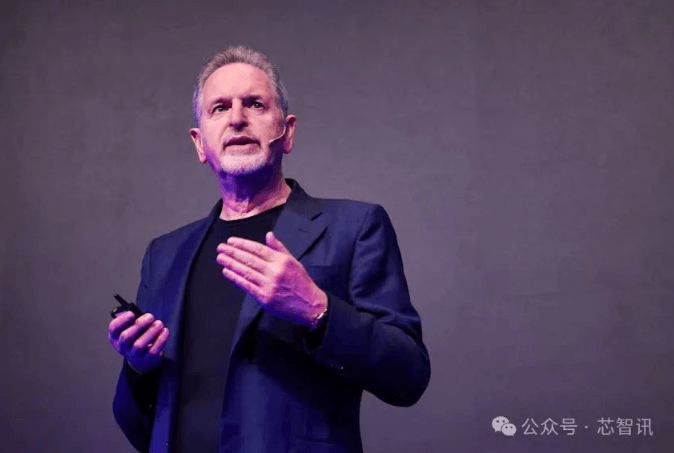
ARM CEO:强烈反对
半导体芯闻· 2025-06-13 09:41
Core Viewpoint - The CEOs of Arm and Nvidia criticize the US export controls on AI semiconductors to China, arguing that these measures could hinder technological progress and negatively impact consumers and industry participants [1][2]. Group 1: Impact of US Export Controls - Arm's CEO Rene Haas stated that narrowing access to technology is detrimental, suggesting it could shrink the overall market and harm consumers [1]. - Nvidia's CEO Jensen Huang described the export controls as a "failure," indicating that they have not suppressed China's AI development but rather accelerated innovation among Chinese competitors like Huawei [1][2]. - The US restrictions on data center processor exports have reportedly cost Nvidia $8 billion and effectively excluded the company from the Chinese market [1]. Group 2: Industry Dynamics and Competition - Haas emphasized Arm's significant influence in China and noted that he has spent considerable time lobbying in Washington, believing that Arm's voice is being heard [2]. - Huang warned that if AI chip restrictions persist, Huawei could gain a competitive edge, as the company has already established a strong presence in China and other markets [2].
ARM CEO:强烈反对
半导体芯闻· 2025-06-13 09:39
Core Viewpoint - The CEOs of Arm and Nvidia criticize the US export controls on AI semiconductors to China, arguing that these measures could hinder overall technological progress and negatively impact consumers and industry participants [1][2]. Group 1: Impact of US Export Controls - Arm's CEO Rene Haas stated that narrowing access to technology is detrimental, suggesting it would shrink the overall market and harm consumers [1]. - The US restrictions on data center processor exports to China have reportedly cost Nvidia $8 billion and effectively excluded it from the market [1]. - Nvidia's CEO Jensen Huang described the export controls as a "failure," indicating that they have not suppressed China's AI development but rather accelerated innovation among Chinese competitors like Huawei [1][2]. Group 2: Industry Dynamics and Competition - Haas has spent significant time lobbying in Washington, acknowledging that the current government has knowledgeable individuals connected to the industry, and believes Arm's voice is being heard [2]. - Huang warned that if AI chip restrictions persist, Huawei could gain a competitive edge, emphasizing that US technology is currently a generation ahead of Chinese counterparts [2].
Arm CEO力挺黄仁勋,反对美国对华半导体出口管制
Sou Hu Cai Jing· 2025-06-13 02:45
Group 1 - Arm CEO Rene Haas criticized the US semiconductor export controls to China, stating that such measures could hinder overall technological progress and negatively impact consumers and industry participants [2][3] - The US implemented new export controls on AI chips to China in April, which led to Nvidia's inability to sell its H20 chip in the Chinese market, resulting in a projected loss of $4.5 billion for the first quarter of fiscal year 2026 and an expected $8 billion revenue loss for the second quarter [2] - Nvidia CEO Jensen Huang also criticized the export controls, labeling them as "failed" and suggesting that they have inadvertently accelerated growth and innovation among Chinese competitors like Huawei [3][4] Group 2 - Arm is also affected by US export control policies, which prevent its high-performance processor IP for infrastructure from being exported to China [3] - Rene Haas has been actively lobbying in the US, spending more time in Washington over the past year and a half than in his entire career, while acknowledging that the current US government has many knowledgeable individuals connected to the industry [3] - Huang warned that if restrictions on AI chips to China persist, local manufacturers like Huawei will gain a competitive advantage, as the technology gap is only one generation [4]