
大疆创新

Search documents
手持百元钞票向员工“撒金雨”!影石创新90后董事长引发轩然大波,紧急公告回应,对员工及管理层进行教育
Sou Hu Cai Jing· 2025-08-15 13:55
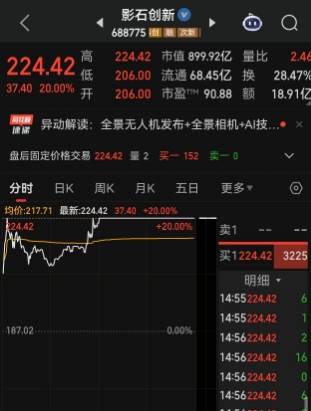
Core Viewpoint - The recent cash distribution event by Liu Jingkang, the chairman of Yingstone Innovation, has sparked significant public discussion, leading the company to issue a response and clarify the situation surrounding the event and its implications for the company’s image and operations [1][2]. Group 1: Company Activities and Developments - Yingstone Innovation announced the public testing of its first panoramic drone, "Yingling Antigravity A1," which is set to officially launch in January 2026, with no significant revenue expected for the fiscal year 2025 [1][2]. - The company has a history of high-profile employee incentives, including a "Million Weight Loss Challenge" that has distributed nearly 2 million yuan in rewards since its inception [2]. - On the 1024 Programmer's Day in 2023, Yingstone Innovation gifted its programmers with gold keyboard caps and established a 1 million yuan "Love Fund" to encourage employee relationships [3]. Group 2: Market Position and Competition - Yingstone Innovation is positioning itself in the drone market, which is seen as a strategic move to capture unmet customer demand and drive company growth, particularly in competition with DJI [4]. - The company’s stock experienced a significant increase, reaching a limit up of 20 cm, with a market capitalization of 90 billion yuan following the announcement of the new drone [2]. - The competitive landscape is intensifying as Yingstone Innovation and DJI are encroaching on each other's market territories, indicating a potential battle for market share in the drone sector [4].

2024财年收入458万美元,这家STEM教育公司申请赴美上市
Sou Hu Cai Jing· 2025-08-15 05:34
Core Viewpoint - Idea Tech Holding Limited, the parent company of STEM education and drone distributor Aisnada, has filed for an IPO on NASDAQ under the ticker "IDTL," aiming to raise approximately $9 million through the issuance of 2 million shares priced between $4 and $5 each [2]. Company Overview - Aisnada was established in 2018 and is headquartered in Hong Kong, specializing in STEM and technology innovation education solutions [3]. - The company is an authorized distributor for DJI's iFlight drones, the exclusive distributor for HuLa educational drones in Hong Kong, and holds exclusive rights for BattleAce educational and competitive robots from XuanZhi Technology in Hong Kong [3]. Financial Performance - For the fiscal year ending June 30, 2024, Aisnada reported total revenues of approximately $4.58 million, with a net income of $1.04 million. Revenue from software and hardware sales accounted for 58.21% of total revenue, while STEM education training courses contributed 36.28% [8]. - In the first half of fiscal year 2024, Aisnada's total revenue was approximately $1.99 million, with a net income of $0.31 million. Software and hardware sales represented 53.40% of total revenue, and STEM education training courses accounted for 29.38% [9]. Use of Proceeds - Aisnada plans to utilize approximately $756,000 of the net proceeds from the IPO as follows: 46% for expanding service capabilities and upgrading technology, 10% for marketing and branding activities, 18% for international market expansion, and 26% for general operational expenses [2]. Market Coverage and Expansion Plans - Aisnada's products and services currently cover 35% of Hong Kong's primary and secondary schools, reaching over 5,000 students across 345 schools [10]. - The company's expansion strategy includes four phases: entering the mainland China market, localizing and standardizing global content, integrating third-party offline hardware, and expanding overseas market operations, particularly focusing on Southeast Asia [10][11][12]. Business Model - Aisnada operates under both B2B and B2C models, collaborating with schools and organizations in Hong Kong to provide technology education products and services, while also targeting parents as potential customers for educational products [6]. Supplier Dependency - Aisnada's market position is closely tied to its relationships with major suppliers like DJI and HuLa. Any disruption in these partnerships could significantly impact its ability to offer differentiated products and affect revenue negatively [13].

中国低空经济繁荣的“三重门”:技术角力、城市竞逐与瓶颈突破
2 1 Shi Ji Jing Ji Bao Dao· 2025-08-14 11:08
Core Viewpoint - The establishment of the Wuhu Intelligent Manufacturing Base by the company marks a significant step in the production of eVTOLs, which are seen as a key component in the emerging low-altitude economy in China. The development of eVTOL technology is progressing from experimental stages to large-scale production, with various configurations competing for market share and regulatory approval [1][2]. Group 1: eVTOL Technology and Market Dynamics - The eVTOL market is characterized by diverse configurations, including multi-rotor, compound wing, and tilt-rotor designs, each with distinct performance, safety, and certification challenges [2][4]. - Multi-rotor designs are simpler and more efficient for short-distance urban transport, while compound wings offer a balance of vertical takeoff and cruising efficiency, making them a popular choice among eVTOL companies [2][4]. - Tilt-rotor configurations are considered the most promising due to their ability to switch between vertical and horizontal flight modes, although they require advanced materials and control systems [3][4]. Group 2: Drone Market Evolution - The drone industry has expanded from military applications to a diverse market, including consumer, agricultural, and industrial segments, each with unique characteristics and business models [5][6]. - Consumer drones focus on portability and ease of use, while agricultural drones aim to enhance efficiency and reduce labor costs in farming [5][6]. - Industrial drones are highly customized and expensive, often requiring specialized training for operation, and are used in various sectors [6]. Group 3: Regional Competition and Innovation - Major cities in China, such as Shenzhen, Beijing, and Chengdu, are emerging as key players in the low-altitude economy, supported by strong policies, industry clusters, and research capabilities [7][8]. - Shenzhen is a leader in drone logistics, with companies like Meituan and SF Express actively operating in this space, while Beijing focuses on innovation-driven development [7][8]. - Chengdu has attracted companies like WoFei Aviation, enhancing its position in the eVTOL sector through effective industry collaboration [8]. Group 4: Challenges in Low-Altitude Economy - Safety and regulatory challenges are critical for the development of the low-altitude economy, particularly regarding airworthiness certification and airspace management [9][10]. - Key technical challenges include battery life, noise control, and system reliability, which are essential for the widespread adoption of eVTOLs and drones [10][11]. - The commercial viability of low-altitude operations hinges on controlling operational costs and establishing sustainable business models, with high initial costs being a significant barrier [12][13]. Group 5: Future Outlook and Business Model Exploration - The potential for eVTOLs in urban air mobility (UAM) is significant, but factors such as pricing strategies, target demographics, and competition with traditional transport modes must be carefully considered [14]. - Companies are exploring various applications, such as drone delivery services, to validate their business models and achieve profitability [13][14]. - The successful integration of eVTOLs into urban transport systems will depend on continuous technological advancements and the development of effective regulatory frameworks [10][12].

对话松禾资本厉伟:不幻想自己是天才,老老实实按常识做事
3 6 Ke· 2025-08-14 00:59
Group 1 - The core viewpoint of the article emphasizes the resilience and innovative spirit of Shenzhen, as expressed by investor Li Wei, who believes the city is determined to push forward [1][4]. - Li Wei has invested in three notable entrepreneurs from the 1980s across different industries: Xu Li of SenseTime, Wang Tao of DJI, and Liu Zihong of Royole Technology. DJI dominates over 80% of the global non-military drone market, while SenseTime is a strong competitor in the generative AI space. However, Royole has faced significant challenges, leading to its bankruptcy restructuring in May 2024 [2][3][10]. - Despite the failure of Royole, Li Wei remains supportive of Liu Zihong, having invested over 1 billion yuan in the company since its angel round in 2012. He believes in Liu's potential as a scientist and entrepreneur, despite the latter's struggles in business management [2][10]. Group 2 - Li Wei reflects on the importance of luck in success, stating that while effort is crucial, external factors also play a significant role. He believes that if everyone could predict the future, the world would be different [18][19]. - The article discusses the contrasting paths of Liu Zihong and Wang Tao, highlighting that DJI's business model required less capital and market education compared to Royole's, which needed extensive collaboration with terminal manufacturers [20][21]. - Li Wei expresses regret over missed opportunities, such as not investing in CATL, emphasizing that in emerging industries, leading companies are often undervalued [27][28]. Group 3 - The article mentions that Li Wei's investment philosophy is shaped by a balance of idealism and pragmatism, where he values technological advancement and the capabilities of entrepreneurs [5][39]. - Li Wei's father, Li Yining, a prominent economist, has significantly influenced his approach to business and ethics, emphasizing the importance of character in entrepreneurship [4][51][52]. - The discussion includes Li Wei's views on the necessity of continuous learning and adaptation in the fast-evolving tech landscape, advocating for a mindset that embraces both common sense and innovative thinking [42][48].

携手奔跑 成德眉资交出高含金量半年“答卷”
Si Chuan Ri Bao· 2025-08-13 06:45
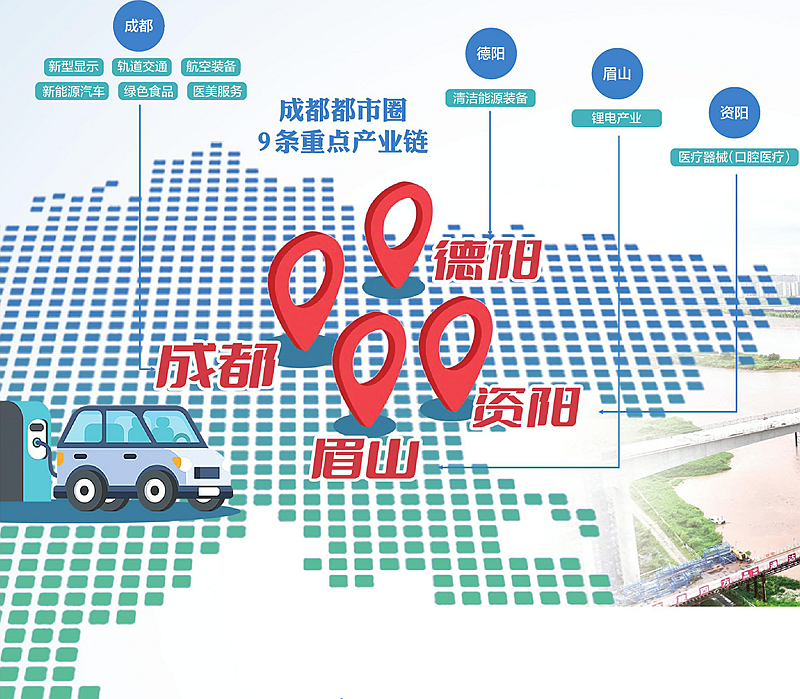
Core Insights - The Chengdu metropolitan area has become a key driver of high-quality economic development in Sichuan, contributing 47.5% to the province's GDP with a total output of 15,171.8 billion yuan in the first half of the year, reflecting a year-on-year growth of 6.1% [4][6] - The four cities within the metropolitan area—Chengdu, Deyang, Meishan, and Ziyang—are collaborating effectively to enhance economic growth, with significant contributions from industrial sectors and fixed asset investments [5][6][10] Economic Performance - The combined GDP of Chengdu, Deyang, Meishan, and Ziyang exceeded 1.51 trillion yuan in the first half of the year, up from 1.39 trillion yuan in the same period last year, showcasing the area's economic significance despite occupying only 6.8% of the province's land [6][10] - Chengdu's GDP growth rate of 5.8% places it among the top cities in the nation, while Deyang and Meishan achieved the highest growth rates in the province [8][10] Industrial Development - The metropolitan area saw a 9.1% increase in industrial added value, significantly supporting Sichuan's overall industrial growth, which reached a three-year high of 7.3% [6][10] - The four cities have developed nine key industrial chains, with a total output value exceeding 1.2 trillion yuan, and several sectors, such as new energy vehicles and solar batteries, reported growth rates above 100% [10][11] Investment and Collaboration - A global investment conference held in June led to the signing of 14 low-altitude economy projects, enhancing resource sharing and collaborative development within the metropolitan area [6][7] - The release of the first investment guide for the Chengdu metropolitan area aims to optimize the investment environment and foster long-term cooperative mechanisms among the four cities [7][11] Service Sector Growth - The service sector, particularly in Chengdu, has shown robust growth, with the third industry's added value reaching 8,654.2 billion yuan, accounting for 71.5% of Chengdu's total economic output [14] - Cultural and tourism integration has been a significant growth driver, with various events and international competitions boosting local consumption and tourism [14][15] Transportation and Connectivity - Improved transportation infrastructure has facilitated greater connectivity among the four cities, enhancing economic interactions and operational efficiencies [16][17] - The opening of new theme parks and the increase in passenger traffic on local rail lines have demonstrated the tangible benefits of enhanced transportation links [15][16] Future Prospects - The Chengdu metropolitan area is focusing on collaborative innovation and the establishment of a regional innovation community to address challenges such as homogenization and insufficient collaborative innovation [17] - Ongoing projects and investments are expected to further strengthen the economic framework and achieve the target of a total economic output of 3.3 trillion yuan by the end of the year [17]
司南导航:高精度迷途 资本盛宴后的技术困局丨大A避雷针
Quan Jing Wang· 2025-08-13 05:51
Core Viewpoint - The company Sinuo Navigation, which debuted on the STAR Market as the "first stock for high-precision positioning domestic substitution," has faced a dramatic decline in net profit by 179% in 2024, alongside regulatory issues regarding financial disclosures [1][6]. Company Performance - Sinuo Navigation, focused on high-precision navigation, experienced a significant drop in performance just one year after its listing in August 2023, with net losses reaching 33.05 million yuan in 2024 [2][6]. - The company reported a substantial decrease in gross margins across various product lines, with overall gross margin falling to 48.18%, marking the second consecutive year of decline since 2022 [4]. Financial Metrics - The gross margins for high-precision GNSS boards/modules, data collection devices, and system solutions decreased by 15.62, 0.63, and 6.08 percentage points respectively [4]. - Sales and management expense ratios have increased significantly, with sales expense ratio rising from 17.17% in 2020 to 25.35% in 2024, and management expense ratio increasing from 6.32% to 8.08% in the same period [4]. Market Position and Competition - Sinuo Navigation holds a market share of only 23.67% in the domestic high-precision GNSS board/module market, significantly lower than its competitor, Hexin Xingtong, which has a market share of approximately 62.02% [10]. - The company faces intense competition in the high-precision GNSS receiver market, where it holds a mere 6.17% market share, and in the agricultural autonomous driving system market, with only 3.13% market share [10]. Regulatory Issues - The company has been ordered by the Shanghai Securities Regulatory Bureau to correct significant discrepancies in its financial disclosures, including major changes in asset and liability items and inaccuracies in the use of raised funds [12]. - The resignation of the financial officer after only six months has raised concerns about the company's governance and transparency, further impacting investor confidence [13].


奥比中光:公司已与普渡机器人、高仙机器人等室内外清洁机器人公司达成业务合作
Mei Ri Jing Ji Xin Wen· 2025-08-08 11:41
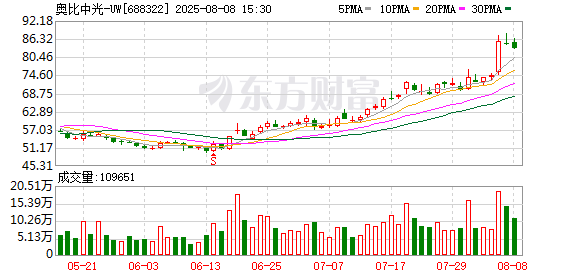
奥比中光(688322.SH)8月8日在投资者互动平台表示,在清洁机器人领域,公司已与普渡机器人、高 仙机器人、LionsBot、领贝机器人等室内外清洁机器人公司达成业务合作。关于公司与具体客户的业务 合作情况,请您详见公司披露的相关公告。 (文章来源:每日经济新闻) 每经AI快讯,有投资者在投资者互动平台提问:大疆创新公司发布的扫地机视觉方案,公司是否提供 技术? ...

南山区九连冠
Nan Fang Du Shi Bao· 2025-08-06 23:13
Core Insights - Nanshan District in Shenzhen has 19 global unicorn companies across 15 cutting-edge sectors, showcasing its economic vitality and innovation capacity [2][3] Economic Performance - Nanshan's GDP reached 950.97 billion yuan in 2024, nearly matching Dalian's total GDP, and the district is on track to enter the "trillion yuan club" with a 4.8% growth rate in the first half of 2025 [2] - The district boasts a GDP density of over 5 billion yuan per square kilometer, with secondary and tertiary industries growing at 5.3% and 4.7% respectively, indicating a dual-driven model of high-tech industries and modern services [2] Innovation and R&D - Nanshan's R&D investment intensity stands at 7.66%, nearly three times the national average, reflecting its strong innovation ecosystem [3] - The emergence of 19 unicorns has transformed Nanshan's innovation landscape from isolated breakthroughs to a cluster explosion, particularly in hard technology sectors [3] Ecosystem and Talent Development - Nanshan's self-sustaining ecological cycle in innovation is supported by research platforms like Pengcheng Laboratory and policies that encourage young talent, resulting in 586,000 business entities [4] - The "basic research + industrialization" model has significantly shortened the product development cycle, enhancing the region's competitive edge [4] Global Expansion - Nanshan serves as an innovation engine for the Greater Bay Area, with companies like DJI expanding their supply chains across the region and globally [6] - The "Entrepreneur Star" competition has fostered world-class companies and established a comprehensive global innovation chain, attracting numerous international projects [6] Quality of Life and Social Development - Nanshan's development is reflected in improvements in education, healthcare, and sports, enhancing residents' quality of life [7] - Initiatives like the "New Six Actions" have significantly increased residents' happiness, demonstrating Nanshan's commitment to high-quality urban development [7]

两大超级独角兽,互攻腹地
3 6 Ke· 2025-08-06 07:55
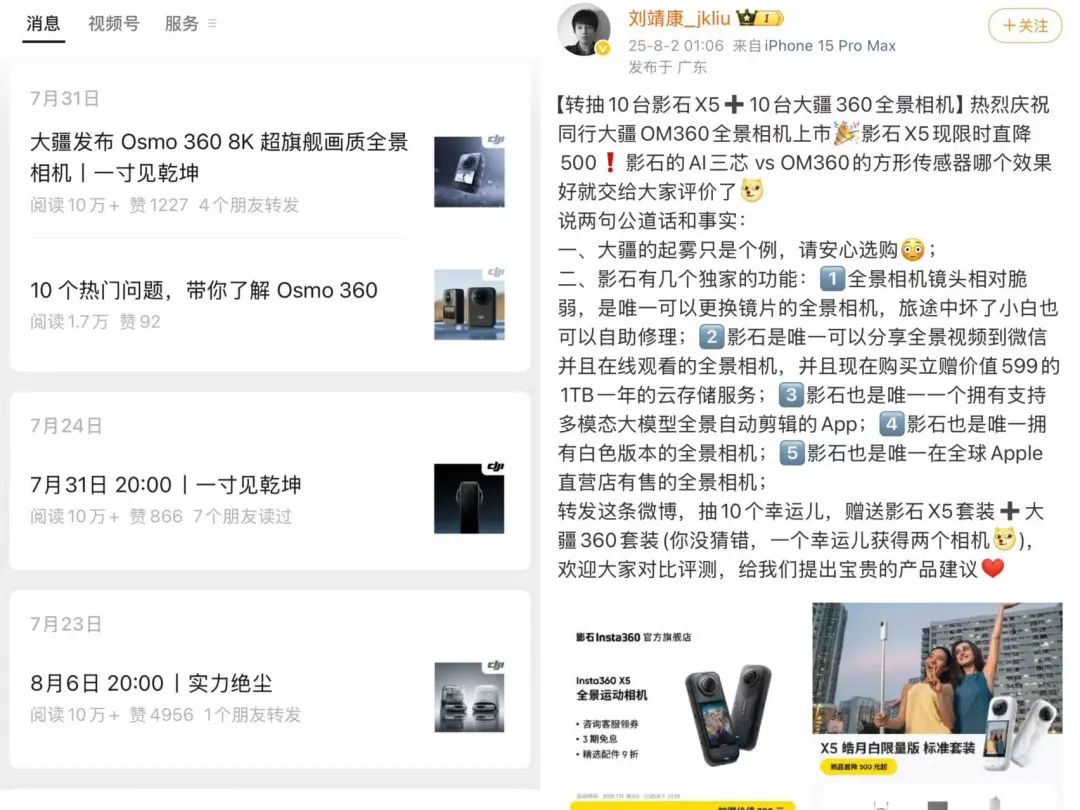
Core Viewpoint - The competitive landscape between Insta360 and DJI is intensifying, with both companies launching new products aimed at each other's market segments, particularly in the panoramic camera and drone sectors [1][4][11]. Group 1: Product Launches and Market Moves - Insta360 announced its "影翎Antigravity" panoramic drone brand on July 28, aiming to redefine the flying experience and challenge DJI's dominance in the drone market [1]. - DJI responded by launching its new 8K flagship panoramic camera, Osmo 360, just days later, indicating a direct competition in the panoramic photography space [1][11]. - The launch of Osmo 360 is seen as a strategic move to counter Insta360's entry into the drone market, highlighting the aggressive nature of both companies [1][11]. Group 2: Competitive Strategies - Insta360's founder, Liu Jingkang, publicly acknowledged DJI's new product while promoting a discount on Insta360's X5 camera, showcasing a proactive marketing strategy [3]. - Liu revealed that the decision to enter the drone market was made five years ago, anticipating DJI's potential response in the panoramic camera sector [4][29]. - Both companies are leveraging their respective strengths, with DJI's established market presence and Insta360's innovative approach to panoramic imaging [8][12]. Group 3: Market Share and Financial Performance - According to data, DJI's market share in the global action camera market increased from 15.9% to 32.1%, while Insta360's share decreased from 26.9% to 18.1% [10]. - As of 2023, Insta360 held the largest share in the global panoramic camera market for six consecutive years, with projections indicating a near 70% share by 2025 [12][13]. - Insta360's revenue for the previous year was reported at 5.574 billion yuan, with 80% of sales coming from overseas markets, highlighting its international reach [14]. Group 4: Industry Trends and Future Outlook - The global aerial drone market is projected to grow significantly, from $1.92 billion in 2017 to an estimated $12.2 billion by 2030, indicating a lucrative opportunity for both companies [32]. - The competitive dynamics between Insta360 and DJI reflect broader trends in the tech industry, where companies are increasingly diversifying their product lines to capture new market segments [35][36]. - The ongoing rivalry is expected to drive innovation and market expansion, with both companies aiming to enhance their product offerings and meet evolving consumer demands [28][40].
周观点:分歧中酝酿生机,周期中挖掘复苏-20250803
Xinda Securities· 2025-08-03 09:29
Investment Rating - The industry investment rating is "Positive" [2] Core Viewpoints - The report highlights that there are opportunities for recovery in the light industry manufacturing sector amidst existing divergences and cyclical challenges [2] - The report emphasizes the importance of monitoring the paper price recovery as the supply side experiences disturbances, particularly in the pulp market, with expectations for price increases in Q3 and Q4 [2][3] - The new tobacco segment shows resilience with British American Tobacco reporting stable performance in new products, indicating potential growth in the mid-single digits for new tobacco products [3] - The report notes the impact of updated tariffs on exports, suggesting a potential recovery in orders as clarity on tariff policies emerges in August [4] - The packaging sector is expected to benefit from competitive advantages and improved supply chain management, with companies like Zhongxin and Yongxin poised for growth [6] - The smart glasses market is anticipated to gain momentum as major tech companies emphasize the importance of AI integration in wearable technology [6] - The cross-border e-commerce landscape is evolving with changes in U.S. tax policies, which may clarify the global strategies of domestic sellers [7] - The report discusses the structural opportunities in the maternal and infant industry due to new government subsidies, which are expected to stimulate demand in lower-tier markets [9][10] - The home appliance sector is likely to stabilize as government funding for consumption upgrades is implemented [16] - The tools sector is projected to see a recovery in demand as the U.S. may initiate interest rate cuts, which could boost housing transactions [17] Summary by Sections Pulp and Paper - Global pulp supply disturbances are noted, with companies like Altri and UPM adjusting production strategies, leading to expectations of price recovery in Q3 and Q4 [2][3] New Tobacco - British American Tobacco's H1 results show a slight decline in overall revenue but stable performance in new tobacco products, indicating potential for growth [3] Exports - Recent updates on tariffs may lead to a recovery in orders, with a focus on companies that can adapt to the changing landscape [4] Packaging - Companies in the packaging sector are expected to leverage cost advantages and improve supply chain efficiencies for growth [6] Smart Glasses - The smart glasses market is set to expand as major tech firms invest in AI capabilities [6] Cross-Border E-commerce - Changes in U.S. tax policies are expected to clarify the operational landscape for cross-border e-commerce sellers [7] Maternal and Infant Industry - New government subsidies are anticipated to stimulate demand in the maternal and infant sector, particularly in lower-tier markets [9][10] Home Appliances - The home appliance sector is expected to stabilize with government support for consumption upgrades [16] Tools - The tools sector may see demand recovery as the U.S. considers interest rate cuts, potentially boosting housing market activity [17]
