
森马服饰

Search documents
森马服饰(002563.SZ):公司在机器人,人形机器人,机器狗等方面没有进行相关的投资
Ge Long Hui· 2025-11-07 07:59
Core Viewpoint - Semir Apparel (002563.SZ) has stated on its investor interaction platform that the company has not made any investments in robotics, humanoid robots, or robotic dogs [1] Group 1 - The company clarified its current investment focus, indicating no involvement in advanced robotics technologies [1]

森马服饰(002563.SZ):公司目前与小鹏没有相关合作
Ge Long Hui· 2025-11-07 07:59
Core Viewpoint - Semir Apparel (002563.SZ) has stated that there is currently no collaboration with Xiaopeng Motors [1] Company Summary - Semir Apparel confirmed through its investor interaction platform that it has no existing partnership with Xiaopeng Motors [1]
钉钉AI表格重大技术突破,业内首个真正实现单表容量千万热行
Ge Long Hui· 2025-11-06 20:16
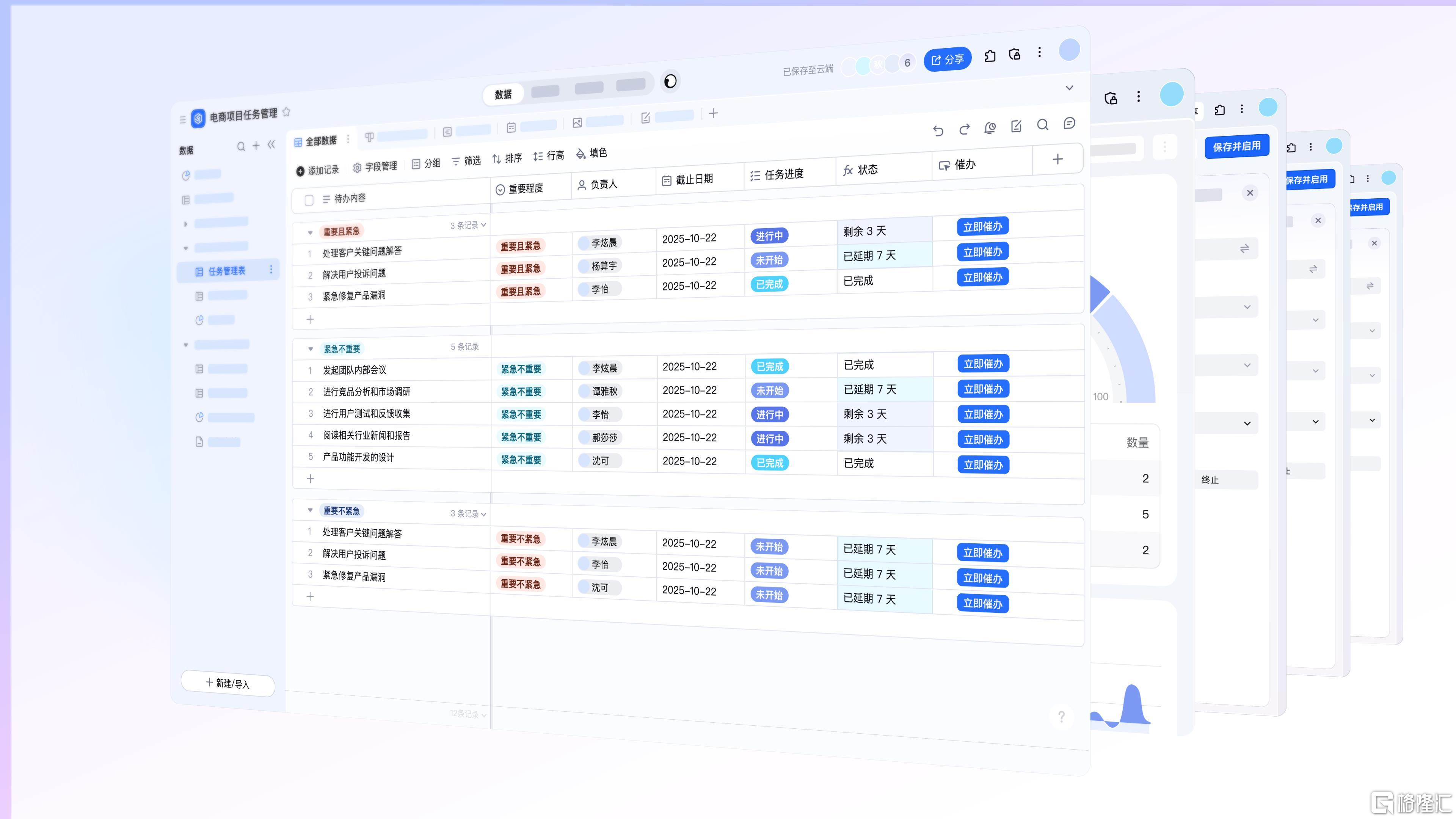
Core Insights - DingTalk AI Spreadsheet has become the first intelligent spreadsheet in the industry to support a single table capacity of 10 million hot rows, significantly enhancing data management for brands during peak business periods like Double Eleven [2] - The AI Spreadsheet was developed in collaboration with Alibaba Cloud's ADB-PG database team, utilizing a new storage-computing integrated application architecture to meet the explosive growth in user computing demands [2] - This year's Double Eleven marks the first full-scale application of AI technology by Alibaba, with various brands, including Semir and Yintai, leveraging DingTalk AI Spreadsheet for preparation [2] Company Applications - De Xiang Yuan Roast Duck, a restaurant brand with 40 chain stores, has transitioned to using DingTalk AI Spreadsheet, allowing for real-time management of massive sales data and significantly improving calculation speed from minutes to seconds [5] - The company can now perform multi-dimensional aggregation analysis of dish sales across all stores, enabling precise control over dish quality and agile optimization of operations [5] - The real-time updates and dynamic dashboards allow headquarters to quickly identify best-selling and underperforming dishes, optimizing menu structure and inventory strategies while reducing food waste [5] Performance Improvements - The AI Spreadsheet's speed and efficiency have eliminated the need for manual data splitting, reducing management costs and enhancing store operational efficiency and customer satisfaction [3][5] - The ability to detect abnormal sales fluctuations in real-time allows for quick identification of issues and corrective actions, ensuring stable dish quality [5]


森马的黄金10年,可能要结束了
Sou Hu Cai Jing· 2025-11-06 14:40
Core Insights - The article discusses the transformation of Semir from a casual wear brand to a children's clothing giant, driven by the two-child policy and demographic changes in China [2][12][14]. Group 1: Business Transformation - Semir's revenue from children's clothing surpassed casual wear for the first time in 2017, marking a significant shift in its business model [4][14]. - By 2024, children's clothing accounted for over 70% of Semir's total revenue, indicating a successful pivot towards this segment [2][4][10]. - The children's clothing segment generated a revenue of 43.13 billion yuan in the first half of 2025, representing a year-on-year growth of 5.97% [3][10]. Group 2: Market Position and Performance - The brand Balabala, under Semir, has become the leading children's clothing brand in Asia, contributing significantly to Semir's market position [6][10]. - The number of children's clothing stores reached 5,514, making up 66% of Semir's total store count, while casual wear stores dwindled to only 281 [9][10]. - The gross profit margin for children's clothing was 48.21%, higher than the 43.22% margin for casual wear, highlighting its profitability [10][11]. Group 3: Future Growth Strategies - Semir is focusing on an IP strategy to drive future growth, collaborating with popular franchises like Disney's Zootopia and others [15][18][20]. - The company has established an IP management system to integrate IP resources into product development and sales, aiming to deepen consumer connections [18][20]. - As the demographic dividend from the two-child policy wanes, the success of Semir's IP-driven strategy will be crucial for sustaining growth in the coming years [15][20].

森马服饰:公司旗下各品牌会根据品牌定位、消费者画像引入IP资源
Zheng Quan Ri Bao Wang· 2025-11-06 14:13
Core Viewpoint - The company emphasizes its dual-brand strategy, focusing on adult casual wear under the Semir brand and children's clothing under the Balabala brand, while enhancing emotional connections with consumers through IP collaborations [1] Brand Strategy - The company operates two major brand clusters: Semir for adult casual wear and Balabala for children's clothing [1] - Each brand tailors its approach based on brand positioning and consumer profiles, integrating IP resources for deeper consumer engagement [1] IP Management - An internal IP full-cycle management system has been established, overseeing key processes from IP introduction to product development and sales [1] - In 2023, the Semir brand launched a co-branded product with the popular game "Honor of Kings" [1]
森马服饰:公司在海南省未注册设立子公司
Zheng Quan Ri Bao Wang· 2025-11-06 13:42
Core Viewpoint - Senma Clothing has established a subsidiary in Xiamen, Fujian Province, and has not registered a subsidiary in Hainan Province, indicating a focused regional strategy in retail expansion [1] Company Operations - The company operates several retail stores under its brands, including Senma and Balabala, in both Hainan and Fujian provinces [1] - The retail presence includes direct-operated stores, franchised stores, and joint venture stores, showcasing a diversified approach to retail operations [1]
头部电商玩家们,已经换上了会思考的AI表格
凤凰网财经· 2025-11-06 13:03
Core Viewpoint - The article discusses the transformation of the e-commerce industry in China, emphasizing the need for advanced AI tools to overcome traditional operational inefficiencies and data silos, particularly during high-stakes events like "Double Eleven" [1][2][3]. Group 1: E-commerce Challenges - The e-commerce sector in China generates vast amounts of real-time data but relies on outdated tools like Excel, leading to operational inefficiencies and data silos [3][4]. - The reliance on manual processes creates delays in decision-making, especially when responding to customer feedback or inventory changes [2][6]. - The complexity of e-commerce operations, involving multiple departments and real-time data, exacerbates the challenges of coordination and efficiency [5][6]. Group 2: Adoption of AI Tools - Leading companies like Semir and Yintai have adopted new AI-driven tools, such as DingTalk's AI spreadsheets, to enhance operational efficiency and real-time data management [2][10]. - DingTalk's AI spreadsheet can handle up to 10 million active rows, allowing e-commerce professionals to manage data without manual segmentation, thus improving response times during peak sales [2][10]. - The introduction of AI tools has transformed traditional roles, enabling employees to focus on strategic decision-making rather than repetitive data tasks [17][19]. Group 3: Case Studies - A case study from Yintai illustrates how the use of DingTalk's AI spreadsheet streamlined the management of promotional activities across multiple brands and locations, significantly reducing preparation time [7][10]. - Semir's customer service team has benefited from AI integration, allowing for real-time feedback analysis and quicker response times, thus enhancing customer satisfaction [12][13]. - The AI tools have enabled companies to predict sales trends and adjust resource allocation dynamically, improving overall operational efficiency [15][19]. Group 4: Strategic Shift in the Industry - The article highlights a strategic shift in the e-commerce industry from a focus on "traffic dividends" to "efficiency dividends," as companies recognize the need for deeper technological investments [18][19]. - Alibaba's commitment to investing 380 billion in AI infrastructure over the next three years reflects a broader industry trend towards integrating AI capabilities into core business processes [18][19]. - The evolution of AI tools like DingTalk's AI spreadsheet represents a significant advancement in organizational efficiency, impacting various sectors beyond e-commerce [19][20].

一张AI表格,接管2025年双11
虎嗅APP· 2025-11-06 09:34
Core Viewpoint - The AI industry has matured, with "AI spreadsheets" emerging as effective tools for enhancing efficiency in the e-commerce sector, particularly during the 2025 Double Eleven shopping festival [2][4]. Group 1: AI Spreadsheet Development - DingTalk's AI spreadsheet achieved a significant technical breakthrough, allowing a single spreadsheet to handle up to 10 million active rows, addressing the data surge during major sales events [2][4]. - The rise in usage of AI tools like DingTalk's spreadsheet reflects the urgent market demand for efficient data management in e-commerce [4][5]. - The fragmentation of data in the e-commerce industry has historically hindered efficiency, with disparate systems leading to high error rates and slow feedback [5][6]. Group 2: E-commerce Industry Challenges - E-commerce transactions reach trillions annually, with peak periods like Double Eleven seeing transaction volumes 1.5 times higher than normal [5]. - Traditional methods of data management in e-commerce, such as Excel and CRM systems, are cumbersome and inefficient, necessitating a shift to more integrated solutions [5][6]. - The complexity of e-commerce operations, including diverse product categories and marketing strategies, complicates data integration and decision-making processes [5][6]. Group 3: DingTalk's Unique Position - DingTalk's AI spreadsheet is uniquely positioned within Alibaba's ecosystem, enabling it to connect directly with e-commerce data structures and understand the specific needs of Chinese merchants [6][20]. - The AI spreadsheet is evolving into a smart agent capable of thinking, executing, and collaborating, thus transforming traditional SaaS tools into a new type of business operating system [6][20]. Group 4: Case Studies - Brands like AlmondRocks have leveraged DingTalk's AI spreadsheet to streamline operations, reducing manual data entry and improving decision-making efficiency [11][13]. - Silver Tai Department Store utilized the AI spreadsheet to synchronize operations across multiple locations, significantly enhancing collaboration and operational efficiency [14][20]. - Semir, a leading apparel company, has integrated the AI spreadsheet to convert customer feedback into actionable product directives, improving responsiveness to market changes [16][19]. Group 5: Market Impact and Future Outlook - As of August 2025, over 300,000 companies are using DingTalk's AI spreadsheet, with e-commerce and retail sectors experiencing a 280% year-on-year growth [21][22]. - The penetration rate of smart spreadsheet applications in the retail e-commerce sector is projected to reach 80% by the end of 2026, indicating a significant shift in operational practices [22][23]. - The future of competition in e-commerce will hinge on decision-making speed and execution automation, with DingTalk's AI spreadsheet playing a crucial role in this transformation [22][23].

森马服饰(002563.SZ):在海南省未注册设立子公司
Ge Long Hui A P P· 2025-11-06 08:33
Core Viewpoint - Semir Apparel has established a subsidiary in Xiamen, Fujian Province, and has not set up a subsidiary in Hainan Province, indicating a focused regional strategy in its operations [1] Group 1 - The company operates multiple retail formats including direct-operated stores, franchised stores, and joint venture stores under its brands Semir and Balabala in both Hainan and Fujian provinces [1]
渤海证券研究所晨会纪要(2025.11.06)-20251106
BOHAI SECURITIES· 2025-11-06 02:12
Group 1: Fund Market Overview - In October, the major indices in the Shanghai and Shenzhen markets showed mixed performance, with the Shanghai Composite Index rising by 1.85% while the Sci-Tech 50 Index fell by over 5% [2] - A total of 77 new funds were issued in October, with a total issuance scale of 631.70 billion yuan, and the issuance of index funds accounted for 170.46 billion yuan [2] - The average performance of equity funds and QDII funds declined, while commodity funds saw the largest average increase of 4.61% [3] Group 2: Fund Performance - The large-cap value style outperformed the growth style in October, with a rise of 2.62%, while the small-cap growth style experienced the largest decline of approximately 3.22% [3] - The average decline for mini funds (500 million to 1 billion yuan) was the smallest at 1.79%, with a positive return ratio of 28.87% [3] - The overall position of active equity funds increased to 79.94% as of October 31, up by 2.51 percentage points from the previous month [3] Group 3: ETF Market Overview - In October, the net inflow of funds into ETFs was 137.51 billion yuan, showing a noticeable slowdown compared to the previous month [3] - The top five ETFs with the highest net inflow included gold ETFs and securities ETFs, while the top outflows were from the ChiNext ETF and the CSI A500 ETF [3] Group 4: Industry Research - Light Industry Manufacturing - In the first three quarters, the light industry manufacturing sector reported revenue of 4,638.61 billion yuan, a slight increase of 0.15% year-on-year, while net profit decreased by 20.85% [9] - The home goods sector saw a revenue increase of 3.84% and a net profit increase of 2.78%, with a net profit margin of 8.27% [9] - The packaging and printing sector experienced significant growth, with revenue and profit increasing by 10.34% and 10.16% respectively, although the gross profit margin decreased by 1.29 percentage points [10] Group 5: Industry Research - Textile and Apparel - The textile and apparel sector saw a decline in revenue and net profit in the first three quarters, with decreases of 2.22% and 9.75% respectively [10] - The apparel and home textile sector managed to reverse a five-quarter decline in net profit, achieving a year-on-year growth of 0.43% in the third quarter [10] - The investment strategy suggests that the "old-for-new" policy is showing effects, and the upcoming consumption boost from major holidays may support demand in the home goods sector [11]