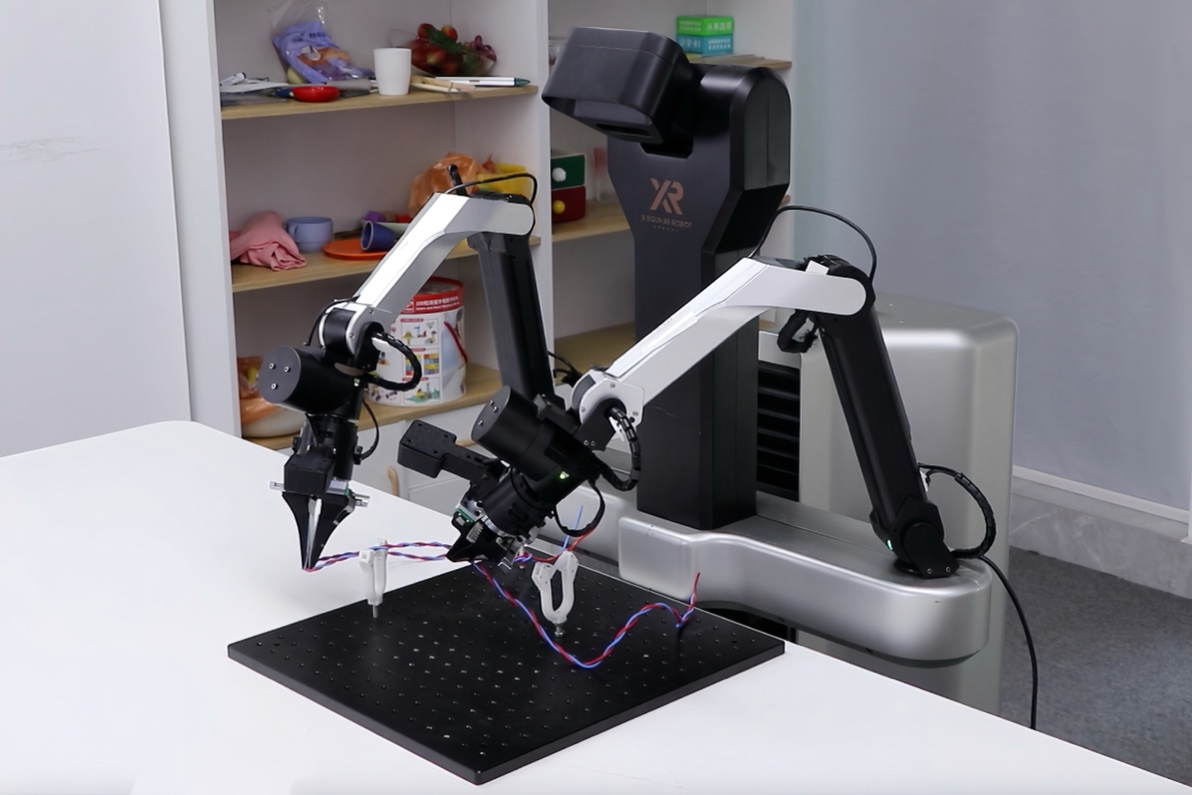
自变量机器人

Search documents
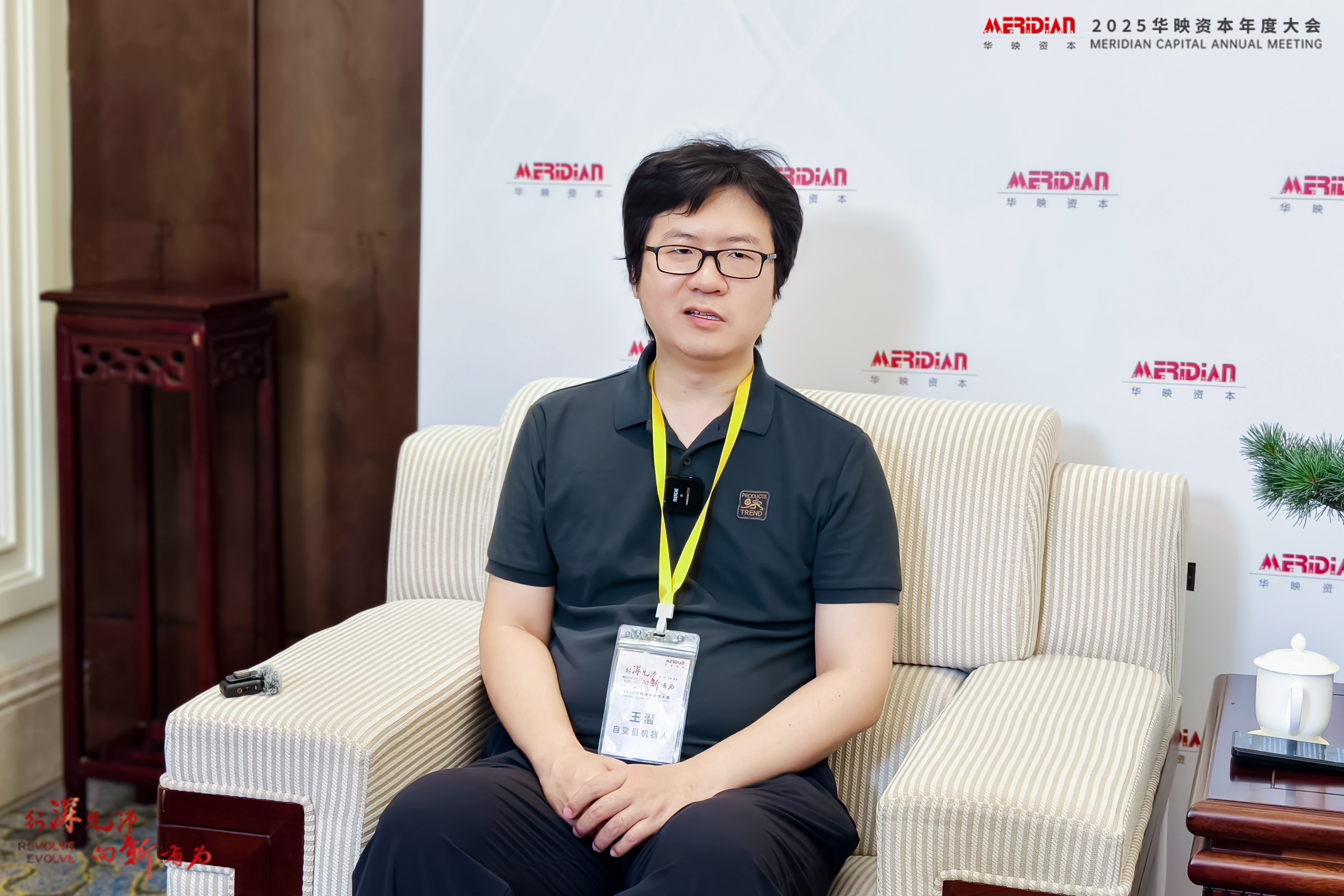
对话自变量机器人创始人王潜:国内具身智能行业的融资速度不是太快,甚至还有些慢
Mei Ri Jing Ji Xin Wen· 2025-07-01 02:25
Core Viewpoint - The conference highlighted the growing interest in embodied intelligence, with the CEO of Self-Variable Robotics discussing the company's funding strategy and the current state of the industry, emphasizing that the investment pace in China is relatively slow compared to the U.S. market [1][4]. Funding and Investment - Self-Variable Robotics has completed seven rounds of financing, raising over 1 billion yuan, indicating a strong financial backing despite the industry's need for capital [1]. - The CEO believes that the current investment climate in embodied intelligence does not exhibit significant bubbles, likening it to a rich coffee without foam, suggesting a healthy market environment [4]. - There is a notable disparity in funding scale and company valuations between Chinese and American firms, with the CEO stating that Chinese companies lag by an order of magnitude [4]. Market Dynamics - The CEO pointed out that the competition in embodied intelligence between China and the U.S. is at a similar starting line, but the support and funding levels differ significantly [4]. - The industry requires substantial patient capital to support technological iterations and market adaptations, highlighting the need for continued investment [4]. Talent Acquisition - There is a shift in the job market, with recent graduates showing a preference for stable, mature industries rather than cutting-edge projects, which is viewed as a concerning trend for the sector [5]. Application and Technology - Self-Variable Robotics focuses on developing the "brain" of robots through general embodied models, contrasting with other companies that emphasize physical robot capabilities [6]. - The CEO noted that industrial applications do not align well with the capabilities of general embodied models, as industrial tasks often require high precision but not complex reasoning or interaction [6]. - The company prefers to target commercial and service sectors where complex tasks can enhance model capabilities and meet customer demands [6]. Robot Design - The company has opted for a wheeled chassis for its robots, citing advantages in cost and reliability over bipedal designs, which are not deemed necessary at this stage [7].


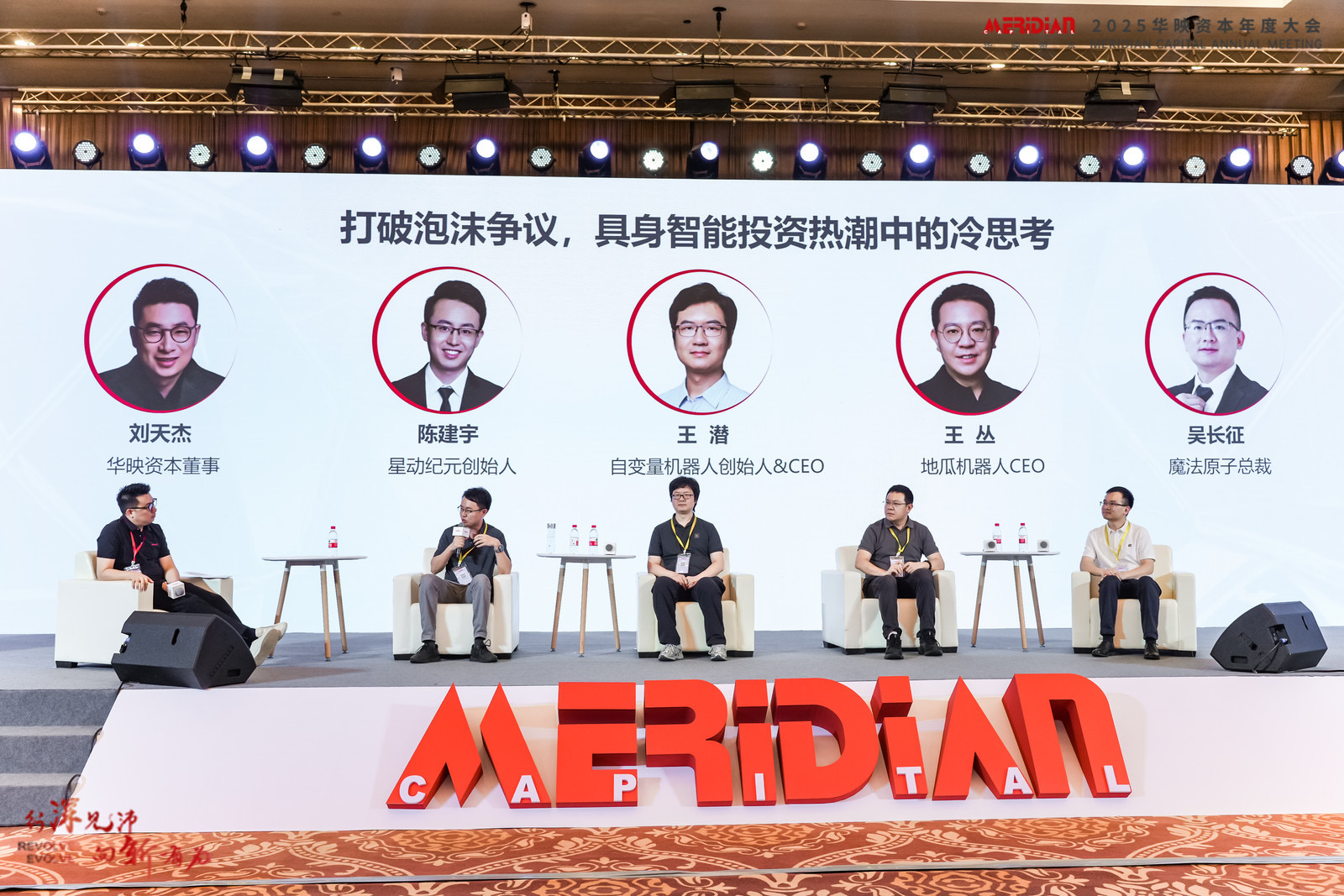
四家具身智能公司齐聚,热钱与泡沫并存的万亿赛道谁能挺进决赛圈
Bei Ke Cai Jing· 2025-06-29 08:26
Core Insights - The embodied intelligence sector is experiencing unprecedented investment and interest, with discussions on whether there is a bubble and which applications will mature first [1][3] Investment Landscape - The current investment scale in embodied intelligence is significantly lower than that in the smart automotive sector, indicating potential for growth once scalable commercial applications are identified [3][4] - Companies believe that more capital is needed to bridge the financing gap between domestic and international players, with domestic leading companies operating at a scale of tens of billions of RMB compared to tens of billions of USD for their US counterparts [3][4] Market Applications - B-end applications are seen as the most suitable for initial deployment, particularly in areas like logistics, quality inspection, and manufacturing processes [6][7] - The industry is exploring various strategies, including the replacement of human labor in hard-to-fill positions, with a gradual expansion into more complex scenarios over the next few years [6][7] Technological Development - The VLA (Vision, Language, Action) model is considered a key framework for the future of robotics, with ongoing improvements in data collection and model training methodologies [7][8] - The industry is moving towards a unified model paradigm, emphasizing the importance of integrating visual, linguistic, and action capabilities in robotic systems [8] Competitive Landscape - The embodied intelligence sector is expected to evolve similarly to the smartphone and automotive industries, with a diverse range of players including hardware manufacturers and AI developers [9][10] - The market is anticipated to consolidate into a limited number of major players, with a focus on maintaining technological barriers and establishing closed-loop commercial applications [10][11]
具身智能融资仍高潮迭起,是时候未雨绸缪了吗?
Nan Fang Du Shi Bao· 2025-06-27 03:43
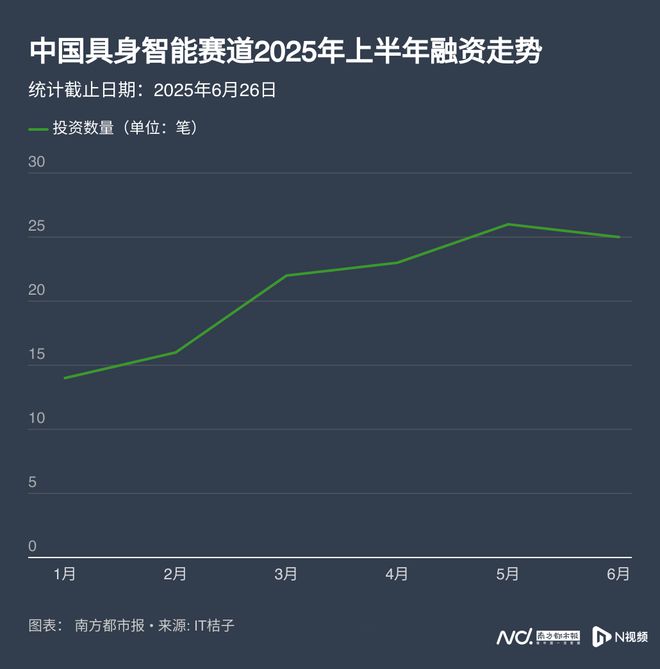
若仅从公开的投融资交易数量来看,尚难瞥见具身智能降温的端倪。根据南都记者在数据服务商IT桔子 平台的统计,截至2025年6月26日,包含人形机器人在内的具身智能赛道共收获126笔融资。其中,6月 的投融资数量25笔,基本上与3至5月的情况持平,并显著高于1月的14笔和2月的16笔。不过,投融资对 外披露存在滞后性。 VC(风险投资)投资人李鑫近期调研了北京的四个具身智能项目,他发现,约见公司创始人变得容易 了许多。短短几个月前,看项目需要排期,创始人也可能爱搭不理。 李鑫据此判断,具身智能赛道在降温了,创始人的态度变化代表着行业"最直接的水温"。他从其他投资 人和FA(财务顾问)人士处亦得到相同的判断,"身边的FA已经不接新的具身智能本体项目,开始把精 力放在其他领域了"。 过去两年多,具身智能的融资热度持续攀升,过亿元的早期融资不再鲜见。特别是今年春节后,这轮热 度达到新的高位。星海图联合创始人许华哲3月下旬曾告诉南都记者,体感上,今年融资变得容易了很 多。"去年,投资人的心态可能是有兴趣投资,但需进一步考虑。然而,今年他们的心态已经变成 FOMO(Fear of Missing Out,害怕错过),更倾向 ...
统一框架下的具身多模态推理:自变量机器人让AI放下海德格尔的锤子
机器之心· 2025-06-18 06:09
Core Viewpoint - The article emphasizes the need for a paradigm shift in robotics from modular systems to a unified architecture that enables embodied intelligence, allowing robots to process perception, reasoning, and action simultaneously, akin to human cognition [4][10][34]. Current Paradigm Limitations - Existing mainstream methods treat different modalities as independent modules, leading to inherent flaws in information processing and understanding [6][7]. - The representation bottleneck results in unavoidable compression losses when transferring information between different modality encoders, hindering deep cross-modal understanding of the physical world [7]. - The structural disconnection prevents models from learning intuitive causal relationships across modalities, which is essential for true physical intelligence [8]. Unified Architecture: From Division to Integration - The proposed unified modality architecture aims to eliminate artificial boundaries between visual, linguistic, and action modalities, processing them as a single information flow [4][10]. - The core of this architecture is unified representation learning, converting all modality information into a shared high-dimensional token sequence [11]. - A multi-task, multi-modal generation mechanism serves as a supervisory method, compelling the model to establish deep cross-modal correspondences [12]. Emergent Capabilities: Embodied Multi-Modal Reasoning - The unified architecture unlocks comprehensive embodied multi-modal reasoning capabilities that current modular systems cannot achieve [16]. - Symbol-space reasoning allows robots to deconstruct abstract shapes into concrete representations and perform physical operations based on this understanding [17]. - Physical space reasoning enables robots to understand the implications of actions on structural stability and articulate their reasoning processes [19][20]. - The system can autonomously explore complex environments by integrating visual observations, spatial memory, and common knowledge into coherent reasoning chains [22]. Conclusion - The transition to a unified architecture is crucial for enabling robots to interact seamlessly with the physical world, integrating perception, understanding, and action without the delays and losses associated with modular systems [30][31]. - This shift is not merely incremental but represents a fundamental evolution necessary for achieving embodied intelligence capable of cross-modal causal reasoning and spatial logic [34].

从宇树到飞行机器人,光速光合如何捕捉下一个千亿赛道
投中网· 2025-06-09 02:55
Core Viewpoint - The article discusses the strategic investments made by LightSpeed Venture Partners in the field of embodied intelligence, highlighting their focus on next-generation AI carriers and the potential for significant growth in this sector [1][2]. Investment Strategy - LightSpeed Venture Partners is leveraging a global perspective and a robust information network to inform their investment decisions, utilizing cutting-edge research from top universities in the US and Europe [3]. - The investment logic of LightSpeed is empirical, favoring high-ceiling sectors while being cautious in their approach, focusing on long-term trends and practical applications [3][4]. - The firm emphasizes the importance of timing in investments, aiming to balance early-stage risks with growth potential to avoid pitfalls of premature or overly aggressive investments [3][4]. Key Investments - LightSpeed's recent investments include a significant stake in Yushu, a robotics company, which has shown promising advancements in motion control algorithms and the potential to evolve from quadrupedal to humanoid robots [6][9]. - The firm also invested in Self-Variable Robotics, which has rapidly completed multiple funding rounds, raising over 1 billion yuan within a year and focusing on developing general-purpose robots with advanced capabilities [11][12]. Market Trends - The article notes a surge in angel-round projects in the embodied intelligence sector, driven by advancements in generative AI, although the future commercialization of these technologies remains uncertain [11]. - LightSpeed is particularly interested in the software and hardware dimensions of embodied intelligence, recognizing the rapid iteration capabilities of their portfolio companies [11][12]. Future Outlook - The firm sees significant potential in the flying robot sector, with a focus on companies like Weifen Zhifei, which aims to create autonomous flying robots capable of operating in unstructured environments [13][14]. - LightSpeed is also exploring less prominent areas within AI hardware, such as liquid cooling and controlled nuclear fusion, which are critical for enhancing AI system performance and reliability [16][17]. Conclusion - The article concludes that despite the challenges in the current investment landscape, there are still abundant opportunities in technology sectors, particularly in AI and robotics, with the potential for substantial returns as the market evolves [18][19].



一文回顾2025年5月机器人领域大事件
Sou Hu Cai Jing· 2025-06-06 21:06
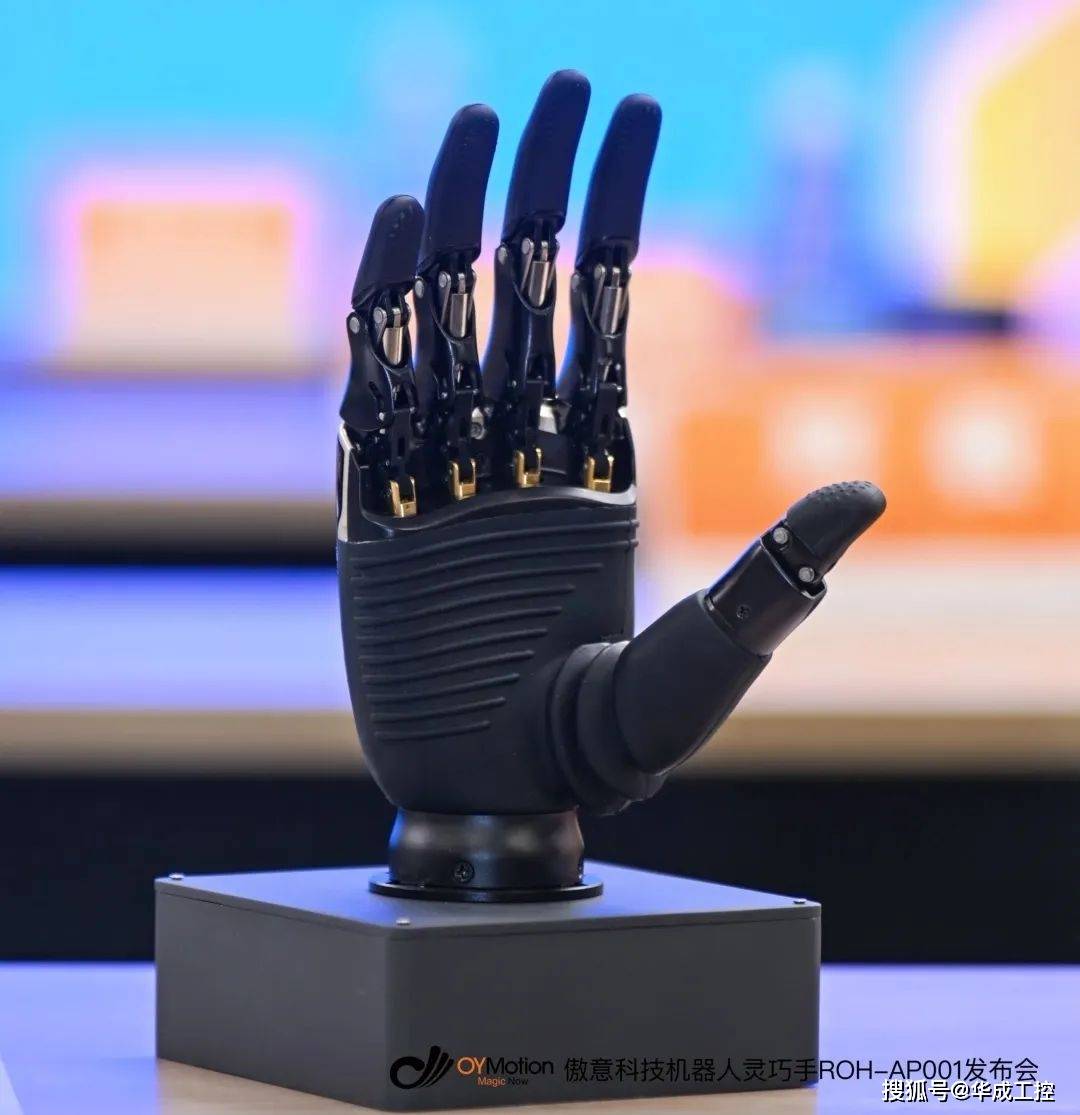
Group 1: Industry Standards and Collaborations - The world's first "Humanoid Robot Intelligence Level" standard has been released, establishing a framework for evaluating humanoid robots based on four dimensions: perception, decision-making, execution, and interaction, categorized into five levels from L1 to L5 [2] - Huawei and UBTECH Technology signed a comprehensive cooperation agreement to innovate in the fields of embodied intelligence and humanoid robots, focusing on product technology development and application scenarios [3] - Yujian Technology and Tencent Cloud have deepened their strategic cooperation to accelerate the large-scale implementation of embodied intelligent robots across various industries [5] Group 2: Financing and Investments - Diguo Robot completed a $100 million Series A financing round, with participation from over ten investment institutions, aiming to build a complete product system for embodied intelligence [4] - Self-Variable Robot secured several hundred million yuan in Series A financing, led by Meituan, to accelerate the development of its self-research embodied intelligence model and robot body [9] - Aoyi Technology announced nearly 100 million yuan in B++ round financing to enhance the development of its tactile dexterous hands and expand its production capacity [10] Group 3: Product Launches and Innovations - Aoyi Technology launched the second generation of its dexterous hand, featuring high-density tactile sensors and lightweight design, attracting significant industry attention [11] - UR15, a high-speed collaborative robot from Universal Robots, was introduced, achieving a TCP speed of 5 m/s, making it the fastest collaborative robot to date [13] - The "Yunxia" series of high-speed SCARA robots was launched by New Times, achieving a cycle time of only 0.24 seconds, positioning it among the fastest in the industry [18] Group 4: Strategic Partnerships and Market Developments - Mechanical Ninth Institute and Mairui Robot reached a strategic cooperation agreement to promote new developments in intelligent manufacturing [25] - Tianchuang Robot and Zongheng Co., Ltd. signed a strategic cooperation agreement to collaborate on integrated intelligent inspection solutions [26] - Xian Gong Intelligent submitted its prospectus for a Hong Kong IPO, aiming to leverage its leading position in the global robot controller market [27]
自变量机器人王潜:具身智能大模型没法抄国外作业
3 6 Ke· 2025-05-29 01:05
Core Viewpoint - The article discusses the emergence of embodied intelligence in China, highlighting the rapid growth and investment in the sector, particularly focusing on the company "Self-Variable Robotics" founded by Wang Qian, which has raised over 1 billion yuan in funding within a year and a half [5][12]. Group 1: Company Overview - Wang Qian, the founder of Self-Variable Robotics, has a strong academic background and prior experience in the U.S. quant fund industry, which he left to pursue robotics [2][5]. - Since its establishment in 2023, Self-Variable Robotics has completed seven rounds of financing, with a total amount exceeding 1 billion yuan [5]. - The company has adopted an "end-to-end unified VLA model" technology route, updating its model every 2-3 months [7][12]. Group 2: Industry Context - 2023 is marked as a significant year for the domestic embodied intelligence sector, with major players like Nvidia's founder predicting it as the next tech wave [5]. - The domestic humanoid robotics startup landscape has formed a clear hierarchy, with Self-Variable Robotics moving from a secondary to a quasi-first-tier position due to its funding achievements [5]. - There are contrasting views on the commercial viability of humanoid robots, with some investors skeptical about their practical applications, while others continue to invest heavily [5][10]. Group 3: Technological Development - Self-Variable Robotics has developed the WALL-A model capable of performing complex tasks beyond simple operations, positioning itself at the forefront of the industry [8][12]. - Wang Qian anticipates that a GPT-3 level embodied intelligence model could emerge within a year, with commercial applications expected to materialize in one to two years [10][21]. - The company prioritizes enhancing model capabilities over immediate commercialization, with two-thirds of its expenditures directed towards model development [12][30]. Group 4: Market and Commercialization - Current commercial applications for embodied robots are primarily in research education and hospitality, which Wang Qian believes are not the ultimate target markets for long-term growth [10][31]. - The company has already developed a physical product, although it has not yet been widely released, and is currently in the proof of concept stage with seed customers [27][29]. - Wang Qian expresses skepticism about the long-term value of current commercial scenarios, suggesting they may be more about meeting investor expectations than achieving substantial market impact [31][32]. Group 5: Competitive Landscape - The article notes that while domestic companies are catching up, there remains a significant gap between Chinese and U.S. companies in terms of overall capabilities [37]. - Self-Variable Robotics claims to be on par with international leaders like Physical Intelligence and Google in certain aspects, despite the general perception of being behind [38]. - The challenges of open-source models in the embodied intelligence space are highlighted, with Wang Qian arguing that commercial success cannot rely solely on open-source strategies [43][44].

湘财证券:工程机械行业分化明显 人形机器人商业化加速
Zhi Tong Cai Jing· 2025-05-26 08:14
据盖世具身智能,5月22日北京人形机器人创新中心发布全球首个《人形机器人智能化分级》团体标 准,包括感知认知、决策学习、执行表现、协作交互四大核心维度的技术矩阵。该技术标准正式发布, 有望加速人形机器人感知、决策、交互等核心能力的技术进化,加快其商业化落地。此外,据高工人形 机器人,5月22日京东科技和上海具身智能智创基金成为智元机器人新股东,这是京东首次投资人形机 器人企业。此前,美团也完成对自变量机器人的独家投资。随着更多互联网大厂入局人形机器人市场, 人形机器人技术有望进一步加速。该行继续看好机器人板块行情,建议关注人形机器人放量驱动减速 器、丝杠、轴承、电机等核心零部件需求增长的投资机会。 可控核聚变 据可控核聚变公众号,5月1日BEST项目工程提前2月启动;5月15日中核工程联合体与ITER组织签署WPP 合同。据央视财经,5月23日特朗普签署行政命令,通过全面改革美国核管理委员会等措施以加快核反 应堆测试等。近年来在AI算力爆发带来全球电力需求快速增长,核聚变作为高效清洁能源,国内外相 关发展进入加速期,今年以来国内相关项目招标亦加快落地。该行看好核聚变加速落地下,上游相关设 备项目中标带来的业绩 ...
人形机器人格斗大赛落幕,深市同标的规模最大的机器人ETF(159770)连续4日获资金净流入,累计“吸金”超1.1亿元
2 1 Shi Ji Jing Ji Bao Dao· 2025-05-26 06:46
Group 1: Robotics ETF Performance - The CSI Robotics Index (H30590) saw a slight increase of 0.10% near the market close on May 26, with the Robotics ETF (159770) achieving a trading volume exceeding 100 million yuan and a premium rate of 0.02% [1] - The Robotics ETF (159770) has experienced a net inflow of over 110 million yuan over the past four days, with a net flow rate of 1.94% in the last five days, ranking first among seven similar products [1] - As of May 23, the latest circulating scale of the Robotics ETF (159770) reached 5.434 billion yuan, making it the largest in its category in the Shenzhen market [1] Group 2: Developments in Humanoid Robotics - A humanoid robot competition, the "CMG World Robot Competition Series," took place in Hangzhou, featuring the Unitree G1 humanoid robot, highlighting key aspects such as skill fluidity and human-robot collaboration [2] - Major companies like JD.com and Meituan are increasingly investing in the humanoid robotics sector, with recent financing rounds for companies like Shanghai Zhiyuan New Technology Co., Ltd. and self-variable robots [2] - The humanoid robotics industry is rapidly evolving, with new technologies emerging and production processes accelerating, as noted by Huachuang Securities [2] Group 3: Market Outlook for Humanoid Robotics - Dongwu Securities expresses optimism about the humanoid robotics sector, anticipating a significant production year in 2025, and emphasizes the importance of key suppliers and components in the supply chain [3]
接连获光速光合、美团等投资,自变量机器人的端到端突围
2 1 Shi Ji Jing Ji Bao Dao· 2025-05-26 04:14
Core Insights - The article highlights the advancements and potential of the company "Self-Variable Robotics" in the field of embodied intelligence, showcasing its innovative end-to-end general-purpose model WALL-A and its significant funding achievements [1][2][10] Company Overview - Self-Variable Robotics launched the WALL-A model, which is the largest parameter scale end-to-end general-purpose embodied intelligence model, achieving over 95% success rate in complex tasks within minutes [1][8] - The company has completed seven rounds of financing in less than a year and a half, raising over 1 billion yuan (approximately 140 million USD) [1][9] Technology and Innovation - The company focuses on an integrated model architecture for embodied intelligence, which enhances task learning efficiency by training all tasks within the same model [4][5] - The WALL-A model demonstrates zero-shot generalization capabilities in new task scenarios, a key indicator of achieving general-purpose robotics [8][9] Market Potential - The embodied intelligence sector is expected to grow significantly, with Goldman Sachs predicting the humanoid robot market will reach 154 billion USD by 2035 [12] - Self-Variable Robotics aims to penetrate markets such as elderly care and household services, positioning itself to capture emerging opportunities [12] Investment and Strategic Positioning - The company has attracted significant investment interest due to its leading technology and differentiated competitive edge in the embodied intelligence field [2][10] - The investment strategy reflects a broader trend in the robotics sector, with a focus on both hardware and software integration to meet diverse market needs [12]