金山软件

Search documents
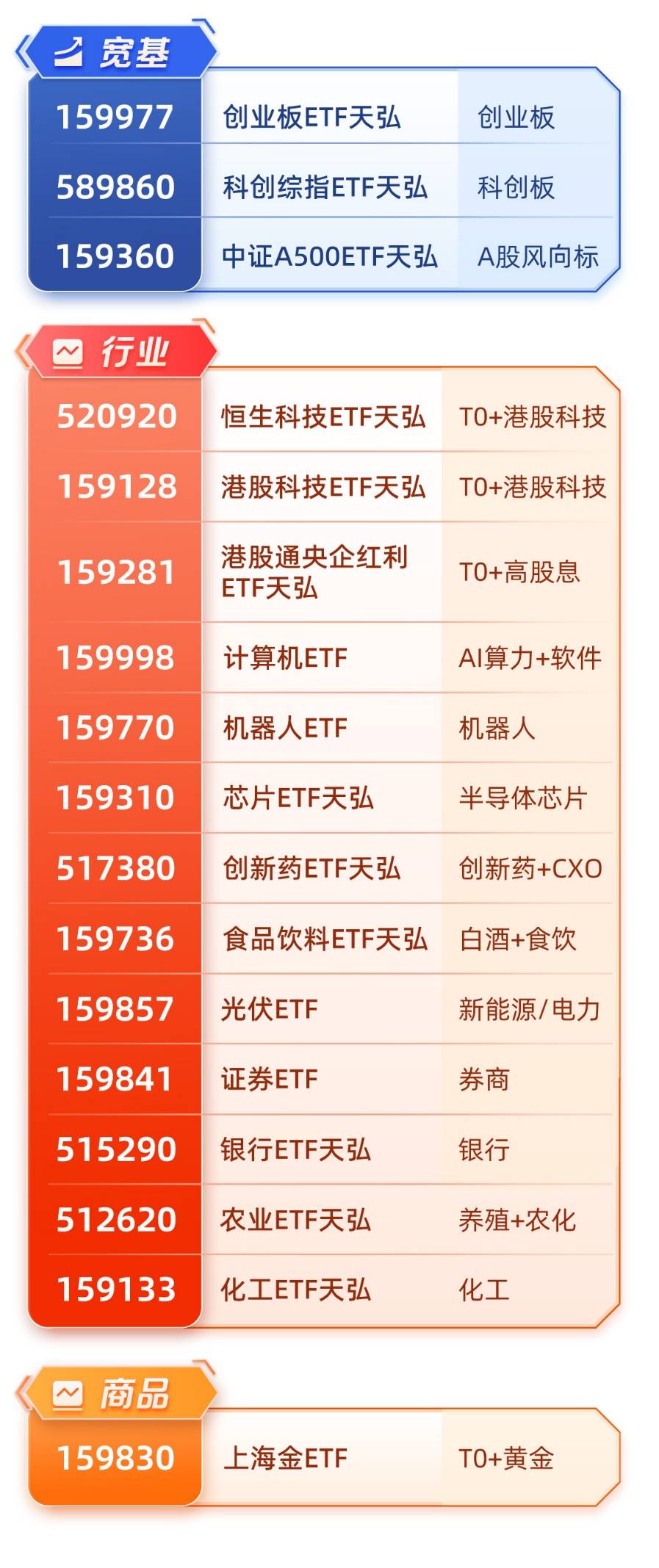
腾讯领衔港股科技企业回购潮!港股科技ETF天弘(159128)自上市次日以来持续净流入累计超11亿元
Sou Hu Cai Jing· 2025-12-31 01:35
Core Insights - The Hong Kong Technology ETF Tianhong (159128) has seen a turnover of 2.52% with a transaction volume of 40.82 million yuan, while the tracked National Index of Hong Kong Stock Connect Technology (987008) rose by 1.07%, led by stocks such as UBTECH (09880) and SMIC (00981) [1] - As of December 30, the Hong Kong Technology ETF Tianhong (159128) reached a new high with a total size of 1.652 billion yuan and 1.791 billion shares outstanding [1] - The Hang Seng Technology ETF Tianhong (520920) also reported a turnover of 2.54% and a transaction volume of 270 million yuan, with the Hang Seng Technology Index (HSTECH) increasing by 1.96% [1] Fund Flows - The Hang Seng Technology ETF Tianhong has recorded a net inflow of 1.74 million yuan recently, accumulating a total of 34.8 million yuan over the past five trading days [2] - The Hong Kong Technology ETF Tianhong (159128) has seen a cumulative net inflow of over 1.1 billion yuan since its listing [1][2] Product Highlights - The Hong Kong Technology ETF Tianhong (159128) tracks the top 30 core technology assets in Hong Kong, with the top ten constituents accounting for over 75% of the fund [2] - The ETF allows for T+0 trading and is not subject to QDII quotas, making it a more accessible investment tool for technology assets [2] Market Trends - The ongoing buyback trend in the Hong Kong market is led by technology giants, with Tencent leading the buyback with 78.13 billion HKD, accounting for 44.17% of total buybacks [2][3] - The buyback activity is characterized by a concentration among leading firms and a clear use of idle funds, indicating a strategic approach to capital management [3] Institutional Views - Analysts from Zhongtai Securities suggest that the overall easing monetary policy from the Federal Reserve is beneficial for the Hong Kong market, particularly for the technology sector [4] - The acceleration of autonomous driving policies is expected to boost the automotive sector, with a positive outlook for technology stocks driven by the AI wave [4]


金山软件(03888.HK)12月30日回购999.62万港元,年内累计回购3.45亿港元
Zheng Quan Shi Bao Wang· 2025-12-30 14:56
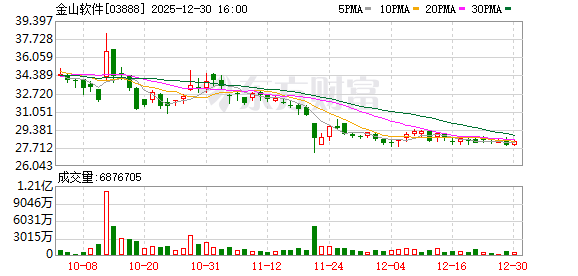
Group 1 - The core point of the article is that Kingsoft Software has been actively repurchasing its shares, with a total of 248.24 million shares repurchased since December 22, amounting to 69.98 million Hong Kong dollars [2][3] - On December 30, the company repurchased 354,200 shares at a price range of 28.040 to 28.300 Hong Kong dollars, with a total repurchase amount of 9.9962 million Hong Kong dollars [2] - The stock price increased by 1.29% on the same day, closing at 28.260 Hong Kong dollars, with a total trading volume of 194 million Hong Kong dollars [2] Group 2 - Year-to-date, Kingsoft Software has conducted 27 repurchase transactions, totaling 11.7282 million shares and a cumulative repurchase amount of 345 million Hong Kong dollars [3] - The detailed repurchase data shows various dates, share quantities, and price ranges, indicating a consistent strategy to buy back shares [3][4] - The highest repurchase price recorded during this period was 35.100 Hong Kong dollars, while the lowest was 27.260 Hong Kong dollars [4]
金山软件(03888) - 关连交易 本公司与北京多看订立之租赁协议
2025-12-30 14:54
香港交易及結算所有限公司及香港聯合交易所有限公司對本公告之內容概不負責,對其準確性或完整性亦不發表 任何聲明,並明確表示,概不對因本公告全部或任何部分內容而產生或因依賴該等內容而引致之任何損失承擔任 何責任。 (於開曼群島持續經營的有限公司) (股份代號:03888) 關連交易 本公司與北京多看訂立之租賃協議 Kingsoft Corporation Limited 金山軟件有限公司 董事會謹此宣佈,於二零二五年十二月三十日,本公司(代表承租人)與小米之合併聯 屬實體北京多看訂立租賃協議,據此,北京多看同意將該等物業出租予承租人,自二 零二六年一月一日起至二零三一年十二月三十一日止為期六年。 北京多看為小米之合併聯屬實體。小米為本公司董事兼主要股東雷軍先生之聯繫人 士。雷軍先生擁有小米之多數投票權。因此,小米為本公司之關連人士,而北京多看 亦為本公司之關連人士。 根據國際財務報告準則第16號,根據租賃協議租賃之該等物業將被確認為使用權資 產,總代價約為人民幣256.17百萬元(相當於約282.63百萬港元),而租賃協議項下擬進 行之交易將被確認為收購使用權資產,其根據上市規則第14A章將構成本公司之一次 性關 ...
金山软件(03888) - 持续关连交易本公司与小米订立之框架协议
2025-12-30 14:52
香港交易及結算所有限公司及香港聯合交易所有限公司對本公告之內容概不負責,對其準確性或完整性亦不發表 任何聲明,並明確表示,概不對因本公告全部或任何部分內容而產生或因依賴該等內容而引致之任何損失承擔任 何責任。 Kingsoft Corporation Limited 金山軟件有限公司 (於開曼群島持續經營的有限公司) (股份代號:03888) 持續關連交易 本公司與小米訂立之框架協議 茲提述本公司日期為二零二二年十二月三十日之公告,內容有關本公司與小米訂立的 框架協議,以規範雙方截至二零二五年十二月三十一日止三個年度持續進行之若干交 易。 本集團已與小米集團建立長期穩定之業務關係。於二零二二年十二月三十日,本公司 及小米訂立一份框架協議,以規範雙方截至二零二五年十二月三十一日止三個年度持 續進行之若干交易。 為重續截至二零二八年十二月三十一日止未來三個年度現有框架協議項下之交易,本 公司與小米訂立框架協議,據此:(i)本集團將向小米集團提供各項綜合服務,主要包 括推廣服務、郵箱定製開發服務以及授權及訂閱服務;(ii)本集團將與小米集團共同經 營由本集團提供的遊戲;(iii)小米集團將向本集團提供各項綜合服務, ...
金山软件12月30日斥资999.6万港元回购35.42万股
Zhi Tong Cai Jing· 2025-12-30 11:28
Group 1 - The company, Kingsoft Corporation (03888), announced a share buyback plan, intending to repurchase 354,200 shares at a total cost of HKD 9.996 million [1]
金山软件(03888)12月30日斥资999.6万港元回购35.42万股
智通财经网· 2025-12-30 11:21
Group 1 - The company, Kingsoft Corporation (03888), announced a share buyback plan, intending to repurchase 354,200 shares at a cost of HKD 9.996 million [1]
金山软件(03888.HK)12月30日耗资999.6万港元回购35.4万股
Ge Long Hui· 2025-12-30 11:21
Group 1 - The company, Kingsoft Corporation (03888.HK), announced a share buyback on December 30, 2023, spending HKD 9.996 million to repurchase 354,000 shares [1]
金山软件(03888) - 翌日披露报表
2025-12-30 11:13
第 1 頁 共 9 頁 v 1.3.0 | 1). | 已購回以作註銷但尚未註銷之股份 | | 582,000 | 0.04 % | HKD | 34.3598 | | --- | --- | --- | --- | --- | --- | --- | | | 變動日期 | 2025年5月29日 | | | | | | 2). | 已購回以作註銷但尚未註銷之股份 | | 367,200 | 0.03 % | HKD | 33.4893 | | | 變動日期 | 2025年5月30日 | | | | | | 3). | 已購回以作註銷但尚未註銷之股份 | | 310,200 | 0.02 % | HKD | 32.2222 | | | 變動日期 | 2025年6月2日 | | | | | | 4). | 已購回以作註銷但尚未註銷之股份 | | 310,600 | 0.02 % | HKD | 32.1709 | | | 變動日期 | 2025年6月3日 | | | | | | 5). | 已購回以作註銷但尚未註銷之股份 | | 586,400 | 0.04 % | HKD | 34.1057 | | | 變動日 ...
用20年一雪前耻:中国游戏行业最励志的逆袭
3 6 Ke· 2025-12-30 10:37
Core Viewpoint - The evolution of the Chinese shooting game industry over the past 20 years has transformed it from a niche market to a significant player in the global gaming landscape, with substantial growth potential and recognition in the FPS genre [60][63]. Group 1: Historical Context - In 2004, a pivotal moment occurred when a Chinese player, Meng Yang, defeated the renowned American gamer "Fatal1ty" in a major FPS competition, marking a significant achievement for Chinese esports [1]. - Despite early successes, the Chinese shooting game market struggled for recognition and profitability, with many industry players doubting its viability [3][9]. - The dominance of MMO games in the early 2000s overshadowed shooting games, leading to a lack of investment and development in the FPS genre [9][11]. Group 2: Industry Development - Tencent's strategic pivot towards shooting games began with the acquisition of "CrossFire" and "King of Battlefield," which were initially seen as low-potential projects [12][14]. - "CrossFire" underwent significant adjustments to appeal to a broader audience, leading to its successful launch in 2008, which opened the floodgates for the domestic shooting game market [19][24]. - The release of "Call of Duty 4: Modern Warfare" in 2007 set a new standard for FPS games globally, but Chinese developers were slow to adapt to this model [27][29]. Group 3: Recent Trends and Innovations - The rise of mobile gaming in 2014 provided a level playing field for Chinese developers, allowing them to compete globally with heavy shooting mobile games [31][33]. - "CrossFire: Gun Battle" successfully adapted the FPS experience for mobile, demonstrating that complex shooting mechanics could be effectively implemented on mobile platforms [35][37]. - The emergence of battle royale games in 2017, such as "PUBG Mobile," showcased the capabilities of Chinese developers to create competitive products that resonated with global audiences [38][40]. Group 4: Current Market Position - As of 2023, the Chinese shooting game market has grown significantly, contributing over 100 billion yuan to the gaming industry and becoming the second-largest game category in China [60][63]. - Chinese developers are increasingly recognized for their innovative gameplay mechanics and ability to adapt to market demands, positioning them as leaders in the global shooting game sector [49][55]. - The ongoing development of new gameplay styles, such as extraction shooters, indicates a proactive approach to evolving the FPS genre and meeting player expectations [52][54].
游戏行业赚快钱的时代结束了
Di Yi Cai Jing· 2025-12-30 05:45
Core Insights - The Chinese gaming industry in 2025 is characterized by a complex landscape of "recovery" and "internal competition," with market revenue exceeding 350 billion yuan and user base surpassing 680 million, indicating a year of continued recovery despite intense competition [3][4][12] - The industry is experiencing a significant market divide, with the "winner-takes-all" trend intensifying, leading to a situation where a few leading companies dominate the market, while smaller teams find new opportunities in single-player and AI-native games [3][10][12] Market Performance - In 2025, the domestic gaming market revenue is approximately 350.8 billion yuan, reflecting a year-on-year growth of 7.7%, while the user base has grown by 1.4% to over 680 million [4][5] - Self-developed games have generated overseas revenue of about 20.46 billion USD, maintaining a scale exceeding 100 billion yuan for six consecutive years [4][5] - Despite the overall upward trend in the gaming and esports industry, the market has entered a phase of stock competition, with a saturated user base and increased self-developed game output [4][5] Industry Challenges - The competition among gaming companies has intensified, with many projects failing despite significant investments, as seen with NetEase's "射雕" and Kingsoft's "解限机," which faced substantial player drop-off and negative feedback [5][6] - The cost of developing successful mobile games has increased significantly, making it harder for companies to achieve profitability [6][9] Market Dynamics - The market recovery is largely driven by a few top-tier games from leading companies like Tencent and NetEase, which dominate the revenue charts [7][9] - Tencent's gaming revenue reached 636 billion yuan in Q3 2025, with total revenue for the first three quarters exceeding 1.8 trillion yuan, solidifying its position in the market [9][10] Future Trends - The rise of single-player games is a notable trend, with companies increasingly focusing on high-quality, creative content rather than just marketing [12][13] - AI technology is emerging as a potential game-changer, offering new opportunities for smaller developers to compete by lowering development costs and enhancing creativity [11][15] - The industry is expected to enter a new "golden decade" of growth, driven by improved game quality, expanded overseas markets, and supportive policies [12][15]