
ABB

Search documents
英伟达为何值5万亿美元?答案或藏在AI数据中心里
Feng Huang Wang· 2025-10-30 05:05
Core Insights - Nvidia has become the first company globally to reach a market capitalization of $5 trillion, driven by its significant share in AI investment spending [1] - The measurement of data centers has shifted from physical size to computing power measured in gigawatts, with Wall Street now evaluating data centers based on "cost per gigawatt" [1] - The construction cost for a 1 gigawatt AI data center is estimated at $35 billion, representing a new economic foundation for the AI industry [2] Cost Structure of AI Data Centers - The largest single cost in AI data centers is attributed to GPUs, accounting for approximately 39% of total expenditures, with Nvidia's chips being the primary contributors [3] - Each 1 gigawatt of computing power requires over 1 million GPU chips, highlighting the central role of GPUs in the AI industry [3] - Networking equipment follows GPUs in cost, comprising about 13% of data center expenses, benefiting companies like Arista Networks and Broadcom [4] Infrastructure and Operational Costs - Power and cooling infrastructure, including generators and transformers, represent nearly 10% of total costs for a 1 gigawatt AI data center [6] - The operational costs of running a 1 gigawatt AI data center are relatively low, with annual electricity costs estimated at $1.3 billion and minimal personnel requirements [7] - The industry is facing challenges related to power supply, with major companies like Siemens Energy and GE Vernova reporting a surge in orders for turbines and grid infrastructure [7]

中国工业科技_2025 年三季度机器人自动化格局分析_市场份额如何变化China Industrial Tech_ 3Q25 Robot_Automation Landscape Analyzer_ How are market shares shifting_
2025-10-30 02:01
Summary of China Industrial Robot & Automation Landscape - 3Q25 Industry Overview - The report focuses on the **China Industrial Robot (IR)** and **Industrial Automation (IA)** sectors, analyzing market shares and sales data for 3Q25 [1][2]. Key Observations - **Market Share Growth**: Domestic IR players increased their total market share to **55%** in 3Q25, up **2 percentage points (pp)** year-over-year (yoy) and **1 pp** quarter-over-quarter (qoq) [3][27]. - **Sales Volume Growth**: Domestic brands experienced a **12% yoy** growth in sales volume, significantly outpacing overseas brands, which only grew by **2% yoy** [3][27]. - **Total Industrial Automation Market**: The IA market saw a **2% yoy decline** in 3Q25, with project markets down **4% yoy** and OEM markets up **2% yoy**. The full-year outlook for 2025 is expected to be flat at **0% yoy** [27][30]. Sales Data - **Total IR Unit Sales**: Reached **81,000 units** in 3Q25, marking a **7% yoy** increase but a **6% qoq** decline, indicating a slowdown from the previous quarter's **20% yoy** growth [27][31]. - **Cobot Segment**: Continued strong growth at **31% yoy**, although this was a deceleration from **52% yoy** in 2Q25 [27]. - **Performance by Robot Type**: - Large 6-axis robots grew **6% yoy** - Small 6-axis robots grew **5% yoy** - SCARA robots grew **2% yoy** [27]. Market Dynamics - **End-Market Performance**: - Strong growth in sectors like **Semiconductor (+30% yoy)**, **Lithium battery (+17% yoy)**, and **Auto electronics (+16% yoy)**, although these were lower than in 2Q25. - The **Solar** sector was a significant underperformer, declining **22% yoy** [27][35]. Company Performance - **ESTUN**: Maintained the 1 position in the IR market with a **10% market share**, despite a **11% qoq** decline in sales volume [27][40]. - **Inovance**: Ranked 4 with an **8% market share**, showing **7% yoy** growth in sales volume but a **8% qoq** increase [27][40]. - **Market Share by Robot Type**: - **Small 6-axis Robots**: Domestic brands increased their market share to **58%**. ESTUN led with **10%**, while Inovance held **6%** [27][42]. - **Large 6-axis Robots**: Domestic brands maintained a **33%** market share, with ESTUN at **15%** and Inovance at **2%** [27][44]. - **SCARA Robots**: Inovance's market share increased to **25%**, recovering from previous declines [27]. Component Market - **IA Components**: Inovance retained its 1 position in **Servo** (32% share) and **Low Voltage Inverter** (21% share) markets, although both saw slight declines in market share [27][28]. Inventory and Production Insights - There was a notable discrepancy between industrial robot production and domestic sales, with approximately **123,000 units** produced in 3Q25 and **51,000 units** exported [27][28]. Conclusion - The China Industrial Robot and Automation sectors are experiencing a shift towards domestic players gaining market share, with strong performance in specific end-markets. However, overall growth is tempered by declines in certain segments and a slowdown in sales volume growth compared to previous quarters.


ABB: From Cyclical Industrial Supplier To Visible, Resilient Infrastructure Compounder
Seeking Alpha· 2025-10-29 21:42
Back on August 22 , I discussed how ABB ( OTCPK:ABBNY ) was shifting from Volatility to Visibility and setting the stage for structural compounding. Since my note, the stock is up ~12%I have over 13 years of diverse financial analysis experience across various sectors, including Auto, Industrials, and IT. Worked in a Ford and Caterpillar treasury, and managed Investor relations and Strategic finance of a listed IT company of market cap ~USD 2.5bn. My early background also includes equity research analyst, w ...


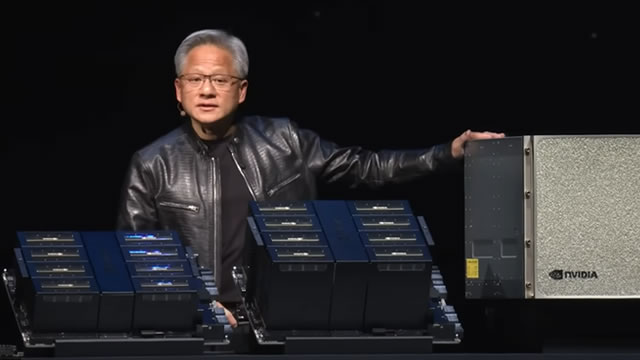
Why Nvidia is worth $5 trillion: Inside a $35 billion, 1 gigawatt AI data center.
Business Insider· 2025-10-29 18:01
Core Insights - Nvidia is capturing a significant share of the AI spending boom, contributing to its valuation of nearly $5 trillion [1][12] - The new metric for AI data centers is gigawatts of computing capacity, with 1 gigawatt costing approximately $35 billion, representing a new economic foundation for AI [3][4] AI Data Center Costs - The largest cost component in an AI data center is GPUs, accounting for about 39% of total spending, with Nvidia's chips being the primary drivers [7][12] - Networking equipment constitutes around 13% of data center costs, benefiting companies like Arista Networks, Broadcom, and Marvell [14] - Power distribution and cooling infrastructure represent significant costs, with power distribution alone taking up nearly 10% of spending [16][18] Company Opportunities - Nvidia captures nearly 30% of total AI data center spending as profit due to its high gross profit margins of 70% [12] - TSMC, Nvidia's foundry partner, earns approximately $1.3 billion per gigawatt from manufacturing GPU components [12] - Other chipmakers like AMD and Intel are attempting to catch up, while hyperscalers such as Google, Amazon, and Microsoft are investing in custom AI accelerators [13] Infrastructure and Operational Costs - Real estate, electricity, and labor account for about 10% of upfront costs, with operational costs being relatively low [18] - The annual electricity cost to run a 1 gigawatt AI data center is about $1.3 billion, and personnel costs are minimal, with only 8 to 10 staff members typically required [18] - The bottleneck is shifting towards power availability, with companies like Siemens Energy and GE Vernova experiencing increased orders for turbines and grid infrastructure [19]
Artisan International Value Fund Q3 2025 Portfolio Update
Seeking Alpha· 2025-10-29 01:00
Group 1 - The article discusses the importance of enabling Javascript and cookies in browsers to prevent access issues [1] - It highlights that users with ad-blockers may face restrictions when trying to access content [1]


新能源及工业
Haitong Securities International· 2025-10-28 10:50
Investment Rating - The report suggests a positive outlook on the nuclear power sector, particularly focusing on small modular reactors (SMRs) as a key energy solution for AI data centers, driven by recent administrative actions from the Trump administration [5][48][50]. Core Insights - The collaboration between OpenAI, Oracle, and Vantage Data Centers to build the "Lighthouse" Stargate data center cluster in Wisconsin is a significant development, contributing to the expansion of IT capacity in the U.S. [1][12]. - The U.S. grid reliability is under threat, with warnings from NERC about a potential "five-alarm fire" risk, indicating urgent infrastructure needs [1][26]. - The demand for gas turbines is expected to grow, driven by the re-industrialization and development of AI data centers, despite a stable electricity demand in the U.S. [18][22]. - The report highlights a robust growth in the transformer export market, particularly from China and South Korea, indicating a strong demand for electrical equipment [38][39]. Summary by Sections Global Infrastructure and Construction Equipment - North America's data center vacancy rates have reached a historic low of 1.6%, reflecting strong demand [8]. - The average price for 250 to 500 kW cabinets has increased by 2.5%, while those over 10 MW have surged by 19% due to limited power supply and rising construction costs [8]. Global Electrical and Intelligent Equipment - The gas turbine price index increased by 3.43% year-on-year as of August 2025, indicating a stable competitive landscape [15]. - The U.S. electrical transformer production price index remained stable at 440.55, with a year-on-year increase of 2.5% [29]. Global Energy Industry - The average spot price of electricity in major U.S. regions rose by 21.32% week-on-week, with a significant increase in clean energy installations [3]. - The collaboration between Oklo and Newcleo to develop advanced fuel manufacturing infrastructure in the U.S. is a notable advancement in the nuclear sector [3]. Global New Materials - The global uranium spot price increased by 10% month-on-month, reflecting a tightening supply [4]. - The price index for steel pipes and stainless steel rose by 0.58% month-on-month, indicating a positive trend in the materials market [4]. Key Company Insights and Commentary - GE Vernova is expanding its capabilities in the nuclear sector, with a focus on high-voltage equipment and small modular reactors [43]. - Siemens Energy is actively investing in expanding its transformer manufacturing capacity in Germany, indicating strong order reserves [43]. - ABB has signed significant contracts for electrification projects, showcasing its commitment to energy management solutions [41].

电网设备出海专家访谈
2025-10-27 15:22
Summary of Key Points from Conference Call Records Industry Overview - The global power grid infrastructure is facing a significant demand for upgrades, driven by aging equipment in Europe and North America, and the dual impact of renewable energy development and aging infrastructure in Asia, Africa, and Latin America [1][2][3] - The demand for modern, efficient, and sustainable smart grid systems is urgent across various regions due to the need for infrastructure modernization and the integration of renewable energy sources [3] Regional Investment Demand - **Europe**: Faces severe aging of grid equipment, with many devices over 40 years old. A projected investment of approximately €2 trillion is needed by 2050 to address these issues [5] - **North America**: Similar aging issues, compounded by a surge in power demand from data centers and AI, which may account for over 10% of total load in the coming years [3] - **Asia and Africa**: Rapid development is noted, with countries like Indonesia and Singapore needing significant upgrades to their grid systems to accommodate new energy structures [3] - **Latin America**: Brazil's grid infrastructure is lagging behind its investments in solar and wind projects, leading to power outages that affect economic activities [3] Chinese Power Equipment Companies - Chinese power equipment firms primarily export to Europe and the U.S. through local agents or single-unit sales, facing certification barriers. In non-European markets, they utilize direct sales and partnerships to expand market share [1][6] - The penetration rate of Chinese power equipment in Europe is low, estimated at around 5% in 2024, with projections of 7-8% in 2025. In Brazil, the penetration is estimated at 20-30% [11] - Chinese companies have a competitive edge in cost and delivery capabilities, but face challenges in brand recognition and trust in international markets [8][10] Market Opportunities and Challenges - The global demand for IGBT and related core components is high, particularly in flexible DC transmission projects, with supply shortages being a significant issue [9] - Chinese companies are capitalizing on the booming demand in the Middle East, South Asia, and East Asia, leveraging their cost advantages and flexible service offerings [10] - International competitors like Schneider, Siemens, and ABB are expanding production, particularly in transformer manufacturing, but face long construction cycles [7][8] Competitive Landscape - Chinese power equipment firms are increasingly recognized in the Middle East, with high-end products gaining acceptance, although they still face quality perception issues [7] - In contrast, Western companies maintain a strong foothold in the market due to established relationships and cultural recognition among local decision-makers [12] Future Outlook - The outlook for Chinese high-voltage direct current (HVDC) technology is promising, with significant projects already underway in Brazil and Saudi Arabia, showcasing China's competitive advantages in technology, equipment supply, and project management [14][15][16] - The global DC transmission project market is experiencing rapid growth, with China positioned as a key player, particularly in regions where they can offer comprehensive solutions [15][16]
人形机器人前沿:大型科技公司 “投身机器人领域”…… 软银 ABB、苹果、Meta、擎天柱 v3Humanoid Horizons Big Tech 'Doing the Robot'... SoftbankABB, Apple, Meta, Optimus v3
2025-10-27 12:06
Summary of Key Points from the Conference Call Industry Overview - The focus is on the humanoid robotics and physical AI sector, with major players including SoftBank, ABB, Apple, Meta, Google, and Tesla [1][2][3][5][6]. Core Developments 1. **SoftBank's Acquisition of ABB Robotics**: - SoftBank agreed to purchase ABB's Robotics division for $5.4 billion, shifting from a previous plan to spin off the business due to competition from Chinese firms [5][39]. - Masayoshi Son, SoftBank's founder, emphasized that "SoftBank's next frontier is Physical AI," aiming to integrate AI and robotics to drive innovation [5][39]. 2. **Meta's Humanoid Robot Initiative**: - Meta is developing a humanoid robot called 'Meta-Bot' and aims to become a software/AI provider for various hardware developers [5][39]. - The company has formed a robotics team to create datasets and world models for enhanced robot capabilities [5][39]. 3. **Google's Robotics Advancements**: - Google DeepMind released the Gemini Robotics series, enhancing robots' ability to perform complex tasks through embodied reasoning [5][46]. - Google and Meta are both building world models that allow agents to interact in simulations, with potential applications in robotics [5][6]. 4. **Tesla's Optimus Robot**: - Tesla plans to unveil the fully redesigned Optimus v3 in Q1 2026, with ambitious production goals of 1 million units for v3 and up to 100 million for future versions [7][53]. - CEO Elon Musk highlighted the challenges in developing humanoid robots, particularly in creating dextrous hands [7][53]. 5. **China's Dominance in Industrial Robotics**: - China accounted for 54% of global industrial robot installations in 2024, marking a significant increase from 26% a decade ago [7][8]. Financial Insights - The Humanoid 100 index has increased by 27% since its inception on February 6, 2025, outperforming the S&P 500 and other indices [11]. - Tesla's stock rating is currently "Overweight" with a price target of $410, while its market cap stands at approximately $1.58 trillion [3][7]. Notable Partnerships and Funding 1. **Figure AI's Series C Funding**: - Figure AI raised $1 billion in a Series C round, valuing the company at $39 billion, aimed at scaling humanoid robots for home and commercial use [29]. 2. **Strategic Partnerships**: - Figure AI partnered with Brookfield to build a real-world database for its Helix VLA model [35]. - Telexistence and Seven-Eleven Japan are collaborating to deploy humanoid robots in stores by 2029 [35]. 3. **Apple's Robotics Development**: - Apple is reportedly collaborating with BYD to manufacture AI-enabled robots, with products expected to launch in 2026 and 2027 [7][39]. Emerging Trends and Future Outlook - The development of humanoid robots is seen as a significant opportunity, with many companies investing heavily in AI and robotics [5][6][39]. - The integration of AI with robotics is expected to drive advancements in various sectors, including manufacturing, logistics, and consumer applications [5][39]. Conclusion - The humanoid robotics and physical AI industry is rapidly evolving, with significant investments and developments from major tech companies. The competitive landscape is intensifying, particularly with China's growing influence in industrial robotics. The future of humanoid robots appears promising, with potential applications across various sectors.



SoftBank approves final $22.5bn investment in OpenAI
Yahoo Finance· 2025-10-27 11:52
Investment in OpenAI - SoftBank has authorized an additional $22.5 billion investment in OpenAI, raising its total commitment to $30 billion as part of a larger $41 billion financing round announced in April [1][2] - The investment is contingent upon OpenAI completing a corporate restructuring to enable a public listing, with a potential reduction of SoftBank's investment to $20 billion if the restructuring does not occur [2][3] Stargate AI Infrastructure Project - OpenAI, Oracle, and SoftBank announced plans to expand the Stargate AI infrastructure project by developing five new data center sites across the US, increasing total capacity to nearly 7 gigawatts (GW) [4] - The expansion is supported by investments exceeding $400 billion over the next three years, as part of a strategy to meet a 10GW, $500 billion commitment by the end of this year [4] Acquisition of ABB Robotics Division - SoftBank has reached an agreement to acquire the robotics division of Swiss technology firm ABB for an enterprise value of $5.4 billion [5] - The robotics unit generated $2.3 billion in revenue in 2024, accounting for nearly 7% of ABB's total revenue, with an operational EBITA margin of 12.1% [5]

汇川技术:公司将重点发展“AI+视觉”技术
Zheng Quan Ri Bao Zhi Sheng· 2025-10-27 11:40
Core Viewpoint - The acquisition of ABB's robotics business by SoftBank reflects the increasing competitiveness of Chinese companies in the six-axis robot sector, indicating that international giants are facing pressure from the rise of Chinese robotics firms [1] Group 1: Industry Insights - The high-end market, particularly in the automotive sector, is currently dominated by foreign companies, but it represents the largest potential replacement market in the future [1] - Chinese companies are gradually penetrating high-end application fields as they mature in robot body performance and technical solutions [1] Group 2: Company Strategy - The company plans to focus on the development of "AI + Vision" technology and aims to deeply integrate it into industrial robots to enhance intelligence levels [1] - The company is positioning itself to seize significant development opportunities in the robotics sector [1]