
华兰生物

Search documents
血液制品企业不再“躺赚”
21世纪经济报道· 2025-09-10 13:07
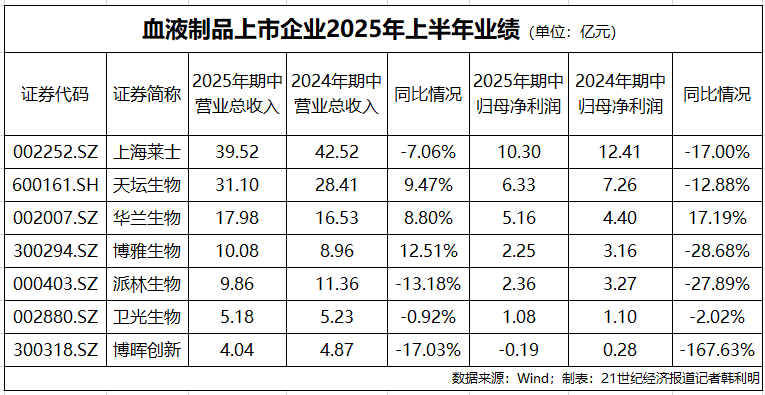
Core Viewpoint - The acquisition of Pailin Biological by China Biotech marks a significant shift in the blood products industry, indicating a trend towards consolidation and increased competition among major players [1][3][7]. Company Developments - Pailin Biological's controlling shareholder, Shengbang Yinghao, signed a share transfer agreement with China Biotech to transfer nearly 200 million shares, representing 21.03% of the total share capital, for approximately 4.699 billion yuan at a price of 23.51 yuan per share [1]. - Following the acquisition, the controlling shareholder will change from Shengbang Yinghao to China Biotech, with the actual controller shifting from the Shaanxi Provincial Government to China National Pharmaceutical Group [1]. - Pailin Biological's stock price closed at 17.84 yuan on September 10, reflecting a 3.04% decline, despite the acquisition price representing a 27.77% premium over the previous closing price [1]. Industry Trends - The blood products industry in China is expected to undergo consolidation, driven by government policies and market demand, with major players like China Biotech enhancing their competitive edge through acquisitions [3][9]. - The market size for blood products in China is projected to reach 600 billion yuan in 2024 and 950 billion yuan by 2030, indicating significant growth potential [9]. Financial Performance - Pailin Biological experienced a revenue increase of 14% in 2024, reaching 2.655 billion yuan, and a net profit increase of 21.76% to 745 million yuan. However, in the first half of 2025, revenue fell by 13.18% to 986 million yuan, and net profit dropped by 27.89% to 236 million yuan [5][10]. - The decline in performance is attributed to reduced product supply due to capacity expansion efforts at its subsidiaries [6]. Competitive Landscape - The blood products sector is facing challenges, with only a few companies, such as Tian Tan Biological and Hualan Biological, reporting revenue growth in the first half of 2025, while others experienced significant declines [10][11]. - The industry is witnessing a shift from a previously profitable environment to one where companies must innovate and adapt to maintain competitiveness [10][12]. Strategic Responses - Companies are exploring mergers and acquisitions to enhance their plasma collection capabilities and reduce costs, as the number of operational plasma collection stations is limited due to strict regulations [12][14]. - Pailin Biological plans to improve plasma supply and product development while considering industry consolidation strategies [6][12].



47亿元收购遇冷?派林生物易主背后 血液制品企业谋变破局
2 1 Shi Ji Jing Ji Bao Dao· 2025-09-10 10:46
Group 1: Company Developments - The controlling shareholder of Pailin Biological has changed from Shengbang Yinghao to China National Pharmaceutical Group after signing a share transfer agreement, with nearly 200 million shares (21.03% of total shares) transferred for approximately 4.699 billion yuan at a price of 23.51 yuan per share [2] - Following the acquisition, Pailin Biological's stock price fell by 3.04% to 17.84 yuan per share, indicating a market reaction that did not align with the acquisition premium of 27.77% [2] - Pailin Biological's revenue for 2024 is projected to be 2.655 billion yuan, a 14% increase year-on-year, while net profit is expected to rise by 21.76% to 745 million yuan [4] Group 2: Industry Trends - The blood products industry in China is expected to experience consolidation, driven by government policies and market demands, with China National Pharmaceutical Group enhancing its position in the sector through this acquisition [3] - The blood products market in China is projected to grow from 60 billion yuan in 2024 to 95 billion yuan by 2030, indicating significant growth potential [7] - The industry is facing challenges, with many listed blood product companies reporting declining profits in the first half of 2025, attributed to price reductions in blood products [9] Group 3: Competitive Landscape - The acquisition of Pailin Biological by China National Pharmaceutical Group raises concerns about potential competition between Pailin and Tian Tan Biological, as their product lines overlap significantly [5][6] - The blood products industry is characterized by high entry barriers, with fewer than 30 companies currently operating, emphasizing the importance of resource acquisition through mergers and acquisitions [9] - Companies are exploring both traditional and innovative strategies to enhance their market positions, including expanding plasma collection capabilities and reducing reliance on human-derived plasma through technological advancements [10]

47亿元收购遇冷?派林生物易主背后,血液制品企业谋变破局
2 1 Shi Ji Jing Ji Bao Dao· 2025-09-10 10:45
Core Viewpoint - The acquisition of Palin Biological by China National Pharmaceutical Group marks a significant shift in the blood products industry, with implications for market consolidation and competitive dynamics [1][2][4]. Company Summary - Palin Biological's controlling shareholder, Shengbang Yinghao, signed a share transfer agreement with China National Pharmaceutical, transferring nearly 200 million shares, representing 21.03% of the total share capital, for approximately 4.699 billion yuan at a price of 23.51 yuan per share [1]. - Following the acquisition, the controlling shareholder will change from Shengbang Yinghao to China National Pharmaceutical, with the actual controller shifting from the Shaanxi Provincial Government to China National Pharmaceutical Group [1]. - The acquisition price represents a 27.77% premium over Palin Biological's closing price of 18.4 yuan per share on September 9, but the market reacted negatively, with the stock closing at 17.84 yuan, down 3.04% [1]. - Palin Biological's revenue for 2024 is projected to be 2.655 billion yuan, a 14% increase year-on-year, while net profit is expected to rise by 21.76% to 745 million yuan [3]. Industry Summary - The blood products industry in China is expected to see significant consolidation, driven by government policies and market demands, with China National Pharmaceutical's acquisition of Palin Biological enhancing its competitive position [2]. - The blood products market in China is projected to reach 60 billion yuan in 2024 and grow to 95 billion yuan by 2030, indicating substantial growth potential [5]. - Despite the positive long-term outlook, the industry faced challenges in the first half of 2025, with many listed companies reporting declining revenues and profits due to price reductions in blood products [6][8]. - The industry is experiencing a shift from a previously profitable era to one requiring innovation and strategic acquisitions to maintain competitiveness [8][9]. - Companies are exploring strategies such as expanding plasma collection capabilities and diversifying into high-value biopharmaceuticals to navigate current market pressures [8][10].
疫苗ETF鹏华(159657)涨超2%,CRO概念震荡走高
Xin Lang Cai Jing· 2025-09-05 04:22
Group 1 - The National Vaccine and Biotechnology Index (980015) has seen a strong increase of 1.92%, with notable gains from stocks such as Zhaoyan New Drug (603127) up 8.41%, and Kanglong Chemical (300759) up 5.06% [1] - In the first half of 2025, 16 out of 28 A-share CXO companies reported a year-on-year increase in net profit, compared to only 7 companies in the same period last year [1] - The overall revenue of the medical R&D outsourcing sector grew by 13.77% year-on-year in the first half of 2025, with net profit attributable to shareholders increasing by 63.82% [1] Group 2 - The top ten weighted stocks in the National Vaccine and Biotechnology Index (980015) account for 64.01% of the index, including companies like Fosun Pharma (600196) and Changchun High-tech (000661) [2] - The Vaccine ETF Penghua (159657) closely tracks the National Vaccine and Biotechnology Index, which consists of 50 companies involved in the biotechnology industry [1]
流感疫苗出现5.5元“冰点价”
第一财经· 2025-09-04 03:44
Core Viewpoint - The article highlights the significant price drop of influenza vaccines in China, particularly in public procurement, with the price of the trivalent influenza vaccine reaching a new low of 5.5 yuan per dose, raising concerns about market dynamics and the sustainability of vaccine manufacturers [3][5]. Group 1: Vaccine Pricing and Procurement - The trivalent influenza vaccine from Shanghai Biological Products Research Institute won the bid at a price of 5.5 yuan per dose, while Hualan Biological's bid was 10 yuan per dose [3][5]. - The current bid prices for public flu vaccines are lower than the service fees charged in some regions, which range from 6 to 25 yuan per dose [3][5]. - The price of domestic trivalent influenza vaccines has been consistently decreasing in the public market since last year, with multiple instances of bids falling below 10 yuan per dose [5][7]. Group 2: Market Dynamics and Competition - The ongoing price war in the influenza vaccine market is attributed to the introduction of similar products and the need for companies to maintain or expand their market share [7][8]. - Companies are increasingly focusing on the public market due to rising government budgets for influenza vaccination, while facing competition from quadrivalent vaccines [7][8]. - The production and distribution timelines for influenza vaccines necessitate early market entry, leading to higher potential waste if companies fail to secure bids [8]. Group 3: Vaccine Types and Innovations - The current influenza vaccines in China are categorized into three types: split virus vaccines, subunit vaccines, and live attenuated vaccines, with split virus vaccines being the most prevalent [11]. - The first quadrivalent subunit influenza vaccine, Huierkangxin, has been included in the national health insurance list, priced between 326.5 and 359 yuan per dose [11][12]. - Innovative vaccine products are less affected by the price competition seen in traditional vaccines, indicating a potential market for differentiated products [11][12]. Group 4: Public Health and Vaccination Rates - Vaccination with influenza vaccines can significantly reduce related medical costs and improve public health outcomes, particularly for vulnerable populations [12]. - There has been a noted decline in vaccination rates for non-national immunization program vaccines, including influenza vaccines, with an average annual vaccination rate below 4% from 2020 to 2023 [13]. - Experts suggest that improving public awareness and encouraging differentiated competition among manufacturers are essential for increasing vaccination rates and moving beyond price wars [13].


流感疫苗出现5.5元“冰点价”
Xin Lang Cai Jing· 2025-09-04 03:20
Core Viewpoint - The launch of flu vaccine immunization programs in various provinces, including Beijing and Zhejiang, has drawn attention due to the significant reduction in the public-funded flu vaccine price to 5.5 yuan per dose, marking a new low in the market [1] Group 1: Vaccine Pricing and Procurement - The public procurement announcements on September 1 and 2 revealed that three vaccine manufacturers, including Hualan Biological, Shanghai Institute of Biological Products, and Beijing Kexing, won bids for the "immunization" projects [1] - The bid price for the trivalent flu vaccine from Shanghai Institute was set at 5.5 yuan per dose, while Hualan Biological's bid was 10 yuan per dose, both prices lower than some regions' vaccination service fees [1] - Some areas charge a vaccination service fee for second-class vaccines, typically ranging from 6 to 25 yuan per dose, with certain hospitals and community health service centers in Beijing charging up to 25 yuan per dose for self-paid vaccines [1]
长春高新(000661):创新平台多箭齐发,生长激素企稳
HTSC· 2025-09-03 06:23
Investment Rating - The investment rating for the company is "Buy" with a target price of 144.48 RMB [7][5]. Core Views - The company's revenue for 1H25 was 6.603 billion RMB, with a net profit attributable to the parent company of 0.983 billion RMB, reflecting a year-on-year decline of 0.5% and 42.85% respectively. The revenue stability is attributed to steady sales of growth hormone and stable performance in the real estate sector, while the profit decline is mainly due to increased sales, management, and R&D expenses during the innovation transition [1][5]. - The company is expected to stabilize its revenue in 2025, driven by an increase in long-acting growth hormone revenue and the expansion of non-growth hormone product sales. The approval and rapid market entry of IL-1β is also anticipated to contribute positively [1][5]. - The long-term growth trajectory is supported by the commercialization of pipelines in various therapeutic areas, including oncology, autoimmune diseases, pediatrics, and gynecology [1][5]. Summary by Sections Financial Performance - In 1H25, the company reported revenue of 6.603 billion RMB and a net profit of 0.983 billion RMB, with a year-on-year decline of 0.5% and 42.85% respectively. The decline in profit is primarily due to increased expenses related to the company's innovation transition [1][5]. - The company expects revenue to stabilize in 2025, with a projected net profit decline due to ongoing investments in sales and management during the transition period [1][5]. Product Development - The company has established multiple technology platforms for drug development, including ADC, small nucleic acids, long-acting release, and dual antibodies/multifunctional macromolecules. Currently, 8 molecules across 11 indications are in clinical III phase and NDA stages [3]. - Key therapeutic areas for future growth include endocrine disorders, immunology, and oncology, with several promising candidates in the pipeline [3]. Market Outlook - The company anticipates steady revenue growth in 2025, driven by the expansion of growth hormone sales and the introduction of new products in gynecology, pediatrics, and oncology [2][5]. - The approval of the IL-1β drug is expected to generate significant sales in its first year, with further growth anticipated as additional indications are pursued [2][5].

上半年超七成企业利润承压 血制品行业业绩持续分化
Zheng Quan Ri Bao Wang· 2025-09-01 12:45
Core Viewpoint - The blood products industry is experiencing significant performance differentiation among listed companies due to fluctuating terminal medical demand, ongoing centralized procurement policies, and intensified competition for plasma station resources [1][2]. Revenue Performance - The blood products industry has shown a clear tiered revenue structure, with leading companies benefiting from resource barriers while smaller firms struggle with revenue growth [2][3]. - Shanghai Raist achieved a revenue of 3.952 billion yuan, with a year-on-year plasma collection increase of nearly 12% [2]. - Tian Tan Bio reported a revenue of 3.110 billion yuan, a year-on-year increase of 9.47%, supported by its stable plasma collection capabilities [2]. - Hualan Bio generated a revenue of 1.798 billion yuan, up 8.8% year-on-year, with its blood products segment contributing 1.737 billion yuan, a 7.57% increase [2]. - The top three companies accounted for 74.64% of the total revenue of the eight listed companies in the industry [2]. Profitability Analysis - There is a significant disparity in net profit performance, with only two companies reporting positive year-on-year growth in net profit [4][5]. - Shanghai Raist led with a net profit of 1.03 billion yuan, while Hualan Bio saw a notable increase of 17.19% in net profit to 516 million yuan, driven by improved gross margins [4]. - Tian Tan Bio's net profit decreased by 12.88% to 633 million yuan, impacted by declining product sales prices and reduced interest income [4]. - The profitability of smaller companies is under pressure, with Baiya Bio reporting a net profit of 225 million yuan and a cash dividend plan reflecting shareholder returns [5]. - Bai Lin Bio's net profit fell by 27.89% to 236 million yuan due to capacity expansion efforts, while Wei Guang Bio's net profit slightly decreased by 2.02% to 108 million yuan [5][6]. Industry Challenges - The industry faces challenges such as weak terminal demand, ongoing centralized procurement pressures, and financial and R&D constraints [6]. - The demand for conventional products like human albumin has decreased due to adjustments in treatment rhythms at medical institutions [6]. - Centralized procurement policies continue to exert pressure on pricing, affecting revenue from related business lines [6]. - Companies are experiencing tight funding issues as they invest in expanding plasma stations and advancing new product development [6].



医药生物行业周报(8月第5周):MASH无创诊断有望加速新药研发-20250901
Century Securities· 2025-09-01 00:40
Investment Rating - The report provides a positive outlook on the MASH non-invasive diagnosis technology, suggesting it could accelerate new drug development in the pharmaceutical and biotechnology sector [2]. Core Insights - The pharmaceutical and biotechnology sector experienced a decline of 0.65% from August 25 to August 29, underperforming compared to the Wind All A index (1.9%) and the CSI 300 index (2.71%). Only the medical research outsourcing (4.9%) and other biological products (0.14%) sectors saw gains, while in vitro diagnostics (-4.12%), raw materials (-3.34%), and vaccines (-0.59%) faced significant declines [2][7]. - The FDA has accepted the proposal for using VCTE-LSM as a reasonable alternative endpoint for clinical trials in adults with MASH and moderate to advanced fibrosis. This non-invasive method is expected to enhance patient compliance and could lead to a surge in drug development in the MASH area within the next two to three years [2][13]. - The report emphasizes the potential for domestic companies in China to leverage their cost advantages and forward-looking strategies in the field of non-invasive companion diagnostics, particularly in the MASH drug development competition [2]. Market Weekly Review - The pharmaceutical and biotechnology sector's performance was notably weaker than the broader market indices, with specific sub-sectors like medical research outsourcing and other biological products showing resilience [7][8]. - Individual stocks such as Tianchen Medical (30.1%), Ailis (25.6%), and Maiwei Biotech-U (22.4%) performed well, while stocks like Lifang Pharmaceutical (-13.9%), Yuekang Pharmaceutical (-11.9%), and Kanghua Biotech (-11.1%) faced significant losses [10][12]. Industry News and Key Company Announcements - On August 28, Kangfang Biotech announced that its drug AK112 received approval for treating advanced non-squamous non-small cell lung cancer, with promising clinical trial results expected to be presented at an international conference [12]. - The report highlights various companies' financial performances, with notable revenue changes and profit margins, indicating a mixed outlook across the sector [16][17].



华兰生物(002007):血制品稳健增长 高比例分红彰显价值
Xin Lang Cai Jing· 2025-08-30 02:55
Core Insights - The company reported a total operating revenue of 1.798 billion yuan for H1 2025, representing an 8.8% year-on-year increase, and a net profit attributable to shareholders of 516 million yuan, up 17.19% [1] - The blood products segment showed steady growth with revenue of 1.737 billion yuan in H1 2025, a 7.57% increase, and a gross margin of 51.69% [1][2] - The vaccine segment achieved significant growth with a revenue of 57 million yuan, a 92.63% increase, despite challenges from price reductions and fluctuating vaccination rates [2] - The company demonstrated improved profitability with a net profit margin of 28.69%, up 2.06 percentage points year-on-year, and announced a mid-year dividend plan of 5 yuan per 10 shares, totaling approximately 914 million yuan [3] Financial Performance - H1 2025 total operating revenue: 1.798 billion yuan, up 8.8% [1] - H1 2025 net profit attributable to shareholders: 516 million yuan, up 17.19% [1] - H1 2025 gross margin for blood products: 51.69%, up 1.59 percentage points [1] - H1 2025 net profit margin: 28.69%, up 2.06 percentage points [3] Segment Performance - Blood products revenue: 1.737 billion yuan in H1 2025, up 7.57% [1] - Vaccine revenue: 57 million yuan in H1 2025, up 92.63% [2] - Clinical progress in vaccines includes completion of Phase III for certain products and ongoing clinical trials for others [2] Future Outlook - The company expects steady growth in plasma collection due to the operational commencement of the Fengdu plasma collection station and the upcoming peak collection season [1] - Earnings per share (EPS) projections for 2025-2027 are 0.71 yuan, 0.76 yuan, and 0.80 yuan respectively [4]