沐曦

Search documents
《关于深入实施“人工智能+”行动的意见》快评:走深走实“以应用促创新”的 AI产业发展之路
Yin He Zheng Quan· 2025-08-04 11:57
Group 1: AI Industry Development - China's AI industry has entered a "scale-up" phase, with a market size exceeding 700 billion RMB and a growth rate of over 20% annually[7] - The "AI+" action plan emphasizes three paths: open scene leadership, solidifying industrial foundations, and maintaining safety[4] - By 2030, the "AI+" industry is expected to achieve a compound annual growth rate (CAGR) of 15%, with a market value surpassing 1 trillion RMB, contributing approximately 10% to GDP growth over the next decade[40] Group 2: Industrial and Consumer Applications - China's industrial base provides rich scenarios for AI applications, with the country accounting for 31.6% of global manufacturing output in 2024, projected to reach 45% by 2030[25] - The AI consumer hardware market is expected to exceed 1.17 trillion RMB in 2024, growing at a rate of 10%, and is projected to surpass 2.5 trillion RMB by 2030[34] - Industrial robots installed in China reached 276,300 units in 2023, representing 51% of global installations, indicating a strong foundation for AI integration in manufacturing[30] Group 3: Data and Infrastructure - China's data volume is projected to grow from 51.78 ZB in 2025 to 136.12 ZB by 2029, with a CAGR of 26.9%[15] - The AI infrastructure is continuously improving, with domestic AI chip performance rapidly catching up to international standards, exemplified by Huawei's Ascend 384 system[13] - The number of AI companies in China exceeds 4,500, covering critical areas such as chips, algorithms, data, and applications[7]
《关于深入实施“人工智能+”行动的意见》快评:走深走实“以应用促创新”的AI产业发展之路
Yin He Zheng Quan· 2025-08-04 07:39
Group 1: AI Industry Development - China's AI industry has entered a "scale-up" phase, with a market size expected to exceed 700 billion RMB by the end of 2024, maintaining a growth rate of over 20% annually[7] - The "AI+" action plan emphasizes three main paths: open scene leadership, solidifying industrial foundations, and maintaining safety defenses[4] - The AI consumer hardware market is projected to surpass 1.17 trillion RMB in 2024, with a growth rate of approximately 10%[34] Group 2: Industrial and Consumer Applications - China's industrial robot installations reached 276,300 units in 2023, accounting for 51% of global new installations, with a projected annual growth rate of over 15%[30] - The AI application landscape is expanding in both industrial and consumer sectors, with significant opportunities in digital-native fields and high-penetration industries like finance and healthcare[42] - By 2030, the "AI+" industry is expected to achieve a compound annual growth rate (CAGR) of 15%, contributing approximately 10% to China's GDP growth over the next decade[40] Group 3: Data and Infrastructure - China's data volume is projected to grow from 51.78 ZB in 2025 to 136.12 ZB by 2029, with a CAGR of 26.9%[15] - The AI infrastructure, including computing power and data processing capabilities, is continuously improving, with domestic AI chip performance rapidly catching up to international standards[13] - The number of AI companies in China is over 4,500, covering critical areas such as chips, algorithms, and applications[7]
李家庆、郑伟鹤,最新发声!
中国基金报· 2025-08-01 10:34
Core Viewpoint - The discussions at the Hangzhou Investment and Financing Ecological Conference highlighted the significant breakthroughs in China's open-source field, particularly in AI large models and RISC-V chips, indicating a globalization trend for Chinese technology [2][4]. Group 1: AI and Open Source Development - The emergence of nine out of the top ten open-source models globally from Chinese companies signifies China's leading position in both AI and open-source dimensions [4]. - Open-source is becoming the infrastructure for digital economic development, reshaping production relationships and the competitive landscape in technology innovation [4][6]. - Chinese entrepreneurs are transitioning from being "users" of technology to "contributors" and "leaders," with RISC-V chip shipments expected to exceed 50% of the global market share by 2024 [5]. Group 2: Investment Opportunities and Market Revaluation - The current phase of asset revaluation in China is highlighted, with significant growth in companies related to AI, such as the rapid increase in valuation for companies like Cambricon [8]. - The A-share market has shown positive performance, and the revaluation of Chinese assets is expected to continue over the next two to three years, driven by industry upgrades [8]. - Private equity firms are encouraged to adopt a diversified investment strategy, accepting some failures while actively seeking out potential "super winners" in the AI sector [9].

国产算力出海元年开启
3 6 Ke· 2025-07-31 10:28
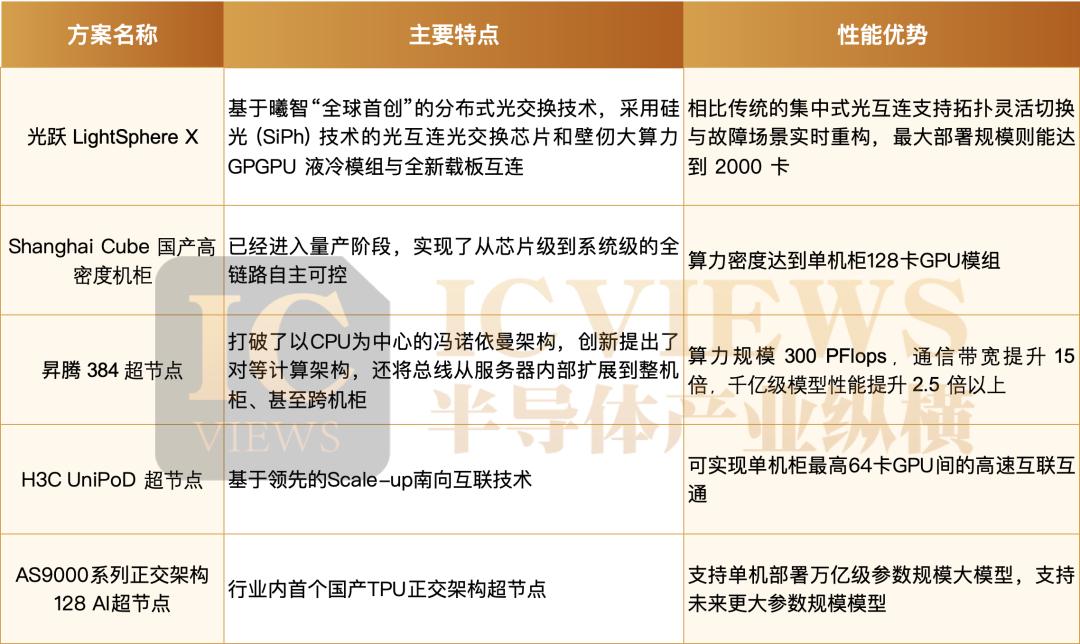
Group 1: Core Insights - The emergence of Huawei's Ascend 384 Super Pod signifies a potential shift towards domestic computing power in China, indicating that the era of domestic computing capabilities may have arrived [1][2] - The breakthroughs in single-chip computing power and large-scale cluster technology have been achieved, with notable advancements from companies like Huawei and Muxi [2][3] Group 2: Domestic Computing Power Developments - Huawei's Ascend 384 Super Pod features a total computing power of 300 PFlops, surpassing NVIDIA's similar system, which has a total computing power of 180 PFlops, making Huawei's performance 1.7 times greater [3] - The Ascend 384 Super Pod consists of 12 computing cabinets and 4 bus cabinets, achieving the industry's largest scale of 384-card high-speed bus interconnection, enhancing data transmission efficiency [2][3] - Other companies, such as Muxi and Hengwei Technology, are also making significant strides in the domestic computing power sector, with Muxi's new GPU product and Hengwei's TPU architecture [4][5] Group 3: International Expansion of Domestic Computing Power - The Chinese government emphasizes that artificial intelligence can be an international public good, promoting technology sharing to bridge global intelligence gaps, particularly for developing countries [8] - Companies like Feiteng are actively pursuing international markets, with plans to embed domestic chips into overseas infrastructure projects [7][8] Group 4: Advantages of Domestic Computing Power Going Global - The full-stack solution capability of Chinese computing power is maturing, allowing for the establishment of a replicable technology ecosystem that includes algorithm optimization and talent training [10] - China's complete industrial chain in AI provides a competitive edge in deploying solutions across various sectors, including consumer and business applications [11] Group 5: Significance of the Global Expansion of Domestic Computing Power - The global expansion of domestic computing power reduces reliance on Western technologies and demonstrates that domestic technologies can compete internationally [12] - The promotion of China's AI ethical framework as a potential international standard could reshape global governance in AI [12] - The initiative to build offshore data resource pools can enhance domestic model training by providing diverse data sources [14]

超节点,凭何成为AI算力“新宠”?
2 1 Shi Ji Jing Ji Bao Dao· 2025-07-31 01:00
Core Insights - The rapid development of large models driven by AI demands significant computational power, leading to the emergence of the "SuperPod" as a key solution for efficient AI training [1][2] - The transition from traditional computing architectures to SuperPod technology signifies a shift in the AI infrastructure competition from isolated breakthroughs to a system-level ecosystem [1][5] Industry Trends - The SuperPod, proposed by NVIDIA, represents a Scale Up solution that integrates GPU resources to create a low-latency, high-bandwidth computing entity, enhancing performance and energy efficiency [2][4] - The traditional air-cooled AI servers are reaching their power density limits, prompting the adoption of advanced cooling technologies like liquid cooling in SuperPod designs [2][5] Market Outlook - The market for SuperPods is viewed positively, with many domestic and international server manufacturers selecting it as the next-generation solution, primarily utilizing copper connections [2][4] - Major Chinese tech companies, including Huawei and Xizhi Technology, are actively developing SuperPod solutions, showcasing significant advancements in AI computing capabilities [5][6] Technological Developments - The ETH-X open standard project, led by the Open Data Center Committee, aims to establish a framework for SuperPod architecture, combining Scale Up and Scale Out networking strategies [4] - Companies like Moer Thread are building comprehensive AI computing product lines, emphasizing the need for efficient collaboration among large-scale clusters to enhance AI training infrastructure [6]
超节点,凭何成为AI算力“新宠”
2 1 Shi Ji Jing Ji Bao Dao· 2025-07-31 00:38
Core Insights - The rapid development of large models driven by the AI wave has created stringent demands for computing power, leading to the emergence of the "SuperPod" as a key solution in the industry [1][2] - The transition from traditional computing architectures to SuperPod technology signifies a shift towards high-performance, low-cost, and energy-efficient AI training solutions [1][2] Industry Trends - The SuperPod, proposed by NVIDIA, represents the optimal solution for Scale Up architecture, integrating GPU resources to create a low-latency, high-bandwidth computing entity [2] - The traditional air-cooled AI servers are reaching their power density limits, prompting the adoption of advanced cooling technologies like liquid cooling in SuperPod designs [2][5] - The market outlook for SuperPods is optimistic, with many domestic and international server manufacturers adopting this next-generation solution [2][4] Technological Developments - Current mainstream SuperPod solutions include private protocol schemes (e.g., NVIDIA, Trainium, Huawei) and open organization schemes, with copper connections becoming increasingly prevalent for internal communications [3][4] - The ETH-X open SuperPod project, led by the Open Data Center Committee, exemplifies the integration of Scale Up and Scale Out networking strategies [4] Company Initiatives - Chinese tech companies are actively investing in the SuperPod space, with Huawei showcasing its Ascend 384 SuperPod, which features the largest scale of 384-card high-speed bus interconnection [5] - Other companies like Xizhi Technology and Muxi have introduced innovative solutions, such as distributed optical interconnects and liquid-cooled GPU modules, enhancing the SuperPod technology landscape [5][6] - Moore Threads has established a comprehensive AI computing product line, aiming to create a new generation of AI training infrastructure, referred to as a "super factory" for advanced model production [6]
国产大模型“开源潮”持续,中兴通讯宣布开源6个自研大模型
Nan Fang Du Shi Bao· 2025-07-30 13:31
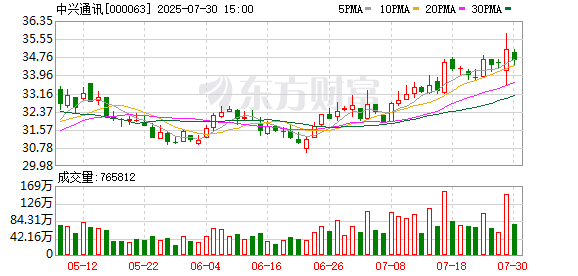
Core Insights - The domestic AI large model sector is experiencing a wave of open-source initiatives, with ZTE Corporation announcing the open-sourcing of 11 core technological achievements, including 6 self-developed large models and 5 industry datasets [2][4] - The NTele-R1-32B-V1 telecom model stands out, utilizing approximately 800 carefully selected samples for training, which offers a new possibility for reducing AI development costs through "small sample efficient training" [2][4] - The trend of open-sourcing is part of a broader shift in the domestic large model industry from pursuing "general" models to focusing on "vertical" applications, emphasizing the need for specialized knowledge in specific fields [6] Company Developments - ZTE's open-sourced models include two smaller parameter models (7B and 3B) that achieve reasoning capabilities comparable to larger models through "curriculum reinforcement learning" and "reject sample self-improvement" mechanisms, suitable for resource-constrained environments [3][4] - The TFCE dataset, designed for AI development in the telecom industry, includes over 1,800 functions and 917 Python questions, covering core technology applications from 4G to 6G [4] - ZTE's initiatives are part of the "Renewal Community," a national-level AI open-source platform aimed at promoting an autonomous AI ecosystem in China [4] Industry Trends - The competition in AI technology is evolving from a focus on individual model capabilities to a comprehensive competition that includes hardware-software adaptation and developer ecosystems [4][6] - The open-source movement is seen as a key pathway to building an autonomous technology system, with high-quality domestic open-source models viewed as crucial for activating the domestic AI chip industry chain [6] - The collaboration model of "national team + main players" is emerging as a new trend in the development of the domestic AI industry, facilitating innovation and accelerating technology iteration and application [6]

国产大模型与AI芯片联盟,意义有多重大?
Guan Cha Zhe Wang· 2025-07-30 12:03
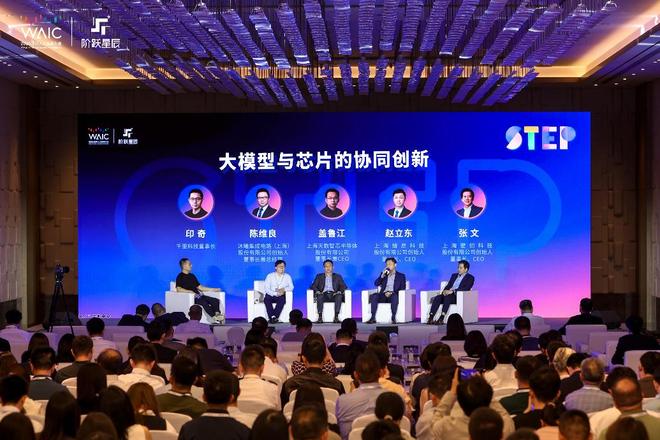
Core Insights - The establishment of the "Model-Chip Ecological Innovation Alliance" by ten domestic large model, AI chip, and computing acceleration companies marks a significant step towards adapting domestic AI chips from the development stage of large models, opening new avenues for collaboration in the domestic chip industry [1][3][4] - The release of the new generation multimodal reasoning large model Step 3 by Jumpspace, which boasts a remarkable adaptation capability to domestic chips, achieving inference efficiency up to 300% compared to DeepSeek-R1 on domestic chips [3][8] - The trend of increasing reliance on domestic computing power is driven by supply risks associated with NVIDIA chips, prompting more users and computing power vendors to shift towards domestic alternatives like Huawei Ascend [4][6][10] Industry Developments - The "Model-Chip Ecological Innovation Alliance" includes major players such as Huawei Ascend, Mu Xi, and others, indicating a strong collaborative effort within the industry [3][14] - Jumpspace's proactive approach in integrating model development with hardware capabilities aims to address inefficiencies in adapting models to chips, which traditionally lagged behind model iterations [10][11] - The new attention mechanism architecture, Multi-Matrix Factorization Attention (MFA), significantly reduces key-value cache usage during inference, making it more compatible with domestic chips [13] Market Dynamics - Jumpspace anticipates a revenue of 1 billion yuan for the year, showcasing its strong market position compared to competitors like Zhipu AI, which is projected to generate 200-300 million yuan in revenue but face losses of up to 2 billion yuan [22] - The rapid application of multimodal models is seen as a key growth area, with Jumpspace already collaborating with major domestic smartphone manufacturers and automotive companies to enhance user experiences [23] Regional Insights - Shanghai's dominance in the "Model-Chip Ecological Innovation Alliance" reflects its robust industrial foundation and emphasis on soft-hard integration, supported by local semiconductor manufacturing capabilities [24][25] - The city's AI industry has seen significant growth, with over 24,733 AI companies registered in 2024, marking a 5.1% increase from the previous year [24]

Agent爆发、应用开花、算力赶集,这届WAIC见证“生态起来了”
Di Yi Cai Jing· 2025-07-30 10:32
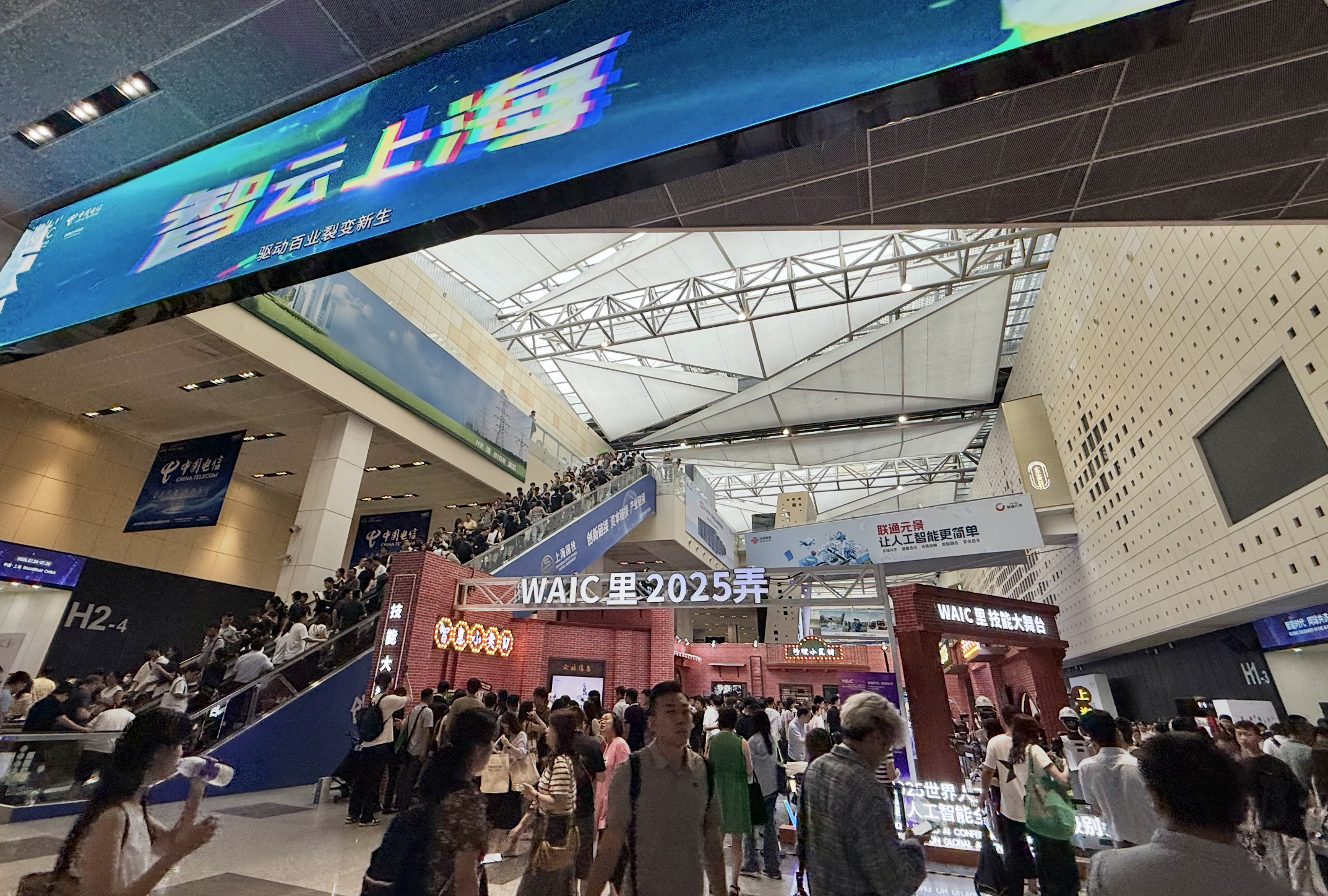
人潮涌动的展馆、遍地开花的应用、马力全开的算力,大模型行业水温变了。 刚刚过去的WAIC(世界人工智能大会),是近些年里最热闹的一届。开幕前几日全场门票就已售罄,在二手市场,WAIC三日通票被炒至2000多元一张, 单日票被炒至600元以上,是原价的四倍。展会期间,各大AI群里不断有人在求票。 为期四天的展会,35万人次线下涌入,展览面积首次突破7万平米,扩增了40%,800余家企业带来3000余项展品,是往年的一倍。提及大会的热闹,一位参 展商对第一财经表示,去年都是大模型厂商为主,主要展出各种模型、比拼技术参数,离普通人太远,但今年都是各种应用了,很多家长还带着小孩来学 习。 蜜度首席技术官刘益东观察到,开源生态正在带动整个AI生态的繁荣。现场很多厂商都是做Agent(智能体)和应用的,而这些反过来又带动了基础设施和 算力,算力厂商的展位更大了。 九章云极DataCanvas公司AI首席科学家缪旭感慨," C端的人特别多,AI的渗透率越来越高,前几年很多人不懂,但现在每个人都能聊上几句。"去年他们担 心应用落地慢,现在反而担心算力供不应求。 应用向下"扎根" 有很多企业是第一次来WAIC参展,一个显著特征 ...
国产AI算力的“阶跃”时刻
Guan Cha Zhe Wang· 2025-07-30 09:26
Core Insights - The event highlighted the collaboration among leading domestic computing chip companies and the launch of the new multi-modal reasoning model Step 3 by Jumpshare Star, showcasing the strong adaptability of domestic chips [3][5][12] - The establishment of the "Model-Chip Ecological Innovation Alliance" aims to synchronize product development among hardware manufacturers and enhance strategic cooperation [12][19] - Jumpshare Star's revenue guidance for the year is projected to reach 1 billion yuan, indicating a strong market position compared to competitors [13][14] Group 1: Model and Chip Integration - The Step 3 model demonstrates a 300% inference efficiency improvement on domestic chips compared to DeepSeek-R1, and over 70% improvement in distributed inference on NVIDIA Hopper architecture [6][8] - Jumpshare Star's approach integrates model development with hardware characteristics from the outset, addressing the inefficiencies of traditional development cycles [8][9] - The new multi-matrix factorization attention (MFA) architecture significantly reduces key-value cache usage by 93.7%, making it more compatible with domestic chips [11] Group 2: Market Position and Strategy - Jumpshare Star has released over ten multi-modal models in the past year, positioning itself favorably in a market where multi-modal applications are increasingly sought after [15][16] - The company has established significant partnerships with leading domestic smartphone manufacturers and automotive companies, enhancing its market reach [16] - The rapid application of multi-modal models is expected to create a feedback loop that drives further model improvements [16] Group 3: Shanghai's Role in AI Development - Shanghai hosts a significant number of AI companies, with 24,733 registered AI enterprises in 2024, reflecting a 5.1% growth from the previous year [18] - The city benefits from a robust industrial ecosystem, including major wafer fabs and advanced packaging capabilities, which support GPU companies [18][19] - Shanghai's state-owned capital is actively investing in AI startups, indicating strong governmental support for the industry [18]