
越疆科技

Search documents
从世界工厂到科创中心 折射深圳创新“三级跃迁”
Zheng Quan Shi Bao· 2025-08-25 18:21
Group 1 - The "Tiangong" robot, developed by a team associated with the Shenzhen-listed company UBTECH, won the gold medal in the 100-meter sprint at the 2025 World Humanoid Robot Games, marking a significant advancement in robotic capabilities [2] - Shenzhen's innovation journey spans 45 years, evolving from low-end manufacturing to a thriving ecosystem of diverse industries, with an average of approximately 580 patents granted daily [2][11] - The establishment of the Shenzhen Special Economic Zone in 1980 initiated a focus on industrial development, laying the groundwork for future innovation by attracting capital, technology, and labor [3][4] Group 2 - The "Three Comes and One Compensation" model was pivotal in building Shenzhen's industrial base, allowing foreign businesses to provide equipment and materials while local companies handled production [3][4] - By 1994, enterprises operating under the "Three Comes and One Compensation" model accounted for one-third of Guangdong's total, highlighting Shenzhen's role as a burgeoning "world factory" [4] - Companies like China International Marine Containers (CIMC) exemplify the shift from foreign technology reliance to independent innovation, becoming a global leader in container production by 1996 [5] Group 3 - Shenzhen's industrial landscape evolved to include a diverse range of sectors, with significant contributions from state-owned enterprises, enhancing the region's technological capabilities [6][7] - The transition from manufacturing to brand creation marked a second leap in innovation, with local companies like Huawei and DJI establishing themselves as global players [7][8] - Shenzhen's complete industrial chain has attracted high-tech enterprises, fostering an environment conducive to innovation and rapid product development [8][9] Group 4 - The current innovation ecosystem in Shenzhen resembles a "tropical rainforest," where companies collaborate and thrive together, supported by a robust technological infrastructure [10][11] - The government plays a crucial role in nurturing this ecosystem, focusing on creating favorable conditions for innovation through various initiatives, including the development of low-altitude infrastructure [11] - In the first five months of 2025, Shenzhen granted a total of 87,152 patents, reflecting its transformation from a manufacturing hub to a center of technological innovation [11][12]


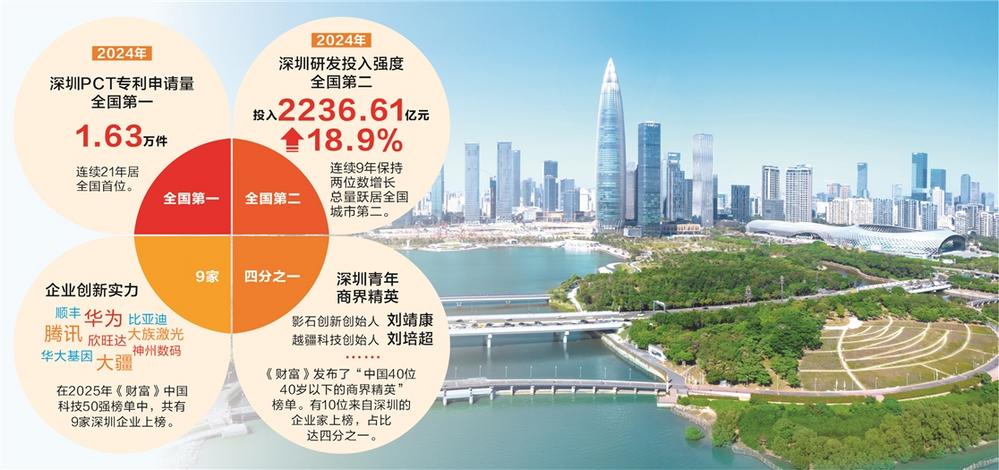
深圳最动人的风景,是年轻人眼中闪烁的光
Zheng Quan Shi Bao· 2025-08-25 18:17
Core Insights - Shenzhen is recognized as a hub for young entrepreneurs, with an average citizen age of 32.5 years, making it the youngest first-tier city in China [1] - The city has produced a significant number of young business leaders, with 10 out of 40 individuals on the "Fortune" list of business elites under 40 coming from Shenzhen, showcasing the strength of its entrepreneurial ecosystem [1] Group 1: Entrepreneurial Environment - The entrepreneurial spirit in Shenzhen is characterized by a supportive ecosystem that includes industry chains, funding, talent, and favorable policies, allowing innovative ideas to flourish [1] - In 2024, Shenzhen established 561,600 new business entities, bringing the total to over 4.4 million, maintaining the highest density of entrepreneurship among major cities in China, with 244 businesses per 1,000 people [3] Group 2: Success Stories - Liu Jingkang, a representative of young entrepreneurs, founded Ying Shi Innovation in Shenzhen in 2015, overcoming supply chain challenges and achieving a global market share of 1 in the panoramic camera sector by 2018 [2] - Liu Peichao, founder of Yuejiang Technology, also faced similar supply chain issues but found solutions in Shenzhen, leading to the company's listing on the Hong Kong Stock Exchange in December 2024 as the first stock of collaborative robots in China [2] Group 3: Innovation and Impact - The stories of Liu Jingkang and Liu Peichao reflect a broader trend of young entrepreneurs in Shenzhen who are reshaping technology and driving innovation, contributing to the city's reputation as a cradle for young business leaders [3] - Shenzhen's journey over 45 years illustrates the power of a city that embraces openness and innovation, resonating with the dreams of individuals and creating transformative impacts on a global scale [3]

深圳最动人的风景 是年轻人眼中闪烁的光
Zheng Quan Shi Bao· 2025-08-25 18:13
Core Insights - Shenzhen is recognized as a hub for young entrepreneurs, with an average citizen age of 32.5 years, making it the youngest first-tier city in China [1] - The city has seen a significant number of young business leaders, with 10 out of 40 individuals on the "Fortune" list of business elites under 40 coming from Shenzhen, showcasing the strength of its young entrepreneurs [1] Group 1: Entrepreneurial Environment - The entrepreneurial ecosystem in Shenzhen supports innovation with a complete supply chain, funding, talent, and favorable policies, allowing dreams to flourish [1] - In 2024, Shenzhen established 561,600 new business entities, bringing the total to over 4.4 million, leading the nation in both total and density of entrepreneurial activities [3] - The city has a remarkable entrepreneurial density, with 244 business entities per 1,000 people, indicating that nearly one in four individuals is an entrepreneur [3] Group 2: Success Stories - Liu Jingkang, a representative of young entrepreneurs, moved to Shenzhen in 2015 and led his company, Yingshi Innovation, to surpass major international competitors in the panoramic camera market by 2018, achieving the top global market share [2] - Liu Peichao, founder of Yujian Technology, faced similar supply chain challenges and moved to Shenzhen in 2015, where his company became the first listed collaborative robot company in China by December 2024, growing from a five-person team to over 500 employees [2] - The stories of Liu Jingkang and Liu Peichao reflect the broader trend of young entrepreneurs thriving in Shenzhen, contributing to the city's reputation as a cradle for innovation [3]
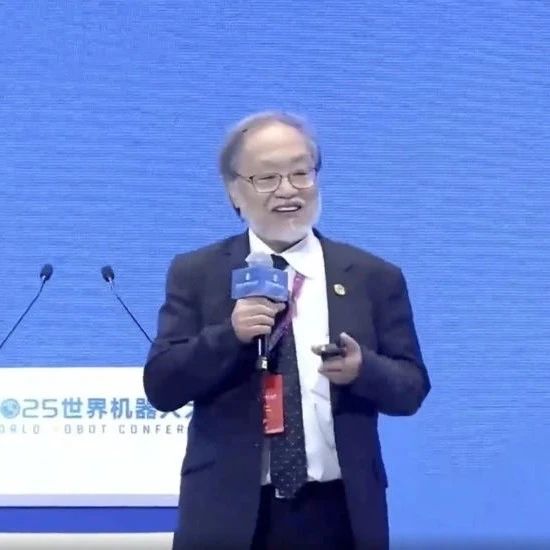
【WRC专家观点】中国科学院外籍院士、日本工程院院士福田敏男:《日本具身智能的发展》
机器人圈· 2025-08-25 12:00
Core Viewpoint - The article discusses the advancements and future potential of robotics and embodied intelligence, emphasizing the importance of collaboration between humans and machines to enhance various sectors, including healthcare and disaster response [1][10]. Group 1: Event Overview - The 2025 World Robot Conference will be held from August 8 to 12 in Beijing, featuring a main forum and 31 series of activities with 416 experts and representatives sharing insights on new technologies and applications [1]. Group 2: Embodied Intelligence - Embodied intelligence is defined as the ability of robots to not only perform tasks but also to perceive and understand their environment, marking a shift from traditional AI definitions [8]. - The development of embodied intelligence emphasizes the need for robots to adapt to complex environments and possess cognitive abilities [8][9]. Group 3: Technological Advancements - Significant progress has been made in nanorobotics over the past 40 to 50 years, with ongoing research aimed at making robots more intelligent and capable [4][5]. - The integration of bionic elements into robotic systems is highlighted, with a focus on developing distributed autonomous robotic systems that can operate within the human body [6][7]. Group 4: Human-Robot Collaboration - The article stresses the importance of human-robot collaboration, suggesting that robots should not only assist in repetitive tasks but also provide solutions in critical situations [9][10]. - A vision for 2050 is presented, where robots will possess the ability to autonomously identify and solve problems, significantly enhancing their role in society [10][11]. Group 5: Future Prospects - The potential for companion and caregiving robots is discussed, with the expectation that they will be able to support humans throughout their lives, including during emergencies [10][12]. - The concept of "soft robots" is introduced, which combines flexibility and adaptability with traditional robotic capabilities, aiming for a balanced design approach [11][12].
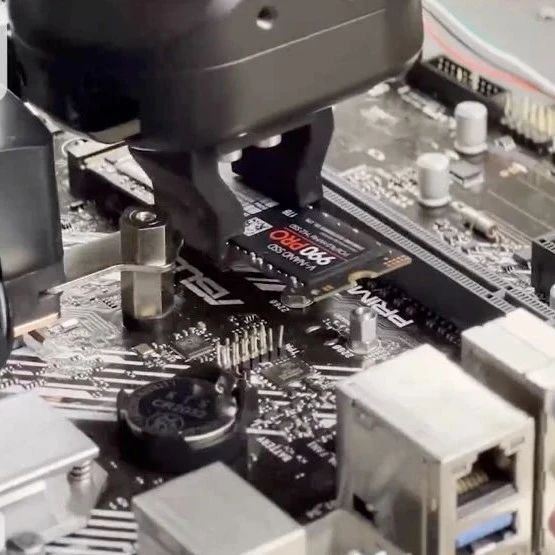
Science Robotics 通过人机交互强化学习进行精确而灵巧的机器人操作
机器人圈· 2025-08-22 09:02
Core Insights - The article discusses the challenges and advancements in robotic manipulation, particularly focusing on the potential of Reinforcement Learning (RL) to enhance robotic skills and performance in real-world applications [2][3][4]. Group 1: Challenges in Robotic Manipulation - Robotic manipulation remains a significant challenge, with traditional methods requiring extensive manual design and large-scale data collection, limiting their deployment in real-world scenarios [2]. - RL offers a promising alternative by enabling robots to autonomously acquire complex skills through interaction, but issues related to sample efficiency and safety hinder its full potential in real environments [3]. Group 2: HIL-SERL Framework - The UC Berkeley BAIR lab introduced a revolutionary RL framework called Human-in-the-Loop Sample-Efficient Robotic Reinforcement Learning (HIL-SERL), which integrates multiple components to effectively train vision-based RL strategies for general robotic manipulation [4]. - HIL-SERL achieves remarkable performance, reaching a 100% success rate across tasks with only 1-2.5 hours of training, significantly outperforming baseline methods that average below 50% success [4][12]. Group 3: Methodology and Results - To address optimization stability, a pre-trained visual backbone is utilized for policy learning, while a sample-efficient non-policy RL algorithm is employed to manage sample complexity, combining human demonstrations and corrections [5]. - The system's ability to learn from human corrections is crucial for improving performance, especially for challenging tasks that are difficult to learn from scratch [5][12]. - The tasks tackled include complex operations like assembling furniture and flipping objects in a pan, demonstrating the system's robustness even under external disturbances [7][11]. Group 4: Performance Metrics - The trained RL strategies show a 101% increase in average success rate and a 1.8 times reduction in cycle time compared to traditional imitation learning methods, indicating RL's superior capability in real-world training scenarios [12][21]. - The system's design allows for dual-arm coordination and the execution of intricate tasks, showcasing its flexibility across various operational contexts [21].
【WRC专家观点】欧洲机器人协会副主席尤哈·罗宁:《重建整个欧洲机器人市场》
机器人圈· 2025-08-20 09:59
Core Viewpoint - The article discusses the challenges and opportunities in the European robotics market, emphasizing the need for collaboration, investment, and innovation to enhance the sector's competitiveness globally [1][3][11]. Group 1: Event Overview - The 2025 World Robot Conference will be held from August 8 to 12 in Beijing, featuring a main forum and 31 series of activities with 416 experts and representatives sharing insights on new technologies and applications [1]. - Juha Röning, Vice President of the European Robotics Association, will present on rebuilding the European robotics market [1][3]. Group 2: Challenges in the Robotics Industry - The robotics industry faces significant challenges, including the need for private investment in Europe to match the levels seen in China and the U.S. [4]. - Issues such as global economic conditions, supply chain problems, and complex IP management are highlighted as barriers to growth [5][11]. Group 3: Strategic Goals and Collaboration - A comprehensive strategy is necessary to enhance the economic ecosystem, requiring collaboration across various sectors to build a robust system [6][14]. - The establishment of the euRobics organization aims to promote cooperation in research and industry, facilitating knowledge sharing and resource integration [7][13]. Group 4: Market Development and User Engagement - The article stresses the importance of user involvement in product development to ensure that robots meet market needs [8][11]. - It highlights the necessity of lowering barriers to robot deployment while ensuring safety and compliance with IP regulations [8][9]. Group 5: Future Directions and Innovations - The integration of AI with robotics is crucial for future advancements, although challenges remain in understanding physical laws and ensuring effective collaboration [10][16]. - The article calls for increased investment in automation and talent development to drive innovation in robotics and related fields [5][12].

最高5000万元!广东将对这些AI与机器人项目进行奖补
机器人圈· 2025-08-19 10:07
Core Viewpoint - Guangdong Province is accelerating the development of the artificial intelligence and robotics industry by providing financial support for key projects, with individual projects eligible for up to 50 million yuan in subsidies [1]. Group 1: Financial Support for Key Projects - The implementation details specify that funding will support four major project categories, including the construction of manufacturing innovation centers, cultivation of quality enterprises, establishment of benchmarks for industrial intelligence applications, and development of open-source ecosystems [1]. - The funding will be allocated from the provincial fiscal budget and is part of the previously announced policies to promote innovation in the AI and robotics sectors [1]. Group 2: National-Level Manufacturing Innovation Centers - Guangdong will support the establishment of national and provincial manufacturing innovation centers in the AI and robotics fields, with subsidies covering up to 40% of the total cost of newly purchased R&D equipment (excluding tax) [3]. - For provincial centers, the maximum subsidy is capped at 1 million yuan, while national centers can receive up to 5 million yuan [3]. Group 3: Champion Enterprises - The province aims to stimulate innovation by supporting the cultivation of high-quality enterprises in the AI and robotics sectors, specifically targeting "specialized, refined, and innovative" small giants and national manufacturing champions recognized by the Ministry of Industry and Information Technology [5]. - The financial support includes a one-time subsidy of up to 300,000 yuan for national champions and varying amounts for small giants based on their geographical location [5]. Group 4: AI Empowerment in New Industrialization - Guangdong will provide support for benchmark projects that integrate AI into the industrial economy, with subsidies covering up to 30% of the investment costs (excluding tax) [7]. - The minimum subsidy for these projects is set at 3 million yuan, with a maximum of 8 million yuan [7]. Group 5: Open Source Ecosystem Development - The province will also support the operation of open-source communities and ecosystems, with eligibility for organizations that build influential open-source platforms in the AI or robotics fields [10]. - The funding will cover up to 30% of the verified operational costs from the previous year, with a maximum subsidy of 8 million yuan [10].
中国人工智能专利数量占全球总量的60%
机器人圈· 2025-08-19 10:07
Group 1 - China's artificial intelligence patent quantity accounts for 60% of the global total, indicating a significant advancement in AI capabilities [2] - The data industry in China is rapidly developing, with the number of data enterprises expected to exceed 400,000 by 2024, and the industry scale reaching 5.86 trillion yuan, a 117% increase compared to the end of the 13th Five-Year Plan [2] - By June 2025, over 35,000 high-quality datasets have been established in China, with a total volume exceeding 400PB, driving demand for data transactions [2] Group 2 - AI is viewed as a tool for extending human creativity rather than replacing it, marking a scientific revolution that breaks down disciplinary barriers [3] - Researchers are encouraged to adapt to AI-driven changes in scientific research paradigms to avoid being left behind [3] Group 3 - Huawei launched the Unified Cache Manager (UCM), an AI inference acceleration suite that significantly reduces inference costs and improves processing speed [4] - The UCM technology can reduce the first token latency by up to 90% and enhance throughput in long-sequence scenarios by 2 to 22 times [4] Group 4 - NVIDIA introduced new world models and libraries for robotics, including the Cosmos Reason model with 700 million parameters, designed for physical AI and robotics applications [5][6] Group 5 - Apple is accelerating its AI hardware development, planning to launch a desktop robot and a smart speaker with a screen, which could redefine home interaction scenarios [7] - The desktop robot is designed as a "virtual companion" with capabilities in AI, robotics, and computer vision, while the smart speaker will feature enhanced AI assistant functionalities [7]
英特尔副总裁李映:未来AI创新应用正朝着五个方向加速演进
机器人圈· 2025-08-19 10:07
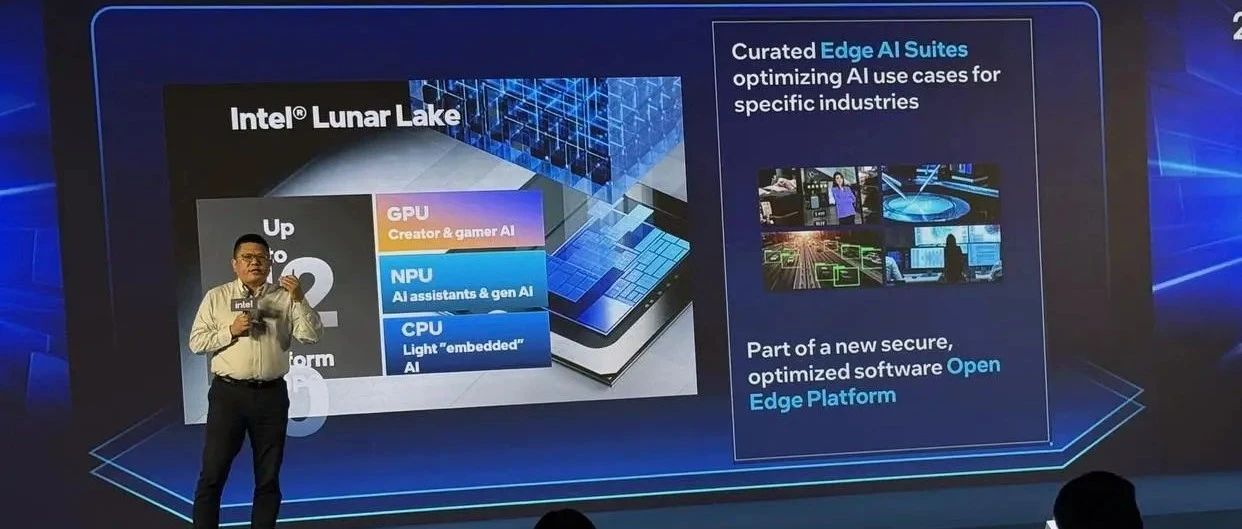
Core Viewpoint - The article discusses five major trends in AI innovation applications as summarized by Intel's Vice President, Li Ying, during the 2025 Intel AI Innovation Competition awards ceremony held in Shenzhen [1][2]. Group 1: Trends in AI Innovation Applications - **Cloud-Edge-End Collaboration**: The collaboration among cloud, edge, and terminal devices is becoming more refined, with cloud handling large model training and global decision-making, edge focusing on localized real-time computing, and terminal devices processing privacy data locally through lightweight models [3]. - **Increased Importance of Data Security and Privacy**: Data security and privacy protection have become core requirements in AI development, with local inference rising, allowing sensitive data to remain on-site rather than being uploaded to the cloud [3]. - **Complementary Ecosystem of Traditional AI and Large Models**: Traditional AI's specialization and large models' generalization capabilities are merging, with large models leading in tasks like natural language understanding while traditional AI focuses on specific vertical applications [3]. Group 2: User Experience and Development Trends - **Humanized and Personalized Experience**: AI applications are shifting from merely functional to emotionally resonant and personalized services, utilizing emotional computing and multimodal interactions to cater to individual user needs [4]. - **Lowering Development Barriers**: The rise of low-code/no-code platforms and pre-trained models is facilitating a new era of "全民AI创新" (全民 AI Innovation), allowing developers to implement solutions with minimal data adjustments, significantly reducing development cycles [4].

深圳:探路者 | 《财经》封面
Cai Jing Wang· 2025-08-18 12:08
Economic Performance - Shenzhen's GDP reached 1.832226 trillion yuan in the first half of the year, marking a 5.1% year-on-year growth despite various challenges such as US-China trade tensions and domestic economic pressures [1][2] - The establishment of the Shenzhen Special Economic Zone 45 years ago has led to a GDP increase from 2.7 million yuan to nearly 4 trillion yuan, representing a growth of over 13,000 times [6] Reform and Innovation - The release of the "Opinions" by the Central Committee and the State Council aims to deepen reform and expand openness in Shenzhen, focusing on education, technology, and talent integration [2][3] - Shenzhen is encouraged to implement new reform measures and innovative experiments to enhance its role as a key engine in the Guangdong-Hong Kong-Macao Greater Bay Area [2][3] Infrastructure and Connectivity - The interconnection of metro systems between Shenzhen and Dongguan reflects the rapid urban integration and infrastructure development in the region [4] - Shenzhen's proactive planning in modern infrastructure has positioned it as a crucial gateway for trade and economic activities in China [9] Industry Development - Shenzhen has established a complete industrial chain in the new energy vehicle sector, with over 30% of national enterprises in this field having a presence in Shenzhen [16] - The city is also a hub for the robotics industry, with significant growth in both industrial and service robots, showcasing a robust ecosystem of innovation and production [24][25] Talent and Investment - Shenzhen's total talent pool has surpassed 7 million, with over 400,000 skilled workers and more than 22,000 returnees from studying abroad, contributing to its innovation-driven economy [22] - The city has seen a substantial increase in venture capital investments, with over 97 billion yuan invested in more than 20,000 projects [29] Challenges and Future Outlook - The competitive landscape is intensifying, with concerns about maintaining Shenzhen's unique advantages amid rising competition from other cities [20][28] - The city is tasked with balancing its historical successes with the need for continuous innovation and adaptation to global market changes [33][34]
