商汤科技

Search documents
DeepSeek流量暴跌,全球AI霸主地位遇滑铁卢;90后开发者6个月狂赚8000万;人形机器人A轮5亿融资|混沌AI一周焦点
混沌学园· 2025-07-11 07:55
Core Trends - The "Chaos AI Business Practical National Tour" has successfully commenced, aiming to ignite practical applications of AI across 20 innovative cities in China, with events already held in Changsha and Nanchang [1][2] - The AI application landscape is evolving with lower entry barriers due to open-source models and contextual engineering, enabling disruptive innovations that empower ordinary individuals [2] - AI penetration in vertical industries is increasing, particularly in pharmaceuticals, digital healthcare, and live service sectors, indicating potential transformative changes [2] AI Applications - Feishu has launched a comprehensive upgrade of its AI product matrix, including knowledge Q&A and AI meetings, along with the industry's first AI application maturity standard to facilitate enterprise AI adoption [3][4] - Google DeepMind's spinoff, Isomorphic Labs, is set to begin human trials for its AI-assisted cancer drug, marking a significant milestone in the pharmaceutical industry [12][13] Investment and Financing - Star Sea Map has raised over $100 million in its A4/A5 financing rounds, with a total pre-A and A round financing of nearly 1.5 billion yuan, reflecting strong capital interest in the embodied intelligence sector [6][7] - TARS, founded by former Huawei employees, completed a record $122 million angel round financing, showcasing investor confidence in embodied intelligence technologies [13] - Cloud Deep has secured nearly 500 million yuan in financing, positioning itself as a leader in the quadruped robot field with over 600 industry projects [14] - Star Motion Era has raised nearly 500 million yuan in its A round financing, emphasizing breakthroughs in humanoid robot technology and significant global demand [16] Business Cases - Wix's acquisition of AI startup Base44 for $80 million highlights the trend of AI enabling entrepreneurship, with Base44 allowing users to generate full-stack application code through natural language [7][8] - The AI personal finance assistant, Kapi Accounting, has gained over one million users in six months, indicating a shift in personal finance management through AI [21][22] Market Insights - The digital human market in China is projected to reach 30 billion yuan by 2025, with significant cost reductions in enterprise live streaming [19][20] - The rise of "contextual engineering" in Silicon Valley is reshaping AI model development, enhancing efficiency and application quality [18][20] Technology Developments - Baidu has open-sourced ten major models, significantly lowering the barriers for AI development and enhancing multi-modal capabilities [21] - The introduction of the Star Stream Agent, designed for Chinese designers, aims to revolutionize the design industry with automated processes and multi-modal content creation [24]


AI六小虎,胜利大逃亡?
投中网· 2025-07-09 02:12
Core Viewpoint - The AI "Six Little Tigers" are facing unique challenges as they prepare for IPOs, with varying degrees of readiness and market conditions impacting their prospects [3][9]. Group 1: Market Dynamics - The AI landscape is evolving rapidly, with major players like Alibaba and ByteDance pushing the boundaries, forcing smaller companies to adapt quickly [4][20]. - The "Six Little Tigers" are experiencing pressure from larger firms, which have raised their valuations and created a challenging environment for smaller companies to secure funding or acquisitions [20][21]. Group 2: IPO Readiness - Two companies, Zhipu and MiniMax, are leading the charge towards IPO, while Moonlight is also reportedly preparing for a listing [7][9]. - Recent policy changes in Hong Kong and the Science and Technology Innovation Board have made it easier for early-stage tech companies, including AI firms, to go public [11][12][13]. Group 3: Individual Company Challenges - Baichuan Intelligence and Zero One Wanwu are showing signs of lagging behind, with difficulties in their IPO pursuits due to overexpansion and competition [15]. - Zhipu is seen as the most prepared for an IPO, having secured significant funding and a clear strategy, but faces uncertainties due to market conditions [16][17]. - MiniMax is focusing on overseas markets to boost revenue but risks being categorized as a software company, limiting its growth potential [17]. Group 4: Long-term Viability - The long-term success of the "Six Little Tigers" post-IPO will depend on their technological advantages, commercialization efficiency, and investor patience [27][28]. - Historical precedents from the "Four Little Dragons" in AI highlight the risks of failing to convert technological investments into profitable business models, with significant losses reported [29][30][31].

MiniMax逆着商汤过河
Sou Hu Cai Jing· 2025-07-04 01:21
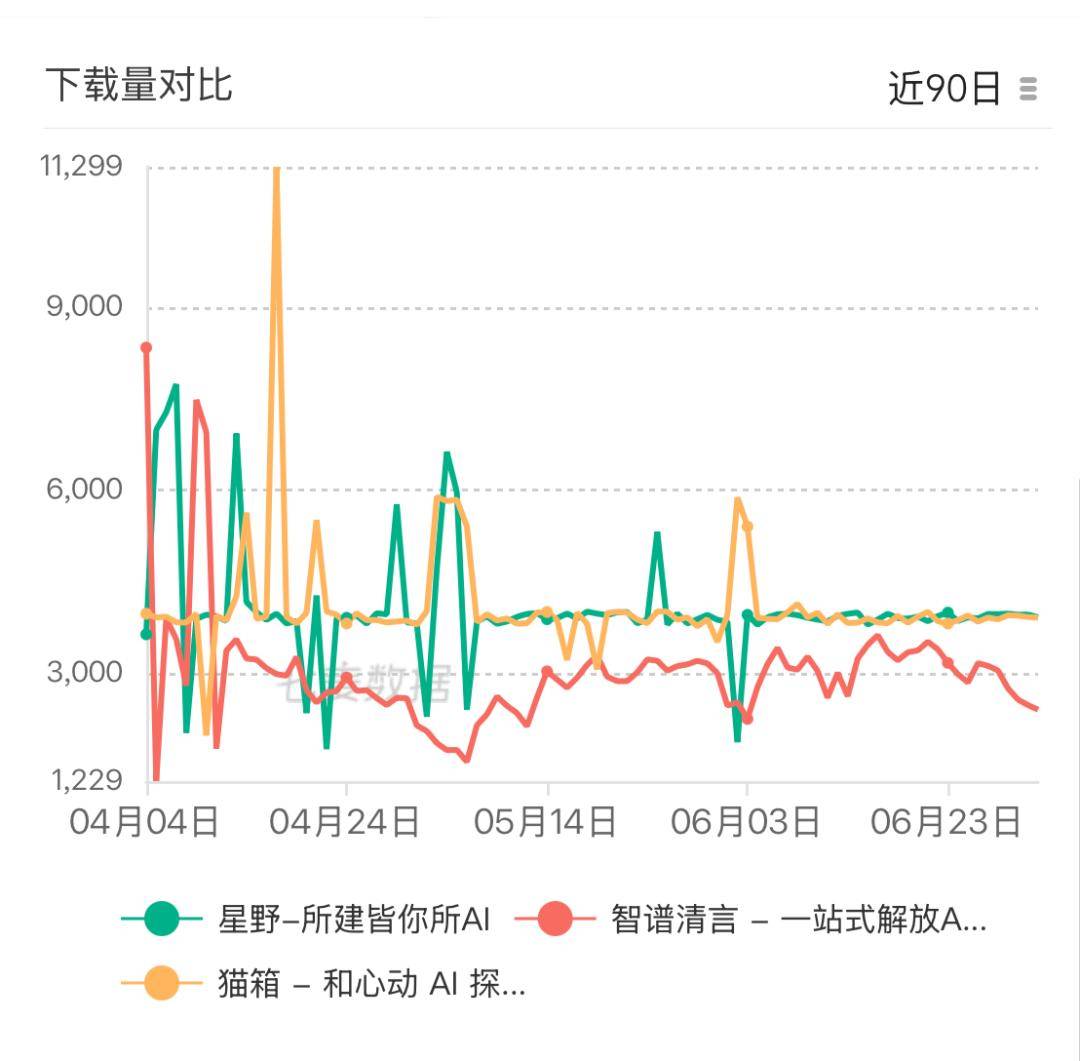
Core Viewpoint - The emergence of DeepSeek has shifted the dynamics of the AI startup landscape, leading to significant changes among the "AI Six Tigers," with some companies reducing investment, cutting operations, or seeking IPOs [1][2]. Group 1: Company Developments - MiniMax is actively pursuing an IPO, positioning itself as a unique entity among the "AI Six Tigers" by focusing on consumer-oriented products, contrasting with the more enterprise-focused models of its predecessors [2][11]. - Zhiyu's core business is primarily B2B, providing enterprise-level API services, while MiniMax emphasizes consumer applications, indicating a strategic divergence in their business models [10][11]. - The founders of MiniMax, including Yan Junjie, previously held significant positions at SenseTime, which influences their approach and strategy in the AI market [3][4]. Group 2: Market Positioning - MiniMax's product offerings, such as the AI applications "Hailuo" and "Xingye," are designed to cater to consumer needs, aiming for higher user engagement and market penetration compared to traditional B2B models [10][11]. - The competitive landscape shows that MiniMax's consumer products are gaining traction, with its app "Xingye" ranking 25th in the AI product download list, indicating strong market interest [7][11]. - The shift towards consumer applications is seen as a strategic advantage, allowing MiniMax to potentially achieve faster user adoption and revenue generation compared to its B2B-focused counterparts [11][12]. Group 3: Lessons Learned - Yan Junjie’s experience at SenseTime has shaped his understanding of market dynamics, particularly the importance of balancing technology advancement with commercialization strategies [6][11]. - MiniMax's approach to technology emphasizes open-source models and flexible asset management, contrasting with SenseTime's more traditional asset-heavy strategy [12]. - The lessons learned from SenseTime's market performance, particularly regarding the management of investor expectations and market patience, are reflected in MiniMax's proactive IPO strategy [7][11].
第四期全球名校“Z世代”领袖连线活动举办 中外青年共话AI技术应用
Huan Qiu Wang Zi Xun· 2025-07-02 03:25
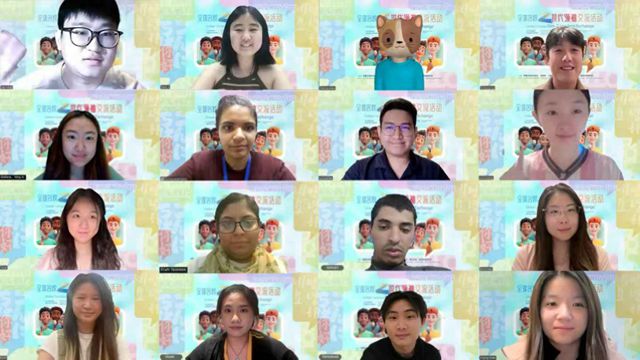
Group 1: Event Overview - The fourth global elite "Generation Z" leaders online event was successfully held, gathering over 40 youth representatives from 15 renowned universities, including Shanghai Jiao Tong University and the University of California, Berkeley, to discuss "AI technology and future applications" [1][4] Group 2: AI Technology Insights - Yang Jian, a former core researcher from Alibaba's Tongyi team, highlighted the breakthrough in code intelligence technology, emphasizing that AI models have democratized programming, allowing code generation through natural language descriptions [4] - Echo Zhang from University College London stated that the core value of AIGC (AI-generated content) lies in "co-creation between humans and algorithms," illustrating its impact on personalized education and medical diagnostics with examples like Google DeepMind's "MedGemma" model [5] - Erum Yasmeen from Shanghai Jiao Tong University referenced a World Economic Forum statistic predicting that 85 million jobs will be displaced by AI, while new jobs will be created, stressing the importance of adapting faster than technology [9][10] Group 3: Educational Technology Evolution - Hua Xiaowen from Shanghai Jiao Tong University reviewed the evolution of educational technology, advocating that technology should enhance learners' individual expression and multiple intelligences rather than replace teachers [7] - The discussion included the introduction of AI courses in countries like Finland, encouraging students to engage with global issues such as sustainable development goals [7] Group 4: Data Analysis and AI Development - Duan Yuqing from the University of Auckland shared a thought-provoking perspective that "dirty data" can sometimes be more valuable than "clean data" for training AI models, particularly in financial fraud detection [12]
福布斯中国“人工智能科技企业TOP 50”发布,创新集群阶梯崛起
Zheng Quan Shi Bao Wang· 2025-06-27 14:39
Core Insights - The 2025 Forbes China "Top 50 AI Technology Companies" list highlights the diverse technological characteristics of selected companies, showcasing a significant presence of hard technology and internationalization, particularly in Shanghai [1][2]. Group 1: Regional Highlights - Shanghai leads with 21 companies on the list, focusing on sectors like new energy vehicles, biomedicine, robotics, and semiconductor integrated circuits [2]. - Beijing has 14 companies, with notable contributions from Cambrian's AI chips and Zhipu AI's general models, reflecting the region's emphasis on technological originality [2]. - The central region, particularly Wuhan, shows growing innovation with 9 companies, including Landing's AI cervical cancer screening system serving over 2,000 medical institutions [2][3]. Group 2: Industry Growth and Structure - Wuhan's AI industry has experienced a compound annual growth rate exceeding 40% over the past five years, with a core industry scale surpassing 70 billion [3]. - The AI industry in China is structured like a pyramid, with major players at the top, "invisible champions" in the middle, and numerous emerging companies at the base, indicating a vibrant ecosystem [4][5]. Group 3: Patent and Innovation Landscape - The top 50 companies collectively hold over 260,000 patents, with the top five companies accounting for 90% of the total, while the AIGC sector sees a 45% annual growth in software copyrights, primarily from small to medium enterprises [4]. - The coexistence of large established firms and agile startups reflects the unique vitality of the AI industry, which requires both long-term foundational research and rapid scene innovation [4][5]. Group 4: Investment Trends - Among the selected companies, 20 are publicly listed, indicating that 25% of the firms are established, while 75% are non-listed, suggesting that innovation is not monopolized by large corporations [5]. - The investment logic has shifted, focusing on the commercialization roadmap rather than just technological concepts, as seen in companies like Yuanli Wuxian and Blue Technology [5]. Group 5: Future Development Trends - The list reveals three key trends: the evolution of multimodal large models towards lightweight and industry-specific applications, the integration of quantum computing with AI chips, and the emergence of AI in healthcare, industrial robotics, and semiconductor equipment as potential investment hotspots [6][7]. - The AI industry in China is moving beyond mere technological catch-up to establish a unique industrial ecosystem, supported by the implementation of the "New Generation Artificial Intelligence Development Plan" [7].

特斯联、群核科技等AI公司IPO提速:谁将成今年港股最大标的?
IPO日报· 2025-06-27 09:23
Core Viewpoint - The Hong Kong stock market is experiencing unprecedented enthusiasm this year, particularly with a surge in IPOs from AI companies, driven by favorable policies and improved liquidity [4][5]. Group 1: Market Trends - The Hong Kong stock market has seen a significant increase in liquidity and investor confidence since the beginning of the year, leading many startups to pursue IPOs [5]. - AI companies are particularly favored in the market, with notable examples including DeepSeek, which has led to a reevaluation of the value of Chinese tech companies [5]. - The market has shown signs of recovery since the second half of 2024, with consumer stocks like Pop Mart and Mixue Ice City gaining attention [5]. Group 2: Company Developments - Several AI companies have filed for IPOs, including Teslin, Yunzhisheng, and Qunhe Technology, with a focus on international expansion in their fundraising plans [6][7]. - Teslin, a key player in the AIoT sector, has a projected revenue growth rate of 58.0% from 2022 to 2024, with revenues of 7.38 billion, 10.06 billion, and 18.43 billion respectively [8][9]. - Qunhe Technology aims to expand its market presence in the U.S., South Korea, Japan, and Southeast Asia, indicating a strategic focus on international markets [6]. Group 3: Financial Performance - Many AI companies have relatively small revenue scales, with companies like Yunji Technology reporting revenues of 1.61 million, 1.45 million, and 2.45 million for 2022, 2023, and 2024 respectively [7]. - Teslin stands out with a valuation exceeding 20 billion, positioning it as one of the largest AI IPOs in Hong Kong this year [8]. - The R&D investment for Teslin has been substantial, with R&D expenses reaching 2.87 billion, 3.29 billion, and 3.22 billion over the past three years, representing a significant portion of its revenue [9][10].

张勇、俞永福等9人退出阿里合伙人;小米未来5年研发投入预计2000亿元;荣耀完成IPO辅导备案
Sou Hu Cai Jing· 2025-06-27 04:51
Group 1: Alibaba's Partner Restructuring - Alibaba Group has reduced its partner organization from 26 to 17 members, focusing on frontline business leaders and further rejuvenating its core management team [2] Group 2: Xiaomi's Product Launches - Xiaomi officially launched the YU7 series with prices ranging from 253,500 to 329,900 yuan, and announced a total investment of 5.79 billion yuan in the assisted driving sector [3] - Xiaomi also introduced AI glasses starting at 1,999 yuan, with plans to invest an additional 200 billion yuan in R&D over the next five years [3] Group 3: Honor's IPO Progress - Honor Technology has completed its IPO counseling registration with the Shenzhen Securities Regulatory Commission, potentially becoming the first AI terminal ecosystem company listed in A-shares [4] Group 4: Meituan's AI Investment - Meituan's core local business CEO revealed that the company invests over 10 billion yuan annually in AI, emphasizing the importance of building a solid AI infrastructure [5] Group 5: Apple's CarPlay Ultra Controversy - Apple faces opposition from car manufacturers regarding its CarPlay Ultra system, with several luxury brands stating they will not adopt the new software [6] Group 6: Changes in Apple's App Store Policies - Apple has revised its App Store terms to provide developers with more options for directing users to better deals outside the App Store, in response to EU digital antitrust laws [6] Group 7: He Kaiming Joins Google DeepMind - He Kaiming, a prominent figure in computer vision, has joined Google DeepMind as an outstanding scientist, enhancing the company's research capabilities [7] Group 8: Google Cloud's New CFO - Google Cloud has appointed Kobi Bar Nathan as its new CFO, who previously held a similar position at Oracle [8] Group 9: SoftBank's AI Ambitions - SoftBank aims to become the largest platform supplier in the "super artificial intelligence" sector within the next decade, with a total investment commitment of 32 billion USD to OpenAI [9] Group 10: NVIDIA's Challenge to Cloud Giants - Major cloud providers like Amazon, Microsoft, and Google are facing competition from NVIDIA, which has launched its own cloud computing service and invested in AI cloud startups [10] Group 11: CoreWeave's Acquisition Attempt - CoreWeave is seeking to acquire AI server supplier Core Scientific to expand its capacity in the AI server cloud rental market [11] Group 12: OceanBase's Brand Upgrade - OceanBase has officially adopted the Chinese brand name "Haiyang Database" as part of its strategy to embrace the AI era [13] Group 13: Growth in True Wireless Earbuds Market - The global shipment of true wireless earbuds increased by 18% year-on-year in Q1 2025, reaching 78 million units, marking the highest growth rate since 2021 [15]






科技分论坛 - 新格局 新供给 2025年中期策略报告会
2025-06-26 14:09
Summary of Key Points from Conference Call Records Industry Overview - The conference primarily discusses the **computer industry** and **AI technology** developments, particularly focusing on the transition from training to application in AI investments, with a significant emphasis on the **inference demand** expected to exceed 70% of overall computing power needs by 2025[1][2]. Core Insights and Arguments - **AI Investment Shift**: The investment logic in AI is shifting from training to application, with inference demand projected to grow significantly, indicating a widening supply-demand gap in computing power[1][2]. - **Market Performance**: The computer industry experienced a "rise and fall" trend in the first half of 2025, with initial optimism driven by the release of DeepSeek, which later faced a market correction due to underperformance expectations for 2024[4][5]. - **Financial Metrics**: The computer industry showed year-on-year revenue improvement, but the net profit growth rate outpaced revenue growth due to significant cost optimization. However, the overall asset-liability ratio is rising, and ROE is declining, indicating the industry is still in a bottom-seeking phase[6][7][8]. - **AI Agent Technology**: AI Agent technology has made unexpected advancements in environmental perception, planning, tool usage, and memory capabilities, but the actual product deployment and user adoption remain below expectations due to the absence of a "killer app"[10][12]. - **DeepSeek R2 Release**: The anticipated release of DeepSeek R2 is expected to catalyze AI development in the second half of 2025, with potential improvements in computing power efficiency and performance[13][14]. Additional Important Insights - **Global Supply-Demand Gap**: The global supply-demand gap for inference computing power is expected to continue expanding, with significant demand for H200 GPUs projected at approximately 3.8 million units in 2025 and over 13 million units in 2026[3][16][17]. - **Investment Opportunities**: Current investment opportunities in the AI industry are concentrated in areas such as NVIDIA's computing power chain, domestic AI application ecosystems, and AI Agent application tracks[18][19]. - **Solid-State Battery Market**: The solid-state battery market is entering a production phase in 2025, but its penetration rate remains low due to the dominance of traditional liquid electrolyte batteries. The transition to solid-state technology is expected to accelerate in specific applications, particularly in electric vehicles[20][23]. - **Technological Innovations**: Innovations in solid-state battery manufacturing processes, such as dry electrode technology, are identified as key investment areas, alongside the evolving roles of separators and electrode materials in battery performance[24][25][26][27][28]. Conclusion - The conference highlights a transformative period for the computer and AI industries, with significant shifts in investment focus, technological advancements, and emerging market opportunities. The anticipated developments in AI applications and solid-state battery technologies are expected to shape future investment landscapes.
特斯联、群核科技等AI公司IPO提速:谁将成今年港股最大标的
2 1 Shi Ji Jing Ji Bao Dao· 2025-06-23 10:00
Core Viewpoint - The Hong Kong stock market is experiencing unprecedented enthusiasm this year, driven by a surge in AI companies seeking IPOs, with significant policy support and improved liquidity attracting these firms to the market [1][3][4]. Group 1: AI Companies Going Public - Several AI companies, including Teslin, CloudWalk, and others, are actively pursuing IPOs in Hong Kong, indicating a trend towards increased market participation from the AI sector [1][2][4]. - The emergence of DeepSeek has led to a reevaluation of the value of Chinese tech companies, creating new opportunities for AI firms in the Hong Kong market [1][3]. - The introduction of new listing rules, particularly sections 18A and 18C, has made it easier for biotech and specialized tech companies to go public, with 18C allowing for a focus on R&D and technology barriers rather than traditional profit requirements [3][4]. Group 2: Market Conditions and Opportunities - The liquidity in the Hong Kong market has significantly improved since the beginning of the year, boosting confidence among investors and encouraging startups to list [3][4]. - The performance of consumer stocks has shown signs of recovery, with notable companies like Bubble Mart and Mixue Ice Cream gaining attention, which may also reflect positively on the broader market [3]. - AI companies are increasingly recognized for their potential, with significant market interest in firms like Horizon Robotics and Yujing Technology, which have seen their valuations rise dramatically post-IPO [3][6]. Group 3: Financial Performance and Growth - Teslin is projected to be the largest AI IPO in Hong Kong this year, with a valuation exceeding 20 billion RMB and a compound annual growth rate of 58% in revenue from 2022 to 2024 [6][7]. - Other AI companies, such as CloudWalk and Yujing Technology, have also reported substantial valuations, with CloudWalk nearing 9 billion RMB and Yujing Technology at 7.3 billion RMB prior to their IPOs [7][8]. - The R&D investment by Teslin is significant, with a team of 363 researchers making up over 52% of its workforce, reflecting the company's commitment to innovation and technology development [8][9].

银河通用获11亿元融资创纪录,机器人行业关注其与宇树技术和资本结合可能性
Tai Mei Ti A P P· 2025-06-23 04:51
Core Insights - The article highlights the significant financing round of 1.1 billion RMB (approximately 160 million USD) completed by Beijing Galaxy General Robotics, marking the largest single financing in the humanoid robot and embodied intelligence sector to date [2][5] - Galaxy General has raised over 2.4 billion RMB (approximately 340 million USD) since its establishment two years ago, with a projected valuation of 1 billion USD by mid-2025 [2][3] - The company focuses on high-value scenarios, emphasizing the cost-saving potential of their robots, which can replace human labor costs significantly [2] Financing Overview - Galaxy General Robotics secured seed funding shortly after its establishment, followed by a series of financing rounds, including 700 million RMB in angel funding and 500 million RMB in strategic funding [3] - The latest round of financing involved prominent investors such as CATL Capital and various national and local funds, indicating strong market interest and confidence in the company's potential [3][5] Technological Developments - The company announced the launch of OpenWBT, the world's first fully open-source, multi-model humanoid robot remote operation system, in collaboration with Tsinghua University [4] - Galaxy General's Galbot has been enhanced with a new end-to-end VLA model, improving its scalability and generalization capabilities [4] Commercial Applications - Galaxy General introduced the world's first humanoid robot smart retail solution, capable of managing a wide range of products in automated stores, with plans to deploy in 100 stores nationwide by the end of the year [4] - A joint venture with Bosch Group aims to explore commercial applications of embodied intelligence robots in industrial manufacturing [4] Market Potential - The humanoid robot market in China is projected to see sales of 2,400 units in 2024, increasing to 7,300 units in 2025, with a market size approaching 2.4 billion RMB [13] - By 2035, the humanoid robot market could reach approximately 140 billion RMB, with significant growth expected as production ramps up [13][14] Industry Dynamics - The collaboration between Galaxy General and Yushutech is noted for its potential to combine embodied intelligence technology with hardware and motion control [5][10] - The global humanoid robot market is anticipated to grow substantially, with estimates suggesting 200 million humanoid robots could be operational by 2050, addressing labor shortages and creating a market worth 30 to 50 billion USD by 2035 [14]