
贝达药业

Search documents
贝达药业:瑞普晨创自主研发的RGB-5088胰岛细胞注射液治疗1型糖尿病的临床研究已在推进当中
Mei Ri Jing Ji Xin Wen· 2025-11-11 04:16
Core Viewpoint - The company is actively engaging in strategic collaborations to address clinical needs in chronic diseases such as hypertension, diabetes, hyperlipidemia, and arthritis, with a focus on stem cell therapy development [2]. Group 1: Strategic Collaborations - The company has formed a strategic partnership with Hangzhou Ruipu Chenchuang Technology Co., Ltd. to develop stem cell therapy [2]. - The collaboration will focus on the technology of inducing differentiation of pluripotent stem cells into pancreatic islet cells [2]. Group 2: Clinical Research Progress - The RGB-5088 pancreatic islet cell injection for the treatment of type 1 diabetes is currently undergoing clinical research [2]. - The company will monitor developments in other areas and will disclose any significant collaborations in a timely manner [2].

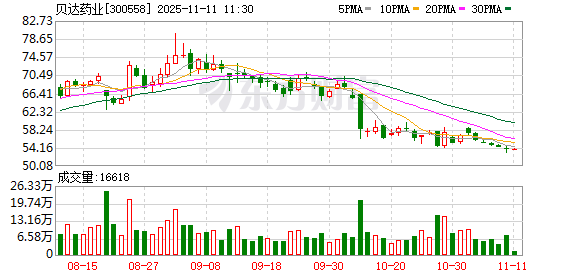
贝达药业:控股子公司全面负责恩沙替尼项目在中国境外的开发和运作,目前暂未布局其他商品的营销推广
Mei Ri Jing Ji Xin Wen· 2025-11-11 04:13
Core Viewpoint - The company, Betta Pharmaceuticals (300558.SZ), confirmed that its subsidiary, Xcovery Holdings, Inc., is currently focused solely on the overseas commercialization of Ensartinib and has not initiated marketing efforts for other products [2] Group 1 - The company is engaged in the overseas development and operation of the Ensartinib project through its subsidiary [2] - There are no current plans for the marketing and promotion of additional products by the subsidiary [2]
贝达药业:公司与杭州瑞普晨创科技有限公司在人多能干细胞向胰岛细胞诱导分化技术领域展开深入合作
Mei Ri Jing Ji Xin Wen· 2025-11-11 01:25
Group 1 - Company has signed a strategic cooperation agreement with Hangzhou Ruipu Morning Technology Co., Ltd. to invest in the field of stem cell differentiation technology towards pancreatic cells [1] - The clinical research of RGB-5088 pancreatic cell injection for the treatment of type 1 diabetes is currently underway [1] - Company will monitor developments in other areas and will disclose any significant collaborations in a timely manner [1] Group 2 - Company has established a strategic partnership with Shengsi Biotech to enter the hemophilia treatment sector, which is characterized by long-term medication needs and strong customer loyalty [3] - The inquiry from investors highlights the potential for the company to develop long-term medication projects beyond oncology, such as hypertension, diabetes, weight loss, and anti-lipid drugs [3]
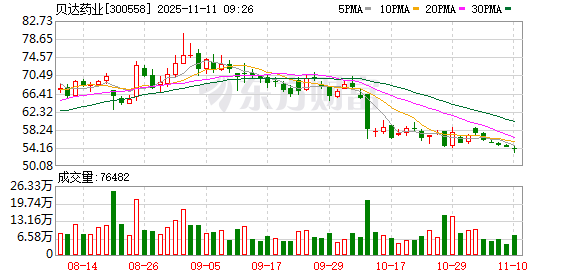
贝达药业:帕妥珠单抗目前处于正常审评审批中
Mei Ri Jing Ji Xin Wen· 2025-11-11 01:25
Group 1 - The core issue raised by investors is the pause in the progress of Pertuzumab after the company's involvement, which was previously going smoothly [2] - The company, Betta Pharmaceuticals (300558.SZ), responded that Pertuzumab is currently undergoing normal review and approval processes, and any significant developments will be disclosed in a timely manner [2]
医保国谈落下帷幕,关注乳腺癌创新疗法动向
ZHONGTAI SECURITIES· 2025-11-10 08:52
Investment Rating - The report maintains a "Buy" rating for several key companies in the pharmaceutical and biotechnology sector, including WuXi AppTec, Sangamo Therapeutics, and Tigermed [2][8]. Core Insights - The report highlights a positive outlook for the pharmaceutical sector, anticipating a recovery in demand and profitability for innovative drug companies, particularly in the CRO/CDMO and life sciences upstream segments [7][14]. - The recent national medical insurance negotiations have concluded, with a focus on supporting innovative drug chains, and the new drug list is set to be implemented on January 1, 2026 [14][56]. - The report emphasizes the importance of monitoring developments in innovative therapies for breast cancer, particularly the advancements in KAT6 inhibitors and PI3K/mTOR inhibitors [15][20]. Summary by Sections Company Performance - Key companies recommended for investment include WuXi AppTec, WuXi Biologics, and Tigermed, all showing strong growth potential [2][8]. - The report notes that the pharmaceutical sector's overall market capitalization is approximately 731.50 billion, with a circulating market value of around 661.54 billion [5]. Market Trends - The report indicates that the pharmaceutical sector has experienced a decline of 2.40% recently, while the broader market (CSI 300) increased by 0.82%, suggesting a challenging environment for the sector [7][14]. - The report anticipates a gradual recovery in revenue and profit growth for the pharmaceutical sector, with a focus on innovative drugs and medical devices [14][56]. Regulatory Developments - The recent national medical insurance negotiations involved 120 companies, with 127 drugs participating in the basic medical insurance drug list negotiations [14][56]. - The introduction of a dual directory review model is expected to further support the innovative drug chain [14][56]. Innovation Focus - The report highlights the ongoing clinical trials for Celcuity's Gedatolisib and the advancements in KAT6 inhibitors by domestic companies, indicating a strong focus on innovative cancer therapies [15][20]. - The report suggests that companies like Kangchen Pharmaceutical are making significant strides in the KAT6 inhibitor space, positioning themselves competitively in the international market [53].




中国创新药,10亿赌注的「药神」游戏
3 6 Ke· 2025-11-08 01:23
Core Insights - The emergence of dual-target weight loss drugs has created significant market dynamics, with contrasting experiences for Chinese and foreign pharmaceutical companies [2] - Eli Lilly's weight loss drug, tirzepatide, generated $16.4 billion in sales last year due to its dual action on GLP-1 and GIP hormones, effectively suppressing appetite and controlling blood sugar [2] - Chinese company Hansoh Pharmaceutical's HS-20094, also a dual-target drug, was licensed to Regeneron for an upfront payment of only $80 million, highlighting the disparity in financial returns between Chinese and Western firms [4][6] Industry Dynamics - The pharmaceutical industry operates under a "three tens" rule: 10 years of development, $1 billion investment, and a 10% success rate, though actual conditions are more complex [7] - Innovative drugs are categorized into two types: First-in-class, which are groundbreaking, and Fast Follow, which modify existing drugs without infringing patents [9][11] - First-in-class drugs tend to have higher profit potential, while Fast Follow drugs have a higher success rate and quicker market access [11][13] Market Trends - Chinese pharmaceutical companies are increasingly recognized for their innovative capabilities, with their first-in-class drugs accounting for 24% of the global pipeline, second only to the U.S. [13] - The trend of multinational companies seeking to acquire Chinese innovations is driven by the expiration of patents on their main drugs and the high costs of internal R&D [15] - China’s advantages include faster clinical trial patient recruitment and the ability to develop competitive drugs in high-tech fields [16][18] Talent and Infrastructure - The rise of the pharmaceutical outsourcing industry (CXO) has created a large pool of skilled professionals familiar with international standards [20] - The return of Chinese scientists from abroad has brought advanced technology and a global perspective, enhancing the competitive edge of local firms [22][24] Challenges and Strategies - Chinese innovative drug companies often start by developing generics to build cash flow before investing in original research [25][30] - The licensing-out model allows Chinese firms to secure upfront payments for drugs in development, which can fund further R&D [32] - Despite successes, many companies face challenges such as product shortages and financial difficulties, emphasizing the risks inherent in drug development [34]


中国创新药,10亿赌注的「药神」游戏
36氪· 2025-11-08 01:19
Core Viewpoint - The article discusses the contrasting experiences of Chinese and foreign pharmaceutical companies in the innovative drug market, particularly focusing on the emergence of dual-target weight loss drugs and the financial implications of drug licensing agreements [4][8]. Group 1: Market Dynamics - The dual-target weight loss drug "Tirzepatide," developed by Eli Lilly, generated sales of $16.4 billion last year due to its ability to mimic two natural hormones, GLP-1 and GIP, effectively suppressing appetite and controlling blood sugar [4][6]. - In contrast, Chinese company Hansoh Pharmaceutical's HS-20094, also a dual-target drug, was licensed to Regeneron for an upfront payment of only $80 million, highlighting the disparity in financial returns between Chinese and foreign firms [6][11]. Group 2: Drug Development Challenges - The pharmaceutical industry operates under a "three tens" rule: 10 years of development, $1 billion investment, and a 10% success rate, indicating the high risks associated with innovative drug development [12][13]. - Innovative drugs are categorized into two types: First-in-class, which are groundbreaking treatments, and Fast Follow, which modify existing drug structures without infringing on patents [14][17]. Group 3: Competitive Landscape - Chinese pharmaceutical companies have made significant strides, with their first-in-class drugs accounting for 24% of the global pipeline, second only to the United States [19]. - The article notes that multinational corporations are increasingly seeking to acquire Chinese innovative drugs due to the expiration of their own patents and the high costs of internal R&D [21]. Group 4: R&D Efficiency - Chinese companies excel in the speed of drug development, particularly in patient recruitment for clinical trials, which can take significantly less time compared to the U.S. [22]. - The rise of the CRO (Contract Research Organization) industry in China has created a large pool of skilled researchers familiar with international standards, enhancing the country's R&D capabilities [25][27]. Group 5: Globalization of Chinese Pharma - The article emphasizes that the ultimate goal for Chinese innovative drug companies is to enter global markets, as the potential market of 7 billion people far exceeds that of 1.4 billion in China [38]. - The licensing-out model allows Chinese companies to secure upfront payments to fund further R&D while granting multinational firms rights to sell their drugs in other markets [39]. Group 6: Social Responsibility and Challenges - The article highlights the social responsibility of pharmaceutical companies, citing the case of Betta Pharmaceuticals, which provided free life-saving drugs worth nearly $13 billion to patients [40]. - However, it also points out the challenges faced by companies like Betta, which have encountered product shortages and financial difficulties, raising questions about the sustainability of their charitable initiatives [42].


贝达药业三闯港交所:资金告急、产品断档、研发缩水“四驾马车”失速IPO能否成为救命稻草?
Xin Lang Cai Jing· 2025-11-07 10:43
Core Viewpoint - Bid Pharma is attempting to issue H-shares and list on the Hong Kong Stock Exchange for the third time in four years, driven by increasing financial pressure and declining performance [1] Financial Performance - For the third quarter of 2025, Bid Pharma reported revenue of 2.717 billion yuan, a year-on-year increase of 15.9%, but net profit attributable to shareholders fell by 23.86% to 317 million yuan [1] - As of September 2025, the company had current assets of 1.484 billion yuan and current liabilities of 1.927 billion yuan, resulting in a current ratio of 0.77 and a quick ratio of 0.59, both significantly below industry standards [1] Debt Issues - The company is facing a 180 million yuan debt dispute with its partner, Yifang Bio, which has remained unresolved for over two years [1] - Yifang Bio has reported that despite multiple communications and formal reminders, the debt has not been recovered, leading to a provision for bad debts of 18 million yuan [1] Product Pipeline Challenges - Bid Pharma's revenue is heavily reliant on its long-standing product, Kaimena, which has accounted for over 96% of revenue from 2016 to 2019 [1] - The newly launched third-generation EGFR-TKI, Beifutini (brand name: Saimeina), has underperformed in the market despite receiving approval and inclusion in the national medical insurance directory [1] R&D and Investment Activities - The company has been expanding its business through investments, including a stake in Rui Pu Chen Chuang for diabetes cell therapy and a 7.47% share in He Yuan Bio [2] - However, many of these projects are still in early stages and unlikely to provide immediate financial support [2] - R&D expenditures have decreased, with a 21.59% drop to 717 million yuan in 2024 and a further 2.88% decline in the first three quarters of 2025 [2] Workforce Reduction - The R&D team has been significantly reduced, with personnel numbers dropping from 647 in 2022 to 327 by the end of 2024, indicating a nearly 50% cut [2] - In contrast, sales and management expenses have been rising, with management costs increasing by 26.45% to 372 million yuan in the first three quarters of 2025 [2] Strategic Outlook - The company has proposed a "four-horsepower" strategy focusing on market sales, new drug development, strategic cooperation, and innovation ecosystems, but results have yet to show significant improvement [1][2]
医药生物行业双周报(2025、10、24-2025、11、6)-20251107
Dongguan Securities· 2025-11-07 09:22
Investment Rating - The report maintains a "Market Weight" rating for the pharmaceutical and biotechnology industry, indicating that the industry is expected to perform within ±10% of the market index over the next six months [3][29]. Core Insights - The SW pharmaceutical and biotechnology industry underperformed the CSI 300 index, declining by 0.61% from October 24 to November 6, 2025, which is approximately 2.50 percentage points lower than the index [10][23]. - Most sub-sectors within the industry recorded negative returns during the same period, with the vaccine and pharmaceutical distribution sectors showing the highest gains of 2.87% and 2.33%, respectively, while offline pharmacies and medical research outsourcing experienced declines of 3.95% and 3.11% [11][12]. - Approximately 57% of stocks in the industry recorded positive returns, with notable performers including Hezhong China, which saw a weekly increase of 115.96% [15][12]. Summary by Sections 1. Market Review - The SW pharmaceutical and biotechnology industry lagged behind the CSI 300 index, with a decline of 0.61% from October 24 to November 6, 2025 [10]. - Most sub-sectors recorded negative returns, with vaccines and pharmaceutical distribution leading in gains [11]. - About 57% of stocks in the industry had positive returns, with significant fluctuations among individual stocks [15]. 2. Industry News - The 11th batch of national drug centralized procurement results was announced, involving 55 varieties and 445 companies, with a selection rate of 57% [21]. - The new procurement rules emphasize clinical stability, quality assurance, and higher standards for bidding companies [21]. 3. Company Announcements - Yekang Pharmaceutical announced that its subsidiary received approval for clinical trials of YKYY013 injection for chronic hepatitis B treatment [22]. 4. Industry Outlook - The report suggests focusing on investment opportunities in innovative drugs and sectors with expected business development catalysts, including medical devices and traditional Chinese medicine [25]. - Key companies to watch include Mindray Medical, Yifeng Pharmacy, and Aier Eye Hospital, among others [26].
贝达药业三闯港交所:资金告急、产品断档、研发缩水 “四驾马车”失速IPO能否成为救命稻草?
Xin Lang Zheng Quan· 2025-11-07 09:21
Core Viewpoint - Beida Pharmaceutical is facing significant challenges, including declining performance, tight funding, and a lack of competitive products, as it attempts to relaunch its H-share IPO in Hong Kong for the third time in four years [1][2]. Financial Performance - For the first three quarters of 2025, Beida reported revenue of 2.717 billion yuan, a year-on-year increase of 15.9%, but the net profit attributable to shareholders fell by 23.86% to 317 million yuan [2]. - The company's operating cash flow for the same period was 668 million yuan, down 19.6% year-on-year, indicating weakening cash generation capabilities [2]. - As of September 2025, Beida's current assets were 1.484 billion yuan, while current liabilities reached 1.927 billion yuan, resulting in a current ratio of 0.77 and a quick ratio of 0.59, both significantly below industry standards [2]. Debt and Liquidity Issues - Beida is embroiled in a 180 million yuan debt dispute with its partner, Yifang Bio, stemming from a 2018 cooperation agreement related to the lung cancer drug BPI-D0316 [3]. - The company has delayed payments citing cash flow issues, which has negatively impacted its commercial reputation [3]. Product Pipeline Challenges - Beida's revenue heavily relies on its long-standing product, Kaimena, which has seen its market competitiveness decline due to the emergence of third-generation EGFR-TKI drugs [4]. - The newly launched third-generation EGFR-TKI, Beifu, has underperformed in the market, failing to achieve significant sales despite receiving regulatory approval and inclusion in the national medical insurance directory [4]. R&D and Strategic Initiatives - Beida's recent strategic initiatives, including investments in new therapies and collaborations, have not yet yielded significant results [7]. - The company has seen a reduction in R&D spending, with a 21.59% decrease in 2024 to 717 million yuan, and a further 2.88% decline in the first three quarters of 2025 [8]. - The R&D team has been cut by nearly 50%, from 647 employees in 2022 to 327 by the end of 2024, raising concerns about the continuity of its research efforts [8]. Cost Structure and Financial Management - In contrast to declining R&D expenditures, Beida's management, sales, and financial expenses have increased significantly, with management expenses rising by 26.45% and financial expenses by 78.26% in the first three quarters of 2025 [9]. - The lack of new blockbuster products and the pressure on the funding chain raise questions about Beida's ability to recover growth through its planned IPO [9].