DeepSeek

Search documents
未知机构:元宝开启红包雨模式春节AI大厂营销还有什么值得催化的事件-20260203
未知机构· 2026-02-03 02:10
Summary of Conference Call Notes Industry Overview - The conference call discusses the AI industry, particularly focusing on major players like Tencent, Alibaba, and ByteDance, as well as emerging companies like DeepSeek. The context is centered around marketing strategies during the Chinese New Year and the impact of AI applications on consumer engagement. Key Points and Arguments - **Tencent's Yuanbao App**: - Yuanbao, a large model app under Tencent, achieved the top position in the iOS app store's free chart due to its special marketing activities during the Spring Festival, including "red envelope" giveaways and interactive features termed "AI family bucket" [1] - The success highlights the importance of traffic marketing in the current AI-to-consumer landscape [1] - **Alibaba's Initiatives**: - Alibaba plans to integrate its Qwen 3.5 app with Taobao and Fliggy, aiming to convert traffic into business decisions during the Spring Festival [1] - Qwen has previously targeted young and family demographics through sponsorships of events like Bilibili's New Year Gala and Jiangsu TV's Spring Festival Gala [1] - **ByteDance's Collaboration**: - ByteDance's Volcano Engine has become the exclusive AI cloud partner for the 2026 Central Radio and Television Station Spring Festival Gala, with its Doubao platform facilitating interactive features such as real-time voice bullet comments and AI-generated New Year paintings [2] - **DeepSeek's Upcoming Launch**: - DeepSeek is expected to release DeepSeek V4 around the Spring Festival, which will enhance capabilities, particularly in coding and multimodal functions, while reducing computational requirements [2] Additional Important Content - **Investment Recommendations**: - Suggested companies to watch include: - **DeepSeek-related**: Daily Interaction, Hangzhou Steel [3] - **Alibaba-related AI applications**: Hengsheng Electronics, Shiji Information, Langxin Group, Focus Media, Qianfang Technology [3] - **Alibaba-related computing**: Hongjing Technology, Hangzhou Steel, Dataport, Runjian Technology [3] - **AI healthcare applications**: Weining Health, Meinian Health, Sichuang Medical [3] - **ByteDance-related AI applications**: Hand Information, BlueFocus, Vision China, New Wisdom Software, Shengguang Shares, Tianyu Digital Science [3] - **ByteDance-related computing**: Cambrian, Dazhi Technology, Runze Technology, Century Interconnect [3]


未知机构:据知情人士透露DeepSeek对其计划保持沉默预计不会像去年那样发布重大更新-20260203
未知机构· 2026-02-03 02:00
Summary of Conference Call Notes Company Overview - The company discussed is DeepSeek, which is involved in the development of advanced AI models, specifically focusing on their V3 and upcoming V4 model series. Key Points and Arguments - DeepSeek is expected to remain silent about its plans and is unlikely to release significant updates this year, contrasting with the previous year’s activity [1] - The company may only implement minor updates to its V3 model series [2] - The next flagship model, V4, is anticipated to be a trillion-parameter foundational model, indicating a substantial increase in model size [3] - The rapid expansion of the model's scale has slowed down the training process, resulting in delays in the release timeline [4]
中原证券晨会聚焦-20260203
Zhongyuan Securities· 2026-02-03 00:29
Core Insights - The report highlights the performance of various sectors in the A-share market, indicating a mixed trend with certain industries like electric grid and liquor leading the gains while others like precious metals and fertilizers lag behind [3][7][13] - The macroeconomic analysis suggests that while the GDP growth target for 2025 was achieved, structural issues such as weak demand persist, necessitating policy support to sustain growth momentum [10][11] - The telecommunications sector is experiencing significant changes due to tax adjustments, which may impact revenue and profit margins for major players like China Mobile, China Unicom, and China Telecom [3][6] Market Performance - The A-share market has shown volatility with the Shanghai Composite Index and Shenzhen Component Index experiencing declines of 2.48% and 2.69% respectively [1] - The telecommunications industry index outperformed the broader market, reflecting a 12.82% increase in December, driven by strong demand for communication equipment [27] - The new materials sector has also shown robust performance, with a 10.54% increase in January, significantly outperforming the broader indices [18] Industry Analysis - The report discusses the upcoming launch of DeepSeek's new AI model, DeepSeek V4, which is expected to surpass existing models in performance and could significantly impact the AI landscape [15][17] - The photovoltaic industry is highlighted for its strong growth, with over 300GW of new installations in 2025, despite facing challenges such as rising costs and regulatory changes [21][22] - The media sector is experiencing a surge in activity, particularly in gaming and film, with the upcoming Spring Festival expected to drive significant box office revenues [24][26] Economic Indicators - The report notes that China's GDP for 2025 reached 1401879 billion, marking a 5.0% increase from the previous year, with consumption playing a more significant role in growth [10] - The fixed asset investment showed a decline of 3.8%, indicating potential weaknesses in the investment landscape [10] - The telecommunications retail sector saw a year-on-year increase of 20.9% in 2025, reflecting strong consumer demand for communication devices [28] Investment Recommendations - Investors are advised to adopt a balanced strategy, focusing on sectors like AI and high-end manufacturing while also considering cyclical and resource sectors for potential opportunities [3][14] - The report suggests that the media sector, particularly gaming and film, presents high growth potential due to favorable policy environments and technological advancements in AI [26] - In the telecommunications sector, companies involved in optical fiber and AI mobile technologies are recommended for investment due to their growth prospects [31]



元宝红包建群,“根本停不下来”
财联社· 2026-02-02 16:19
Core Viewpoint - The article discusses the escalating competition among major tech companies during the Spring Festival AI traffic battle, highlighting their various strategies and promotional activities aimed at engaging users and enhancing their platforms [1][2][3]. Group 1: Tencent's Strategy - Tencent launched a "10 billion red envelope" campaign to attract users, which led to a surge in traffic and temporary instability of the Yuanbao App [1][6]. - The company is focusing on social interaction through its Yuanbao platform, introducing an AI social feature called "Yuanbao Party" to enhance user engagement in group settings [6]. - Tencent aims to replicate the success of the WeChat red envelope phenomenon from 11 years ago, indicating a strategic push to boost user retention and engagement [6]. Group 2: Alibaba's Approach - Alibaba's Qianwen App announced a "30 billion Spring Festival Treat Plan," the largest investment in a Spring Festival campaign in the company's history, aimed at promoting AI-driven consumer experiences [2][5]. - The plan includes various services across Alibaba's ecosystem, such as Taobao, Hema, and Alipay, emphasizing a focus on integrating AI into real-life consumption [5]. - Qianwen App is testing AI shopping functionalities and plans to offer features like AI ticket purchasing and other consumer services during the Spring Festival [5]. Group 3: Industry Dynamics - The competition is characterized by different focal points among the companies, with Alibaba targeting AI shopping and Tencent emphasizing social interaction [3][4]. - Other players like Baidu and Volcano Engine are also participating in the AI traffic battle, with Baidu offering a cash red envelope initiative and Volcano Engine partnering with the Spring Festival Gala [2][3]. - The article notes that the effectiveness of these marketing strategies in retaining users remains uncertain, as long-term retention depends on both marketing efforts and the practical utility of the products [6].



Alibaba Raises Stakes in China's Chatbot War Ahead of Lunar New Year
PYMNTS.com· 2026-02-02 15:51
Core Viewpoint - Alibaba plans to invest 3 billion yuan (approximately $432 million) during the Lunar New Year to promote its Qwen AI app, intensifying competition among China's tech giants in the consumer-facing AI chatbot market [1][2][4]. Group 1: Investment and Marketing Strategy - The spending initiative will commence on February 6 and aims to attract users through incentives related to dining, drinks, entertainment, and leisure, including large red envelope-style rewards [3][6]. - This investment is about three times the amounts announced by competitors Tencent and Baidu, highlighting the aggressive marketing strategies employed by major tech firms during the festive season [4][6]. Group 2: Competitive Landscape - The competition in China's AI sector is intensifying, particularly following the launch of advanced domestic models that have disrupted the market [7]. - Several AI companies are synchronizing product upgrades with the holiday period, with DeepSeek expected to release its next-generation V4 model in mid-February [8]. Group 3: Consumer Behavior Insights - Data indicates that consumers tend to remain loyal to the first AI chatbot they try, which influences companies to utilize familiar growth strategies from payments and eCommerce to drive downloads and habitual use [9].

领军企业密集推出新技术 AI产业创新步伐加快
Ke Ji Ri Bao· 2026-02-02 05:07
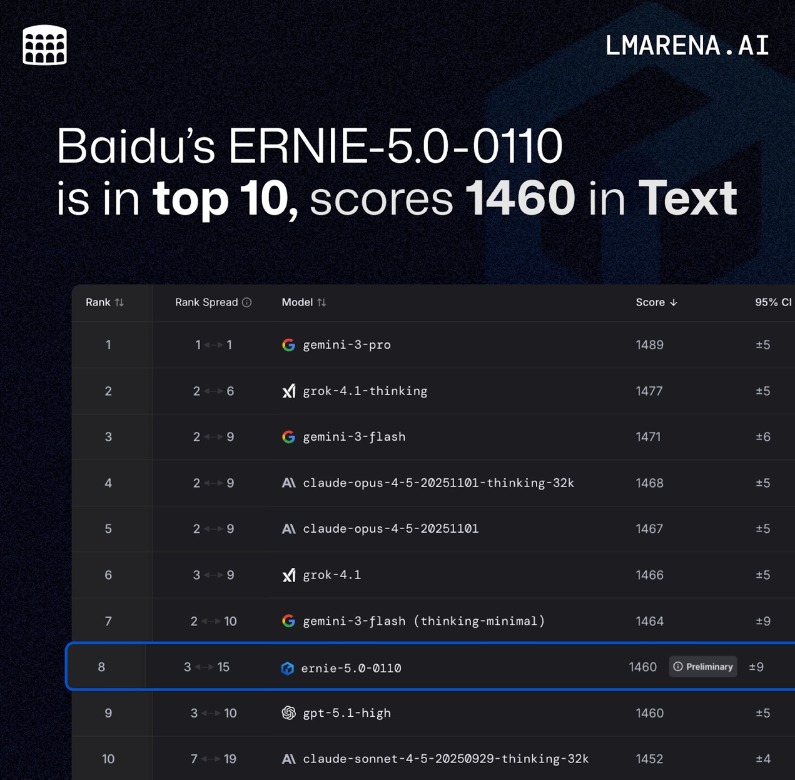
Core Insights - The AI industry in China is experiencing intensified competition as major players like Baidu, Alibaba, and DeepSeek rapidly innovate and release new technologies and products, establishing a three-way competitive landscape [1][9] Group 1: Baidu's Developments - Baidu launched the official version of its Wenxin 5.0 model on January 22, which utilizes a native multimodal architecture for unified modeling, supporting various data types such as text, images, audio, and video [1] - Wenxin 5.0 has achieved top rankings in both domestic and international arenas, being recognized as the leading model in text and visual understanding categories [1][2] - Baidu's new Paddle OCR-VL-1.5 model, released on January 29, features innovative "irregular frame positioning" technology for improved optical character recognition, directly competing with DeepSeek's offerings [4][8] Group 2: Alibaba's Innovations - Alibaba introduced the Qwen3-Max-Thinking reasoning model, which employs a novel testing time extension mechanism to enhance reasoning performance while being more cost-effective [3] - The model leverages its ecosystem by integrating with platforms like Taobao and Alipay, facilitating efficient collaboration between technology and application scenarios [3] Group 3: DeepSeek's Strategy - DeepSeek focuses on open-source advantages and bottom-layer capabilities, releasing the DeepSeek-OCR 2 model that utilizes the DeepEncoder V2 method for smarter image processing [3] - The company emphasizes a full-stack open-source approach, combining model weights, training frameworks, and deployment tools to maximize cost-effectiveness [3] Group 4: Industry Trends - The AI sector in China is transitioning into a new phase of large-scale implementation, with companies demonstrating clear paths of innovation and contributing to industry transformation and broader social benefits [9] - The competition among leading players is characterized by their unique business ecosystems and technological advancements, driving the industry from a "catch-up" phase to a "leading" position [9]
正式裁员30000人,赔偿N+4!
猿大侠· 2026-02-02 04:11
Core Insights - The article highlights a significant reduction in traditional tech job positions, with a decrease of nearly 24,940 employees from 2023 to 2024, indicating a trend of layoffs in the tech industry [1] - In contrast, there is a booming demand for AI-related positions, particularly for roles such as "Large Model Application Development Engineer," with over 60% of companies investing in AI products [2][4] - Salaries for AI roles are rising sharply, with some companies offering annual salaries as high as 1.54 million yuan, reflecting a 150% increase compared to traditional tech roles [2][4] Employee Trends - The total number of employees decreased from 259,316 in December 2021 to 194,320 by December 2024, showing a consistent decline in workforce numbers [2] - The quarterly employee reduction rates indicate a trend of layoffs, with the most significant drop occurring between March and June 2024, where 14,369 employees were let go [2] AI Job Market - The demand for AI talent is contrasted with the shrinking traditional tech job market, creating a "fire and ice" scenario in the tech industry [4] - Companies are specifically looking for skills in three core areas: Retrieval-Augmented Generation (RAG), AI Agents, and model fine-tuning, which are essential for developing AI applications [4][8] Training and Development - A training program titled "Large Model Application Development Practical Training" is being offered to equip developers with necessary skills in AI technologies, including RAG and AI Agents [4][7] - The program promises to provide practical experience and job placement opportunities, including a job referral package and interview preparation materials [5][18] Career Opportunities - The article emphasizes the urgency for traditional programmers to adapt to the AI landscape to avoid job insecurity, particularly as the industry evolves rapidly [12][20] - Successful completion of the training program is expected to enhance employability and provide access to high-paying job opportunities in the AI sector [10][18]

“中国何以挑战美国AI霸权?这就是答案”
Guan Cha Zhe Wang· 2026-02-02 03:51
Core Insights - China's "Genius Class" system is effectively cultivating AI talent, transforming the country from a talent void to a powerhouse in AI development [1][2] - The scale of talent cultivation in China, with approximately 5 million STEM graduates annually, far exceeds that of the United States, which produces around 500,000 [2] - Graduates from the "Genius Class" are significantly contributing to leading tech companies in China and are also making their mark in international AI research institutions [1][4] Group 1: Talent Development Mechanism - The "Genius Class" system allows students aged 16 to 18 to engage in intensive study, bypassing traditional college entrance exams based on their performance in international competitions [2] - This system has been pivotal in producing leaders in China's tech industry, with notable alumni from companies like ByteDance, Alibaba, and DeepSeek [1][2] Group 2: Historical Context and Evolution - The emphasis on science education in China dates back to post-World War II, with a national belief that "science is key to national progress" [8] - The "Genius Class" emerged in the 1980s, inspired by the success of Chinese students in international science competitions, leading to a structured approach to nurturing top talent [9][10] Group 3: Impact on AI Industry - The rise of AI as a national strategic priority in 2017 has accelerated the focus on talent cultivation, with 35 new AI-focused classes established in 2018 alone [9][10] - Companies like DeepSeek, staffed predominantly by "Genius Class" graduates, are challenging Western dominance in AI, exemplified by their development of competitive models at significantly lower costs [5][6] Group 4: Personal Experiences and Outcomes - Graduates from the "Genius Class" report a unique educational experience that fosters creativity and problem-solving skills, which are essential in the tech industry [6][13] - The success of the "Genius Class" is reflected in the high number of graduates now holding significant positions in tech, finance, and academia, indicating a broad impact on various sectors [13]
未知机构:Token数据周报01311为什么团队反复强调Token消耗-20260202
未知机构· 2026-02-02 02:05
Summary of Conference Call Notes Industry Overview - The focus is on the AI industry, particularly the token consumption related to AI models and applications, which is deemed essential for the entire AI ecosystem's sustainability [1][2]. Key Points 1. **Token Consumption as a Lifeline**: - AI large model companies and related application firms are currently unable to achieve positive operating cash flow. OpenAI is projected to reach positive cash flow around 2030. Thus, both AI model and application layers rely on fundraising cash flow to subsidize investment and operating cash flows. This dependency on external capital is expected to continue for over three years [1][2]. 2. **Token as a Deflationary Asset**: - Since the launch of ChatGPT by OpenAI in 2022, the cost of tokens has decreased by 99%. The rapid increase in token usage is crucial to offset the deflation in token prices, thereby maintaining high revenue growth, which is essential for attracting continuous external investment in AI [1][2]. 3. **Historical Context of Investment Cycles**: - Drawing parallels with the dot-com bubble, the early 2000s saw internet usage and bandwidth consumption still growing despite the bubble's burst. The collapse was not due to a significant valuation drop but rather a loss of investor confidence, leading to the failure of companies unable to achieve positive cash flow. The Dow Jones Internet Index experienced a maximum decline of over 95% [2]. 4. **Recent Token Consumption Data**: - In the past week, token consumption reached 7.5 trillion, a slight decrease of 2% week-over-week but a significant increase of 987% year-over-year. Google remains dominant with consumption rising from 1.67 trillion to 1.92 trillion, capturing over 25% market share. Anthropic holds the second position, while x-ai has surged to third place with a consumption of 996 billion, surpassing OpenAI [2][3]. 5. **Emerging Players**: - Xiaomi entered the top ranks with a consumption of 587 billion, while MistralAI also made it into the top ten. Other companies like DeepSeek, Tongyi Qianwen, and Z-AI maintained stable rankings [3]. Investment Recommendations - The team continues to recommend investments in the following sectors based on anticipated growth in token consumption and the performance of the AIDC industry chain: - **Energy Supply Chain**: Companies such as Jerry Holdings, Yingliu Co., Wanzhe Co., Liande Co., Boying Special Welding, Longda Co., and Changbao Co. [3]. - **Liquid Cooling Industry**: Companies including Invec, Hongsheng Co., World Co., Jieban Technology, Hanzhong Precision, and Ice Wheel Environment [3].
Kimi海外收入已超国内,要做“Anthropic + Manus”|智能涌现独家
3 6 Ke· 2026-02-02 00:06
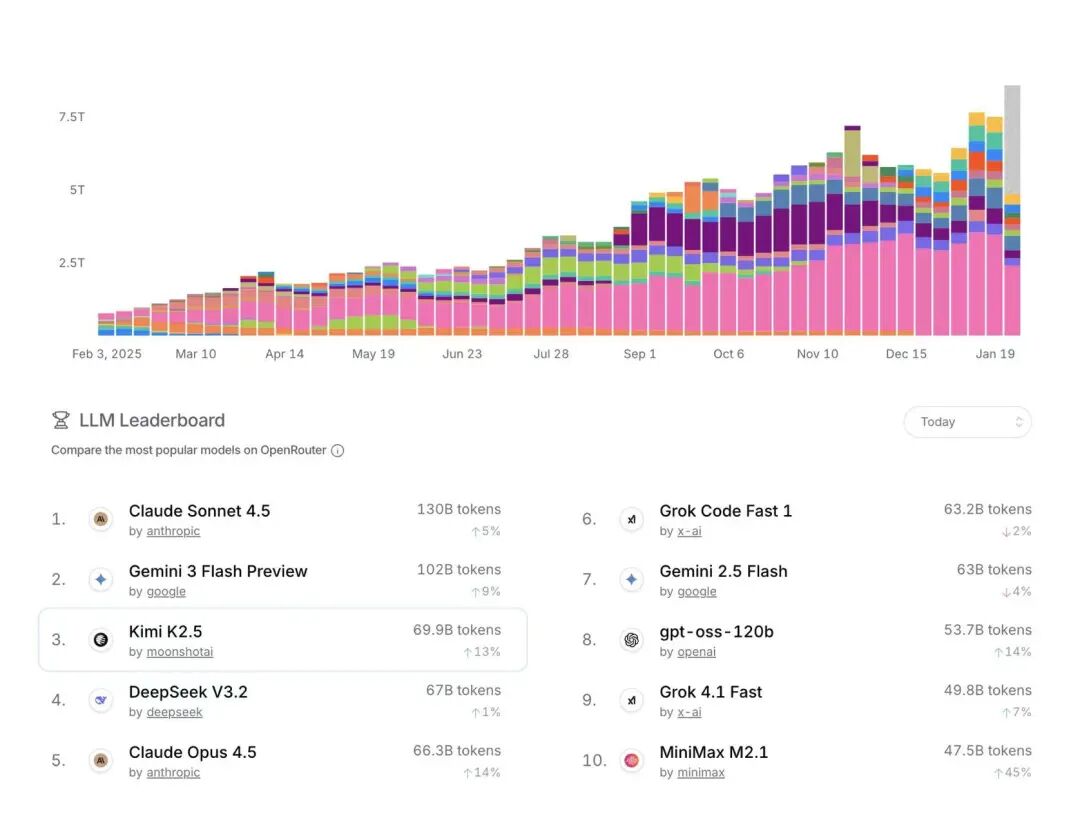
Core Insights - Kimi has recently announced that its overseas revenue has surpassed domestic revenue, with a fourfold increase in global paid users following the release of the new model K2.5 [2][7] - The K2.5 model has quickly gained popularity, ranking third on Openrouter, just behind Claude Sonnet 4.5 and Gemini 3 Flash [4][6] - Kimi's approach focuses on enhancing AI capabilities through a multi-agent system, allowing for parallel task execution and significantly improving efficiency in various applications [9][10] Revenue and User Growth - Kimi's overseas API revenue has increased fourfold since November 2025, with monthly growth rates for both overseas and domestic paid users exceeding 170% [7] - The global paid user base has seen a fourfold increase shortly after the K2.5 model release [2] Model Development and Features - The K2.5 model is Kimi's most advanced to date, featuring a native multimodal architecture that covers visual understanding, code generation, and agent clusters [7] - K2.5 has achieved state-of-the-art results in benchmark tests, surpassing some closed-source models like GPT-5.2 and Claude Opus 4.5 [7] Technological Innovations - Kimi's development strategy emphasizes algorithmic and efficiency innovations, focusing on critical explorations due to limited resources [11] - The company has successfully implemented unique optimizations in large-scale LLM training, such as the Muon optimizer and a self-developed linear attention mechanism [11] Product Strategy - Kimi aims to position itself as a productivity tool for end-users while also attracting developers through its API platform [12] - The company has rebranded its C-end product to Kimi Agent, indicating a focus on creating more refined and thematic products [12][14] Competitive Positioning - Kimi's strategy aligns with that of Anthropic, focusing on foundational model intelligence and open-sourcing its technology to build influence [10] - The company is concentrating on high-demand scenarios like coding and office automation, which are expected to have clear commercialization prospects [14][15]