
Neuralink

Search documents
强脑科技完成20亿元融资,规模全球第二仅次于Neuralink
Huan Qiu Lao Hu Cai Jing· 2026-01-07 07:30
Core Insights - Strong Brain Technology, a brain-computer interface "unicorn," recently completed approximately 2 billion yuan in financing, making it the second-largest financing in the global brain-computer interface sector, following Neuralink [1] - The financing round attracted prestigious investors, including IDG Capital, Huaden International founded by Intel CEO Chen Lifeng, and several technology and education companies [1] - The brain-computer interface sector has seen a surge in secondary capital, with the sector's stocks rising over 20% in the last three trading days [1] Company Overview - Founded in 2015, Strong Brain Technology is recognized alongside innovative companies like DeepSeek and Yuzhu Technology as part of the "Hangzhou Six Little Dragons" [1] - Unlike Neuralink, Strong Brain Technology focuses on the development of non-invasive brain-computer interface technology [1] - The company's products span rehabilitation medicine, smart health, and intelligent education, with FDA and CE certifications obtained [1] Product and Market Potential - The core product, "Super Sensor," can detect weak brain electrical signals without invasive procedures, converting them into neural signals to control external devices [1] - The product currently assists individuals with physical disabilities in performing activities like running and complex sports [2] - Strong Brain Technology aims to help 1 million disabled individuals regain mobility and assist 10 million patients with Alzheimer's, autism, and insomnia over the next 5-10 years [2] Financial and Investment Highlights - Strong Brain Technology has attracted significant investment since its inception, completing multiple funding rounds, including a $400 million Series A in 2019 and subsequent rounds totaling $30 million and $20 million [2] - As of 2024, the company's valuation stands at 8.5 billion yuan according to the Hurun Global Unicorn List [2] - The company is reportedly preparing for an IPO, potentially in Hong Kong or mainland China, after completing over $100 million in pre-IPO financing by 2025 [2] Industry Trends - According to research from Open Source Securities, brain-computer interface technology is expected to commercialize by 2026, expanding from medical necessities into AI applications and robotics [2] - The commercialization path for non-invasive products is clear, indicating significant revenue potential in the future [2]
股价提前异动!亚辉龙跨界“脑机接口” ,引来上交所三连问
2 1 Shi Ji Jing Ji Bao Dao· 2026-01-07 07:24
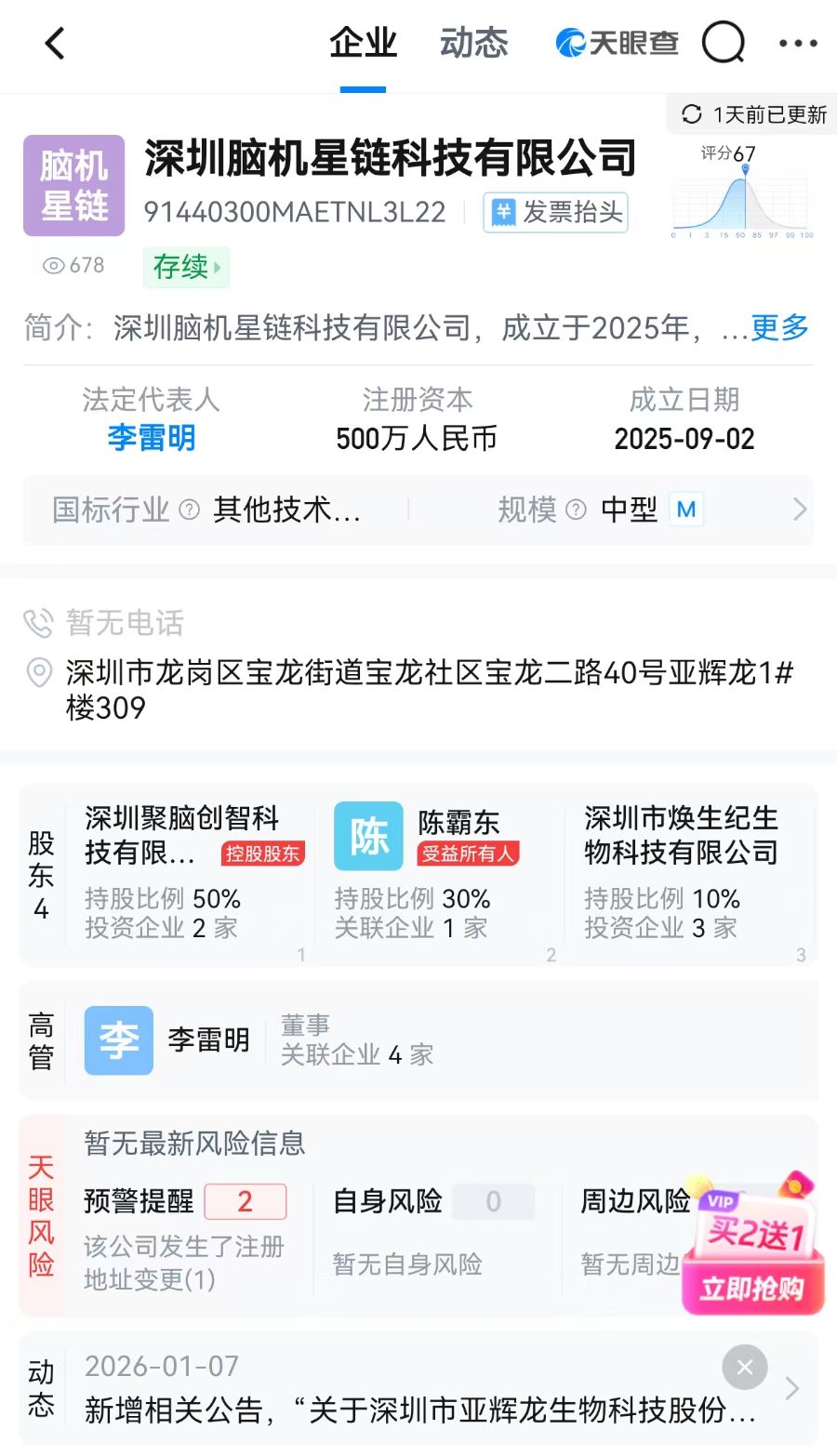
Core Viewpoint - The company Aihuilong (688575.SH) is entering the brain-computer interface (BCI) sector through a strategic cooperation agreement with Shenzhen Brain Machine Starlink Technology Co., Ltd, aiming to enhance diagnostic technology for central nervous system diseases and expand market reach [1][4]. Group 1: Strategic Cooperation - Aihuilong signed a strategic cooperation framework agreement with Brain Machine Starlink to integrate BCI technology with clinical and market resources [1]. - The company committed to leveraging its influence to enhance Brain Machine Starlink's financing and governance capabilities [2]. - The cooperation aims to develop BCI-related products and promote market expansion, although it has raised questions regarding the feasibility and synergy of the collaboration [2][12]. Group 2: Financial Performance - Aihuilong's revenue for the first three quarters of 2025 was 1.287 billion yuan, a year-on-year decline of 7.69%, with net profit dropping 72.36% to 60.42 million yuan [4]. - The company's stock price fell by 8.83% over the past year, with its market capitalization dropping to around 9 billion yuan [4]. - Despite the announcement of the BCI cooperation, the company's financial outlook remains uncertain, with no immediate impact on performance expected [10]. Group 3: Market Reaction - Following the announcement, Aihuilong's stock price initially rose by 3% but later experienced a decline [11]. - The Shanghai Stock Exchange issued an inquiry regarding the cooperation, questioning potential insider trading and requiring additional disclosures about the partnership [3][12]. - The BCI sector has seen a surge in interest, with related stocks experiencing significant gains, influenced by announcements from other companies in the field [10].


A股超50亿元涌入,脑机接口概念狂掀涨停潮
2 1 Shi Ji Jing Ji Bao Dao· 2026-01-07 05:47
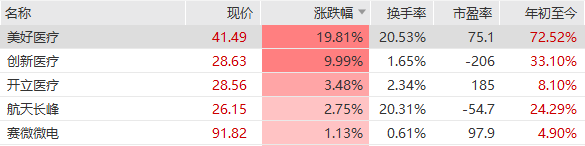
记者丨雷若馨 编辑丨孙超逸 2022年的冬季残奥会上,失去左臂及右臂大部分的运动员贾红光,佩戴着智能仿生手,通过非侵入式脑机接口技术识别大脑意图,顺利完成火炬交接和传 递。 2025年的冬天,马斯克宣布,脑机接口公司"神经连接(Neuralink)"将启动大规模脑机接口输出,并计划转向近乎全自动化手术,引爆全球医疗行业热度。 新年伊始,A股脑机接口概念板块接连两个交易日掀涨停潮,超50亿元资金流入。Wind数据显示,最近三个交易日,脑机接口指数累计涨幅超过14%。 1月7日早盘,脑机接口概念延续强势,创新医疗、南京熊猫双双3连板。 | 名称 | 现价 | 涨跌幅 ▼ | 换手率 | 市智率 | 年初至今 | | --- | --- | --- | --- | --- | --- | | 美好医疗 | 41.49 | 19.81% | 20.53% | 75.1 | 72.52% | | 创新医疗 | 28.63 | 9.99% | 1.65% | -206 | 33.10% | | 开立医疗 | 28.56 | 3.48% | 2.34% | 185 | 8.10% | | 航天长峰 | 26.15 | 2. ...
A股超50亿元涌入,脑机接口概念狂掀涨停潮
21世纪经济报道· 2026-01-07 05:40
Core Viewpoint - The article highlights the rapid growth and investment potential in the brain-computer interface (BCI) sector, driven by technological advancements and significant market interest, particularly following announcements from Neuralink regarding large-scale production and automation of BCI devices [1][4][14]. Market Performance - The A-share BCI concept sector experienced a surge, with over 5 billion yuan flowing into the market, and the BCI index showing a cumulative increase of over 14% in the first three trading days of the year [1][8][11]. - Notable stocks in the BCI sector include Meihao Medical, which saw a 19.81% increase, and Innovation Medical, which rose by 9.99% [2]. Industry Overview - BCI technology connects the brain with external devices for information exchange, categorized into three types: invasive, semi-invasive, and non-invasive, each with varying levels of signal quality and risk [4]. - The healthcare sector is identified as the primary application area for BCI technology, accounting for 56% of its applications, with projections estimating the global BCI medical application market to reach $40 billion by 2030 and $145 billion by 2040 [4][6]. Policy and Development - The Chinese government has included BCI in its "14th Five-Year Plan," with goals for core technology breakthroughs by 2027 and positioning the industry among the world's leaders by 2030 [5][6]. - In 2025, several companies, including Boryeong and Ladder Medical, completed significant implantation trials, marking China's entry into clinical trials for invasive BCI after the U.S. [6]. Company Developments - Companies like Beiyikang and Aipeng Medical are actively involved in BCI, with Aipeng focusing on non-invasive technologies and partnerships for rehabilitation systems [10][12]. - Other firms, such as Xiangyu Medical and Xinwei Medical, are developing various BCI products and are expected to see rapid revenue growth in the coming years [10][12]. Investment Landscape - The BCI sector has attracted significant investment, with nearly 100 financing events in the past five years totaling over 10 billion yuan, and a notable 30% year-on-year increase in financing activities in 2025 [14]. - Analysts suggest that the BCI industry is on the verge of commercial growth, supported by policy and technological advancements, while also cautioning about the challenges of clinical validation and high costs [14][15].

马斯克带火脑机接口!中国“独角兽”强脑科技完成20亿元融资
Jin Rong Jie· 2026-01-07 04:05
Core Insights - Elon Musk has provided a timeline for mass production of brain-computer interface (BCI) devices, igniting interest in global capital markets, with related indices in A-shares rising over 13% on the first trading day of the year [1] - Strong Brain Technology recently completed a significant financing round of approximately 2 billion RMB, marking the second-largest financing in the global BCI sector after Neuralink [1] - The Chinese government has included BCI technology in its "14th Five-Year Plan," indicating a strong push towards commercialization and innovation in the industry [1][3] Company Overview - Strong Brain Technology was founded in February 2015 and has developed non-invasive BCI technologies, including smart bionic limbs and sleep aids, achieving FDA and CE certifications [2] - The company has a history of substantial financing, including a $400 million Series A round in 2019, and plans for an IPO in Hong Kong or mainland China with a valuation exceeding $1.3 billion [2] Market Dynamics - The Chinese BCI market is projected to exceed 3.8 billion RMB by 2025, with medical health applications accounting for 56%, and is expected to surpass 10 billion RMB by 2030 [3] - The government plans to invest over 50 billion RMB in the BCI industry during the "14th Five-Year Plan," aiming to cultivate 2-3 global leading companies by 2030 [3] Future Development - Strong Brain Technology aims to accelerate research and development in rehabilitation and consumer sectors, with a vision to assist 1 million individuals with physical disabilities and 10 million patients suffering from brain-related conditions over the next 5 to 10 years [4] - The company emphasizes the importance of making BCI technology accessible to the general public, aligning with the "technology for good" philosophy [4] Global Industry Landscape - Neuralink remains the highest-valued BCI company globally, with a valuation of $9 billion following its Series E funding round in 2025 [5] - The BCI technology is expected to achieve commercialization by 2026, with applications expanding from medical needs to AI and robotics [5] - The global BCI market is projected to grow to approximately $12.4 billion by 2034, indicating significant investment potential in both medical and technological sectors [5]
A股半导体产业链大涨,多股20CM涨停,黄金白银回调,镍、锡飙升
21世纪经济报道· 2026-01-07 04:00
| 上证指数 | 深证成指 | 科创综指 | | --- | --- | --- | | 4095.54 | 14071.35 | 1746.07 | | +11.88 +0.29% | +48.79 +0.35% +25.66 +1.49% | | | 万得全A | 创业板指 | 北证50 | | 6674.65 | 3332.74 | 1506.61 | | +32.89 +0.50% | +13.45 +0.41% +13.57 +0.91% | | | 沪深300 | 中证500 | 中证A500 | | 4792.05 | 7902.04 | 5880.24 | | +1.36 +0.03% | +87.91 +1.13% +20.03 +0.34% | | | 中证1000 | 深证100 | 中证红利 | | 7930.24 | 5978.96 | 5591.68 | | +65.33 +0.83% -10.65 -0.18% +0.63 +0.01% | | | | 万得全A涨跌分布 | | | | The a my my a | | SIACAA | 记者丨曾静娇 编辑丨刘雪莹 1月7日,A ...

20亿!国产脑机接口独角兽拿下全球第二大单笔融资
思宇MedTech· 2026-01-07 03:52
Core Viewpoint - The article highlights the significant financing of approximately 2 billion RMB by Strong Brain Technology, marking it as the second-largest disclosed financing in the global brain-computer interface (BCI) sector after Neuralink, drawing attention from both capital markets and the industry [2][3]. Financing Overview - Strong Brain Technology completed a financing round of about 2 billion RMB on January 6, 2026, with a diverse investor base including financial investors, industrial capital, and strategic investors such as IDG, Huaden International, and Lens Technology [2][14]. - This financing round reflects a continued interest in Strong Brain Technology's existing technology routes and product advancements, indicating confidence in the company's future [3][15]. - The company has a history of securing substantial capital, having previously completed multiple financing rounds, including a 20 million USD B round in 2025 and a 30 million USD Pre-B round [13][14]. Company and Product Development - Founded in February 2015, Strong Brain Technology has evolved into a key player in the BCI field, focusing on non-invasive BCI technology [7][9]. - The company has developed high-precision EEG signal acquisition and analysis technologies, achieving mass production of solid gel electrode materials in 2017, which improved the stability and accuracy of EEG signal collection [9]. - Strong Brain Technology has launched several BCI-related products, including smart bionic hands and legs, and a brain-machine intelligent sleep aid, with some products receiving FDA and CE certifications for international market entry [11][12]. Clinical and Market Progress - Strong Brain Technology's smart bionic hand is the first BCI product in China to receive FDA approval, allowing it to enter over 30 countries and regions by 2025 [12]. - The company holds over 200 core patents in the BCI field, with approximately 60% being invention patents, positioning it favorably in the domestic patent landscape [12]. Policy and Industry Support - The Chinese government has issued implementation opinions to promote innovation and development in the BCI industry, aiming for breakthroughs in key technologies by 2027 and establishing a robust industrial ecosystem by 2030 [16][17]. - Local governments, including Beijing and Shanghai, have introduced action plans to accelerate the application of BCI technologies across various sectors by 2030 [18][19]. Standardization and Ecosystem Development - The National Medical Products Administration released the first industry standard for BCI medical devices, effective January 1, 2026, to unify terminology and support regulatory and industrial collaboration [22]. - Various regions are also advancing infrastructure development to support BCI product research and application [23].
东微半导20260106
2026-01-07 03:05
Summary of Dongwei Semiconductor's Conference Call Company Overview - **Company**: Dongwei Semiconductor - **Industry**: Brain-Computer Interface (BCI) and Power Solutions Key Points on Brain-Computer Interface Technology - **Liquid Flexible Electrode Technology**: Dongwei's liquid flexible electrode technology utilizes hydraulic injection to stiffen probes, eliminating the need for tungsten needle assistance. This method has shown a reduction in trauma by approximately 70% in mouse experiments, with ongoing trials in macaques expected to further validate its effectiveness in humans [2][3][5]. - **Comparison with Competitors**: Compared to companies like Neuralink, Dongwei's technology significantly reduces neuronal damage and immune response, enhancing long-term reliability. The effectiveness of their electrodes has improved by over 70% in animal tests [2][5][6]. - **Strategic Partnerships**: Dongwei has formed strategic collaborations with top hospitals, including Huashan Hospital, to support clinical applications and research [2][10]. - **Investment in R&D**: The company plans to invest a total of 1.5 billion yuan in chip development over three years, with an annual investment of approximately 100 million yuan in electrodes, clinical applications, and algorithms [2][11]. Development Plans and Market Position - **Full Industry Chain Control**: Dongwei aims to be a comprehensive invasive BCI company, controlling all aspects from electrodes to chips, algorithms, and clinical processes. This positions them uniquely in the market, as few domestic startups possess such capabilities [10][12]. - **Clinical Trials and Commercialization**: The company anticipates rapid commercialization of its products, potentially faster than competitors like Neuralink, due to lower costs and supportive policies in China. They expect to achieve significant clinical applications within two to three years [12][21]. - **Challenges in Chip Development**: Key challenges in BCI chip development include integrating various technologies such as digital, analog, power, transmission, and RF. Dongwei has accumulated expertise in these areas and plans to acquire or invest in relevant teams to enhance their product offerings [9][10]. Financial and Market Insights - **Cost Structure**: The cost of neural electrodes is influenced by various factors, with the most significant expenses arising from clinical procedures and maintenance rather than the electrodes themselves. As production scales up, marginal costs are expected to decrease [7]. - **Market Demand**: There is a strong domestic demand for specialized BCI chips, and Dongwei aims to meet this need through independent research and development [9][11]. Future Outlook - **Technological Aspirations**: Dongwei envisions BCI technology not only addressing disabilities but also enhancing the quality of life for the aging population, positioning it as a universal technology for human welfare [21][22]. - **Power Solutions Expansion**: The company is also focusing on power solutions, particularly in AI server power supply and silicon carbide devices, which are expected to see significant growth in the coming years [15][16][17]. Additional Insights - **Competitive Landscape**: Dongwei acknowledges the competitive nature of the semiconductor and BCI markets, with ongoing efforts to enhance their market share against established international players [18][19]. - **Long-term Vision**: The company aims to become a leading provider of advanced power solutions, focusing on efficient energy conversion and addressing structural opportunities in various sectors, including AIDC and renewable energy [22].

脑机接口专题解读
2026-01-07 03:05
Summary of Neuralink and Brain-Computer Interface Industry Insights Company and Industry Overview - **Company**: Neuralink - **Industry**: Brain-Computer Interface (BCI) Key Points and Arguments 1. **Neuralink's Technological Progress**: Neuralink has achieved 1,024-channel motor area decoding and completed 20 human implants, with surgery efficiency improved to 20 minutes per case, aiming to reduce infection risks and enable industrial-scale production to lower costs [1][2][4]. 2. **Diverse BCI Technology Paths**: BCI technology includes non-invasive, semi-invasive, and invasive methods. Non-invasive methods are suitable for simple applications, while semi-invasive methods, like those from Boryung, have completed clinical trials. Invasive methods, such as Neuralink's, are used for high-precision decoding of motor, language, and visual signals [1][5]. 3. **Domestic Material Gaps**: There is a technological gap between domestic and overseas companies in upstream materials like electrode sensors and signal chips. However, Chinese companies are narrowing this gap through independent research and international collaboration [1][6][7]. 4. **Embedded BCI Functionality**: Embedded BCIs capture neural signals through electrodes, which are then processed by backend devices. Domestic companies are making strides in all aspects of this technology, gradually closing the gap with international leaders [1][8][9]. 5. **Algorithm Performance Challenges**: The performance of brain signal decoding algorithms relies on data quality and quantity. Collaborating with hospitals to obtain clinical data is crucial for enhancing algorithm performance, but lightweight devices face challenges in data collection [1][9]. 6. **Accuracy of BCI Systems**: Invasive BCIs like Neuralink achieve a 99% accuracy rate, while non-invasive methods have lower accuracy rates (70%-80% for motor imagery). Domestic companies are making progress but still lag behind in data accumulation [3][10]. 7. **Commercialization Barriers**: The key barrier to BCI commercialization is obtaining medical device registration. Once achieved, products can be legally sold and potentially covered by insurance, significantly enhancing market acceptance [11][12]. 8. **Market Growth Projections**: The BCI market is expected to reach $10 billion to $40 billion by 2030, with rapid growth in non-invasive products initially, followed by invasive products. If human-computer interaction solutions become mainstream, the market potential could expand significantly [11][12]. 9. **Investment Opportunities**: The most valuable investment segments in the BCI supply chain are chips and batteries, which are costly and complex to produce. There are opportunities in the primary market, but the secondary market requires careful evaluation of companies' actual involvement in BCI [13]. 10. **Regulatory and Economic Considerations**: BCI products must undergo rigorous evaluations for clinical effectiveness, safety, and economic viability before being included in insurance coverage. The process involves assessing clinical value and cost-effectiveness [15][14]. 11. **Ethical Considerations**: Neuralink's technology raises ethical concerns, particularly regarding the stimulation functions that could influence human behavior. This necessitates careful consideration of the applications and implications of such technologies [17]. 12. **Future Milestones**: Key milestones for the BCI industry include policy developments, clinical trial completions, and significant advancements from companies like Neuralink and Boryung, which will attract market attention [18]. Additional Important Insights - **Risks in the Current Market**: While the market is filled with opportunities, investors should remain cautious to avoid overlooking potential risks due to excessive optimism [19].
美好医疗20260106
2026-01-07 03:05
Summary of the Conference Call for Meihow Medical Company Overview - Meihow Medical focuses on medical device CDMO, covering areas such as respiratory care, cochlear implants, blood glucose management, and cardiovascular surgical interventions, with full-process production capabilities and relevant qualifications [2][3] Key Business Segments - The company has made significant progress in cochlear implants, utilizing a sound processor to convert external sounds into multiple frequency bands, transmitted to the inner ear via platinum wires, with a unit price of approximately $1,000 and a gross margin of 60%-70% [2][6] - Meihow Medical is developing implantable brain-machine interface (BMI) devices, leveraging its cochlear implant experience, with expected gross margins similar to cochlear implants once mass production begins [2][7] Brain-Machine Interface Technology - BMI technology is categorized into output, input, and interactive types, with applications in medical rehabilitation, mental health, education, and entertainment [4][5] - The company anticipates BMI new business revenue to reach millions to tens of millions of RMB by 2025, with potential for significant growth in 2026 [4][16] Market Outlook - In 2026, Meihow Medical expects a recovery in its main business, with double-digit growth in home respiratory devices and cochlear implants, and above-average growth in blood glucose and consumer segments [4][22] - The company’s BMI products are still in the early industrial stage, with current revenue from cochlear implants around 100 million RMB, 50% of which comes from invasive electrode pieces [15] Collaboration and Client Relationships - 90% of Meihow Medical's business comes from overseas exports, with collaborations with leading companies in the BMI field [17][18] - The company has established a strong reputation due to its long-term experience in processing Class III materials, which is a key consideration for clients when selecting suppliers [19] Challenges and Innovations - Long-term implant technology is a complex system engineering challenge, requiring integration of process technology to ensure stability under long-term conditions [21] - The company is also exploring semi-invasive and non-invasive products, aiming to enhance the effectiveness of non-invasive devices through invasive technology [12][13] Future Developments - Meihow Medical is expanding into humanoid robotics, leveraging existing technologies and planning to fill production capacity in emerging consumer electronics markets [25] - The company’s Malaysian factory is expected to stabilize profit margins and net profits as production scales up [24] Conclusion - Overall, Meihow Medical is positioned for growth in the medical device sector, particularly in cochlear implants and brain-machine interfaces, with a strong focus on innovation and collaboration with industry leaders [2][4][16]