DeepSeek

Search documents
中美AI差异多大?这家AI企业创始人给出最新判断
Xin Lang Cai Jing· 2026-01-29 04:20
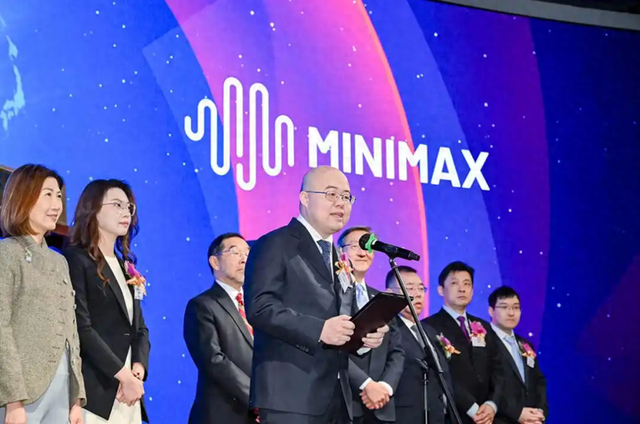
Core Insights - MiniMax, an AI company founded in 2022, has quickly established itself as a leader in the multimodal AI technology space, achieving the fastest IPO in the AI sector within four years of its inception [1][11] - The company emphasizes a unique organizational structure that fosters innovation by breaking down barriers between algorithms, development, and product management, allowing a team of around 400 to produce results equivalent to a team of over 1,000 [3][13] - MiniMax's approach focuses on developing foundational technologies rather than just applications, with a commitment to user service, internationalization, and being technology-driven [4][13] Company Overview - The name "MiniMax" is derived from the minimax algorithm in game theory, symbolizing the pursuit of optimal solutions within conflicting conditions [2] - The average age of the MiniMax team is 29, with 73.8% of the workforce in research and development, reflecting a youthful and dynamic workforce [12] - The company has successfully served over 212 million users across more than 200 countries, positioning itself as a global player in the AI market [6][18] Market Position and Strategy - MiniMax competes directly with major players like OpenAI, offering a lightweight model with 230 billion parameters at a cost that is one-tenth of its competitors, which has garnered significant attention from global developers [6][18] - The company believes that the key to overcoming challenges in AI development lies in innovative solutions to data quality and computational efficiency, rather than being constrained by existing limitations [5][14] - MiniMax's strategy includes a focus on enhancing the capabilities of its models, particularly in coding and autonomous agent functionalities, with expectations of significant advancements by 2025 and 2026 [19] Future Outlook - The company anticipates that by 2027, there will be disruptive developments in AI, particularly in the ability to create AI that can conduct its own research [9] - MiniMax aims to maintain its focus on exploring cutting-edge technology indicators and ensuring that its models align with trends in productivity transformation [9][19] - Despite concerns about potential market bubbles in the AI sector, MiniMax's growth trajectory, evidenced by its user base and ongoing demand for AI solutions, suggests a solid foundation for continued expansion [10][20]

DeepSeek sets sights on AI search and agents, job postings show
BusinessLine· 2026-01-29 04:15
Core Insights - DeepSeek is expanding its AI capabilities with new search features and a focus on agents, increasing competition with US firms like OpenAI and Google [1] Group 1: Company Developments - DeepSeek is hiring specialists to develop a multilingual AI search engine that can process various inputs, including text, images, and audio [2] - The company is emphasizing the need for training data, evaluation systems, and platforms to support AI agents that operate with minimal human intervention [3] - DeepSeek's R1 model, released last January, has already made waves in the AI sector, and there is anticipation for a successor model [4] Group 2: Research and Publications - In December, DeepSeek published a paper on a more efficient AI development approach, which has historically preceded major model releases [5] - The company has hinted at its next product with a vague reference to "model1" on its GitHub account, maintaining a level of secrecy [5] Group 3: Industry Context - Other AI developers, including OpenAI, are also investing in AI search and agents to move beyond traditional chatbots and handle more everyday tasks [6] - DeepSeek has expressed its ambition to develop artificial general intelligence (AGI), aligning with the goals of other leading AI firms [7] - The company seeks candidates with a strong interest in the technological development of AGI, indicating its long-term vision [7]
X @Bloomberg
Bloomberg· 2026-01-29 04:06
DeepSeek is looking to broaden its AI offerings with new artificial intelligence search features and more emphasis on agents, ramping up competition with US firms like OpenAI and Google https://t.co/bpSTo7sep3 ...
X @Bloomberg
Bloomberg· 2026-01-29 03:26
RT Saritha Rai (@SarithaRai)DeepSeek is making a bold play in the AI race.Fresh job listings point to an acceleration into native search and autonomous agents.https://t.co/fwwgFGzEEo https://t.co/YGBJmcx2Jw ...
X @Bloomberg
Bloomberg· 2026-01-29 01:34
DeepSeek is looking to broaden its AI offerings with new artificial intelligence search features and more emphasis on agents, ramping up competition with US firms like OpenAI and Google https://t.co/5qWMwtFcbG ...
国产大模型同日转向:DeepSeek向左,Kimi向右,拼落地的时代开始了?
3 6 Ke· 2026-01-29 00:29
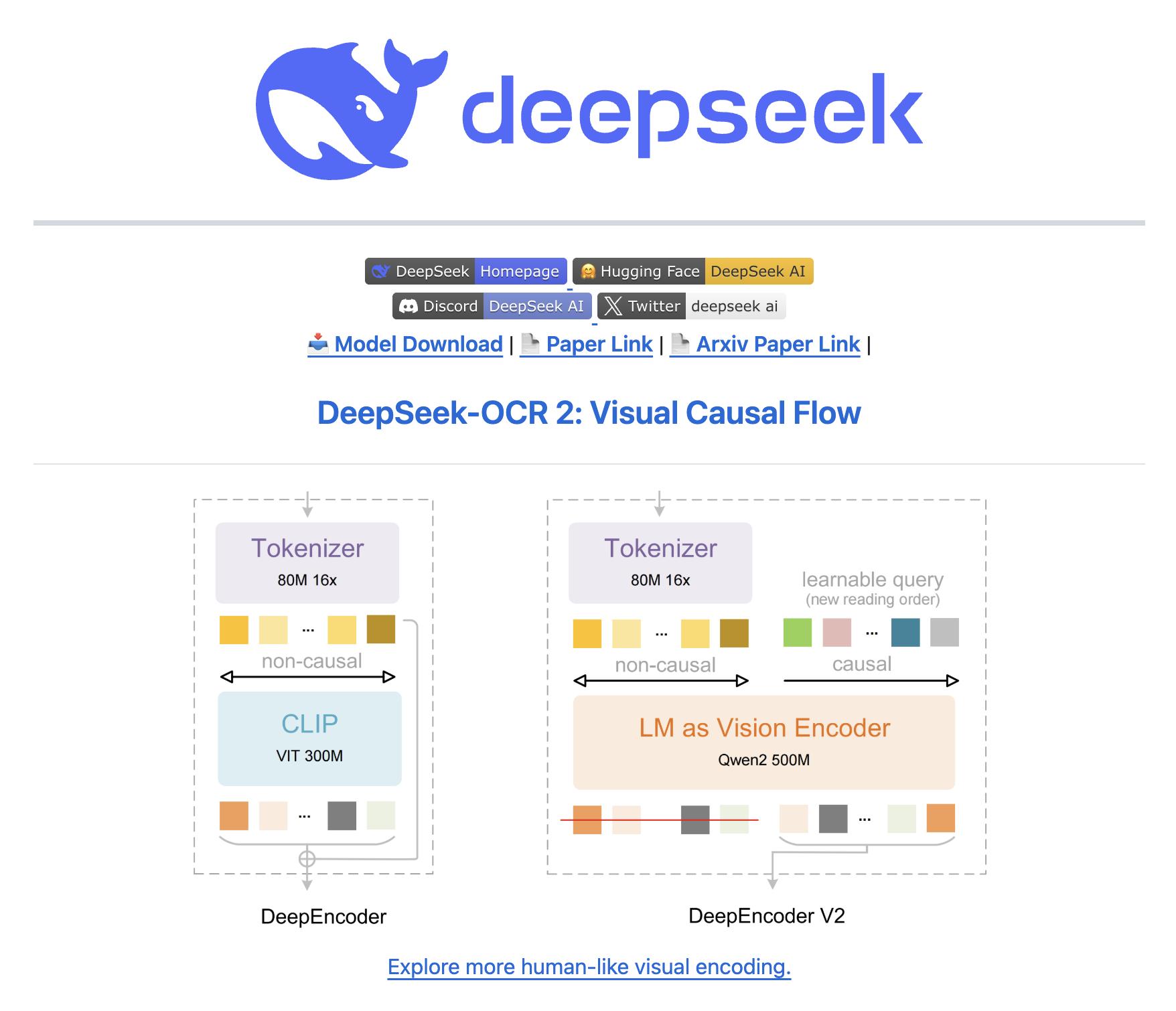
Core Insights - Two prominent domestic AI startups, DeepSeek and Kimi, have released significant open-source updates to their models, DeepSeek-OCR 2 and K2.5, respectively, marking a pivotal moment in AI development [1][4] - DeepSeek-OCR 2 focuses on enhancing the model's ability to "read" information through a new visual encoding mechanism, aiming to improve efficiency and reliability in processing complex documents [1][10] - Kimi K2.5 aims to evolve AI from merely answering questions to executing complex tasks, emphasizing long memory, multi-modal understanding, and task execution capabilities [4][12] Group 1: DeepSeek-OCR 2 - DeepSeek-OCR 2 introduces a new approach to document processing, allowing the model to learn human-like visual logic and compress lengthy text inputs into higher-density "visual semantics" [1][10] - The model shifts from a mechanical text processing method to understanding document structure, enabling it to identify titles, tables, and related information more effectively [8][10] - This upgrade addresses long-standing issues in AI document handling, such as high costs and inefficiencies associated with traditional text input methods [10][11] Group 2: Kimi K2.5 - Kimi K2.5 emphasizes the transition from a question-answering model to a more capable digital assistant, capable of handling complex tasks and multi-modal inputs [4][12] - The model's long memory feature allows it to retain context over extended interactions, reducing the need for repeated explanations [12][17] - Kimi K2.5's focus on task execution and intelligent agent capabilities positions it as a more versatile tool for real-world applications, moving beyond simple advisory roles [12][22] Group 3: Industry Trends - The recent upgrades in AI models reflect a broader industry shift towards practical applications, prioritizing usability and integration into real-world workflows over mere parameter scaling [15][16] - Key areas of focus include enhancing memory retention, improving visual comprehension, and redefining AI's role from advisor to executor [17][22] - The emphasis on engineering and deployment capabilities highlights the industry's commitment to making AI tools more accessible and effective in business environments [22][23]

MiniMax稀宇科技创始人闫俊杰接受《环球时报》独家专访:担心AI泡沫,不如专注自身进步
Huan Qiu Shi Bao· 2026-01-28 23:07
Core Viewpoint - MiniMax, an AI company founded in 2022, has rapidly established itself as a leading player in the global AI landscape, achieving a record IPO within four years and becoming a notable AI unicorn [1]. Group 1: Company Overview - MiniMax is named after the minimax algorithm from game theory, symbolizing the tension between conflicting forces in innovation [2]. - The company has a young team with an average age of 29, where 73.8% are involved in research and development, reflecting a grassroots entrepreneurial spirit [2][3]. - The organizational structure emphasizes breaking down barriers between algorithms, development, and product management, allowing for high productivity from a relatively small team [3]. Group 2: Business Strategy - MiniMax focuses on foundational technologies rather than just applications, aiming to serve users directly and drive internationalization [4]. - The company has adopted a strategy of using AI tools for data synthesis, which helps address challenges related to data quality and computational power [6]. - MiniMax's models are designed to provide intelligent content across various formats, positioning the company to compete effectively in the AGI era [4][5]. Group 3: Market Position and Competition - MiniMax's lightweight model, M2, achieves top-tier performance at a cost that is only one-tenth of competitors like OpenAI, making it attractive to global developers [7]. - The company views the AI industry as a growing market rather than a zero-sum game, focusing on enhancing its competitive edge and differentiation [7]. - Talent acquisition is identified as a significant barrier in the industry, and MiniMax aims to leverage its AI-native organizational structure to maximize talent potential [8]. Group 4: Future Outlook - Predictions indicate that by 2025, Chinese models will significantly improve in coding and autonomous capabilities, with MiniMax expected to achieve notable advancements in multi-modal generation [8]. - The next breakthrough in AI is anticipated to involve using AI to create AI, with expectations of disruptive developments by 2027 [9]. - MiniMax emphasizes the importance of maintaining a focus on technological innovation and user recognition to ensure continued growth in the AI sector [10].
Exclusive: Nvidia helped DeepSeek hone AI models later used by China's military, lawmaker says
Reuters· 2026-01-28 22:19
U.S. chipmaker Nvidia helped China's DeepSeek hone artificial intelligence models that were later used by the Chinese military, the chairman of a U.S. House of Representatives committee said in a lett... ...

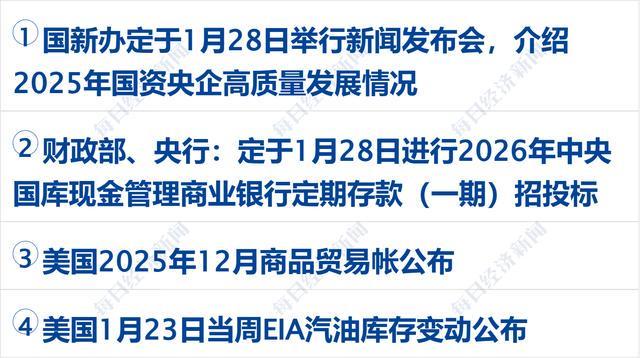
美国将在中东举行空军演习;国际油价大涨3%,黄金涨破5180美元创新高;刘强东给老家村民送年货丨每经早参
Mei Ri Jing Ji Xin Wen· 2026-01-28 18:58
Market Overview - US stock indices closed mixed, with the Dow down 0.83%, the Nasdaq up 0.91%, and the S&P 500 up 0.41%. Tech stocks generally rose, with Intel up over 3% and Amazon up over 2%. Conversely, healthcare insurance stocks fell sharply, with the S&P 1500 Managed Care Index dropping 18%, the largest decline since 1997. UnitedHealth fell over 19% and CVS dropped over 14% [1] - International oil prices surged, with WTI crude oil rising 3.07% to $62.49 per barrel and Brent crude oil up 2.9% to $66.65 per barrel [1] - Gold prices reached a new historical high, with spot gold peaking at $5187.96 per ounce, up 3.33% to $5174.95 per ounce at the time of reporting. COMEX gold futures rose 1.87% to $5177.4 per ounce, while spot silver increased by 8.11% to $112.32 per ounce [1] - Major European stock indices closed mixed, with the UK FTSE 100 up 0.58%, the German DAX down 0.1%, and the French CAC 40 up 0.27% [1] Semiconductor Industry - Zhongwei Semiconductor announced a price increase of 15% to 50% for products including MCU and Norflash due to rising costs and supply chain pressures [9] - Guokai Microelectronics also issued a price increase notice, raising prices for KGD products by 40% to 80% starting January [9] - The price adjustments reflect increasing cost pressures in the semiconductor industry, indicating a potential rise in industry inflation risks [10] AI and Technology - Muxi Co., Ltd. launched the X series scientific intelligent GPU, aimed at enhancing AI for Science innovation ecosystems [11] - The company projected a revenue increase of 115.32% to 128.78% for the fiscal year 2025, with expected losses narrowing significantly compared to the previous year [12] - Li Xiang, chairman of Li Auto, emphasized the company's focus on AI trends during an all-hands meeting, which may boost investor confidence [13] E-commerce and Logistics - JD.com founder Liu Qiangdong utilized autonomous vehicles to deliver New Year goods to his hometown, showcasing the company's logistics capabilities and commitment to rural revitalization [14] Consumer Electronics - Apple initiated a limited-time promotion for the iPhone Air, reducing prices by up to 2000 yuan, which may impact consumer trust and channel management [15] Investment and Fund Management - E Fund and Guotou Ruijin announced the suspension of subscription services for their gold and silver-themed funds, reflecting heightened investor risk aversion [17]
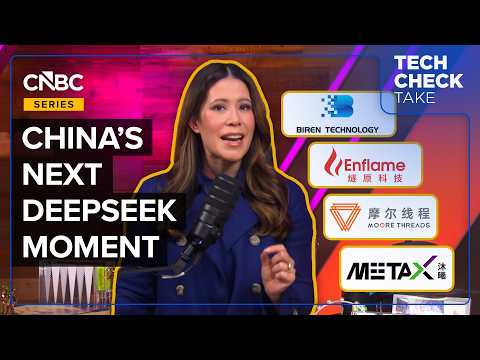
China’s Next DeepSeek Moment Is In AI Hardware
CNBC· 2026-01-28 15:01
China's next DeepSeek moment. It won't be another AI model. The >> United States doesn't want to partake participate in China.Um, Huawei's got China covered and Huawei's got everybody else covered. >> Instead, [music] it's their AI hardware that's catching up. And that may matter more.[music] >> Some of these new Chinese models are really like surprising everyone as well. Further ahead, much lower cost, [music] trained without the super expensive chips. >> They're nanconds behind us.>> Nanc. Now they're nan ...