
Alchip

Search documents
摩根士丹利:人工智能供应链_半导体实地调研 -关键要点
摩根· 2025-07-04 01:35
Investment Rating - The report maintains an "Overweight" (OW) rating for TSMC and expresses bullish sentiment towards AI-related investments, particularly in the semiconductor sector [2][4]. Core Insights - TSMC's CoWoS capacity is projected to grow over 30% year-on-year, reaching approximately 90-95k by 2026, which is favorable for both Nvidia and AI ASIC supply chains [1][2]. - There is strong demand for AI applications in China, but hardware supply constraints are identified as a significant bottleneck [3]. - The report highlights a robust growth forecast for cloud semiconductors in 2026, with TSMC's CoWoS-L capacity expected to expand to 68k, indicating strong demand for Blackwell and Rubin chips [2][8]. Summary by Sections AI Supply Chain Insights - The report indicates that Nvidia's B30 GPU shipments to China are uncertain and could impact China's AI capital expenditures [1][3]. - Chinese AI developers are considering alternatives like Huawei chips if Nvidia's B30 cannot be shipped, but they have not yet seen Huawei's 910C available for sale [3]. TSMC Capacity and Demand - TSMC's total CoWoS capacity is expected to be around 90-95k in 2026, reflecting a 33% increase from 70k at the end of 2025 [2][8]. - The report raises TSMC's CoWoS capacity forecast for 2026 from 90k to 93k wafers per month, with non-TSMC capacity remaining unchanged [8][9]. Customer Demand and Forecasts - Nvidia's CoWoS consumption is projected to remain at 580k units in 2026, with an increase in CoWoS-L consumption estimates due to strong demand [13]. - Broadcom's CoWoS consumption estimate is raised to 110k units in 2026, driven by higher demand for Meta's MTIAv3 chips [13]. AI Capex and Market Sentiment - The report anticipates that the top four US hyperscalers will generate $550 billion in operating cash flow in 2025, supporting ongoing investments in AI-related data centers [31][32]. - Average AI capex/EBITDA is expected to be around 50% in 2025, indicating strong financial capacity for further spending [32].
摩根士丹利:全球科技人工智能供应链半导体实地考察 - 关键要点
摩根· 2025-07-02 15:49
Investment Rating - The report maintains an "Overweight" (OW) rating for TSMC based on strong demand in the AI supply chain [2][3][4]. Core Insights - TSMC's CoWoS capacity is projected to grow over 30% year-over-year, reaching approximately 90-95k by 2026, which is positive for both Nvidia and AI ASIC supply chains [2][3][4]. - There is strong demand for AI applications in China, but hardware supply constraints are a significant bottleneck [3][4]. - The report highlights a bullish sentiment among investors regarding AI, with key concerns focused on potential demand issues and alternative investments beyond Nvidia [2][3]. Summary by Sections TSMC Capacity and Demand - TSMC's CoWoS total capacity is expected to be around 90-95k in 2026, indicating a 33% growth from 70k at the end of 2025 [2][3][8]. - The CoWoS-L capacity may expand to 68k, reflecting strong demand for Blackwell and Rubin chips [2][3][8]. AI Supply Chain Insights - Chinese AI developers are aware of Nvidia's B30 chips, with foundry wafer orders totaling 2 million units in the second half of 2025, but no confirmed purchase orders have been made [3][4]. - If B30 shipments to China are not realized, developers may shift to Huawei chips, although availability remains uncertain [3][4]. ASIC Design Services - Alchip is expected to be the sole source for Trainium3 XPU, with revenue anticipated to ramp up significantly in 2026 [4][5]. - Marvell's focus will be on "XPU-attach" chips, and the longevity of Trainium2 will impact its growth in 2026 [4][5]. AI Capex and Market Sentiment - The top four US hyperscalers are projected to generate $550 billion in operating cash flow in 2025, supporting ongoing investments in AI-related data centers [31][32]. - The report anticipates a 43% year-over-year growth in cloud capex for 2025, up from a previous forecast of 39% [41][42].


JP Morgan--台积电CoWoS和WMCM的客户和产能分析
傅里叶的猫· 2025-06-29 10:24
Core Viewpoint - The article provides an analysis of TSMC's CoWoS and WMCM technologies, focusing on customer demand, capacity forecasts, and investment outlooks, particularly in the semiconductor industry [1]. Customer Demand Analysis - For NVIDIA, JP Morgan forecasts a 25% increase in CoWoS demand by 2026, reaching 58% market share, driven by the migration to the Rubin platform, which will increase package size by 50% [2]. - AMD's CoWoS demand is expected to be weak in 2025 and 2026 due to restrictions on the MI300 series in the Chinese market, but there is optimism for the MI400 series in late 2026 and 2027 [3]. - Broadcom is projected to see stable growth in ASIC demand, particularly from Google TPU, with Meta expected to start mass production of its CoWoS-based AI accelerator in 2025 [4][5]. Capacity and Technology Analysis - TSMC's CoWoS capacity is expected to stabilize by 2027, with a slight slowdown in expansion plans due to reduced GPU demand in China [10]. - By 2026, CoWoS-L is anticipated to account for 64% of TSMC's total CoWoS output, driven by more customers migrating to this technology [13]. - WMCM technology is simpler than CoWoS and is expected to significantly expand, with production capacity projected to reach 27,000 wafers per month by the end of 2026 and 40,000 by the end of 2027 [15]. Overall Consumption Forecast - Total CoWoS consumption is projected to grow from 134,000 wafers in 2023 to 1,132,000 wafers by 2027, reflecting a compound annual growth rate of 32% [11]. - NVIDIA's CoWoS consumption is expected to increase significantly, with projections of 705,000 wafers by 2027, while AMD's consumption will remain modest [11]. - The overall market for CoWoS is expected to see a shift towards CoWoS-L, with a majority of customers adopting this technology by 2025 [11][12].


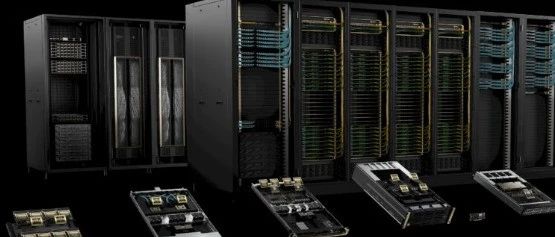
摩根士丹利:全球科技-AI 供应链ASIC动态 -Trainium 与 TPU
摩根· 2025-06-19 09:46
Investment Rating - The report maintains an "Overweight" (OW) rating on several companies in the AI ASIC supply chain, including Accton, Wiwynn, Bizlink, and King Slide in downstream systems, as well as TSMC, Broadcom, Alchip, MediaTek, Advantest, KYEC, Aspeed, and ASE in upstream semiconductors [1][11]. Core Insights - The AI ASIC market is expected to grow significantly, with NVIDIA outpacing the ASIC market in 2025, generating enthusiasm for ASIC vendors. Asian design service providers like Alchip and MediaTek are anticipated to gain market share due to their efficient operations and quality services [2][21]. - The global semiconductor market is projected to reach $1 trillion by 2030, with AI semiconductors being a major growth driver, estimated to reach $480 billion, comprising $340 billion from cloud AI semiconductors and $120 billion from edge AI semiconductors [21][22]. Summary by Sections AI ASIC Market Developments - AWS Trainium: Alchip has taped out the Trainium3 design, with wafers already produced. Alchip is expected to have a strong chance of winning the 2nm Trainium4 project [3][15]. - Google TPU: Broadcom is expected to tape out a new 3nm TPU after the Ironwood (TPU v7p) enters mass production in 1H25, while MediaTek is also preparing for a 3nm TPU tape-out [4][18]. - Meta MTIA: Preliminary volume forecasts for MTIAv3 are expected in July, with considerations for larger packaging for MTIAv4 [5]. Downstream and Upstream Suppliers - Downstream suppliers for AWS Trainium2 include Gold Circuit for PCB boards, King Slide for rail kits, and Bizlink for active electrical cables. Wiwynn is expected to see 30-35% of its total revenue from Trainium2 servers in 2025 [6][11]. - Key upstream suppliers include TSMC for foundry services, Broadcom for IP and design services, and Alchip for back-end design services [11][10]. Market Size and Growth Projections - The AI semiconductor market is projected to grow to $50 billion by 2030, representing 15% of cloud AI semiconductors. This indicates a significant opportunity for AI ASIC vendors despite NVIDIA's dominance in the AI GPU market [21][24]. - The report estimates that the global AI capex total addressable market (TAM) for 2025 could reach around $199 billion, driven by major cloud service providers [26][58]. Financial Implications - Alchip's revenue from Trainium3 chips is estimated to be $1.5 billion in 2026, with expectations of continued growth in the AI ASIC market [18][21]. - MediaTek's revenue from TPU projects is projected to grow significantly, with estimates of $1 billion in 2026 and potential growth to $2-3 billion in 2027 [19][21].
摩根士丹利:Investor Presentation-中国人工智能与存储市场展望
摩根· 2025-06-11 02:16
Investment Rating - Industry view is cautious [1] Core Insights - The report highlights a cautious outlook for the semiconductor industry, particularly in the context of AI and memory sectors, with a focus on potential recovery in the second half of 2025 impacted by tariff costs [7] - Long-term demand drivers include the reacceleration of AI semiconductor demand due to generative AI, which is expected to proliferate across various verticals outside the semiconductor industry [7] - The report indicates that the global semiconductor revenue peaked in the third quarter of 2024, with a forecasted decline in semiconductor exports from Korea since February 2025 [12][19] Summary by Sections Semiconductor Market Dynamics - The cyclical downturn is characterized by a shift from euphoria to pessimism, as indicated by the SOX Index performance [8] - Historical data shows that declines in semiconductor inventory days have historically signaled positive stock price appreciation [41] - The report notes that the domestic GPU supply chain may face dilution due to shipments of NVIDIA B30, impacting inferencing AI demand [7] Memory and Logic Cycles - Memory stock prices are seen as leading indicators for logic semiconductors, with the report suggesting that memory share price peaks lead logic semis [42][43] - The report forecasts a significant increase in HBM (High Bandwidth Memory) market size, projecting it to reach US$64 billion by 2027, with a CAGR of 107% from 2023 to 2027 [67] AI and Technology Trends - The report emphasizes the shift in value from hardware to application in the AI investment stack, indicating a growing focus on software and application development [73] - It is projected that local GPU revenue in China could grow to RMB 287 billion by 2027, driven by advancements in local manufacturing capabilities [90]
摩根大通亚太地区科技- Coforge/高通/苹果/BE半导体/天弘
摩根大通· 2025-06-10 05:50
Investment Ratings - Coforge: Overweight (O/W) with a price target (PT) of Rs2,080 [3][4] - Qualcomm: Overweight (O/W) with a price target (PT) of $185 [3][4] - Apple: Overweight (O/W) with a price target (PT) of $240 [5] - BE Semiconductor: Overweight (O/W) with a price target (PT) of €121 [6] - Celestica: Overweight (O/W) with a price target (PT) of $115 [6] Core Insights - Coforge's management is optimistic about industry-leading growth and margin expansion, expecting a 14% EBIT margin in FY26 [3][4] - Qualcomm's acquisition of Alphawave for $2.4 billion is aimed at enhancing its Data Center portfolio, positioning it competitively in the custom AI ASIC market [6] - Apple's WWDC event revealed limited AI updates, indicating a focus on retaining its existing consumer base rather than attracting new switchers [5][6] - Taiwan's May exports surged by 38.6% year-over-year, driven by strong shipments to the US, indicating robust demand in the tech sector [9] Detailed Highlights - Coforge's proactive sales strategy and large deal execution are expected to drive robust growth in FY26, with a strong pipeline of large deals [3][4] - Qualcomm's strategic acquisition of Alphawave strengthens its position in the Data Center market, with competitors in Asia including Alchip and Mediatek [6] - Apple suppliers such as Murata, Sunny Optical, AAC, and Genius Optical are highlighted as key players in the supply chain [5][6] - BE Semiconductor is preparing for its Capital Markets Day, with expectations for market sizing and customer insights [6] - Celestica's competitive landscape in Switching includes major players like Inventec, Accton, and Arista, with significant growth opportunities identified [6] - OpenAI has reached $10 billion in annual recurring revenue, indicating strong demand for custom AI ASIC projects [6]


IP 设计服务展望:2026 年 ASIC 市场动态
2025-05-22 05:50
Summary of Conference Call Notes Industry Overview - The conference call focuses on the ASIC (Application-Specific Integrated Circuit) market dynamics, particularly involving major players like AWS, Google, Microsoft, and META, with projections extending into 2026 and beyond [1][2][5]. Key Company Insights AWS - AWS has resolved issues with Trainium 3 and continues to secure orders from downstream suppliers. The development of Trainium 4 has commenced, with expectations for a contract signing soon [2][5]. - The specifications for AWS's TPU chips are significantly higher than competitors, with TPU v6p and TPU v7p expected to have ASPs of US$8,000 and higher, respectively [2]. Google - Google is progressing steadily with its TPU series, with TPU v6p featuring advanced specifications including multiple compute and I/O dies. The company is anticipated to become a top customer for GUC due to its rapid ramp-up in CPU development [2][10]. - The revenue from Google's 3nm server CPU is expected to contribute to GUC's revenue sooner than previously anticipated, moving from Q4 2025 to Q3 2025 [10]. Microsoft - Microsoft is working on its Maia v2 ASIC, with a target of ramping 500,000 chips in 2026. However, the project has faced delays, pushing the tape-out timeline from Q1 2025 to Q2 2025 [3][4]. - The allocation of chips has shifted, with expectations of 40-60k chips for MSFT/GUC and 400k chips for Marvell in 2026 [3]. META - META is transitioning from MTIA v2 to MTIA v3, with expectations of ramping 100-200k chips for MTIA v2 and 200-300k chips for MTIA v3 in 2026 [2]. Non-CSPs - Companies like Apple, OpenAI, and xAI are entering the ASIC server market, with many expected to tape out in 2H25 and ramp in 2H26. These companies are likely to collaborate with Broadcom for high-end ASIC specifications [7][8][9]. Financial Projections - GUC's FY25 revenue is expected to exceed previous forecasts, driven by contributions from Google and crypto projects. However, concerns remain about FY26 growth without crypto revenue, with a projected 50% YoY growth in MP revenue [10][11]. - The revenue contribution from various ASIC projects in 2026 includes significant figures such as US$16,756 million from TPU v6p and US$2,616 million from Trainium 3 [18]. Additional Insights - The competitive landscape for ASIC design services is intensifying, with Broadcom and MediaTek entering the fray alongside existing players like Marvell and GUC [4][15]. - The potential impact of geopolitical factors on HBM2E clients was discussed, highlighting the resilience of Faraday in the face of possible restrictions [14]. Conclusion - The ASIC market is poised for significant growth, driven by advancements in technology and increasing demand from both CSPs and non-CSPs. Key players are adapting their strategies to navigate challenges and capitalize on emerging opportunities in the sector [1][5][7].



英伟达computeX 大会--NVLink Fusion
傅里叶的猫· 2025-05-19 15:11
Core Viewpoint - Nvidia's introduction of NVLink Fusion aims to enhance flexibility and customization in AI infrastructure while maintaining its technological advantage in the market [8][17]. Group 1: Nvidia's Development and Products - Nvidia has evolved from focusing on GPUs to becoming a giant in AI infrastructure, with significant milestones such as the launch of CUDA in 2006 [1]. - The GB300 chip, set to launch in Q3, boasts a 1.5x improvement in inference performance, HBM memory, and a 2x increase in network bandwidth, while maintaining physical compatibility with previous generations [6]. - The Project DIGITS personal AI computer, DGX Spark, is now in full production, with availability expected by Christmas [6]. Group 2: NVLink Fusion Technology - NVLink Fusion extends Nvidia's NVLink technology to third-party CPUs and accelerators, allowing for a more open ecosystem while still requiring Nvidia chips in the system [8][10]. - The technology includes two components: a semi-custom CPU connection via NVLink C2C and the integration of NVLink 5 Chiplet into third-party accelerators [9][10]. - NVLink Fusion is designed as a "either/or" technology, allowing for either a semi-custom CPU or GPU but not both simultaneously, ensuring Nvidia's presence in the system [10]. Group 3: Market Implications and Partnerships - Current partners for NVLink Fusion include Alchip and AsteraLabs, with Fujitsu and Qualcomm developing new CPUs compatible with Nvidia GPUs [11]. - The limited openness of NVLink Fusion may accelerate diversification in AI computing infrastructure and provide pathways for third-party chips to enter the high-performance computing market [11][17]. - Nvidia's strategy reflects an understanding that a fully closed NVLink could limit market expansion, particularly among cloud service providers and sovereign AI projects [17]. Group 4: NVLink Advantages - NVLink 5 offers a dual bandwidth of 1.8 TB/s, significantly outperforming PCIe 5.0, which is crucial for scaling AI model training and inference [20]. - The NVLink Switch chip enables rack-level scalability, supporting up to 72 GPUs with a total bandwidth of 130 TB/s, a capability that competitors struggle to match [20]. - The integration of NVLink with Nvidia's SHARP protocol and Mission Control software optimizes AI workload throughput and latency, enhancing overall performance [20].

Nvidia announces new tech to keep it at the center of AI development
CNBC· 2025-05-19 10:04
Core Insights - Nvidia CEO Jensen Huang announced new products and initiatives aimed at positioning the company at the forefront of artificial intelligence development and computing [1] Group 1: NVLink Fusion Program - The new "NVLink Fusion" program allows customers and partners to integrate non-Nvidia CPUs and GPUs with Nvidia's products, expanding the usability of NVLink technology [2] - NVLink Fusion enables the creation of semi-custom AI infrastructures by combining Nvidia processors with various CPUs and ASICs, enhancing the NVLink ecosystem [3] - AI chipmaking partners for NVLink Fusion include MediaTek, Marvell, Alchip, Astera Labs, Synopsys, and Cadence, with customers like Fujitsu and Qualcomm able to connect third-party CPUs to Nvidia's GPUs [3] Group 2: Market Strategy - The introduction of NVLink reflects Nvidia's strategy to capture market share in data centers that utilize ASICs, which have been traditional competitors [4]
LLM:GPU,还是ASIC?
半导体行业观察· 2025-04-30 00:44
如果您希望可以时常见面,欢迎标星收藏哦~ 四年前,GPT-2 提供的是学龄前儿童的智力。GPT-4 就像一个聪明的高中生。 来源 :内容 编译自 semiengineering ,谢谢。 OpenAI、Anthropic 和 xAI 的首席执行官有着惊人相似的愿景——人工智能的进步是指数级的, 它将改变人类,其影响将超出大多数人的预期。 这不仅仅是猜测。人工智能的市场及其价值如今已是真实存在的: 1、使用 GitHub CoPilot 的人类开发人员借助 AI 可将编码速度提高 55%。 2、GPT-4 在 LSAT 考试中的得分为 88%,而普通人的得分为 50%。 3我个人正在使用 ChatGPT 进行西班牙语会话练习和语法练习 2025 年,OpenAI 的大模型收入将达到约 100 亿美元,Anthropic 的大模型收入将达到 20 亿至 40 亿美元。 到2028年左右,大模型(LLM)将提供博士级别的智力。到2030年代,法学硕士的智商将超越人 类。 人 工 智 能 的 经 济 效 益 也 在 不 断 提 升 。 特 定 模 型 的 成 本 每 年 下 降 4 倍 ( Anthropic ) 到 ...

