兴业证券

Search documents
兴业证券 | “斩杀线”发酵对美国经济的影响 ——从移民的贡献谈起
王涵论宏观· 2026-01-19 15:03
Group 1 - The "slaughter line" events may impact the willingness of potential immigrants to the U.S., reflecting a subtle shift in global perceptions of America as a land of opportunity [1][5] - Immigrants contribute significantly to the U.S. economy, accounting for approximately 14% of the population but generating about 17% of GDP, indicating their economic output exceeds their population share [6][7] - The demographic advantage of immigrants, primarily in the prime working age, leads to a higher labor participation rate, making them a crucial pillar of productivity [7] Group 2 - High-skilled immigrants are essential for innovation in the U.S., particularly in AI and technology sectors, where the domestic education system struggles to meet the demand for talent [10][11] - The U.S. relies heavily on foreign talent, with a significant portion of STEM graduates being international students, highlighting the need for high-end immigration to maintain technological leadership [11][12] - Historical patterns show that attracting global talent has been a cornerstone of U.S. innovation, with immigrants holding a substantial share of patents in key industries [12][13] Group 3 - Immigrants serve as net contributors to the U.S. fiscal landscape, providing significant tax revenues while alleviating financial pressures on social welfare systems [17][19] - In 2023, immigrants' estimated purchasing power was around $1.7 trillion, contributing to various sectors and directly stimulating economic growth [19][22] - The younger demographic of immigrants helps sustain the social welfare system by contributing to taxes that support programs for the aging population [22] Group 4 - The "slaughter line" narrative reflects deeper societal issues in the U.S., such as class stratification and weakened safety nets, which may diminish the allure of the "American Dream" [23][24] - Recent tightening of immigration policies and increased enforcement actions signal a growing exclusionary sentiment, potentially reducing the flow of high-skilled immigrants [24][25] - While the U.S. may maintain its economic operations in the short term due to existing advantages, long-term implications could include challenges to economic growth and the stability of the dollar [25]



兴业证券2026年资金面展望:增量资金依然源源不断 进一步形成正向反馈
智通财经网· 2026-01-19 11:11
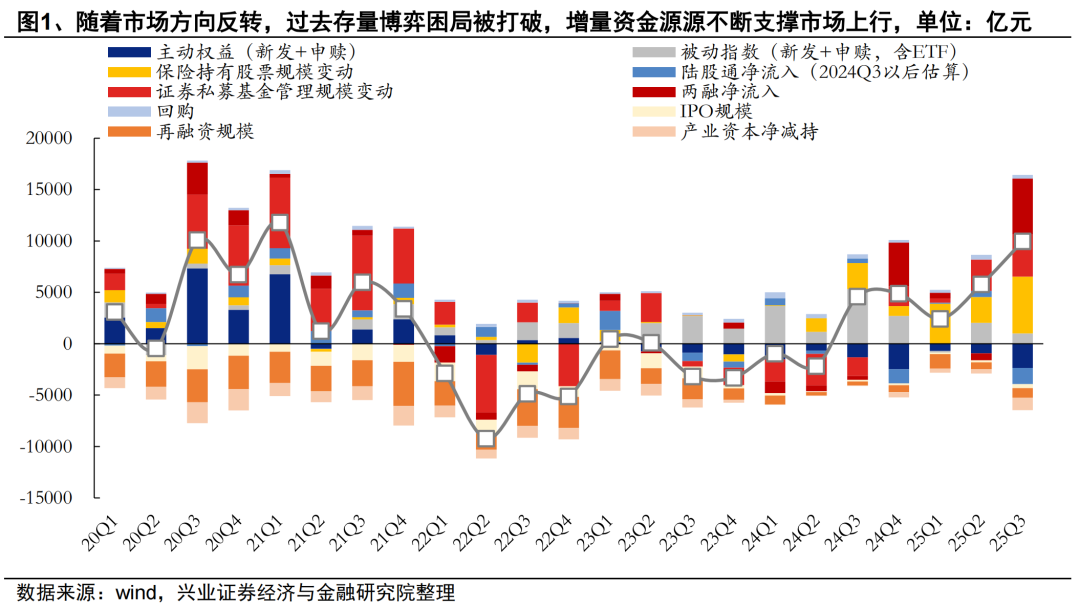
Core Viewpoint - The report from Industrial Securities indicates that since 2025, various types of capital have accelerated their entry into the market, driving indices to new ten-year highs. The influx of incremental capital is expected to continue this year, supported by domestic wealth reallocation, active equity fund returns, and foreign capital returning to Chinese assets [1]. Group 1: Capital Inflow Predictions - Public funds are expected to stabilize and recover, with new active equity funds projected to reach 5 trillion yuan by 2026, while existing funds may see a net redemption of around 2 trillion yuan [3]. - Insurance capital is anticipated to increase its stock market investments significantly, with net inflows expected to reach 12 trillion yuan by 2026 due to high premium income and supportive policies [3]. - Foreign capital is projected to return to the A-share market, with an estimated inflow of around 1 trillion yuan, driven by favorable conditions such as U.S. interest rate cuts and the undervaluation of the RMB [3][21]. Group 2: Characteristics of Current Capital Inflows - The current market shows a notable characteristic of synchronized capital inflows from various sources, reducing the impact of any single capital flow slowdown. This includes contributions from insurance, ETFs, private equity, and margin financing [5]. - Major institutional holdings account for approximately 8% of the free float market capitalization of the entire A-share market, indicating a balanced pricing power among different types of capital [5]. Group 3: Active Equity Funds - Active equity funds are expected to transition from significant net outflows to small net inflows by 2026, driven by improved excess returns and the establishment of trust between fund managers and investors [8][9]. - The active equity funds are projected to see a monthly issuance of 300-500 billion yuan, with net inflows of around 2 trillion yuan anticipated by 2026 [17]. Group 4: Insurance Capital Trends - Insurance capital is expected to continue its systematic allocation to equity assets, with a projected increase of 1.2 trillion yuan in A+H shares by 2026, driven by high premium income and regulatory encouragement [32][40]. - The proportion of equity assets held by insurance capital has risen to 15.5%, nearing historical highs, with a significant focus on high-dividend stocks [35]. Group 5: Private Equity and Fund Management - Private equity funds are experiencing a resurgence in net inflows, driven by high-net-worth individuals seeking financial asset allocations amid declining returns from real estate and traditional industries [42]. - The management scale of private equity funds has increased significantly, with a notable rise in stock positions, indicating strong demand from high-net-worth individuals [42]. Group 6: Margin Financing and ETF Trends - Margin financing has seen rapid growth, but the increase in leverage poses risks to market stability. Future inflows may slow, but overall totals are expected to remain stable [46]. - ETFs are shifting from broad index purchases to industry and thematic investments, with significant net inflows into thematic ETFs, indicating changing investor preferences [49][51]. Group 7: National Team and Long-term Capital - The national team is playing a stabilizing role in the market, providing liquidity support during downturns and preventing overheating during upswings, with significant holdings in stock ETFs [54]. - Policies are being implemented to encourage long-term capital inflows, particularly from social security and pension funds, which are expected to increase their equity allocations [59][61].
1.19犀牛财经晚报:IMF上调中国经济增长预期
Xi Niu Cai Jing· 2026-01-19 10:26
Group 1 - IMF raised China's economic growth forecast for 2025 by 0.2 percentage points to 5% and also increased the 2026 growth expectations [1] - The People's Bank of China lowered the re-lending and rediscount rates by 0.25 percentage points, which is expected to enhance credit supply to key sectors [1] - In December 2025, the monthly active users of securities apps reached 175 million, marking a 1.75% month-on-month increase and a 2.26% year-on-year increase, setting a new monthly record for that year [1] Group 2 - The number of private equity firms with over 10 billion yuan in assets has reached 114, with the addition of one firm and two exits from this category [2] - Michael Burry warned about the AI bubble, predicting a prolonged downturn in the tech industry due to overspending on data centers and microchips [2] Group 3 - The gold price in Shenzhen's Shui Bei market reached 1200 yuan per gram, up from approximately 1126 yuan at the beginning of January [3] - Global DRAM supply is expected to be revised upward by 2027 due to Micron's acquisition plans, which will enhance advanced DRAM production capacity [3] Group 4 - Porsche's global sales in 2025 were 279,400 units, a 10% decline year-on-year, with a significant drop of 26.28% in the Chinese market [4] - Three squirrels confirmed a price adjustment for some products due to rising logistics and labor costs as the Spring Festival approaches [4] Group 5 - West Securities Research Director Mu Qiguo is set to resign from his position [5] - Greenland Holdings has had 3.71 billion yuan worth of shares frozen for three years by a court [5] Group 6 - Vanke has been listed as an execution target for over 1.08 billion yuan by a court [6] - The China Securities Regulatory Commission imposed a three-year market ban on Jin Yongrong for manipulating the securities market [7] Group 7 - Shenzhen Pengcheng New Energy Technology Co., Ltd. has initiated IPO counseling for A-shares [8] - Jiangxi Copper signed a cooperation framework agreement with China Ordnance Material Group for the purchase and sale of copper and nickel products [9] Group 8 - Huazhong Cable terminated its acquisition of Hunan Xingxin Aerospace New Materials Co., Ltd. due to disagreements on specific terms [10] - Zhonghe Technology won a 141 million yuan project for the Chongqing Rail Transit signal system [11] Group 9 - New Fengming plans to acquire a 35% stake in a port development company for 259 million yuan [12] - Chongqing Construction won a construction project worth approximately 1.023 billion yuan [13] Group 10 - Nanjing Commercial Travel expects a net profit decline of 75.90% to 83.57% for 2025 [14] - Ruimai Te anticipates a net profit increase of 22.28% to 51.24% for 2025 [15] Group 11 - Fulai Ente expects a net profit growth of 81.67% to 127.08% for 2025 [16] - Libang Instruments forecasts a net profit increase of 75% to 105% for 2025 [17] Group 12 - Ding Tong Technology expects a net profit increase of approximately 120% for 2025 [19] - E-Dian Tianxia's stock will resume trading on January 20 after a suspension for price volatility [20] Group 13 - The three major indices showed mixed results, with the Shanghai Composite Index rising by 0.29% and the ChiNext Index falling by 0.7% [21]
石基信息(002153) - 2026年1月19日投资者关系活动记录表
2026-01-19 10:00
Group 1: Product Advantages and Market Positioning - DAYLIGHT PMS is designed as a platform product specifically for group clients, utilizing a microservices architecture that allows for external integration of hotel operations [2] - The product offers a single customer profile and inventory, simplifying data management for hotel groups [2] - Competitors in the international hotel group information system market include ORACLE, INFOR, and Agilysys [3] Group 2: Market Strategy and Client Segmentation - DAYLIGHT PMS primarily targets international chain hotels and luxury hotel groups with strong centralized control, rather than focusing solely on hotel tier [4] - The company also offers other cloud PMS products tailored for localized star-rated hotels and pure domestic star-rated hotel markets [4] Group 3: AI Integration and Development - AI is being utilized in two main areas: marketing tools that generate revenue based on a percentage of GMV, and predictive analytics within PMS and POS products [5] - The company is actively using AI in product development to enhance coding efficiency and ensure the security of AI-generated code [5] Group 4: Operational Efficiency and Partnerships - The company enhances operational efficiency by directly connecting customer information systems with various booking channels and payment institutions [6] - Strategic collaboration with Alibaba leverages both online and offline resources, facilitating a comprehensive integration of information systems [7][8] Group 5: Research and Development Investment - The company plans to maintain significant R&D investments to develop additional functionalities and integrate more subsystems into DAYLIGHT PMS [9] Group 6: Supplier Selection and Market Entry - Hotel groups typically avoid exclusive agreements with suppliers, opting for a single system to reduce costs and improve management efficiency [10] - International hotel groups often launch in the Chinese market first due to its advanced mobile applications and stringent data security compliance [11] Group 7: SaaS Business Model - The SaaS business model charges subscription fees based on the number of hotel rooms and the functionalities utilized [11] - After signing with a hotel management group, individual hotels must negotiate based on the standards set by the group [11]

证券类App,最新月活排名出炉
Zhong Guo Ji Jin Bao· 2026-01-19 08:28
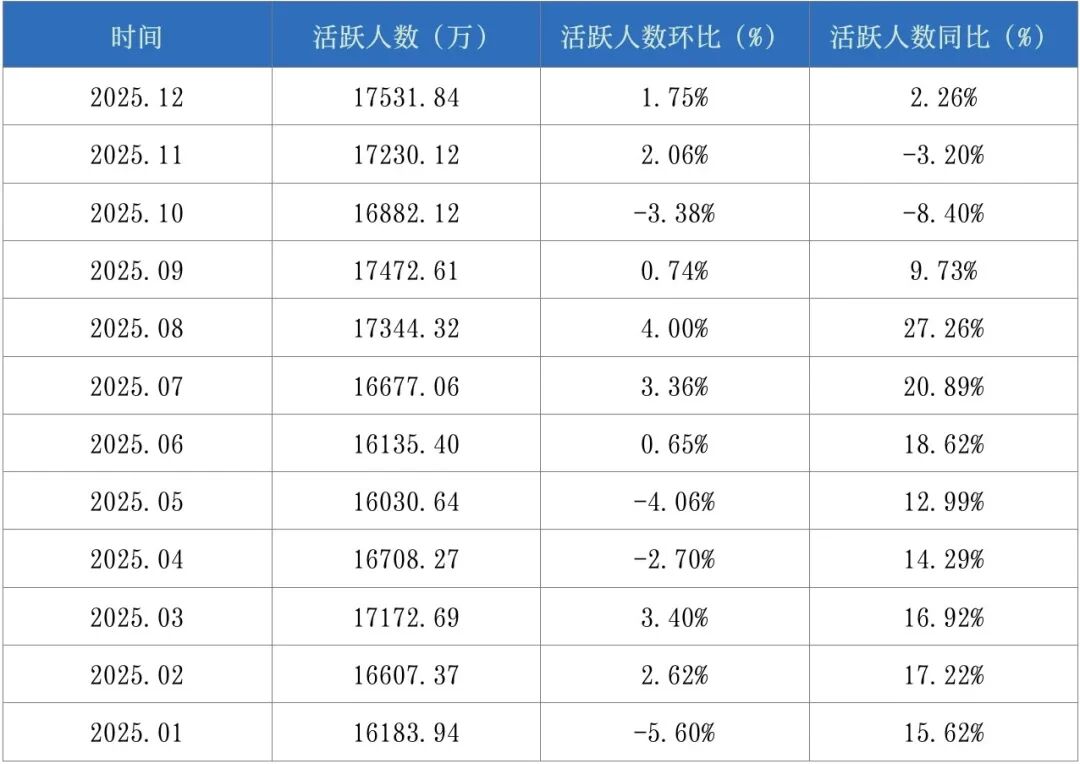
Core Insights - The monthly active users (MAU) of securities apps reached a record high of 175 million in December 2025, marking a 1.75% month-over-month increase and a 2.26% year-over-year increase, indicating a strong recovery in user engagement within the year [1][2]. User Engagement Trends - The year 2025 saw a fluctuating trend in MAU for securities apps, starting at approximately 161.84 million in January, peaking in December. The lowest point was in May, after which a recovery began, with notable rebounds in November and December [1][2]. - The monthly active user numbers for the months leading up to December were as follows: - January: 161.84 million - March: 171.73 million - May: 160.31 million (lowest point) - November: 172.30 million - December: 175.31 million [2]. Competitive Landscape - In December, third-party securities apps dominated the market, with Tonghuashun leading at 36.70 million MAU, followed by Dongfang Caifu at 18.22 million and Dazhihui at 12.97 million. Among brokerage apps, Huatai's Zhangle Wealth and Guotai Junan's Junhong surpassed 10 million MAU [2][3]. - The number of brokerage apps with an average monthly active user count exceeding 6 million increased to 14 in 2025, reflecting a growing concentration in the market [4]. AI Integration in Services - The application of AI technology in the securities industry has accelerated, with various brokerages launching intelligent tools across three core areas: intelligent research, trading, and advisory services. This aims to enhance user experience and service efficiency [6]. - Notable advancements include: - Upgrades in intelligent trading systems by Galaxy Securities, which automate price negotiations and order generation [6]. - The launch of AI advisory platforms by multiple brokerages, integrating comprehensive financial data to improve user decision-making [6]. Average Monthly Active Users - The average monthly active users for the top securities apps in 2025 were as follows: - Tonghuashun: 35.50 million - Dongfang Caifu: 17.43 million - Dazhihui: 12.10 million - Zhangle Wealth: 11.44 million - Guotai Junan Junhong: 9.88 million [5].


证券类App,最新月活排名出炉
中国基金报· 2026-01-19 08:13
Core Insights - The monthly active users (MAU) of securities apps reached 175 million in December 2025, marking a 1.75% month-on-month increase and a 2.26% year-on-year increase, achieving a new monthly high for the year [4][3] - Throughout 2025, the MAU of securities apps experienced a recovery after a dip in the middle of the year, with a significant rebound in November leading to a peak at year-end [4][2] - The competition for traffic between third-party platforms and brokerage self-operated apps intensified, with brokerages accelerating the integration of AI technology in advisory and trading scenarios to enhance service models and user experience [4][12] Monthly Active Users Overview - In December 2025, the MAU for securities apps was 175.32 million, with notable monthly changes: November had 172.30 million (up 2.06% month-on-month) and October had 168.82 million (down 3.38% month-on-month) [5][4] - The MAU trend for 2025 showed a starting point of 161.84 million in January, peaking in December after a recovery phase post-May [4][5] Leading Apps and Market Dynamics - The top three securities apps by MAU in December were Tonghuashun (36.70 million), Dongfang Caifu (18.22 million), and Dazhihui (12.97 million) [6][5] - Among brokerage self-operated apps, Huatai's Zhangle Wealth reached over 12 million MAU, followed by Guotai Haitong Junhong with 10.40 million [6][5] - The number of brokerage apps with an average monthly active user count exceeding 6 million increased to 14 in 2025, indicating a growing concentration in the market [8][7] AI Technology Integration - The application of AI technology in the securities industry has accelerated, with multiple brokerages launching intelligent tools across key areas such as intelligent research, trading, and advisory services [12][11] - Notable advancements include the upgrade of trading robots by Galaxy Securities and the introduction of AI advisory platforms by various brokerages, enhancing service efficiency and user experience [13][12] - Despite the current limitations of AI tools in guaranteeing stable investment returns, their functionality is expanding, addressing various investment challenges and improving investors' capabilities in data analysis and strategy formulation [12][13]




证券ETF鹏华(159993)盘中净申购3200万份,12月证券类APP月活达1.75亿
Xin Lang Cai Jing· 2026-01-19 06:59
Group 1 - The number of monthly active users for securities apps reached 175 million in December 2025, marking a month-on-month increase of 1.75% and a year-on-year increase of 2.26%, setting a new monthly record for 2025 [1] - CITIC Securities highlighted that the latest draft for public consultation focuses on serving the real economy, enhancing the inclusiveness of the capital market, and preventing systemic risks, establishing a clear and sustainable regulatory framework for the derivatives market [1] - Securities companies with strong compliance capabilities and superior product and service offerings are expected to gain more stable development opportunities in an increasingly regulated market environment [1] Group 2 - As of January 19, 2026, the constituents of the Guozheng Securities Leading Index (399437) showed mixed performance, with Guolian Minsheng leading with a 2.49% increase, followed by Caitong Securities at 0.58%, and Changjiang Securities at 0.35% [1] - The Securities ETF Penghua (159993) closely tracks the Guozheng Securities Leading Index, reflecting the market performance of quality listed companies in the securities theme of the Shanghai and Shenzhen markets, and providing investors with richer index investment tools [1] - As of December 31, 2025, the top ten weighted stocks in the Guozheng Securities Leading Index accounted for 79.13% of the total index weight, including companies like Dongfang Caifu, CITIC Securities, and Huatai Securities [2]

ETF盘中资讯|资金继续爆买!创业板人工智能ETF(159363)盘中下探1%吸金3亿元!机构建议关注算力业绩催化
Sou Hu Cai Jing· 2026-01-19 05:48
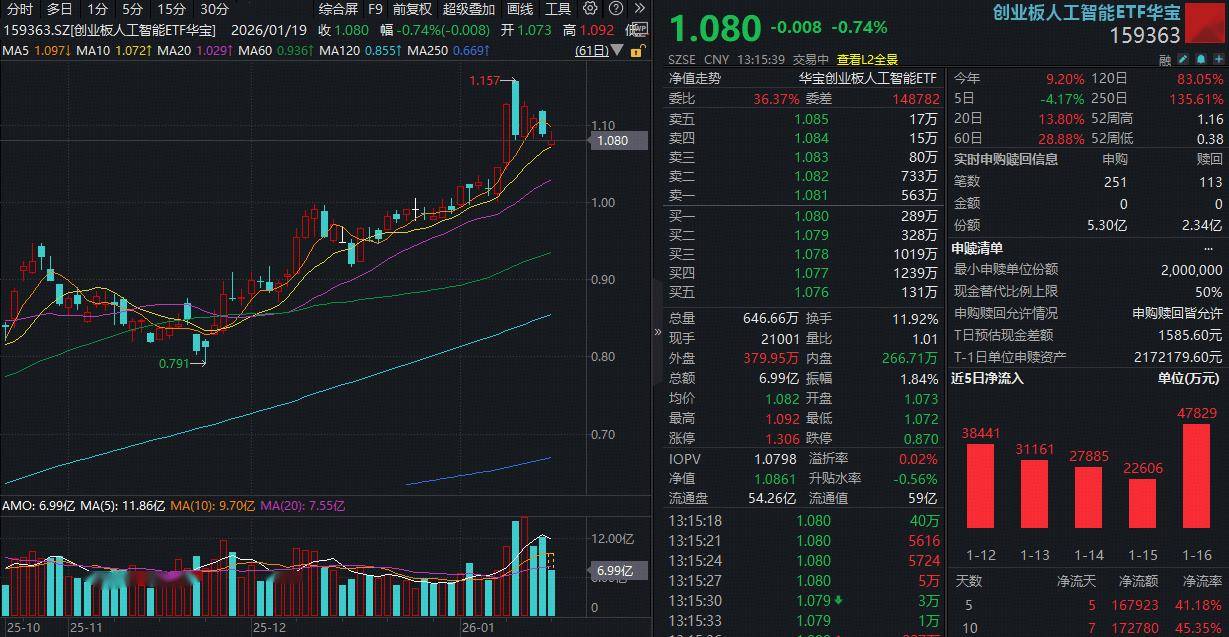
展望后市,当前AI发展从算力建设走向应用落地,一键布局"算力+AI应用"的创业板人工智能ETF(159363)及场外联接(A类023407、C类023408),更直 接受益于AI技术商业化爆发的增长红利。从赛道看,创业板人工智能约六成仓位布局算力(光模块为主),约四成仓位布局AI应用,不止是"算力"核心, 也是真正的"AI应用"代表。 1月19日,创业板人工智能震荡下探1%,大额资金继续涌入。成份股跌多涨少,截至发稿,航宇微、蓝色光标领涨超5%,铜牛信息、首都在线、新易盛等 上涨超2%。下跌方面,锐捷网络领跌超10%,深信服、联特科技、太辰光、光环新网等多股跌超2%。 热门ETF方面,双线布局"算力+AI应用"的创业板人工智能ETF(159363)场内下探1%,盘中下触10日线,资金逢跌买入。继单周爆买近17亿元后,今日盘 中资金再度净申购3亿份,按场内平均价估算约超3亿元。 | 分时 多日 1分 5分 15分 30分 综合屏 F9 前复权 超级叠加 画线 工具 ♡ 2 » | | | | | | 创业板人工智 | | --- | --- | --- | --- | --- | --- | --- | | 2 ...

港股开盘 | 恒指低开0.76% 贵金属板块走强 紫金矿业等涨超1%
Zhi Tong Cai Jing· 2026-01-19 01:48
Group 1 - The Hang Seng Index opened down 0.76% and the Hang Seng Tech Index fell 0.77%, with strong performance in the precious metals sector, particularly Zijin Mining and China Silver Group, both rising over 1%, while tech stocks like Alibaba dropped over 2% [1] - Tianfeng Securities believes that the Hong Kong stock market has a rebound basis supported by valuation repair and sentiment improvement in the short term, but the upward elasticity and sustainability are constrained by multiple factors due to high overseas interest rates and limited rate cut expectations [1] - China Merchants Securities notes that the lagging performance of Hong Kong stocks compared to A-shares is primarily due to overseas liquidity dynamics, with the US unemployment rate dropping to 4.4%, supporting a 95.6% probability of the Federal Reserve pausing rate cuts in January [1] Group 2 - Huatai Securities indicates that after a month of pessimistic consolidation, the Hong Kong stock market sentiment index has officially entered a panic zone, historically leading to a significantly increased probability of price increases in the following month [2] - Industrial Securities recommends prioritizing leading internet companies in the Chinese AI sector, expecting a resonance of buying from both domestic and foreign capital [2] - The report suggests focusing on dividend assets in a low-interest-rate environment, highlighting opportunities in insurance, banking, energy, property management, and public utilities [2]

机构:高净值人群资金成A股入市主力
2 1 Shi Ji Jing Ji Bao Dao· 2026-01-18 14:49
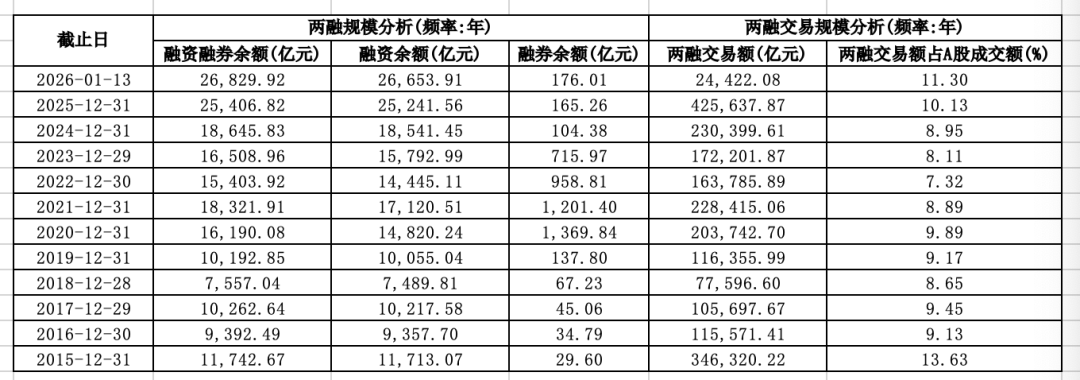
Core Viewpoint - The A-share market has shown strong performance at the beginning of 2026, with active trading and a significant increase in margin financing accounts, indicating a robust influx of new capital into the market [1]. Group 1: Market Activity and Capital Inflow - In 2025, a record 1.5421 million new margin financing accounts were opened, marking a more than 50% increase from 2024 [1]. - By the end of 2025, the total margin financing balance surged from 1.85 trillion yuan to 2.52 trillion yuan, reflecting a growth of over 30% [1]. - In the first week of 2026, net inflow of margin financing exceeded 80 billion yuan [1]. Group 2: Changes in Margin Financing Regulations - On January 14, 2026, the Shanghai and Shenzhen Stock Exchanges announced an increase in the minimum margin financing ratio from 80% to 100% for new contracts, aimed at reducing leverage levels and protecting investor rights [3][7]. - This adjustment is applicable only to new margin financing contracts, while existing contracts will continue under previous regulations [8] [7]. Group 3: Future Capital Inflow Expectations - Analysts predict that the structure of new capital inflow in 2026 will shift towards ordinary residents as their risk appetite recovers, with an estimated total inflow of 2 trillion yuan for the year [12]. - The influx of capital in 2025 was characterized by significant participation from private equity funds and leveraged funds, with a notable return of foreign capital [10][11]. Group 4: Investment Trends and Sector Focus - Financial institutions maintain an optimistic outlook for the A-share market, driven by increasing investor confidence and a stable upward trend [13]. - Key investment areas include AI, high-end manufacturing sectors such as military and nuclear power, and traditional industries undergoing transformation through AI [13]. - Investment strategies for 2026 emphasize technology innovation and cyclical supply-demand rebalancing, particularly in AI-driven hardware and domestic semiconductor industries [14].