Stellantis N.V.

Search documents
中国车企在欧销量暴涨127%,份额逼近10%
Di Yi Cai Jing· 2026-01-21 11:32
Core Insights - In 2025, Chinese automakers achieved record sales in the European market, reaching 811,000 units, a year-on-year increase of 99% [2] - The overall European automotive market saw sales of 13.3 million units in 2025, a 2.3% increase from the previous year, with electric vehicle sales growing by 30% [2] Group 1: Market Performance - Chinese automakers' monthly sales in Europe surpassed 100,000 units for the first time in December 2025, totaling 109,900 units, representing a 127% year-on-year growth [2] - The market share of Chinese automakers in Europe reached 9.5% in December 2025, up from 4.5% in the same month of 2024 [2] - The total sales of Chinese brands in Europe for 2025 were 811,000 units, with a market share of 6.1%, compared to 3.1% in 2024 [2] Group 2: Brand Performance - SAIC MG was the highest-selling Chinese brand in Europe in 2025, with sales of 307,000 units, a 26% increase, ranking 16th overall [3] - BYD followed with sales of 187,000 units, a 276% increase, moving up from 31st to 22nd place [3] - Chery's brands collectively sold 120,000 units in Europe, significantly higher than 17,000 units in 2024, while Geely's brands sold 68,000 units, a 58% increase [3] Group 3: Market Dynamics and Strategies - The European automotive market is facing a 35.3% anti-subsidy tax on Chinese electric vehicles, effective from 2024, which poses challenges for Chinese manufacturers [3] - Despite initial sales declines in Q1 2025 due to tariffs, BYD and other brands like Leap Motor are expanding their market share in Europe [4] - Chinese automakers are leveraging plug-in hybrid models, which are still subject to a 10% basic tariff, to navigate the tariff landscape and capture market share [4] Group 4: Future Outlook - The price commitment mechanism between China and the EU is expected to stabilize sales in the short term, with a projected annual growth rate of around 20% for Chinese electric vehicle exports to the EU from 2026 to 2028 [5] - As companies adapt to new regulations and enhance local production capabilities, the competitiveness of Chinese electric vehicles in the EU market is anticipated to improve [5]

2025全球汽车行业十大年度事件 | 精进2025——汽车行业10个十大年度盘点(十)
Jing Ji Guan Cha Wang· 2026-01-21 08:25
Core Insights - The automotive industry in 2025 has experienced significant changes driven by a combination of policies and market dynamics, leading to a complex environment characterized by both opportunities and challenges [2][4]. Group 1: Policy Changes - The global automotive industry faced a "tariff storm" initiated by the U.S. imposing a 25% tariff on imported cars and parts, which triggered retaliatory measures from Canada and Mexico, significantly impacting operational costs for companies like Audi and Ford [5][6]. - The EU's proposal to adjust its 2035 ban on new combustion engine vehicles reflects a shift in climate policy, allowing for a 90% reduction in CO2 emissions instead of a complete ban, driven by market realities and competitive pressures [8][9]. - The U.S. energy strategy underwent a major reversal with the signing of the "Big and Beautiful" act, which eliminated several green energy incentives and relaxed fuel economy standards, leading to a slowdown in electric vehicle investments by companies like GM and Ford [12][13]. Group 2: Industry Dynamics - The European automotive sector faced a wave of factory closures, including Audi and Volkswagen, as companies struggled with high costs and declining demand, prompting significant restructuring efforts [10][11]. - The introduction of a new electric vehicle subsidy program in Germany aims to stimulate domestic demand and protect local manufacturers amid declining sales and increased competition from foreign brands [17][18]. - The failure of the Honda-Nissan merger led Nissan to initiate a global restructuring plan, highlighting the financial pressures faced by Japanese automakers in the evolving market landscape [19]. Group 3: Strategic Collaborations - Ford and Renault announced a strategic partnership to develop affordable electric vehicles in Europe, reflecting a collaborative approach to address the challenges posed by the electric vehicle market and competition from Chinese brands [20][21]. Group 4: Resource and Technology Trends - China's export controls on rare earth materials have intensified the global competition for resources essential for electric vehicle production, prompting the U.S. and EU to accelerate their own supply chain strategies [15][16]. - The hydrogen fuel technology sector is experiencing a slowdown, with major manufacturers like Stellantis and GM halting their hydrogen projects due to high costs and inadequate infrastructure, indicating a shift in focus towards electric vehicles [22][23][24].


加拿大下调关税,“为中国电车敞开大门”
Huan Qiu Shi Bao· 2026-01-21 04:37
Core Viewpoint - Canada has significantly adjusted its import policy for Chinese electric vehicles, eliminating the 100% additional tax and providing an annual quota of 49,000 vehicles, which will enjoy a 6.1% most-favored-nation tariff rate. This move is seen as a response to the U.S. government's pressure on automakers and opens the door for Chinese manufacturers to assemble vehicles in Canada for the first time [1][2]. Group 1: Policy Changes and Impacts - The Canadian government, led by Prime Minister Carney, announced the cancellation of the additional tariffs on Chinese electric vehicles, which were previously set at 100% starting from October 2024 [2][3]. - The new policy is expected to foster joint ventures between Chinese companies and reliable Canadian partners, preserving and creating jobs in the Canadian automotive sector while enhancing the electric vehicle supply chain [2][3]. - Over 50% of the imported vehicles under the new agreement are projected to be affordable models priced below CAD 35,000 (approximately RMB 175,000), providing more options for Canadian consumers [2][3]. Group 2: Market Reactions and Future Prospects - Following the tariff adjustments, the value of electric vehicle imports from China to Canada surged from less than CAD 100 million in 2022 to CAD 2.2 billion in 2023, with approximately 44,000 units imported, primarily Tesla Model Y [3]. - Experts predict that Chinese automotive brands could capture about 10% of the Canadian electric vehicle market due to the favorable trade agreement [5]. - The Canadian Electric Vehicle Association expressed optimism about the increased competition and lower prices resulting from the influx of Chinese electric vehicles, which are typically priced CAD 10,000 to CAD 15,000 lower than comparable models in Canada [6][7]. Group 3: Strategic Developments - The Canadian government is formulating a new automotive industry strategy aimed at enhancing market access for domestic manufacturers while imposing stricter conditions on foreign automakers that do not establish local production [8][9]. - The new policy allows for the first time the assembly of vehicles by Chinese manufacturers in Canada, with stipulations for using Canadian software and forming joint ventures with local companies [9][10]. - There is a strong potential for investment from Chinese electric vehicle companies in Canada, as the market offers significant opportunities due to its size and demand for affordable electric vehicles [10].
德国突然复活电车补贴,中国车也不例外
汽车商业评论· 2026-01-20 23:15
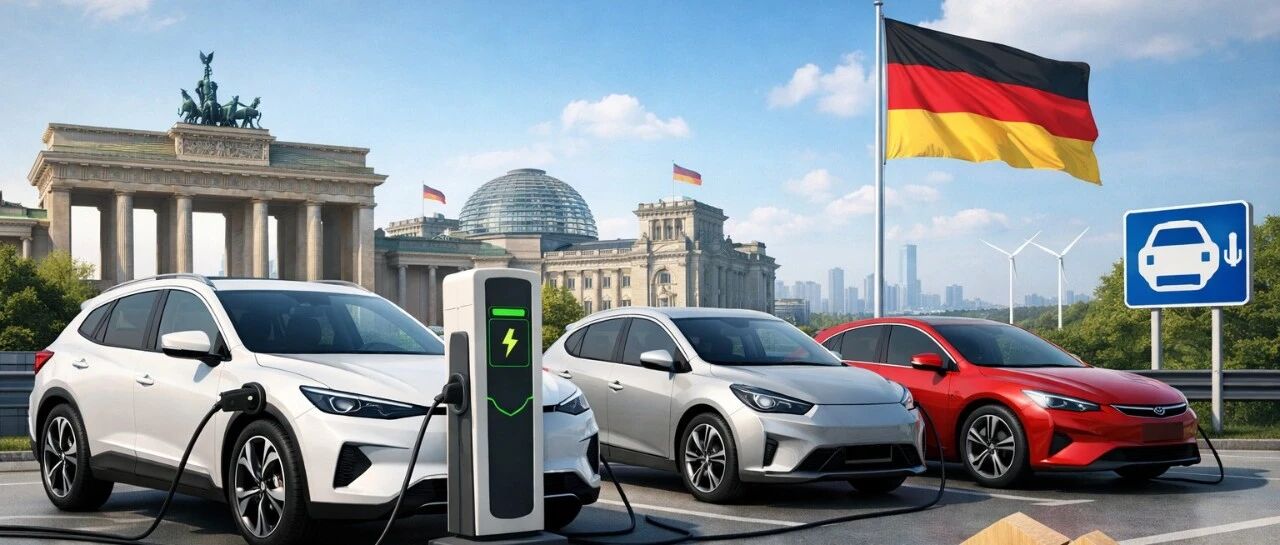
Group 1 - The core viewpoint of the article is the introduction of a new car subsidy program in Germany aimed at low- to middle-income families, with a budget of €3 billion to support approximately 800,000 vehicles by 2029 [3][4][9] - The subsidy amounts range from €1,500 to €6,000, with specific criteria based on family size and income levels, emphasizing support for families with children and lower-income households [7][14] - The program includes electric vehicles (BEV), eligible plug-in hybrids (PHEV), and range-extended electric vehicles (REEV), with specific emissions and range requirements for certain models to qualify for subsidies [7][8] Group 2 - The subsidy program is a response to a significant decline in electric vehicle demand in Germany, following the abrupt termination of previous subsidies in late 2023, which led to a cooling market in 2024 [4][12] - The new policy aims to stabilize the automotive manufacturing sector affected by market fluctuations, with a focus on new car purchases rather than used vehicles [9][12] - The program allows for the inclusion of imported vehicles, including those manufactured in China, marking a shift towards a more open market compared to other European countries that have imposed restrictions [15][18] Group 3 - The subsidy structure is designed to target private low-income families, with the intention of making electric vehicles more accessible to those who might be deterred by prices [13][14] - The government has set specific income thresholds for eligibility, with a maximum taxable annual income of €80,000 for families, and additional allowances for children [7][9] - The program's implementation timeline is crucial, as it allows for vehicles registered after January 1, 2026, to qualify for subsidies, with an online application platform expected to launch in May 2026 [8][9]
财经观察:加拿大下调关税,“为中国电车敞开大门”
Huan Qiu Shi Bao· 2026-01-20 23:01
【环球时报驻加拿大特约记者 陶短房 环球时报记者 丁雅栀 环球时报特约记者 任重】编者的话:"加拿 大为中国电动汽车敞开了大门。"加拿大《环球邮报》19日报道称,加拿大总理卡尼近期宣布对中国电 动汽车进口政策实施重大调整,加拿大不再征收100%附加税,同时给予每年4.9万辆的配额,配额内享 受6.1%的最惠国关税待遇。另据彭博社报道,加拿大政府正在制定一项新的汽车业发展策略,旨在为 在该国生产汽车的企业提供更广阔的市场准入机会。报道认为,此举是对美国现任政府迫使汽车制造商 将工厂从加拿大迁至美国这一行为的回击,同时也为中国汽车制造商首次在加拿大组装汽车敞开大门。 加拿大多项政策调整引发车企与市场的积极反响,相关行业专家表示,"这无疑是重大利好"。 4.9 万辆配额: " 探寻市场的机遇 " 中国机电产品进出口商会汽车国际化专业委员会高级专家孙晓红在接受《环球时报》记者采访时表示, 2024年加拿大政府跟随美国,对中国电动车加征100%关税后,这一举措向双方合作发出了错误信号。 中国电动汽车本身在价格、性能等方面很适合加拿大消费者,原本正处于良好发展势头,却被强行中 断。当前,卡尼政府取消了此前100%的加税, ...
Can a Stellantis Turnaround Make Investors Rich?
Yahoo Finance· 2026-01-20 18:25
Core Insights - Stellantis presents a potential investment opportunity despite a 35% decline in stock value over the past three years, contrasting with competitors like Ford and General Motors, which have seen gains of 9% and 122% respectively [2][4] - The company is at a crossroads under new CEO Antonio Filosa, who faces the challenge of redefining Stellantis' identity and improving its market position [3][4] Company Strategy - Stellantis has struggled to establish a clear identity post-merger of Fiat Chrysler and PSA Group in 2021, leading to a portfolio of 14 brands with unclear strategic direction [4][5] - The automaker plans to maintain its global structure while investing significantly in its brands, particularly Jeep, Ram, and hybrids, to drive sales and revenue growth [7] - A substantial investment of $13 billion is earmarked for U.S. operations over the next four years, indicating a commitment to revitalizing its market presence [7] Product Development - Jeep is identified as a critical component of Stellantis' strategy, with plans to launch four new or refreshed models, including a new Cherokee, within a year to replace discontinued high-volume products [8]

豪掷30亿欧元 德国重启电车购车补贴
Bei Jing Shang Bao· 2026-01-20 16:57
Group 1 - The German government announced a subsidy of up to €6,000 for households purchasing new electric vehicles to boost the domestic electric vehicle industry, following the termination of the previous subsidy policy at the end of 2023 [1][2] - The total budget for the new electric vehicle support plan is €3 billion (approximately $3.49 billion), aimed at supporting the purchase or leasing of about 800,000 new vehicles, applicable to private consumers starting from January 1, 2026 [1][2] - The new support plan is expected to increase electric vehicle registrations by 17% this year, reaching nearly 1 million, according to the German automotive industry association (VDA) [3] Group 2 - The new subsidy plan will be effective retroactively from the beginning of this year and will last until 2029, with no geographical restrictions [2] - The German automotive industry has been struggling to adapt to the transition to electric vehicles amid a weak global economy and declining demand, facing significant competition from local Chinese manufacturers [1][2] - The UK government has also announced a green freight plan with a budget of £318 million (approximately $427 million) for electric truck purchase subsidies, highlighting a broader trend in Europe towards supporting electric vehicle adoption [4]
Is Rivian on Track to Launch the Affordable R2 Ahead of Schedule?
ZACKS· 2026-01-20 15:30
Core Insights - Rivian Automotive, Inc. has commenced production of validation units for its R2 electric SUV at its Normal, IL plant, with customer deliveries expected to start in the first half of 2026 [1][9] - The R2 is positioned as a more affordable, higher-volume vehicle aimed at expanding Rivian's market presence beyond its premium R1T and R1S models [2] - The Normal plant has undergone significant upgrades, including a 1.1 million square-foot expansion, to support the R2's production and planned launch [3] Production and Launch Timeline - Rivian initially anticipated R2 deliveries to begin in the first half of 2026, but with validation units now being produced, the company is on track to potentially start deliveries in late Q1 or early Q2 of 2026 [4][9] - The R2 is projected to have a starting price of approximately $45,000 [4] Marketing and Brand Positioning - Rivian will return as a headline sponsor at SXSW in 2026, focusing on promoting the R2 to a broader audience [5] Financial Performance - Rivian's stock has underperformed compared to the Zacks Automotive-Domestic industry, with shares gaining 21.7% over the past six months, while the industry grew by 33.6% [8] - Rivian's forward sales multiple is 2.96, which is below the industry's average of 3.27, indicating that the company may be undervalued [12] Earnings Estimates - The Zacks Consensus Estimate for Rivian's loss per share for 2025 has narrowed by a penny, while the estimate for 2026 has narrowed by 2 cents in recent weeks [11]

Germany to roll out €3bn EV subsidy scheme without origin restrictions – report
Yahoo Finance· 2026-01-20 12:15
Group 1 - Germany plans to launch a €3 billion ($3.5 billion) electric vehicle (EV) subsidy program to stimulate demand following a slump in domestic sales, open to all manufacturers including Chinese brands [1][2] - The program aims to finance the purchase of approximately 800,000 vehicles through 2029, with individual subsidies ranging from €1,500 to €6,000 based on household income, family size, and vehicle category [4] - The initiative is expected to benefit manufacturers like Volkswagen and Stellantis as they introduce more affordable electric models, while also supporting lower-cost Chinese manufacturers such as BYD [5][2] Group 2 - The German approach to EV subsidies differs from other European markets, where restrictions based on vehicle origin are imposed, such as in the UK and France [3] - The program is part of a broader effort to accelerate electric car adoption and support the automotive sector, which has faced challenges due to the withdrawal of subsidies in late 2023 [1][5] - The German government has also extended a tax exemption for electric vehicles until 2035, enhancing the prospects for lower-priced models like Renault's R5 E-Tech and Volkswagen's ID. Polo [6]
美国关税施压,欧洲汽车制造商股价集体下滑
Xin Lang Cai Jing· 2026-01-20 06:32
Group 1 - The European automotive sector experienced a collective sell-off due to the threat of new tariffs from the U.S., with major automakers' stock prices declining significantly during early trading [1][3] - President Trump announced a plan to impose a 10% tariff on goods from Denmark, Norway, Sweden, France, Germany, the UK, the Netherlands, and Finland starting February 1, with a potential increase to 25% on June 1 [3] - Following the announcement, stocks of major automotive companies such as BMW, Mercedes-Benz, and Porsche fell by over 3%, while Volkswagen and Ferrari saw declines exceeding 2% [3] Group 2 - The market is concerned that the new tariffs will increase operational uncertainty for European automakers in the North American market, putting long-term pressure on their profit expectations [3] - Previously, the Trump administration had announced a 25% tariff on EU automobiles, which was later adjusted to 15% under certain conditions, reflecting a history of fluctuating trade policies affecting the automotive industry [3] - The UK has implemented a tiered tariff system, with the first 100,000 cars subject to a 10% tariff and any additional units incurring a 27.5% tariff [3]