
价格承诺机制

Search documents
德国央行行长挑唆:别天真,得给中国划红线
Guan Cha Zhe Wang· 2026-01-24 13:48
Group 1 - The President of the German Central Bank, Joachim Nagel, emphasizes the need for Europe to better protect its key industries from competition with China, suggesting the establishment of "red lines" regarding Chinese influence [1][3] - Nagel acknowledges the dual nature of China's economic power, recognizing it as an attractive market for many companies while also posing significant competitive pressure, particularly on the German automotive industry [1][3] - The German government has announced a €3 billion electric vehicle subsidy plan, which does not exclude Chinese manufacturers, contrasting with other European countries that have implemented stricter standards to limit Chinese electric vehicles [3][4] Group 2 - Despite the increasing market share of Chinese car manufacturers in Germany, their overall presence remains low, with BYD projected to sell approximately 23,000 units in 2025, representing less than 1% of the total German automotive market [6] - The end of Germany's electric vehicle subsidy program in 2023 has led to a significant decline in new registrations, with a projected drop of over 27% to 380,000 units in 2024 [6] - Recent negotiations between China and the EU regarding electric vehicle trade have shown positive progress, indicating a potential easing of trade tensions, with Chinese brands expected to capture a record 12.8% of the European electric vehicle market by November 2025 [7][8]


中国车企在欧销量暴涨127%,份额逼近10%
Di Yi Cai Jing· 2026-01-21 11:32
Core Insights - In 2025, Chinese automakers achieved record sales in the European market, reaching 811,000 units, a year-on-year increase of 99% [2] - The overall European automotive market saw sales of 13.3 million units in 2025, a 2.3% increase from the previous year, with electric vehicle sales growing by 30% [2] Group 1: Market Performance - Chinese automakers' monthly sales in Europe surpassed 100,000 units for the first time in December 2025, totaling 109,900 units, representing a 127% year-on-year growth [2] - The market share of Chinese automakers in Europe reached 9.5% in December 2025, up from 4.5% in the same month of 2024 [2] - The total sales of Chinese brands in Europe for 2025 were 811,000 units, with a market share of 6.1%, compared to 3.1% in 2024 [2] Group 2: Brand Performance - SAIC MG was the highest-selling Chinese brand in Europe in 2025, with sales of 307,000 units, a 26% increase, ranking 16th overall [3] - BYD followed with sales of 187,000 units, a 276% increase, moving up from 31st to 22nd place [3] - Chery's brands collectively sold 120,000 units in Europe, significantly higher than 17,000 units in 2024, while Geely's brands sold 68,000 units, a 58% increase [3] Group 3: Market Dynamics and Strategies - The European automotive market is facing a 35.3% anti-subsidy tax on Chinese electric vehicles, effective from 2024, which poses challenges for Chinese manufacturers [3] - Despite initial sales declines in Q1 2025 due to tariffs, BYD and other brands like Leap Motor are expanding their market share in Europe [4] - Chinese automakers are leveraging plug-in hybrid models, which are still subject to a 10% basic tariff, to navigate the tariff landscape and capture market share [4] Group 4: Future Outlook - The price commitment mechanism between China and the EU is expected to stabilize sales in the short term, with a projected annual growth rate of around 20% for Chinese electric vehicle exports to the EU from 2026 to 2028 [5] - As companies adapt to new regulations and enhance local production capabilities, the competitiveness of Chinese electric vehicles in the EU market is anticipated to improve [5]

德国30亿欧元电车补贴对中企开放,“不设限,有信心赢得竞争”
Guan Cha Zhe Wang· 2026-01-20 03:42
Core Viewpoint - Germany has reintroduced an electric vehicle (EV) subsidy program worth €3 billion to stimulate market growth, contrasting with restrictive measures in other European countries that limit access for Chinese automakers [1][3]. Group 1: Subsidy Program Details - The new subsidy plan targets private consumers and applies to new registrations of pure electric vehicles, certain plug-in hybrids, and range-extended electric vehicles starting from January 1, 2026, until 2029 [3][4]. - Subsidy amounts range from €1,500 to €6,000 based on vehicle type, household size, and income level, with an expectation to support approximately 800,000 new vehicle purchases or leases [4]. Group 2: Market Impact and Industry Response - The German automotive industry association (VDA) welcomed the new subsidy plan but emphasized the need for improved infrastructure to ensure the program's effectiveness [4]. - Companies like Volkswagen and Stellantis are expected to benefit from the subsidy, as well as Chinese brands like BYD that are expanding in the European market [4]. Group 3: Trade Relations and Market Share - Recent negotiations between China and the EU regarding electric vehicle trade have shown positive progress, potentially allowing Chinese automakers to enter the EU market without facing anti-subsidy taxes [6][10]. - Chinese brands are gaining market share in Europe, with projections indicating that by November 2025, their share in the European electric vehicle market could reach a record 12.8% [7][10].
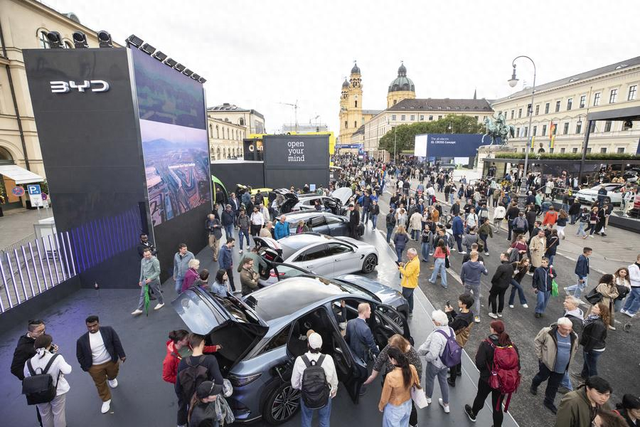
30亿补贴对中企开放,“不设限,德国有信心”
Guan Cha Zhe Wang· 2026-01-20 02:52
Group 1 - Germany has reintroduced an electric vehicle (EV) subsidy program worth €3 billion, aimed at stimulating market growth and open to all manufacturers, including Chinese companies [1][3] - The new subsidy plan will support approximately 800,000 new vehicle purchases or leases, focusing on low- to middle-income groups, and is expected to accelerate the adoption of electric vehicles in Germany [4] - The subsidy amounts will range from €1,500 to €6,000 based on vehicle type, household size, and income level, applicable to new registrations starting January 1, 2026, and lasting until 2029 [3][4] Group 2 - The German automotive industry association (VDA) welcomed the new subsidy plan but emphasized the need for improved infrastructure to ensure its effectiveness [4] - The new subsidy is seen as beneficial for companies like Volkswagen and Stellantis, which are increasing their focus on affordable electric vehicle models, as well as for Chinese brands like BYD that are expanding in the European market [4] - Recent developments in EU-China electric vehicle trade negotiations indicate a potential easing of tensions, with agreements that could allow Chinese manufacturers to enter the EU market without facing anti-subsidy tariffs [6][7] Group 3 - Chinese brands are gaining market share in Europe, with projections indicating that by November 2025, their share in the European electric vehicle market could reach a record 12.8% [7] - The expected annual growth rate for Chinese electric vehicle exports to the EU is around 20% from 2026 to 2028, positioning them as a significant driver of global electric vehicle market growth [10]
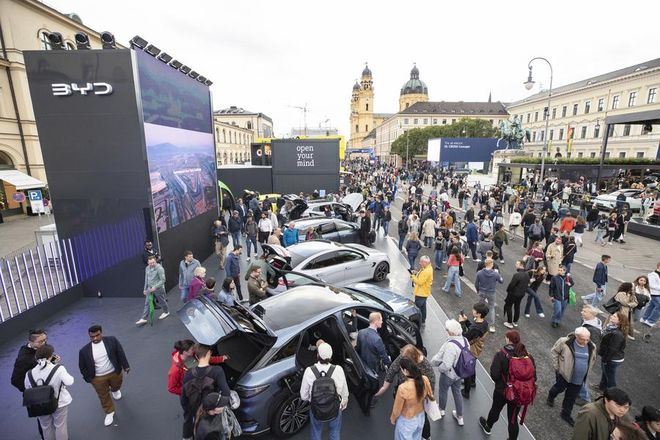
瑞银:中欧电动车价格承诺机制,为中国品牌带来长短期双重利好
Jing Ji Guan Cha Wang· 2026-01-16 09:34
Core Viewpoint - The introduction of a "price commitment" mechanism instead of high tariffs is a significant benefit for Chinese automotive companies, allowing them to avoid high tariffs and potentially achieve excess profits in a competitive market environment [2] Group 1: Price Commitment Mechanism - The price commitment mechanism is a legal alternative to anti-dumping or anti-subsidy measures under the World Trade Organization framework, where companies submit applications specifying minimum prices and annual export quantities [2] - This mechanism is expected to help improve the profitability of automotive companies and assist in establishing a mid-to-high-end brand image for Chinese vehicles in international markets [2][3] Group 2: Market Trends and Export Growth - Despite a slowdown in domestic demand, the export volume of Chinese vehicles is on the rise, with an expected increase of 1.5 million units in overseas sales by 2026, surpassing the previous average annual increase of 1 million units [3] - In 2025, the export of Chinese passenger cars is projected to reach 5.739 million units, representing a year-on-year growth of 19.7%, with nearly 50% of these being new energy vehicles [3] Group 3: Market Share Projections - By 2030, the market share of Chinese automotive brands in Western Europe is anticipated to rise from 5% to 15%, driven by increased cooperation with local European companies and the expansion of local production capacity [4] - Currently, Chinese automotive brands hold a 20% share in the global market, which is expected to grow to 25% by 2030 [4] Group 4: Challenges Facing the Automotive Market - The introduction of a 5% purchase tax on new energy vehicles in 2026 is expected to negatively impact the automotive market, with significant cost increases for consumers [6] - The new subsidy policy for new vehicles will reduce the financial support for consumers, particularly affecting lower-end models priced between 80,000 to 100,000 yuan [6] - Rising raw material prices, including lithium, copper, and aluminum, are anticipated to increase automotive production costs by several thousand yuan [7] Group 5: Sales Forecasts - The wholesale segment of the domestic automotive market is projected to experience a low single-digit decline in 2026, with retail sales also expected to decline in the mid-single digits, translating to a reduction of approximately 500,000 vehicles sold [7] - For the new energy vehicle sector, sales growth is forecasted at 8%, significantly lower than the previous year's growth of over 30%, with total sales growth expected to reach around 15% when including exports [7]
国泰海通|汽车:中欧电动汽车反补贴案取得阶段性进展
国泰海通证券研究· 2026-01-14 12:25
Core Viewpoint - The article discusses the significant framework consensus reached between China and the EU regarding the anti-subsidy case against Chinese electric vehicles, transitioning from high tariffs to a constructive "minimum price commitment" mechanism [1][2]. Group 1: Framework Consensus - On January 12, 2026, the Chinese Ministry of Commerce announced that China and the EU have reached an important framework consensus to replace high tariffs with a minimum price commitment mechanism [1]. - The EU had previously imposed anti-subsidy taxes on Chinese electric vehicles, with rates reaching up to 35.3%, significantly impacting the profitability and competitiveness of Chinese automakers in the European market [1]. - The consensus was reached after ongoing negotiations since October 2023, with the EU officially imposing anti-subsidy taxes in April 2024 [1]. Group 2: Price Commitment Mechanism - The EU will issue guidelines for submitting price commitment applications, allowing eligible Chinese electric vehicle companies to replace anti-subsidy taxes with price commitments [2]. - This arrangement reflects the willingness of both parties to resolve differences through dialogue within the framework of multilateral trade rules, contributing to the stability of the automotive industry and supply chain [2]. - The implementation of the price commitment mechanism is expected to alleviate the tariff pressure on Chinese electric vehicle exports to Europe, potentially lowering overall export costs and improving profit margins [2]. Group 3: Investment Recommendations - The article recommends investing in Chinese electric vehicle companies that have established a solid presence in the European market, with strong channels and product foundations [3].

中欧电动车案“软着陆”彰显对话的含金量
Xin Lang Cai Jing· 2026-01-13 23:58
Core Viewpoint - The resilience of China-EU relations is highlighted amidst increasing geopolitical tensions and protectionism, with both parties reaching a significant consensus on price commitment applications for Chinese electric vehicle companies [1] Group 1: Key Developments - The EU officially released guidelines for submitting price commitment applications, allowing Chinese electric vehicle companies to comply with these regulations [1] - The negotiations were characterized by mutual respect and adherence to World Trade Organization (WTO) rules, showcasing a rational approach to counter zero-sum game thinking [2] - The price commitment mechanism is seen as a predictable alternative that mitigates trade costs and ensures normal business operations for supply chain enterprises [2] Group 2: Industry Implications - The deep interconnection of the China-EU electric vehicle supply chain is emphasized, with the competitive edge of China's electric vehicle industry stemming from technological innovation and market competition [3] - The guidelines acknowledge the positive impact of Chinese investment and technology on Europe's green transition, suggesting that collaboration is more beneficial than imposing tariffs [3] - The resolution of the electric vehicle case is viewed as a calibration of the China-EU economic relationship, reinforcing the idea that open cooperation is the way forward [4] Group 3: Future Outlook - The China-EU economic relationship may enter a new phase characterized by normalized competition and stable cooperation, although the EU's "de-risking" policies remain a concern [4] - The successful resolution of the electric vehicle case should serve as a model for future negotiations, emphasizing the importance of maintaining global supply chain stability [4]
瑞达期货碳酸锂产业日报-20260113
Rui Da Qi Huo· 2026-01-13 10:09
Report Summary 1. Industry Investment Rating - Not mentioned in the report. 2. Core View - The lithium carbonate fundamentals are in a stage of slight increase in supply and cautious demand. It is recommended to conduct light - position oscillatory trading and pay attention to controlling risks in trading rhythm [2]. 3. Summary by Relevant Catalogs 3.1 Market Data - **Futures Market**: The closing price of the main contract was 166,980 yuan/ton, up 10,920 yuan; the net position of the top 20 was - 136,111 lots, up 1,772 lots; the position of the main contract was 460,281 lots, down 46,421 lots; the spread between near - and far - month contracts was - 4,360 yuan/ton, up 6,300 yuan; the Guangzhou Futures Exchange warehouse receipts were 26,898 lots/ton, up 928 lots [2]. - **Spot Market**: The average price of battery - grade lithium carbonate was 159,500 yuan/ton, up 7,500 yuan; the average price of industrial - grade lithium carbonate was 156,000 yuan/ton, up 7,500 yuan; the basis of the Li₂CO₃ main contract was - 7,480 yuan/ton, down 3,420 yuan [2]. - **Upstream Situation**: The average price of spodumene concentrate (6% CIF China) was 1,880 US dollars/ton, up 130 US dollars; the average price of amblygonite was 18,500 yuan/ton, up 850 yuan; the price of lithium mica (2 - 2.5%) was 6,500 yuan/ton, up 100 yuan [2]. - **Industry Situation**: The monthly output of lithium carbonate was 56,820 tons, up 2,840 tons; the monthly import volume was 22,055.19 tons, down 1,825.51 tons; the monthly export volume was 759.24 tons, up 513.33 tons; the monthly operating rate of lithium carbonate enterprises was 49%, up 2 percentage points; the monthly output of power batteries was 176,300 MWh, up 5,700 MWh [2]. - **Downstream and Application Situation**: The monthly operating rate of ternary cathode materials was 50%, down 1 percentage point; the monthly operating rate of lithium iron phosphate cathode was 60%, down 3 percentage points; the monthly output of new energy vehicles was 1,880,000 units, up 108,000 units; the monthly sales volume was 1,823,000 units, up 108,000 units; the cumulative sales penetration rate was 47.48%, up 0.74 percentage points; the cumulative sales volume was 14,780,000 units, up 3,518,000 units; the monthly export volume was 300,000 units, up 44,000 units; the cumulative export volume was 2.315 million units, up 1.174 million units [2]. - **Option Situation**: The total call position was 65,420 contracts, up 4,295 contracts; the total put position was 94,168 contracts, up 6,167 contracts; the put - call ratio of total positions was 143.94%, down 0.0252 percentage points; the implied volatility of at - the - money IV was 0.65%, up 0.0929 percentage points [2]. 3.2 Industry News - The Ministry of Commerce released a briefing on the progress of consultations in the China - EU electric vehicle case. The China - EU agreed to provide general guidance on price commitments to Chinese exporters of pure electric vehicles to the EU. It is expected that from 2026 to 2028, China's electric vehicle exports to the EU will maintain an average annual growth rate of about 20% [2]. - Xici Technology's sales revenue in the lithium - ion battery industry accounts for more than half. The lithium - ion battery industry shows signs of recovery, mainly driven by the growth of power battery and energy storage demand [2]. - The National Development and Reform Commission will improve supporting systems, issue management measures for the comprehensive utilization of new energy vehicle power batteries, and revise the guidance catalog for industrial structure adjustment [2]. - In December 2025, Chile's total lithium carbonate exports were 18,341 tons, a month - on - month increase of 2.10% and a year - on - year decrease of 8.68%. Exports to China decreased, while exports to South Korea and Japan increased [2]. 3.3 Market Analysis - **Fundamentals**: As lithium carbonate prices rise, lithium ore prices increase. There may be hedging space, and domestic supply is slightly increasing. Downstream battery cathode material manufacturers have low acceptance of high - priced lithium and mainly adopt a rigid - demand procurement strategy, with strong market wait - and - see sentiment [2]. - **Options**: The put - call ratio of option positions is 143.94%, down 0.0252% month - on - month, indicating a bearish sentiment in the option market, and the implied volatility slightly increases [2]. - **Technical Analysis**: On the 60 - minute MACD chart, the two lines are above the 0 axis, and the red bars are converging [2].