
GE Vernova

Search documents
QBTS vs. QUBT Ahead of Q3 Earnings: Which Quantum Stock Leads?
ZACKS· 2025-10-30 20:01
Core Insights - Quantum computing is in its early stages, presenting high risks but significant long-term potential, with D-Wave Quantum Inc. (QBTS) and Quantum Computing Inc. (QUBT) showing promising narratives ahead of their Q3 2025 earnings release [1] D-Wave Quantum Inc. (QBTS) - D-Wave reported a 42% year-over-year revenue increase in Q2 2025, achieving a record cash balance of over $819 million, driven by the rollout of its Advantage2 system and partnerships with companies like GE Vernova and Nikon Corporation [2][9] - The company enters Q3 2025 with strong financial health, allowing for accelerated adoption of Advantage2 and progress towards its goal of scaling to 100,000-qubit hardware [6][9] - D-Wave's strategic focus includes gate-model development, quantum-AI initiatives, and advanced cryogenic packaging partnerships, with Q3 serving as a potential indicator of its ability to convert liquidity into adoption [7][9] Quantum Computing Inc. (QUBT) - QUBT made significant advancements, including a commercial order for its quantum photonic vibrometer and the inauguration of its thin-film lithium-niobate chip foundry in Arizona, ending Q2 with approximately $349 million in cash [3][10] - The company has a solid financial foundation with over $426 million in assets and only $30 million in liabilities, enabling aggressive scaling without immediate funding pressures [10] - QUBT's future milestones will focus on proving repeatability and commercial demand, with partnerships with institutions like NASA and Delft University, aiming to transition from technology validation to scalable monetization by late 2025 [12][11] Stock Performance and Analyst Insights - QUBT's average price target suggests a potential increase of 69.7% from its last closing price of $15.52, while QBTS's average price target indicates a decline of 24.4% from $34.26 [13][15] - As both companies approach their Q3 2025 earnings reports, D-Wave appears better positioned for near-term execution due to its larger cash position and accelerating revenue growth, while QUBT is still in the early stages of converting pilot projects into recurring revenues [16][17]




Analyst Warns About Valuation of This AI Energy Stock – ‘Feels Like 1999’
Yahoo Finance· 2025-10-30 15:10
Core Insights - Vistra Corp. (NYSE:VST) is currently under scrutiny regarding its stock valuation, with analysts suggesting a preference for AI hardware and software stocks over energy plays [1][2] - The company is positioned to benefit from increasing power demand driven by the growth of artificial intelligence, which has led to rising investor expectations for future power prices [3] - Despite the potential for Vistra Corp., some analysts believe that other AI stocks may offer better returns with lower risk [3] Group 1 - Doug Clinton from Deepwater Asset Management expressed concerns about Vistra Corp.'s valuation and recommended focusing on AI hardware and software stocks instead of energy stocks [1][2] - The Carillon Eagle Mid Cap Growth Fund highlighted Vistra's potential to secure future power purchase agreements (PPAs) with large tech companies to meet their AI-related power needs [3] - Analysts are comparing the current state of AI investments to the late 1990s tech bubble, indicating a cautious outlook on energy stocks like Vistra [2][3]

美国与日本达成稀土和能源合作
Sou Hu Cai Jing· 2025-10-30 02:54
Core Points - The recent agreements between the U.S. and Japan, as well as other countries, aim to reduce dependence on Chinese rare earth elements and establish a more secure supply chain for critical minerals [2][3][4] - China currently dominates the rare earth market, controlling approximately 40% of global rare earth reserves, nearly 70% of global production, and about 90% of processing capacity [3][4] - The establishment of a complete supply chain independent of China will take significant time and effort, as other countries lack the necessary technology and infrastructure [4][5] Group 1 - The U.S. and Japan signed a rare earth and energy cooperation agreement to reduce reliance on China [2] - The U.S. has also signed agreements with Australia, Thailand, Malaysia, and Cambodia to diversify the supply chain for critical minerals [2][3] - Benchmark Mineral Intelligence highlights that U.S. and allied manufacturers still heavily depend on Chinese rare earths, making it challenging to secure supply chains [4] Group 2 - The U.S. and Japan's discussions included collaboration on next-generation nuclear power, particularly focusing on small modular reactors [5] - The BWRX-300 design by GE Vernova and Hitachi is mentioned as a potential area of cooperation in nuclear energy [5]

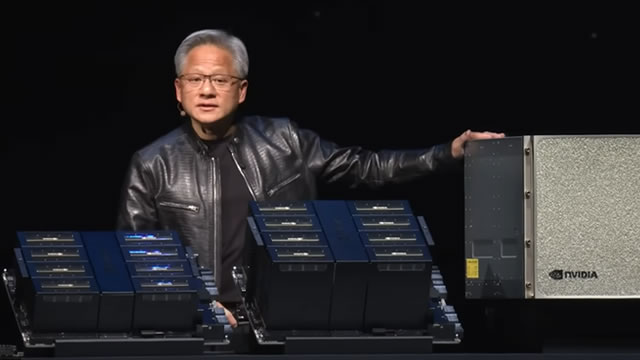
Why Nvidia is worth $5 trillion: Inside a $35 billion, 1 gigawatt AI data center.
Business Insider· 2025-10-29 18:01
Core Insights - Nvidia is capturing a significant share of the AI spending boom, contributing to its valuation of nearly $5 trillion [1][12] - The new metric for AI data centers is gigawatts of computing capacity, with 1 gigawatt costing approximately $35 billion, representing a new economic foundation for AI [3][4] AI Data Center Costs - The largest cost component in an AI data center is GPUs, accounting for about 39% of total spending, with Nvidia's chips being the primary drivers [7][12] - Networking equipment constitutes around 13% of data center costs, benefiting companies like Arista Networks, Broadcom, and Marvell [14] - Power distribution and cooling infrastructure represent significant costs, with power distribution alone taking up nearly 10% of spending [16][18] Company Opportunities - Nvidia captures nearly 30% of total AI data center spending as profit due to its high gross profit margins of 70% [12] - TSMC, Nvidia's foundry partner, earns approximately $1.3 billion per gigawatt from manufacturing GPU components [12] - Other chipmakers like AMD and Intel are attempting to catch up, while hyperscalers such as Google, Amazon, and Microsoft are investing in custom AI accelerators [13] Infrastructure and Operational Costs - Real estate, electricity, and labor account for about 10% of upfront costs, with operational costs being relatively low [18] - The annual electricity cost to run a 1 gigawatt AI data center is about $1.3 billion, and personnel costs are minimal, with only 8 to 10 staff members typically required [18] - The bottleneck is shifting towards power availability, with companies like Siemens Energy and GE Vernova experiencing increased orders for turbines and grid infrastructure [19]

Bloom Energy Stock Surges Nearly 17% In Wednesday Pre-Market: What's Going On? - Bloom Energy (NYSE:BE), Brookfield Asset Mgmt (NYSE:BAM)
Benzinga· 2025-10-29 11:57
Core Insights - Bloom Energy Corp's shares increased by 16.83% in pre-market trading after exceeding analyst expectations for Q3 [1] Financial Performance - The company reported Q3 revenue of $519.05 million, surpassing the analyst estimate of $424.98 million, representing a year-over-year increase of 57.1% [2] - Adjusted earnings per share (EPS) for the quarter were 15 cents, exceeding the projected 9 cents per share [2] - Product and service revenue accounted for $442.9 million, marking a 55.7% year-over-year rise [2] - The company ended the quarter with approximately $595 million in cash and cash equivalents [3] Strategic Partnerships - Bloom Energy announced a $5 billion AI partnership with Brookfield Asset Management, contributing to a surge in stock price [4] - In July, the company partnered with Oracle Corp to deploy its fuel cell technology in Oracle Cloud Infrastructure data centers across the U.S., which also positively impacted stock performance [4] Market Performance and Valuation Concerns - The company's stock has experienced over a 1000% surge over the past year, driven by significant partnerships and deployment stories [5] - Bank of America analyst Dimple Gosai expressed concerns that Bloom's current valuation may not align with its fundamentals, noting that while service margins and fuel cell reliability have improved, performance has not consistently met historical targets [6] - The company faces increasing competition from major players such as Caterpillar, Cummins, Rolls-Royce, and GE Vernova, whose offerings are perceived to be superior [6] Growth and Value Rankings - Benzinga's Edge Rankings place Bloom Energy in the 99th percentile for growth but only in the 2nd percentile for value, indicating a weakness in this area [7] - Year-to-date, shares have risen by 384.72%, with the last trading price at $133.03 [7]

Japan Commits $467 Bln In Investments In US
RTTNews· 2025-10-29 09:31
Investment Commitments - The Japanese government and companies have committed to investments worth $467 billion in major projects in the United States to revitalize the U.S. industrial base [1] - Japan will invest up to $332 billion in critical energy infrastructure, including partnerships with Westinghouse, GE Vernova, Hitachi, Bechtel, Kiewit, SoftBank Group Corp., and Kinder Morgan [2] Power Equipment and Infrastructure - Japanese companies will invest up to $25 billion to supply large-scale power equipment such as gas turbines and generators in collaboration with GE Vernova [3] - An additional $25 billion will be invested to supply electrical power modules and transformers in collaboration with Toshiba, and $20 billion for thermal cooling systems with Carrier [4] Advanced Technology and Components - A $30 billion investment is pledged with Mitsubishi Electric for power station systems for data centers, $25 billion with TDK for advanced electronic components, and $20 billion with Fujikura for optical fiber cables [5] - Japan will invest $15 billion in advanced electronic components with Murata Manufacturing and another $15 billion for energy storage systems with Panasonic [6] Manufacturing and Infrastructure Projects - Japanese companies will construct a $3 billion ammonia and urea fertilizer facility and a $2 billion copper smelting and refining facility in the U.S. [7] - Investments include $600 million for upgrading ports and waterways, $500 million for a diamond grit manufacturing facility, and $350 million for a lithium-iron-phosphate production facility [8] Trade and Export Opportunities - Japan committed to expanding opportunities for U.S. exports, including Toyota's plans to export U.S.-made vehicles to Japan without additional testing [9] - A Memorandum of Cooperation was signed to expand shipbuilding capacity in both nations [10]


Does Billionaire Philippe Laffont Know Something Wall Street Doesn't? His Hedge Fund Is Backing a Stock That Jumped 211% in Just 5 Days.
The Motley Fool· 2025-10-29 07:30
Core Insights - Coatue Management, led by Philippe Laffont, holds shares in Beyond Meat, raising questions about the rationale behind this investment given the company's declining performance [1][3][12] - Beyond Meat's stock experienced significant volatility, initially surging over 200% before a sharp decline, primarily driven by a convertible note offering and subsequent social media-fueled trading activity [6][8][19] Company Performance - Beyond Meat's recent 8-K filing revealed a convertible note offering that added 316,150,176 new shares, indicating liquidity challenges [6] - The company is facing declining sales and a gross margin of around 9%, highlighting its financial struggles and need for cash [12] Market Dynamics - The stock's volatility was exacerbated by a short squeeze, reminiscent of past events with GameStop and AMC, but such phenomena are typically short-lived [8][9] - Following the debt offering, Beyond Meat announced a distribution deal with Walmart, which could potentially improve customer acquisition and sales [10] Investment Rationale - Coatue's investment in Beyond Meat may serve as a hedge against its position in Impossible Foods, reflecting a strategy to gain exposure in the plant-based food market [16] - The small size of Coatue's investment in Beyond Meat, accounting for less than 0.1% of its total holdings, suggests it may be a peripheral rather than a core investment [18]


美国800亿美元核电投资领航AI基建
HTSC· 2025-10-29 05:14
Investment Rating - The report maintains an "Overweight" rating for the energy and power equipment sectors [4]. Core Insights - The report highlights a significant investment framework of $550 billion from Japan and the U.S. focused on power infrastructure, with a notable $80 billion investment led by Westinghouse for nuclear power projects [1][2]. - The anticipated investments are expected to accelerate the construction of AI-related power infrastructure, addressing the growing demand from data centers and the need for grid expansion in the U.S. [2]. Summary by Sections Nuclear Power Investments - Confirmed intention for nuclear power investments could reach $200 billion, with Westinghouse's project potentially amounting to $100 billion for constructing AP1000 reactors and small modular reactors (SMR) in the U.S. [8]. - Another project by GE Vernova/Hitachi for SMR construction also has a potential investment of up to $100 billion [8]. Energy Infrastructure Investments - Confirmed intention for energy infrastructure investments could reach $127 billion, involving companies like GE Vernova, Bechtel, and Kiewit, with individual project investments estimated at $250 million each for several projects [8]. AI Power Infrastructure Investments - Confirmed intention for AI power infrastructure investments could reach up to $60 billion, with key players including Mitsubishi Electric and Panasonic, focusing on power generation and data center equipment [8]. Recommendations for Companies - The report recommends investing in companies that are likely to benefit from the increased demand for energy equipment and infrastructure, such as Sunpower and Siemens Energy, with target prices set at 195.40 CNY and 108.50 EUR respectively [12][14].

重大项目曝光,特朗普发声
Zheng Quan Shi Bao· 2025-10-28 22:41
Group 1 - Japan has unveiled a potential project list for a $550 billion investment mechanism in the U.S., with participating companies including SoftBank, Westinghouse Electric, GE Vernova, and Hitachi, covering sectors such as energy, artificial intelligence, and critical minerals [1][3] - The project list includes 21 projects with a total investment scale exceeding $400 billion, with energy projects dominating the list, including Westinghouse's AP1000 nuclear reactor and small modular reactor projects, each estimated at nearly $100 billion [3][4] - SoftBank is interested in a $25 billion large-scale power infrastructure development project, while other companies like Carrier and Panasonic are also involved in energy-related initiatives [3][4] Group 2 - The investment plan aims to enhance economic and security interests between the U.S. and Japan, focusing on sectors such as semiconductors, pharmaceuticals, metals, critical minerals, shipbuilding, energy, artificial intelligence, and quantum computing [4] - Japan's automotive manufacturers have reported a decline in sales in the U.S. market, with a 22.7% drop in automotive exports contributing to a 10.2% decrease in total exports to the U.S. in the first half of the fiscal year [5] - The U.S. has reduced tariffs on Japanese automobiles from 27.5% to 15% as part of a trade agreement, which is a core component of the investment plan [4]


Jim Cramer Suggests “Let’s Keep Palantir”
Yahoo Finance· 2025-10-28 16:02
Group 1 - Palantir Technologies Inc. is currently on Jim Cramer's radar, with a focus on its stock performance and potential for growth [1] - Cramer has consistently predicted upward movements for Palantir's stock, suggesting it could rise from $50 to $200 over time [1] - The company develops software platforms that assist organizations in analyzing complex data and making operational decisions [2] Group 2 - There is a belief that while Palantir has investment potential, other AI stocks may offer greater upside potential and less downside risk [3] - The article hints at the existence of undervalued AI stocks that could benefit from current economic trends, such as Trump-era tariffs and onshoring [3]
