
任天堂

Search documents
索尼新掌机「抄袭」Switch,能成为下一个 PSP 吗?
3 6 Ke· 2025-08-30 16:37
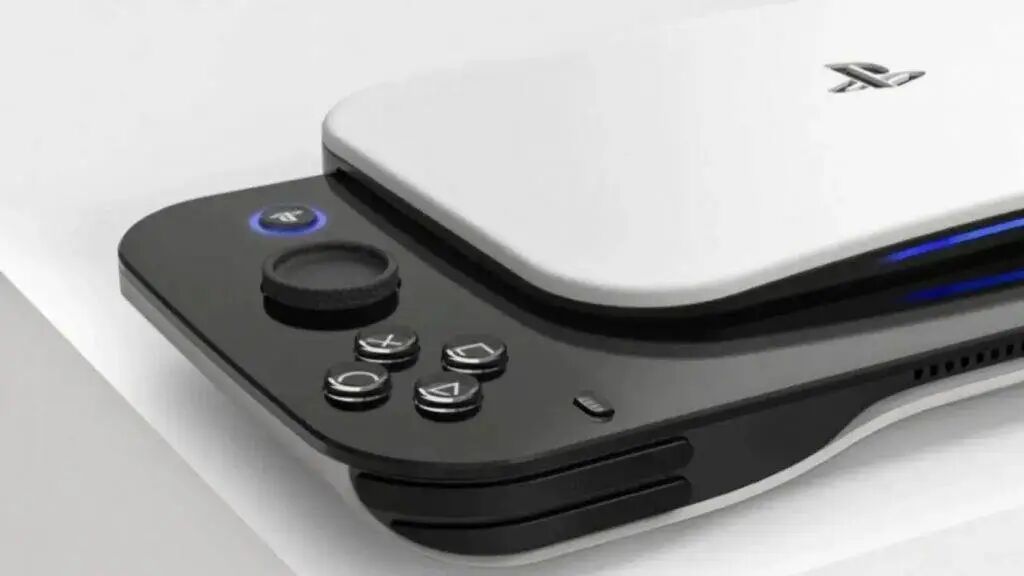
Core Insights - The gaming console market is experiencing significant developments in 2023, with major players like Nintendo, Microsoft, and Sony making notable announcements and product launches [1] - Sony is set to release the next-generation PS6 and a new handheld console, the PS handheld, with expected launch dates between late 2027 and mid-2028 [1][3] Group 1: Sony's New Handheld Console - The PS handheld is designed to be a high-performance gaming device, featuring an AMD APU with 16 RDNA 5 GPU cores and 4 Zen 6 CPU cores, built on TSMC's 3nm process [3][5] - The handheld is expected to support up to 48GB of RAM, with a minimum of 24GB recommended for optimal performance, particularly for modern game engines [5][9] - Pricing for the PS handheld is projected to be between $399 and $499, making it competitively priced against the Switch 2 and ROG Xbox Ally [11][9] Group 2: Performance and Features - In docked mode, the PS handheld's rasterization performance is estimated to be 50-75% of the PS5, while its ray tracing performance could be 1.3-2.6 times better than the PS5 [9][11] - The handheld will feature a 1080P display with a refresh rate of 60Hz or 120Hz, and will include a "docked mode" to enhance performance further [7][9] - The PS handheld aims to provide backward compatibility with PS5 and PS4 games, although it may struggle with larger PS6 titles without streaming services or optimized versions [9][25] Group 3: Competitive Landscape - The PS handheld will compete with other devices like Valve's Steam Deck 2 and Microsoft's Xbox PC handheld, both expected to launch around the same time [15][28] - Sony's strategy focuses on attracting existing PS4 users to upgrade to the new handheld, which is better suited for playing PS4 games [25][23] - The gaming market is becoming increasingly fragmented, with mobile gaming and short-form content posing significant competition to traditional console gaming [19][21]


索尼新掌机“抄袭”Switch,能成为下一个PSP 吗?
Hu Xiu· 2025-08-30 04:39
Group 1 - The gaming industry is experiencing significant developments with major players like Nintendo, Microsoft, and Sony making notable moves in 2023 [1][2] - Sony has officially announced the development of its next-generation console, the PS6, with a release window between late 2027 and mid-2028 [2][3] - The PS6 is expected to feature advanced hardware, including an AMD "Navi 5" Chiplet APU, with performance enhancements over the PS5 [21][22] Group 2 - Sony is also developing a new handheld console, referred to as the "next-gen PSP," which aims to outperform the Nintendo Switch 2 and the ROG Xbox Ally [3][7] - The new handheld will utilize a high-performance AMD APU with a 3nm process, featuring 16 RDNA 5 GPU cores and 4 Zen 6 CPU cores [4][5] - The PS handheld is projected to support at least 24GB of RAM, with a potential for 32GB, to handle modern gaming demands [6][7] Group 3 - The handheld console will have a 1080P display with a refresh rate of either 60Hz or 120Hz, and it will include a "dock mode" to enhance performance [8][9] - In dock mode, the handheld's rasterization performance is estimated to be 50% to 75% of the PS5, while its ray tracing performance could exceed that of the PS5 [11][12] - The pricing for the PS handheld is expected to be between $399 and $499, making it competitive against the Switch 2 and ROG Xbox Ally [18][19] Group 4 - The PS handheld aims to attract developers by providing a new platform for game adaptation and optimization, potentially increasing revenue opportunities [17] - Sony's strategy includes appealing to existing PS4 users to upgrade to the new handheld, which will primarily support PS4 games [39][40] - The competitive landscape includes not only Nintendo and Microsoft but also Valve's upcoming Steam Deck 2, which is expected to launch around the same time [25][42]
宗馥莉们的接班焦虑,日本几百年前就解决了
创业邦· 2025-08-29 10:33
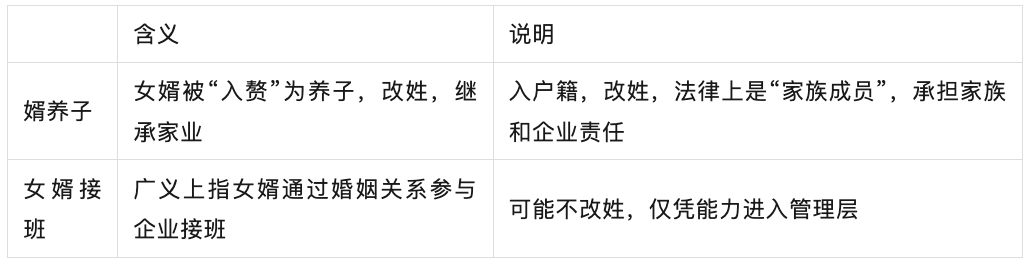
Core Viewpoint - The article discusses the differences in succession practices between Japanese and Chinese family businesses, highlighting Japan's unique approach to inheritance and the cultural significance of family legacy in business continuity [6][29]. Group 1: Japanese Succession Practices - In Japan, succession is viewed as an obligation rather than a choice, with discussions focused on "who will succeed" rather than "whether to succeed" [6][14]. - The concept of "muko-iyashi" (婿养子) allows sons-in-law to inherit family businesses, integrating them into the family and ensuring continuity [16][22]. - Approximately 97% of Japanese small and medium-sized enterprises are family-owned, with about 66% being family-operated [13]. Group 2: Examples of Successful Succession - Toyota is a prime example of successful family succession, with multiple generations of the Toyota family and external leaders contributing to its growth [7][8]. - Nintendo's succession involved a son-in-law taking over, demonstrating the effectiveness of the muko-iyashi system in maintaining business stability [20]. - Companies like Uniqlo and Japan's largest courier service, Yamato Transport, have also seen successful transitions through family or external leadership [10][11]. Group 3: Cultural Factors Influencing Succession - Japanese culture places a strong emphasis on family legacy, with societal expectations for heirs to take over family businesses [28][29]. - The long-standing tradition of prioritizing family names and businesses contributes to a stable environment for succession [26][30]. - The average lifespan of Japanese companies is longer, making succession meaningful and culturally significant [29]. Group 4: Challenges and Considerations - While Japan has a robust succession framework, challenges such as internal conflicts and the need for modernization can arise [10][11]. - The article notes that Japan has fewer high-profile failures in succession compared to other countries, indicating a generally stable transition process [8][13]. - The high inheritance tax in Japan is mitigated by special provisions for business succession, encouraging continuity [29].



宗馥莉们的接班焦虑,日本几百年前就解决了
Hu Xiu· 2025-08-29 04:02
Group 1 - The article discusses the challenges and dynamics of family business succession in Japan and China, highlighting the cultural differences in how succession is approached [2][4][41] - In Japan, succession is often seen as a duty, with discussions focused on "who will take over" rather than "whether to take over," involving multiple generations [3][5][12] - Japanese family businesses have a high rate of continuity, with approximately 97% of small and medium enterprises being family-owned, and 66% of all businesses being family-operated [12][13] Group 2 - The article contrasts the Japanese approach to succession, which includes mechanisms like "muko-iyashi" (adoption of sons-in-law) to ensure stability and continuity, with the more fragmented approach seen in China [16][18][41] - Notable examples of successful family business transitions in Japan include Toyota and Nintendo, where leadership has been passed down through generations, often involving external candidates as well [4][6][10] - The article emphasizes the importance of training and preparation for successors in Japan, with many inheritors gaining experience in other companies before taking over the family business [22][21][30] Group 3 - The article points out that while Japan has a robust system for business succession, it also faces challenges, such as internal conflicts and the need for adaptability in changing markets [8][24] - The cultural emphasis on family and legacy in Japan fosters a sense of responsibility among successors, which contrasts with the more individualistic approach seen in China [26][31][41] - The discussion includes the impact of economic conditions on succession, noting that stability becomes a priority during economic downturns, making the Japanese model appealing for long-term sustainability [14][36]
微软和EA放弃游戏涨价,可这不是玩家的全面胜利
3 6 Ke· 2025-08-28 23:53
Core Viewpoint - The gaming industry is facing significant pressure regarding pricing strategies, with major companies like EA and Microsoft opting to maintain current price points despite rising development costs and market pressures [3][4][7]. Group 1: Company Strategies - EA's CEO Andrew Wilson stated that the company does not plan to change its pricing strategy for upcoming titles, including the anticipated "Battlefield 6," which will continue to be priced at $70 [3][4]. - Microsoft has also decided against raising the price of its games, including "The Outer Worlds 2," maintaining a price of $69.99, which aligns with current market conditions [3][4]. - Both companies are under pressure to expand their gaming revenue, as evidenced by EA's reported net profit decline of 28.2% to $201 million for Q1 of fiscal year 2026 [4][7]. Group 2: Market Dynamics - The gaming industry has seen a rapid increase in game prices, with the jump from $60 to $70 occurring in just four years, contrasting with the previous 20-year period where prices remained stable [7][13]. - The current economic climate, including inflation and rising development costs, has created a challenging environment for game developers, leading to layoffs and project cancellations at both EA and Microsoft [4][7][11]. - Players are increasingly resistant to price hikes, with many expressing that they would not purchase games if prices were raised, indicating a significant backlash against potential increases [7][13]. Group 3: Future Implications - The trend of maintaining game prices may lead to a shift in how games are monetized, with companies potentially offering incomplete products at launch and relying on DLCs to provide a complete experience [15]. - The gaming market is transitioning into a phase where the average revenue per user (ARPU) is increasing, but the overall user base is stagnating, leading to a perception among players that games are becoming more expensive [13][15]. - The expectation for high-quality, expansive games at unchanged prices is becoming increasingly untenable, suggesting that a pricing adjustment may be inevitable in the future [11][15].



Best Buy Sees Slight Sales Increase as Tariff Woes Persist
PYMNTS.com· 2025-08-28 20:18
Core Insights - Best Buy reported a 1.6% increase in quarterly sales, marking the highest growth rate in three years, driven by strong demand in computing, mobile phones, wearables, headphones, and gaming products, particularly due to the launch of Nintendo's Switch 2 [2][5] - Despite the positive sales growth, management decided to maintain its annual revenue guidance of $41.1 billion to $41.9 billion, citing ongoing uncertainties related to tariffs [3][4] Sales Performance - The sales growth of 1.6% was attributed to increased consumer spending in various product categories [2] - The back-to-school shopping season has been particularly strong, with record levels of spending reported, averaging over $1,200 per household [5][6] Management Outlook - CEO Corie Barry emphasized the need to maintain annual guidance due to potential tariff impacts on consumer behavior and business performance [3] - CFO Matt Bilunas noted that consumer hesitation in making purchases could lead to a slowdown in business as the holiday season approaches [4] Economic Context - The Bureau of Economic Analysis reported a GDP growth of 3.3% in the second quarter, driven by increased consumer spending, which may continue to benefit retailers like Best Buy [6] - Spending patterns indicate that essential items for back-to-school are prioritized by families, suggesting sustained consumer spending into the fall [7]


微软首款“Xbox掌机”,终于能玩了?
Hu Xiu· 2025-08-28 12:09
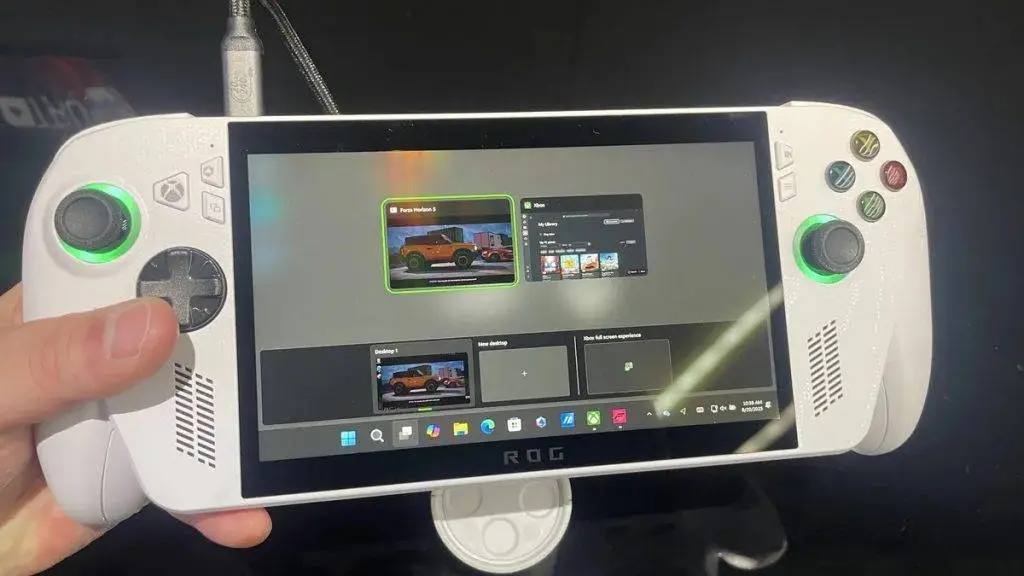
Group 1 - The ROG Xbox Ally, set to launch on October 16, is considered the second most important handheld gaming device of the year, following the Nintendo Switch 2 [1] - This device features a high-end PC handheld configuration, but its significance lies in the optimized Xbox version of Windows it runs [2][3] - The pricing for the ROG Xbox Ally has not been officially announced, but leaks suggest a mid-range price of €599 (approximately ¥4986.68) and a high-end version at €899 (approximately ¥7486.73) [4][5] Group 2 - Upon startup, the ROG Xbox Ally presents a Windows login interface, but quickly transitions to a new Xbox interface designed for controller interaction, effectively hiding the traditional Windows desktop [6][8] - This new interface addresses long-standing issues with Windows handhelds, such as high resource consumption and low performance, by saving approximately 2GB of RAM for gaming [11][12] - The Xbox interface includes features to connect to Bluetooth and Wi-Fi, manage devices, and integrate with other gaming platforms like Steam, enhancing user experience [13][14][15] Group 3 - Microsoft has introduced a "handheld compatibility program" to test and optimize thousands of games for the ROG Xbox Ally, allowing users to easily check game compatibility [17] - A new feature has been developed to cache shader compilation, reducing load times when starting games [19] - Initial reviews highlight the device's performance, with the ROG Xbox Ally X achieving stable frame rates in various games, indicating strong gaming capabilities [30][32] Group 4 - The ROG Xbox Ally aims to compete with the Steam Deck in the handheld gaming market, leveraging Microsoft's optimized Windows to potentially surpass SteamOS [33][36] - The device's design draws inspiration from Xbox controllers, enhancing comfort during gameplay [26] - The overall reception of the new Xbox interface and lightweight Windows has been positive, suggesting a solid step towards integrating Xbox and Windows for handheld gaming [40]
调研速递|南极光接受国信证券等70家机构调研,透露Switch2及笔记本业务重要数据
Xin Lang Cai Jing· 2025-08-28 11:32
Core Viewpoint - Shenzhen Nanjiguang Electronic Technology Co., Ltd. held an investor relations event that attracted participation from 70 institutions, including Guosen Securities, showcasing strong interest in the company's performance and future prospects [1] Group 1: Business Highlights - Nanjiguang is the exclusive supplier of backlight display modules for the Nintendo Switch 2, which has sold over 5.82 million units globally in its first 25 days, significantly outperforming the original Switch and Sony PS5 [1] - The notebook market is shifting towards lightweight and high screen-to-body ratio designs, with an expected shipment of approximately 183 million units in 2025, a year-on-year increase of 4.9% [1] - The company’s backlight technology used in Switch 2 is applicable to high-end lightweight notebooks, contributing to steady revenue growth in this segment [1] Group 2: Financial Performance - In the first half of 2025, the company reported revenue of 397.51 million yuan, a year-on-year increase of 244.67%, and a net profit of 72.89 million yuan, marking a turnaround with a growth of 982.43% [1] - The comprehensive gross margin for 2024 was 16.24%, with quarterly gross margins for Q1 and Q2 of 2025 at 26.97% and 29.60%, respectively, significantly higher than industry peers [1] - Foreign revenue increased by 1669.71% year-on-year, accounting for approximately 69.31% of total revenue, with overall gross margin rising to 28.37% [1] Group 3: Strategic Initiatives - The company is pursuing a dual-track strategy to enhance product offerings, focusing on gaming and esports while also exploring AI, quantum technology, and optical modules [1] - Nanjiguang is monitoring the electronic paper market and has initiated research and market analysis, entering small-scale trial production [1] - The subsidiary Wanzai Nanjiguang has expanded its business scope to include the manufacturing and sales of optoelectronic devices and optical communication equipment [1]


南极光(300940) - 300940南极光投资者关系管理信息20250828
2025-08-28 10:46
Group 1: Company Overview and Market Position - Shenzhen Nanjiguang Electronic Technology Co., Ltd. is the exclusive supplier of backlight display modules for the Switch2 console [2][3] - The company has confidence in maintaining long-term stable cooperation with high-quality clients like Nintendo [3] - The global sales of Switch2 surpassed 5.82 million units within 25 days, significantly outperforming Switch1 and PS5 [3] Group 2: Business Performance and Financials - In H1 2025, the company achieved revenue of CNY 397.51 million, a year-on-year increase of 244.67% [6] - The net profit attributable to shareholders was CNY 72.89 million, marking a turnaround with a growth of 982.43% [6] - The gross profit margin for 2024 was 16.24%, with Q1 and Q2 2025 margins at 26.97% and 29.60%, respectively [7] Group 3: Product Development and Market Trends - The notebook market is evolving towards thinner and larger screens, with an expected global shipment of 183 million units in 2025, a 4.9% increase [4] - The company is focusing on high-margin products in gaming, wearables, and automotive displays, aiming to build a high-margin product portfolio [4][6] - The company is actively tracking trends in dual-screen technology and has the capacity to meet core customer order demands [3][4] Group 4: Strategic Initiatives and Future Outlook - The company plans to leverage its technological capabilities and customer relationships to expand into high-value segments [6][9] - There is a strategic focus on emerging fields such as AI and quantum technology, with a dual-track strategy for product development [9] - The company is optimistic about the potential for electronic paper technology, which is gaining traction in various applications [8][9]
南极光(300940):SWITCH2背光模组独家供应商 业绩弹性凸显
Xin Lang Cai Jing· 2025-08-27 08:48
Group 1 - The company focuses on backlight display modules and has successfully transformed from a single mobile backlight source to high-value applications in industrial control, automotive, tablets, and laptops, becoming the exclusive supplier for Switch 2 [1] - The company achieved a breakthrough in ultra-thin light guide plate design, meeting Nintendo's testing standards with a yield rate exceeding 99.6%, which has helped the company turn losses into profits [1] - Switch 2's first-month global sales reached 5.82 million units, significantly surpassing the market expectations and breaking the previous record set by Sony's PS5 [2] Group 2 - Nintendo forecasts a global sales target of 15 million units for Switch 2 in its first year, ending in March 2026, indicating strong market demand [2] - The company possesses a unique advantage in ultra-thin backlight module technology and yield levels, which are expected to maintain stability in market share and pricing in the short to medium term [2] - The company's performance is projected to show significant elasticity by 2025, with net profits for 2025-2027 estimated at 245 million, 394 million, and 462 million yuan, respectively, corresponding to earnings per share of 1.1, 1.8, and 2.1 yuan [2]