华能国际

Search documents
AI时代全球电力或迎超级周期,借势电力ETF华宝(159146)可A股入局
Sou Hu Cai Jing· 2025-12-22 02:24
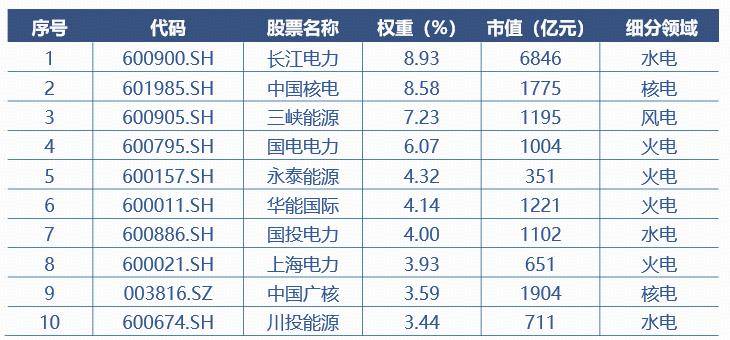
Core Insights - The rapid expansion of AI computing power has led to a significant increase in global electricity demand, highlighting the interconnection between AI and energy sectors [1] - The launch of the "Electricity ETF Huabao (159146)" by Huabao Fund aims to capitalize on energy opportunities related to AI, tracking the CSI All Share Electric Utility Index [1][2] Group 1: ETF Overview - The Electricity ETF Huabao (159146) will track the CSI All Share Electric Utility Index, which includes a diverse range of electricity sources: 43% thermal power, 21% green energy, 24% hydropower, and 12% nuclear power [2][3] - As of November 30, 2025, the index comprises 55 constituent stocks, with the top ten stocks accounting for 54.21% of the index weight, featuring major players like Yangtze Power and China Nuclear Power [2][3] Group 2: Market Trends - The electricity sector is experiencing a new growth phase driven by the increasing demand for power from AI-driven data centers, leading to a tightening of electricity supply and a surge in electricity demand [4][7] - Reports indicate that AI is expected to create a global electricity supercycle, with significant opportunities arising from the integration of renewable energy into the power system [7][8] Group 3: Investment Opportunities - The electricity sector is characterized by stable earnings and low valuations, making it attractive to investors seeking a safe haven during market fluctuations [8][9] - The CSI All Share Electric Utility Index is currently trading at a price-to-earnings ratio (PE-TTM) of approximately 17, which is below the historical average, indicating a potential investment opportunity [9]

五大发电集团“换将”频次骤减:下一赛段拼什么?
3 6 Ke· 2025-12-22 02:02
Core Insights - The leadership adjustments in China's five major power generation groups have reached a new low since the electricity reform in 2015, indicating a shift towards stability and strategic continuity in the industry [1][2] - The trend of frequent personnel changes is diminishing, reflecting a deeper alignment between corporate strategies and the current phase of industry development [1][2] Group 1: Personnel Stability - In Q3 2025, there were fewer leadership changes among the five major power generation groups compared to previous years, with significant positions such as chairpersons and general managers being affected [1] - The "quiet period" in personnel changes signals a departure from the previous "firefighting" approach to a focus on stability, as the necessity for frequent leadership changes to address market challenges has decreased [1][2] Group 2: Competitive Landscape - The competitive landscape among the five major power generation groups is solidifying, with the State Power Investment Corporation (SPIC) leading the first tier due to its comprehensive industry chain layout [3] - SPIC's recent leadership changes include the appointment of Xu Shubiao as general manager, while other subsidiaries have also seen management shifts [3][4] - The second tier is characterized by differentiated competition between SPIC and Huaneng Group, with SPIC leading in renewable energy capacity and Huaneng recovering profits from coal power [3][4] Group 3: Strategic Development - As the "14th Five-Year Plan" is being formulated, the five major power generation groups are seeking a "second growth curve" through various large-scale projects [5][6] - SPIC announced over 200 projects with a total investment exceeding 500 billion yuan, covering nuclear power, offshore wind, and new energy storage [5] - Huaneng Group is also accelerating its development, with projects like the world's largest compressed air energy storage power station under construction [5][6] Group 4: Technological Advancements - Huaneng Group has launched the first virtual power plant in China, integrating AI technology for real-time grid response [6] - The focus on strategic emerging industries is evident, with Huaneng's investments in hydrogen energy and storage reaching 73.8% of total investments by Q3 2024 [6] - The State Energy Group leads in new energy storage projects, with a total of 132 projects and a capacity of 4,934 MW/10,956 MWh as of March 2025 [6][7] Group 5: Future Outlook - The industry is entering a phase of higher quality competition centered around technology, business models, and efficiency, rather than merely competing for market share [7] - The stability in leadership is expected to facilitate a more focused approach to innovation and strategic development in the energy sector [7]
大能源行业2025年第51周周报(20251221):2026年能源工作会议召开,北美AI缺电持续演绎-20251222
Hua Yuan Zheng Quan· 2025-12-22 01:18
证券研究报告 公用事业 行业定期报告 hyzqdatemark 2025 年 12 月 22 日 证券分析师 查浩 SAC:S1350524060004 zhahao@huayuanstock.com 刘晓宁 SAC:S1350523120003 liuxiaoning@huayuanstock.com 邓思平 SAC:S1350524070003 dengsiping@huayuanstock.com 戴映炘 SAC:S1350524080002 daiyingxin@huayuanstock.com 秦雨茁 qinyuzhuo@huayuanstock.com 投资评级: 看好(维持) 2026 年能源工作会议召开,北美 AI 缺电持续演绎 ——大能源行业 2025 年第 51 周周报(20251221) 投资要点: 电力:2026 年全国能源工作会议召开 多省"十五五"能源建设方向明确 全国能源工作会议召开,2026 年新增新能源装机 2 亿千瓦以上。12 月 15 日,2026 年全国能源工作会议在北京召开。会议肯定了 2025 年的能源保供成绩,预期以火电 为主的调节性电源在"十五五"期间仍将受到重 ...
从算力到电力,看准AI能源机遇!电力ETF华宝(159146)今起发行
Xin Lang Cai Jing· 2025-12-22 00:45
告别2025迎接2026的钟声即将响起,盘点过去一年,人工智能领域始料未及之处竟是:AI算力的迅猛 扩张带来了全球电力需求持续攀升的格局。"AI竞争的尽头是能源/电力?" 新趋势、新格局迅速吸引了 资本市场的注意,"电力"成为一道光,从AI延伸而来,又与新能源的崛起紧密相依,并呼应红利/股息 的温暖召唤。 自12月22日(周一)起,千亿ETF大厂*华宝基金开始发行重磅新品"电力ETF华宝(159146)",指向十 分明确——把握AI相关能源机遇,为AI发"电"!该ETF将跟踪中证全指电力公用事业指数 (H30199.CSI),通过成份股"火、水、风、核、光"的多态电力配置,助力投资者在AI大时代战略性地 实现"全电布局,攻守兼备"。 注:根据沪深交易所、Wind、银河证券数据,截至2025年11月30日,华宝基金旗下权益类ETF资产管理 规模已达1296亿元,在全行业排名第9位。 龙头荟萃,全电布局 从中证全指电力公用事业指数的成份股构成,可以对电力ETF华宝(159146)"龙头荟萃、电力十足"的 特点有所感知。 整体来看,中证全指电力公用事业指数定位于"公用事业-电力"领域,它的样本空间为中证全指指数样 ...
公用事业行业周报(2025.12.15-2025.12.19):电量增速回落,煤价持续下行-20251221
Orient Securities· 2025-12-21 09:45
Investment Rating - The report maintains a "Positive" outlook for the utility sector [4] Core Views - The growth rate of electricity generation is slowing down, while coal prices continue to decline [2] - The utility sector is seen as a defensive asset with low valuations, making it attractive for investment [7] - The report emphasizes the need for further market-oriented pricing reforms to support the integration of renewable energy [7] Summary by Sections Electricity Generation - In November 2025, the electricity generation of large-scale power plants increased by 2.7% year-on-year, but the growth rate decreased by 5.2 percentage points compared to October 2025 [10] - The growth of renewable energy generation significantly improved, with wind power increasing by 22.0% and solar power by 23.4% year-on-year [10] - The report notes that the growth of hydropower decreased but remained high, while thermal power generation turned negative with a decline of 4.2% [10] Coal Prices - Port coal prices have been declining, with the Qinhuangdao port's Q5500 coal price at 703 RMB/ton, down 5.6% week-on-week [16] - The report indicates that high coal inventories and low demand from downstream power plants are contributing to the price drop [7] - The report anticipates that the decline in spot coal prices may gradually narrow due to improved acceptance from power plants [7] Investment Recommendations - The report suggests focusing on utility stocks, particularly in thermal power, hydropower, and nuclear power sectors, highlighting specific companies such as Huadian International and China General Nuclear Power [7] - It recommends investing in high-quality hydropower companies due to their low cost per kilowatt-hour and stable business models [7] - The report also notes the potential for growth in wind and solar sectors under carbon neutrality expectations [7] Market Performance - The utility sector index fell by 0.6%, underperforming the CSI 300 index by 0.3 percentage points [41] - Among sub-sectors, hydropower, thermal power, and wind power saw declines, while solar power showed a slight increase of 0.9% [43]






2025年1-10月中国核能发电量产量为3967.6亿千瓦时 累计增长8.7%
Chan Ye Xin Xi Wang· 2025-12-20 02:51
Core Viewpoint - The report highlights the growth trajectory of China's nuclear power generation, indicating a significant increase in production and a positive outlook for the industry from 2025 to 2031 [1] Industry Summary - According to the National Bureau of Statistics, China's nuclear power generation is projected to reach 38.7 billion kilowatt-hours in October 2025, reflecting a year-on-year growth of 4.2% [1] - Cumulatively, from January to October 2025, the total nuclear power generation is expected to be 396.76 billion kilowatt-hours, marking an 8.7% increase compared to the previous year [1] - The report is part of a comprehensive analysis by Zhiyan Consulting, which specializes in industry research and provides strategic insights for investment decisions in the nuclear energy sector [1] Company Summary - Listed companies in the nuclear power sector include China General Nuclear Power (003816), China National Nuclear Power (601985), and others, indicating a diverse market landscape [1] - The report emphasizes the importance of these companies in the context of China's growing nuclear energy market and their potential for investment opportunities [1]

两部门:电力中长期交易直接参与市场用户不再执行分时电价!
中关村储能产业技术联盟· 2025-12-20 02:18
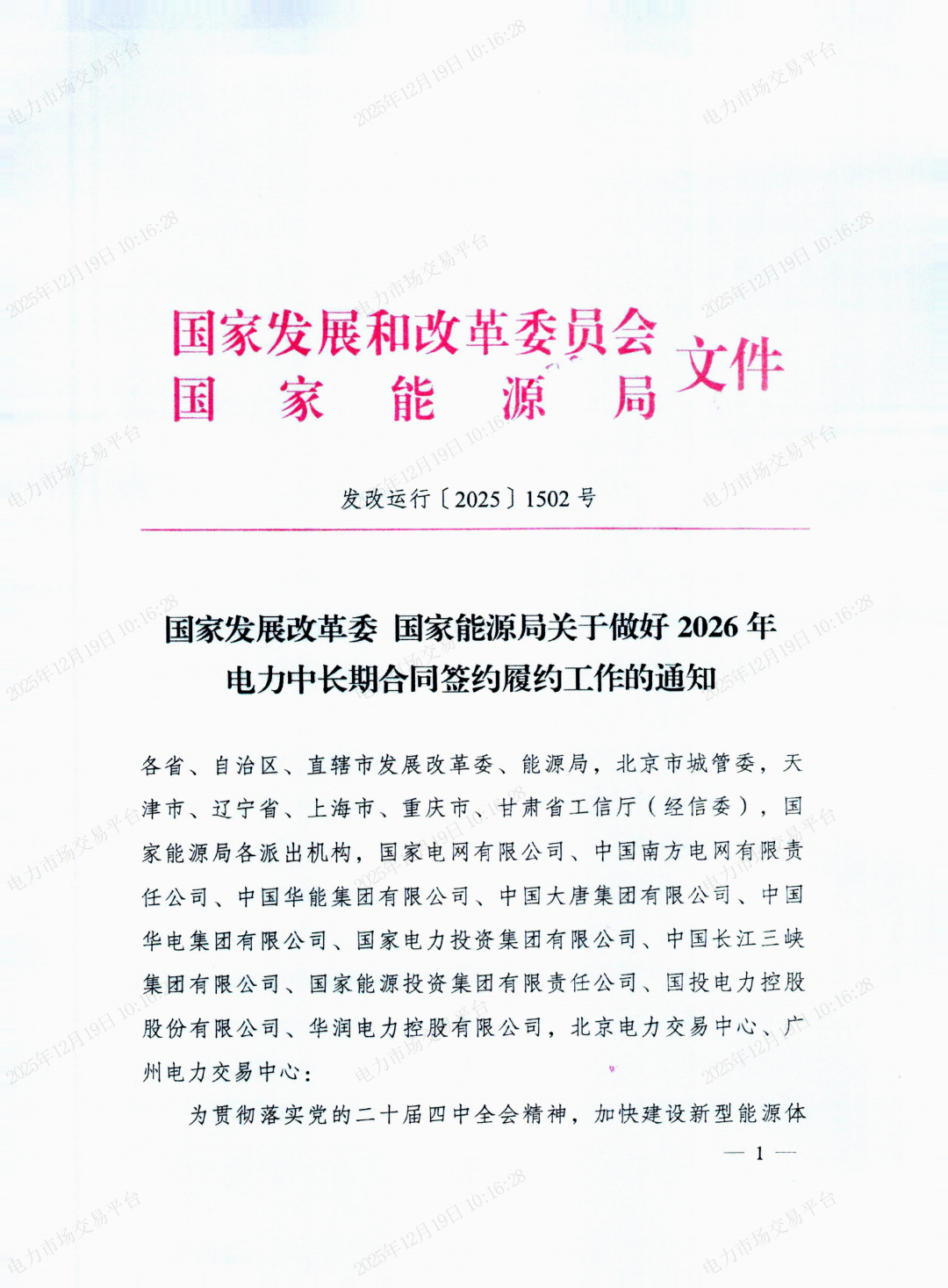
Core Viewpoint - The article discusses the guidelines issued by the National Development and Reform Commission and the National Energy Administration for the signing and performance of medium- and long-term electricity contracts for 2026, emphasizing the importance of high-quality contract signing and flexible pricing mechanisms to ensure stable electricity supply and pricing. Group 1: Contract Signing Mechanisms - The document emphasizes the need to improve the quality of long-term electricity contract signing by implementing time-segmented and curve-based signing mechanisms, allowing for more accurate reflection of price signals across different time periods [1][9] - It encourages the signing of flexible pricing mechanisms that adjust according to market supply and demand and generation costs, rather than mandating fixed prices [2][10] Group 2: Cross-Province and Cross-Region Contracts - The notification requires that for cross-province and cross-region electricity delivery with clear priority generation plans, both sending and receiving parties must collaborate to fully sign annual medium- and long-term contracts, specifying monthly plans and delivery curves [4][8] - It also highlights the need for coordination among electricity trading centers to complete the signing of national contracts by December 25, 2025 [4][15] Group 3: Market Structure and Pricing - The document outlines that regions with operational electricity spot markets should have at least 24 trading time slots, while other provinces should optimize their medium- and long-term trading time slots based on actual electricity load curves [5][9] - It specifies that market participants directly involved in the market will not be subject to government-mandated time-of-use pricing [10] Group 4: Quality and Compliance in Contract Performance - The guidelines stress the importance of continuous and flexible trading within provinces, taking into account the characteristics of renewable energy generation and load [11] - It calls for the establishment of a robust mechanism to ensure high-quality signing and performance of medium- and long-term contracts, including a credit evaluation system for market participants [12][13]

两部门:优化电力中长期价格形成机制,直接参与市场用户不再执行政府规定的分时电价
Xin Lang Cai Jing· 2025-12-19 12:44
Core Viewpoint - The National Development and Reform Commission and the National Energy Administration have issued a notice to enhance the signing and performance of medium- and long-term electricity contracts for 2026 through four key measures, aiming to ensure effective implementation and quality of these contracts [22][25]. Group 1: Contract Signing Requirements - The total signed electricity volume for medium- and long-term contracts by coal-fired power enterprises in each province should not be less than 70% of the actual online electricity volume from the previous year, with monthly contract signing volumes not less than 80% of the expected market-based online electricity volume [10][26]. - The electricity consumption side must ensure that the monthly contract signing volume is not less than 80% of the expected electricity consumption [2][27]. - For cross-provincial and cross-regional contracts, there should be clear arrangements for supporting renewable energy in transmission projects, encouraging green electricity trading to fulfill priority generation plans [3][28]. Group 2: Quality Improvement Measures - There should be a mechanism for time-segmented and curve-based signing in annual electricity medium- and long-term transactions, with at least 24 trading periods in regions where the electricity spot market is operational [5][28]. - The pricing mechanism for medium- and long-term electricity contracts should be flexible, allowing for adjustments based on market supply and demand, and not mandating fixed prices [6][29]. - A balance management system for electricity supply and demand should be established to avoid significant discrepancies in electricity volume across trading periods [12][29]. Group 3: Efficient Contract Performance - Continuous and flexible trading of medium- and long-term contracts within provinces should be promoted, considering the characteristics of renewable energy generation and load [8][30]. - The quality of cross-provincial and cross-regional medium- and long-term transactions should be improved by enhancing trading frequency and optimizing transaction organization [14][30]. - Monitoring of medium- and long-term trading behaviors should be strengthened to prevent market manipulation and ensure compliance with regulations [15][31]. Group 4: Contract Assurance Mechanism - A mechanism to promote high-quality signing and performance of medium- and long-term contracts should be established, ensuring compliance with policy requirements [16][32]. - The priority generation plan for cross-provincial and cross-regional electricity should be effectively implemented, ensuring that annual delivery needs are met [17][33]. Group 5: Timeline - Local government departments and the National Energy Administration should complete the necessary preparations for the medium- and long-term electricity market by December 10, 2025, and finalize cross-provincial contract signing by December 25, 2025 [18][34].




A股行业投资者结构变迁
Changjiang Securities· 2025-12-19 10:35
金融工程丨点评报告 [Table_Title] A 股行业投资者结构变迁 报告要点 [Table_Summary] 《上海证券交易所统计年鉴(2025 卷)》已于近日发布,截至 2024 年,一般法人、自然人投 资者和专业机构(包含沪股通)市值占比分别为 57.22%、22.40%和 20.38%。大类行业中,金 融和周期的机构占比相对较高,二者的机构占比均在震荡提升。一级行业中,银行和非银的机 构占比较为显著,均在 70%以上。 分析师及联系人 [Table_Author] 刘胜利 SAC:S0490517070006 SFC:BWH883 请阅读最后评级说明和重要声明 丨证券研究报告丨 %% %% %% %% research.95579.com 1 [Table_Title2] A 股行业投资者结构变迁 [Table_Summary2] 事件描述 《上海证券交易所统计年鉴(2025 卷)》于 2025 年 12 月发布,由此可分析不同行业的投资者 结构变化。 事件评论 2、投资者机构持仓数据为节点信息,不代表全部调仓行为。 更多研报请访问 长江研究小程序 丨证券研究报告丨 cjzqdt11111 202 ...
电力中长期交易:直接参与市场用户不再执行分时电价!利好新型储能等灵活调节资源
中关村储能产业技术联盟· 2025-12-19 06:19
Core Viewpoint - The document outlines the guidelines for signing and fulfilling long-term electricity contracts for 2026, emphasizing the importance of high-quality contracts to ensure stable electricity supply and pricing in the market [6][7][8]. Group 1: Contract Signing Requirements - The document stresses the need for a high proportion of long-term electricity contracts, with coal-fired power plants required to sign contracts for at least 70% of the previous year's actual grid-connected electricity [7]. - For regions with tight electricity supply, local authorities may adjust the signing ratio upwards during peak seasons [8]. - The document mandates that electricity users should also ensure that their annual contract signing volume meets at least 80% of the expected electricity consumption [8]. Group 2: Improving Contract Quality - It is essential to enhance the quality of long-term contracts by implementing time-segmented and curve-based signing mechanisms, allowing for more precise reflection of price signals [9][10]. - The document encourages the adoption of flexible pricing mechanisms that reflect real-time supply and demand, rather than enforcing fixed prices [10]. - Regions are required to optimize the price formation mechanism, ensuring that market participants are not bound by government-mandated time-of-use pricing [10]. Group 3: Cross-Province and Cross-Region Agreements - The document requires that parties involved in cross-province and cross-region electricity transactions must fully sign annual long-term contracts and clarify monthly plans and delivery curves [3][8]. - It emphasizes the need for coordination between sending and receiving parties to establish stable inter-provincial electricity flows [3][8]. Group 4: Timeframe and Implementation - Local governments and the National Energy Administration are tasked with implementing these guidelines and must report their arrangements for the 2026 annual trading by December 10, 2025 [14]. - The Beijing and Guangzhou electricity trading centers are specifically mentioned to complete the signing of national long-term contracts by December 25, 2025 [3][14].