
宝洁公司

Search documents
牙膏2025年社媒热度趋势及驱动因素分析
数说故事· 2026-01-08 07:49
Investment Rating - The report indicates a strong growth trend and significant structural changes in the toothpaste category on social media in China for 2025, suggesting a positive investment outlook for the industry. Core Insights - The core driving forces behind social media heat include celebrity endorsements and consumer feedback, with a notable increase in social media volume and interaction rates for toothpaste products, particularly driven by marketing events featuring popular celebrities [3][5][12]. Summary by Sections 1. Research Background - The report aims to analyze the social media trends and consumer feedback for toothpaste products in 2025, reflecting the increasing awareness of oral health and the shift towards professional and personalized needs in the market [6][7]. 2. Overall Heat Trend Analysis - The social media volume for toothpaste peaked in August 2025, with over 1.45 million discussions, primarily driven by major celebrity endorsement events [12][25]. - Interaction volume reached its highest in September 2025, exceeding 21.31 million interactions, largely due to a single event featuring a top celebrity [15][25]. 3. Peak Heat Analysis - Key peaks in social media heat for toothpaste occurred in May, August, and September 2025, driven by celebrity endorsement activities [23][25]. - Celebrity endorsements are identified as the primary driver of heat peaks, effectively leveraging the fan economy to boost brand visibility and interaction [24][25]. 4. Consumer Feedback Analysis - The emotional sentiment analysis shows that neutral sentiment dominates (82.2%), followed by positive sentiment (16.1%), indicating that most discussions are informational rather than emotionally charged [33][36]. - Consumers are increasingly focused on product efficacy and ingredient safety, with a notable rise in discussions around specific ingredients like Sodium Lauryl Sulfate (SLS) [38][39]. 5. Conclusion and Recommendations - The report concludes that the toothpaste category's social media landscape in 2025 is characterized by marketing-driven heat and a focus on efficacy and safety to win consumer trust [43]. - Recommendations for brands include adopting a combination strategy of celebrity endorsements and content development, embracing ingredient transparency, and focusing on niche markets to build competitive advantages [45].


中国牙膏第一品牌:击败好来、佳洁士、高露洁,市场份额达到23%
Xin Lang Cai Jing· 2026-01-07 08:23
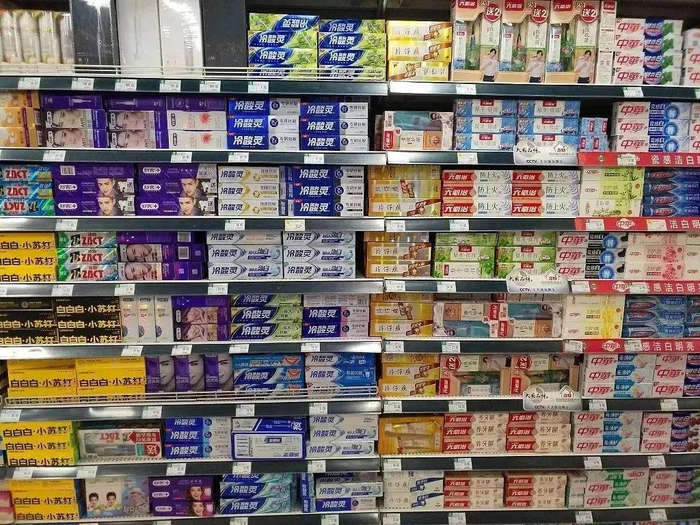
Industry Overview - China is the world's largest producer, consumer, and exporter of toothpaste, with a total market sales of 33.98 billion yuan in the previous year, reflecting a year-on-year growth of 0.86% [1] - The sales channel structure remains predominantly offline, accounting for 75.96% of total sales [1] Competitive Landscape - The top five brands collectively hold over 65% of the market share, indicating a high market concentration, with two local companies among them [5] - Yunnan Baiyao is the leading brand with a market share of 23.86%, having disrupted the market since its launch in 2005 with a focus on high quality and premium pricing [8] - The second largest brand is Haolai (formerly known as Black Toothpaste) with a market share of 20.10%, established in the 1930s [7] - Procter & Gamble's Crest ranks third with an 8.84% market share, having entered the Chinese market in the late 1980s [7] - The fourth position is held by DenCare (Ling Ling) with a market share of 6.83%, known for its long-standing presence in the market [5] - Colgate ranks fifth with a market share of 5.64%, having entered China in 1992 [5] Brand Strategies - The brand "中华" (Zhonghua) is currently ranked seventh with a market share of 4.06%, having once dominated the market with a share of nearly 40% [3] - The brand "薇美姿" (Suhk) holds a 4.88% market share and has initiated a Hong Kong listing plan, leveraging celebrity endorsements to enhance brand visibility [3] - The competitive strategies of local brands focus on continuous product upgrades and channel optimization to regain market dominance against foreign brands [8] Market Trends - The oral care industry has expanded beyond toothpaste and toothbrushes to include mouthwash and dental irrigators, with brands innovating in functionality and design to meet diverse consumer demands [8]

The Zacks Analyst Blog Meta, Bank of America, The Procter & Gamble, Espey and NeurAxis
ZACKS· 2026-01-06 10:46
Core Insights - The Zacks Equity Research team has highlighted several stocks, including Meta Platforms, Bank of America, Procter & Gamble, Espey Mfg. & Electronics, and NeurAxis, in their recent analysis [1][2] Meta Platforms, Inc. (META) - Meta's shares have outperformed the Zacks Internet - Software industry over the past year, with a gain of +3.6% compared to the industry's +1.1% [4] - The company is experiencing steady user growth, particularly in the Asia Pacific region, driven by increased engagement across its platforms like Instagram, WhatsApp, Messenger, and Facebook [4] - Meta is leveraging AI to enhance its platform offerings, reaching over 3.54 billion users daily, which is expected to drive top-line growth [5] - The company plans to invest significantly in developing advanced AI models, although monetization of these services may take time [6] Bank of America Corp. (BAC) - Bank of America's shares have increased by +16.2% over the past six months, slightly underperforming the Zacks Financial - Investment Bank industry's gain of +17.3% [7] - The company's net interest income (NII) is projected to grow at a CAGR of 5.7% by 2027, supported by decent loan growth despite rate cuts [7] - Total revenues are expected to grow by 6.9% in 2025, although trading revenue growth may normalize after a robust performance since 2022 [8] - Elevated expenses due to ongoing investments and weak asset quality may hinder bottom-line growth, with expenses expected to rise by 4.3% in 2025 [9] The Procter & Gamble Co. (PG) - Procter & Gamble's shares have declined by -10.4% over the past six months, slightly better than the Zacks Consumer Products - Staples industry's decline of -11% [10] - The company anticipates all-in sales growth of 1–5% and organic sales gains of flat to up 4% in fiscal 2026, supported by cost savings [11] - Robust cash flow is expected to fund $15 billion in shareholder returns in fiscal 2026, including dividends and share buybacks [11] - However, elevated commodity costs and macroeconomic challenges continue to pressure margins and earnings visibility [12] Espey Mfg. & Electronics Corp. (ESP) - Espey Mfg. & Electronics has outperformed the Zacks Electronics - Military industry over the past six months, with a gain of +3.5% compared to the industry's decline of -32.4% [13] - The company has a backlog of $141.1 million, with 72% scheduled through 2028+, ensuring revenue visibility despite a 12.9% sales decline in Q1 FY26 [13] - Gross margin has expanded to 35.4%, indicating strong cost control and product mix advantages [14] NeurAxis, Inc. (NRXS) - NeurAxis has outperformed the Zacks Medical Info Systems industry over the past six months, with a gain of +65.2% compared to the industry's decline of -16.2% [16] - The company targets a large market for gut/brain disorders with its FDA-cleared IB-Stim neuromodulation system, recently expanding its addressable market to $8 billion [16] - Revenue has been growing at double-digit rates, but the company continues to face losses due to high spending and margin pressure [17]



局势突变催生机遇 消费品巨头宝洁(PG.US)还会重返委内瑞拉吗?
Zhi Tong Cai Jing· 2026-01-06 10:20
Core Viewpoint - The geopolitical shift in Venezuela following the U.S. military operation in January 2026 presents new uncertainties for Procter & Gamble (P&G), which has been navigating its operations in the country for decades [2][5]. Group 1: Historical Context - P&G entered the Venezuelan market in 1947, establishing its first office in 1950 and building its first factory in 1952, making Venezuela a key growth hub in South America [3]. - By 2013, P&G operated two factories in Venezuela with over a thousand employees, covering essential product categories like laundry and baby care [3]. - Political turmoil and economic crises during the Maduro administration led to significant losses, totaling over $600 million from 2013 to 2015, prompting P&G to write off all local assets and cease manufacturing operations [3]. Group 2: Current Operations - Currently, P&G has no factories, research centers, or employees in Venezuela, relying solely on third-party distributors to maintain product supply [4]. - The company has undergone a global restructuring, announcing plans to cut 7,000 non-manufacturing jobs by mid-2027 and exit markets like Bangladesh and Pakistan [4]. - Despite the limited market size in Venezuela, it remains strategically significant for P&G's South American operations [4]. Group 3: Future Opportunities and Risks - The recent geopolitical changes in Venezuela may create potential opportunities for P&G to return, especially with U.S. government support for American companies to re-enter the market [5]. - If a political transition led by the U.S. occurs, easing sanctions and economic normalization could provide mid-term benefits for P&G, potentially allowing for selective reinvestment [5]. - However, P&G has not publicly commented on the possibility of returning to Venezuela, indicating that decisions will depend on the evolving local situation and global strategic priorities [5].
Andrew Hill Investment Advisors Q4 2025 Client Letter
Seeking Alpha· 2026-01-06 07:45
Core Insights - The year 2025 saw client portfolios achieving double-digit gains for the third consecutive year, reflecting resilience in corporations and consumers despite economic challenges [2] - The Federal Reserve's rate cuts aimed at achieving a "soft landing" for the economy contributed to a favorable environment for both stocks and bonds [2] - Gold emerged as a standout performer, rising 70%, while cryptocurrencies struggled, with Bitcoin experiencing significant volatility [11][12] Equities Performance - Equities experienced volatility in 2025, with initial sell-offs due to tariff announcements, particularly affecting companies with exposure to China and Vietnam [3] - Strong corporate earnings in the latter half of the year led to a rebound in stock prices, although some stocks, like Oracle, faced corrections after initial surges [4] - The technology sector, while still dominant, is showing signs of waning momentum, with a shift in focus from AI producers to users [26][28] Fixed Income - Bond yields declined throughout 2025, with the 10-year Treasury falling from 4.57% to 4.11%, benefiting client portfolios [8] - The investment strategy includes a focus on high-grade bonds and tax-free municipal debt, which are viewed as attractive in the current market [9][23] Commodities - Commodities had a strong year, with gold significantly outperforming the stock market, while cryptocurrencies faced declines [11][40] - The demand for energy is increasing, driven by factors such as data centers and electric vehicles, with companies like GE Vernova and Constellation Energy positioned to benefit [33][37] Economic Outlook - The economy is projected to grow by 2% in 2026, with consumer spending expected to increase by 2% and private investment by 2.3%, largely driven by AI-related developments [17] - Concerns about a "K-shaped economy" highlight disparities in asset appreciation, with wealth concentration among asset holders [12][13] Investment Strategy - The investment strategy for 2026 is less aggressive, with a focus on underweighting stocks and overweighting fixed income due to premium valuations and peaking earnings growth [20] - The portfolio includes a mix of traditional and alternative investments, with gold remaining a core holding as a hedge against market volatility [40]


We're trimming our position in a stock that is off to a strong new year
CNBC· 2026-01-05 16:03
Core Viewpoint - The company is selling 45 shares of BlackRock, reducing its ownership to 65 shares and decreasing its portfolio weighting from approximately 3.10% to 1.90% [1] Summary by Relevant Sections Stock Performance - BlackRock's stock has shown a positive trend at the beginning of the new year, with a 5% increase over the past two sessions, following a disappointing 2025 where shares gained only about 6% [1] Portfolio Management - The sale of BlackRock shares is part of a strategy to capitalize on recent stock strength and to rebuild cash reserves to over 7% of the portfolio [1] - Recent purchases include stocks from Nike, Procter & Gamble, and Alphabet, with the BlackRock sale intended to offset these acquisitions and provide flexibility for future investments in Alphabet [1] Financial Gains - The sale will result in a realized gain of approximately 9% on shares that were purchased in late 2024 [1]


VDC vs. RSPS: Broad Diversification or Balanced Bets for Consumer Staples Investors?
The Motley Fool· 2026-01-04 21:00
Core Insights - The Vanguard Consumer Staples ETF (VDC) has outperformed the Invesco S&P 500 Equal Weight Consumer Staples ETF (RSPS) by over 2% in the last year due to lower fees and broader diversification [1][14] - VDC offers lower costs and slightly stronger recent performance, while RSPS provides a concentrated, equal-weighted approach within the consumer staples sector [1][2] Cost Comparison - VDC has an expense ratio of 0.09%, significantly lower than RSPS's 0.40% [3][4] - VDC's assets under management (AUM) stand at $8.6 billion, compared to RSPS's $236.2 million [3] Performance Metrics - The one-year return for VDC is 0.05%, while RSPS has a return of (3.2%) as of December 17, 2025 [3] - Over five years, VDC has grown $1,000 to $1,244, while RSPS has decreased it to $988 [5] Portfolio Composition - VDC holds 105 stocks, with a portfolio that is 98% consumer defensive, featuring major positions in Walmart (14.53%), Costco (12.00%), and Procter & Gamble (10.09%) [6][12] - RSPS consists of 38 equally weighted stocks, with top holdings including Dollar General (3.52%) and Monster Beverage (3.34%) [8][12] Risk Assessment - The maximum drawdown over five years for VDC is (16.55%), while RSPS has a higher drawdown of (18.64%) [5] - VDC has a beta of 0.56, indicating slightly higher volatility compared to RSPS's beta of 0.52 [3] Investment Implications - Both ETFs focus on the defensive consumer staples sector, appealing to investors seeking stability and reliable dividends during economic uncertainty [13][14] - Investors must consider the trade-offs between VDC's lower costs and concentration in large-cap stocks versus RSPS's equal weighting that may reduce single-stock risk [11][14]

Buffett's Departure From Berkshire Hathaway Puts Spotlight on Greg Abel
Yahoo Finance· 2026-01-04 20:15
Core Viewpoint - The retirement of Warren Buffett as CEO of Berkshire Hathaway Inc. marks a significant leadership transition, with Greg Abel taking over amidst various challenges [1]. Group 1: Leadership Transition - Greg Abel has assumed the role of CEO on the first day of the new year, succeeding Warren Buffett after a six-decade tenure [1]. - Abel's leadership will be scrutinized as he faces the challenge of effectively managing Berkshire's substantial cash reserves, which have recently exceeded $350 billion [2]. Group 2: Cash Management Strategies - The cash reserves of Berkshire Hathaway surpass the market values of major companies like Home Depot, Procter & Gamble, and General Electric, presenting opportunities for stock buybacks, acquisitions, or dividends [2]. - Historically, Berkshire has not engaged in significant share repurchases in the last five quarters and has only paid a dividend once under Buffett's leadership in 1967, indicating a conservative approach to cash allocation [3]. Group 3: Challenges Ahead - Abel, previously in charge of Berkshire's non-insurance businesses, is expected to face increased pressure from Wall Street and shareholders to utilize the cash reserves more effectively than Buffett did [3]. - He must also manage Berkshire's subsidiaries, including Geico, and oversee a $300 billion stock portfolio while making critical allocation decisions [4]. Group 4: Company Culture and Future Direction - Maintaining Berkshire's culture of trust, honesty, patience, discipline, and long-term thinking is crucial for Abel as he navigates complex relationships with subsidiary management teams [5]. - The effectiveness of Abel's decisions regarding cash management and cultural preservation will be pivotal in shaping the future direction of Berkshire Hathaway [5].
巴菲特价值投资的“科技适配”
Zheng Quan Ri Bao· 2026-01-04 16:44
Core Insights - Warren Buffett officially retired on December 31, 2025, marking the end of his career and drawing attention to his investment strategies at Berkshire Hathaway [1] - In November 2025, Berkshire released its last 13F report under Buffett, revealing that Apple constituted 22.69% of its portfolio, while Berkshire made its first investment in Alphabet, ranking it as the tenth largest holding [1] - Buffett's shift towards investing in technology stocks, particularly Alphabet, challenges the notion that value investing is incompatible with tech investments [1][2] Group 1 - Buffett's historical avoidance of technology stocks was due to concerns over their uncertain profit models and unclear competitive advantages, which initially aligned with his value investing principles [2] - Over the past 20 years, Berkshire's investment portfolio has evolved, with significant investments in technology companies like IBM, Apple, and now Alphabet, indicating a shift in Buffett's strategy [2][3] - The characteristics of Apple, such as brand loyalty and predictable earnings, align with value investing standards, which also apply to Alphabet's diverse revenue streams and strong competitive position [3] Group 2 - Buffett's adjustments in holdings before retirement set a precedent for value investing in the AI era, redefining the concept of competitive advantages in technology [3][4] - The focus for global investors should shift from whether a stock is a tech company to evaluating predictable cash flows, strong competitive moats, and effective management in the context of ongoing technological advancements [4]

