
华硕

Search documents
赢家在上游:谁在定义一块“电竞好屏”?
经济观察报· 2025-08-11 11:57
Core Viewpoint - TCL Huaxing is transforming the concept of a "good screen" from a vague consumer idea into a clear industry standard, continuing its exploration in the display panel market [1]. Group 1: Industry Context - The 22nd ChinaJoy showcased a notable phenomenon where major gaming brands like Samsung, Lenovo, and ASUS collaborated around TCL Huaxing as a common upstream supplier, highlighting its significant role in the competitive landscape of the gaming display market [2][4]. - TCL Huaxing has achieved the highest panel shipment volume and market share in the esports monitor (MNT) sector for three consecutive years, with one in three gaming monitors globally using its screens [2][4]. Group 2: Technological Integration - TCL Huaxing's technology is deeply embedded in high-end gaming products, with its displays being integral to flagship offerings from major brands, indicating its transition from a mere supplier to a critical technology partner [7][8][9]. - The company offers a range of tailored display solutions for different gaming scenarios, such as HVA Black for enhanced contrast and HFS Shoot for high refresh rates, addressing the evolving demands of gamers [10][12]. Group 3: Strategic Shift - In 2019, TCL Huaxing recognized the need to break free from the cyclical nature of the display industry and identified esports as a strategic opportunity to establish technological barriers and brand strength [15][16]. - The company shifted from a passive order-driven model to an active market-defining approach, engaging directly with gamers to identify and address unmet needs in the gaming experience [17][18]. Group 4: Standardization Efforts - To establish its technology as an industry standard, TCL Huaxing acquired a mature production line from Samsung, enabling it to quickly scale up production and ensure high-quality output [22][24][25]. - This acquisition provided TCL Huaxing with essential capabilities, including high-quality mass production, valuable time advantages, and a skilled engineering team, facilitating the transition of its technology from concept to reliable industrial standard [27]. Group 5: Future Directions - TCL Huaxing is positioning itself to support the evolving demands of AI applications, focusing on reducing power consumption in displays to enhance overall device performance [30][36]. - The company is exploring the integration of AI in its manufacturing processes and aims to provide essential hardware support for AI technologies, indicating a strategic direction towards becoming a key player in the AI ecosystem [32][37].


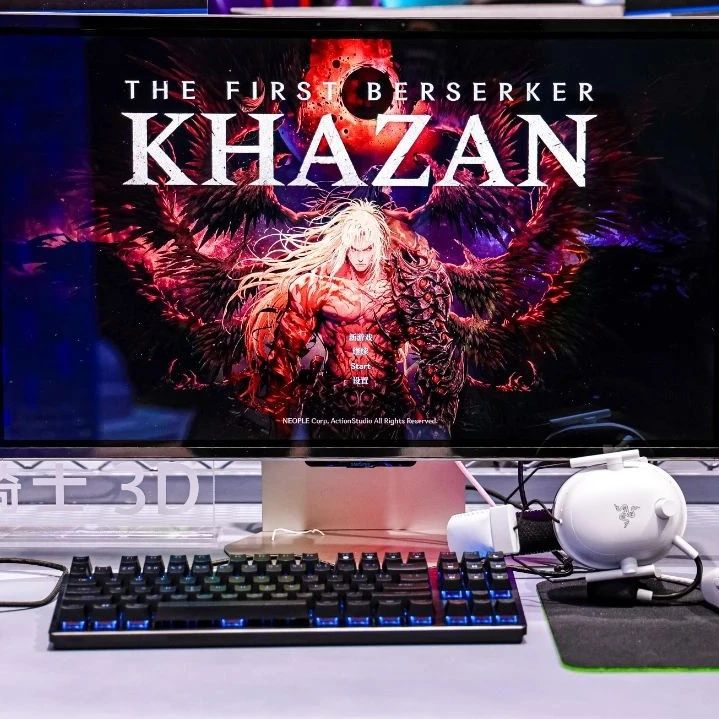
ChinaJoy 2025:TCL 携全球伙伴亮相,展现电竞显示与智能终端创新实力
Jin Tou Wang· 2025-08-11 02:22
Core Viewpoint - The ChinaJoy 2025 event in Shanghai showcased TCL's advancements in the esports display sector and smart terminal products, emphasizing its commitment to building an esports ecosystem and driving global esports industry development [1][4]. Group 1: Esports Display Solutions - TCL Huaxing presented a comprehensive range of esports display solutions, including a 116" 2.5K 240Hz printed OLED laptop display and a 27" 4K 120Hz printed OLED monitor, highlighting their capabilities in delivering high-quality visuals and immersive experiences [1][4]. - The company introduced new display technologies such as HVA Fast, HVA Black, and HFS Shoot, tailored to meet the demands of various gaming genres [4]. Group 2: Smart Terminal Products - TCL's smart terminal products, like the TCL Cold Pudding ultra-thin ice-making refrigerator, can produce ice in just 60 minutes, catering to gamers' needs for instant refreshment [2]. - The TCL AI Super Drum washing and drying machine features an industry-leading 1.31 cleaning ratio and utilizes AI technology to provide personalized washing solutions [2]. Group 3: Technological Innovations - TCL Huaxing has achieved mass production of a 21.6-inch printed OLED medical display, showcasing advantages in color gamut, low power consumption, and high resolution [3]. - The company holds a total of 65,319 global patent applications, with 24,060 patents granted, leading the world in available invention patents in the printed OLED field [3]. Group 4: Industry Collaboration and Standards - TCL is actively involved in industry standards, having led the release of 21 standards and participated in 118, demonstrating its commitment to shaping the future of display technology [3]. - The company collaborates with major brands like Samsung, Lenovo, and ASUS to create an interactive customer exhibition area, enhancing the esports experience [4].
液冷材料及电子氟化液更新
2025-08-11 01:21
Summary of Conference Call Records Industry Overview - The conference call discusses advancements in liquid cooling technology, particularly influenced by NVIDIA's bidirectional cold plate solution, which impacts the traditional single-phase silent cooling market while maintaining existing applications [1][2]. Key Points and Arguments - **Bidirectional Cold Plate Technology**: - This technology offers better cooling capabilities than air cooling and single-phase cold plates, handling nearly 2,500 watts of power, but is still less effective than single-phase or bidirectional silent systems [1]. - The design is complex and limited in medium selection, primarily using high-cost, low-supply low-boiling-point fluorinated liquids [1][5]. - **R134a Refrigerant**: - Tianhong Technology has validated the use of R134a refrigerant in bidirectional cold plates, raising market interest in new refrigerant applications. China, as a major refrigerant producer, may see companies expand market share due to this development [1][4][7]. - The potential demand from tech giants like Google could significantly impact the global refrigerant market, with estimates of 2,000 tons needed annually if adopted [19]. - **Market Dynamics**: - Despite the emergence of bidirectional cold plates, traditional silent cooling systems remain stable in specific scenarios, with companies like Alibaba and ByteDance continuing to use established technologies [8][12]. - The industry is exploring new cooling solutions to meet increasing chip power demands, with various manufacturers actively seeking new refrigerant solutions [13]. - **Challenges in Liquid Cooling**: - The selection of liquid mediums poses significant challenges, as high-performance liquids are often expensive, while cheaper options may have critical drawbacks [17]. - The complexity of designing and deploying liquid cooling systems adds to the overall costs and challenges [17]. Additional Important Content - **Comparative Analysis of Cooling Solutions**: - Bidirectional cold plates have higher cooling capacities compared to single-phase cold plates and air cooling, but they still have limitations and may only serve as a temporary solution for high power demands [10]. - The design complexity of hybrid cooling solutions combining cold plates and silent systems is high, making implementation difficult [9]. - **Future Trends**: - The industry is expected to see a shift towards more advanced cooling technologies if existing solutions cannot meet future demands [13]. - Companies like New Oriental are pivoting towards semiconductor temperature control etching liquids to address growth bottlenecks in cleaning businesses [26]. - **Refrigerant Market Status**: - The refrigerant market is transitioning from third-generation to fourth-generation products, with third-generation products still dominating due to their maturity and high output [20]. - Major players in the refrigerant market include traditional companies like Juhua and Sanmei, which have performed well amid rising demand due to hot weather [20]. - **Liquid Mediums in Cooling Solutions**: - The first-generation liquid cooling solutions primarily used water and glycol mixtures, while newer solutions utilize various expensive liquids, including fluorinated liquids and silicone oils [11][15]. - High-end fluorinated liquids are considered the best choice for performance, but their high cost limits widespread adoption [16]. This summary encapsulates the key insights and developments discussed in the conference call, highlighting the evolving landscape of liquid cooling technologies and their implications for the industry.

赢家在上游:谁在定义一块“电竞好屏”?
Jing Ji Guan Cha Bao· 2025-08-09 22:57
Core Insights - The 22nd ChinaJoy showcased a notable collaboration among leading brands like Samsung, Lenovo, and ASUS, all utilizing TCL Huaxing as a common upstream supplier for their flagship gaming products [2][4] - TCL Huaxing has established itself as a dominant player in the gaming monitor panel market, holding the top global market share for three consecutive years, with one in three gaming monitors using its screens [2][4] - The company has shifted from being a passive supplier to actively defining market standards and addressing gamer experience pain points through collaborative innovation with downstream brands [10][11] Market Dynamics - The gaming display market is evolving from a performance-driven focus to a comprehensive experience-oriented approach, with players seeking improved visual quality, comfort, and energy efficiency [7][8] - TCL Huaxing's technology offerings, such as HVA Black, HFS Shoot, and HVA Fast, cater to these new user demands by enhancing contrast, refresh rates, and response times [5][8] Strategic Moves - In 2019, TCL Huaxing recognized the need to escape the cyclical nature of the display industry and identified the gaming sector as a strategic growth area [9][10] - The company transitioned from an order-driven model to a proactive market-defining approach, engaging directly with gamers to identify and address unmet needs [10][11] Technological Advancements - The acquisition of Samsung's 8.5-generation LCD panel production line in 2020 allowed TCL Huaxing to rapidly enhance its production capabilities and establish itself as a reliable industry standard [15] - The company is leveraging AI technologies to optimize manufacturing processes and reduce costs, while also focusing on developing low-power display technologies to meet the demands of AI-driven devices [19][24] Future Outlook - TCL Huaxing aims to position itself as a key enabler for top brands in the gaming market, embedding its technology into high-performance products to set industry standards [25] - The company is exploring new possibilities at the intersection of AI and display technology, indicating a forward-looking strategy to remain relevant in an evolving tech landscape [25]
这是有多不小心,男子出差华为“买错”成华硕!
Xin Lang Cai Jing· 2025-08-08 10:23
这是有多不小心,男子出差华为"买错"成华硕! 这是有多不小心,男子出差华为"买错"成华硕! 这是有多不小心,男子出差华为"买错"成华硕!!!! 特别声明:以上文章内容仅代表作者本人观点,不代表新浪网观点或立场。如有关于作品内容、版权或其它问 题请于作品发表后的30日内与新浪网联系。 ...

AMD 与微软合作定制芯片 覆盖 Xbox 主机、PC 及掌机
Huan Qiu Wang Zi Xun· 2025-08-08 04:24
Group 1 - AMD has confirmed its long-standing partnership with Microsoft, focusing on the development of custom chips for the next-generation Xbox platform [1] - The custom chip will not only support the next-generation Xbox console but will also extend to PC and handheld devices, indicating Microsoft's strategy to create a unified chip solution across multiple platforms [1] - This approach aims to enhance interoperability and provide a consistent user experience across different devices within the Xbox ecosystem [1] Group 2 - AMD possesses extensive experience and technical expertise in the custom chip sector, currently developing custom SoCs for both Sony's next-generation PlayStation and Microsoft's next-generation Xbox [3] - AMD's FSR 4 technology is a collaborative result with Sony, showcasing a deep partnership in technological innovation [3] - The Z2 series SoC from AMD has been successfully integrated into the ROG Xbox Ally product developed in collaboration with Microsoft and ASUS, further solidifying their partnership [3]


无人谈论的AI堆栈:数据采集作为基础设施
3 6 Ke· 2025-08-07 07:23
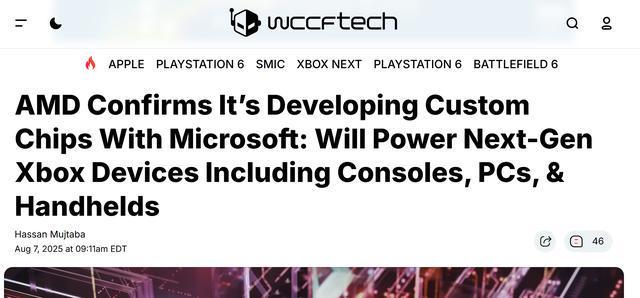
Core Insights - The performance of AI products increasingly relies on data quality and freshness rather than just model size [1][2][3] - Companies like Salesforce and IBM are acquiring data infrastructure firms to enhance their AI capabilities with real-time, structured data [2][5][6] - The definition of "good data" includes being domain-specific, continuously updated, structured, deduplicated, and real-time actionable [4][5][6] Data Infrastructure Importance - Data collection is now seen as a critical infrastructure rather than a secondary task, emphasizing the need for reliable, real-time access to data [2][9][22] - The modern AI data stack has evolved into a value chain that includes data acquisition, transformation, organization, and storage [10][22] - Effective data retrieval quality surpasses prompt engineering, as outdated or irrelevant data can hinder model performance [7][19] Strategic Data Collection - Data collection must be strategic, providing structured and immediate data for AI agents [12][13] - It should handle dynamic user interfaces, CAPTCHAs, and mixed extraction methods to ensure comprehensive data gathering [14][15] - Data collection infrastructure should be scalable and compliant with legal standards, moving beyond fragile scraping tools [16][22] Future of AI Systems - The future of AI performance will depend more on knowledge acquisition speed and context management rather than just model size [23][24] - Companies that view data collection as a foundational capability will likely achieve faster and more cost-effective success [25]


IDC:联想在消费游戏本市场持续稳居榜首,第二季度市场份额达到42.0%
Xin Lang Cai Jing· 2025-08-06 06:43
Group 1 - Lenovo continues to lead the consumer gaming laptop market with a market share of 42.0% in Q2 2025 [1] - ASUS has shown strong performance with its "ROG" and "TUF" series products, achieving a market share of 32.1%, ranking second [1] - Softcom has experienced rapid growth in recent quarters due to its pricing advantages, securing the third position in the market [1] Group 2 - HP's "Omen" and "Pavilion" series have recently seen a recovery in market share, maintaining the fourth position [1]

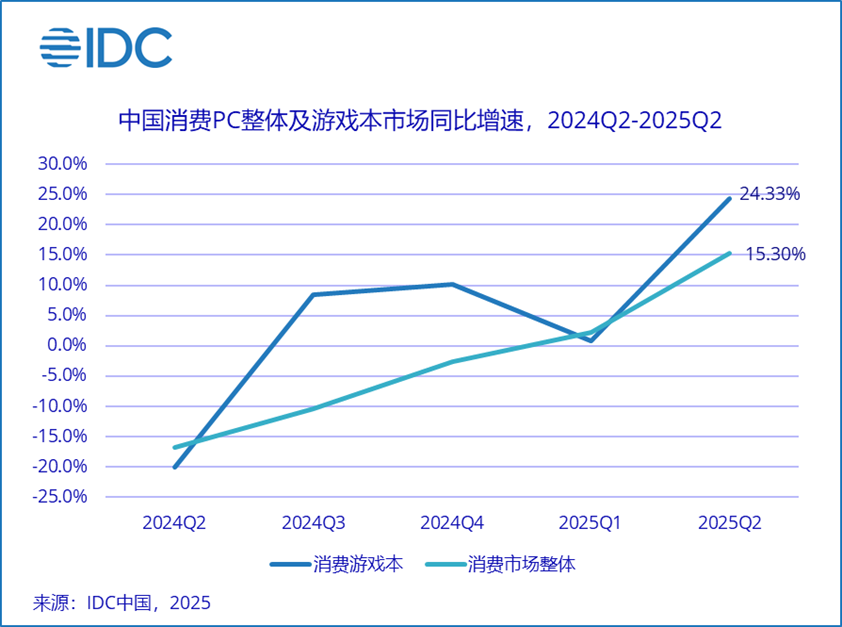
IDC:二季度中国游戏本市场同比增速达24.3% 显著高于整体消费PC市场
Zhi Tong Cai Jing· 2025-08-06 05:56
Group 1 - The Chinese consumer gaming PC market is experiencing strong growth, particularly in gaming laptops, which have shown a year-on-year growth of 24.3% in Q2 2025, significantly outpacing the overall consumer PC market [1] - The growth is driven by the sustained demand from university students and core gamers for high-performance devices, as well as the rapid evolution of gaming content showcased at ChinaJoy 2025 [1] - The increasing complexity of graphics rendering, immersive interaction experiences, and AI integration in gaming are raising hardware requirements, further propelling the upgrade demand in the gaming PC market [1] Group 2 - Lenovo continues to lead the consumer gaming laptop market with a market share of 42.0% in Q2 2025, followed by ASUS at 32.1% and Softcom Power at third place [3] - HP's "Shadow Elf" and "Light Elf" series have also seen a recent recovery in market share, maintaining their position in fourth place [3] Group 3 - The launch of NVIDIA's RTX 50 series graphics cards has rapidly gained traction, capturing nearly 60% of the overall market within months of release, with 75.3% of gaming laptop sales in June 2025 attributed to products featuring the RTX 50 series [4][5] - The rise of AI-driven gaming is reshaping the hardware market, with gaming laptops equipped with NPU experiencing a remarkable year-on-year growth of 107.8% in June 2025 [6] - AI gaming is expected to become one of the most promising segments in the future gaming PC market [6]
全球平板出货六连增:苹果三星市占率下滑,华为升至第三
Guan Cha Zhe Wang· 2025-08-06 03:17
Group 1: Tablet Market Overview - In Q2 2025, global tablet shipments reached 39 million units, marking a 9% year-on-year growth and a 5% quarter-on-quarter increase, driven by stable demand in China and EMEA regions [1][2] - Apple led the market with a 36.1% share, despite a 2.4% increase in shipments, its market share declined by 2.5 percentage points [1][2] - Samsung held a 17.1% market share with a 1.8% increase in shipments, but its share decreased by 1.9 percentage points [1][2] - Huawei rose to third place with an 8.3% share, experiencing a 29.2% year-on-year growth in shipments [1][2] - Lenovo and Xiaomi followed with 7.9% and 7.8% market shares, respectively, with Lenovo's shipments growing by 24.7% and Xiaomi's by 42.3% [1][2] Group 2: Market Drivers and Trends - The growth in the tablet market is supported by consumer subsidy policies in China and global commercial tender projects [2][3] - A surge in new product launches, particularly in the gaming tablet segment, has contributed to market expansion, especially in Asia [2][3] - Xiaomi's Redmi K Pad and vivo's Pad5 are notable new products, with Lenovo's Legion Tab seeing a significant increase in shipments [3] Group 3: Chromebook Market Insights - Lenovo led the global Chromebook market in H1 2025 with shipments of 3.45 million units, a 27% year-on-year increase, benefiting from the Japanese GIGA school project [4][5] - HP ranked second with 2.59 million units shipped, but its market share declined by 4% [4][5] - Acer, Dell, and ASUS also showed varied performance, with ASUS experiencing a 43% growth in shipments due to the GIGA project [4][5]


