代理AI

Search documents
“代理AI”崛起,CPU翻身?
华尔街见闻· 2026-03-09 03:52
Core Viewpoint - The AI server market narrative has shifted from a GPU-centric focus to a more balanced approach, emphasizing the importance of CPU in AI data centers as the demand for computational power evolves with the rise of Agentic AI [1][3][14]. Group 1: Changes in AI Workflows - The transition from simple chatbots to Agentic AI has fundamentally altered the computational requirements of data centers, necessitating a shift in how tasks are processed [2][5]. - Agentic AI workflows require not only content generation but also complex task management, which involves multiple logical branches and multi-threaded processing, diminishing the parallel advantages of GPUs [5][6]. Group 2: Server Demand and Supply Dynamics - HSBC Securities has significantly raised its forecast for global server shipments in 2026 to a year-on-year growth of 20%, up from a previous estimate of 4%, indicating a strong demand that exceeds market expectations [7]. - The supply chain is currently facing a significant shortfall, with CPU and DRAM memory supply gaps estimated at 30%-40%, and shortages in SSDs and power chips ranging from 10%-30% [8]. Group 3: Financial Incentives and Capital Expenditure - The implementation of the One Big Beautiful Bill Act in the U.S. provides strong financial incentives for cloud service providers (CSPs) to invest in data center assets, including servers, through 100% accelerated depreciation and immediate R&D expense deductions [10]. - CSPs' capital expenditures are projected to reach $743 billion by 2026, representing an 81% increase, with a significant shift in spending from land acquisition to purchasing computational equipment [11]. Group 4: Beneficiaries of the Shift - The market is transitioning from a GPU-centric logic to a more balanced value chain for computing nodes, with ODMs and key component suppliers poised to benefit from the rising importance of CPUs in server architecture [12][13]. - The demand for CPUs driven by Agentic AI is expected to provide long-term certainty to the server market and outline a clear hardware upgrade path for investors [15].

【西街观察】AI拐点也有盲点
Bei Jing Shang Bao· 2026-02-26 13:24
Group 1 - Nvidia reported a remarkable financial performance with revenue and profit growth exceeding 70% in the fourth quarter, indicating a significant turning point for Agentic AI adoption among enterprises [1] - The transition from generative AI to Agentic AI signifies a shift from consumer-oriented applications to enterprise-level operations, highlighting the increasing reliance on AI for practical tasks [1][2] - The enthusiasm for AI is driven by the desire for digital employees that operate continuously, but the narrowing margin for error in serious business applications raises concerns about reliability [2] Group 2 - Nvidia's impressive sales figures are largely attributed to a few large-scale customers, raising concerns about market concentration reminiscent of the internet bubble over two decades ago [3] - As AI technology advances, it is crucial to address the overlooked details and ensure that AI systems are reliable and safe, especially as they gain decision-making capabilities [3]

英伟达(NVDA.US)电话会:黄仁勋高呼代理AI拐点已至,“推理即收入”,当前的太空数据中心经济还是“贫瘠的”
智通财经网· 2026-02-26 01:25
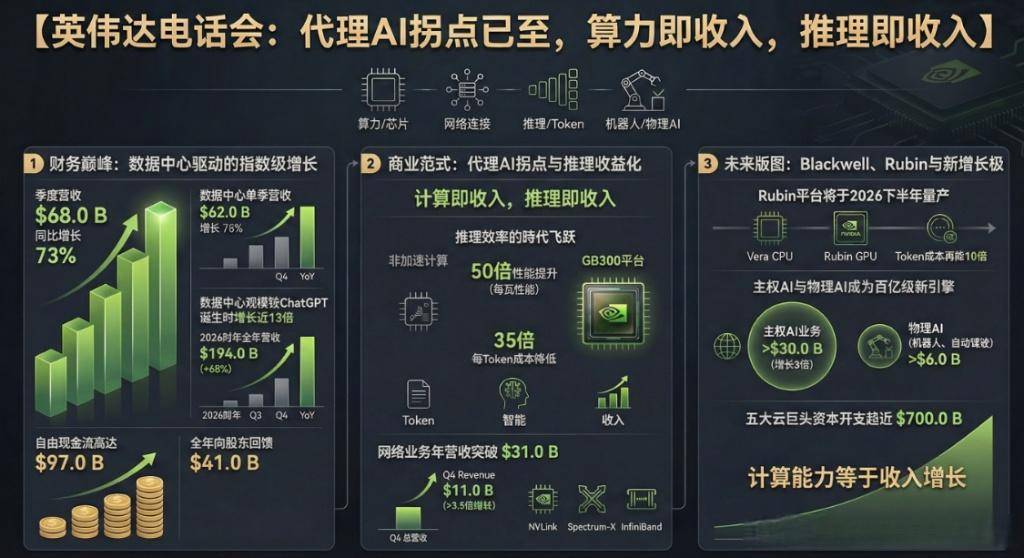
Core Insights - Nvidia reported record quarterly revenue of $68 billion, a 73% year-over-year increase, and provided strong guidance for future growth, emphasizing the transformative impact of Agentic AI on revenue generation [1][18][29] - CEO Jensen Huang highlighted that computational power is directly linked to revenue, asserting that without computational resources, token generation and revenue growth are not possible [1][6][10] Financial Performance - Total revenue reached $68 billion, marking a 73% increase year-over-year and accelerating growth compared to the previous quarter [1][18] - Data center revenue was a significant driver, contributing $62 billion in the fourth quarter, a 75% year-over-year increase [20][23] - Nvidia's data center business has expanded nearly 13 times since the launch of ChatGPT in 2023, with expectations for continued quarterly growth throughout 2026 [18][23] Product and Technology Developments - The Blackwell architecture has been deployed with a performance advantage of 50 times over competitors, and the first samples of the Vera Rubin platform have been sent to customers, with mass production expected in the second half of 2026 [4][24] - Nvidia's software optimizations have led to a fivefold performance increase in the GB200 NVL72 within four months [19] - The company is focusing on reducing inference token costs by up to 10 times through new architectures [4][24] Strategic Partnerships and Investments - Nvidia is nearing a partnership agreement with OpenAI, potentially involving a $300 billion investment in AI infrastructure [12][31] - The company has invested $10 billion in Anthropic and is collaborating with Meta to deploy millions of Blackwell and Rubin GPUs [5][31] - Nvidia's partnerships with Siemens, Dassault Systems, and Synopsys aim to enhance industrial AI applications [5] Market Trends and Future Outlook - The shift from traditional machine learning to generative AI is driving significant capital expenditure among major cloud service providers, with expectations for a $700 billion investment in 2026 [22][23] - Nvidia anticipates that sovereign AI business will exceed $30 billion in fiscal 2026, driven by demand from countries like Canada, France, and the UK [23] - The company expects first-quarter revenue for fiscal 2027 to be around $78 billion, primarily driven by data center growth [29]
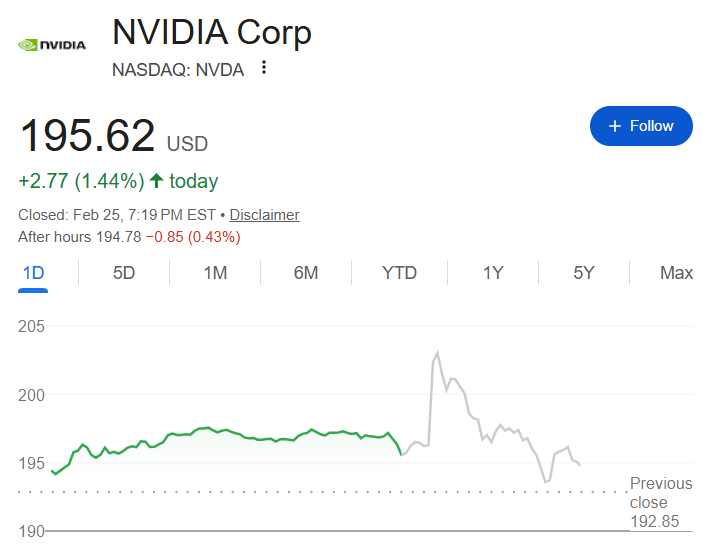
【英伟达电话会:黄仁勋高呼代理AI拐点已至,“推理即收入”,当前的太空数据中心经济还是“贫瘠的”】英伟达CEO黄仁勋在电话会上直言,代理AI(Agentic AI)已达到拐点,算力直接转化为收入。黄仁勋认为没有算力就无法生成token,没有token就无法实现营收增长,云服务商的巨额资本开...
Sou Hu Cai Jing· 2026-02-26 01:12
Core Insights - Nvidia's CEO Jensen Huang stated that Agentic AI has reached a turning point, where computing power directly translates into revenue [1] - Huang emphasized that without computing power, tokens cannot be generated, and without tokens, revenue growth cannot be achieved [1] - The company confirmed it is close to finalizing a significant infrastructure partnership with OpenAI, with order demand extending to 2027 [1] Group 1 - The current state of the space data center economy is described as "barren" [1] - Huang highlighted that the substantial capital expenditures by cloud service providers will ultimately convert into revenue [1]
高盛CES总结会:AI基建的增量需求来自“具身智能”和“代理”
Hua Er Jie Jian Wen· 2026-01-08 11:27
Core Insights - The market is experiencing a deep evolution in AI infrastructure rather than a simple cyclical peak, with strong demand continuing but structural changes in drivers [1] - The focus for investors should shift from merely stacking computing power to hardware that supports longer context and more complex reasoning capabilities [1] Group 1: Nvidia - Nvidia's Rubin platform is set to ramp up production significantly in the second half of 2026, with assembly time reduced from 2 hours to approximately 5 minutes, breaking supply bottlenecks [2] - The new platform allows each GPU to access up to 16TB of context memory, a substantial increase from the previous 1TB, which is expected to greatly benefit the NAND market [2] - Nvidia is also advancing in physical AI with the release of the open-source model "Alpamayo" for L4-level autonomous driving development [2] Group 2: AMD - AMD is focusing on closing the gap with competitors, targeting "agent AI" and "physical AI" as key growth areas, with the MI400 series GPU set to launch in 2026 and the MI500 series in 2027 [3] - The company aims to offer competitive pricing with the MI440X GPU for enterprises and Ryzen AI Max for PCs, which is positioned against Nvidia's offerings [3] - The Ryzen AI Halo development platform will be available in Q2 2026, supporting models with up to 200 billion parameters for edge computing [3] Group 3: Micron - Micron is experiencing a strong supply-demand environment for DRAM, with pricing remaining firm and entering a supply allocation mode due to high demand [4] - The NAND market is expected to see significant growth driven by AI data center demand for SSDs, marking a shift in focus from HBM to NAND as an additional growth engine [4] Group 4: Marvell - Marvell is strengthening its position in data center interconnects through the acquisition of XConn Technologies for $540 million, expected to contribute revenue starting in the second half of 2026 [6] - The company has aggressive growth targets, projecting 25% and 40% year-over-year growth for its data center business in 2026 and 2027, respectively [6] Group 5: Analog Chips - The analog chip sector, exemplified by ADI, is facing a "bottoming" phase with channel inventory below 6 weeks, indicating a supply shortage [7] - Despite low inventory levels, OEM customers have not begun to replenish stock, leading to a cautious recovery outlook [7] - ON expects a normalization in pricing in 2026, while Skyworks is relying on its major customer to withstand market pressures [7] Group 6: Synopsys - The battlefield for chip design is shifting towards the integration of design and physical simulation, with Synopsys showcasing a collaborative product with Ansys for advanced packaging expected in the first half of 2026 [8] - This integration signifies a move beyond traditional logic design to precise simulations of the physical world [8]

黄仁勋:Rubin提前量产,物理AI“ChatGPT时刻”已至
Tai Mei Ti A P P· 2026-01-06 01:53
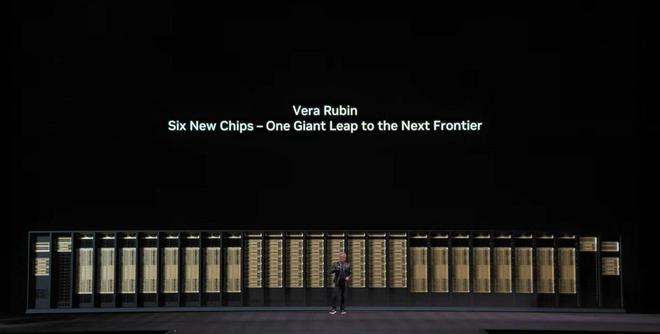
Core Insights - NVIDIA is set to experience unprecedented spending in 2026, showcasing its absolute strength and leading advantage in the AI field [2] - The company has announced the full production of its next-generation Rubin chip architecture, significantly ahead of the expected timeline [3] Group 1: Rubin Chip Architecture - The Rubin architecture aims to create an incredible AI supercomputer, marking the next generation of artificial intelligence [3] - The architecture consists of six chips, including the NVIDIA Vera CPU and NVIDIA Rubin GPU, designed for extreme collaboration to enhance efficiency and performance in large model training and inference [4] - Compared to the current Blackwell architecture, Rubin uses four times the GPUs for parallel training of mixed experts (MoE) models, reducing average inference costs by up to 10 times and increasing training speed by 3.5 times [4] Group 2: Market Position and Competition - NVIDIA faces strong competition from Google’s TPU and other ASIC chips, which are perceived to offer lower total cost of ownership (TCO) while maintaining or exceeding performance [5] - Despite the competitive landscape, NVIDIA's CEO expressed confidence in Rubin's ability to improve the company's product delivery value and market share in data centers [5] - Major cloud providers and AI developers, including AWS, Google, and Microsoft, are interested in deploying Rubin, indicating strong customer demand [5] Group 3: Future Trends in AI - The demand for AI computing is expected to surge, with Morgan Stanley predicting a 26% year-over-year increase in data center AI chip shipments in 2026 [6] - NVIDIA aims for Rubin to counter predictions that ASIC chips will significantly outpace GPU growth, with ASIC market share expected to rise from under 41% to over 46% [6] - The company is positioning itself for the transition from generative AI to agent-based AI, which is anticipated to transform enterprise-level AI usage [6] Group 4: Physical AI Developments - NVIDIA is actively investing in physical AI, having previously introduced the NVIDIA Cosmos model and now unveiling new products in robotics and autonomous driving [6][7] - Collaborations with leading companies like Boston Dynamics and Caterpillar are underway to develop new AI robots using NVIDIA's technology [7] - The CEO declared that the "ChatGPT moment" for physical AI has arrived, indicating a significant shift in the industry [7]
美银:印度已成全球最活跃AI大模型市场,庞大年轻人口沦为硅谷“试验田”
Hua Er Jie Jian Wen· 2025-12-18 06:22
Core Insights - India has surpassed other countries to become the market with the highest penetration of large language models (LLMs), driven by low data costs and a large young population [1] - According to Bank of America, India is not only the most active AI consumer market but also a key frontier for global tech giants to test next-generation AI technologies [1] Market Dynamics - India leads globally in user numbers for popular AI applications like ChatGPT, Gemini, and Perplexity, reflected in both monthly active users (MAUs) and daily active users (DAUs) [1] - Local telecom giants such as Bharti Airtel and Jio are accelerating this trend by offering free premium AI application subscriptions, further solidifying market penetration [1] Competitive Landscape - Bank of America identifies Bharti Airtel and Jio as potential market winners in this trend, as such collaborations can enhance user stickiness and benefit them in the mid-term AI scale-up [1] - However, the report warns that local startups may face increased pressure as global AI companies enter the market, potentially squeezing their survival space [1] User Base and Accessibility - India's vast and diverse user base makes it an ideal testing ground for "Agentic AI," which can independently reason, plan, and execute tasks [2] - The country has the second-largest online population globally, with over 700 to 750 million mobile internet users, and low data costs (approximately $2 for 20 to 30GB of monthly data) lower the entry barrier for AI [3] Role of Telecom Operators - Telecom operators like Jio and Bharti Airtel play a crucial role in the AI adoption wave in India by offering free subscriptions to paid versions of AI applications, creating a win-win situation for users, AI companies, and telecom operators [3] - This strategy not only reduces the cost of advanced AI tools but also fosters a fair competitive environment, enhancing learning outcomes and productivity [3] Future Testing Grounds - India is positioned to be a testing ground for the next phase of AI technology, particularly "Agentic AI," due to its large and diverse user base [4] - Bank of America suggests that global AI companies could partner with local firms in India to provide service fulfillment, indicating that India is not just a consumer market but also a critical experimental base for Silicon Valley tech giants [4]
德勤《2026年前沿技术、智能媒体与通信行业预测报告》:AI的静默落地与全球技术主权的重构
欧米伽未来研究所2025· 2025-11-22 03:32
Core Insights - The article emphasizes that the technology industry is entering a more pragmatic and complex phase as the initial hype around generative AI subsides, with a focus on scaling applications through data governance, system integration, and compliance [2][3]. Group 1: AI Development and Market Dynamics - By 2026, the focus of AI development will shift significantly towards "inference," with two-thirds of global computing power dedicated to running AI models, surpassing the power used for model training [3]. - The rise of "passive" usage of generative AI embedded in existing applications will lead to a user base far exceeding that of standalone tools like ChatGPT, with AI-generated summaries in search engines expected to be used three times more frequently than independent Gen AI tools by 2026 [3]. Group 2: Enterprise Transformation and AI Agents - The core of enterprise transformation will be "Agentic AI," with a predicted market size of $45 billion by 2030 if interoperability and governance challenges are effectively addressed [4]. - Traditional SaaS models are expected to be disrupted, moving towards mixed pricing models based on outcomes or usage [4]. Group 3: Geopolitical Trends and Semiconductor Supply Chains - Technology sovereignty has become a central policy issue for governments, leading to accelerated efforts to establish independent digital infrastructures, particularly in AI computing power and semiconductors [5]. - Key technology trade restrictions are tightening, creating new supply chain bottlenecks, particularly around advanced manufacturing tools and technologies, which could impact a $300 billion AI chip market [5]. Group 4: Media and Content Production Trends - The media and entertainment industry is being reshaped by short videos and generative AI, with the rise of "micro-dramas" expected to double in revenue to $7.8 billion by 2026 [7]. - Video podcasts are projected to generate $5 billion in global advertising revenue by 2026, combining audio storytelling with visual elements [7]. Group 5: Telecommunications and Consumer Engagement - In developed markets, the marginal effects of technology upgrades are diminishing, leading to a shift in customer retention strategies from technical performance to brand value and service experience [6]. - By 2026, promotional strategies like free offers may prove more effective in retaining customers than emphasizing network performance [6].

戴尔科技 AI 服务器销量强劲增长
美股研究社· 2025-08-26 12:58
Core Viewpoint - Dell Technologies is expected to report strong Q2 2026 earnings, with analysts raising EPS estimates significantly, reflecting high market expectations for the company's performance [1][2]. Financial Estimates - Projected revenue for Q2 2026 is $29.2 billion, with adjusted EPS estimated at $2.30, driven by optimism in AI infrastructure and traditional server sales [2][9]. - Analysts have upgraded EPS estimates 13 times and downgraded 3 times in the past 90 days, indicating strong market sentiment [1]. Segment Performance - The Infrastructure Solutions Group (ISG) is anticipated to see a 12% year-over-year revenue increase in Q1 2026, with server and networking revenue growing by 16% [3][4]. - AI-optimized server shipments reached $1.8 billion, with a backlog of $14.4 billion, primarily driven by demand from cloud service providers and enterprise clients [3][4]. Strategic Developments - Dell is enhancing its AI data platform to streamline AI development and deployment, aiming to connect AI agents with enterprise data [4]. - The company is positioned to benefit from a significant upgrade cycle as many existing servers are outdated, particularly among its customer base [4]. Market Trends - The overall IT spending forecast for 2025 indicates strong growth in data center systems, with Dell expected to outperform market expectations in this area [8][9]. - The commercial PC sales are gradually increasing, supported by the anticipated improvements from Windows 11 updates [10]. Financial Health - As of Q1 2026, Dell's cash and cash equivalents stood at $7.7 billion, with total debt at $28.8 billion, reflecting a strong financial position [10][11]. - The company has seen improvements in its leverage ratio, indicating better financial management since Q2 2025 [10]. Future Outlook - Dell is expected to achieve significant growth in Q2 2026, driven by AI server sales and a shortening refresh cycle for traditional servers and commercial devices [10][12]. - The integration of GenAI technology in operations is anticipated to enhance operational efficiency and drive future growth [10].

“所有移动的物体都能变成机器人”,英伟达加快物理AI部署
Di Yi Cai Jing· 2025-08-12 04:42
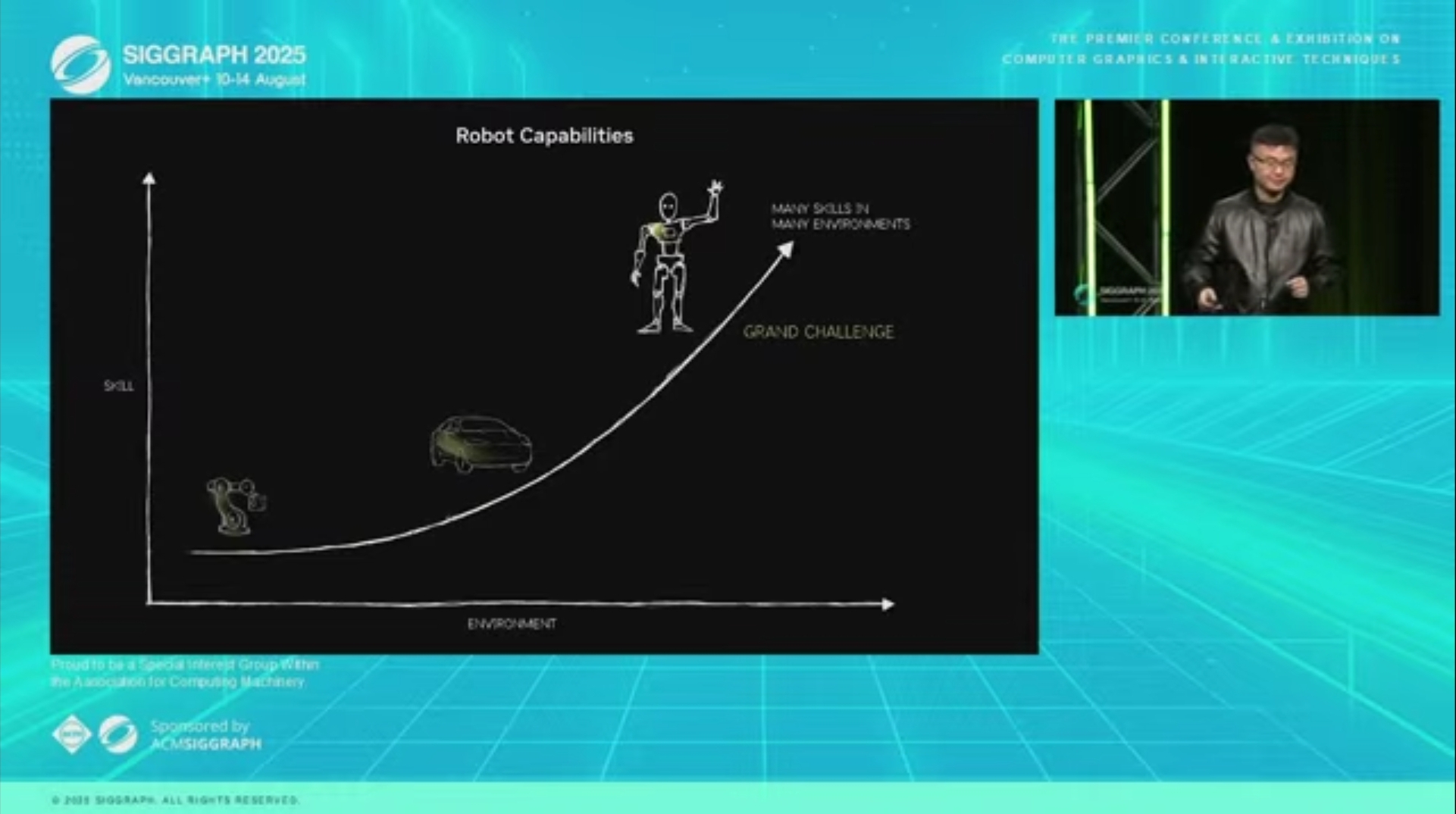
Core Viewpoint - The next wave of innovation is identified as Physical AI, which is emphasized by NVIDIA's CEO Jensen Huang, highlighting its potential to drive significant market growth in various sectors [1] Group 1: Physical AI Development - NVIDIA is accelerating its deployment in the Physical AI sector, which relies on neural graphics, synthetic data generation, physical modeling, reinforcement learning, and AI inference technologies [1] - Physical AI is expected to unlock a trillion-dollar market, as mentioned during the 2025 World Robot Conference [1] - At the SIGGRAPH 2025 conference, NVIDIA presented 16 papers focusing on Physical AI, indicating its central theme for the event [1][2] Group 2: Relationship Between Graphics and AI - There is a close relationship between Physical AI and graphics research, with advancements in rendering technology enabling the creation of realistic virtual worlds for training advanced Physical AI systems [2] - NVIDIA's rendering research has improved real-time path tracing performance by 10,000 times over nine years, showcasing significant technological progress [2] Group 3: Robotics and AI Integration - Future robots are expected to redefine operations in factories, warehouses, and agriculture, with a strong coupling between AI and simulation research [2] - Training robots in virtual environments is safer and more efficient than in the real world, allowing for rapid skill acquisition [2] Group 4: Product Launches and Innovations - NVIDIA has introduced several products related to Physical AI, including the Cosmos world model for generating synthetic driving scenarios and the open-source 70 billion parameter visual language model, Cosmos Reason [5] - New hardware solutions, such as the RTX PRO 6000 Blackwell server GPU, are being launched to support AI and Physical AI workloads [5]