银华基金

Search documents
银华基金业务副总经理于蕾:力争赢收益、稳回撤 为持有人打造长期良好盈利体验
Zhong Guo Ji Jin Bao· 2025-12-01 00:14
Core Viewpoint - The investment philosophy of the company emphasizes maximizing long-term returns while controlling drawdowns, aiming to enhance the long-term returns and profit experience for investors [1][2]. Group 1: Investment Philosophy and Strategy - The company focuses on high win-rate assets as a primary source of excess returns, utilizing a stable investment management method developed over two decades of pension investment management experience [2]. - The investment framework aims to maximize long-term returns while controlling drawdowns, particularly sensitive to losses due to the nature of pension funds [2][3]. - The multi-asset team emphasizes dynamic cross-asset, cross-product, and cross-industry comparisons to identify high-value assets and adjust allocations when certain asset classes become overheated [2][4]. Group 2: Performance and Achievements - The company’s enterprise annuity business and "fixed income plus" products have seen significant growth, with the weighted average return of single plans ranking fourth among annuity managers as of 2024 [5]. - The "Yinhua Shenghong Bond A" product has achieved a net value growth of 6.81% since February 18, 2024, outperforming its benchmark by 5.53% [5][6]. Group 3: Risk Management and Decision-Making - The company has established a comprehensive risk management system, including portfolio risk monitoring and market risk warnings, to enhance the investment experience [4]. - The investment decision-making process is characterized by a "high consensus, high belief" mechanism, ensuring that diverse viewpoints are consolidated into clear strategic directions [11]. Group 4: Future Outlook - The company is optimistic about the equity market over the next two years, identifying key variables such as price stability and real estate recovery as important for market fundamentals [11]. - There is a focus on technological innovation as a long-term investment direction, with attention to sectors like aviation, hotels, and tourism as indicators of consumer recovery [11].
银华基金于蕾: 植根团队沃土 打造稳健方舟
Zhong Guo Zheng Quan Bao· 2025-11-30 22:00
Core Viewpoint - The article emphasizes the importance of a systematic and collaborative investment approach led by Yu Lei at Yinhua Fund, focusing on long-term stable growth rather than short-term gains [1][2]. Group 1: Investment Philosophy - Yu Lei's investment philosophy is shaped by her extensive experience in managing corporate pensions, emphasizing absolute returns while being sensitive to losses [2]. - The investment strategy aims to maximize long-term returns while controlling drawdowns, reflecting a disciplined approach to risk management [2][4]. Group 2: Platform Ecosystem - The multi-asset investment team at Yinhua Fund operates within a dynamic platform ecosystem that fosters collaboration and knowledge sharing among team members [3]. - This ecosystem is designed to provide diverse investment solutions, ensuring that clients benefit from a comprehensive research and investment team rather than relying on a single fund manager [3][6]. Group 3: Product Offering - The newly launched fund, Yinhua Sheng'an Six-Month Holding Mixed Fund, is positioned as a "fixed income plus" product aimed at investors seeking stable returns [1]. - The team has successfully managed the Yinhua Shenghong Bond Fund, achieving a net value growth of 6.81% since Yu Lei's tenure, significantly outperforming the benchmark by 5.53 percentage points [3]. Group 4: Risk Management - The team employs a multi-layered drawdown management strategy, focusing on a "fund-weighted return" approach to enhance investor experience [5][6]. - Investment decisions are made with a strict adherence to risk control, ensuring that any significant holdings have manageable downside risks [5][6]. Group 5: Market Outlook - Yu Lei maintains a cautious yet optimistic view on the A-share and Hong Kong markets, anticipating significant investment opportunities in 2024 and 2025 driven by valuation recovery [6][7]. - The team is particularly bullish on technology stocks and sectors like consumption and cyclical industries, while adopting a cautious stance on the bond market due to high valuations [6][7].
植根团队沃土 打造稳健方舟
Zhong Guo Zheng Quan Bao· 2025-11-30 20:21
Core Viewpoint - The article discusses the investment strategies and philosophies of the multi-asset investment team at Yinhua Fund, led by Yu Lei, emphasizing a systematic and collaborative approach to asset allocation that aims for long-term stable growth rather than short-term gains [1][2]. Group 1: Investment Philosophy - The investment philosophy focuses on long-term value maximization while controlling drawdowns, shaped by Yu Lei's extensive experience in pension fund management [1][3]. - The team aims to provide a comprehensive solution that aligns with clients' risk-return needs, leveraging a platform that integrates collective wisdom and systematic processes [1][2]. Group 2: Platform Ecosystem - Yinhua Fund's multi-asset team has developed a dynamic "platform ecosystem" that fosters collaboration and knowledge sharing among team members, enhancing their investment capabilities [2][3]. - The team emphasizes a culture of sharing and collaboration, ensuring that strategies and knowledge flow smoothly within the team to create a strong collective force [2][3]. Group 3: Performance and Strategy - The performance of the "Fixed Income Plus" product, Yinhua Shenghong Bond, shows a net value increase of 6.81% since Yu Lei's tenure, significantly outperforming the benchmark by 5.53 percentage points [2][3]. - The team employs a multi-layered drawdown management strategy and dynamic asset allocation, focusing on the "fund-weighted return" to enhance investor experience [3][4]. Group 4: Market Outlook - The team maintains a cautious yet optimistic view on the A-share and Hong Kong markets, anticipating significant investment opportunities in 2024 and 2025, driven by valuation recovery [4][5]. - In the bond market, the team views the current environment as favorable but acknowledges limited room for further yield declines, adopting a cautious stance on convertible bonds due to high valuations [5].
打造“固收+”精品致力于提升持有人体验——访银华基金于蕾
Shang Hai Zheng Quan Bao· 2025-11-30 14:10
Core Viewpoint - The article emphasizes the importance of "fixed income plus" (固收+) investment strategies in providing stable long-term returns for investors, particularly in a declining interest rate environment [3][4][9]. Group 1: Investment Strategy - The core of the "fixed income plus" business is asset allocation, which is seen as a critical measure of a professional team's capabilities [3][7]. - The investment philosophy focuses on maximizing returns while controlling drawdowns, highlighting the significance of cost-effectiveness across different asset classes [3][7]. - The "fixed income plus" products have gained popularity as they address asset allocation challenges and offer a relatively stable approach to achieving long-term returns in volatile market conditions [4][9]. Group 2: Market Trends and Data - As of Q3 2025, the total market size of "fixed income plus" products reached 2.44 trillion yuan, an increase of over 500 billion yuan from Q2 2025, and a rise of 1.11 trillion yuan compared to Q3 2024 [4]. - The article notes that the real estate sector's drag on the economy is expected to diminish over the next two to three years, potentially leading to a recovery in consumer and business confidence, which could create overall investment opportunities in A-shares and Hong Kong stocks [9]. Group 3: Team and Technology - The company has invested significantly in resources to support the "fixed income plus" direction, with a multi-asset team of over 50 members, including specialists in equity and various investment strategies [5][6]. - AI technology is increasingly utilized to enhance investment decision-making, improve efficiency, and identify investment risks, thereby strengthening the team's capabilities [6][5]. Group 4: Future Outlook - The company plans to launch a new "fixed income plus" product, focusing on balancing aggressiveness and safety while aiming for excess returns [9]. - Future investment strategies will consider sectors showing signs of recovery, such as consumption-related industries and cyclical products linked to PPI recovery, while maintaining an open mindset to adapt to market changes [9].


重仓小米的基金,少了200多只
Sou Hu Cai Jing· 2025-11-30 02:46
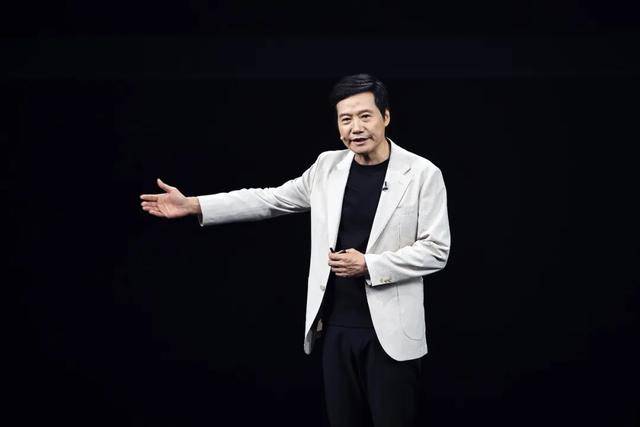
Core Viewpoint - Xiaomi Group's stock price has experienced a significant decline, prompting the company's founder, Lei Jun, to take measures to support the stock price through share buybacks and personal stock purchases [2][4]. Group 1: Stock Performance and Actions - Xiaomi's stock price has dropped by 40.4% from its historical high of 61.45 HKD on June 27 to a low of 36.62 HKD [2]. - On November 24, Lei Jun purchased 2.6 million shares at approximately 38.58 HKD each, increasing his ownership to 23.26% [2]. - Prior to Lei Jun's purchase, Xiaomi had repurchased 21.5 million shares for a total of 8.11 billion HKD (approximately 7.4 billion RMB) at prices around 37.61 HKD and 37.92 HKD [2]. Group 2: Fund Activity and Market Sentiment - The number of public funds heavily invested in Xiaomi surged from 90 to 130 in Q2 2024, reaching a peak of 487 by Q2 2025 [5][6]. - However, by Q3 2025, the number of funds holding Xiaomi shares plummeted to 266, indicating a nearly 50% reduction in just one quarter [6]. - Notable fund managers, including Xie Zhiyu and Li Xiaoxing, significantly reduced their holdings in Xiaomi during Q3 2025, with several funds dropping Xiaomi from their top ten holdings [7][9]. Group 3: Future Outlook and Challenges - Xiaomi faces critical challenges, including safety controversies surrounding its automotive division and rising memory costs impacting its smartphone business [4]. - Fund managers expressed concerns about declining profitability in the electric vehicle sector, which may affect investor sentiment towards Xiaomi [9][10].
FOF持续密集发行!偏债策略成配置主线
券商中国· 2025-11-29 03:18
Core Viewpoint - The FOF (Fund of Funds) market is experiencing a significant surge in issuance, characterized by rapid fundraising and a strong demand for stable asset allocation strategies [2][5][6]. Group 1: FOF Issuance Trends - In November, the issuance of FOF products accelerated, with multiple funds being established on the same day, indicating a concentrated formation trend [1][2]. - On November 25, four FOFs were launched simultaneously, achieving substantial initial fundraising results within short periods, showcasing the popularity of debt-oriented strategies [3][4]. - The total number of FOFs established this year with a scale exceeding 1 billion yuan has reached approximately 50, with 23 exceeding 10 billion yuan and 4 surpassing 50 billion yuan [5]. Group 2: Market Dynamics - The FOF market is described as entering a "big year" for issuance, with total fundraising exceeding 700 billion yuan, significantly surpassing the total for the previous year [5]. - The demand for stable returns and diversified asset allocation is driving the popularity of FOFs, which are seen as a favorable investment option in the current market environment [6]. - Factors contributing to the rise in FOF issuance include a shift towards stable asset allocation in the public fund industry, the appeal of FOFs to individual investors due to their standardized and easily understandable nature, and the increasing allocation of institutional funds towards FOFs [6].

【ETF观察】11月28日宽基指数ETF净流出6.02亿元
Sou Hu Cai Jing· 2025-11-28 22:37
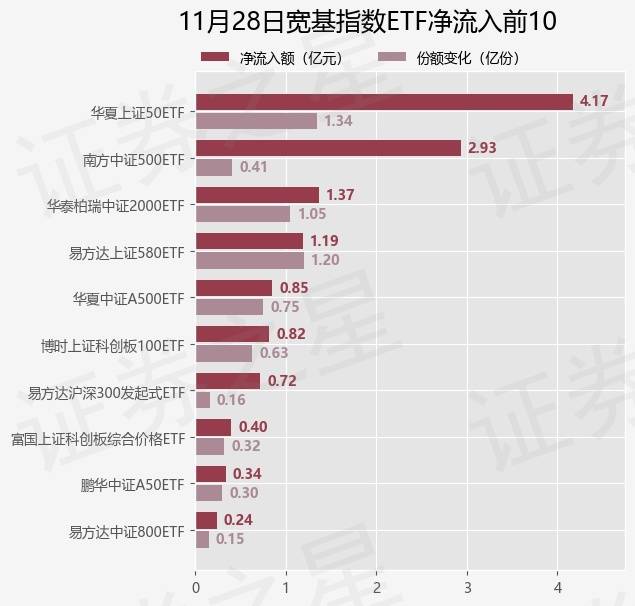
Core Insights - On November 28, the total net outflow of broad-based index ETFs reached 602 million yuan, with a cumulative net outflow of 20.638 billion yuan over the past five trading days, during which there were four days of net outflows [1] - A total of 31 broad-based index ETFs experienced net inflows on the same day, with the top inflow coming from the Huaxia SSE 50 ETF (510050), which saw an increase of 134 million shares and a net inflow of 417 million yuan [1] Summary by Category Net Inflows - The Huaxia SSE 50 ETF (510050) had a net inflow of 417 million yuan, with a share increase of 134 million, bringing its total shares to 5.7951 billion [3] - Other ETFs with notable net inflows include: - Southern CSI 500 ETF (510500) with a net inflow of 293 million yuan and a share increase of 41 million [3] - Huatai-PineBridge CSI 2000 ETF (563300) with a net inflow of 137 million yuan and a share increase of 105 million [3] Net Outflows - The top net outflow was from the Huaxia SSE Sci-Tech 50 ETF (588000), which saw a decrease of 243 million shares and a net outflow of 337 million yuan [4] - Other ETFs with significant net outflows include: - Huatai-PineBridge CSI 300 ETF (510300) with a net outflow of 275 million yuan and a share decrease of 59 million [5] - SSE Composite Index ETF (510210) with a net outflow of 237 million yuan and a share decrease of 246 million [5]
ETF市场周报 | 市场反弹行情演绎,小市值因子占优!前期热门ETF再度走强
Sou Hu Cai Jing· 2025-11-28 09:28
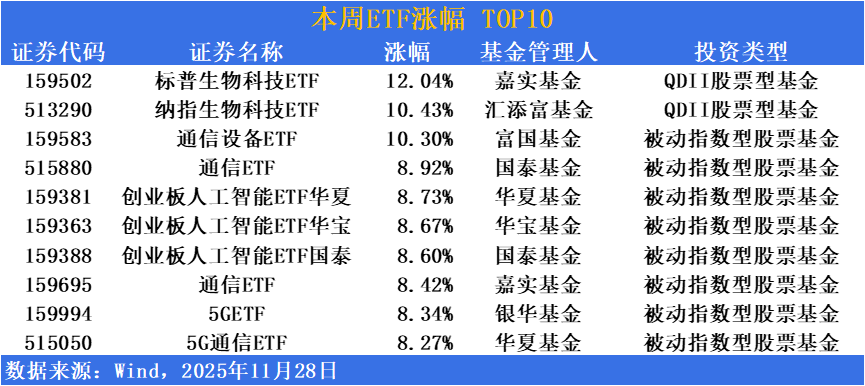
Market Overview - The stock market experienced a rebound during the week of November 24-28, 2025, with major indices showing positive performance: Shanghai Composite Index up 1.40%, Shenzhen Component Index up 3.56%, and ChiNext Index up 4.54% [1] - Trading volume remained low, with daily turnover around 1.8 trillion, indicating weak enthusiasm from external investors [1] - The market showed a trend of small-cap stocks outperforming larger ones, with gains increasing from the CSI 300 to the CSI 2000 [1] ETF Performance - Growth sectors saw significant rebounds, with the top-performing ETFs showing gains over 10%: S&P Biotechnology ETF up 12.04% and NASDAQ Biotechnology ETF up 10.43% [2] - The average gain for all ETFs was 2.42%, driven by a rebound in sectors like CPO and telecommunications [2] - The top ten ETFs by gain were all related to growth sectors, indicating a strong recovery in previously popular themes [2] Fund Flow Trends - Overall, there was a net outflow of 279.76 billion, with stock ETFs experiencing a significant outflow of 362.95 billion [6] - In contrast, money market ETFs and cross-border ETFs saw net inflows, indicating a shift towards safer investments [6] - The top inflow ETFs included the Huabao Qiyi ETF with 36.91 billion and the Benchmark Treasury ETF with 29.45 billion [8] Economic Indicators - Fiscal revenue showed a year-on-year increase of 3.16%, driven by higher tax income, while land transfer income continued to decline [5] - General fiscal expenditure fell by 9.78%, reflecting a significant drop compared to the previous month [5] - The real estate sector remains under pressure, with calls for new policies to stimulate the market [5] Upcoming ETF Listings - Two new ETFs are set to launch next week: Penghua Hang Seng Technology ETF and E Fund CSI A500 Dividend Low Volatility ETF, both targeting specific growth and dividend strategies [11][12] - The Hang Seng Technology ETF will focus on major tech stocks in Hong Kong, while the A500 Dividend ETF aims to provide stable returns through high dividend-paying stocks [11][12]
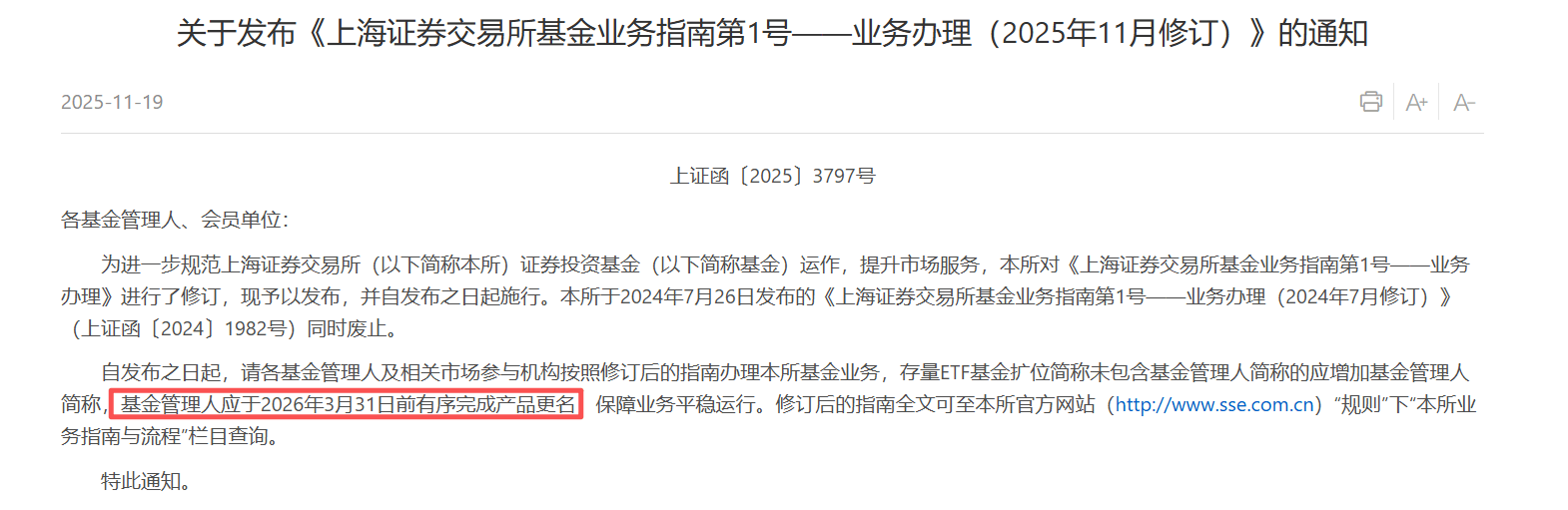
ETF改名倒计时,国泰基金能承受降费之痛?
Sou Hu Cai Jing· 2025-11-28 02:18
Core Viewpoint - The recent ETF renaming regulation has intensified the competition in the fee structure of ETFs, shifting the focus from brand names to management fees, which will now be prominently displayed in ETF names [1][3][12] Group 1: ETF Renaming Regulation - All existing ETFs must complete renaming by March 31, 2026, with a new naming structure that includes the management company's name [1] - The new naming convention will make management fees more visible, allowing investors to compare fees directly alongside brand names [3][12] Group 2: Impact on Fund Companies - Fund companies with high fee structures, like Guotai Fund, face pressure to reassess their pricing strategies as the visibility of fees increases [1][5][12] - Guotai Fund's ETF management fee structure is outdated, with over 70% of its products still charging a 0.5% management fee, compared to a market average of 27% for 0.15% fee products [6][9] Group 3: Market Trends and Comparisons - The U.S. ETF market has seen a significant decline in fees over the past decade, with Vanguard's VOO leading the way at a 0.03% management fee, illustrating a trend that may be mirrored in China [4] - As of November 26, 2025, there are 371 ETFs with a management fee of 0.15%, indicating a growing low-fee segment in the market [11] Group 4: Competitive Landscape - Guotai Fund's A500 ETF, once a leader in its category, has seen its assets shrink by over 20% as competition intensifies from other fund companies [7][8] - A recent collective action by major fund companies to lower management fees to 0.15% for various core ETFs marks a significant shift in the industry, indicating a new era of low-fee ETFs [10][11]