润达医疗

Search documents
财通资管医疗保健混合A:2025年第二季度利润2479.39万元 净值增长率12.31%
Sou Hu Cai Jing· 2025-07-21 10:00
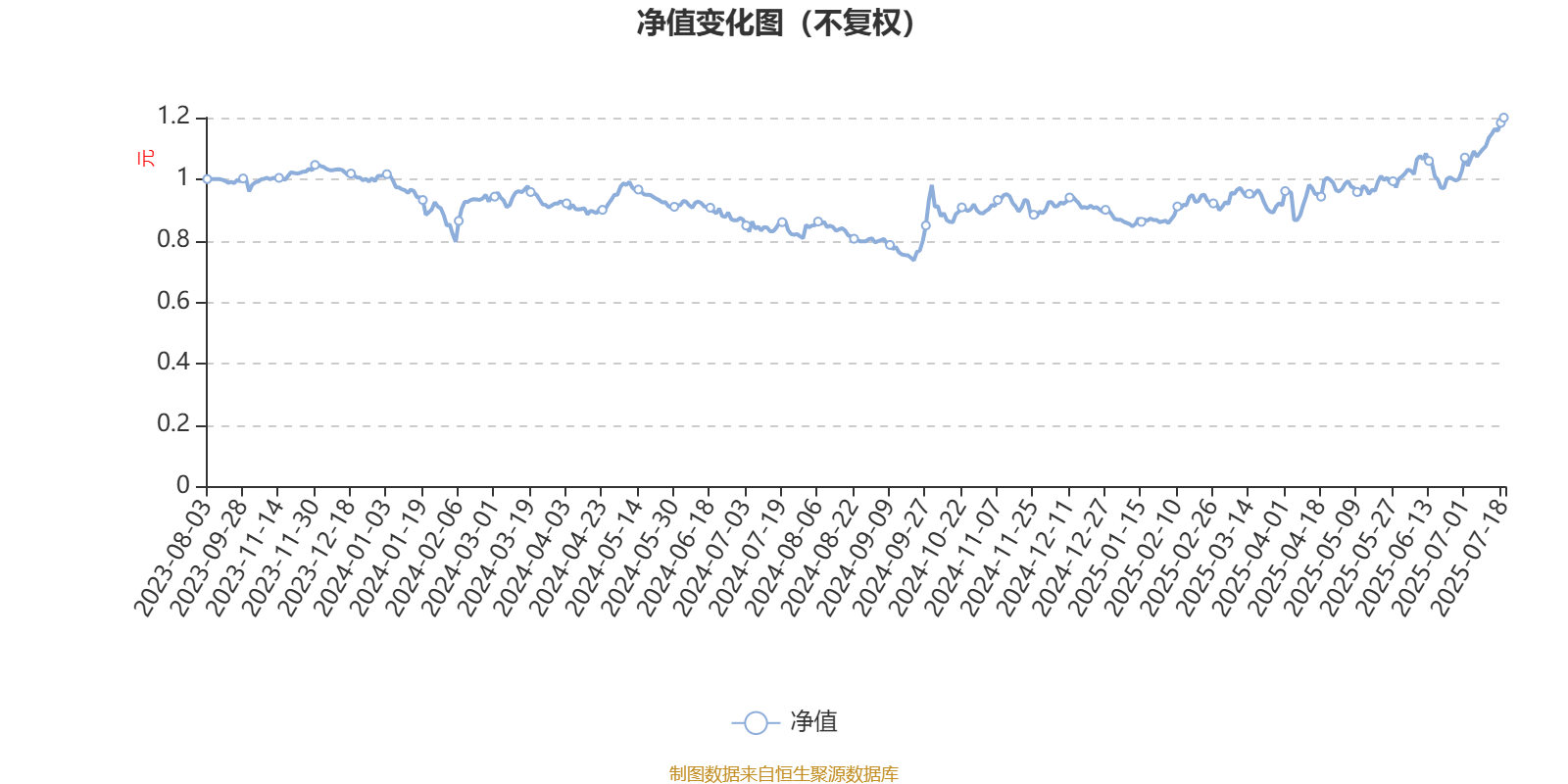
Core Insights - The AI Fund Caizheng Asset Management Healthcare Mixed A (018484) reported a profit of 24.79 million yuan for Q2 2025, with a weighted average profit per fund share of 0.1341 yuan [2] - The fund's net value growth rate for the reporting period was 12.31%, and the fund size reached 131 million yuan by the end of Q2 [2][14] - The fund focuses on long-term investments in pharmaceutical and healthcare stocks, with a unit net value of 1.2 yuan as of July 18 [2] Performance Metrics - As of July 18, the fund's one-year cumulative net value growth rate was 40.05%, ranking 68 out of 133 comparable funds [3] - The fund's three-month and six-month cumulative net value growth rates were 27.15% and 38.72%, ranking 71 out of 138 and 73 out of 138 respectively [3] - The fund has maintained an average stock position of 85.93% since inception, with a peak of 92.29% at the end of Q1 2024 [13] Risk and Return Analysis - The fund's Sharpe ratio since inception is 0.2868, indicating a moderate risk-adjusted return [7] - The maximum drawdown since inception is 29.68%, with the largest quarterly drawdown occurring in Q1 2024 at 21.64% [10] Investment Strategy - The fund manager, Yi Xiaojin, emphasizes identifying investment targets that can benefit from the aging economy and domestic demand evolution, focusing on sectors such as innovative drugs, medical devices, and pharmacies [2] - The fund aims to invest in companies that are actively embracing international expansion, particularly in medical consumables, raw materials, and innovative medical devices [2] - The fund holds a concentrated portfolio, with the top ten holdings including companies like Rejing Biology, Zhaoyan New Drug, and WuXi AppTec [17]

银华医疗健康混合A:2025年第二季度利润77.26万元 净值增长率2.25%
Sou Hu Cai Jing· 2025-07-18 08:22
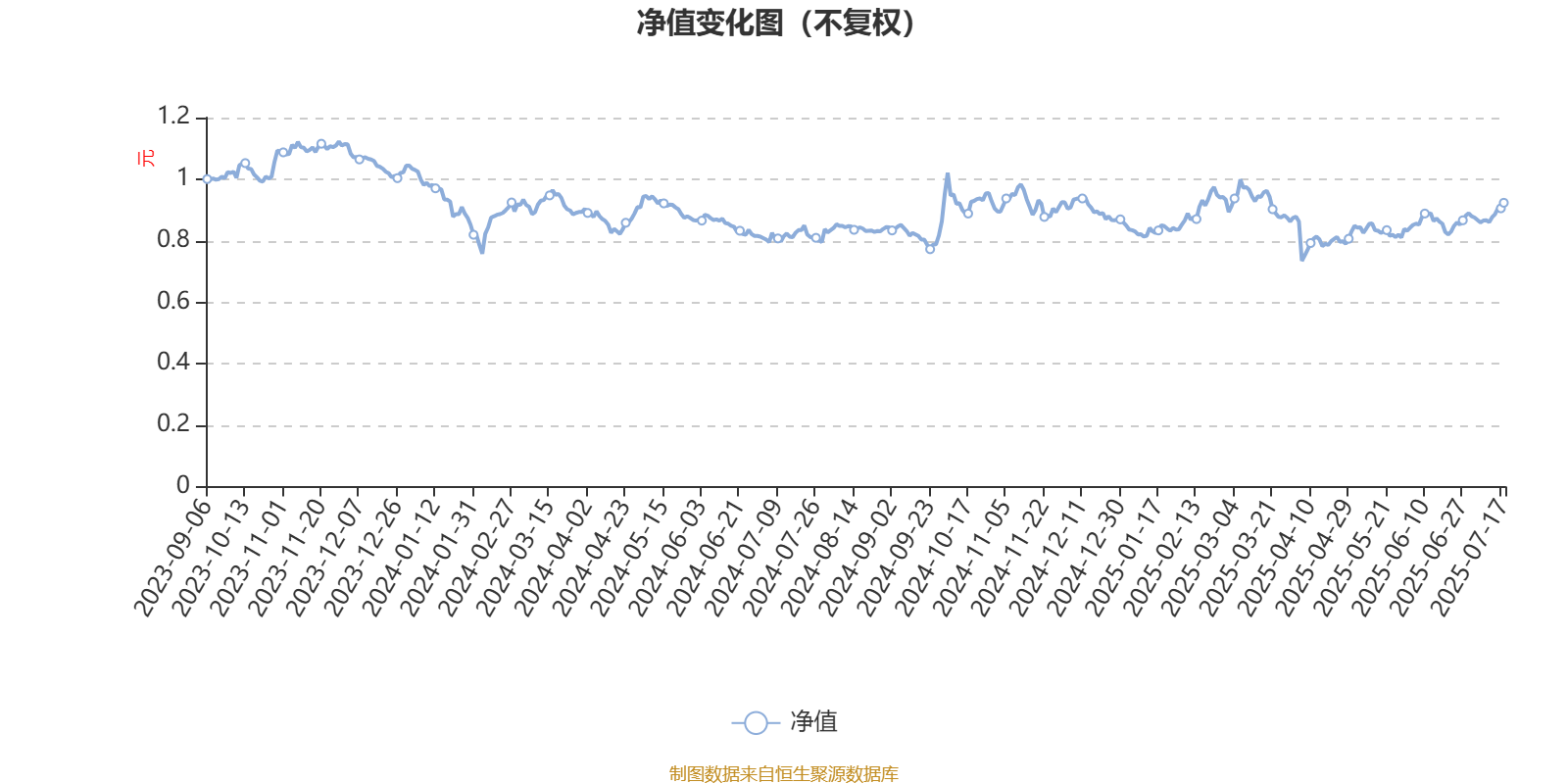
Core Viewpoint - The AI Fund Yinhua Medical Health Mixed A (018364) reported a profit of 772,600 yuan for Q2 2025, with a weighted average profit per fund share of 0.0195 yuan, indicating a net value growth rate of 2.25% during the reporting period [3]. Fund Performance - As of July 17, the fund's unit net value was 0.923 yuan, with a three-month net value growth rate of 16.98%, ranking 104 out of 138 comparable funds [4]. - The fund's six-month net value growth rate was 10.74%, ranking 130 out of 138, and the one-year growth rate was 11.90%, ranking 120 out of 133 [4]. Fund Management Insights - The fund management believes that the risks associated with the significant decline in profitability in the pharmaceutical industry have been largely eliminated due to gradual policy optimization and the expansion of commercial insurance [3]. - The management highlights that technological innovation is the core driving force for the pharmaceutical industry's development, with a focus on innovative drugs and AI medical applications [3]. Investment Strategy - The fund's long-term investment strategy is concentrated on AI drug development and AI medical applications, which are expected to enhance cost efficiency and innovation within the pharmaceutical sector [3]. Fund Metrics - As of June 27, the fund's Sharpe ratio since inception was -0.0151 [8]. - The maximum drawdown since inception was 34.55%, with the largest quarterly drawdown occurring in Q1 2024 at 27.52% [11]. - The average stock position since inception was 88.71%, compared to the industry average of 86.9% [14]. The fund reached a peak stock position of 93.17% by the end of 2024 [14]. Fund Size and Holdings - As of the end of Q2 2025, the fund's size was 35.6523 million yuan [15]. - The top ten holdings of the fund included companies such as Crystal Technology Holdings, Yimaitong, and JD Health, among others [18].
A股医药商业板块竞价活跃,浙江震元、人民同泰均一字涨停,药易购、英特集团、润达医疗等跟涨。
news flash· 2025-07-18 01:33
Core Viewpoint - The A-share pharmaceutical commercial sector is experiencing active bidding, with companies such as Zhejiang Zhenyuan and Renmin Tongtai hitting the daily limit up, while others like Yaoyigou, Yingte Group, and Rundar Medical are also seeing gains [1] Group 1 - Zhejiang Zhenyuan and Renmin Tongtai both reached the daily limit up [1] - Companies such as Yaoyigou, Yingte Group, and Rundar Medical are following suit with price increases [1]

申万宏源研究晨会报告-20250717
Shenwan Hongyuan Securities· 2025-07-17 00:49
Group 1: AI Medical Industry Insights - The AI medical sector is entering a new phase of multi-modal integration and practical application, driven by technological changes that alter application scenarios and data utilization [11] - Clinical auxiliary diagnosis and drug development are leading commercialization, while health management potential remains to be unlocked [11] - Key investment targets include AI-assisted diagnosis, internet healthcare, and AI drug development, with specific companies highlighted for each segment [11] Group 2: Lin Qingxuan's Market Position - Lin Qingxuan is a leading high-end domestic skincare brand in China, focusing on camellia oil as a core ingredient and achieving significant sales milestones [11][12] - The company has demonstrated strong financial performance, with revenue projected to grow from 690 million yuan in 2022 to 1.21 billion yuan in 2024, reflecting a compound annual growth rate (CAGR) of 32.7% [11] - The skincare market in China is expected to grow significantly, with the market size projected to increase from 332.9 billion yuan in 2019 to 461.9 billion yuan by 2024 [12] Group 3: Power Industry Developments - Gansu Province has introduced a capacity pricing mechanism for coal power, which is expected to enhance the profitability stability of coal power plants [16] - The new pricing mechanism aligns with national standards and is anticipated to improve the revenue stability of coal power plants, thereby optimizing the energy structure in China [16] - The introduction of capacity pricing for energy storage systems is expected to increase investment in storage solutions, improving the consumption rate of renewable energy [16]
计算机行业2025Q2业绩前瞻:预计25Q2继续改善
Shenwan Hongyuan Securities· 2025-07-15 07:15
Investment Rating - The report maintains a positive outlook on the computer industry for Q2 2025, indicating an expected improvement in performance [2][4]. Core Insights - The report predicts a gradual recovery in industry profits starting from Q2 2025, with revenue growth rates of 5% and 21% for Q4 2024 and Q1 2025 respectively, and net profit growth rates of -68% and 82% [4][5]. - A total of 55 tracked A-share and Hong Kong-listed computer companies are analyzed, with 13 companies expected to achieve over 50% net profit growth, representing 23.6% of the sample [4][5]. - The report identifies key investment targets across various segments, including AIGC, digital economy leaders, and data innovation [4][5]. Summary by Category Company Performance Predictions - Companies with over 50% net profit growth include: - Jinzheng Co. (4493%) - Zhongke Chuangda (333%) - Zhina Zhen (313%) - Kalait (265%) - Hengsheng Electronics (233%) [4][5][6]. - Companies with 30%-50% net profit growth include: - Dameng Data (48%) - Fanwei Network (39%) - New Point Software (38%) [4][5][6]. - Companies with 0%-30% net profit growth include: - Dongfang Caifu (27%) - Haiguang Information (27%) - Desai Xiwai (27%) [4][5][6]. - Companies with -30% to 0% net profit growth include: - Weining Health (-4%) - Nova Star Cloud (-11%) [4][5][6]. - Companies with less than -30% net profit growth include: - Qiming Star (-30%) - Top Point Software (-36%) [4][5][6]. Key Investment Targets - AIGC Segment: Jinshan Office, Wanxing Technology, Daotong Technology, Hongsoft Technology, and others [4]. - Digital Economy Leaders: Hikvision, Jinshan Office, Hengsheng Electronics, and others [4]. - Data Innovation: Haiguang Information, Ruantong Power, Suocheng Technology, and others [4]. - AIGC Computing Power: Langchao Information, Haiguang Information, and others [4].


润达医疗(603108) - 2025 Q2 - 季度业绩预告
2025-07-14 09:35
[Current Period Performance Forecast](index=1&type=section&id=%E4%B8%80%E3%80%81%E6%9C%AC%E6%9C%9F%E4%B8%9A%E7%BB%A9%E9%A2%84%E5%91%8A%E6%83%85%E5%86%B5) The company forecasts a net loss for H1 2025, with attributable net profit expected to range from -RMB 130 million to -RMB 109 million Estimated Financial Performance for H1 2025 | Indicator | Estimated Amount (RMB Million) | | :--- | :--- | | **Net Profit Attributable to Parent Company** | -130.37 to -108.64 | | **Net Profit Attributable to Parent Company (Excluding Non-Recurring Items)** | -144.94 to -120.78 | - The financial data in this performance forecast has not been audited by a certified public accountant[6](index=6&type=chunk) [Prior Period Performance Review](index=1&type=section&id=%E4%BA%8C%E3%80%81%E4%B8%8A%E5%B9%B4%E5%90%8C%E6%9C%9F%E7%BB%8F%E8%90%A5%E4%B8%9A%E7%BB%A9%E5%92%8C%E8%B4%A2%E5%8A%A1%E7%8A%B6%E5%86%B5) The company achieved profitability in the prior year's corresponding period, with net profit attributable to shareholders of RMB 91.31 million Prior Period Financial Performance (H1 2024) | Indicator (H1 2024) | Amount (RMB Million) | | :--- | :--- | | **Net Profit Attributable to Parent Company** | 91.31 | | **Net Profit Attributable to Parent Company (Excluding Non-Recurring Items)** | 79.19 | | **Earnings Per Share (RMB)** | 0.15 | [Analysis of Pre-Loss Performance](index=2&type=section&id=%E4%B8%89%E3%80%81%E6%9C%AC%E6%9C%9F%E4%B8%9A%E7%BB%A9%E9%A2%84%E4%BA%8F%E7%9A%84%E4%B8%BB%E8%A6%81%E5%8E%9F%E5%9B%A0) The current period's loss is primarily due to centralized procurement policies impacting the in-vitro diagnostics industry, leading to reduced revenue and gross profit margins - The core negative impact stems from centralized procurement policies in the in-vitro diagnostics industry, leading to a year-on-year decline in the company's **revenue and gross profit margin**[9](index=9&type=chunk) - Fixed expenses such as employee compensation, accumulated depreciation and amortization, and financing costs did not decrease proportionally with revenue, exacerbating the loss[9](index=9&type=chunk) - The company actively implemented cost-reduction and efficiency-improvement measures, resulting in a year-on-year increase of over **50%** in net cash flow from operating activities during the reporting period[9](index=9&type=chunk) [Risk Warning and Other Disclosures](index=2&type=section&id=%E5%9B%9B%E3%80%81%E9%A3%8E%E9%99%A9%E6%8F%90%E7%A4%BA) This performance forecast is a preliminary, unaudited estimate; final data will be in the 2025 semi-annual report, cautioning investors of risks - The data in this performance forecast is a preliminary estimate and unaudited, thus subject to uncertainty[10](index=10&type=chunk) - The specific and accurate financial data will be subject to the company's officially disclosed 2025 semi-annual report; investors are advised to be aware of investment risks[11](index=11&type=chunk)

润达医疗:预计2025年上半年净利润亏损1.3亿元-1.09亿元
news flash· 2025-07-14 09:16
Core Viewpoint - RunDa Medical (603108) is expected to report a net loss attributable to shareholders of the parent company ranging from -130 million to -109 million yuan for the first half of 2025, indicating a decline compared to the same period last year [1] Financial Performance - The projected net profit attributable to shareholders, excluding non-recurring gains and losses, is expected to be between -145 million and -121 million yuan for the first half of 2025 [1]
AI医疗系列二暨GenAI系列深度之62:AI医药:智愈未来,技术变革下的生态重塑
Shenwan Hongyuan Securities· 2025-07-14 04:42
Investment Rating - The report indicates a positive investment outlook for the AI healthcare industry, highlighting significant growth potential and increasing investment activity in the sector [3][10][46]. Core Insights - The AI healthcare sector is entering a new phase characterized by multi-modal integration and practical applications, driven by advancements in large models and generative AI [3][7]. - Clinical decision support and drug development are leading the commercialization efforts, while health management remains an area with untapped potential [3][14]. - The report emphasizes the importance of third-party vendors in reducing model hallucination rates and enhancing the reliability of AI applications in healthcare [3][18][21]. Summary by Sections AI Healthcare Trends - The industry is experiencing heightened investment interest and technological advancements, with major players accelerating their presence in the AI healthcare space [9][10][13]. - The integration of AI into clinical workflows is becoming standard, with AI-assisted diagnosis systems deployed in 89% of tertiary hospitals [8][14]. AI Healthcare Application Penetration - AI applications are diversifying across clinical diagnosis, drug development, health management, and AI for science (AI4S), with varying levels of maturity and market potential [30][31]. - The report identifies key areas of application, including intelligent clinical decision support, drug discovery, and personalized health management [36][39]. Key Companies in AI Clinical Diagnosis - Companies like Tempus AI and 嘉和美康 are leading in AI-assisted clinical diagnosis, focusing on electronic medical records and data-driven healthcare solutions [47][51]. - The report highlights the importance of data barriers and scenario positioning in determining the value of AI diagnostic tools [3][46]. Key Companies in AI Health Management - Companies such as 阿里健康 and 京东健康 are leveraging AI to enhance online healthcare services, with a focus on chronic disease management and personalized health plans [39][44]. - The report notes that the integration of insurance and healthcare services is crucial for the growth of AI health management solutions [39][44]. Key Companies in AI Drug Development - The report discusses the role of AI in accelerating drug development processes, with companies like Recursion and 晶泰控股 focusing on preclinical research and drug discovery [38][44]. - AI is expected to significantly reduce the time and cost associated with traditional drug development methods [38][44]. AI4S and Broader Applications - AI4S is identified as a growing field with applications in various scientific domains, including life sciences and materials science, although it faces longer conversion cycles [42][44]. - The report emphasizes the need for innovative approaches to data generation and modeling in AI4S applications [42][44].




【招银研究|行业深度】AI医疗行业研究——技术赋能与生态重构下的医疗革命
招商银行研究· 2025-07-11 09:00
Core Insights - AI is driving the transformation and upgrading of the healthcare industry, becoming a strategic high ground for technology empowering people's livelihoods [1] - The evolution of AI in healthcare is transitioning from "assistance tools" to "intelligent participation" due to advancements in large model technology and multi-modal capabilities [2][10] - The AI healthcare ecosystem consists of three core layers: data and computing power, algorithm models and platform capabilities, and various application scenarios [1][13] Group 1: AI Healthcare Overview - AI healthcare is defined as a systematic solution based on AI technology for deep learning, pattern recognition, and intelligent decision-making to assist in diagnosis, optimize resource allocation, and improve efficiency [1] - The industry is experiencing a paradigm shift with the emergence of large models that support unified understanding and task adaptation of multi-modal medical data [2] - The AI healthcare ecosystem includes traditional healthcare, AI healthcare service, and AI healthcare technology product ecosystems, which are interdependent and collaboratively developed [13][14] Group 2: Application Scenarios - AI is widely used in medical imaging diagnosis, pathology recognition, and clinical decision support, enhancing service capabilities and diagnostic efficiency [3] - In the medical payment sector, AI aids in claims review, intelligent cost control, and personalized pricing, leading to refined management [3] - AI is also empowering genomics and molecular biology, facilitating personalized treatment pathways and pushing precision medicine into clinical practice [3] Group 3: Market Overview - The global AI healthcare market is transitioning from a "technology breakthrough" phase to a "deployment" phase, with significant growth expected, from $29.01 billion in 2024 to $50.42 billion by 2032, at a CAGR of 44.0% [18][19] - In contrast, China's AI healthcare market is in a critical transition from "technology validation" to "value validation," with market size growing from 2.7 billion yuan in 2019 to 10.7 billion yuan in 2023, projected to reach 97.6 billion yuan by 2028 [19][22] Group 4: Development History - The evolution of AI in healthcare can be divided into three stages: medical informationization, internet healthcare, and intelligent healthcare, with the current transition from "internet healthcare" to "intelligent healthcare" [7][10] - AI is deeply integrated into the entire process of pre-diagnosis, diagnosis, and post-diagnosis, utilizing technologies like AI large models, medical robots, AR/VR, and 5G [7][10] Group 5: Business Opportunities - The emergence of large models is reshaping AI healthcare technology, enabling complex medical scenarios and enhancing the efficiency of healthcare professionals [2][25] - The medical data market is expected to activate with the establishment of a compliant data sharing mechanism, transforming medical data from "sleeping assets" to "efficient elements" [2][25] - AI is expected to create a closed-loop system of "data-model-scenario-payment," becoming a key driver for high-quality development in the healthcare system [3][11] Group 6: AI Medical Payment - AI in medical payment is becoming a key engine for improving the efficiency of medical insurance and commercial insurance systems, covering claims review, cost control, and fraud detection [47][48] - The application of AI in the medical payment sector is evolving from "process automation" to "risk control intelligence" and "actuarial-driven" approaches [49] Group 7: Gene Sequencing - The cost of gene sequencing is rapidly decreasing, driven by the introduction of AI and parallel computing, with costs dropping to below $100 for whole genome sequencing [52][53] - The gene sequencing industry is maturing, with applications in research and clinical fields, including non-invasive prenatal testing, tumor diagnosis, and precision treatment [52][56]

儿童应该如何预防铅中毒?
Xin Lang Cai Jing· 2025-07-11 06:28
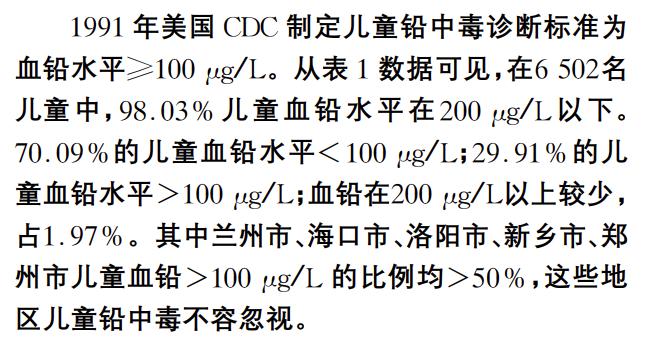
Core Insights - Lead poisoning in children has re-emerged as a significant public health issue in China, with alarming statistics indicating that approximately 31.24 million children have blood lead levels exceeding 50µg/L, which is the threshold for intervention as per WHO guidelines [1][4] Group 1: Prevalence and Statistics - In 2019, it was estimated that 35.1% of children in China had blood lead levels above 50µg/L, with regions like Guizhou and Heilongjiang showing high levels between 50-100µg/L, and over 60% of children in Yunnan exceeding 100µg/L [1][4] - Historical data indicates that in certain cities, over 50% of children had blood lead levels exceeding 100µg/L, highlighting the severity of lead poisoning in specific areas [3][4] Group 2: Health Implications - Lead exposure can lead to irreversible damage to cognitive development in children, with levels above 10µg/dL being particularly concerning, despite often lacking noticeable clinical symptoms [4][5] - Symptoms of lead poisoning can vary, with acute cases presenting severe symptoms like abdominal pain and seizures, while chronic exposure may lead to developmental delays and learning difficulties [5][6] Group 3: Prevention and Recommendations - Preventive measures include assessing living environments for lead sources, such as old paint and plumbing, and ensuring a diet rich in calcium and iron to reduce lead absorption [6] - The healthcare sector is responding to the increased demand for lead testing, although recent reports indicate no significant surge in product demand related to lead testing services [6]