
AWS

Search documents
The Real Driver of Innovation Isn’t AI—It’s Inclusion | Noelle Russell | TEDxBoston
TEDx Talks· 2025-07-25 16:39
Career & Experience - The speaker has extensive experience in cloud architecture and AI, starting from IBM during the Y2K era, moving to Red Hat and VMware, and eventually becoming a principal cloud architect at AWS [1] - The speaker was an early member of the Amazon Alexa team, contributing significantly to its initial codebase and developing applications focused on mindfulness and kindness [2] - The speaker was recruited by Microsoft to help productize AI research models into Azure AI services (cognitive services), successfully transitioning 17 research models into production [4][5] AI Development & Leadership - The AI industry is currently in a "baby tiger mode," where the focus is on the potential of AI without fully considering the risks and long-term implications [6][7] - The speaker emphasizes the importance of asking critical questions about AI's future impact, including security, accuracy, and trust (SAT), to ensure responsible AI development [8][17] - The speaker founded the AI Leadership Institute in 2016 to teach the world to listen to problems and build AI that responds to those problems [11] - The speaker wrote a book called "Scaling Responsible AI: From Enthusiasm to Execution," highlighting the need for clarity of thought in leading machines [12] Human-AI Interaction - The speaker stresses the importance of designing the human-AI experience, where humans and AI work together, requiring individuals to actively participate and contribute their expertise [18][19] - The speaker notes that the number one skill to manage a machine is clarity of thought [13] Challenges & Perspectives - The speaker's unique perspective as a woman, Latina, and mother of a child with Down syndrome influenced her work and highlighted the need for diverse perspectives in AI development [2] - Companies often struggle with security, accuracy, and trust when implementing AI [16]


集邦咨询:预估Blackwell将占2025年英伟达(NVDA.US)高阶GPU出货逾80%
智通财经网· 2025-07-24 08:59
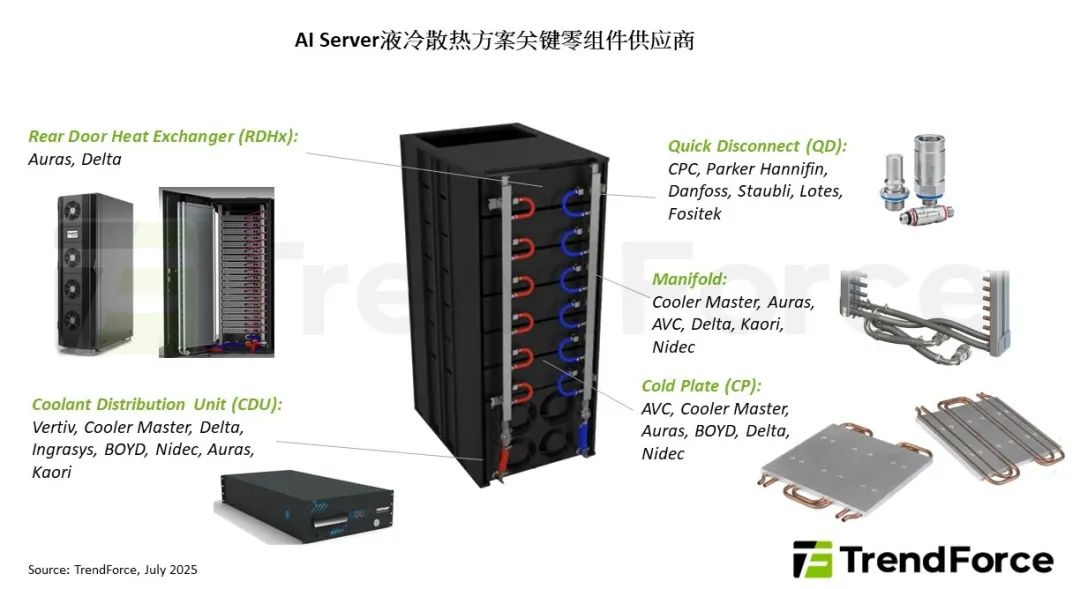
Group 1 - The overall Server market is stabilizing, with ODMs focusing on AI Server development, particularly with NVIDIA's new Blackwell platform products [1] - TrendForce estimates that Blackwell GPUs will account for over 80% of NVIDIA's high-end GPU shipments this year [1] Group 2 - North American CSP giant Oracle is expanding its AI data centers, benefiting companies like Foxconn, Supermicro, and Quanta [2] - Supermicro's growth this year is primarily driven by AI Servers, having secured some GB200 Rack projects [2] - Quanta has successfully expanded its GB200/GB300 Rack business due to collaborations with major clients like Meta, AWS, and Google, along with Oracle orders [2] - Wiwynn is deepening its partnerships with Meta and Microsoft, expecting performance growth in the second half of the year, focusing on ASIC AI Servers [2] Group 3 - The expansion of AI data centers will be crucial for the scaling of the liquid cooling industry [2] - Liquid cooling solutions are increasingly being adopted for high-end AI chips, with new data centers incorporating "Liquid Cooling Ready" designs to enhance thermal management efficiency [2] Group 4 - Liquid cooling is becoming a standard configuration for high-performance AI data centers, driving demand for cooling components [4] - Fositek has begun shipping components for the GB300 platform, competing with Danfoss in the supply of quick connectors for AWS ASIC liquid cooling [4] - Auras is actively entering the data center liquid cooling market, with its business becoming a core growth driver, serving major clients like Oracle, Supermicro, and HPE [4] - Auras has started supplying liquid cooling products to Meta, establishing a foundation for future participation in the GB200 platform's liquid cooling supply chain [4]

POC to PROD: Hard Lessons from 200+ Enterprise GenAI Deployments - Randall Hunt, Caylent
AI Engineer· 2025-07-23 15:50
Core Business & Services - Kalin builds custom solutions for clients, ranging from Fortune 500 companies to startups, focusing on app development and database migrations [1][2] - The company leverages generative AI to automate business functions, such as intelligent document processing for logistics management, achieving faster and better results than human annotators [20][21] - Kalin offers services ranging from chatbot and co-pilot development to AI agent creation, tailoring solutions to specific client needs [16] Technology & Architecture - The company utilizes multimodal search and semantic understanding of videos, employing models like Nova Pro and Titan v2 for indexing and searching video content [6][7] - Kalin uses various databases including Postgress, PG vector, and OpenSearch for vector search implementations [13] - The company builds AI systems on AWS, utilizing services like Bedrock and SageMaker, and custom silicon like Tranium and Inferentia for price performance improvements of approximately 60% over Nvidia GPUs [27] AI Development & Strategy - Prompt engineering has proven highly effective, sometimes negating the need for fine-tuning models [40] - Context management is crucial for differentiating applications, leveraging user data and history to make strategic inferences [33][34] - UX design is important for mitigating the slowness of inference, with techniques like caching and UI spinners improving user experience [36][37]
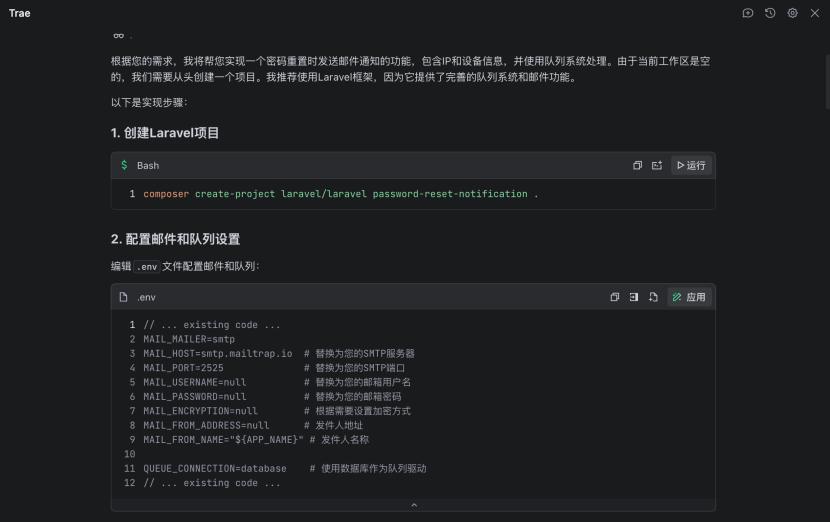
AI Coding产品井喷,但属于创业者的机会正在关闭
3 6 Ke· 2025-07-23 10:22
Core Insights - AI Coding is the first application in the current wave of large model technology to validate Product Market Fit (PMF), representing a significant market with established revenue models [1][2] - AI Coding tools are fundamentally SaaS products, facing typical challenges such as pricing ceilings, user retention difficulties, and low conversion rates [1][13] - For startups, having solid technical barriers, unique data, and vertical capabilities is crucial, or they must find clear and efficient exit strategies to avoid being overtaken by larger competitors [1][14] - In complex system development, professional developers remain essential, but their roles are shifting from pure coding execution to demand breakdown, architecture design, and efficient collaboration with AI [1][15] Industry Developments - In July alone, major companies like ByteDance and Tencent launched new AI coding tools, including TRAE 2.0 and CodeBuddy IDE, indicating a rapid acceleration in product releases [1][2] - Cursor, a notable overseas player, completed a $900 million financing round, achieving a valuation close to $10 billion, significantly outpacing domestic counterparts [2] - Google announced the acquisition of Windsurf for $2.4 billion, highlighting the competitive landscape and the value of AI coding tools [2] Product Features - TRAE 2.0 has evolved into a comprehensive "Context Engineer" that automates the entire process from planning to deployment based on natural language input [3][5] - CodeBuddy IDE, launched by Tencent, offers three parallel modes: planning, design, and AI coding, aiming to streamline the development process and reduce repetitive tasks [6][8] - CodeBuddy IDE integrates with Tencent Cloud and emphasizes seamless transitions from design to code, addressing common pain points in front-end development [8] Competitive Landscape - The AI coding tool market features various players, with Cursor focusing on professional programmers and Windsurf targeting ease of use for beginners [9] - Devin positions itself as an "AI software engineer," capable of self-planning and executing complex programming tasks independently [9] - Lovable and Replit adopt different approaches, with Lovable focusing on aesthetic programming for non-technical users and Replit emphasizing collaborative coding experiences [10] Market Challenges - The AI coding tool market, while vibrant, faces challenges typical of the SaaS industry, including user retention and low willingness to pay among early adopters [13] - Startups without significant technological advantages may struggle to maintain market position against larger companies with more resources [13][14] - The shift towards AI-assisted development is changing hiring practices, with companies increasingly seeking full-stack engineers who can analyze requirements and design architectures [15]




NV 链哪些新进展,尚未提及 PCB 新材料
2025-07-21 00:32
Summary of Conference Call Records Industry Overview - The conference call primarily discusses the PCB (Printed Circuit Board) industry, focusing on the supply and demand dynamics of electronic fabrics and copper foil materials, particularly in relation to major players like Google and AWS [1][2][19]. Key Points and Arguments 1. **NV Product Developments**: - The GB300 Computer Tree utilizes Doosan's M8 and M4 mixed pressure design (5+12+5 HDI). The Switch Tree is likely to use S9G materials from Shengyi Technology. Expected NV machine shipments for 2025 are close to 15,000 units [1][3]. 2. **Supply Chain Risks**: - Supply of first-generation electronic fabric is sufficient, but second-generation fabric faces tight supply, with high risks anticipated in the first half of 2026. The potential transfer of production capacity for HYP4 copper foil to AWS may create supply pressures [1][6]. 3. **Market Demand for Second-Generation Fabric**: - Significant demand for second-generation fabric is expected from Google, OpenAI, and domestic AI companies, with tight supply anticipated to continue until 2027 [8][9]. 4. **Alternative Solutions for Material Shortages**: - In case of second-generation fabric shortages, alternatives include using M9 resin with first-generation fabric or employing third-generation guiding copper (HOB3) to reduce costs [10][12]. 5. **Q Material Strategy**: - Q materials are gaining importance due to their stable raw material supply compared to second-generation guiding copper, although processing yields are currently low. Long-term, Q materials may become a superior choice post-2027 [11][14]. 6. **Copper Foil Pricing Trends**: - The price of fourth-generation copper foil is on an upward trend due to strong market demand and rising raw material costs. Current supply from domestic manufacturers is insufficient to meet demand [15][16]. 7. **LCT Electronic Fabric Market**: - LCT electronic fabric has seen a price increase of 20% this year, with a market demand of approximately 500,000 to 600,000 meters, but total demand is not as high as expected [16][19]. 8. **Differences in PCB Requirements between AWS and Google**: - AWS has strict cost control measures and different PCB material requirements compared to Google, which uses high-performance GPUs and has more flexibility in material selection [20]. 9. **Future Demand Projections**: - Amazon's demand for T2.5 is currently high, with T3 expected to launch in mid-2026. The increase in chip count per board will reduce overall PCB demand by 40% [24]. Additional Important Insights - The certification cycle for narrow board markets is lengthy, making it difficult for domestic companies to penetrate the market quickly [2][16]. - The overall supply of resin fillers is stable, with ongoing domestic production efforts to reduce costs and improve quality [22]. - The PCB industry is currently facing tight supplies of electronic fabrics and copper foils, while other materials like resins and fillers are relatively abundant [19].
AWS' Deepak Singh on generative AI for software development
CNBC Television· 2025-07-15 15:00
Software Development Paradigm Shift - The AI world is changing how software is built, moving from traditional programming languages like Java or C++ to natural language instructions [1] - Instead of writing code, users can instruct AI to perform tasks, such as building a website with specific design elements, using natural language [1] Globalization of Software Development - The company is investing in making programming global by enabling users to give instructions to AI agents in their native language, such as Korean [2] - This approach allows developers worldwide to interact with AI agents in their preferred language and receive responses in the same language [2]

CoreWeave抢跑GB300商用部署,收购CoreScientific强化电力资源掌控
Haitong Securities International· 2025-07-11 06:26
Investment Rating - The report does not explicitly state an investment rating for the industry or specific companies involved Core Insights - CoreWeave has become the first cloud provider to commercially deploy the NVIDIA GB300 NVL72 platform, featuring a fully integrated system with significant performance improvements, achieving 1.1 ExaFLOPS for inference and 0.36 ExaFLOPS for training, representing a 50% performance uplift over the previous generation [2][12] - The acquisition of Core Scientific allows CoreWeave to control over 1.3 GW of power resources, expected to save approximately $500 million annually in operational costs and avoid $10 billion in future rental expenses, marking a strategic shift towards a vertically integrated infrastructure platform [5][14] - CoreWeave's partnerships with major clients like OpenAI and Google position it to become a leading vendor in the AI cloud infrastructure market, contingent on its ability to deliver compute commitments consistently [5][15] Summary by Sections Event Summary - In July 2025, CoreWeave announced its commercial deployment of the NVIDIA GB300 NVL72 platform, utilizing a fully integrated rack system with advanced components, achieving significant performance and efficiency improvements [2][12] Technical Architecture - The GB300 NVL72 architecture includes 72 Blackwell Ultra GPUs, Grace CPUs, and BlueField-3 DPUs, enabling high-speed communication and efficient power management through liquid cooling [3][17] Strategic Moves - The acquisition of Core Scientific for $9 billion enhances CoreWeave's control over data center resources, reducing reliance on third-party providers and lowering deployment costs, establishing a competitive advantage in the AI cloud sector [5][14] - The report highlights the increasing divergence in the Neocloud landscape, with CoreWeave's rapid deployment capabilities and integration of hardware and software setting it apart from traditional cloud service providers [6][17]
摩根士丹利:AI ASIC-协调 Trainium2 芯片的出货量
摩根· 2025-07-11 01:13
Investment Rating - The industry investment rating is classified as In-Line [8]. Core Insights - The report addresses the mismatch in AWS Trainium2/2.5 chip shipments attributed to unstable PCB yield rates, with an expectation of approximately 1.1 million chip shipments in 2025 [1][3]. - Supply chain checks estimate total shipments for the Trainium2/2.5 life cycle (2H24 to 1H26) at 1.9 million units, with a focus on production and consumption in 2025 [2][11]. - The report highlights a significant gap between upstream chip production and downstream consumption, suggesting improvements in yield rates may reduce this gap by 2H25 [6][11]. Upstream - Chip Output Perspective - As of late 2024, 0.3 million units of Trainium2 chips were produced, with a projected total of 1.1 million shipments in 2025, primarily packaged by TSMC (70%) and ASE (30%) [3][11]. - An additional 0.5 million Trainium2.5 chips are expected to be produced in 1H26, bringing the total life cycle shipments to 1.9 million units [3]. Midstream - PCB Perspective - Downstream checks indicate potential shipments exceeding 1.8 million units of Trainium chips, averaging around 200K per month since April [4][11]. - Key suppliers for PCB boards include Gold Circuit and King Slide, which provide essential components for Trainium computing trays [4]. Downstream - Server Rack System Perspective - Wiwynn is identified as a key supplier for server rack assembly, with revenue from AWS Trainium2 servers increasing in 1Q25, aligning with the upstream chip production estimates [5][11]. - The report notes that each server rack can accommodate 32 chips, supporting the projected consumption figures [5]. Component Suppliers - Major suppliers for Trainium2 AI ASIC servers include AVC for thermal solutions, Lite-On Tech for power supply, and Samsung for memory components [10][18]. - Other notable suppliers include King Slide for rail kits and Bizlink for interconnect solutions [10][18]. Future Projections - For Trainium3, shipments are estimated at 650K for 2026, with production managed by Alchip [12][13]. - The report anticipates that Trainium4 will enter small production by late 2027, with a rapid ramp-up expected in 2028 [14].
X @TechCrunch
TechCrunch· 2025-07-10 23:02
AWS is launching an AI agent marketplace next week with Anthropic as a partner | TechCrunch https://t.co/2SX3uNfJDm ...
摩根士丹利:全球背景下中国人工智能半导体发展;台积电前瞻
摩根· 2025-07-09 02:40
Investment Rating - The industry investment rating is "In-Line" for Greater China Technology Semiconductors [2]. Core Insights - The report highlights the growth potential in China's AI semiconductor sector, with a forecasted capital expenditure increase of 62% year-over-year to RMB 373 billion for the top six companies [19]. - TSMC's revenue guidance for Q3 2025 indicates a potential growth of approximately 3% quarter-over-quarter in USD, but a decline of 1.6% in TWD [12]. - The report anticipates that China's local GPU market will significantly expand, with local GPU revenue projected to reach RMB 287 billion by 2027, driven by advancements in SMIC's leading node capacity [33]. Summary by Sections Valuation Comparison - TSMC's target price is set at 1,288 TWD, representing a 19% upside potential, with an estimated P/E ratio of 23.9x for 2024 [8]. - The average EPS growth for the semiconductor sector is projected at 40% for 2024, with a mean P/B ratio of 2.3x [8]. - The memory segment shows a notable upside potential for Giga Device, with a target price of 145.0 CNY, indicating a 20% upside [9]. TSMC Preview - TSMC's Q3 2025 revenue is estimated at NT$ 910 billion, with a gross profit of NT$ 508 billion, reflecting a year-over-year growth of 35.1% [12]. - The gross margin is expected to be 55.8%, while the operating margin is projected at 45.5% [12]. China AI Semiconductor Demand - The report projects that China's GPU self-sufficiency ratio will increase from 34% in 2024 to 82% by 2027, indicating a strong trend towards domestic production [28]. - The total addressable market (TAM) for cloud AI in China is expected to reach USD 48 billion by 2027 [30].