
罗氏

Search documents
Roche Shares Rise After Breast-Cancer Pill Shows Positive Results in Trial
WSJ· 2025-11-18 11:02
Core Insights - The drugmaker's results for giredestrant indicate a potential new treatment option for early-stage cancer, which is significant as most patients are diagnosed at this stage [1] Company Summary - The introduction of giredestrant could enhance the treatment landscape for early-stage cancer patients, potentially leading to improved patient outcomes [1]



自免双抗:临床高效推进,交易与研发热度持续
China Post Securities· 2025-11-18 05:53
Industry Investment Rating - The industry investment rating is "Outperform the Market" and is maintained [1] Core Viewpoints - The report highlights significant clinical advancements in the dual-antibody sector, particularly focusing on the TSLP/IL-13 dual antibody Lunsekimig by Sanofi, which has entered Phase III clinical trials for COPD, with the first patient dosed on September 24 [4][5] - The report emphasizes the potential of dual antibodies in autoimmune diseases, particularly in respiratory conditions like asthma and COPD, indicating a substantial market opportunity [7] Summary by Relevant Sections Industry Basic Situation - The closing index level is 8665.0, with a 52-week high of 9323.49 and a low of 6764.34 [1] Clinical Progress Updates - Sanofi's Lunsekimig is in Phase II/III trials for COPD, aiming to enroll 1884 patients to evaluate its efficacy and safety compared to a placebo [4] - The CM512 dual antibody by Connoa shows promising results in atopic dermatitis, with EASI-75 and EASI-90 response rates of 58.3% and 41.7% respectively, compared to 21.4% and 0% in the placebo group [5] Market Activity and Collaborations - The report notes ongoing collaborations, such as the agreement between Qianxin Biotech and Roche for QX031N, which targets both TSLP and IL-33, with an upfront payment of $75 million and potential milestone payments up to $995 million [6] - The report also mentions the presentation of the CS2015 dual-specific antibody by Basestone Pharmaceuticals at the ACAAI conference, showcasing its therapeutic potential [6] Investment Recommendations - The report suggests focusing on companies like Connoa, Innovent Biologics, Qianxin Biotech, and Basestone Pharmaceuticals, as dual antibodies are expected to reshape treatment paradigms in autoimmune diseases [7][9]
中邮证券:自免双抗临床高效推进 交易与研发热度持续
智通财经网· 2025-11-18 03:23
Core Insights - The report from China Post Securities highlights the potential of dual antibodies in the field of autoimmune diseases, particularly in respiratory conditions like asthma and COPD, indicating significant room for improvement in existing therapies. The market potential for TSLP class dual antibodies is viewed positively [1]. Group 1: Clinical Progress of Dual Antibodies - Sanofi's lunsekimig (TSLP/IL-13 dual antibody) has entered Phase III clinical trials, with the first patient dosed on September 24. The trials aim to enroll 1,884 patients to evaluate the efficacy and safety of lunsekimig compared to placebo in adults with eosinophilic phenotype COPD [1]. - The primary endpoint of the studies is the annualized rate of moderate to severe COPD exacerbations from baseline to week 48. The company confirmed the completion of the first patient dosing during the Q3 earnings call on October 24 [1]. Group 2: Efficacy Data and Advantages - The first-phase data for Connoa's CM512 (TSLP x IL-13 dual antibody) in atopic dermatitis (AD) showed promising results, with EASI-75 and EASI-90 response rates of 58.3% and 41.7% respectively at the 300mg dose after 12 weeks, compared to 21.4% and 0% in the placebo group. This indicates a strong potential for deep relief and sustained stability [2]. - CM512's long half-life advantage suggests that it can effectively reduce dosing frequency in clinical use, thereby improving patient compliance [2]. Group 3: Ongoing Transactions and Research Activity - On October 28, Qianxin Biotech entered a global exclusive collaboration and licensing agreement with Roche for QX031N, a long-acting dual antibody targeting TSLP and IL-33, with an upfront payment of $75 million and potential milestone payments up to $995 million. This product is expected to be developed as a new treatment option for COPD and asthma [3]. - BGI Pharma showcased the OX40L/TSLP bispecific antibody CS2015 at the 2025 ACAAI, which demonstrated therapeutic potential in preclinical trials [3].
小核酸:技术突破,打开千亿市场
2025-11-18 01:15
Summary of Key Points from the Conference Call on Small Nucleic Acid Drugs Industry Overview - The global small nucleic acid drug market has reached $6.2 billion and is expected to exceed $40 billion by 2033, driven by new drug approvals, commercialization, and breakthroughs in non-liver-targeted therapies [1][9][14] - Major multinational pharmaceutical companies like Novartis and Roche are actively investing in this sector through business development (BD) and acquisitions, with over 20 small nucleic acid drugs already on the market and more than 300 in clinical stages [1][4][9] Core Insights and Arguments - Key technological breakthroughs include GalNAc delivery technology and chemical modification techniques, which significantly enhance drug stability and efficacy, facilitating successful clinical trials [1][5][8] - ASO (Antisense Oligonucleotides) and siRNA (small interfering RNA) are the two main types of small nucleic acids, with siRNA showing rapid development post-delivery technology breakthroughs [1][6][7] - The small nucleic acid drug development process faces challenges in delivering drugs to non-liver tissues, necessitating the development of new delivery systems like AOC (Antibody-Oligonucleotide Conjugates) [1][8] Market Dynamics - The small nucleic acid target landscape is concentrated on metabolic diseases, hyperlipidemia, and hepatitis B, with significant competition in targets like PCSK9 [3][16] - Since 2018, the total BD transaction value in the small nucleic acid field has reached $45.2 billion, indicating strong interest from multinational corporations [3][17] - Domestic companies in China are rapidly emerging, transitioning from follower strategies to gaining leading advantages in certain targets and technologies [3][20] Company-Specific Developments - **Novartis**: Acquired Avidity for $12 billion to obtain AOC delivery technology, indicating a strong commitment to the small nucleic acid sector [3][9][15] - **Domestic Companies**: Companies like Shiyao Group, BoWang Pharmaceutical, and Jingyin Biotechnology are actively pursuing relevant targets and have made significant progress in clinical stages [3][20][21] - **Yuekang Pharmaceutical**: Leading in the domestic A-share market with a revenue of approximately $383.8 billion in 2024 and a focus on small nucleic acid pipelines [22] - **Frontier Biotech**: Concentrating on IGA nephropathy with multiple candidates showing first-in-class potential [24] - **Fuyuan Pharmaceutical**: Focused on generics but also advancing in small nucleic acid innovation, with over 20 patented targets [25] - **Shiyao Group**: Notable for its rapid progress in the SRA field, with three drugs in clinical trials [26][27] - **Rebio**: Recently submitted a listing application and has established significant partnerships, indicating strong growth potential [31] Future Trends - The small nucleic acid field is expected to see a surge in new drug approvals and clinical data readouts in the coming years, with a focus on expanding indications beyond liver-targeted therapies [14] - The market is anticipated to grow significantly, with projections indicating a rise from $6.2 billion to over $40 billion by 2033, driven by new approvals and commercialization efforts [9][14] - Companies are increasingly focusing on innovative delivery systems and expanding their target indications to include CNS and other areas [8][14][30] Additional Important Insights - The sales of existing small nucleic acid products are growing rapidly, with drugs like Inclisiran expected to see sales increase from $754 million in 2024 to over $1.2 billion in 2025 [12][13] - The competitive landscape is intensifying, with domestic companies showing strong potential to emerge as leaders in the small nucleic acid market [10][30]

诺诚健华提前盈利上岸
Jing Ji Guan Cha Wang· 2025-11-18 00:46
Core Insights - The company, Innovent Biologics, has announced that it will achieve breakeven in 2025, two years ahead of schedule, driven by strong commercialization performance and strategic licensing deals [1][3][10] Financial Performance - For the first three quarters of 2025, the company reported total revenue of 1.12 billion yuan, a year-on-year increase of 59.8% [2] - Revenue from the key BTK inhibitor, Oubatinib, rose by 45.8% year-on-year to 1.01 billion yuan, surpassing the total revenue of the previous year [2] - The company's loss for the first three quarters narrowed significantly by 74.8% to 70 million yuan, attributed to strong revenue growth and strict cost management [3] Strategic Initiatives - The company has successfully executed a significant licensing deal worth over $2 billion, aimed at accelerating the internationalization of Oubatinib [4][5] - The management has raised the full-year sales guidance to at least a 40% year-on-year increase based on the strong performance in the first three quarters [2] Research and Development - The company has over 10 research pipelines, with several in Phase III clinical trials, which will benefit from the strong cash flow generated by its operations [1][3] - In addition to Oubatinib, the company has developed multiple research barriers, including a new generation BCL2 inhibitor, Mesutoclax, which has shown an 84.0% overall response rate in difficult-to-treat patients [7][8] Market Positioning - The company is positioning itself for global expansion, leveraging partnerships to enhance its market presence and profitability [4][5] - The collaboration with Zenas, a U.S.-based biotech, is expected to create synergies in the treatment of multiple sclerosis, targeting a market worth nearly $30 billion [6][8] Future Outlook - The company aims to enter a rapid development phase, with plans to push five to six innovative drugs for approval and three to four products for global markets [9][10] - The strategic focus has shifted from a single product explosion to a multi-driver approach, indicating a robust pipeline and potential for market revaluation [10]

FDA Restricts Use of Sarepta's Gene Therapy, Adds Safety Warnings
ZACKS· 2025-11-17 15:36
Core Insights - The FDA has approved significant changes to the label of Sarepta Therapeutics' Elevidys, a gene therapy for Duchenne muscular dystrophy (DMD), narrowing the eligible patient population and adding new safety restrictions [1][2][4]. Summary by Sections Label Changes - Elevidys is now approved only for ambulatory patients aged four years and older with DMD, excluding non-ambulatory patients [2][4]. - A boxed warning has been mandated, highlighting risks of acute liver failure (ALF) and acute liver injury (ALI) [2][4]. - Additional limitations include restrictions for patients with pre-existing liver impairment, recent vaccinations, or active/recent infections [3][8]. Monitoring and Studies - New monitoring requirements include weekly liver function tests for at least three months post-treatment [3][8]. - Patients must remain near a medical facility for at least two months after infusion to ensure rapid access to care if complications arise [3][8]. - Sarepta is required to conduct an observational study enrolling approximately 200 DMD patients to evaluate the risk of serious liver injury over at least 12 months [5][8]. Market Reaction - Despite the substantial label changes, Sarepta's stock rose nearly 6% following the announcement, indicating investor relief that Elevidys was not completely withdrawn from the market [6][8]. - Year-to-date, the stock has plummeted nearly 85%, contrasting with the industry's 15% growth [7]. Future Developments - To address safety issues, Sarepta is developing a revised treatment protocol with an enhanced sirolimus-based immunosuppressive regimen aimed at reducing acute liver complications [10]. - A clinical study of this updated regimen is planned to potentially resume dosing in the non-ambulatory population pending FDA review [10][11].


美瑞关税下调 瑞士企业承诺巨额投资
Sou Hu Cai Jing· 2025-11-17 13:15
Group 1 - The core point of the article is the announcement of a trade framework agreement between the United States and Switzerland, which includes a significant reduction in tariffs on Swiss imports from 39% to 15% [1] - Swiss companies have committed to invest $200 billion in the U.S. as part of the agreement, with an expected investment of $67 billion by 2026, covering key industries such as pharmaceuticals, medical devices, aerospace, and gold refining [1] - The agreement also requires Switzerland to further open its agricultural market, reduce tariffs on U.S. agricultural products, and simplify inspection procedures while recognizing U.S. vehicle safety standards [1] Group 2 - Swiss media express concerns about the uncertainty in U.S.-Swiss trade relations despite the tariff reduction, highlighting potential volatility under the Trump administration [2]
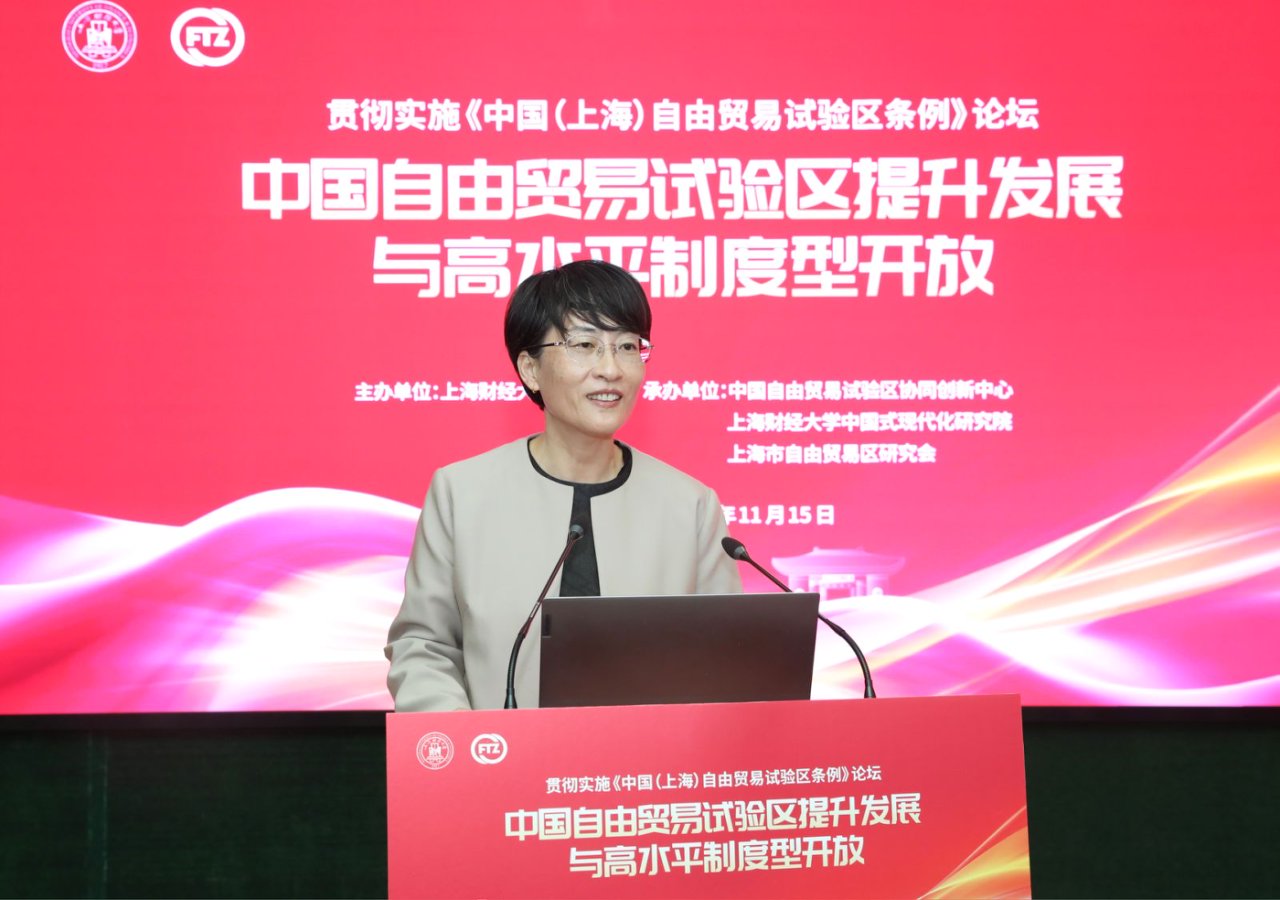
高校智慧赋能自贸区升级,上海财大论坛共探制度型开放
Guo Ji Jin Rong Bao· 2025-11-17 04:15
Core Viewpoint - The forum on the implementation of the "China (Shanghai) Free Trade Zone Regulations" emphasizes the strategic significance of the free trade zone's development and its role in high-level institutional openness [1][4]. Group 1: Strategic Importance - The free trade zone has become a testing ground for deepening reforms and a pioneer in institutional openness, significantly contributing to China's integration into the global economy [3][6]. - The forum serves as a timely opportunity to enhance academic research and policy recommendations in the field of free trade zones [4]. Group 2: Policy and Governance - The newly revised "China (Shanghai) Free Trade Zone Regulations" reflect Shanghai's confidence and determination to promote high-level openness [5]. - The Shanghai Free Trade Zone Research Association aims to address key issues in the construction of the free trade zone and to serve as a think tank for decision-making [4][7]. Group 3: Development and Innovation - Experts discussed the need for deepening investment openness and trade facilitation, as well as enhancing the service trade level through the implementation of negative lists [6]. - The Shanghai Free Trade Zone is recognized as a significant reform initiative, with a focus on both external engagement and internal reform to enhance governance and support high-level technological innovation [7][8]. Group 4: Future Outlook - The Shanghai American Chamber of Commerce highlights the positive impact of the free trade zone on foreign enterprises, indicating that future reforms and innovations will be crucial for its continued success [8]. - The development of a performance evaluation system for the free trade zone aims to provide dynamic monitoring and scientific assessment of its institutional openness [8].
视频丨美国大幅下调对瑞士关税 瑞士付出了什么代价
Yang Shi Xin Wen· 2025-11-17 03:16
Group 1 - The core point of the article is the significant reduction of tariffs on Swiss imports by the United States, from 39% to 15%, as part of a trade negotiation framework agreement [1] - The agreement was influenced by active lobbying and substantial investment commitments from Swiss companies, including a delegation of executives from major firms like Glencore, Roche, and Novartis meeting with President Trump [1] - The trade negotiations were expedited after the Swiss delegation presented gifts, which included engraved gold bars and Rolex watches, to facilitate discussions [1] Group 2 - In exchange for the tariff reduction, Swiss companies committed to investing $200 billion in the U.S., with an expected investment of $67 billion by 2026, covering key sectors such as pharmaceuticals, medical devices, aerospace, and gold refining [2] - Swiss companies also agreed to establish production lines in the U.S. and to further open their agricultural market, reduce tariffs on U.S. agricultural products, and simplify inspection procedures [2] - Despite the tariff reduction, uncertainties remain in the U.S.-Swiss trade relationship due to the unpredictable nature of the Trump administration [2]
从39%到15%,瑞士对美关税协议达成
Huan Qiu Shi Bao· 2025-11-16 23:00
Group 1 - The United States and Switzerland have reached a new tariff agreement, reducing tariffs from 39% to 15%, with Switzerland committing to invest approximately $200 billion in the U.S. by the end of 2028 [1][2] - The total investment includes commitments from Swiss pharmaceutical companies Roche ($50 billion) and Novartis ($23 billion), as well as investments from engineering group ABB and railway equipment manufacturer Stadler [1] - The agreement must be approved by the Swiss parliament and will subsequently undergo a national referendum, with the Swiss government emphasizing the need to lower costs for domestic companies [1][2] Group 2 - The tariff negotiations are critically important for Switzerland, as the U.S. is a major export market for Swiss goods such as watches, chocolate, pharmaceuticals, and machine tools [2] - The recent tariff crisis has led to a significant decline in Swiss technology exports to the U.S., with a reported drop of 14.2% in the third quarter compared to the previous year [1] - The economic impact of the tariffs has prompted discussions about Switzerland's neutral status and increased calls for strengthening relations with the European Union [2]