联发科

Search documents
抢单大战…传三星2纳米砍价 挖台积墙脚
Jing Ji Ri Bao· 2025-09-28 23:23
Core Viewpoint - The semiconductor industry is entering the 2nm process generation, with Samsung reportedly offering a price of $20,000 per wafer, significantly lower than TSMC's price of $30,000, indicating a price war to attract major clients like Nvidia, Qualcomm, and Tesla [1] Group 1: Pricing Strategy - Samsung's 2nm pricing is approximately 33% lower than TSMC's, which is seen as a strategic move to gain market share [1] - The reported price of $20,000 per wafer translates to about NT$600,000, while TSMC's price is around NT$900,000 [1] Group 2: Market Dynamics - TSMC is expected to begin mass production of its 2nm process in the second half of the year, with demand outstripping supply, leading to earlier reports of potential price increases [1] - Samsung's price cut is viewed as an attempt to secure orders from TSMC's major clients, thereby diversifying its customer base [1] Group 3: Clientele and Applications - TSMC has secured orders from major clients including Apple, AMD, MediaTek, and Qualcomm, focusing on high-performance applications such as smartphone chips and CPUs [1] - Currently, Samsung's 2nm process is primarily used for its own mobile processors, but the price reduction aims to expand its economic scale and attract external orders [1]

从智能手机到智能体,端侧AI的故事才刚刚开始
Zheng Quan Shi Bao· 2025-09-28 22:22
Core Insights - Qualcomm emphasizes the importance of edge AI, which allows AI models to be deployed on end devices, enabling local intelligent processing without relying on cloud servers [1][2] - The shift towards edge AI is reshaping user experience across various smart devices, moving from traditional smartphone extensions to direct interactions with intelligent agents [2][3] - MediaTek also highlights edge AI capabilities in its flagship chip, significantly reducing the need for cloud resources for tasks like 4K image generation and natural language processing [3] Group 1 - Edge AI offers faster processing speeds and enhanced data security by keeping personal data local, while cloud AI relies on server-based processing [1] - The transition to edge AI is driven by the need for smarter user interfaces that adapt to individual user needs and habits [2] - Future applications of edge AI are expected to extend beyond consumer devices to industrial-grade terminals and sensors across various sectors [3] Group 2 - Qualcomm's CEO mentions the necessity of a new computing architecture to support the evolving demands of edge AI, including redesigning operating systems, software, and chips [3] - The integration of edge and cloud AI is essential for optimal performance, allowing for seamless collaboration between local and cloud-based processing [4]

9月最受关注重点研究:NPU、定制化存储星辰大海
2025-09-28 14:57
Summary of Key Points from the Conference Call Industry Overview - The focus is on the AI edge technology that empowers mobile devices, enabling local AI model operations while ensuring data privacy and low-latency interactions. This technology is primarily applied in AI smartphones and AI PCs, requiring robust local computing power and multimodal content processing capabilities [1][2][3]. Core Insights and Arguments - **AI Smartphone Projections**: It is anticipated that global shipments of AI smartphones will reach 54% by 2028, with the Chinese market expected to hit 150 million units by 2027. Initially, AI features will be introduced in the high-end market before gradually penetrating the mid-to-low-end segments [1][5]. - **AI PC Development**: AI PCs are positioned as core platforms that integrate computing power, personal large models, and applications while protecting user data privacy. The penetration rate of AI PCs is expected to rise, driving an increase in average selling prices (ASP) by 10%-15% for PCs with integrated NPU [1][6]. - **Smart Automotive Sector**: The demand for NPU and customized storage solutions is significantly increasing in smart vehicles, particularly for offline model deployment in cabin domains. Independent NPUs are becoming standard to ensure large model inference and interaction in areas without signal coverage [1][7]. - **NPU as a Focus for Chip Manufacturers**: NPU, designed specifically for AI, is a key focus for chip manufacturers. It excels in scalar, vector, and tensor computations, maximizing user experience in generative AI applications through heterogeneous computing alongside CPU and GPU [1][8]. Additional Important Content - **NPU Performance Metrics**: The main performance indicators for NPU include TOPS (Tera Operations Per Second) and memory bandwidth, which are crucial for inference response capabilities. NPU is widely used in smartphones, PCs, and automotive applications [1][9]. - **Current and Future NPU Forms**: Currently, NPU is primarily integrated within processors or SoCs. However, discrete NPU solutions are being explored to enhance computing power and optimize battery life during standby [1][10]. - **Market Potential for Discrete NPU**: If all flagship smartphones adopt discrete NPU solutions, the expected shipment volume could reach around 100 million units for third-party high-end smartphones. In the PC market, a 10% penetration rate for high-end products would require approximately 20 million discrete NPUs, leading to a potential total shipment of 120 million units across smartphones and PCs [1][11]. - **Customized Storage Solutions**: Customized storage is critical for achieving optimal NPU performance, similar to HBM for GPUs. The market for customized storage is projected to reach $2-3 billion in the next two to three years, especially as discrete NPU solutions penetrate the PC and smartphone markets [1][12][14]. - **Competitive Landscape**: In the NPU and customized storage sectors, domestic companies like Xiaomi, Honor, and Lenovo are actively developing NPU solutions, while international players include Qualcomm and MediaTek. In customized storage, companies like Gigadevice are leading in performance, with traditional DRAM manufacturers also participating [1][15].
英伟达千亿豪赌OpenAI;混沌HDDI商业智能体亮相云栖;红杉揭秘95%企业AI应用失败真相 | 混沌AI一周焦点
混沌学园· 2025-09-28 11:58
Core Insights - The article discusses the introduction of the HDDI, an AI-driven consulting tool by Hundun, aimed at transforming business strategy decision-making and making professional consulting services more accessible to small and medium enterprises [2][3]. Group 1: HDDI Features and Functionality - HDDI integrates Hundun's unique innovation theory framework and a decade's worth of case studies, functioning like a real consulting advisor [3]. - It shifts the business service model from a one-time project basis to a subscription-based partnership, providing continuous strategic support [3]. - The tool can help decision-makers identify core issues through guided conversations and generate comprehensive analysis reports within minutes, including feasibility assessments and implementation paths [6]. Group 2: AI Trends and Market Dynamics - Sequoia Capital's research indicates a "productivity paradox" with only 5% of companies deriving significant value from generative AI, while 95% see minimal benefits due to static tools that fail to integrate deeply into business processes [8]. - The AI landscape is witnessing a shift where AI is replacing entry-level jobs, emphasizing the importance of experienced employees' tacit knowledge as a competitive advantage [8]. - The article highlights the need for entrepreneurs to develop AI agents that can learn and integrate into backend processes, moving towards a business outcome-based pricing model [8]. Group 3: Major Industry Developments - Nvidia's strategic partnership with OpenAI involves an investment of up to $100 billion to build AI data centers, marking a significant advancement in AI infrastructure [17][23]. - The launch of the Dimensity 9500 chip by MediaTek represents a breakthrough in edge AI capabilities, with a 111% performance increase and a 56% reduction in power consumption [19][24]. - The article emphasizes the competitive landscape where large companies are integrating AI into their core products, creating new opportunities for startups to provide specialized AI solutions [20].


【e公司观察】从智能手机到智能体,芯片厂商竞逐端侧AI
Zheng Quan Shi Bao Wang· 2025-09-28 10:52
Core Insights - The focus on edge AI is growing among chip manufacturers, as it allows AI models to be deployed on end devices, enhancing local processing capabilities without relying on cloud servers [1][2][3] Group 1: Edge AI vs. Cloud AI - Edge AI processes data locally, resulting in faster processing speeds and improved data security, as personal data remains on the device [1] - Cloud AI involves training and inference tasks being handled by cloud servers, which can support larger models but may introduce latency and data security concerns [1] Group 2: Industry Trends and Applications - Qualcomm's CEO highlighted a shift towards AI-driven user interfaces, indicating that devices like smartwatches and wireless earbuds are evolving to interact directly with AI agents [2] - Media reports suggest that edge AI applications are emerging, such as personalized travel planning that considers users' schedules [2] - MediaTek also emphasized edge AI capabilities in its flagship chip, claiming significant enhancements in AI computation and image recognition, reducing reliance on cloud services [3] Group 3: Future Developments - Qualcomm is working on a new computing architecture to support the demands of edge AI, which includes redesigning operating systems, software, and chips [3] - The potential for edge AI extends beyond consumer devices to industrial applications, where sensors can analyze data streams and make decisions [3] - The narrative around edge AI is just beginning, with expectations that various sectors, including manufacturing and retail, will integrate AI capabilities into their operations [3] Group 4: Collaboration Between Edge and Cloud - Emphasizing edge AI does not diminish the importance of cloud AI; the ideal scenario involves seamless collaboration between edge and cloud processing for efficient task distribution [4]
从智能手机到智能体,芯片厂商竞逐端侧AI
Zheng Quan Shi Bao Wang· 2025-09-28 10:42
Core Insights - Qualcomm has emphasized the importance of edge AI in its recent flagship chip launch, highlighting its ability to process AI tasks locally on devices without relying on cloud servers [1][2] - Edge AI offers faster processing speeds and enhanced data security by keeping personal data on local devices, while cloud AI relies on server-based processing [1] - The shift towards edge AI is reshaping user experiences across various smart devices, moving from traditional smartphone extensions to direct interactions with intelligent agents [2] Group 1: Edge AI Advantages - Edge AI reduces latency by eliminating the need for data exchange between devices and cloud servers, resulting in quicker response times [1] - Local processing enhances data security by minimizing the risk of data breaches associated with cloud storage [1] - Despite its advantages, edge AI faces limitations in computational resources and storage capacity compared to cloud-based models [1] Group 2: Industry Trends - Qualcomm's CEO predicts a future dominated by intelligent agents, where various smart devices will collectively redefine mobile experiences [2] - Media reports indicate that edge AI applications are emerging, such as personalized travel planning that considers users' schedules [2] - MediaTek has also highlighted its advancements in edge AI capabilities, enabling high-resolution image generation and long-text processing directly on devices [3] Group 3: Future Developments - Qualcomm is working on a new computing architecture to support the evolving needs of edge AI, including redesigned operating systems, software, and chips [3] - The potential for edge AI extends beyond consumer devices to industrial applications, where sensors can analyze data streams and make decisions [3] - The narrative of edge AI is just beginning, with expectations for widespread adoption across various sectors, including manufacturing and retail [3] Group 4: Cloud and Edge AI Collaboration - The future will likely see a seamless collaboration between edge and cloud AI, optimizing task distribution for more efficient processing [4]
台积电3nm和5nm产能被客户抢光
半导体行业观察· 2025-09-28 01:05
Core Viewpoint - TSMC's production lines are nearing full capacity due to unprecedented demand for its 3nm and 5nm processes, driven primarily by mobile and HPC customers amid the AI boom [2][3]. Group 1: Demand and Market Dynamics - TSMC is experiencing strong demand across all its processes, particularly from major clients like NVIDIA, AMD, and Apple, who are integrating TSMC's chips into their consumer products [3]. - The 3nm and 5nm production lines are expected to be fully booked by next year, with a significant portion allocated to mobile and HPC clients [3][4]. - The tight supply of wafers has made it increasingly difficult for tech giants to secure chips, indicating a shift in the semiconductor market where chips are viewed as a scarce resource [4]. Group 2: Future Projections and Investments - TSMC may be compelled to raise process prices to manage demand and expand its production lines, with plans for the N3 process to commence in Arizona, requiring substantial investment [4]. - The demand for the 5nm node is also robust, with reports suggesting that companies like Apple have pre-booked a significant portion of capacity well ahead of the 2nm process launch [4]. Group 3: Industry Implications - The semiconductor industry is heavily reliant on TSMC, making it one of the most critical assets for companies worldwide, which has prompted the U.S. government to seek diversification of production away from Taiwan [4].
腾讯研究院AI每周关键词Top50
腾讯研究院· 2025-09-27 02:33
Core Insights - The article presents a weekly roundup of the top 50 keywords related to AI developments, highlighting significant trends and innovations in the industry [2]. Group 1: Chips - MediaTek's Dimensity 9500 is a notable chip in the AI landscape [3]. - The AI computing power competition is discussed, with insights from a16z and others [3]. - Qualcomm's Snapdragon series AI chips are also highlighted as key players in the market [3]. Group 2: Models - DeepSeek's V3.1 ultimate version is mentioned as a significant model advancement [3]. - Meituan's LongCat-Flash-Thinking model is introduced, showcasing its capabilities [3]. - Baidu's Qianfan-VL and Alibaba's Qwen3-Omni are also noted for their contributions to AI model development [3]. Group 3: Applications - Chrome's Gemini AI assistant is featured as a new application in the AI space [3]. - Notion 3.0 is highlighted for its innovative features [4]. - Tencent's Mixed Yuan 3D Studio and Alibaba's Wan2.2-Animate are also significant applications mentioned [4]. Group 4: Technology - Retro's "anti-aging brain drug" is noted as a breakthrough in AI technology [4]. - Arc Institute's AI-generated genome is another technological advancement discussed [4]. - Skild AI's robot control system is highlighted for its innovative approach [4]. Group 5: Investment and Events - NVIDIA's investment in OpenAI is a significant capital movement in the AI sector [4]. - MIT Technology Review's list of "35 Innovators Under 35" is mentioned, showcasing emerging talents in the field [4]. - OpenAI's Codex best practices are discussed, emphasizing the importance of effective AI usage [5].

三星2nm,大幅降价
半导体行业观察· 2025-09-27 01:38
Core Viewpoint - Samsung is challenging TSMC by reducing its 2nm wafer price to $20,000, which is nearly one-third lower than TSMC's price of $30,000, amidst high demand for advanced chips [5][6]. Group 1: Market Dynamics - The global advanced chip production is operating at full capacity, with companies like Nvidia struggling to secure enough supply to meet their needs [5]. - Despite being a seller's market, there is still competition among chip foundries, as evidenced by Samsung's price reduction strategy [5]. Group 2: Samsung's Strategy - Samsung's decision to lower its 2nm wafer price is seen as a necessary move to avoid idle capacity in its new wafer fabrication plant and ensure a return on investment [5]. - The company previously faced significant challenges with its 2nm plans, including a reported 50% cut in wafer fab investments earlier this year [5]. Group 3: Partnerships and Opportunities - Samsung recently secured a $16.5 billion deal with Tesla to produce AI6 chips, which will be manufactured at its Texas facility, providing a boost to its chip manufacturing efforts [5]. - The collaboration with Tesla is expected to help Samsung improve its yield rates, which are targeted to reach 60% to 70% [5]. Group 4: Competitive Landscape - TSMC currently holds the largest market share in the 2nm segment, with 15 major clients including Intel, AMD, MediaTek, and Nvidia [6]. - Samsung's $20,000 wafer price presents an attractive option for customers unable or unwilling to pay TSMC's premium prices [6].

AI PC芯片赛道,竞争加剧!
半导体行业观察· 2025-09-27 01:38
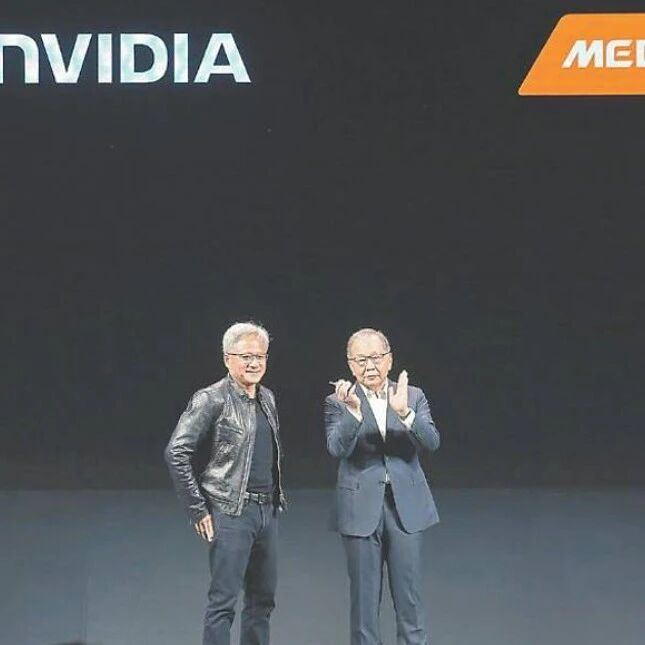
Core Insights - Nvidia is collaborating with MediaTek to develop the N1x chip, which is expected to be introduced by the end of January next year, potentially coinciding with Nvidia's GTC conference [1][3]. - The N1x chip is built on TSMC's 3nm process and is anticipated to enhance MediaTek's operational growth in the coming year [4]. Group 1: Market Developments - Nvidia's entry into the AI PC market is marked by the N1x SoC's progress, with expectations for a product launch in early 2024 [3][4]. - The N1 series chips are designed to target consumer applications, focusing on edge AI and inference demands while maintaining low power consumption [4][5]. Group 2: Competitive Landscape - Qualcomm, as a pioneer in the AI PC sector, aims for a market target of $4 billion by 2029 and welcomes more competitors to increase market penetration [4]. - Qualcomm has deployed 16,000 laptops powered by its processors internally and is actively collaborating with enterprise clients, indicating a shift in the enterprise market dynamics due to the introduction of Arm PCs [5]. Group 3: Technological Advancements - Qualcomm plans to continue using advanced process nodes for its future generations of products, maintaining its leadership in mobile processors [5]. - The competition between Qualcomm and MediaTek is intensifying, with both companies vying for influence in the AI ASIC market and cloud services [5].