DeepSeek

Search documents
爆火的Skills如何给大模型加入“技能”?记者实测
Bei Ke Cai Jing· 2026-01-22 02:09
Core Concept - The emergence of "Skills" in AI represents a paradigm shift, allowing users to encapsulate specific tasks into callable modules, enhancing the functionality of large models in practical applications [1][2]. Group 1: Understanding Skills - Skills address the limitation of general AI, which can understand concepts but struggles with practical execution due to the scattered nature of operational knowledge [2][10]. - The concept originated from the AI model Claude, which introduced "Claude Skills" to enable repeatable task completion based on organizational workflows and brand standards [2][3]. - Skills can be seen as standardized modules that encapsulate multiple prompts, making it easier for users to create and utilize them without extensive programming knowledge [3][4]. Group 2: Adoption and Implementation - Major tech companies, including OpenAI, Microsoft, and Tencent, have quickly adopted the Skills framework, indicating a rapid shift in the AI landscape [4][6]. - The Skills feature was initially a niche tool but gained widespread attention and usage, with significant growth in related code repositories on platforms like GitHub [6][10]. - Users can create Skills through natural language, allowing non-programmers to develop their own modules, which has contributed to its popularity [3][10]. Group 3: Practical Applications - An example of a Skill is a "PDF processing skill," which includes instructions for recognizing fields, handling layouts, and error checking, streamlining document processing tasks [3][11]. - Skills can be iteratively improved based on user feedback, allowing for the refinement of outputs to better meet specific requirements [7][8]. - The ability to store and recall user preferences within Skills reduces the need for repetitive input, enhancing efficiency in task execution [8][10]. Group 4: Future Implications - The future of Skills may significantly impact organizational competitiveness, as the ability to convert tacit knowledge into standardized modules could become a key differentiator [10][11]. - A mechanism called "Progressive Disclosure" is designed to optimize computational efficiency by loading only necessary information when required, thus minimizing resource consumption [10][11]. - While Skills democratize access to AI capabilities, there are concerns about potential risks associated with user-generated content, highlighting the importance of creating proprietary Skills for security [10][11].


欧盟拟推「高风险供应商」禁令,华为回应;DeepSeek新模型「MODEL1」曝光;某汽车品牌LOGO撞脸小米?网友:百分百在蹭小米丨雷峰早报
雷峰网· 2026-01-22 00:31
Key Points - The European Union plans to implement a ban on "high-risk suppliers," which Huawei has criticized as violating fair principles based on nationality [4][5] - DeepSeek has unveiled a new model called "Model 1," which is expected to be more efficient and suitable for edge devices [10][11] - Yu Minhong has launched a "retirement club" targeting individuals aged 50 to 75, offering low-cost experience classes [7][8] - iQIYI's CFO Wang Jun has resigned, with Senior Vice President Zeng Ying taking over as acting CFO [16][17] - Tesla's CEO Elon Musk has restarted the Dojo3 chip project, aiming for advancements in space AI [37][38] - Nvidia's CEO Jensen Huang expressed regret over selling Nvidia stock to buy a car for his parents, calling it the most expensive car in the world [39] - Vivo has maintained a leading position in the Indian smartphone market with a 23% share, significantly ahead of competitors [40][41]



What Bubble? Nvidia CEO Says AI Needs Trillions More in Investments
Yahoo Finance· 2026-01-21 22:57
Core Insights - The AI industry requires "trillions of dollars" in investment for infrastructure development to avoid failure, according to Nvidia's CEO Jensen Huang [1] - Huang describes AI as a "five-layer cake," emphasizing that each layer, from energy to applications, necessitates significant investment, with current commitments at around $1.5 trillion for 2025 alone [2] - Nvidia's market capitalization is now comparable to the total value of all mined silver, highlighting the financial impact of the AI boom [3] Investment and Market Dynamics - Huang's statements come amid market volatility, particularly after a Chinese startup's chatbot caused a 17% drop in Nvidia shares [4] - Despite substantial investments in generative AI, a study from MIT indicates that 95% of organizations are seeing no return on their investments, raising concerns about potential waste [5] - The financing structure within the AI sector has been criticized for creating a closed loop, where Nvidia's investment in OpenAI leads to increased demand for its chips [6] Competitive Landscape - Companies are taking measures to mitigate Nvidia's market dominance, with OpenAI signing a $10 billion deal with Cerebras for faster AI chip technology and partnerships with AMD and Broadcom [7] - Google is promoting its custom Tensor Processing Units (TPUs) as alternatives, with Anthropic agreeing to utilize up to one million TPUs, while Meta is also exploring Google's silicon for its data centers [8]
DeepSeek新模型曝光?“MODEL1”现身开源社区
Shang Hai Zheng Quan Bao· 2026-01-21 21:31
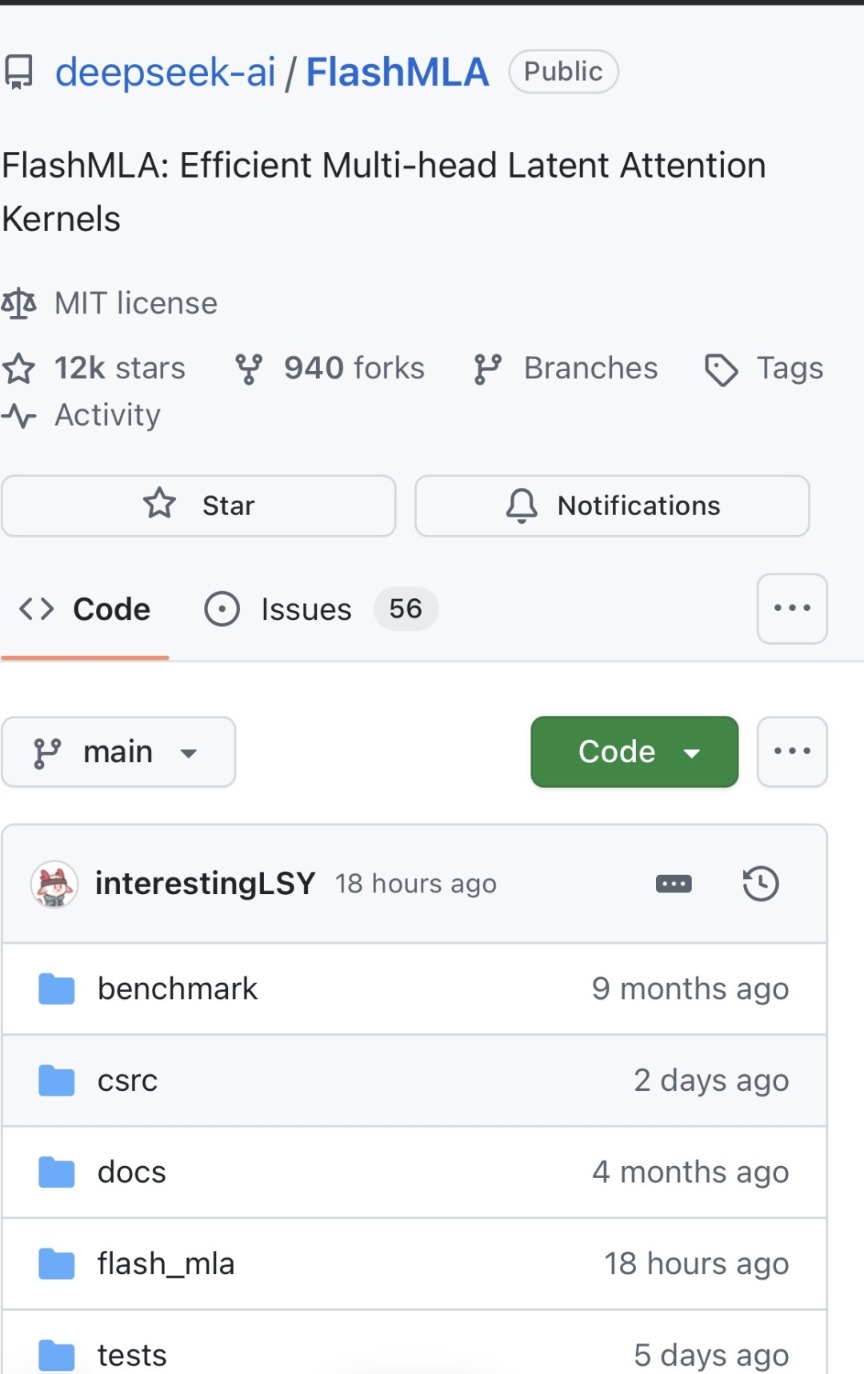
Core Insights - DeepSeek has updated its FlashMLA code on GitHub, revealing the previously undisclosed "MODEL1" identifier, which may indicate a new model distinct from the existing "V32" [3][4] - The company plans to launch an "open source week" in February 2025, gradually releasing five codebases, with Flash MLA being the first project [4] - Flash MLA optimizes memory access and computation processes on Hopper GPUs, significantly enhancing the efficiency of variable-length sequence processing, particularly for large language model inference tasks [4] Company Developments - DeepSeek's upcoming AI model, DeepSeek V4, is expected to be released around the Lunar New Year in February 2025, although the timeline may vary [4] - The V4 model is an iteration of the V3 model released in December 2024, boasting advanced programming capabilities that surpass current leading models like Anthropic's Claude and OpenAI's GPT series [5] - Since January 2026, DeepSeek has published two technical papers introducing a new training method called "optimized residual connections (mHC)" and a biologically inspired "AI memory module (Engram)" [5] Industry Context - The introduction of the Engram module aims to improve knowledge retrieval and general reasoning, addressing inefficiencies in the Transformer architecture [5] - The support from Liang Wenfeng's private equity firm, which has achieved a 56.55% average return in 2025, has bolstered DeepSeek's research and development efforts [5]

腾讯研究院AI速递 20260122
腾讯研究院· 2026-01-21 16:01
Group 1 - DeepSeek's Model 1 has been discovered in the FlashMLA codebase, potentially indicating an upcoming release, featuring a 512-dimensional architecture and support for NVIDIA's Blackwell architecture [1] - Liquid AI has launched the open-source inference model LFM2.5-1.2B-Thinking, which operates on a liquid neural network architecture and requires only 900MB of memory on mobile devices, achieving a score of 88 on MATH-500 [2] - The xAI engineer revealed that AI is being tested as a "colleague" in the MacroHard project, achieving human speeds eight times faster, and the company is considering utilizing idle computing power from approximately 4 million Tesla vehicles in North America [3] Group 2 - Research indicates that models like DeepSeek-R1 can spontaneously form multi-role debate mechanisms, significantly improving accuracy through internal social dialogue [4][5] - Medical SAM3, a new model developed by the University of Central Florida, allows for expert-level segmentation in medical imaging using only text prompts, achieving an average accuracy increase from 11.9% to 73.9% across 33 datasets [6] - Anthropic's CEO predicts that AI will fully take over software engineering roles within 6-12 months, with a significant portion of entry-level jobs expected to disappear in the next 1-5 years [7] Group 3 - The Sequoia xbench team reported that top agents can handle over 60% of 104 daily tasks, indicating that foundational agent capabilities have become commoditized [8] - OpenAI's CFO discussed the maturation of multi-agent systems by 2026, emphasizing that AI bubbles should be measured by API call volumes rather than stock prices, with productivity increases of 27-33% for cutting-edge companies [9]

计算机行业周报:千问App接入阿里生态业务
Guoxin Securities Co., Ltd· 2026-01-21 13:25
Investment Rating - The report gives a "Positive" rating for the computer industry, expecting the industry index to outperform the market index by over 5% in the next six months [33]. Core Insights - The computer industry index rose by 3.82% from January 12 to January 16, outperforming the CSI 300 index by 4.39 percentage points, making it the top-performing sector among other industries [2][11]. - Key stocks that performed well include Tongda Hai with a 39.73% increase, Haohan Deep with a 30.57% increase, and Jiechuang Intelligent with a 28.95% increase. Conversely, *ST Lifang saw a decline of 33.66%, followed by Aerospace Information at -14.46% and Haixia Innovation at -13.40% [14][15]. - Significant developments include the announcement of the integration of Qianwen App into Alibaba's ecosystem, enabling AI-driven services for tasks like ordering food and booking flights [3][31]. Market Performance - The computer industry has a total of 335 listed companies, with 234 companies seeing a rise, accounting for 69.85% of the sector [14]. - The report highlights the performance of individual stocks, with notable gains and losses during the specified period [15]. Recent Developments - Elon Musk announced the open-sourcing of the latest recommendation algorithm for X, promising updates every four weeks [3]. - Apple and Google have entered a partnership where Google's Gemini will support Apple's AI initiatives, with Apple expected to pay around $1 billion annually for this technology [18][19]. - Meta's CEO Mark Zuckerberg announced the Meta Compute initiative, aiming to build a GW-level AI infrastructure over the next decade [21][22]. - The U.S. has relaxed export controls on NVIDIA's H200 chips to China, which is expected to restart shipments to Chinese customers [24].




需求太火爆!智谱AI因算力告急“限购”:GLM编程计划每日仅售20%,老用户优先
Hua Er Jie Jian Wen· 2026-01-21 13:22
Core Viewpoint - The rapid increase in user demand for the newly released GLM-4.7 language model has led to significant computational bottlenecks for Zhipu AI, prompting the company to implement emergency throttling measures to prioritize existing users' experience [1][2]. Company Summary - Zhipu AI announced that starting January 23, it will drastically reduce the daily new subscription limit for its programming assistant service "GLM Coding Plan" to 20% of its previous levels, ensuring that existing users' access is prioritized [1][2]. - The company has experienced frequent throttling errors and significant response time delays during peak hours due to the surge in user numbers, which it attributes to a phase of resource strain caused by rapid growth [1][2]. - The GLM Coding Plan is positioned as a competitor to Claude, and the company is in direct competition with leading firms like OpenAI and Anthropic [1][2]. Industry Summary - The implementation of throttling measures in response to user surges has become a common phenomenon in the rapidly growing AI industry, as seen previously with DeepSeek, which also limited API access due to server resource constraints [3]. - This "throttling" action highlights the temporary mismatch between the explosive growth in AI application demand and the pace of foundational computational infrastructure development [3]. - The computational bottleneck reflects strong end-user demand while revealing the operational challenges AI companies face in transitioning from technological breakthroughs to stable service delivery [3].
AI进化速递 | Meta 新AI团队已交付首批人工智能模型
Di Yi Cai Jing· 2026-01-21 12:49
Core Insights - The article highlights the launch of Shanghai Zhangjiang's first automated production line for robot joints, which accelerates the mass production of humanoid robots [1] Group 1: Industry Developments - The Ministry of Industry and Information Technology reports that AI has penetrated over 70% of business scenarios in leading smart factories [1] - The automated production line in Shanghai Zhangjiang aims to speed up the mass production of humanoid robots [1] - Beijing Renxing and Xiaowu Intelligence have formed a strategic partnership to promote the industrialization of embodied intelligence [1] Group 2: Technological Advancements - DeepSeek has unveiled its new model "MODEL1" [1] - The monthly active users of Keling AI have surpassed 12 million, with daily revenue increasing by approximately 30% compared to December of the previous year [1] - Meta's CTO announced that the new AI team has delivered its first batch of artificial intelligence models [1] Group 3: Investments and Collaborations - OpenAI has launched an educational program aimed at various countries [1] - NVIDIA has invested $150 million in the AI inference startup Baseten [1] - ServiceNow has entered into a three-year collaboration with OpenAI [1]
朱宁:2026中国经济增速放缓,但体量更大、更全球化
Di Yi Cai Jing· 2026-01-21 11:12
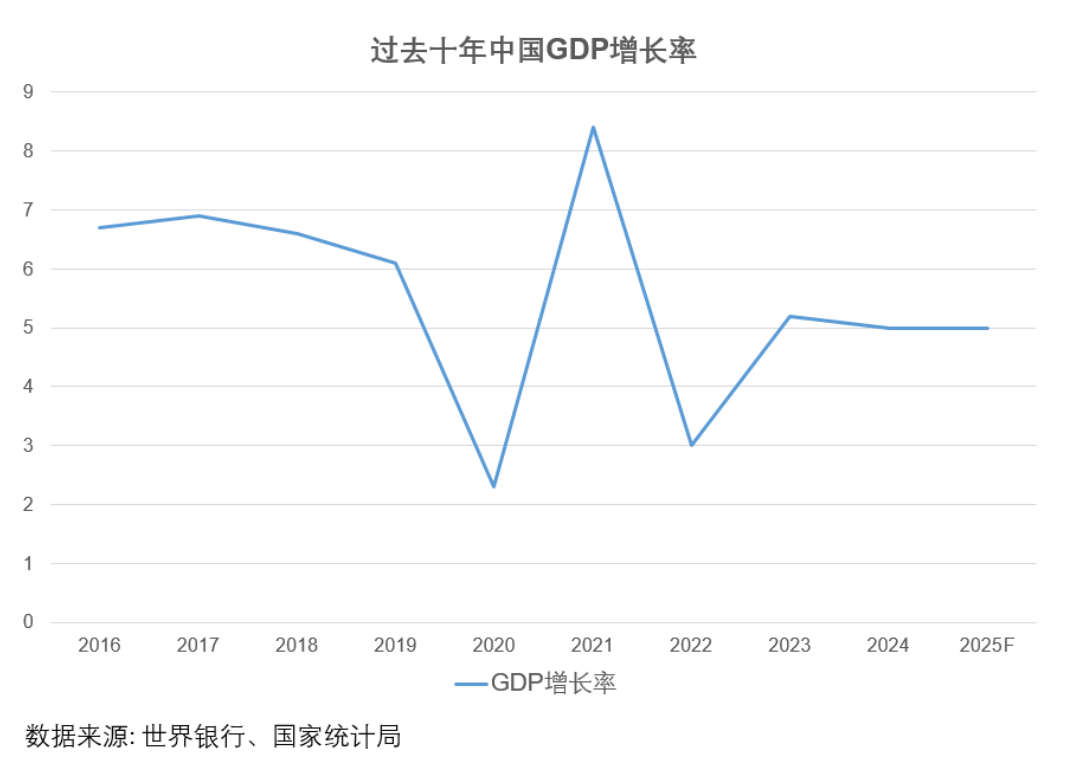
Group 1 - The continuous growth of China's economy indicates that even with a more moderate growth rate, its share in almost all global economic sectors will increase [1][8] - By 2026, China's economic growth target is likely to be set around "5%", which may represent a further slowdown compared to 2025, influenced by a decline in export demand [1][3] - The shift in focus from "GDP supremacy" to self-innovation, national security, and sustainable high-quality development reflects a strategic change in policy priorities [3] Group 2 - China's economic scale has expanded fourfold since 2008, making its contribution to global economic growth comparable to the combined contributions of India and the United States [3] - China's unique advantages include its unparalleled manufacturing base and complete supply chain network, which were highlighted during the COVID-19 pandemic [8][10] - The trend of "recreating a China" abroad suggests that despite its own growth slowdown, China will continue to generate significant value through deepening relationships with developing regions [10]
选择开源,杭州正在下注AI时代“最贵的投资”
2 1 Shi Ji Jing Ji Bao Dao· 2026-01-21 10:37
Core Viewpoint - Hangzhou is positioning itself as a leader in AI innovation by focusing on an open-source ecosystem, integrating private enterprises and tech companies to drive technological advancement and industrial upgrades [1][2]. Economic Goals - The expected economic growth target for Hangzhou in 2026 is set at 5% to 5.5%, with a focus on controlling the urban unemployment rate around 5% and maintaining a consumer price increase of approximately 2% [2]. - The city aims to achieve a retail sales growth of about 5%, surpassing 1 trillion yuan by 2026 [4]. AI Development Strategy - Hangzhou plans to establish itself as the leading city for AI innovation, with initiatives to create a hub for open-source large models and to support the development of high-end chips and foundational software [2][8]. - The city aims to cultivate over three internationally top-tier open-source foundational models by 2030 [2]. Education and Talent Development - To address its previous shortcomings in educational resources, Hangzhou will enhance the integration of education and technology, supporting the development of world-class research universities [3]. Industry Focus - The city will prioritize the development of the AI terminal industry, targeting a scale of 300 billion yuan by 2027, and aims to create 10 AI-themed industrial parks and attract over 1,000 open-source model ecosystem enterprises [5][6]. - By 2026, the city plans to increase the value added by core digital economy industries by 6.5% and raise R&D investment intensity to around 4.1%, with total R&D spending reaching 263.5 billion yuan [4][6]. Future Industry Development - Hangzhou will focus on emerging industries such as synthetic biology, aerospace, and quantum technology, establishing future industry pilot zones [7]. - The city aims to create a collaborative development framework across the entire AI industry chain, emphasizing key areas like embodied intelligence and intelligent driving [8]. Open-source Initiative - The open-source approach is seen as a critical strategy for overcoming barriers in AI development, allowing for broader application and integration of AI technologies across various sectors [9]. - The city plans to implement the "Hangzhou AI+" initiative, which includes opening 200 benchmark scenarios in AI and establishing national pilot bases in key fields [10].